
An airport transit (layover) is a change of plane in a country that is not your destination. For a US or UK traveler, two questions matter: do you need an authorization for the transit country, even if you never leave the airport (yes for the United States, where an ESTA or visa is required even in transit for visa-waiver travelers; yes for the UK if you pass through border control; for Canada, it depends on your nationality), and are both flights on the same booking? If not (a self-transfer), a missed connection is at your own risk.
This guide explains the official rules of the main transit countries, your rights if you miss a connection, and a checklist for a smooth layover. It complements our guides to travel entry requirements and compensation for flight delays.
Airport transit: the essentials
- United States: eligible Visa Waiver Program nationals (including UK citizens) need an ESTA or a visa to transit, according to U.S. Customs and Border Protection (CBP). US citizens travel on their passport.
- United Kingdom: an ETA is needed if you pass through border control at a UK airport before your onward journey (GOV.UK); UK citizens are not concerned.
- Canada: you need an eTA to transit by air if you are from an eTA-required country; US citizens are exempt (canada.ca).
- Same booking: protection on a missed connection, under conditions (EU and UK rules); separate tickets: the risk is yours.
- Baggage: ask at check-in whether it is checked through to your final destination.
Airside transit or leaving the airport: the difference
In a standard transit you stay in the international zone (« airside »): you sometimes go through a security check, but not border control. In other cases you have to enter the country: a terminal change that crosses a border, collecting your bags, checking in again for a flight on a separate ticket, or a national rule that requires entry. Your status then changes: you must meet the country’s entry requirements.
The Schengen area illustrates the mechanism. Some third-country nationals need an airport transit visa to wait for a connection in the international zone; this visa « does not authorize entry into the territory of a Schengen State », and a terminal change that involves crossing a border requires a Schengen visa, according to the Spanish Ministry of Foreign Affairs. Check whether your nationality is concerned, and whether a travel companion of another nationality is.
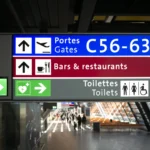
The rules in the main transit countries
| Transit country | Rule for a US citizen | Rule for a UK citizen | Official source | Our guide |
|---|---|---|---|---|
| United States | No visa or ESTA; travel on a valid US passport | ESTA or visa required to transit, even without leaving the airport | CBP (Visa Waiver Program and ESTA FAQ) | ESTA |
| United Kingdom | ETA needed if you pass through border control; if in doubt, ask your airline | Not concerned | GOV.UK | UK ETA |
| Canada | Exempt: US citizens can transit without a visa or eTA; carry the right travel documents | You need an eTA if your country is on the eTA-required list: check the list | canada.ca | Canada eTA |
| Schengen area | Check the rules for your nationality and your final destination | Check the rules for your nationality and your final destination | Schengen rules; Spanish Ministry of Foreign Affairs | ETIAS |
| Other countries | Varies: check the country page of travel.state.gov and the embassy | Varies: check the GOV.UK foreign travel advice for the country and the embassy | travel.state.gov; GOV.UK | Entry requirements |
For the United States, CBP asks you to enter « In Transit » and your final destination in the address lines of the ESTA application; it also says the requirement applies even if you leave the United States the same day. GOV.UK sets the UK ETA at £20 and warns about websites that imitate official services and charge more: use only government websites.
Missed connection: your rights
According to Your Europe, if you miss a connection and arrive at your destination more than three hours late, compensation is due when the flights are on the same booking, EU rules apply and the delay is not caused by extraordinary circumstances. It is not due if you missed the flight because of delays at security checks or if you did not show up for boarding on time.
| Journey distance | Compensation (arrival delay) |
|---|---|
| Up to 1,500 km (932 mi) | €250 (3 hours or more) |
| 1,500 to 3,500 km (932 to 2,175 mi), and intra-EU flights over 1,500 km | €400 (3 hours or more) |
| More than 3,500 km (2,175 mi) | €600 (4 hours or more); €300 between 3 and 4 hours on some routes |
These rules cover flights departing from the EU, whatever the airline, and flights to the EU operated by a European airline. The UK has its own version of these rules: the UK Civil Aviation Authority (CAA) says a claim for a missed connection generally needs a through ticket, meaning one booking for the whole journey, that the distance band is set by the first and last airports in the booking, and that compensation depends on how late you reach your final destination (threshold: three hours). The UK amounts are £220 up to 1,500 km, £350 between 1,500 and 3,500 km, and £520 above (UK Civil Aviation Authority, checked 12 November 2026).
With two separate tickets, the second airline is not bound by your first flight: if you miss it, you may need a new ticket. See also our page on overbooking.
Self-transfer: when your tickets are separate
Combining two tickets from different airlines yourself can lower the price, but turns the layover into a full journey: collecting your bags, leaving into the public area, possibly crossing a border, checking in again and going through security again. You must therefore meet the transit country’s entry requirements and allow a margin that you set yourself, since no minimum connection time applies between separate tickets.
Our decision tree: same booking and airside transit: check only the transit country’s authorization. Separate tickets inside the Schengen area: allow time to collect your bags and check in again. Separate tickets outside Schengen: add the entry requirements of the layover country (ESTA, ETA, eTA, visa) and insurance that covers a missed connection, or a night on site.
Checklist for a smooth transit
- Check the authorization required by the transit country (ESTA, ETA, eTA, visa) before buying tickets.
- Check that your passport is valid for the transit country as well as the final destination.
- Ask at check-in whether your bags are checked through to the final destination.
- Locate the departure terminal of the second flight and the transfer time announced by the airport.
- Keep medication, a charger and a change of clothes in your carry-on, respecting the items prohibited on planes.
- Keep boarding passes and proof of delay for a possible claim.
- Plan a connection on arrival to follow gate changes, with a travel eSIM outside your home region.
Common mistakes to avoid
- Believing a stop in the United States without leaving the airport exempts you from an ESTA (if you are a UK citizen).
- Booking two separate tickets with too short a margin and checked baggage.
- Paying for a travel authorization on an unofficial website.
- Forgetting that a travel companion of another nationality may need a transit visa.
- Losing the proof of delay for the first flight.
Booking a flight with a connection
Before booking, compare the price of a single ticket with two separate tickets, factoring in the risk: a protected connection is often worth a little extra. If you choose a self-transfer, read the guarantees the seller offers in case of a missed connection, and for a delay or cancellation, keep your receipts to assert your rights. Travel insurance can add protection.
Frequently asked questions
Do you need an ESTA for a layover in the United States?
If you are a UK citizen or another visa-waiver national, yes: CBP says an ESTA or a visa is required to transit the United States, even without leaving the airport. US citizens travel on their passport.
Do you need an ETA for a layover in London?
Yes if you pass through UK border control before your onward journey, according to GOV.UK. If in doubt, ask your airline. UK citizens are not concerned.
Do you need an eTA for a layover in Canada?
canada.ca says you need an eTA to transit by air if you are from an eTA-required country. US citizens are exempt; check the list for other nationalities.
Are you compensated if you miss your connection?
Under conditions, if the flights are on the same booking, EU or UK rules apply and you arrive more than three hours late, according to Your Europe and the UK CAA.
What is a self-transfer?
A connection between two separate tickets: you collect your bags, check in again and take on the risk of missing the second flight.
Our sources
- U.S. Customs and Border Protection (cbp.gov), « Frequently Asked Questions about the Visa Waiver Program (VWP) and ESTA », cbp.gov, consulted 24 October 2026 and checked 12 November 2026.
- UK government (gov.uk), « Electronic Travel Authorisation (ETA) », consulted 24 October 2026 and checked 12 November 2026.
- Government of Canada (canada.ca), « Transit through Canada » (page details date 2 June 2025), checked 12 November 2026.
- Spanish Ministry of Foreign Affairs (exteriores.gob.es), « Airport transit visa », consulted 24 October 2026.
- Your Europe (European Commission), « Air passenger rights », consulted 24 October 2026.
- UK Civil Aviation Authority, « Your rights when you miss a connection », checked 12 November 2026.
- Our methodology
Updated November 2026. Entry and transit rules can change: check the official websites of the transit country before you book.