Japan combines ultra-modern cities, thousands of temples and shrines, mountains, hot springs and world-renowned food. It is a safe, clean and very well-organized country where getting around by train is easy, even if you don’t speak Japanese. This Japan travel guide covers the essentials: what to see, which itinerary to follow in 10 days or 2 weeks, what budget to plan and how to get around. In central Honshu, between Tokyo and Kyoto, our guide things to do in Nagoya covers the castle, Atsuta Shrine and the Toyota museum.
To locate cities, regions, terrain, national parks and airports, see our map of Japan.
Japan at a glance
CapitalTokyo
LanguageJapaneseEnglish signage in stations, subways and major sights
✓ Ideal~ Good, with caveats✕ AvoidAverage max. temperature · click a month to see where to go
Jan10°C/50°F
Feb11°C/52°F
Mar14°C/58°F
Apr19°C/67°F
May24°C/74°F
Jun26°C/79°F
Jul30°C/86°F
Aug31°C/88°F
Sep28°C/82°F
Oct22°C/72°F
Nov17°C/62°F
Dec12°C/54°F
✅ Best months: January, February, March, April, may, October, November, December
❌ Period to avoid: August
The best periods are spring (late March to mid-May) and autumn (late September to late November): mild temperatures, cherry blossoms and then red maples. Summer starts with the rainy season (roughly June to mid-July), then becomes very hot and humid, with a risk of typhoons until September. Winter is cold but dry and sunny in Tokyo and Kyoto, and snowy in Hokkaido. If possible, avoid Golden Week (late April – early May), Obon (mid-August) and New Year, when prices and crowds rise. All the details, with normals from the Japan Meteorological Agency, are in our article best time to visit Japan.
What to see in Japan: the highlights
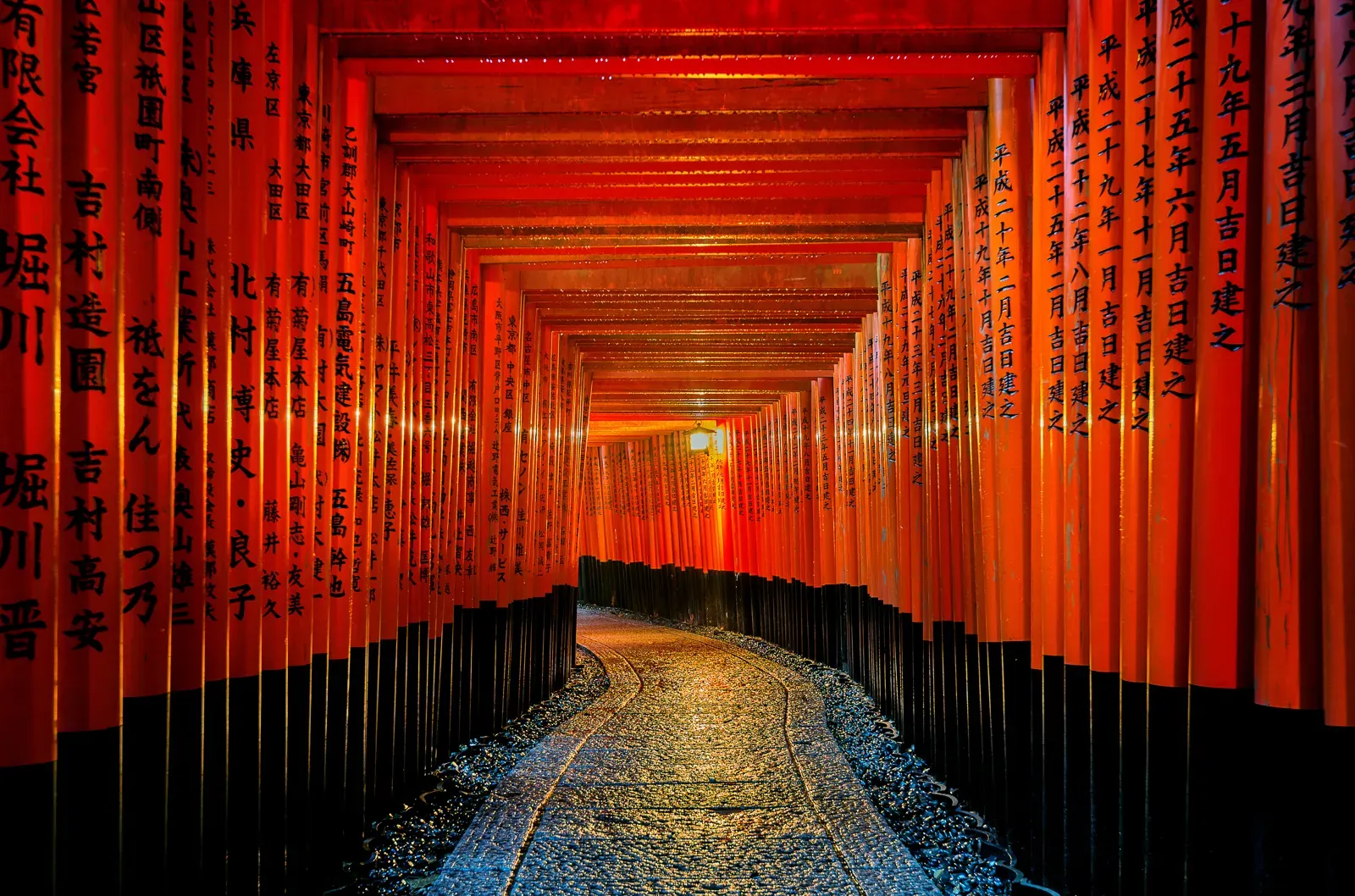
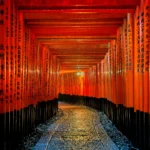
Path of red torii gates at Fushimi Inari Shrine in Kyoto
Tokyo
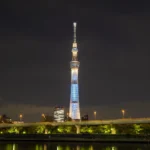
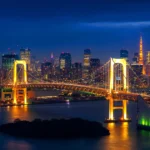
The capital is best explored neighborhood by neighborhood: Asakusa and Senso-ji temple, the Shibuya crossing, Shinjuku and its towers, Meiji Jingu shrine in its wooded park, Harajuku, Ueno and its museums, and Akihabara for electronics and manga culture. Allow at least three or four days. The subway and rail network covers the whole city.
Kyoto
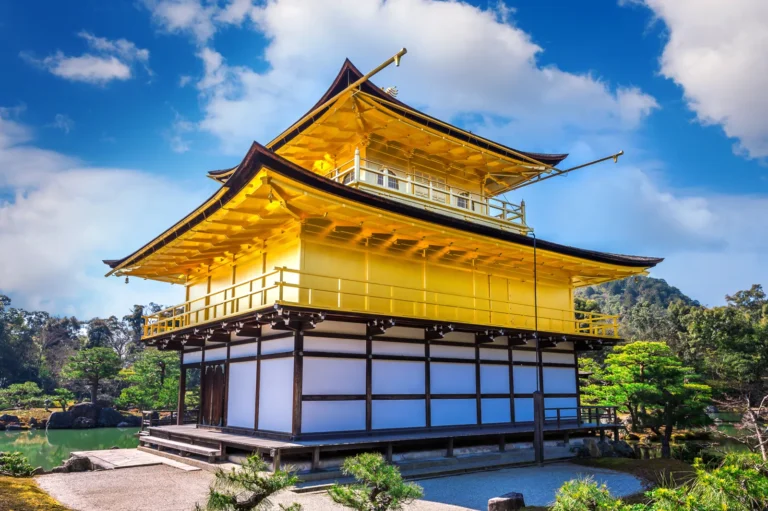
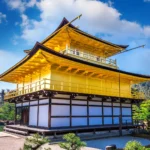
The former imperial capital, Kyoto has many temples and shrines listed as UNESCO World Heritage: Kinkaku-ji (the Golden Pavilion), Kiyomizu-dera, Fushimi Inari and its thousands of torii gates, and the Arashiyama bamboo grove. The Gion district retains traditional wooden houses. Visit the best-known sites early in the morning to avoid the crowds. Planning a trip to Kyoto means spreading the major temples over several days.
Nara
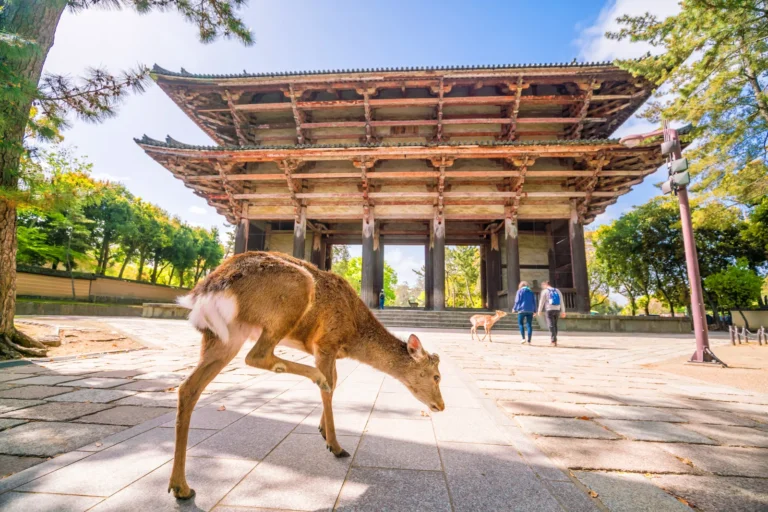
Less than an hour by train from Kyoto or Osaka, Nara is an easy day trip. Todai-ji temple houses a giant bronze Buddha, and the deer of Nara Park roam freely between the shrines.
Osaka
One of the country’s largest cities, Osaka is known for its street food (takoyaki, okonomiyaki) and the buzz of the Dotonbori district. Its castle and Kansai International Airport also make it a good gateway in or out for a trip around western Japan. Kansai gateway and Dotonbori food: the best time to visit Osaka fits well with Kyoto and Nara.
Hiroshima and Miyajima
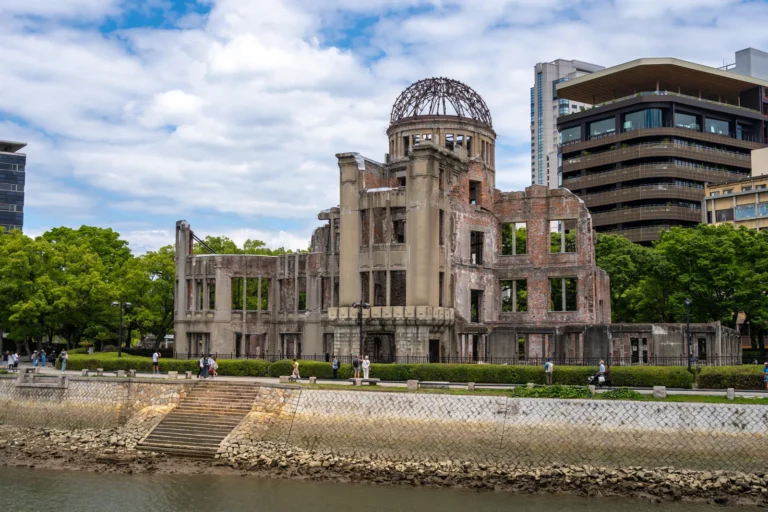
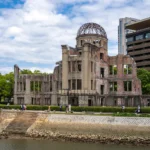
The Peace Memorial and its museum commemorate the atomic bombing of 6 August 1945; the Genbaku Dome is a World Heritage Site. A short ferry ride away, Miyajima island is known for Itsukushima Shrine and its great torii in the sea. Memorial, Genbaku Dome and the Miyajima torii: our Hiroshima travel guide covers these visits and how much time to allow.
The Japanese Alps (Takayama, Shirakawa-go, Kanazawa)
Takayama has kept an old town of wooden merchant houses. The UNESCO-listed village of Shirakawa-go is famous for its farmhouses with steep thatched roofs. Kanazawa, on the Sea of Japan coast, has Kenroku-en garden and a teahouse district. The region fits well between Tokyo and Kyoto.
Hakone and Mount Fuji
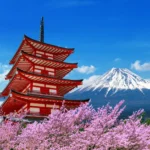
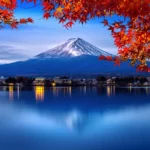
About two hours from Tokyo, Hakone offers hot springs (onsen), ryokan (traditional inns) and, on clear days, a view of Mount Fuji. The Five Lakes area at the foot of the volcano is the other classic base. Fuji is often hidden by clouds: it is more often visible in cold, dry weather, in autumn and winter.
Hokkaido and Okinawa
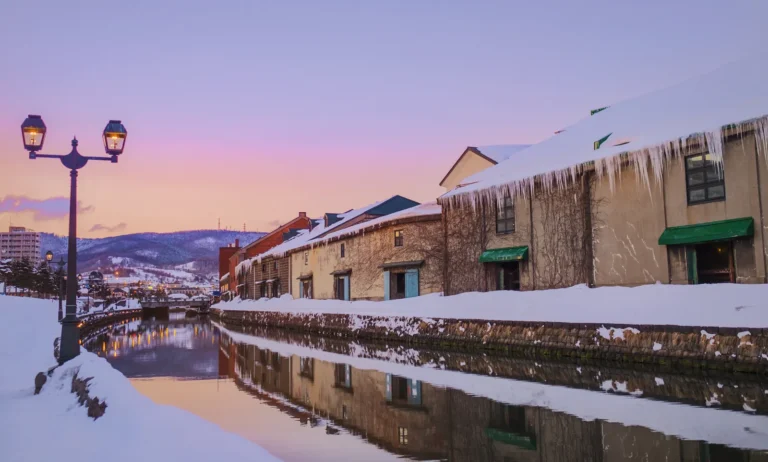
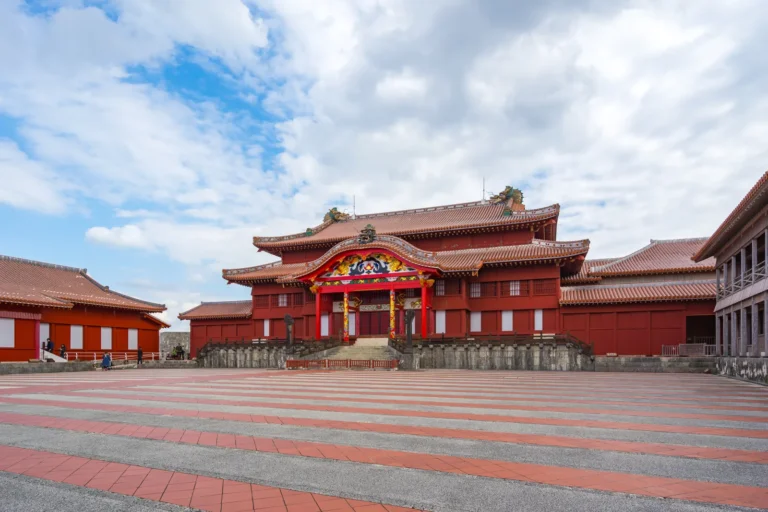
In the north, Hokkaido draws skiers in winter for its abundant snow, and hikers in summer for its national parks. In the south, the subtropical archipelago of Okinawa offers beaches and diving, with a culture distinct from Honshu’s. Both regions are reached by plane from Tokyo or Osaka.
Days 1 to 4: Tokyo, with an optional day trip to Nikko or Kamakura
Day 5: Hakone or the Fuji Five Lakes, night in a ryokan
Days 6 to 8: Kyoto, with a day in Nara
Days 9 and 10: Osaka, then depart from Kansai Airport or return to Tokyo by shinkansen
2 weeks: Tokyo, the Alps and the west
Days 1 to 4: Tokyo
Day 5: Hakone or the Fuji Five Lakes
Days 6 to 8: Takayama, Shirakawa-go and Kanazawa
Days 9 to 11: Kyoto and Nara
Day 12: Hiroshima and Miyajima
Days 13 and 14: Osaka, then depart
To save time, book an open-jaw flight: arrive in Tokyo and fly home from Osaka (Kansai), or the other way round.
Budget for a trip to Japan
Japan has a reputation for being expensive, but the weak yen in recent years has made it more affordable. Accommodation and bullet trains are the biggest costs; meals can stay very affordable. Indicative amounts per person per day, excluding international flights (converted from our euro estimates at roughly €1 = ¥175, October 2026):
Item
Budget
Comfort
Accommodation (based on a shared double room)
roughly ¥4,000–8,000 (hostel, business hotel)
roughly ¥14,000–26,000 (hotel, occasional ryokan)
Meals
roughly ¥3,500–5,000 (konbini, ramen, canteens)
roughly ¥9,000–14,000
Local transport
roughly ¥1,500–2,500
roughly ¥2,500–5,000
Activities and sightseeing
roughly ¥2,000–3,500
roughly ¥5,000–9,000
Total per day
roughly ¥12,000–19,000
roughly ¥32,000–53,000
Indicative estimates, excluding shinkansen journeys. Prices rise during cherry blossom season, Golden Week and the autumn foliage.
Long-distance shinkansen journeys are a separate cost, to be calculated for your itinerary. A night in a ryokan with dinner and breakfast costs considerably more than a standard hotel: plan it as an occasional stop.
How much does a 2-week trip to Japan cost?
Applying the ranges above to 14 days, a two-week trip to Japan comes to roughly ¥170,000–270,000 per person on a budget and ¥440,000–735,000 in comfort, excluding international flights and long-distance trains. Add the cost of your plane ticket (which varies widely by season and booking date) and, if your itinerary justifies it, a 14-day Japan Rail Pass (¥80,000 according to the official website; convert it with our currency converter). An « all-inclusive » organized tour includes these items but generally costs more than a trip you plan yourself.
Who is Japan for?
Our verdicts by traveler profile, based on the places, conditions and budget ranges in this guide:
First trip to Asia: ideal: a safe, clean and very well-organized country, English signage in stations and subways.
Culture: excellent: Kyoto’s temples and shrines, Nara’s Todai-ji, the Hiroshima Peace Memorial, the villages of Shirakawa-go, a night in a temple on Mount Koya.
Food lovers: a very good choice: Osaka street food in Dotonbori, ramen and canteens, a ryokan dinner for one stop.
Families: yes: punctual trains, the deer of Nara Park, Ueno’s museums, luggage forwarding from hotel to hotel. Rooms are often small: check the capacity.
Couples: yes: a night in a ryokan with onsen in Hakone, the Gion district in the evening, cherry blossoms in spring or maples in autumn.
Nature and sports: a good choice: Mount Fuji and the Five Lakes, the Japanese Alps, skiing in Hokkaido in winter, beaches and diving in Okinawa.
Budget travelers: yes, with planning: roughly ¥12,000–19,000 a day in hostels or business hotels, eating at konbini and canteens. Shinkansen trips and peak periods push up the bill.
Getting around Japan
Shinkansen: the bullet train links Tokyo and Kyoto in just over two hours. Punctual and comfortable, it is the most practical way to tour the country. Large suitcases may require a luggage space reservation on some lines.
Japan Rail Pass: according to the official website, the ordinary pass costs ¥50,000 for 7 days, ¥80,000 for 14 days and ¥100,000 for 21 days (adult prices when bought online). Since the 2023 price rise, it is no longer automatically worth it: a single Tokyo – Kyoto round trip is generally not enough to make it pay. Compare with individual tickets and regional passes for your itinerary.
In cities: dense subway and local train networks. A rechargeable transit card (such as Suica or ICOCA) saves buying a ticket for every journey and also works in many shops.
Buses: long-distance night buses are a budget option. In Kyoto, city buses serve the temples but are often packed.
Plane: useful for Hokkaido, Okinawa or Kyushu from Tokyo.
Car: of little use in cities, but handy in rural areas. UK licence holders need the 1949 International Driving Permit plus their UK licence, and must get the IDP in the UK before travel (UK FCDO, GOV.UK, updated 28 August 2026); US drivers need an IDP from AAA obtained before arriving, as permits issued online are not valid in Japan (U.S. Department of State). Japan drives on the left.
Luggage: hotel-to-hotel luggage forwarding services (takkyubin) let you travel light on the train.
Where to stay in Japan
In Tokyo, stay near a well-connected station: Shinjuku and Shibuya for nightlife, Ginza and Tokyo Station for a central base, Asakusa and Ueno for a more traditional atmosphere and often lower prices. In Kyoto, the station area is practical for day trips, and the center (Shijo, Gion) for getting around on foot. In Osaka, Namba and Umeda are the two main hubs. Kyoto Station, Namba or Umeda: if you start in the capital, your choice of neighborhood may also depend on Tokyo’s weather month by month.
There is plenty of choice: youth hostels, business hotels with small but functional rooms, capsule hotels, ryokan with tatami and shared baths, and Buddhist temples that host travelers (shukubo), notably on Mount Koya. Rooms are often smaller than in Europe or North America. During cherry blossom and autumn foliage seasons, book several months ahead, especially in Kyoto. The best time to visit Kyoto is also the most expensive for accommodation.
Entry requirements, health and safety
US citizens: according to the U.S. Department of State (travel.state.gov, page updated August 11, 2025), tourist or business stays of up to 90 days are visa-free. Your passport must be valid for the entire stay and you should have proof of a return or onward ticket.
British citizens: according to the UK FCDO (GOV.UK foreign travel advice, updated 28 August 2026), you get a visa on arrival for tourism or business for up to 90 days, with no need to apply before travel. Your passport must be valid for the length of your stay, with one blank page for the visa stamp.
On arrival: all visitors are fingerprinted and photographed (U.S. Department of State). Entry requirements checked on 24 October 2026; check them again before you travel.
Health: according to the UK FCDO (GOV.UK, updated 28 August 2026), check the latest vaccine recommendations at least 8 weeks before your trip (TravelHealthPro); health risks include dengue, biting insects and ticks, and whooping cough. See a doctor or travel health clinic.
Medication: according to the UK FCDO (GOV.UK, updated 28 August 2026), some common prescription and over-the-counter medicines are illegal in Japan, including Vicks inhalers, cold and flu medication containing pseudoephedrine and some painkillers containing codeine: check the status of your medication with the Japanese embassy. The U.S. Department of State advises carrying prescription medication in its original packaging with your doctor’s prescription.
Medical costs: according to the UK FCDO (GOV.UK, updated 28 August 2026), medical facilities are of a high quality but treatment is expensive. Insurance covering medical costs and repatriation is essential.
Safety: according to the U.S. Department of State, crime against US citizens in Japan is low. The main risks are natural: earthquakes, typhoons (season from June to December, peaking from July to September, according to the UK FCDO, GOV.UK, updated 28 August 2026), volcanic eruptions. Check your accommodation’s evacuation instructions and follow official alerts.
Practical tips for Japan
Money: cards are increasingly accepted, but Japan is still largely cash-based: keep cash for small restaurants, temples and the countryside. Some foreign cards are not accepted; 7-Eleven and Japan Post ATMs accept some foreign cards (GOV.UK). Estimate your spending with our currency converter.
Internet: the mobile network is excellent. An eSIM or pocket Wi-Fi router is very useful for maps, train times and translation.
Tipping: it is not customary and can cause embarrassment.
Etiquette: take your shoes off in homes, ryokan, some temples and restaurants; speak quietly and avoid phone calls on trains; avoid eating while walking; line up on the platform.
Onsen: you bathe naked, after washing. According to GOV.UK, some facilities, including hot springs, do not admit people with tattoos: check ahead or choose a private bath.
Trash: public bins are rare. Carry a small bag for your trash.
Checklist before you leave for Japan
Passport valid for the whole stay
Travel insurance covering medical costs and repatriation
Plug adapter for two flat pins (100 V) if you are coming from the UK
eSIM or pocket Wi-Fi booked for maps and train times
International Driving Permit (1949 version from the UK, or from AAA in the US, obtained before you travel) if you are renting a car
Accommodation booked early for cherry blossoms, Golden Week and autumn in Kyoto
No meat products in your luggage: it is illegal to bring meat products (sausages, bacon, ham) into Japan without permission from the Animal Quarantine Service (GOV.UK)
Medication: check that your medicines are legal in Japan (some common cold and allergy medicines are banned, according to GOV.UK)
Comparable destinations in Asia on a lighter budget: see our travel guides to Thailand and Vietnam.
Not for a short stay if you are a US or British citizen: US citizens can stay up to 90 days visa-free (travel.state.gov), and British citizens get a visa on arrival for up to 90 days (GOV.UK). Your passport must be valid for the whole stay. Checked on 24 October 2026; check the latest rules before you leave.
How much does a two-week trip to Japan cost?
Excluding international flights and the shinkansen, allow roughly ¥12,000–19,000 per person per day on a budget, and ¥32,000–53,000 in comfort. Bullet trains and peak periods (cherry blossoms, Golden Week, autumn in Kyoto) push the bill up.
Is the Japan Rail Pass worth it?
Not always. Since the 2023 price rise, the 7-day pass costs ¥50,000 according to the official website. It becomes worthwhile with several long shinkansen journeys over a short period; for a single Tokyo – Kyoto round trip, individual tickets generally work out cheaper.
What is the best time to visit Japan?
Spring (late March to mid-May) and autumn (late September to late November). If possible, avoid the June rainy season, the August heat and the major Japanese holidays.
How many days do you need in Japan?
Ten days lets you see Tokyo, Hakone, Kyoto, Nara and Osaka. Two weeks leaves time to add the Japanese Alps (Takayama, Shirakawa-go, Kanazawa) and Hiroshima.
Can I drive in Japan with a US or UK licence?
Yes, but not with your national licence alone. UK licence holders need the 1949 International Driving Permit plus their UK licence, and must get the IDP in the UK before travel (UK FCDO, GOV.UK, updated 28 August 2026); US drivers need an IDP from AAA obtained before arriving, as permits issued online are not valid in Japan (U.S. Department of State).
Our sources
Entry, health and safety information read on 24 October 2026: U.S. Department of State, Japan country information (travel.state.gov, last updated August 11, 2025), and UK FCDO, foreign travel advice for Japan (GOV.UK, updated 28 August 2026)
Japan Rail Pass, official website (japanrailpass.net): pass prices
Japan Meteorological Agency (JMA): 1991–2020 climate normals
Transparency: this page contains affiliate links, labelled as such. If you book through them we may earn a commission at no extra cost to you; it does not influence our content or recommendations. How we fund the site.







 Japan in April
 When to go: Kyoto
 When to go: Osaka
 When to go: Tokyo


 Bhutan
 Cambodia
 Central Asia
 China
 Georgia
 Hong Kong
 India
 Indonesia
 Jordan
 Kyrgyzstan
 Laos
 Malaysia
 Maldives
 Mongolia
 Nepal
 Oman
 Philippines
 Qatar
 Singapore
 South Korea
 Sri Lanka
 Taiwan
 Thailand
 United Arab Emirates
 Uzbekistan
 Vietnam
 Macau