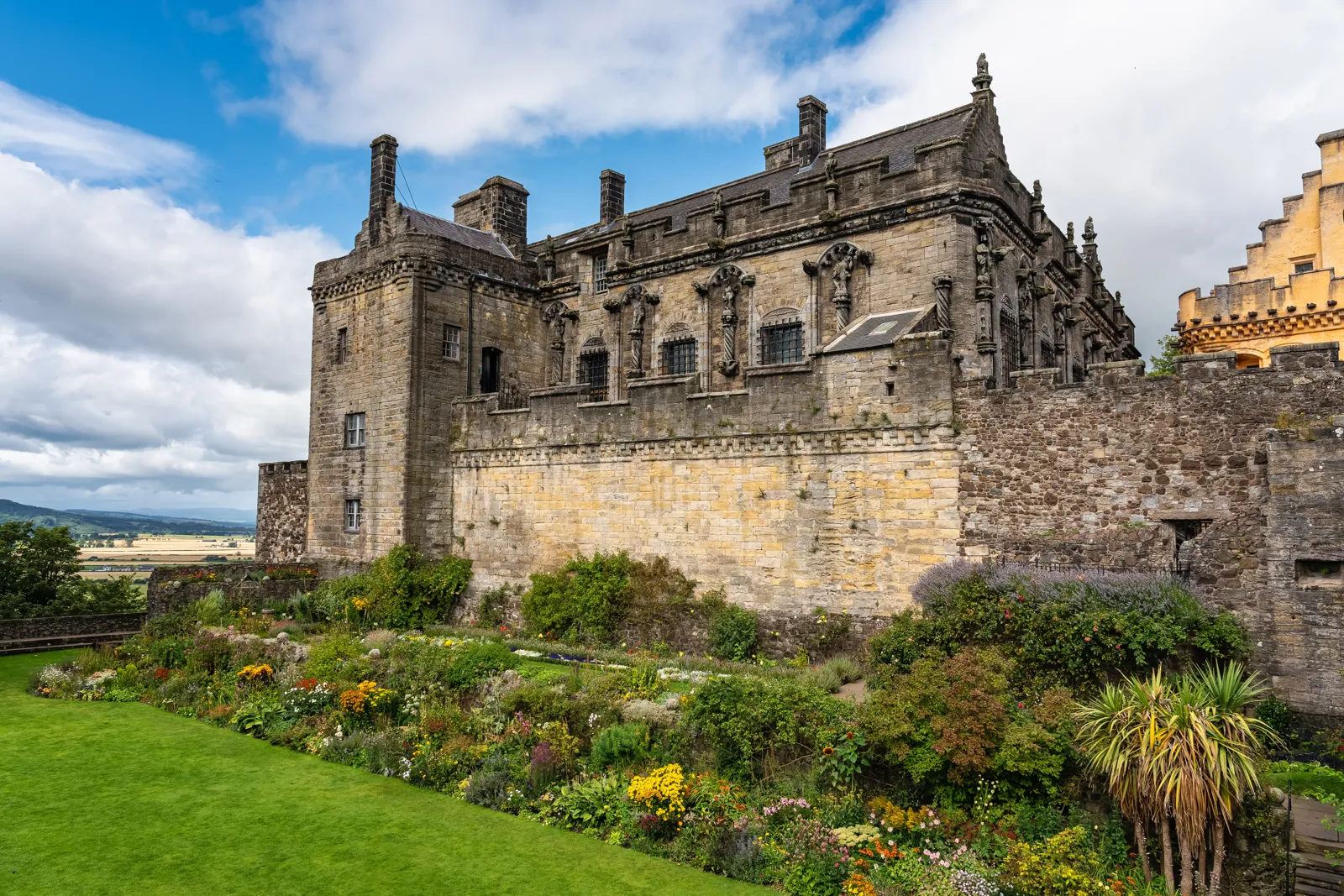
Nagoya, Japan’s fourth-largest city and the capital of Aichi Prefecture, lies on the Tokaido Shinkansen line between Tokyo and Kyoto: people stop here for its castle, Atsuta Shrine, which houses the sacred Kusanagi sword, the Tokugawa Art Museum, its miso-based cuisine and Ghibli Park. What to see in Nagoya, how long to stay, when to go and how to get in from Chubu airport: this Nagoya travel guide covers the essentials, with official sources.
Nagoya fits easily into a route between Tokyo, Kyoto and Osaka. See also our Japan travel guide and the best time to visit Japan.
Flights London → Nagoya
“From” fare provided by Kiwi.com (affiliate link), seen in recent searches; it varies with dates.

Our travel deals for Nagoya
Affiliate links: we earn a commission, at no extra cost to you.
 Learn the languageTargumiLearn a few words of Japanese before you go — 30% off via our link.See the course
- Airport transferKiwitaxiPrivate driver booked in advance at a fixed price.Book a transfer
- Tickets and toursTiqetsEntry tickets and guided tours to book online; compare with the official price.See tickets
- eSIMSailyAnother eSIM plan to compare: data, validity, network.See Saily plans




Nagoya at a glance
- Nagoya Castle 9:00 am–4:30 pm (last entry 4:00 pm), closed December 29 to January 1; the main keep is closed to visitors; admission fees changed on October 1, 2026 — checked on October 24, 2026 at nagoyajo.city.nagoya.jp
- Ghibli Park « Advanced reservations are required » — checked on October 24, 2026 at ghibli-park.jp
- Airport Chubu Centrair, on an artificial island; Meitetsu’s μSKY limited express requires a ¥450 « μticket » supplement on top of the fare — checked on October 24, 2026 at meitetsu.co.jp
- Time zone UTC+9, no daylight saving (details)
- Entry visa-free for up to 90 days for US and UK citizens, passport valid for the whole stay (travel.state.gov, GOV.UK)
- Climate average high of 33.2 °C (92 °F) in August, September is the wettest month, winters are dry and sunny (JMA 1991–2020)
What to see in Nagoya: the highlights
Nagoya Castle and Honmaru Palace
Built in 1612 by the Owari domain, the castle was partly destroyed by bombing in 1945; reconstruction and restoration have continued since 1957 (Wikipedia). The official website states that the main keep and some structures cannot be visited, as part of a project to rebuild the keep. The reconstructed Honmaru Palace is open (last entry 4:00 pm), and the website shows the waiting time to enter in real time. Hours: 9:00 am–4:30 pm, last entry 4:00 pm, closed December 29 to January 1. Access: Nagoyajo station (M07) on the Meijo subway line. The website notes that admission fees changed on October 1, 2026: see the current price list on the official page (checked on October 24, 2026 at nagoyajo.city.nagoya.jp).
Atsuta Shrine
Atsuta Shrine, a Shinto shrine, houses the sacred sword Kusanagi no Tsurugi, one of Japan’s three Imperial Regalia; it is traditionally ranked alongside Ise Shrine (Wikipedia). The sword itself is not on display. The shrine is in Atsuta Ward, south of the center.
Tokugawa Art Museum
Set on the former secondary residence of the Owari lords, this private museum holds the hereditary collection of the Owari branch of the Tokugawa clan: more than 12,000 items, including swords, armor, costumes and Noh masks, lacquerware, ceramics and paintings (Wikipedia). The most precious illustrated scrolls are shown only during temporary exhibitions: check the program.
Osu Kannon, Sakae and the TV tower
The Buddhist temple of Osu Kannon, founded in 1333 and moved to Nagoya in 1612 (Wikipedia), opens onto the Osu shopping district and its covered arcades. Farther northeast, Sakae is the lively center: shops, restaurants, the Nagoya TV Tower and the glass roof of Oasis 21, a bus terminal topped by a water-filled « Spaceship-Aqua. »
Industry and railway museums
Nagoya is an industrial city: the Toyota Commemorative Museum of Industry and Technology, near the station, and the SCMaglev and Railway Park, devoted to trains, are two popular visits on rainy days or with family (Wikipedia). The garden of the Noritake porcelain factory is also open to the public.
Ghibli Park
Ghibli Park is located in Aichi Prefecture. Its official website states that advance reservations are required (checked on October 24, 2026 at ghibli-park.jp): book your tickets before building your itinerary, and only on the official website or the channels it lists.
Nagoya food
« Nagoya meshi » is recognizable by its red miso: miso katsu (breaded pork with miso sauce), tebasaki (fried chicken wings), hitsumabushi (grilled eel on rice, eaten three ways) and kishimen (flat noodles). The restaurants around Nagoya Station let you try these specialties without a detour.
Booking tickets: official sites or resellers?
The castle, the museums and Ghibli Park sell tickets on their official websites. Resellers mainly offer guided tours or combined excursions: check what is included (admission, transportation), the meeting point and the cancellation terms, and for Ghibli Park, make sure the ticket is a genuine official ticket in your name.
Itinerary: Nagoya in one or two days
- Morning: Nagoya Castle and Honmaru Palace at opening time (9:00 am).
- Late morning: Atsuta Shrine.
- Midday: Osu Kannon and the Osu arcades, lunch there.
- Afternoon and evening: Sakae, Oasis 21 and the TV tower; dinner of local specialties near the station.
- Second day: Tokugawa Art Museum in the morning, then the Toyota museum or the SCMaglev and Railway Park, or a day at Ghibli Park (reservation required).
| If you… | Then… |
|---|---|
| Are traveling Tokyo–Kyoto by shinkansen | A one-day stop in Nagoya, with luggage in station lockers |
| Want to see Ghibli Park | Book the official ticket first, then fit your nights in Nagoya around it |
| Are traveling with children | The railway and Toyota museums, the port aquarium |
| Are coming in August | Sightseeing early in the morning and museums in the afternoon: 33.2 °C (92 °F) average high |
| Love food | Miso katsu, hitsumabushi, tebasaki: the station is the most convenient starting point |
| Are looking for a base | Nagoya is on the Tokaido Shinkansen line, between Tokyo and Kyoto |
When to go to Nagoya
Official 1991–2020 Japan Meteorological Agency (JMA) normals for Nagoya station, read on the JMA website, with our calculations of sunrise, sunset and day length.
| Month | Avg. max | Avg. min | Rain | Humidity (%) | Sunrise / sunset on the 15th | Day length | Verdict |
|---|---|---|---|---|---|---|---|
| January | 9.3 °C (49 °F) | 1.1 °C (34 °F) | 51 mm (2.0 in) | 64 | 7:00 am / 5:02 pm | 10 h 02 min | ✅ Cold but dry and sunny |
| February | 10.5 °C (51 °F) | 1.4 °C (35 °F) | 65 mm (2.6 in) | 60 | 6:39 am / 5:34 pm | 10 h 55 min | ✅ Dry, cold |
| March | 14.5 °C (58 °F) | 4.6 °C (40 °F) | 116 mm (4.6 in) | 58 | 6:04 am / 5:59 pm | 11 h 55 min | ✅ Mild, cherry blossoms possible in late March |
| April | 20.1 °C (68 °F) | 9.7 °C (49 °F) | 128 mm (5.0 in) | 59 | 5:21 am / 6:24 pm | 13 h 03 min | ✅ Mild, spring |
| May | 24.6 °C (76 °F) | 14.9 °C (59 °F) | 150 mm (5.9 in) | 64 | 4:49 am / 6:48 pm | 14 h 00 min | ✅ Pleasant |
| June | 27.6 °C (82 °F) | 19.4 °C (67 °F) | 186 mm (7.3 in) | 71 | 4:37 am / 7:08 pm | 14 h 31 min | ⚠️ Rainy season |
| July | 31.4 °C (89 °F) | 23.5 °C (74 °F) | 211 mm (8.3 in) | 73 | 4:48 am / 7:07 pm | 14 h 19 min | ⚠️ Hot and humid, wettest summer month |
| August | 33.2 °C (92 °F) | 24.7 °C (76 °F) | 140 mm (5.5 in) | 69 | 5:11 am / 6:41 pm | 13 h 30 min | ❌ Hottest month |
| September | 29.1 °C (84 °F) | 21.0 °C (70 °F) | 232 mm (9.1 in) | 70 | 5:34 am / 6:00 pm | 12 h 26 min | ⚠️ Wettest month, typhoons |
| October | 23.3 °C (74 °F) | 14.8 °C (59 °F) | 165 mm (6.5 in) | 68 | 5:57 am / 5:18 pm | 11 h 20 min | ✅ Mild, often clear skies |
| November | 17.3 °C (63 °F) | 8.6 °C (47 °F) | 79 mm (3.1 in) | 66 | 6:26 am / 4:46 pm | 10 h 20 min | ✅ Cool and dry |
| December | 11.7 °C (53 °F) | 3.4 °C (38 °F) | 57 mm (2.2 in) | 66 | 6:52 am / 4:41 pm | 9 h 48 min | ✅ Dry, sunny |
How to read it: the best times are spring (April–May) and autumn (October–November), with highs of 17–25 °C (63–77 °F). August is the hottest month (33.2 °C (92 °F) average high, 24.7 °C (76 °F) average low, so very warm nights), and humidity exceeds 70% in June, July and September. September is the wettest month (232 mm (9.1 in)), in the middle of typhoon season. Winter is cold but dry and bright: 5.6 hours of sunshine a day in January, more than in June (5.1 h), according to the JMA. Destination de Voyage calculation: the gap between the average high and low is largest in April (10.4 °C / 19 °F) and smallest in July (7.9 °C / 14 °F): summer nights stay warm.
To compare with Tokyo, Kyoto, Hokkaido or Okinawa, see the best time to visit Japan.
Getting there and getting around Nagoya
Airport transfer: from Chubu Centrair airport
Chubu Centrair International Airport (code NGO) is built on an artificial island in Tokoname, south of Nagoya (Wikipedia). Meitetsu trains link the airport to the city; on the μSKY limited express, a ¥450 « μticket » supplement is required on top of the regular fare (checked on October 24, 2026 at meitetsu.co.jp). The alternatives are the bus, a taxi or a pre-booked private transfer: compare the pickup point and how flight delays are handled.
In the city and to other cities
The Nagoya subway serves the castle (Meijo line, Nagoyajo station), Sakae and Osu. Nagoya Station is a stop on the Tokaido Shinkansen, which links it to Tokyo, Kyoto and Osaka. To compare rail passes with individual tickets, and for entry requirements, see our Japan travel guide.
Where to stay in Nagoya
The area around Nagoya Station is the most convenient for a one-night stop or shinkansen day trips. Sakae is better for going out in the evening, with direct subway access.
Entry requirements and safety
- US citizens: according to the U.S. Department of State (travel.state.gov, Japan page updated August 11, 2025), US citizens can make visa-free tourist or business stays of up to 90 days. Your passport must be valid for the entire stay, and you should have proof of a return or onward ticket.
- UK citizens: according to the FCDO (GOV.UK, updated 28 August 2026), British citizens get a visa on arrival for tourism or business for up to 90 days and do not need to apply before travel. Your passport must be valid for the length of your stay and have one blank page for the visa stamp.
- On arrival: all visitors are fingerprinted and photographed (U.S. Department of State).
- Food imports: it is illegal to bring meat products (sausages, bacon, ham) into Japan without permission from the Animal Quarantine Service (GOV.UK).
See also our Japan visa guide. On the safety side, Japan is exposed to many natural hazards (earthquakes, volcanic eruptions, landslides, typhoons, floods). Check your accommodation’s earthquake instructions when you arrive.
- Currency: Japanese yen; see our currency converter.
- Internet: an eSIM is the simplest solution; see our travel eSIM guide.
- Time difference: see our page on the time difference in Japan.
- Language: Before you leave, you can pick up some basic Japanese with Targumi’s online lessons, with 30% off via our link.
Frequently asked questions
How many days do you need in Nagoya?
One day is enough for the castle, Atsuta, Osu and Sakae; allow two days with the Tokugawa Art Museum and an industry museum, and one more day for Ghibli Park.
Is Nagoya Castle open?
Yes, from 9:00 am to 4:30 pm (last entry 4:00 pm), except December 29 to January 1; the main keep is closed during its reconstruction (official website, accessed October 24, 2026).
Do you need to book Ghibli Park?
Yes: the official website states that advance reservations are required.
What is the best month for Nagoya?
April–May and October–November; August is the hottest (33.2 °C (92 °F) average high) and September the wettest (JMA 1991–2020).
How do you get from Nagoya airport to the city center?
By Meitetsu train from Chubu Centrair airport; the μSKY requires a ¥450 μticket supplement. Otherwise, bus, taxi or pre-booked transfer.
What to eat in Nagoya?
Miso katsu, hitsumabushi, tebasaki and kishimen, the specialties of « Nagoya meshi. »
Our sources
- Entry, health and safety information read on 24 October 2026: U.S. Department of State, Japan country information (travel.state.gov, last updated August 11, 2025), and UK FCDO, foreign travel advice for Japan (GOV.UK, updated 28 August 2026)
- Nagoya Castle (nagoyajo.city.nagoya.jp): « Visitor Information » page and home page, accessed October 24, 2026
- Ghibli Park (ghibli-park.jp), accessed October 24, 2026
- Meitetsu (meitetsu.co.jp/eng): μSKY supplement, accessed October 24, 2026
- Japan Meteorological Agency: 1991–2020 normals for Nagoya station, accessed October 24, 2026
- Wikipedia (English): Nagoya, Nagoya Castle, Atsuta Shrine, Tokugawa Art Museum
- Astronomical calculations: NOAA solar algorithm applied by Destination de Voyage (15th of each month, year 2027)
- Our methodology
Updated October 2026.
Opening hours and prices may change: check the official websites before you go.