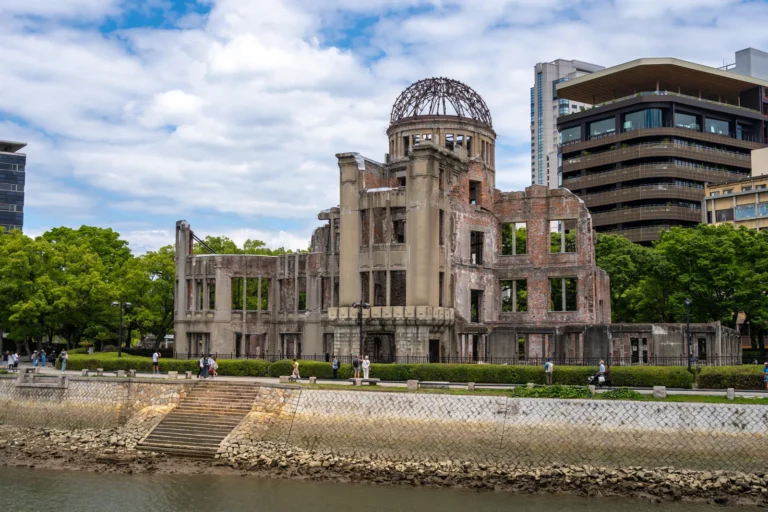
What is there to do in Osaka, and what can you see in a few days? This Osaka travel guide starts with the basics: Osaka is the big city of western Japan and one of the best bases for exploring the Kansai region, with Kyoto, Nara, Kobe and Himeji less than an hour to an hour and a half away by train. The city itself is known for its street food, neighborhoods that stay lively late into the night, and its castle. This guide helps you choose your area, sights and day trips for a stay of 2 to 5 days. A longer excursion from Osaka needs separate planning: our guide to visiting Hiroshima helps you choose between a day trip and an overnight stay.
Osaka at a glance
AirportsKansai International Airport (KIX), on an island in the bay, linked to the city center by train; Itami Airport for domestic flights
FlightsKansai International Airport is the main international gateway; you can also fly into Tokyo (Narita or Haneda) and continue to Osaka by Shinkansen
Ideal length2 to 3 days in the city, plus day trips around Kansai
Best timelate March to May and October–November
Time zoneUTC+9, no daylight saving: 9 hours ahead of London in winter (8 in summer), 14 hours ahead of New York in winter (13 in summer) (details)
EntryUS and UK citizens can visit visa-free for up to 90 days for tourism; check travel.state.gov or GOV.UK before you go
Currencythe yen; cards widely accepted
Electricity100 V, type A/B plugs (two flat pins); US plugs fit, UK travellers need an adapter
Budgetroughly ¥12,000–21,000 per person per day on a budget, ¥28,000–49,000 for a comfortable trip
Things to do in Osaka: the highlights
Dotonbori and Namba
The Dotonbori district, along a canal, is Osaka’s best-known image: giant illuminated signs, restaurants and stalls selling takoyaki (octopus balls) and okonomiyaki (a savory pancake cooked on a griddle). It comes alive mostly in the evening. Around it, Namba and the covered Shinsaibashi shopping arcade are lined with shops and restaurants. A short canal cruise lets you see the district from the water.
Osaka Castle
Surrounded by moats and high stone walls, Osaka Castle is linked to Toyotomi Hideyoshi, who unified Japan in the 16th century. The current keep is a modern reconstruction housing a museum on the castle’s history, with a view over the city from the top floor. The large park around it is one of locals’ favorite spots during the cherry and plum blossom season.
Shinsekai and Tsutenkaku Tower
South of the center, Shinsekai has kept a working-class, mid-20th-century atmosphere around Tsutenkaku Tower. It is the home of kushikatsu, breaded and deep-fried skewers. Nearby, the 300 m (984 ft) Abeno Harukas tower houses the Harukas 300 observatory (58th to 60th floors), with a panoramic view over the Osaka plain. Shitenno-ji temple, founded in 593 according to the temple itself, is one of the oldest in the country; its founding is attributed to Prince Shotoku.
Kuromon Market
Nicknamed « Osaka’s kitchen, » the covered Kuromon Market, near Nippombashi, is lined with fishmongers, fruit stands, grilled seafood and small counters. Come in the morning or late morning: many stalls close in the late afternoon. Prices are higher than in neighborhood markets, as it is very popular with visitors.
Umeda and the Umeda Sky Building
In the north, Umeda is the big business and shopping district around Osaka and Umeda stations. The Umeda Sky Building, two towers linked at the top, has an open-air observatory that is popular at sunset. Further south, Nakanoshima island, between two rivers, brings together museums, parks and early-20th-century buildings.
Sumiyoshi Taisha shrine
One of Japan’s oldest Shinto shrines, Sumiyoshi Taisha stands out for its distinctive architecture and its steeply arched red bridge. It is reached by a streetcar that runs through residential neighborhoods, a different way to see the city. It draws big crowds in the first days of January.
The bay: Kaiyukan Aquarium and Universal Studios Japan
In the port area, the Kaiyukan Aquarium is organized around the Pacific Ocean and its habitats; its large central tank is home to a whale shark, among others. The nearby Ferris wheel offers a view over the bay. On the other side of the water, Universal Studios Japan is one of Asia’s most visited theme parks: buy your tickets in advance and avoid weekends and Japanese holidays.
Day trips from Osaka
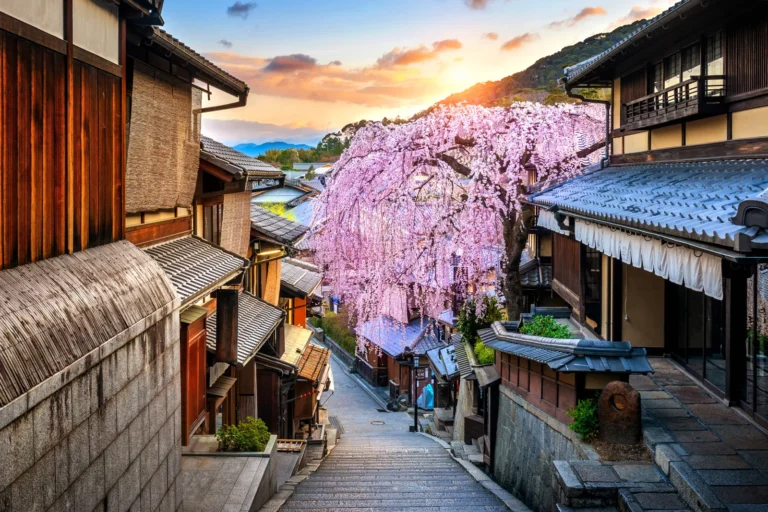
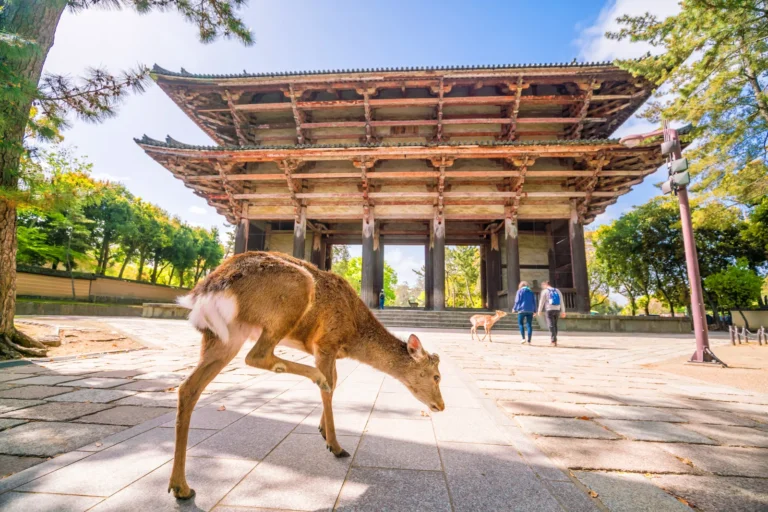
Kyoto is about half an hour away by train: its temples, gardens and Gion district can be visited on a day trip, even though the city deserves several days. Nara, less than an hour away, is home to Todai-ji and its great bronze Buddha, as well as free-roaming deer in its park. Himeji has Japan’s most famous original castle, white and a UNESCO World Heritage Site; the Shinkansen gets you there quickly. Kobe, between sea and mountains, is known for its beef and its Chinatown. Mount Koya (Koyasan), the center of Shingon Buddhism, is ideal for a night in a temple.
Osaka’s neighborhoods
Namba and Shinsaibashi (Minami): the lively heart, at the foot of Dotonbori; direct train to Kansai Airport from Namba
Umeda (Kita): big hotels, JR and private railway stations, convenient for Kyoto, Kobe and Himeji
Shin-Osaka: the Shinkansen station, ideal for a short stopover or lots of train travel
Tennoji: moderate prices, direct JR train to the airport, close to Shinsekai
Hommachi and Yodoyabashi: quiet business districts between Umeda and Namba, well served by the subway
Bay area: for families spending several days at Universal Studios Japan
Itinerary: 2 to 5 days in Osaka
Day 1: Osaka Castle and its park in the morning, Nakanoshima, then the Umeda Sky Building at sunset
Day 2: Kuromon Market, Shinsekai and Tsutenkaku, Abeno Harukas or Shitenno-ji; in the evening, Dotonbori and Namba
Day 3: day trip to Nara (Todai-ji, deer park)
Day 4: Kyoto for the day, or Himeji and Kobe
Day 5: Sumiyoshi Taisha and the bay (Kaiyukan Aquarium), or a day at Universal Studios Japan
Osaka in 2 days: focus on the castle, Dotonbori, Kuromon and Shinsekai (days 1 and 2 above). Osaka in 3 days: add a day trip to Nara or Kyoto. Osaka is often the last stop on a trip that starts in Tokyo: booking an open-jaw ticket into Tokyo and out of Kansai saves you from backtracking. Starting in Tokyo and ending in Osaka means choosing carefully when to go to Tokyo, especially for cherry blossoms or autumn leaves.
Where to stay in Osaka
For a first visit, Namba and Shinsaibashi put the nightlife and street food on your doorstep, with a direct train to Kansai Airport. Umeda suits you better if you take many day trips to Kyoto, Kobe or Himeji. Shin-Osaka is handy for a Shinkansen stopover but less lively in the evening. Our guide to Nara, Japan’s ancient capital covers that day trip in detail.
As in Tokyo, rooms are often small: check the floor area listed. Options range from hostels and capsule hotels to functional business hotels and large upscale hotels. A local accommodation tax is usually added to the room rate. Osaka is often a little cheaper than Kyoto for a comparable level of comfort.
Getting around Osaka
Subway and trains: the Osaka Metro (led by the Midosuji Line, between Umeda, Namba and Tennoji) and the JR Osaka Loop Line cover most of the city. Signs are also in English.
Transit cards: a rechargeable IC card (ICOCA, or Suica and Pasmo) works on trains, subways, buses and in many shops.
From Kansai Airport: Nankai trains (including the Rapi:t) run to Namba; the JR Haruka serves Tennoji, Shin-Osaka and Kyoto. Buses also serve the main districts.
Shinkansen: high-speed trains leave Shin-Osaka for Tokyo, Himeji, Hiroshima and Fukuoka. The Japan Rail Pass only pays off on certain itineraries: compare it with single tickets.
To Kyoto, Nara and Kobe: private railways (Hankyu, Keihan, Kintetsu, Hanshin) are often cheaper than JR.
Taxis: clean and safe but expensive; useful at night, when trains stop around midnight.
When to go to Osaka
✓ Ideal~ Good, with caveats✕ AvoidAverage max. temperature · click a month to see where to go
Jan10°C/49°F
Feb11°C/51°F
Mar14°C/58°F
Apr20°C/68°F
May25°C/77°F
Jun28°C/82°F
Jul32°C/89°F
Aug34°C/93°F
Sep30°C/85°F
Oct24°C/75°F
Nov18°C/64°F
Dec12°C/54°F
✅ Best months: January, February, March, April, may, October, November, December
❌ Period to avoid: August
The best times are late March to May and October to late November: 14 to 25 °C (57 to 77 °F) in the afternoon according to JMA normals, with cherry blossoms in early April and autumn leaves in November. Winter is cool but dry and inexpensive; June is the wettest month, and July–August are very hot and humid. For month-by-month weather and events, see the best time to visit Osaka.
Budget for a trip to Osaka
Osaka is known for its cheap food: you can eat well for little, and accommodation is often a little cheaper than in Tokyo or Kyoto. Indicative amounts per person per day, excluding flights (converted at roughly €1 = ¥175, October 2026):
Item
Budget
Comfort
Accommodation (sharing a double room)
roughly ¥5,000–9,500
roughly ¥14,000–26,000
Meals
roughly ¥3,500–6,000
roughly ¥8,000–14,000
Local transportation
roughly ¥1,000–2,000
roughly ¥2,000–3,500
Sights and activities
roughly ¥2,000–3,500
roughly ¥4,500–7,000
Total per day
roughly ¥12,000–21,000
roughly ¥28,000–49,000
Indicative estimates that vary with the season and the yen exchange rate. Accommodation prices peak during cherry blossom season, Golden Week, Obon and New Year. A day at Universal Studios Japan is a separate expense.
To keep costs down: try the street food (takoyaki, okonomiyaki, kushikatsu), set lunches and the ready-meal sections of convenience stores (konbini), and use private railways rather than JR lines for day trips.
Entry requirements, health and safety
US citizens: according to the U.S. Department of State (travel.state.gov, page updated August 11, 2025), visa-free tourist or business stays of up to 90 days; your passport must be valid for the entire stay and you should have proof of a return or onward ticket.
UK citizens: according to GOV.UK (updated 28 August 2026), British citizens get a visa on arrival for tourism or business for up to 90 days, with no need to apply before travel; your passport must be valid for the length of your stay, with one blank page for the visa stamp.
On arrival: all visitors are fingerprinted and photographed (U.S. Department of State). Bringing in meat products (sausages, bacon, ham) without permission from the Animal Quarantine Service is illegal (GOV.UK).
Health: check vaccine recommendations at least 8 weeks before your trip (GOV.UK). Carry prescription medication in its original packaging with your doctor’s prescription (U.S. Department of State); the UK FCDO warns that some common medicines, including cold medication containing pseudoephedrine, are illegal in Japan (GOV.UK).
Safety: according to the U.S. Department of State, crime against US citizens in Japan is low, but pickpocketing can occur in crowded areas; both the U.S. and UK governments advise against following street touts into bars in the evening.
Earthquakes and typhoons: Japan is a highly active seismic zone, and typhoons can hit the region from summer to autumn. Check your hotel’s evacuation instructions and follow the authorities’ guidance.
Wildlife: be alert to bears: according to the UK FCDO (GOV.UK, updated 28 August 2026), bear sightings and attacks have increased in parts of Japan, especially in mountainous and forested areas; follow local guidance if you go hiking.
Practical tips for Osaka
Money: cards are accepted in most hotels, stores and chains, but Japan is still largely cash-based and some foreign cards are not accepted; 7-Eleven and Japan Post ATMs accept some foreign cards (GOV.UK). Keep cash for stalls and small restaurants.
Internet: a data SIM or eSIM, or a pocket Wi-Fi router, makes maps and train times easier to use.
Escalators: in Osaka, people usually stand on the right, unlike in Tokyo.
Etiquette: don’t talk loudly on the phone on trains, and line up on the platforms. Eating while walking is more tolerated in Dotonbori or Kuromon than elsewhere, but stay near the stall.
Tipping: it is not customary in Japan.
Luggage: luggage delivery services from hotel to hotel or to the airport let you travel light.
Who is Osaka for?
Food lovers: yes, it is the city’s reputation: takoyaki, okonomiyaki and kushikatsu in Dotonbori, Shinsekai and Kuromon Market.
Families: yes: Kaiyukan Aquarium, Universal Studios Japan and a bay area recommended for families spending several days there.
Nightlife: yes: Dotonbori and Namba stay lively late, with night views from the Umeda Sky Building and Abeno Harukas.
Culture: yes, combining the city and day trips: Osaka Castle, Shitenno-ji, Sumiyoshi Taisha, then Kyoto, Nara and Himeji less than an hour and a half away by train.
Budget travel: fairly good for Japan: roughly ¥12,000–21,000 per day, cheap food and accommodation often a little cheaper than in Tokyo or Kyoto.
Two days are enough for the castle, Dotonbori, Kuromon, Shinsekai and Umeda. Allow four to five days to add day trips to Nara, Kyoto, Himeji or Kobe.
Which area should you stay in in Osaka?
Namba or Shinsaibashi for the atmosphere and direct access to Kansai Airport; Umeda if you take many day trips by train; Shin-Osaka for a short Shinkansen stopover.
What to do in Osaka at night?
Dotonbori and Namba stay lively until late, with illuminated signs along the canal and street food. For a night view, go up the Umeda Sky Building or the Harukas 300 observatory in the Abeno Harukas tower.
What to see in Osaka in 2 days?
Osaka Castle and Umeda on the first day, then Kuromon Market, Shinsekai and Tsutenkaku Tower on the second, with Dotonbori and Namba in the evening.
How do you get from Kansai Airport to central Osaka?
Take the Nankai train to Namba, or the JR Haruka to Tennoji and Shin-Osaka. Buses also serve the main districts and hotels.
Is it better to stay in Osaka or Kyoto?
Osaka offers a wider choice of hotels, often cheaper, and lively nightlife; Kyoto is about half an hour away by train. Kyoto is the better choice if you want to enjoy the temples early in the morning and in the evening.
Which airport should you fly into for Osaka?
Kansai International Airport (KIX) is Osaka’s international gateway. You can also fly into Tokyo (Narita or Haneda) and continue by Shinkansen; check current routes when you book.
Our sources
Entry, health and safety information read on 24 October 2026: U.S. Department of State, Japan country information (travel.state.gov, last updated August 11, 2025), and UK FCDO, foreign travel advice for Japan (GOV.UK, updated 28 August 2026)
Osaka climate normals: 1991–2020 normals for the Osaka station, Japan Meteorological Agency (JMA)
Official websites of Abeno Harukas / Harukas 300 (height, observatory floors) and Shitenno-ji temple (history), accessed October 2026
Transparency: this page contains affiliate links, labelled as such. If you book through them we may earn a commission at no extra cost to you; it does not influence our content or recommendations. How we fund the site.


 When to go
 Hanami
 Hiroshima
 HokkaidoeSIM
 Time difference
 Kyoto
 MapNagoya
 Nara
 Okinawa
 Tokyo
 Mount Fuji
 Souvenirs