Visiting Mount Fuji starts with a choice: look at it or climb it. The summit (3,776 m / 12,388 ft) can only be climbed during a short summer season set each year by the authorities; the rest of the year the trails are closed and the volcano is admired from its lakes, viewpoints or the train. This page brings together the official climbing rules, the 2026 season dates, the summit sunrise time calculated for each month of the season and our tips for seeing the mountain. To plan the rest of your trip, see our Japan travel guide.
Key facts: climbing Mount Fuji
2026 climbing season: July 1 to September 10 (Yoshida and Subashiri trails); July 10 to September 10 (Fujinomiya and Gotemba).
Status on 15 October 2026: the 2026 season is over and all trails are closed until next season (expected « early July to early September », with official dates announced before opening).
Hiking Fee: ¥4,000 per person, the same on all four trails.
Reservation / registration: mandatory online (this is not a mountain hut booking).
No entry to the trail from 2 pm to 3 am, except for people with a mountain hut reservation.
Duration: a 2-day / 1-night climb is recommended (the official gear list is written for « 1 night, 2 days »).
Mount Fuji is not a ticketed attraction: it is a volcano inside a national park, so there is no « Fuji ticket » in the sense of a monument. Two very different experiences coexist:
The climb, possible only during the official season and subject to a hiking fee, online registration and entry hours. The official website points out that the elevation gain from the starting point (5th Station) to the summit is well over 1,000 m (3,281 ft) and that it is « not a mountain that anyone can climb easily ».
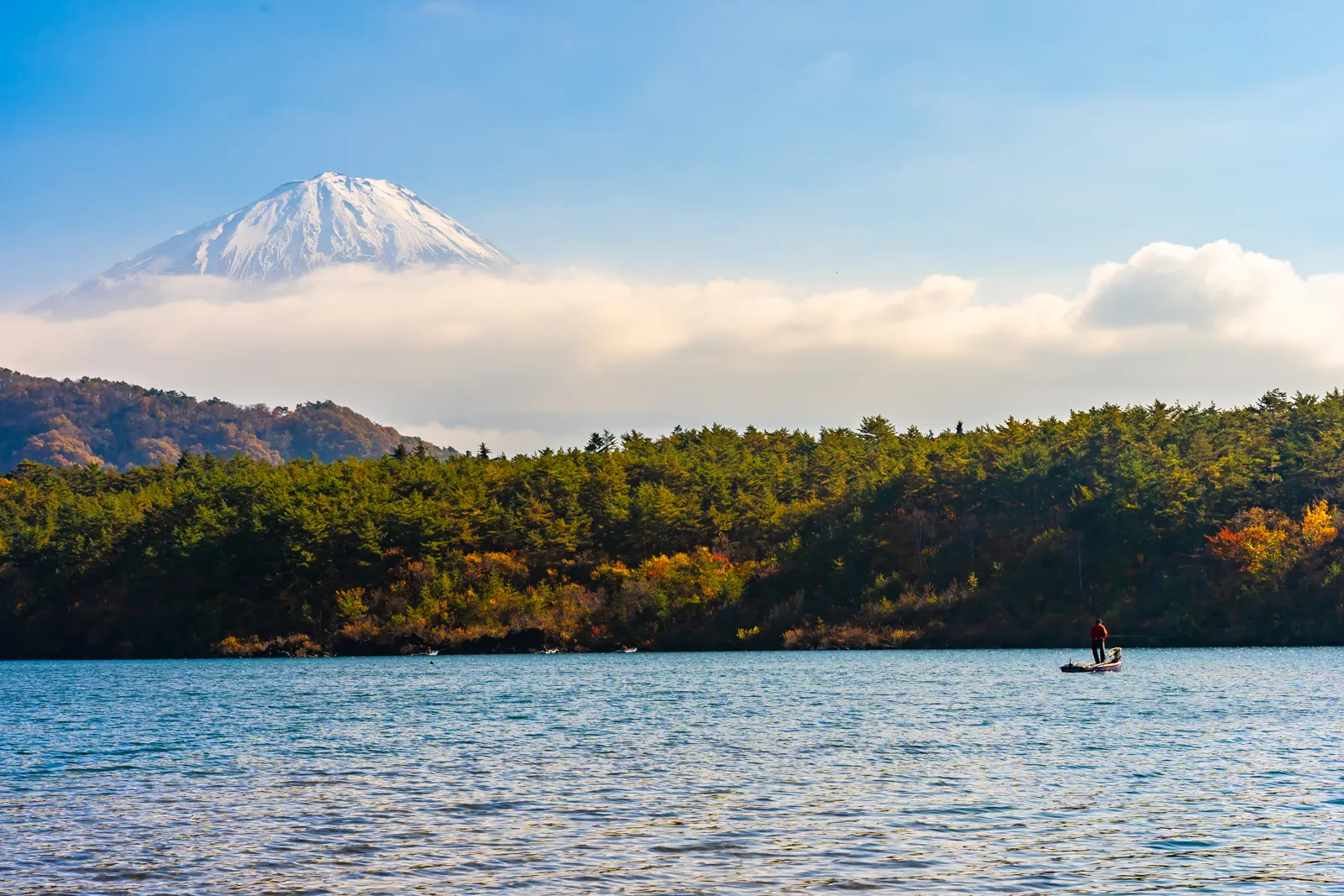
The view, possible all year round from the Fuji Five Lakes area, Hakone or trains leaving Tokyo. It needs no ticket or booking but depends entirely on the weather: the summit is often hidden by clouds.
Tickets and hiking fee: official vs resellers
The only mandatory payment to climb Fuji is the ¥4,000 Hiking Fee, the same on all four trails. It is paid when you register online, through the official systems listed on the climbing website: the Yoshida Trail reservation system (Yamanashi Prefecture) and the « FUJI NAVI » app for the three trails in Shizuoka Prefecture (Fujinomiya, Gotemba, Subashiri).
The fee does not include a mountain hut or transport to the 5th Station. Agencies selling « climbing packages » charge for a service (bus, guide, hut): that is not an official entry fee. Be wary of websites that suggest you must go through them to get permission: registration is done on the official systems. When the trails have been closed (road or buses suspended), the prefectures have already issued automatic refunds, for example on September 9 and 10, 2026, according to the published notices.
Opening dates and hours
Trail
Prefecture
2026 season
Official note
Yoshida
Yamanashi
July 1 – September 10
Descent possible until the morning of September 11
Subashiri
Shizuoka
July 1 – September 10
—
Fujinomiya
Shizuoka
July 10 – September 10
5th–6th Station section open from late June to early November
Gotemba
Shizuoka
July 10 – September 10
—
Crater walk (Ohachimeguri)
Summit
July 10 – September 10
Closed July 1–10, 2026
Source: fujisan-climb.jp, « Season » and « Things to know before climbing » pages, read on 15 October 2026.
Outside the season, the official website is explicit: all trails to the summit are closed, mountain huts and first-aid stations are shut, mobile coverage is limited and strong northwesterly winds make the climb « extremely dangerous ». The site also notes that crowds build from mid-July and peak on weekends and during Obon (mid-August): aim for a weekday.
Best time to see or climb Mount Fuji
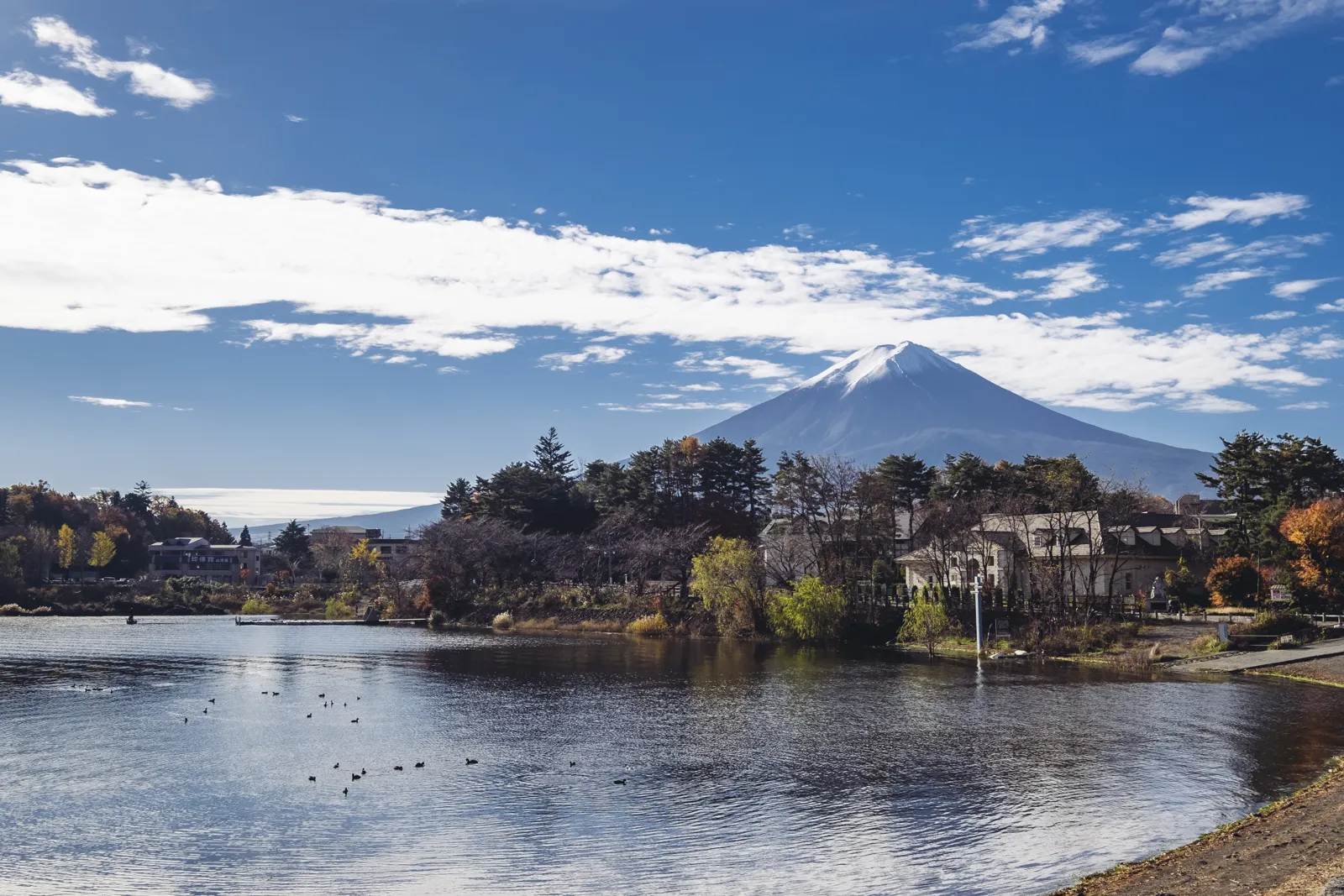
Fuji from Lake Kawaguchi in autumn.
To climb: only during the season, ideally on a weekday, avoiding weekends and Obon. Most climbers want to watch the sunrise from the summit (goraikō). Here is the sunrise time calculated for the summit during the season:
Date
Sunrise
Sunset
July 1
04:33
19:04
July 10
04:38
19:02
July 20
04:44
18:58
August 1
04:53
18:49
August 15
05:04
18:34
August 25
05:12
18:22
September 1
05:17
18:12
September 10
05:24
18:00
Destination de Voyage calculation (NOAA solar algorithm, Japan time, approximate summit coordinates). Calculated for a sea-level horizon: from 3,776 m (12,388 ft), the sun appears a few minutes earlier.
In practice, you need to be at the summit around 4:30–5:00 am in July and around 5:00–5:15 am in early September. The official website warns that before dawn the temperature at the summit can drop close to 0 °C (32 °F), even in summer, and that the longer you wait, the higher the risk of hypothermia: arrive just in time rather than too early.
To admire: winter is generally the driest season around Tokyo, which improves the chances of clear skies. According to the Japan Meteorological Agency’s 1991–2020 normals (Tokyo station), published on our page on the best time to visit Japan, about 60 mm (2.4 in) of rain falls in January, 57 mm (2.2 in) in February and 58 mm (2.3 in) in December, against 156 to 235 mm (6.1 to 9.3 in) from July to October. This is not a measure of visibility at Fuji itself, but a good indication of the dry season on the Kantō plain. Early in the morning, the air is often clearer than in the middle of the day.
How long to spend and suggested plan
Climb: 2 days / 1 night, with a night in a mountain hut booked in advance, then a final ascent before dawn and the descent in the morning. The official website provides a mandatory gear list: over-the-ankle hiking boots, rain jacket and rain pants, warm clothing (fleece, down jacket, gloves), headlamp and batteries, 1 to 2 liters of water, trash bags, and cash including ¥100 coins for huts and toilets.
Day trip to see the mountain: a round trip from Tokyo to the Fuji Five Lakes area or Hakone, with several viewpoints. Leave some margin: if the summit is hidden in the morning it may clear later (or the other way round).
Combined: spending a night in the area gives you two sunrises and doubles your chances of seeing the volcano.
Choosing your trail
All four trails start from a 5th Station, but they are reached differently. The official website explains that they differ in distance, elevation gain, scenery, crowds and number of huts, and that each has a color code (signs and maps) to avoid taking the wrong trail on the way down, a common mistake. Yoshida (Yamanashi side) is the busiest; Fujinomiya starts highest; Gotemba is the longest. Also check the private car restrictions on the access roads (Fuji-Subaru Line, Fuji Skyline, Fuji-azami Line), published every season: in summer, you often go up by bus.
Getting there
For each trail, the official website links to its access options, which change with the season (shuttles, car restrictions). From Tokyo, the Yoshida 5th Station and the Fuji Five Lakes area are reached by bus or train; Fujinomiya is usually reached via Shin-Fuji or Mishima station. Check the year’s timetables before booking your hut: missing the last bus means waiting until the next day, and entry to the trail is banned from 2 pm to 3 am without a hut reservation.
Accessibility
The climb is not accessible to people with reduced mobility: volcanic terrain, gravel slopes and more than 1,000 m (3,281 ft) of elevation gain. The 5th Stations, reachable by bus, and the lakeside viewpoints do, however, let you see the volcano without effort. For specific needs, ask the 5th Station information centers listed on the official website.
Common mistakes (based on the official rules)
Going outside the season: trails closed, no rescue services on site.
Showing up without registering or paying the hiking fee.
Arriving at the trailhead after 2 pm without a hut reservation: entry is refused until 3 am.
Climbing in sneakers without warm clothes: staff may check your gear.
Waiting too long in the cold at the summit before dawn.
Taking the wrong trail on the way down: follow your trail’s color.
Forgetting cash: huts and pay toilets often only take cash.
Only during the official summer season. In 2026, from July 1 to September 10 for the Yoshida and Subashiri trails, and from July 10 to September 10 for Fujinomiya and Gotemba. Outside the season, all trails to the summit are closed.
How much does it cost to climb Mount Fuji?
The official Hiking Fee is ¥4,000 per person, paid when you register online. Mountain huts and transport are extra.
Do you need a reservation to climb Fuji?
Yes: online registration is required on the official systems (the Yoshida system on one side, the FUJI NAVI app for the Shizuoka trails). It is not a mountain hut booking, which must be made separately.
What is the best season to see Mount Fuji?
Winter, which is drier around Tokyo (about 57 to 60 mm, or 2.2 to 2.4 in, of rain a month from December to February according to the JMA normals for Tokyo), generally offers better chances of clear skies than summer.
What time is sunrise at the summit of Fuji?
According to our NOAA-based calculation, around 4:30 to 4:40 am in July and around 5:10 to 5:20 am in early September (Japan time), a few minutes earlier at the summit because of the altitude.
Our sources
Official Mount Fuji climbing website (fujisan-climb.jp, Council for the Promotion of Appropriate Use of Mt. Fuji: Ministry of the Environment, Yamanashi and Shizuoka prefectures): « Season » and « Things to know before climbing » pages and official notices, consulted on 15 October 2026.
Japan Meteorological Agency (JMA): 1991–2020 normals for Tokyo, taken from our page on the best time to visit Japan.
Destination de Voyage calculation: sunrise and sunset (NOAA algorithm).
Transparency: this page contains affiliate links, labelled as such. If you book through them we may earn a commission at no extra cost to you; it does not influence our content or recommendations. How we fund the site.