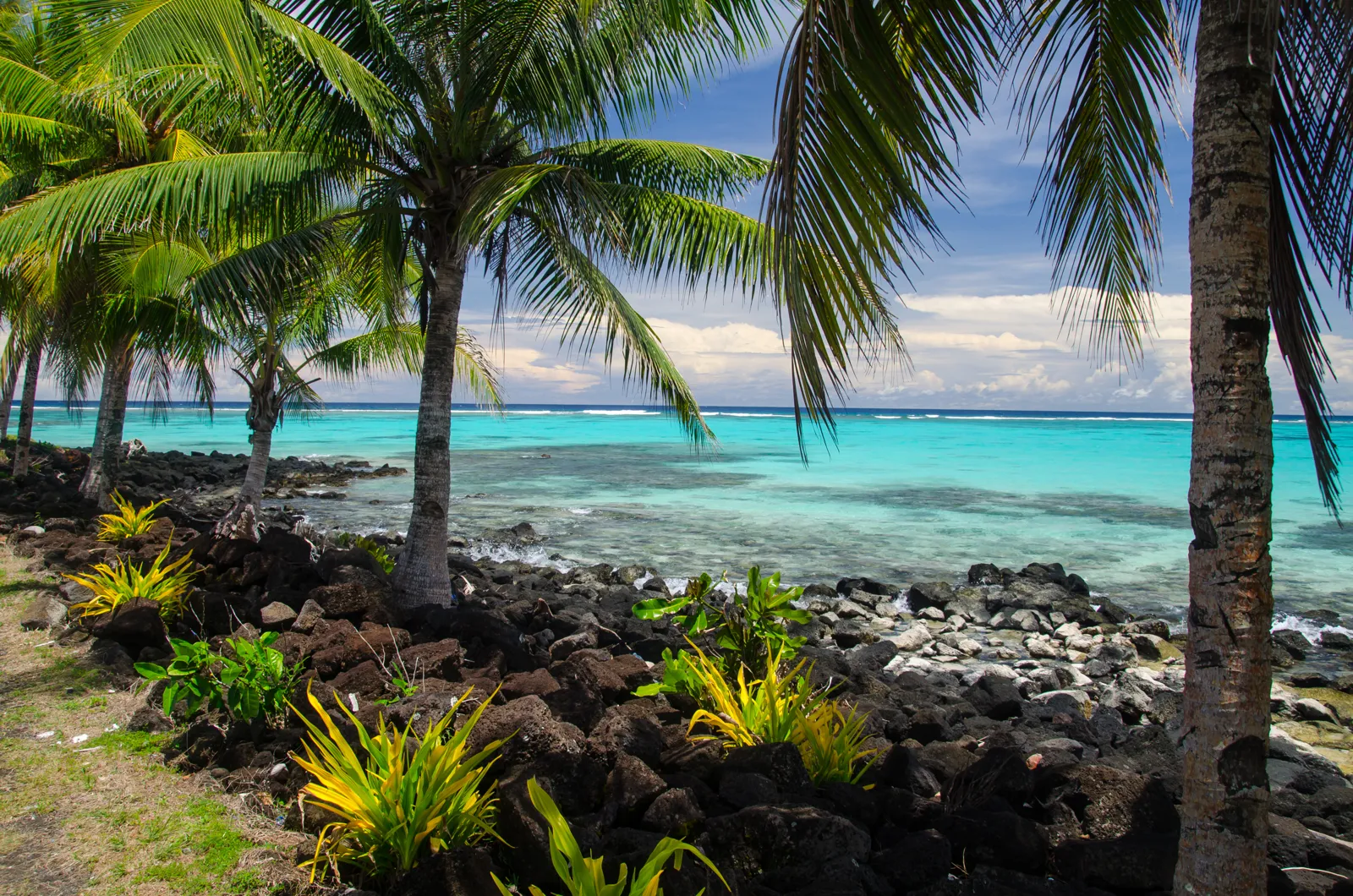
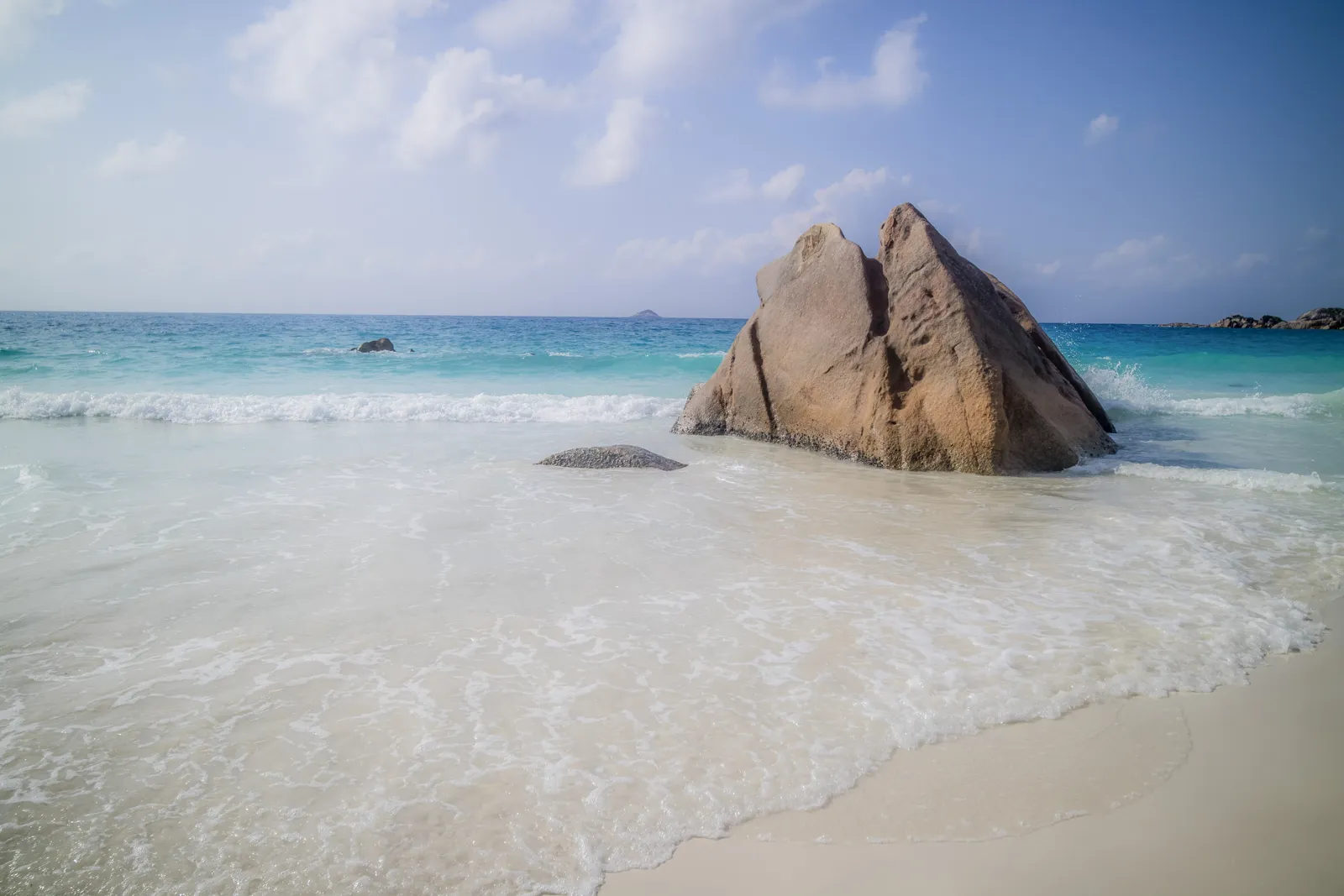
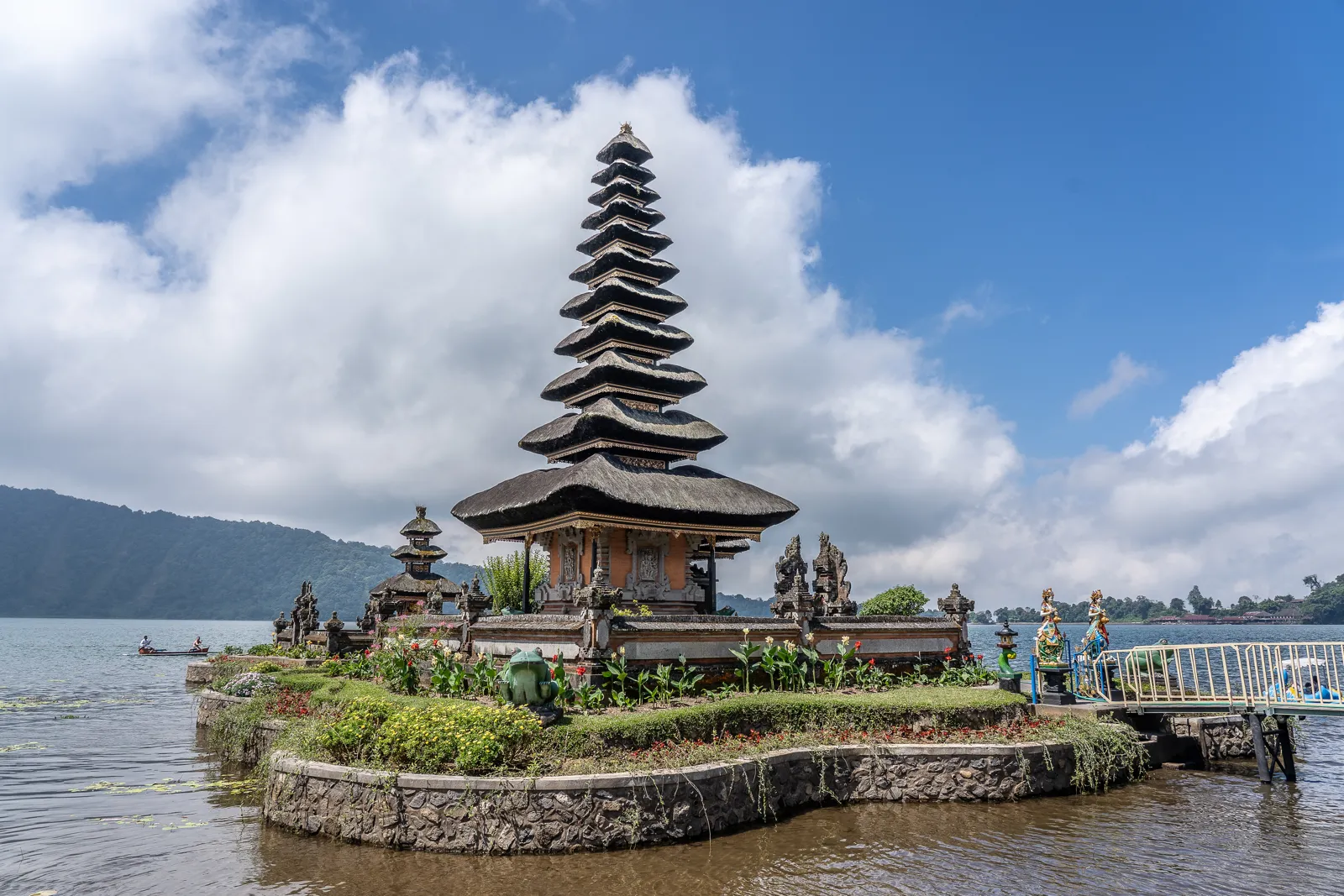
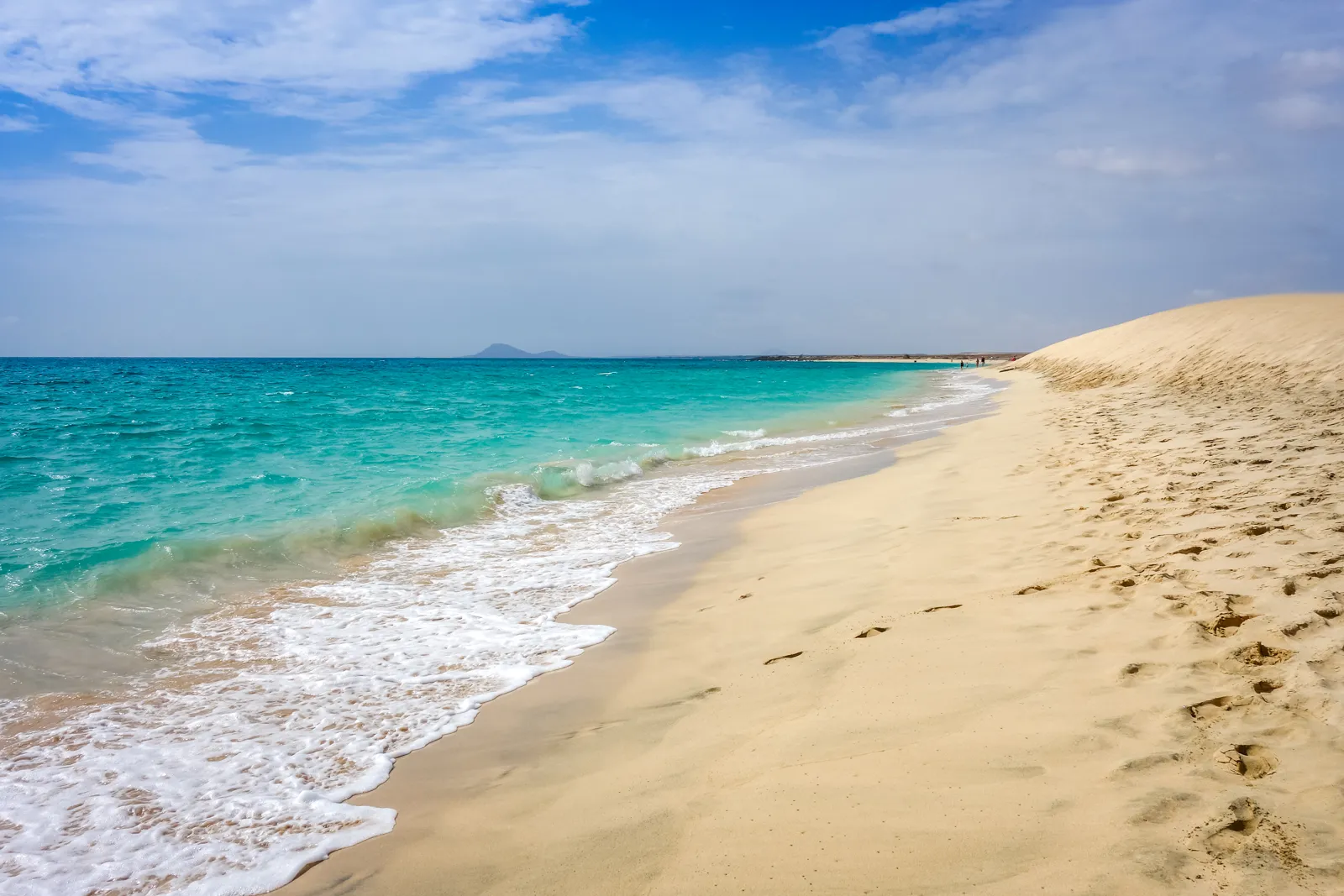
Vanuatu is an archipelago of 83 volcanic islands in the South Pacific, about 540 km (336 mi) north-northeast of New Caledonia. This Vanuatu travel guide covers what brings visitors here: active volcanoes, including Mount Yasur on Tanna, lagoons, wrecks and Melanesian culture. The best time to go is May to October, outside the cyclone season.
It brings together the islands worth knowing, entry requirements and safety advice checked on 24 October 2026 against the U.S. Department of State (travel.state.gov, last updated October 15, 2026) and the UK FCDO (GOV.UK, updated 19 March 2026), official climate normals for Port Vila, and a calculation we have not found elsewhere: the number of rainy days to expect in a week, month by month.
Time zoneUTC+11 (11 hours ahead of London in winter, 16 hours ahead of New York in winter)
AirportsPort Vila Bauerfield International Airport (Efate) · detailsCheck current routes with the airlines
EntryUS: no visa for up to 30 days; UK: check with Vanuatu immigration · travel.state.gov · GOV.UK
Electricitycheck voltage and plug type with your accommodation · plugs
Best timeMay to October
When to go to Vanuatu
Go from May to October. This is the driest and coolest season: in Port Vila, about 87 to 94 mm (3.4 to 3.7 in) of rain falls per month from July to September, compared with 274 to 321 mm (10.8 to 12.6 in) from January to March, and lows drop to 18.0 °C (64 °F). According to the U.S. Department of State (travel.state.gov, last updated October 15, 2026), the cyclone season usually lasts from November to April; the UK FCDO (GOV.UK, updated 19 March 2026) says it normally runs from November to May and that cyclones can happen throughout the year. If you travel then, follow the bulletins of the Vanuatu Meteorology and Geo-Hazards Department and take out suitable insurance.
Month
High °C (°F)
Low °C (°F)
Rain mm (in)
Rainy days
Rainy days per 7 days
Sunshine / day
Cyclone season
Verdict
January
31.3 (88)
22.5 (72)
316.1 (12.4)
15.4
3.5
7.1 h
Yes
❌ Heavy rain, cyclones possible
February
31.2 (88)
23.0 (73)
273.7 (10.8)
16.6
4.2
5.5 h
Yes
❌ Heavy rain, cyclones possible
March
30.8 (87)
22.6 (73)
320.9 (12.6)
18.5
4.2
6.4 h
Yes
❌ Wettest month, cyclones possible
April
29.9 (86)
22.0 (72)
255.2 (10.0)
17.1
4.0
5.5 h
Yes
⚠️ End of the cyclone season
May
28.8 (84)
20.2 (68)
210.3 (8.3)
12.9
2.9
5.5 h
No
✅ Rain decreasing
June
27.4 (81)
19.8 (68)
180.0 (7.1)
11.3
2.6
5.4 h
No
✅ Drier and cooler
July
26.4 (80)
18.2 (65)
94.4 (3.7)
10.3
2.3
4.8 h
No
✅ Dry, cool nights
August
27.0 (81)
18.0 (64)
87.4 (3.4)
9.8
2.2
5.4 h
No
✅ Dry
September
27.7 (82)
18.4 (65)
87.3 (3.4)
8.1
1.9
5.8 h
No
✅ Driest month
October
28.5 (83)
19.6 (67)
134.1 (5.3)
8.4
1.9
6.4 h
No
✅ Dry, heat building
November
29.2 (85)
20.7 (69)
192.3 (7.6)
12.1
2.8
6.0 h
Yes
⚠️ Start of the cyclone season
December
30.7 (87)
21.7 (71)
187.2 (7.4)
13.2
3.0
6.3 h
Yes
⚠️ Hot, more rain, cyclones possible
1961-1990 normals for Port Vila (Bauerfield International Airport, Efate), Deutscher Wetterdienst, via the Wikipedia climate box (article « Port Vila »). Rainy days: ≥ 1 mm (0.04 in). Sunshine per day: Destination de Voyage calculation. Rainy days per 7 days: rainy days in the month × 7 / number of days in the month (Destination de Voyage calculation). Cyclone season: November to April according to the U.S. Department of State (travel.state.gov, last updated October 15, 2026); the UK FCDO gives November to May.
These normals date from 1961-1990: they are the most recent ones for Port Vila we have found from an official body. They give a good idea of the seasonal rhythm, but not of recent changes.
A week in Vanuatu: how many rainy days?
In September, the most favorable month, expect about 1.9 rainy days out of 7 in Port Vila.
In March, at the heart of the wet season, more than 4 days out of 7.
Sunshine is present all year: 4.8 to 7.1 hours a day on average.
In practice: aim for May to October for volcano hikes and boat crossings; the wet season still works for diving, as long as you keep an eye on cyclone alerts.
Things to do in Vanuatu: the highlights
Efate and Port Vila
Efate, the country’s third-largest island, is home to the capital, Port Vila, and the international airport. It is the base for most stays: market, waterfront, lagoons and boat trips. According to the UK FCDO (GOV.UK, updated 19 March 2026), a significant earthquake hit Port Vila on 17 December 2024: some areas remain closed for safety reasons and some hotels and tourism operators are temporarily closed, so confirm your bookings.
Tanna and Mount Yasur
Tanna is known for Mount Yasur, one of the most active volcanoes in the archipelago. According to the UK FCDO (GOV.UK, updated 19 March 2026), volcano alert levels can change unexpectedly and you may not be able to reach an island if a volcano is active: follow the instructions of local guides and check the current alert level with the Vanuatu Meteorology and Geo-Hazards Department (VMGD) before you go.
Espiritu Santo and Luganville
The country’s largest island (3,956 km², or 1,527 sq mi), Espiritu Santo served as an American base during the Second World War. At the end of the war, some of the equipment was dumped into the sea at a place now called Million Dollar Point. Luganville is the main town.
Malekula
The country’s second-largest island, Malekula is one of the oldest geologically. It is best explored as an adventure trip, with limited infrastructure.
Pentecost
Pentecost Island is the only one whose name given by Bougainville has survived. The word « Vanuatu », meaning « the land that stands up », comes from Hano, the language spoken on this island.
Ambrym
Ambrym is home to the Marum and Benbow volcanoes. In December 2018, the draining of its caldera lifted the island’s east coast by more than two meters (6.6 ft). According to the U.S. Department of State (travel.state.gov, last updated October 15, 2026), parts of Ambrym, and all of Ambae, have been permanently evacuated because of volcanic activity: avoid these areas and any others under evacuation orders.
Itinerary ideas for Vanuatu
10 days: Efate (Port Vila and lagoons, 4 days), Tanna and Mount Yasur (3 days), back to Efate.
2 weeks: Efate (4 days), Tanna (3 days), Espiritu Santo and Luganville (5 days), back to Port Vila.
Domestic flights and inter-island boats depend on the weather: keep a spare day before your international flight.
Getting around Vanuatu
Flights: Port Vila Bauerfield International Airport, on Efate, is the main gateway. According to the UK FCDO (GOV.UK, updated 19 March 2026), Air Vanuatu is currently not operating international or domestic flights, while other airlines continue to fly to and from Vanuatu; travel to the outer islands is often on small local aircraft, many domestic airports have basic or no facilities, and schedules may change or be suspended at short notice due to weather or volcanic ash clouds.
Boats: boat services between the islands are infrequent and can be unreliable, and many boats do not hold current seaworthiness certificates: check their safety before boarding (GOV.UK).
Driving: UK travelers can drive with a UK photocard licence; holders of a paper licence may need to update it or get the correct International Driving Permit (GOV.UK). According to the U.S. Department of State (travel.state.gov, last updated October 15, 2026), roads are generally narrow and in poor repair, only Port Vila and Luganville have consistently paved roads, with a 50 km/h (30 mph) limit, seat belts must always be worn, and you must give way to traffic from the right (and from the left at roundabouts). After an accident, local law requires you to stop and stay until the police arrive. Avoid driving at night if you can: there is little street lighting, and pedestrians and animals are on the roads (GOV.UK).
Taxis and buses: taxis are widely available in Port Vila and Luganville and are generally safe; buses and minibuses also run, but safety standards vary and petty theft is more frequent on public transport (travel.state.gov). The U.S. Department of State advises women to avoid going out alone at night or to isolated places.
Where to stay in Vanuatu
Port Vila and Efate have the widest choice of accommodation. On Tanna and the outer islands, options are more limited and often simpler: book before you leave, especially if you are combining several islands.
Entry requirements, health and safety
Entry requirements for Vanuatu. The authorities in Vanuatu set and enforce entry rules (GOV.UK).
US citizens: according to the U.S. Department of State (travel.state.gov, last updated October 15, 2026), you need a valid passport, an onward ticket and proof of sufficient funds. Tourist visas are not required for stays of up to 30 days; for longer stays, apply to the Immigration Office for a residence permit or an extension of stay of up to 120 days before the initial 30 days expire.
UK citizens: according to the UK FCDO (GOV.UK foreign travel advice, updated 19 March 2026), your passport must have an expiry date at least 6 months after the date you arrive. Check with the Vanuatu Department of Immigration and Passport Services whether you need a visa in advance. For medical entry requirements and vaccinations, see TravelHealthPro.
Arriving by yacht: the U.S. Department of State refers sailors to the Permanent Mission of the Republic of Vanuatu to the United Nations for entry rules.
Customs: there are strict rules on goods you can bring in or take out, and you must declare anything that may be prohibited or taxed (GOV.UK); items such as firearms, certain prescription drugs, wooden artifacts, exotic animals and food may be restricted (travel.state.gov). Kava is banned from entry to the UK (GOV.UK). Check your home country’s allowances for the return (e.g. CBP in the US, HMRC in the UK).
Entry requirements checked on 24 October 2026; check them again before you travel, as the two sources do not give the same level of detail. If in doubt, contact a Vanuatu embassy or the immigration department.
Safety: the risk of crime is generally low, but there have been burglaries with violence and some street crime and attacks on foreigners, including tourists at nightclubs and bars in Port Vila (the UK FCDO (GOV.UK, updated 19 March 2026)). The U.S. Department of State reports some cases of ATM or credit card number theft: monitor your accounts after using your cards.
Volcanoes, earthquakes and tsunamis: Vanuatu lies on the Ring of Fire; volcanic eruptions, earthquakes and tsunamis are possible, with over 2,000 seismic events reported each year (GOV.UK). Follow the alert levels of the Vanuatu Meteorology and Geo-Hazards Department (VMGD) and the advice of local authorities.
Swimming: currents can be extremely strong, coral can cause cuts, water quality is poor in some lagoons and there are sharks in Vanuatu waters (GOV.UK). Use licensed water sports operators; Vanuatu has 2 hyperbaric chambers, both in Port Vila, according to GOV.UK (travel.state.gov mentions one).
Health: health risks include malaria, dengue and chikungunya (the UK FCDO (GOV.UK, updated 19 March 2026)): protect yourself from mosquito bites and check vaccine recommendations at least 8 weeks before your trip. Medical facilities are basic and limited; serious cases require evacuation to Australia or New Zealand. Take out travel insurance covering medical costs and evacuation.
Emergencies: ambulance 115, fire 113, police 111 or 22222 (GOV.UK).
Practical tips for Vanuatu
Money: the currency is the vatu; estimate your spending with our currency converter.
Mobile phone: a 4G network is available, but coverage varies; you can buy SIM cards from Vodafone or Digicel, including at Port Vila airport (GOV.UK).
Local customs: customs are strictly observed; do not wear beachwear away from beaches and hotels, and always ask before taking someone’s photo. Off the beaten track, and at most beaches, landowners may charge a visiting fee (GOV.UK).
Alcohol and kava: supermarkets may not sell alcohol from midday Saturday to 7am Monday, though bars, clubs and hotels may serve it; some kava bars (nakamals), particularly outside Port Vila, do not welcome women (GOV.UK).
LGBT+ travelers: the two sources differ: GOV.UK states that same-sex relationships are legal, while travel.state.gov states that same-sex sexual relations are criminalized. Both advise avoiding public displays of affection.
Frequently asked questions
What is the best time to visit Vanuatu?
May to October. September is the driest month in Port Vila (87.3 mm, or 3.4 in, Deutscher Wetterdienst 1961-1990 normals), outside the cyclone season.
When is the cyclone season in Vanuatu?
According to the U.S. Department of State (travel.state.gov, last updated October 15, 2026), it usually lasts from November to April; the UK FCDO (GOV.UK, updated 19 March 2026) says it normally runs from November to May and that cyclones can happen throughout the year.
Do I need a visa for Vanuatu?
US citizens do not need a tourist visa for stays of up to 30 days, but need a valid passport, an onward ticket and proof of sufficient funds (travel.state.gov, last updated October 15, 2026). British citizens need a passport valid at least 6 months after arrival and should check with the Vanuatu Department of Immigration and Passport Services whether a visa is needed in advance (GOV.UK, updated 19 March 2026). Checked on 24 October 2026.
Can you see Mount Yasur volcano?
Yes, on the island of Tanna, with a local guide. Volcano alert levels can change unexpectedly and an island may become inaccessible (GOV.UK): check the current level with the Vanuatu Meteorology and Geo-Hazards Department before you go.
Is French spoken in Vanuatu?
Yes, French is one of the country’s languages, along with Bislama and English.
Our sources
Deutscher Wetterdienst, 1961-1990 normals for Port Vila (international airport), via the Wikipedia climate box (article « Port Vila »), consulted on 23 October 2026
Entry, health and safety information read on 24 October 2026: U.S. Department of State, Vanuatu country information (travel.state.gov, last updated October 15, 2026), and UK FCDO, foreign travel advice for Vanuatu (GOV.UK, updated 19 March 2026)
Wikipedia: « Vanuatu » (French and English), consulted on 23 October 2026
Destination de Voyage calculations: sunshine per day, rainy days expected per 7 days, cross-checked with the cyclone season
Transparency: this page contains affiliate links, labelled as such. If you book through them we may earn a commission at no extra cost to you; it does not influence our content or recommendations. How we fund the site.