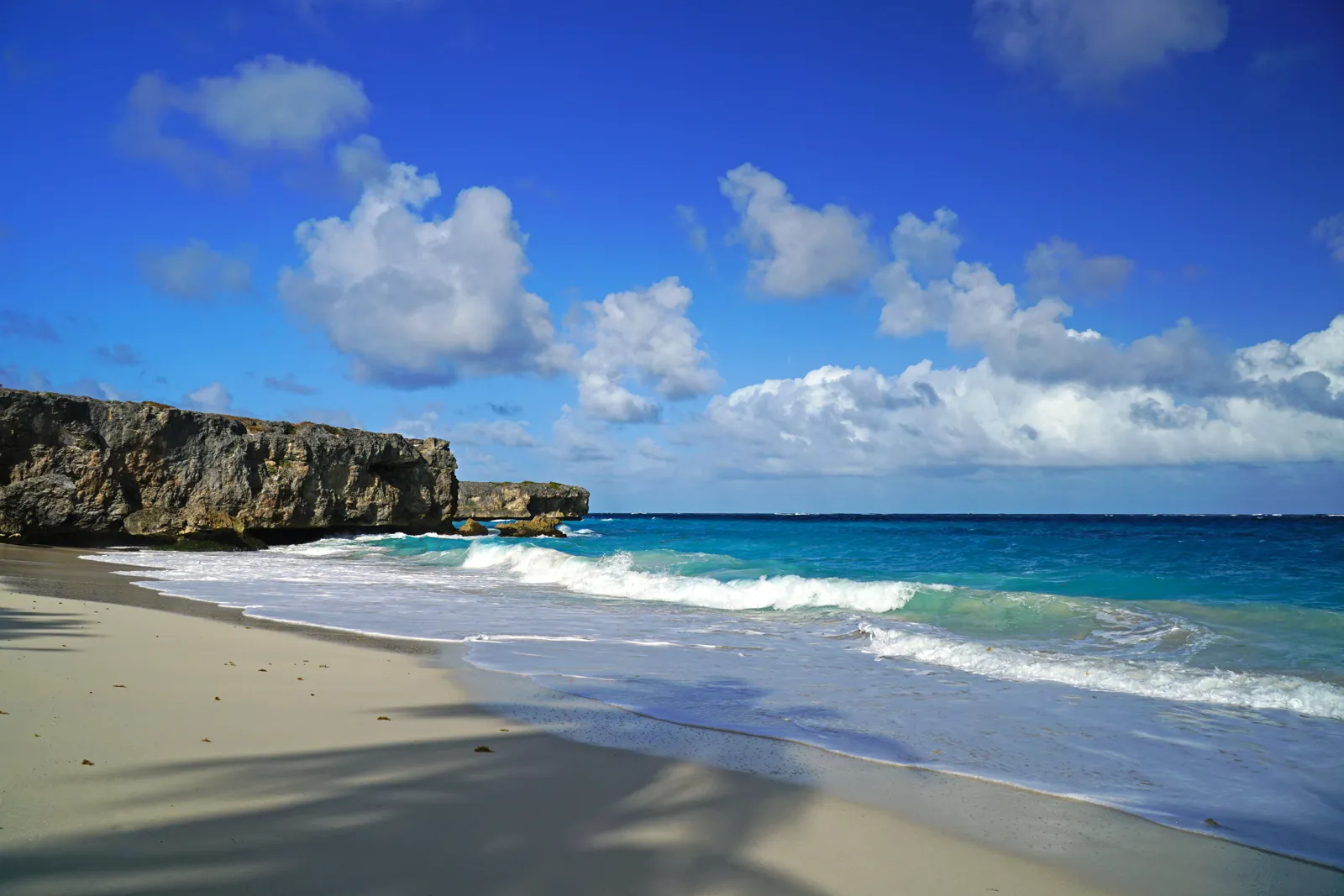
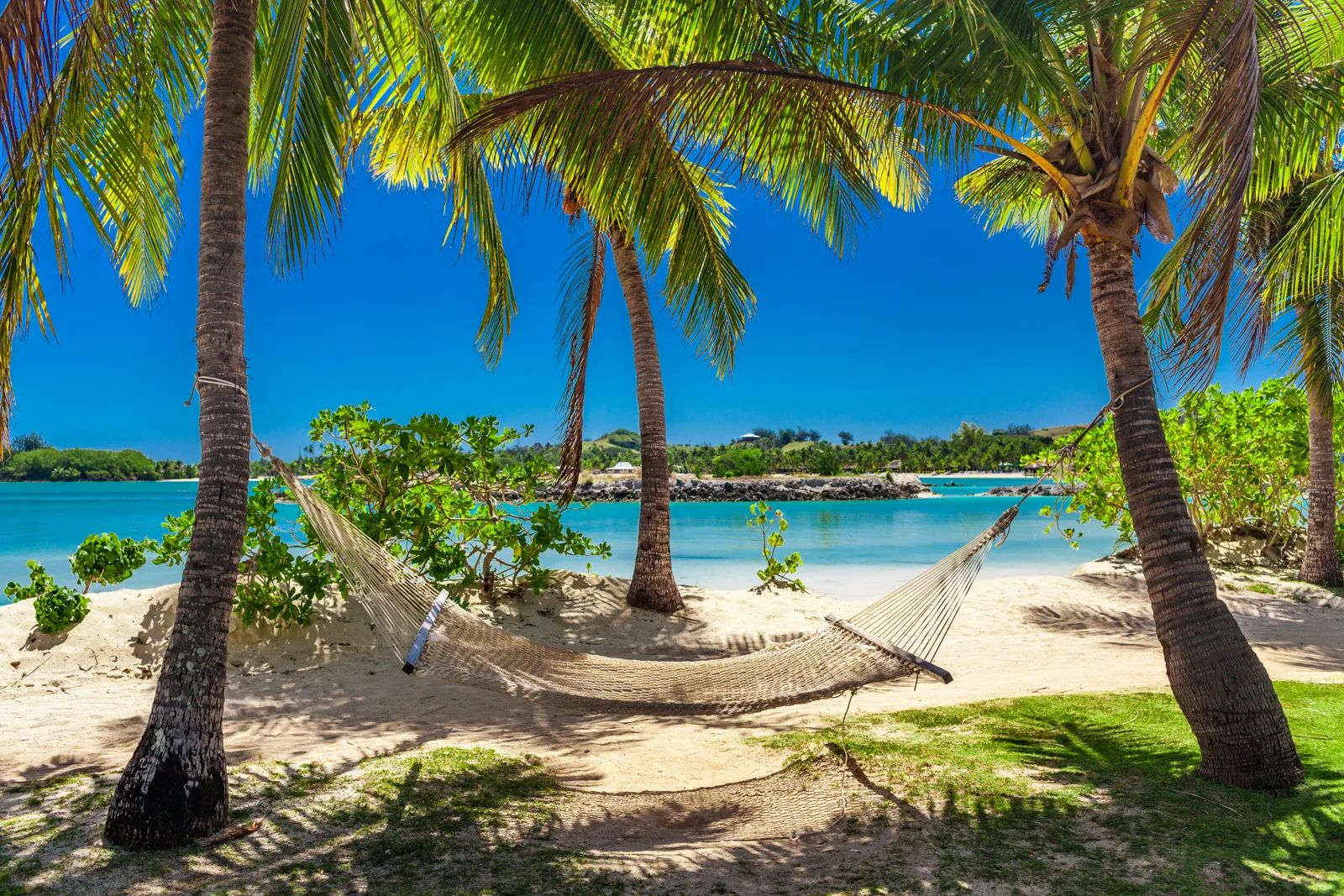
Samoa (the Independent State of Samoa, not to be confused with neighboring American Samoa) is a Polynesian archipelago in the South Pacific. The country is made up mainly of two large islands, Upolu, home to the capital Apia, and Savai’i, which together account for 99% of the land area. This Samoa travel guide covers a country visited for its very much alive Polynesian culture, fa’a Samoa, the beaches of southern Upolu and the lava fields of Savai’i. The best time to go is May to October, outside the cyclone season.
It brings together the islands and sites to know, entry requirements and safety advice read on 24 October 2026 on the UK FCDO (GOV.UK) and U.S. Department of State (travel.state.gov) websites, official climate normals for Apia and a calculation we have not found elsewhere: the number of rainy days to expect over a week, month by month.
Time zoneUTC+13: 13 hours ahead of London and 18 hours ahead of New York in the northern winter
AirportsFaleolo International Airport, on Upolu · detailsCheck current routes with the airlines
EntryUS: 90-day visitor permit on arrival; UK: no visa for up to 60 days · travel.state.gov · GOV.UK
Electricitycheck voltage and plug type with your accommodation · plugs
When to go to Samoa
Go from May to October. This is the least rainy period: Apia gets 112 mm (4.4 in) in August, the driest month, against 483 mm (19.0 in) in January, more than four times as much. The heat barely changes: highs of 29.8 to 31.1 °C (86 to 88 °F) and lows of 23.4 to 24.6 °C (74 to 76 °F) all year round.
According to the UK FCDO (GOV.UK, updated 19 March 2026), the tropical cyclone season normally runs from November to the end of April, but most rain falls from December to March, and higher rainfall inland can cause flooding; it advises monitoring updates from the World Meteorological Organization, the Samoa Meteorology Division or the Fiji Meteorological Service. The U.S. Department of State (travel.state.gov, last updated July 9, 2026) adds that strong winds, heavy rain, landslides and disruptions to services can occur during this season.
Month
High °C (°F)
Low °C (°F)
Rain mm (in)
Rain days
Rain days per 7 days
Sun per day
Cyclone season
Verdict
January
30.6 (87)
24.5 (76)
482.8 (19.0)
20.5
4.6
4.8 h
Yes
❌ Wettest month, cyclones possible
February
30.8 (87)
24.6 (76)
406.3 (16.0)
18.4
4.6
5.7 h
Yes
❌ Very wet, cyclones possible
March
30.9 (88)
24.5 (76)
302.0 (11.9)
18.1
4.1
5.6 h
Yes
⚠️ Wet, cyclones possible
April
31.1 (88)
24.5 (76)
231.8 (9.1)
13.9
3.2
6.2 h
Yes
⚠️ End of cyclone season
May
30.6 (87)
24.0 (75)
244.6 (9.6)
13.2
3.0
6.2 h
No
✅ Rain decreasing
June
30.2 (86)
23.9 (75)
139.2 (5.5)
10.1
2.4
6.6 h
No
✅ Drier
July
29.8 (86)
23.5 (74)
132.8 (5.2)
10.7
2.4
6.9 h
No
✅ Dry
August
29.8 (86)
23.4 (74)
112.3 (4.4)
9.9
2.2
7.1 h
No
✅ Driest and sunniest
September
30.0 (86)
23.6 (74)
143.3 (5.6)
12.0
2.8
6.9 h
No
✅ Dry
October
30.2 (86)
23.9 (75)
220.7 (8.7)
13.1
3.0
6.4 h
No
✅ Rain increasing
November
30.5 (87)
24.2 (76)
260.5 (10.3)
15.5
3.6
6.0 h
Yes
⚠️ Start of cyclone season
December
30.7 (87)
24.4 (76)
413.7 (16.3)
17.8
4.0
5.0 h
Yes
❌ Very wet, cyclones possible
Temperatures, rainfall and rain days (≥ 1 mm): World Meteorological Organization 1991–2020 normals for Apia (NOAA archive), via the Wikipedia climate box (article « Apia »). Sunshine: World Bank, 1971–2000. Rain days per 7 days and sun per day: Destination de Voyage calculation. Cyclone season: November to April according to the UK FCDO and the U.S. Department of State.
A week in Samoa: how many rainy days?
We converted monthly rain days into a one-week stay (rain days ≥ 1 mm in the month × 7 / number of days in the month). Destination de Voyage calculation based on the WMO 1991–2020 normals for Apia.
In August, expect about 2.2 rainy days out of 7, the best figure of the year.
In January, about 4.6 days out of 7: on average it rains every other day, or more.
Sunshine ranges from 4.8 hours a day in January to 7.1 hours in August (World Bank, 1971–2000).
Combined view: the months outside the cyclone season (May to October) are also those with the fewest rainy days over a week.
In practice: July to September suit hiking on Savai’i and ferry crossings best; in the wet season, leave some slack in your schedule.
Things to do in Samoa: the highlights
Apia and Upolu
Apia, on the island of Upolu, is the political and economic capital, where most services are found. Upolu has most of the sites visitors go to.
Vailima and Robert Louis Stevenson
The Scottish writer Robert Louis Stevenson spent the last years of his life in Samoa and wrote about the rivalries between Germany, Britain and the United States in the archipelago. His house and his grave are among the most visited sites in the country.
To Sua Ocean Trench
On Upolu, To Sua is an opening in the ground where you swim in seawater. It is one of the sites highlighted by the Samoan tourism authorities and one of the most visited attractions.
Lalomanu and Saleapaga, southeast Upolu
The beaches of Lalomanu and Saleapaga, in southeast Upolu, are among the most popular with visitors. Offshore lie the uninhabited Aleipata islets (Nu’utele, Nu’ulua, Fanuatapu and Namua). Be careful: according to the UK FCDO (GOV.UK, updated 19 March 2026), tides can produce powerful currents in ocean lagoons and there have been fatal accidents at popular beaches, so take local advice before swimming.
Piula Cave Pool and Papaseea
The Piula cave pool and the Papaseea sliding rocks, on Upolu, complete the list of the country’s most visited sites.
Savai’i and its lava fields
Savai’i is the largest island in Samoa and the only one still volcanically active. The eruptions of Mount Matavanu (1905–1911) left the Saleaula lava fields on the north coast, covering about 50 km² (19 sq mi). The country’s highest point, Mount Silisili (1,858 m / 6,096 ft), is also on Savai’i. The island is reached by ferry from Upolu.
Manono and Apolima
Between Upolu and Savai’i, these two small islands are the only inhabited ones apart from the two large islands. You can see traditional fale there, open houses without walls, closed with palm-leaf blinds at night or in bad weather.
Itinerary ideas for Samoa
One week: Apia and Vailima, To Sua, the beaches of Lalomanu and Saleapaga, Piula and Papaseea, all on Upolu.
10 days to 2 weeks: Upolu (6 days), then the ferry to Savai’i (Saleaula lava fields, villages, beaches) and back to Upolu before your flight.
In the cyclone season, services can be disrupted: keep a spare day before your international flight. If you combine your trip with New Zealand, our Auckland guide presents the city.
Getting around Samoa
Car: according to the U.S. Department of State (travel.state.gov, last updated July 9, 2026), urban and main roads are generally in fair condition, though bumps and potholes are common; side roads are often gravel or dirt, a four-wheel-drive vehicle is recommended on secondary roads and roadside assistance is limited. The UK FCDO (GOV.UK, updated 19 March 2026) advises avoiding night driving, as roads are poorly lit; the speed limit is 40 km/h (25 mph) in towns and villages and 56 km/h (35 mph) elsewhere, and accidents must be reported to the police within 24 hours.
Driving permit: UK drivers must buy a temporary driving permit, which requires their UK licence; car rental companies help with this, and the permit can be used for up to 90 days a year (GOV.UK, updated 19 March 2026). Driving under the influence is an arrestable offense (travel.state.gov).
Fuel and cash: most gas stations and businesses outside Apia only accept cash (travel.state.gov): fill up and carry tala before heading out.
Taxis and buses: taxis are widely available, but use only licensed ones; buses are slow, crowded and rarely used by visitors (travel.state.gov).
Ferry: vessels are sometimes overloaded, and the U.S. Department of State recommends riding only in the passenger compartment, not on the vehicle deck, during crossings.
Walking or cycling: stray dogs are common in Apia and many villages and can become aggressive; keep your distance (GOV.UK, updated 19 March 2026; travel.state.gov).
Where to stay in Samoa
Apia: convenient for services and excursion departures.
Southeast coast of Upolu: for the beaches of Lalomanu and Saleapaga and easy access to To Sua.
Savai’i: for the lava fields and a more rural atmosphere.
Safety: use hotel safes or deposit boxes for passports and valuables (GOV.UK, updated 19 March 2026).
Entry requirements, health and safety
Entry requirements for Samoa. The Samoan authorities set and enforce entry rules (GOV.UK).
US citizens: according to the U.S. Department of State (travel.state.gov, last updated July 9, 2026), visitors can apply for a 90-day visitor permit on arrival. You need a passport valid for at least 6 months beyond your intended stay, a confirmed onward or return ticket, a visa for your next destination if applicable, sufficient funds and a confirmed address in Samoa. A departure tax is payable when you leave, normally included in airfares.
UK citizens: according to the UK FCDO (GOV.UK foreign travel advice, updated 19 March 2026), you can visit without a visa for up to 60 days; border officials issue a free visitor permit using your arrival card. Your passport must have an expiry date at least 6 months after the date you arrive, and you may need to show an onward or return ticket, sufficient funds and confirmed accommodation. A yellow fever vaccination certificate is required if you are coming from a country listed as a transmission risk. A departure tax of 40 tala applies to flights from Samoa to American Samoa.
Connections: the journey usually involves a stopover in another country: check that country’s transit rules with your airline. Entry requirements checked on 24 October 2026; check them again before you travel.
Customs: strict rules cover firearms, plant and animal products, pets and recreational drugs, and you must declare anything that may be prohibited or taxed; cash or travellers’ cheques worth 20,000 tala or more must be declared (GOV.UK, updated 19 March 2026). The U.S. Department of State also lists fruits and honey among regulated items. For your return, check your home country’s allowances (e.g. CBP in the US, HMRC in the UK).
Safety: the UK FCDO (GOV.UK, updated 19 March 2026) describes the level of serious crime as low and petty theft as uncommon, while the U.S. Department of State (travel.state.gov, last updated July 9, 2026) reports that petty theft and robberies are common, including residential break-ins, and that violent assaults, including sexual assaults, have occurred, notably near Apia’s downtown bars.
Natural hazards: cyclones from November to April; Samoa lies on the Pacific Ring of Fire, where earthquakes are a constant risk and can trigger tsunamis (GOV.UK; travel.state.gov). Blowholes are slippery: keep a safe distance and never stand between the opening and the sea (travel.state.gov).
Swimming and activities: take local advice before swimming or surfing; dive companies and tour operators do not always observe safety and maintenance standards, so check that your insurance covers you (GOV.UK, updated 19 March 2026).
Health: dengue, chikungunya and Zika are common: use repellent and sleep under mosquito nets (travel.state.gov, last updated July 9, 2026; GOV.UK). Tap water is not potable in many areas. Hospital care is available in Apia, but most providers require cash payment up front, and a medical emergency is likely to require evacuation to Australia, New Zealand or Hawaii (GOV.UK): take out travel insurance covering medical evacuation.
Emergencies: dial 911 for ambulance, fire and police (GOV.UK; travel.state.gov).
Practical tips for Samoa
Cash: businesses in Apia and resorts may or may not accept major credit cards, and most businesses outside Apia only take cash; ATMs are available at Faleolo Airport, in Salelologa and in many places in Apia (travel.state.gov, last updated July 9, 2026).
Phone and internet: coverage can be limited or non-existent in rural areas and on outlying islands; Vodafone and Digicel SIM cards are sold at the airport, convenience stores and supermarkets and must be registered (GOV.UK, updated 19 March 2026). Check roaming charges with your provider before you leave.
Dress code: dress modestly in towns and villages; swimwear is acceptable on the beach or by streams and waterfalls (GOV.UK, updated 19 March 2026).
Local laws: drinking alcohol in public is illegal except in bars and restaurants, the legal drinking age is 21, and same-sex sexual activity is illegal (GOV.UK, updated 19 March 2026).
Fa’a Samoa: the « Samoan way », developed over about 3,000 years, still shapes social life, chiefly titles and villages; Christianity plays an important role.
Date: since 31 December 2011, Samoa has been west of the International Date Line (UTC+13): it is one day ahead of neighboring American Samoa.
Mistakes to avoid in Samoa
Confusing Samoa and American Samoa: entry rules, currency and the date differ.
Relying on cards everywhere: carry cash in tala.
Driving at night or setting off around Savai’i without fuel and cash.
Riding on the vehicle deck during a ferry crossing.
Packing fruit, honey or other plant and animal products without checking customs rules.
Frequently asked questions
What is the best time to visit Samoa?
May to October. August is the driest and sunniest month in Apia (112.3 mm (4.4 in) of rain according to the WMO 1991–2020 normals), outside the cyclone season.
When is the cyclone season in Samoa?
According to the UK FCDO (GOV.UK, updated 19 March 2026), the tropical cyclone season normally runs from November to the end of April, with most rain falling from December to March.
Do I need a visa for Samoa?
Not for a short visit if you are a US or British citizen. US citizens can get a 90-day visitor permit on arrival with a passport valid at least 6 months beyond the stay and an onward ticket (travel.state.gov, last updated July 9, 2026); British citizens can visit without a visa for up to 60 days, with a passport valid at least 6 months after arrival (GOV.UK, updated 19 March 2026). Checked on 24 October 2026; check again before you leave.
What is the difference between Samoa and American Samoa?
Samoa is an independent state (capital Apia). American Samoa, further east, is a US territory with its own entry rules. It lies on the other side of the International Date Line.
What is the time difference with Samoa?
Samoa is on UTC+13: 13 hours ahead of London and 18 hours ahead of New York in the northern winter (12 and 17 hours during UK and US summer time).
Is Samoa safe?
The UK FCDO (GOV.UK, updated 19 March 2026) describes serious crime as low, while the U.S. Department of State (travel.state.gov, last updated July 9, 2026) reports that petty theft and robberies are common. Take care on the roads, when swimming and around stray dogs.
Our sources
Entry, health and safety information read on 24 October 2026: U.S. Department of State, Samoa country information (travel.state.gov, last updated July 9, 2026), and UK FCDO, foreign travel advice for Samoa (GOV.UK, updated 19 March 2026)
World Meteorological Organization, 1991–2020 normals for Apia (NOAA archive), and World Bank (sunshine 1971–2000), via the Wikipedia climate box (article « Apia »), read on 23 October 2026
Wikipedia (en): « Samoa » and « Apia », read on 23 October 2026
Destination de Voyage calculations: rain days per 7 days, sun per day, comparison with the cyclone season
Transparency: this page contains affiliate links, labelled as such. If you book through them we may earn a commission at no extra cost to you; it does not influence our content or recommendations. How we fund the site.