For a trip to New Zealand, ideally allow three weeks of road trip to cover both islands (two weeks at the very least, focusing on the essentials), with a budget of roughly NZ$155–235 per person per day when traveling cheaply (excluding flights). New Zealand is made up of two large and very different islands: volcanoes, hot springs and Maori culture in the north, the Southern Alps, lakes and fiords in the south. This New Zealand travel guide brings together everything you need to plan your stay.
To locate cities, regions, terrain, national parks and airports, see our map of New Zealand.
New Zealand at a glance
CapitalWellington
LanguagesEnglish, Maori(te reo Māori) and New Zealand Sign Language
Seasons are reversed compared with the Northern Hemisphere. The best period is December to March, during the southern summer, with highs around 20 to 24 °C (68 to 75 °F) and mountain trails open. November and March–April are very good compromises, cheaper and less crowded. Winter (June to August) is ski season on the South Island. All the details, month by month and with official NIWA normals, are in our article best time to visit New Zealand.
What to see in New Zealand: the highlights
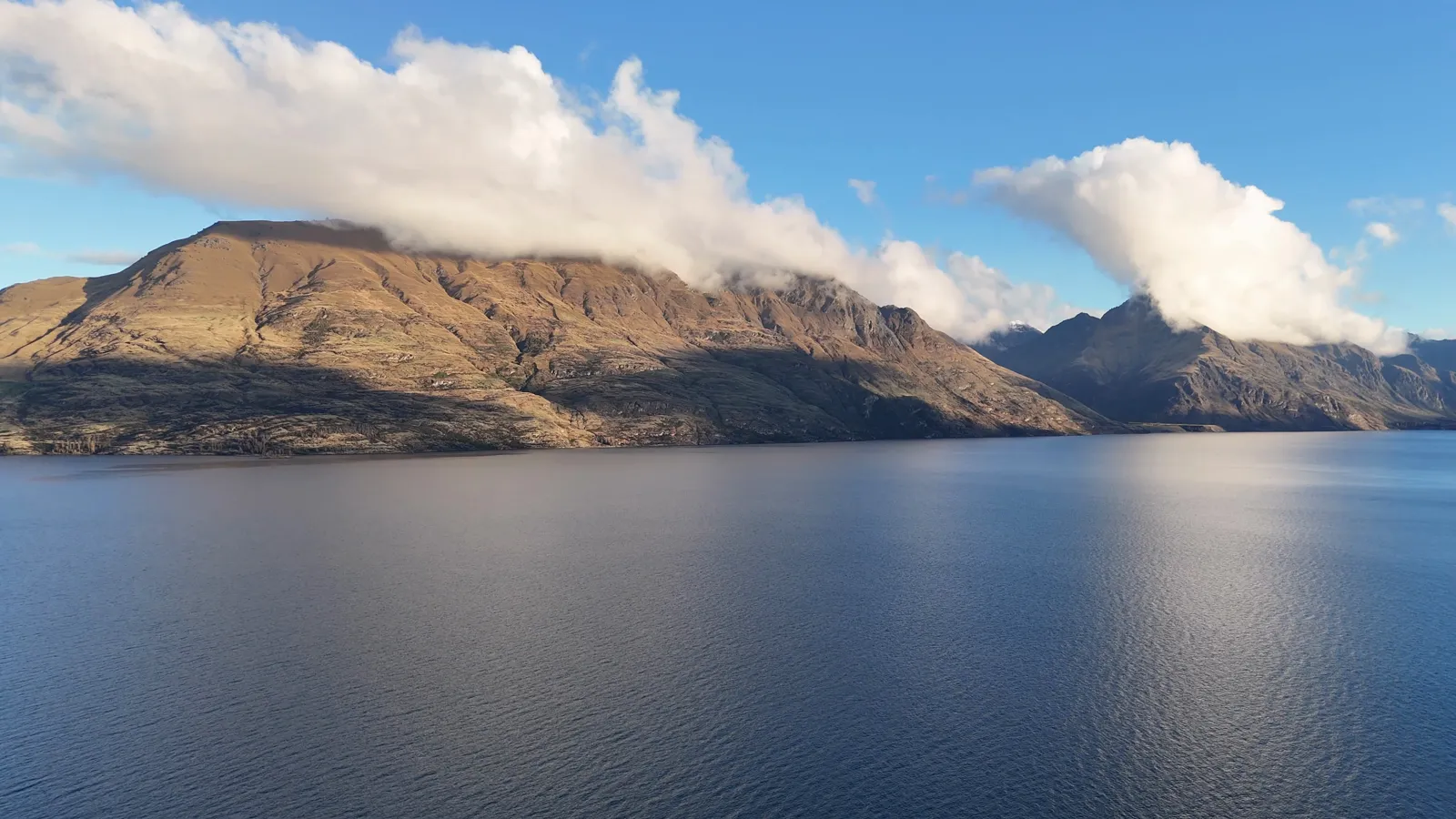
Lake Wakatipu and the mountains around Queenstown, New Zealand
Auckland and the Bay of Islands
The country’s largest city is built on a volcanic field, between two harbors. Climb an old volcano such as Mount Eden, take the ferry to Waiheke Island and its vineyards, and visit the Auckland Museum for its Maori and Pacific collections. To the north, the Bay of Islands combines coves, boat trips and the Waitangi historic site, where the founding treaty between the British Crown and Maori chiefs was signed in 1840. Before you fly, the electronic travel authority is explained in our guide to the NZeTA for New Zealand.
Rotorua and Taupo
Rotorua is the center of geothermal activity: geysers, bubbling mud pools, colorful terraces such as at Wai-O-Tapu, and hot pools. It is also a good place to learn about Maori culture through organized evenings and visits. Further south, Lake Taupo, the largest lake in the country, is ideal for water sports and walks to Huka Falls.
Tongariro National Park
This World Heritage park is home to three active volcanoes: Ruapehu, Ngauruhoe and Tongariro. Its best-known hike, the Tongariro Alpine Crossing, crosses lunar landscapes and emerald lakes in a day. Mountain weather changes fast and volcanic activity can resume: check conditions with the Department of Conservation before setting off, and volcanic alert levels on GeoNet, as the U.S. Department of State recommends.
Wellington
The compact, windy capital is best explored on foot. The Te Papa national museum is free and very comprehensive on history, nature and Maori culture. The cable car climbs to the Botanic Garden, and the city is the departure point for the ferry to the South Island across Cook Strait.
Abel Tasman and the Nelson region
At the top of the South Island, Abel Tasman National Park is known for its golden beaches and coves, explored on foot along the coastal track or by sea kayak, with water taxis to adjust the distance. The Nelson region is one of the sunniest in the country.
The West Coast glaciers
The Franz Josef and Fox glaciers descend from the Southern Alps toward temperate rainforest. Trails lead to viewpoints over their terminal faces; helicopter flights and ice hikes depend on the weather, which is often changeable on this very wet coast.
Queenstown, Wanaka and Aoraki / Mount Cook
On the shores of Lake Wakatipu, Queenstown is the base for adventure sports (bungee jumping, jet boating, paragliding) and for skiing in winter. Wanaka, quieter, offers hikes and lake views. To the northeast, Lake Tekapo and Aoraki / Mount Cook National Park, with the country’s highest peak, are explored on easy trails such as the Hooker Valley Track.
Milford Sound and Fiordland
Fiordland is one of the country’s great landscapes: sheer cliffs, waterfalls and rainforest. The road from Te Anau to Milford Sound is spectacular, and cruises on the fiord often bring sightings of fur seals and dolphins. Doubtful Sound, more remote, requires a longer excursion. The Milford Track, one of the Great Walks, must be booked well in advance.
Things to do in New Zealand: 10 experiences for a first trip
To sum up what to see and do in New Zealand, here are the experiences described above, to be spread between the North Island and the South Island:
Explore Auckland, then the Bay of Islands to the north
Discover the geothermal sites and Maori culture in Rotorua, respecting the welcome protocols of a marae
Hike the Tongariro Alpine Crossing when the weather allows
Cross Cook Strait by ferry between Wellington and Picton
Hike along the coves of Abel Tasman National Park
See the Franz Josef and Fox glaciers on the West Coast
Enjoy the lakes and activities of Queenstown and Wanaka
Cruise the fiord of Milford Sound
Take in Aoraki / Mount Cook and Lake Tekapo
Walk one of the Great Walks, to be booked well in advance in summer
Itinerary ideas: how many days in New Zealand?
Given the length of the journey, allow three weeks if possible. With two weeks, it is better to focus on one island or on the main stops.
10 days to 2 weeks: the essentials
Days 1 to 2: Auckland
Days 3 to 4: Rotorua and Taupo
Day 5: Tongariro Alpine Crossing (weather permitting), then fly or drive to the South Island
Days 6 to 9: Queenstown and Wanaka
Days 10 to 11: Te Anau and Milford Sound
Days 12 to 14 (optional): Lake Tekapo, Aoraki / Mount Cook and back via Christchurch
3 weeks: both islands by road
Days 1 to 3: Auckland and the Bay of Islands
Days 4 to 6: Rotorua, Taupo and Tongariro
Days 7 to 8: Wellington, then the ferry to Picton
Days 9 to 10: Nelson and Abel Tasman
Days 11 to 12: the West Coast and the glaciers
Days 13 to 17: Wanaka, Queenstown, Te Anau and Milford Sound
Days 18 to 21: Aoraki / Mount Cook, Lake Tekapo and Christchurch
Budget for a trip to New Zealand
New Zealand is an expensive destination, especially for accommodation in high season and guided activities. The international flight and vehicle rental are major costs. Indicative amounts per person per day, excluding flights (converted from our euro estimates at roughly €1 = NZ$1.97, ECB rate of 23 October 2026):
Item
Budget
Comfort
Accommodation (based on a shared double room)
roughly NZ$50–100 (hostel, campsite)
roughly NZ$175–355
Meals
roughly NZ$50–80 (self-catering, simple dishes)
roughly NZ$100–175
Transport
roughly NZ$30–60 (bus, ride-sharing, share of a rental)
roughly NZ$80–140 (car or campervan)
Activities and sightseeing
roughly NZ$20–60
roughly NZ$80–195
Total per day
roughly NZ$155–235
roughly NZ$395–590
Indicative estimates, varying with season and region. Activities such as fiord cruises, bungee jumping or helicopter flights cost considerably more.
To keep costs down, cook some of your meals (hostels and campsites have shared kitchens), make the most of the many free trails and natural sites, and travel in the shoulder season, when campervan rates drop sharply.
Getting around New Zealand
Car or campervan: the most common way to explore the country at your own pace. According to the U.S. Department of State (travel.state.gov, last updated May 7, 2026), traffic moves on the left, most intercity travel is on narrow two-lane roads with sharp curves and steep grades, speed limits are much lower than in the US, left turns on a red light are not allowed and cell phone use while driving is prohibited; coverage is very limited on large parts of the South Island’s scenic highways. UK visitors can drive on a UK photocard licence for up to 18 months (UK FCDO, GOV.UK, updated 19 March 2026). Journey times are longer than distances suggest.
Plane: useful to save time between the two islands (Auckland, Wellington, Christchurch, Queenstown).
Ferry: the Cook Strait crossing links Wellington and Picton, with or without a vehicle; book early in summer.
Bus:long-distance bus networks link the main towns and tourist sites.
Train: a few scenic lines, including the crossing of the Southern Alps between Christchurch and Greymouth.
Where to stay in New Zealand
In Auckland, stay in the center (CBD) or near the harbor for the ferries, or in neighborhoods such as Ponsonby for a quieter base. In Queenstown, the center is convenient but expensive; Frankton and Arrowtown are alternatives. In Rotorua, many motels have private thermal pools. In small places (Milford Sound, the glaciers, Mount Cook), supply is limited: book well in advance.
Options include youth hostels, motels, holiday parks (campsites with cabins and campervan sites), Department of Conservation campsites, B&Bs and hotels. Freedom camping is only allowed in certain areas: check local rules to avoid a fine.
Mistakes to avoid on a trip to New Zealand
Forgetting the NZeTA: this electronic authority is required before travel, including in transit (GOV.UK; travel.state.gov).
Bringing food without declaring it: it is illegal to import most food products, and items such as tents, fishing equipment or wood and leather products can carry pests; declare them or use the amnesty bins at the airport (GOV.UK). Undeclared biosecurity-risk goods such as honey, fresh fruit, seeds and plants can bring an instant NZ$400 fine (travel.state.gov).
Trusting distances: roads are winding and narrow, and traffic drives on the left; plan short stages.
Trying to see everything in two weeks: it is better to focus on one island or on the main stops.
Camping anywhere: freedom camping is only allowed in certain areas, or you risk a fine.
Booking late in summer: campervans, ferries, Great Walks and accommodation at Milford Sound or Mount Cook go very early.
Hiking without telling anyone or checking the weather: leave your itinerary with family or friends and monitor regional forecasts, as weather can quickly become dangerous (GOV.UK).
Leaving valuables in the vehicle: thieves target unattended vehicles, especially hire cars and camper vans in tourist areas (GOV.UK).
Entry requirements for New Zealand, health and safety
US citizens: according to the U.S. Department of State (travel.state.gov, last updated May 7, 2026), US citizens traveling under the visa waiver program, including in transit and on cruise ships, need an NZeTA, which can take up to 72 hours to process and is valid for multiple visits for up to two years. The International Visitor Conservation and Tourism Levy (IVL) is paid when you apply. Customs officers may examine phones, laptops and cameras and ask for your password.
UK citizens: according to the UK FCDO (GOV.UK foreign travel advice, updated 19 March 2026), you can visit without a visa for up to 6 months, but you need an NZeTA (plus the levy), valid for up to 2 years. Your passport must have an expiry date at least 3 months after the day you plan to leave, and at the border you must show a return or onward ticket and proof of enough money for your stay.
Arrival declaration: everyone must complete the free New Zealand Traveller Declaration (NZTD), no earlier than 24 hours before the trip (GOV.UK). Entry requirements checked on 24 October 2026; check them again before you travel.
Customs: biosecurity rules are very strict; failing to declare goods could lead to a fine of up to NZ$100,000 or prison (GOV.UK). Prescription medicines must be declared, and all products containing codeine are prescription-only (GOV.UK). For your return, check your home country’s allowances (e.g. CBP in the US, HMRC in the UK).
Health: quality medical care is widely available, though less so in rural areas (travel.state.gov). British visitors are eligible for urgent treatment under a reciprocal health agreement, which does not cover routine care or prescriptions (GOV.UK). The public ACC scheme helps pay for local care if you are injured, but not delayed travel or loss of income (GOV.UK): travel insurance remains essential, and check that it covers adventure sports. Emergency number: 111.
Safety: crime levels are generally low, but street crime happens in major towns and thefts from vehicles, especially hire cars and camper vans, are common (GOV.UK; travel.state.gov). The main risks are natural: New Zealand is in a major earthquake zone, tsunamis can occur along the coasts, and there are several active volcanoes on the North Island (GOV.UK). The U.S. Department of State advises avoiding Whakaari/White Island, where the 2019 eruption killed tourists. Follow the National Emergency Management Agency and MetService.
Practical tips for New Zealand
Money: check your bank’s fees on foreign payments. Our currency converter helps you estimate your spending.
Internet: there is very limited cell phone coverage on large stretches of scenic highway in the South Island (travel.state.gov). Download offline maps and tell someone your route before a hike. To compare operators and data plans, read our page eSIM for New Zealand.
Etiquette: respect Maori sites and customs, for example when visiting a marae (meeting ground), where welcome protocols apply. Do not feed wildlife and stay on marked trails.
Tipping: it is not expected; a gesture for outstanding service is appreciated.
Gear: even in summer, pack a waterproof jacket, a warm layer and sunscreen.
Who is New Zealand for?
Our verdict by traveler profile, based on the information in this guide:
Road trips and hiking: yes, it is the most common way to travel: Tongariro Alpine Crossing, Abel Tasman, Great Walks, Hooker Valley, by car or campervan.
Adventure: yes: bungee jumping, jet boating and paragliding in Queenstown, sea kayaking, glacier flights.
Couples: yes: Waiheke’s vineyards, a Milford Sound cruise, the lakes of Wanaka and Tekapo, motels with private thermal pools in Rotorua.
Families: yes: Rotorua’s geothermal sites, the free Te Papa museum in Wellington, holiday parks with cabins; plan short stages, as roads are winding.
Budget travelers: so-so: roughly NZ$155–235 a day in hostels or campsites, cooking some meals; the flight and vehicle rental are major costs.
Short trips: no: allow at least two weeks, ideally three, given the length of the journey.
Not for a tourist stay if you are a US or British citizen, but you must get an NZeTA electronic travel authority before you travel, including in transit, and pay the tourism levy when applying; it is valid for up to two years (travel.state.gov; GOV.UK). British citizens can stay up to 6 months without a visa (GOV.UK). Checked on 24 October 2026.
How much does a trip to New Zealand cost?
Excluding flights, allow roughly NZ$155–235 per person per day on a budget, and NZ$395–590 in comfort. Renting a campervan or car and the international flight make up a large part of the budget.
How many days do you need in New Zealand?
Three weeks is ideal to cover both islands by road. With two weeks, focus on the main stops or on a single island, the South Island being the most popular for its scenery.
What is the best time to visit New Zealand?
December to March, during the southern summer. November and March–April are very good compromises, cheaper and less crowded. Winter (June to August) mainly suits skiers.
Is New Zealand safe?
Yes, crime levels are generally low. Precautions mainly concern thefts from vehicles, natural hazards (earthquakes, tsunamis, volcanoes) and changeable mountain weather (GOV.UK; travel.state.gov).
What should you see first in New Zealand?
On the North Island: Auckland, Rotorua and Tongariro National Park. On the South Island: Queenstown, Wanaka, Milford Sound, the West Coast glaciers and Aoraki / Mount Cook. With three weeks, add the Bay of Islands, Wellington and Abel Tasman. Our guide to Auckland, the country’s largest city covers the most common stop on the North Island.
Should you rent a car or a campervan in New Zealand?
It is the most common way to travel at your own pace. A campervan gives more freedom, but freedom camping is only allowed in certain areas. Traffic drives on the left, and journeys take longer than distances suggest.
European Central Bank: euro reference rates of 23 October 2026 (budget conversion)
NIWA (National Institute of Water and Atmospheric Research, now Earth Sciences New Zealand): 1991–2020 normals for Auckland Airport, Rotorua, Wellington (Kelburn), Christchurch Airport and Queenstown Airport
Transparency: this page contains affiliate links, labelled as such. If you book through them we may earn a commission at no extra cost to you; it does not influence our content or recommendations. How we fund the site.