⚠️ Safety warning (UK FCDO, GOV.UK, updated 16 October 2026; U.S. Department of State, travel.state.gov, last updated July 30, 2026). The UK FCDO says terrorists are very likely to try to carry out attacks in Kenya, and several areas are covered by travel warnings:
To locate cities, regions, terrain, national parks and airports, see our map of Kenya.
FCDO advises against all travel to: Mandera County; Tarbaj and Wajir East constituencies in Wajir County (except Wajir Town) and areas of Wajir County within 60 km (37 mi) of the Somali border; most of Garissa County (except Garissa Town, Lagdera and part of Balambala); and Lamu County, except Lamu Island and Manda Island.
FCDO advises against all but essential travel to: Garissa Town; Tana River County north of the Tana River as far as Saka; and within 15 km (9 mi) of the east coast between the Tana River and the Galana (Athi-Galana-Sabaki) River.
U.S. State Department « regions to avoid »: the counties of Mandera, Wajir and Garissa and north-eastern Marsabit; all of the coastal counties of Tana River and Lamu and all of Kilifi County north of Malindi; the Kainuk–Lodwar road in Turkana County; the Nairobi neighborhoods of Eastleigh and Kibera; and the Likoni ferry.
Advice changes: check GOV.UK and travel.state.gov (including the State Department’s Travel Advisory for Kenya) before booking and again just before you leave.
Kenya is one of Africa’s great safari destinations: the Masai Mara reserve, the elephants of Amboseli at the foot of Kilimanjaro, the Rift Valley lakes and the vast Tsavo parks. It combines easily with a few days on the Indian Ocean coast, with beaches, reefs and Swahili towns. This Kenya safari and travel guide covers the essentials for planning your trip: what to see, which safari itinerary to follow, budget and safety. Before booking, check the formalities in our guide to the Kenya visa.
Kenya at a glance
CapitalNairobi
LanguagesSwahili and English (official languages)
Currencythe Kenyan shilling (KES) · currenciesUS dollars common for safaris; bring newer bills
Time zoneUTC+3, no daylight saving · details3 h ahead of London and 8 h ahead of New York in winter
AirportsNairobi Jomo Kenyatta (NBO), Mombasa Moi (MBA)Check current routes with the airlines
EntryUS and UK: electronic travel authorization (eTA) before travel, plus mandatory Kenyan travel health insurance · travel.state.gov · GOV.UK
The best period runs from late June to early October: this is the long dry season, ideal for safaris, and the great wildebeest migration generally reaches the Masai Mara from July. January and February are a second good window, perfect for combining safari and beach. The long rains, from March to May, and especially April and May, are the least favorable period; the short rains of November–December are shorter and mostly come as storms. All the details, region by region and with official climate data, are in our article best time to visit Kenya.
What to see in Kenya: parks and highlights
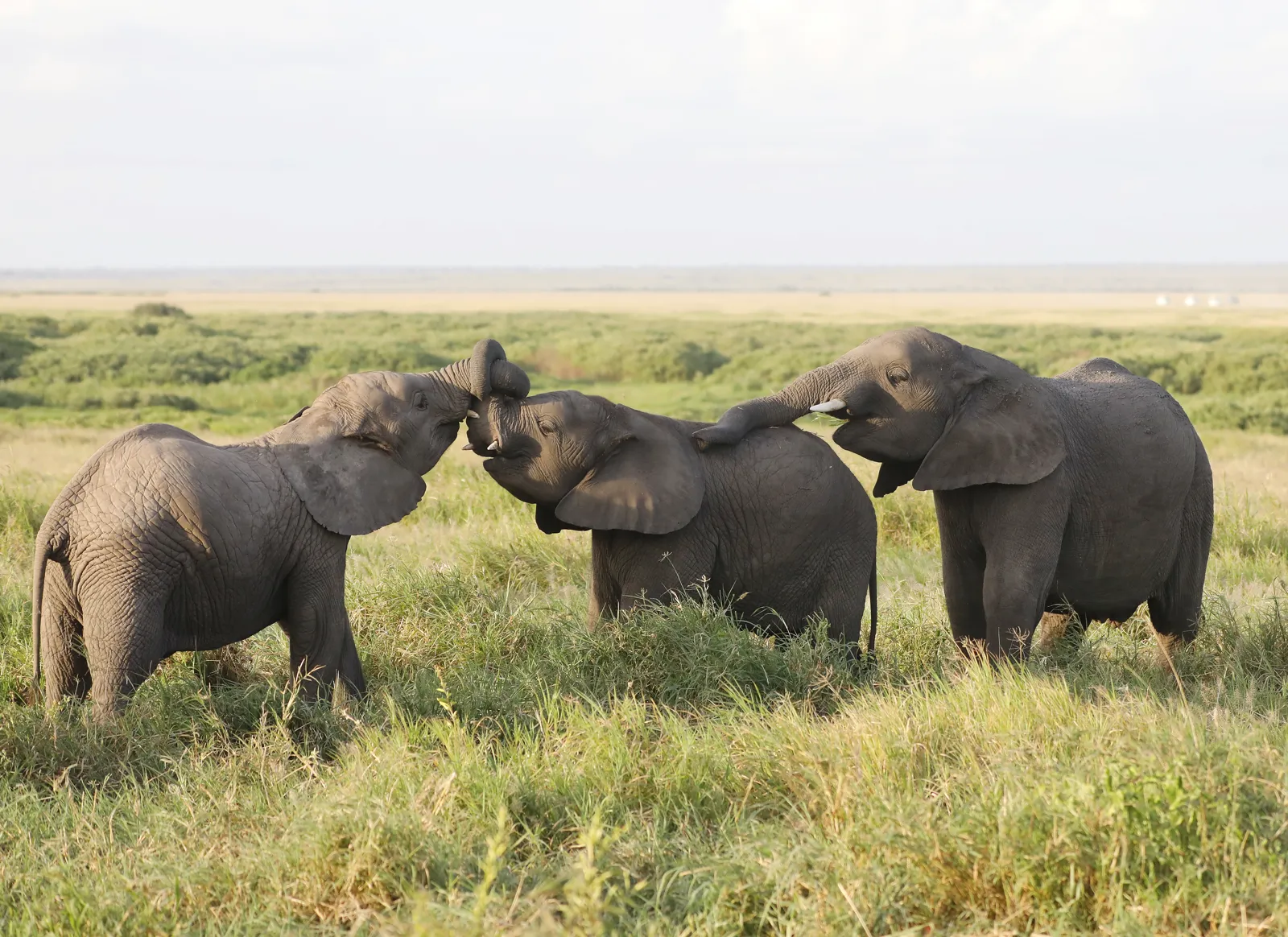
Herd of elephants in Amboseli National Park, Kenya
Masai Mara National Reserve
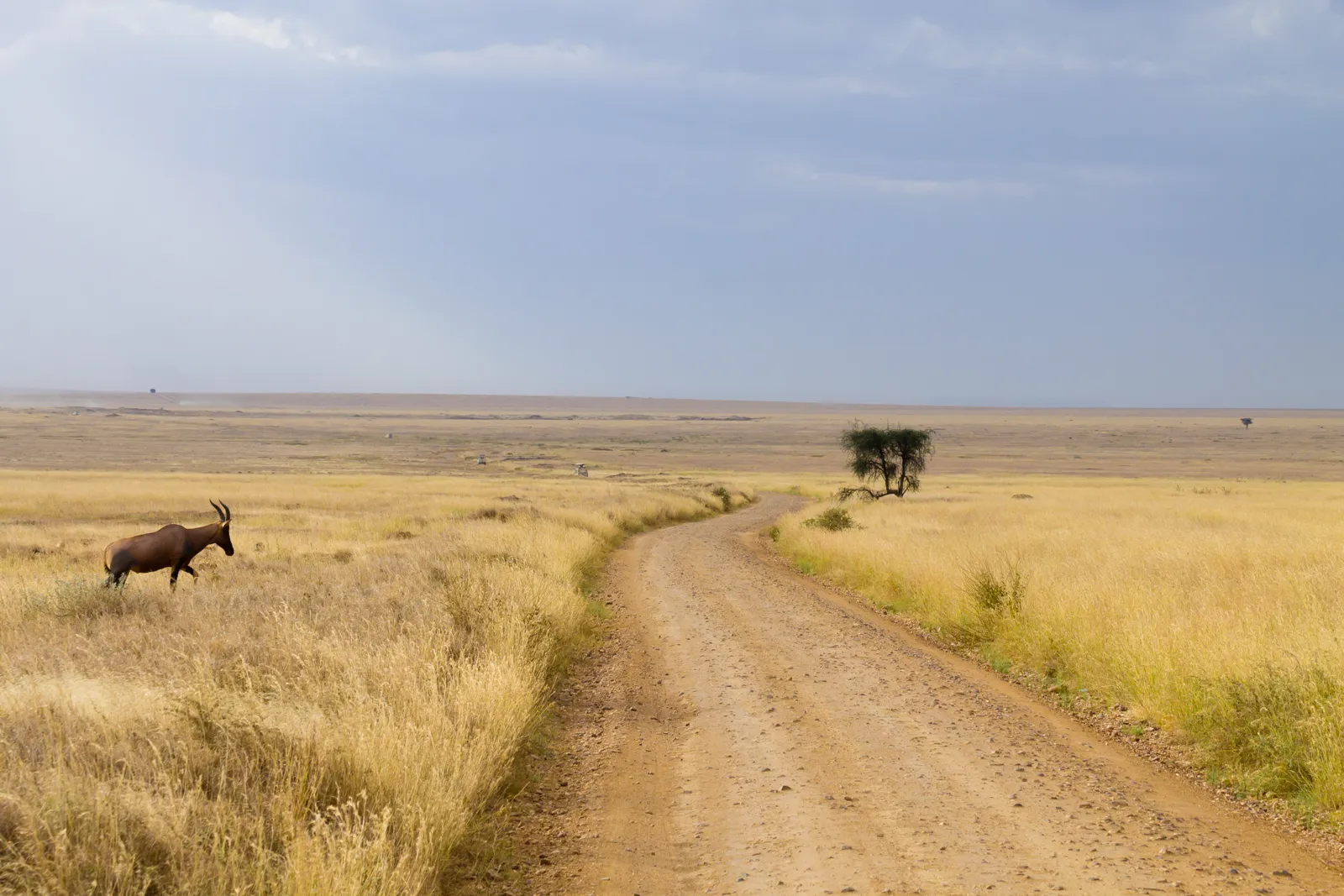
In the south-west of the country, the Masai Mara is the continuation of Tanzania’s Serengeti. It is Kenya’s best-known reserve, famous for its lions, cheetahs and, generally from July to October, the great wildebeest migration and its Mara River crossings. It is managed by Narok County and surrounded by private conservancies, where there are fewer vehicles and walking or night safaris are sometimes allowed. You reach it by road from Nairobi (a full day, partly on dirt tracks) or by light aircraft from Wilson Airport.
Amboseli National Park
In the south, near the Tanzanian border, Amboseli is known for its large elephant herds and its view of Kilimanjaro, Africa’s highest peak, which stands across the border. The park is small and fairly flat, which makes wildlife viewing easier. The summit is most often visible early in the morning.
Tsavo East and Tsavo West
Together, these two parks form one of the country’s largest protected areas, between Nairobi and Mombasa. Flat, dry Tsavo East is known for its elephants reddened by the soil; hillier Tsavo West has the Mzima Springs. Their location makes them a logical stop on a safari that ends on the coast.
The Rift Valley lakes: Nakuru and Naivasha
A few hours from Nairobi, Lake Nakuru National Park is home to black and white rhinos, Rothschild’s giraffes and many birds; the presence of flamingos varies with lake levels. Lake Naivasha is good for boat trips, and neighboring Hell’s Gate is one of the few parks you can explore by bike or on foot. According to the UK FCDO, GOV.UK, updated 16 October 2026, swimming in rivers and lakes is illegal in national parks.
Laikipia and Mount Kenya
At the foot of Mount Kenya, the Laikipia plateau groups private reserves such as Ol Pejeta, known for its rhino conservation programs. Mount Kenya (5,199 m / 17,057 ft at Batian peak) is Africa’s second-highest summit; hikers usually aim for Point Lenana (4,985 m / 16,355 ft), reachable without climbing on a guided trek of several days. The UK FCDO notes that you must hire a local guide on certain hikes and that altitude sickness is a risk on Mount Kenya (GOV.UK, updated 16 October 2026). Further north, Samburu reserve is home to species adapted to dry areas; the FCDO reports ongoing security operations in remote parts of Samburu and neighboring counties (Laikipia, Isiolo, Turkana, West Pokot and others), so check the latest advice before going.
Nairobi
The capital is the country’s gateway. It has a national park on its doorstep, where you can see lions, giraffes and rhinos with tower blocks in the background. The Langata giraffe center and the Sheldrick Wildlife Trust elephant orphanage are classic visits. Avoid walking alone in isolated areas, even in daylight (UK FCDO), and stay away from the neighborhoods named in the warnings at the top of this page.
Mombasa, Diani and Watamu
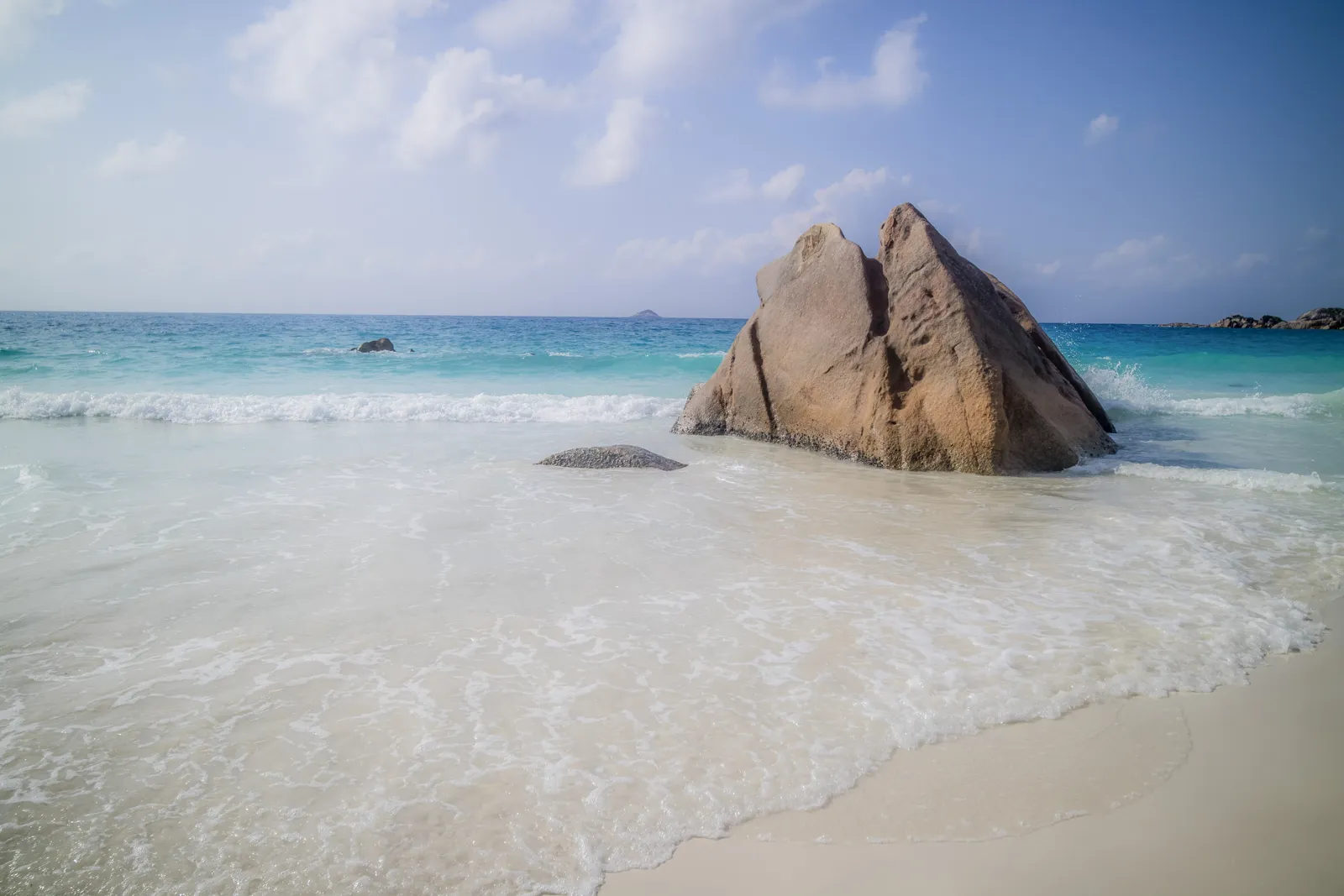
Mombasa, the coast’s main city, retains a Swahili old town and Fort Jesus, built by the Portuguese in the late 16th century. To the south, Diani beach lines up white sand and hotels, with diving and kitesurfing among the main activities. To the north, Watamu and its marine park offer coral reefs and a quieter atmosphere. The U.S. State Department lists all areas of Kilifi County north of Malindi among the regions to avoid, and the UK FCDO advises against travel to parts of the coast further north (see the warning above). The FCDO also flags higher crime risks in Mombasa Old Town and around the Likoni ferry.
Lamu Island
Lamu’s old town, one of the oldest Swahili settlements in East Africa, is explored on foot or by donkey: there are almost no cars. The UK FCDO advises against all travel to Lamu County except Lamu Island and Manda Island, and says to reach the islands only by air, via Lamu airport on Manda Island, not by road (GOV.UK, updated 16 October 2026). The U.S. State Department lists all parts of Lamu County among the regions to avoid.
Itinerary ideas: safari routes in Kenya
7 to 10 days: the safari essentials
Day 1: arrive in Nairobi, overnight there
Days 2 to 4: Masai Mara (three days of game drives to maximize your sightings)
Days 5 and 6: Lake Naivasha and Lake Nakuru
Days 7 and 8: Amboseli and the view of Kilimanjaro
Days 9 and 10: back to Nairobi (national park, giraffe center) or an extension to the coast
2 weeks: safari and the Indian Ocean
Days 1 and 2: Nairobi
Days 3 to 6: Masai Mara, or a neighboring conservancy
Days 7 and 8: Lake Naivasha or Laikipia (Ol Pejeta)
Days 9 and 10: Amboseli, then Tsavo West or Tsavo East
Days 11 to 14: road or train to the coast, then the beach at Diani or Watamu
For a longer trip, Kenya combines well with northern Tanzania (Serengeti, Ngorongoro): see our Tanzania travel guide. To decide whether the combination is worth it, our Kenya or Tanzania comparison sets the parks, seasons and budgets side by side.
Who is Kenya for?
Our verdicts by traveler profile, based on the stops, budget and conditions in this Kenya guide.
Profile
Our verdict
Safari
✅ Masai Mara and the great migration, Amboseli’s elephants, Tsavo, Lakes Nakuru and Naivasha.
Beach
✅ Diani and Watamu on the Indian Ocean, to combine with a safari over two weeks.
Hiking
✅ Point Lenana on Mount Kenya on a guided trek, Hell’s Gate by bike or on foot.
Culture
✅ Swahili old town of Lamu, Fort Jesus in Mombasa.
Families
⚠️ Giraffe center and elephant orphanage in Nairobi, but long drives to the parks, such as the full day on the road to the Masai Mara.
Budget travelers
⚠️ Affordable in cities and on the coast, but a group safari costs roughly US$170–280 per person per day.
Budget for a trip to Kenya
Kenya is not a cheap destination once you go on safari: park entry fees, the vehicle with driver-guide and the lodges make up most of the cost. In cities and on the coast, on the other hand, you can travel simply at reasonable prices. Indicative amounts per person per day, excluding international flights (converted from our euro estimates at roughly €1 = US$1.12, ECB reference rate of 23 October 2026):
Item
Budget
Comfort
Accommodation (based on a shared double room)
roughly US$20–55 (guesthouse, camping)
roughly US$170–390 (lodge or tented camp, often full board)
Meals
roughly US$10–20
often included at lodges; roughly US$35–55 in town
Safari (4×4 vehicle and driver-guide)
roughly US$65–135 on a group safari
roughly US$170–335 on a private safari
Park entry fees
from a few tens of dollars to over US$100 per day depending on the park and season
same
Total per day on safari
roughly US$170–280
roughly US$390–670 and up
Indicative estimates that vary with the season. Lodge and park rates are higher from July to October and over the year-end holidays.
National park entry fees are set by the Kenya Wildlife Service, and those of the Masai Mara reserve by Narok County, which has raised them sharply in recent years, especially for the high season. Check current rates when you book: they are often included in the price of organized safaris.
Getting around Kenya
Organized safari: the most common option. A pop-top 4×4 with driver-guide, shared or private, booked through a local agency or tour operator. The UK FCDO advises using reputable tour operators and not buying safari tours from touts; the U.S. State Department notes that the Kenya Wildlife Service requires tour operators and safari lodges to carry nationally mandated insurance, so ask whether yours complies.
Domestic flights: light aircraft link Nairobi’s Wilson Airport with park airstrips (Masai Mara, Amboseli, Samburu) and the coast (Diani, Malindi, Lamu). Handy for saving time, with strict baggage limits (soft bags often required). If you charter a private aircraft, the UK FCDO advises checking the condition of the aircraft and runways.
Train: passenger trains run between Nairobi and Mombasa (UK FCDO); the U.S. State Department names the Nairobi–Mombasa Standard Gauge Railway as the only route approved for its staff. Keep your valuables with you.
Road: according to the U.S. Department of State, travel.state.gov, last updated July 30, 2026, road accidents are a major threat, traffic drives on the left and intercity night travel should be avoided. UK photocard licence holders can drive for up to 3 months; after that they need the 1968 International Driving Permit plus their UK licence, bought in the UK before travel (UK FCDO, GOV.UK, updated 16 October 2026). The U.S. source does not detail licence rules for US drivers: check with the Embassy of Kenya. Self-drive is best left to experienced travelers.
In cities: ride-hailing apps and taxis booked through your hotel. The U.S. State Department says matatus (shared minibuses) and boda-bodas (motorcycle taxis) are involved in many accidents, and its staff are prohibited from using them; it also reports robberies of U.S. citizens using off-the-street taxis.
Where to stay in Kenya
In the parks, you choose between lodges (permanent buildings, often with a pool), comfortable permanent tented camps with en-suite bathrooms, and the simpler campsites used on budget safaris. In the Masai Mara, staying in a private conservancy offers more peace and other activities. To follow the migration, camps in the north of the reserve, near the Mara River, are the most in demand from July to September.
In Nairobi, Westlands, Karen and Langata are the neighborhoods most used by travelers: Karen and Langata are close to the national park and the giraffe center. On the coast, Diani and Watamu offer beach hotels and villa rentals; in Lamu, guesthouses in old Swahili mansions are a common option.
Entry requirements for Kenya, health and safety
US citizens: according to the U.S. Department of State (travel.state.gov, last updated July 30, 2026), all visitors must obtain an electronic travel authorization (eTA) before entering Kenya. You need a passport with at least two blank pages and six months’ validity, and proof of yellow fever vaccination if arriving from an endemic country. For the latest details, contact the Embassy of Kenya in Washington, D.C.
UK citizens: according to the UK FCDO (GOV.UK foreign travel advice, updated 16 October 2026), you must apply online for an electronic travel authorisation before travel; the Kenyan authorities recommend applying at least 2 weeks before departure. Your passport must have an expiry date at least 6 months after your arrival and at least 2 blank pages. A yellow fever certificate is required if you are coming from a country listed as a transmission risk.
Mandatory travel health insurance: according to the UK FCDO, GOV.UK, updated 16 October 2026, from 5 October 2026 most travelers visiting Kenya for less than 12 months must have Kenyan government-provided travel health insurance, bought as part of the eTA application (or via the eCitizen insurance portal if you already hold an eTA). Foreign policies are not accepted in its place; it is valid for 90 days, with multiple entries. Keep your own travel insurance as well. Apply only on the official eTA website (etakenya.go.ke). Entry requirements checked on 24 October 2026; check them again before you travel.
Health: health risks listed by the UK FCDO include malaria, dengue, Zika, schistosomiasis, mpox and Ebola; the U.S. State Department also lists cholera, traveler’s diarrhea, rabies and hepatitis A and B. On 6 October 2026, the Kenyan Ministry of Health confirmed its first imported case of Ebola, and arrivals may face enhanced health screening (GOV.UK, updated 16 October 2026). Check vaccine recommendations with a doctor or travel health clinic at least 8 weeks before your trip.
Medical care and emergencies: according to the U.S. State Department, appropriate treatment is typically available only in or near Nairobi, Mombasa and Kisumu; medical evacuation insurance is strongly recommended. Emergency numbers: 999 (UK FCDO), or 999, 112 or 911 (U.S. State Department).
Safety: the UK FCDO reports a heightened threat of terrorism and of terrorist kidnap across Kenya, and frequent violent crime (mugging, armed robbery, carjacking) in large cities and on major highways. Areas under warnings are listed at the top of this page. Avoid walking alone in isolated areas, even by day, and stay away from protests, which are common in Nairobi.
In the parks: follow park regulations and the instructions of wardens and guides, and arrive at your destination in daylight (UK FCDO).
Practical tips for Kenya
Money: the U.S. State Department advises bringing relatively new US dollar bills, as Kenyan banks have been known to refuse older ones; you may leave the country with up to 100,000 Kenyan shillings, and destroying Kenyan currency is illegal. Our currency converter helps you estimate your spending.
Internet: a local SIM card or eSIM is useful for ride-hailing apps and mobile payments.
Photos: always ask before photographing someone, especially on visits to Maasai villages. It is illegal to photograph official buildings, including embassies, or at airports (UK FCDO).
Laws: according to the UK FCDO, GOV.UK, updated 16 October 2026, you must always carry ID (a copy of your passport is normally acceptable), smoking is illegal in public places outside designated areas, drones need prior approval from the Kenya Civil Aviation Authority, same-sex sexual activity is illegal, and buying or trading protected wildlife products without a licence is an offense.
Tipping: customary for safari driver-guides and lodge staff; ask your agency about the usual amounts.
Etiquette: the coastal areas are mainly Muslim; the UK FCDO advises dressing conservatively away from tourist resorts and hotels, particularly in Mombasa.
Customs: Kenya has strict customs rules, including on medicines and wildlife products (UK FCDO; U.S. State Department); check your home country’s customs allowances for the return (e.g. CBP in the US, HMRC in the UK).
US and UK citizens need an electronic travel authorization (eTA) before travel, applied for on the official website etakenya.go.ke, plus, since 5 October 2026, Kenyan government travel health insurance bought with it (GOV.UK). Your passport needs six months’ validity and two blank pages (travel.state.gov; GOV.UK). Checked on 24 October 2026; check the latest rules before you leave.
How much does a safari in Kenya cost?
Excluding international flights, allow roughly US$170–280 per person per day for a budget group safari, and often US$390–670 or more for a private safari staying in lodges, park fees included. The high season (July to October) and the year-end holidays are the most expensive.
What is the best time to visit Kenya?
Late June to early October for safaris and the great migration in the Masai Mara, and January to February to combine safari and beach. The long rains of April–May are the least favorable period.
How many days do you need for a safari in Kenya?
Allow at least 3 days in the Masai Mara, and a week to combine two or three parks (Masai Mara, Rift Valley lakes, Amboseli). Two weeks lets you add Tsavo and a few days on the coast.
Is Kenya safe to visit?
The UK FCDO reports a heightened terrorism threat across Kenya and advises against all travel to the Somali border areas and mainland Lamu County; the U.S. State Department also lists the coast north of Malindi and some Nairobi neighborhoods among regions to avoid. Road accidents are a major risk. Check GOV.UK and travel.state.gov before you leave.
What can you see in Kenya in 10 days?
Ten days allow the classic circuit: three days in the Masai Mara, then Lakes Naivasha and Nakuru, and Amboseli with its view of Kilimanjaro, before returning via Nairobi. With two weeks, add Tsavo and a few beach days in Diani or Watamu (see our itineraries above).
Our sources
Entry, health, safety and driving information read on 24 October 2026: U.S. Department of State, Kenya country information (travel.state.gov, last updated July 30, 2026), and UK FCDO, foreign travel advice for Kenya (GOV.UK, updated 16 October 2026)
Government of Kenya, Directorate of Immigration Services: official electronic travel authorization website (etakenya.go.ke)
Kenya Meteorological Department: climate normals published on the World Meteorological Organization’s World Weather Information Service
Embassy of Kenya in Italy: timing of the migration in the Masai Mara
European Central Bank: euro reference rates of 23 October 2026 (budget conversion)
Discover our other destinations in Africa, including neighboring Tanzania and the Zanzibar archipelago to end on a beach. For gorillas, see Rwanda and Uganda.
Transparency: this page contains affiliate links, labelled as such. If you book through them we may earn a commission at no extra cost to you; it does not influence our content or recommendations. How we fund the site.