For a French Polynesia trip, allow at least 10 days for Tahiti, Moorea and Bora Bora, two weeks to add Huahine or Raiatea and a Tuamotu atoll, and a budget of roughly US$135–200 per person per day in a family-run guesthouse (pension), excluding flights. This French Polynesia travel guide covers a French overseas collectivity in the South Pacific made up of 118 islands spread over five archipelagos: high volcanic islands such as Tahiti and Moorea, lagoons such as Bora Bora, the Tuamotu atolls and the rugged Marquesas. It is a distant and expensive destination that needs to be planned well ahead, especially the flights between islands. Here is what to see and do, which island to choose, which itinerary to follow and what budget to plan. The best-known island deserves its own planning: our guide to things to do in Bora Bora covers the lagoon, budget and accommodation.
To locate towns, regions, terrain, national parks and airports, see our map of French Polynesia.
French Polynesia at a glance
CapitalPapeete, on the island of Tahiti
LanguagesFrench(official language) and Polynesian languages, including Tahitian
Currencythe CFP franc · currencies(XPF), pegged to the euro: 1,000 XPF = €8.38 (IEOM)
Time zoneUTC−10 (Tahiti, Bora Bora, Tuamotu) · detailsUTC−9:30 in the Marquesas; 10 to 11 hours behind London, 5 to 6 hours behind New York
AirportsTahiti-Faa’a (international), then Air Tahiti domestic flights · detailsCheck current routes with the airlines
The best period runs from May to October, during the cool season: it is the driest time of year, outside the cyclone season, and the humpback whale season (roughly July to late October). In Tahiti, July, August and September are the driest months, but also the busiest. From November to April, the warm season is wetter, with a risk of cyclones, especially in February. The Marquesas are the exception, with a drier season from September to December. All the details, month by month and archipelago by archipelago, with Météo-France climate normals, are in our article when to go to French Polynesia and Tahiti. Apart from the Marquesas, the islands follow the same seasonal pattern: the best time to visit Tahiti is explained month by month in our guide.
Where to go in French Polynesia: things to do and see
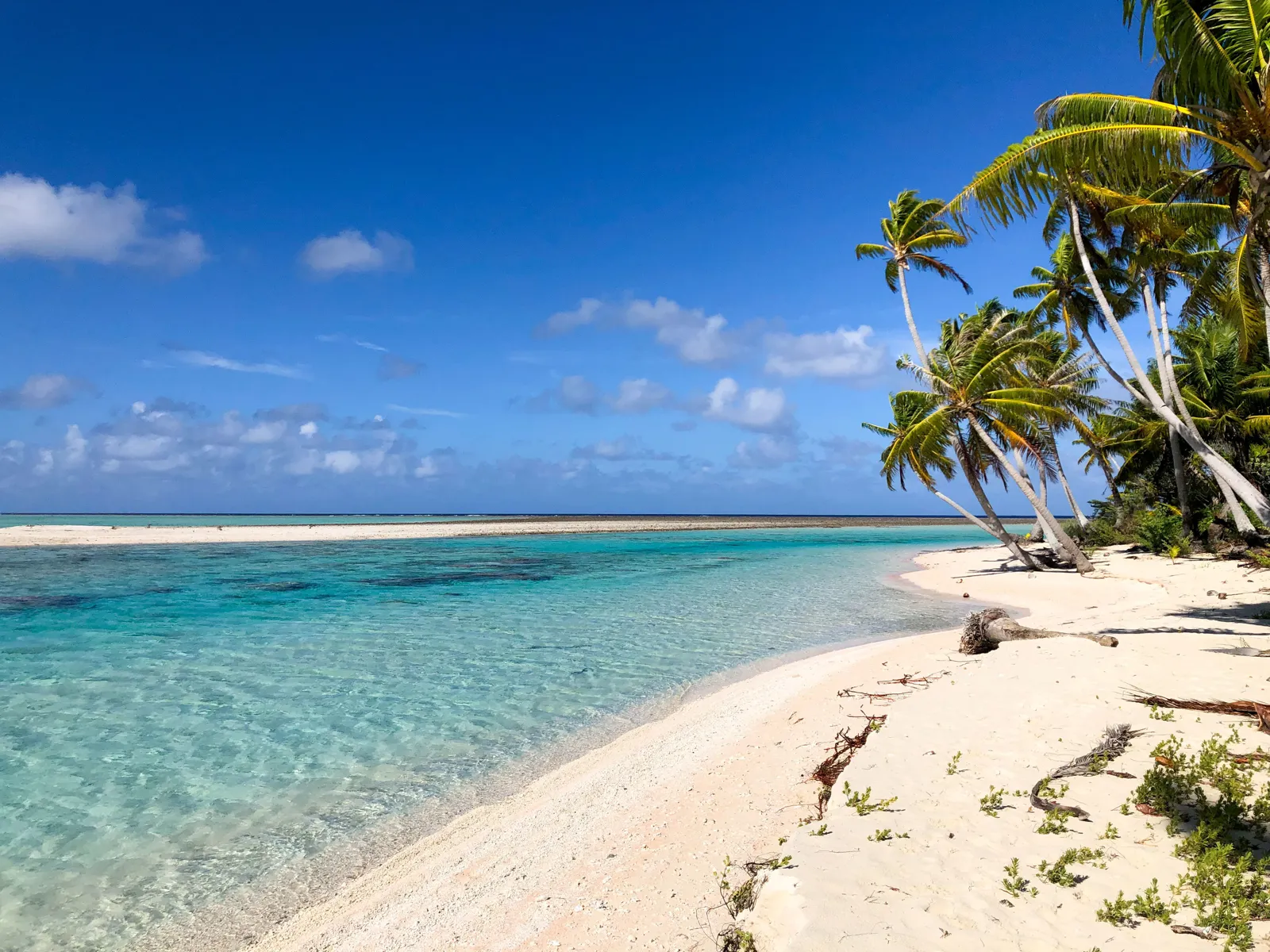
The lagoon of Tikehau atoll, French Polynesia
Tahiti and Papeete
The largest island is the arrival point for all international flights. Papeete can be seen in a day: the municipal market, the waterfront with its food trucks (roulottes) in the evening, and To’ata square, where the Heiva festival is held in July. The rest of the island deserves at least two days: the west coast and its black-sand beaches, inland valleys such as the Papenoo (by 4×4 with a guide), and the Tahiti Iti peninsula as far as Teahupo’o, a world-famous surf spot.
Moorea
Less than an hour by boat from Papeete, Moorea is the easiest island to combine with Tahiti. Cook’s Bay and Opunohu Bay, overlooked by jagged peaks, are best seen from the Belvedere lookout. Activities include snorkelling in the lagoon, hiking in the Opunohu valley and whale-watching boat trips in season with licensed operators.
Bora Bora
Mount Otemanu at the centre of a vast lagoon fringed by motu (islets): this is the best-known image of French Polynesia. The airport is on a motu, linked to Vaitape, the main village, by a shuttle boat. Accommodation ranges from upscale overwater bungalows to guesthouses on the main island. On the programme: a boat tour of the lagoon, snorkelling, Matira beach and possibly diving with rays.
Huahine, Raiatea and Taha’a
The other Leeward Islands are quieter than Bora Bora. Huahine is known for its villages and archaeological sites (marae). Raiatea is home to the Taputapuātea marae, a UNESCO World Heritage Site and a major centre of Polynesian culture. Taha’a, which shares the same lagoon as Raiatea, is known for its vanilla plantations and pearl farms.
Rangiroa and Tikehau (Tuamotu)
Rangiroa is one of the largest atolls in the world: its lagoon is so vast that you cannot see the other side. The Tiputa pass is renowned for diving, with dolphins and sharks. Tikehau, smaller, has pink-sand beaches and a very quiet atmosphere. On the atolls, life revolves around the lagoon: diving, snorkelling and boat trips.
Fakarava (Tuamotu)
Fakarava is part of a UNESCO biosphere reserve. Its two passes, Garuae in the north and Tumakohua in the south, are among the best-known dive sites in French Polynesia. The village of Rotoava has most of the guesthouses; the south of the atoll is very isolated.
The Marquesas
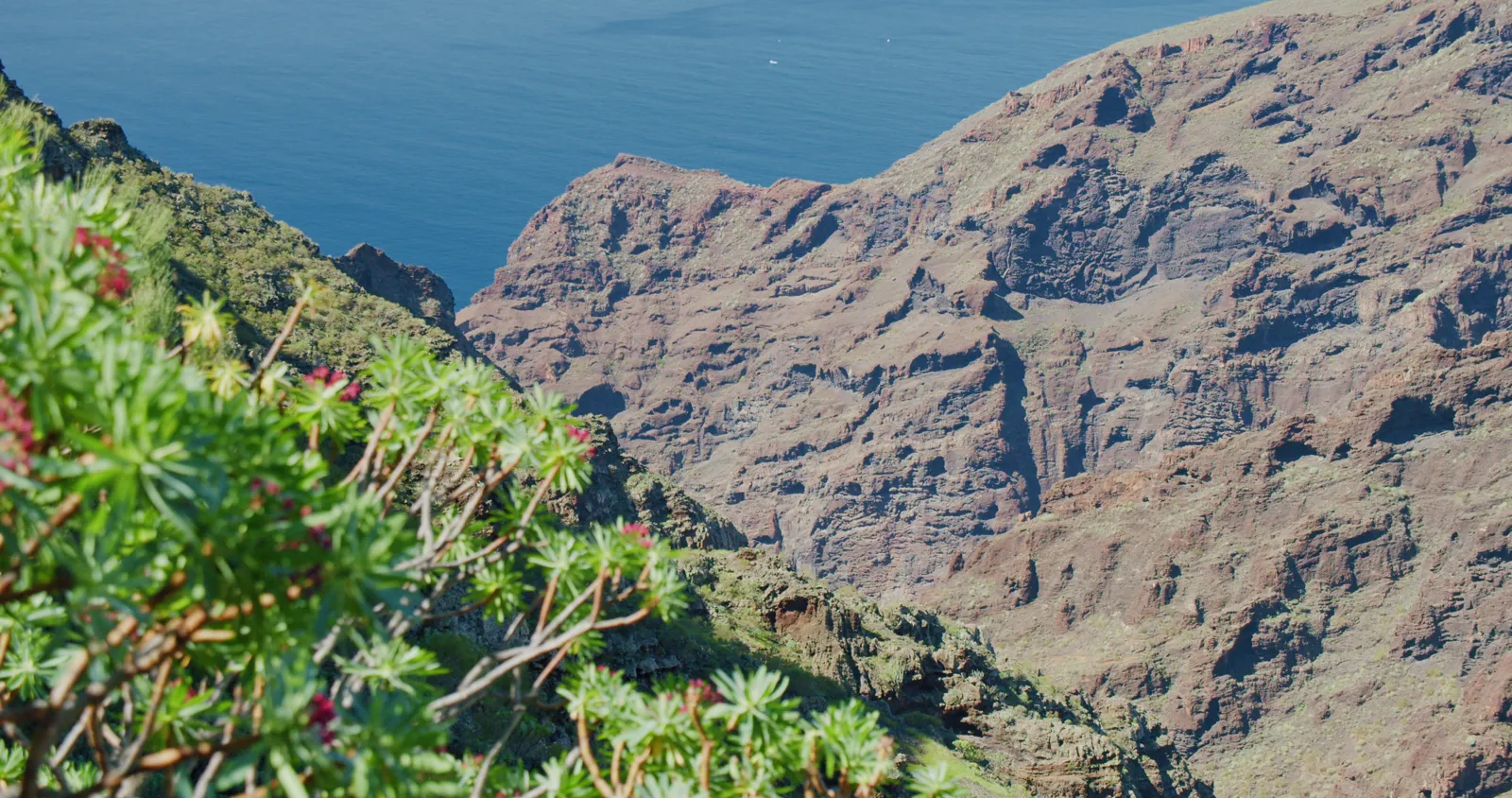
About 1,400 km (870 mi) northeast of Tahiti, the Marquesas have almost no lagoons, but cliffs, deep valleys and archaeological sites (tiki, me’ae). They have been a UNESCO World Heritage Site since 2024. Hiva Oa is home to the graves of Paul Gauguin and Jacques Brel in Atuona. You get there by plane with Air Tahiti or on board a mixed cargo-passenger ship that serves the archipelago.
Rurutu and the Austral Islands
Further south and cooler, the Austral Islands see few visitors. Rurutu is known for humpback whale watching from July to October, with limestone cliffs and caves. Comfort is simple, in family-run guesthouses.
Itinerary ideas for French Polynesia
10 days: Tahiti, Moorea and Bora Bora
Day 1: arrival in Tahiti, rest (the time difference is significant)
Day 2: Papeete, market, island tour or Papenoo valley
Days 3 to 5: Moorea by boat: Belvedere lookout, lagoon, hiking, whales from July to October
Days 6 to 9: flight to Bora Bora: lagoon tour, snorkelling, Matira beach
Day 10: back to Tahiti for your international flight
2 weeks: Society Islands and Tuamotu
Days 1 and 2: Tahiti and Papeete
Days 3 to 5: Moorea
Days 6 and 7: Huahine or Raiatea and Taha’a (marae, vanilla, pearls)
Days 8 to 10: Bora Bora
Days 11 to 13: Rangiroa or Fakarava, diving or snorkelling in the passes
Day 14: back to Tahiti
Connections between islands depend on Air Tahiti schedules: check them before fixing the order of your stops, as not all islands are linked directly to each other.
Budget for a trip to French Polynesia
French Polynesia is one of the most expensive destinations in the world: food is imported, accommodation is limited on the small islands and inter-island flights are costly. Indicative amounts per person per day, excluding international and inter-island flights (converted from our euro estimates at roughly €1 = US$1.12, ECB rate of 23 October 2026):
Indicative estimates, varying widely by island and season. Bora Bora is much more expensive than the other islands.
On top of this budget come the international round-trip flight, which accounts for a large share of the total cost, and Air Tahiti inter-island flights. If you visit several islands, compare single tickets with the airline’s multi-island passes. Family-run guesthouses, often with half board, are the best way to keep costs down.
Getting around French Polynesia
Plane: Air Tahiti links Tahiti with most inhabited islands in the five archipelagos. It is the only fast way to reach Bora Bora, the Tuamotu or the Marquesas. Checked baggage is limited by weight: check your allowance before departure. The U.S. Federal Aviation Administration has assessed French Polynesia’s civil aviation authority as compliant with ICAO safety standards (the U.S. Department of State (travel.state.gov, last updated October 22, 2026)).
Boat: fast ferries link Papeete and Moorea in under an hour, several times a day. Other sea links serve the Leeward Islands, and mixed cargo-passenger ships go as far as the Tuamotu and the Marquesas for travellers with time to spare. Keep an eye on your belongings on buses and ferries (travel.state.gov).
Car and scooter: renting is convenient on Tahiti, Moorea, Huahine or Raiatea, where a road circles the island. On Bora Bora, an e-bike or scooter is enough; on the atolls, bicycles are the norm. UK drivers need the 1968 International Driving Permit plus their UK licence, and must get the IDP in the UK before travelling (the UK FCDO (GOV.UK, updated 10 December 2025)). According to the U.S. Department of State (travel.state.gov, last updated October 22, 2026), most main roads are paved but many secondary roads are not, many side streets are unlit, drink-driving and using a mobile phone while driving are illegal, and cyclists and moped riders should take extra care, especially at night.
Public transport: on Tahiti, buses serve the coast, with reduced frequency in the evening and at weekends.
Where to stay in French Polynesia
On Tahiti, stay on the west coast (Faa’a, Punaauia), close to the airport and the beaches, or in Papeete for a transit night. On Moorea, accommodation is spread around Cook’s Bay and Opunohu Bay and along the northwest coast. On Bora Bora, choose between hotels on the motu, reachable only by boat, and guesthouses on the main island, around Matira or Vaitape.
Family-run guesthouses (pensions de famille), run by Polynesians, can be found on almost every island, including the atolls and the Marquesas. They often offer half board, which is useful on small islands with few restaurants. Book ahead, as capacity is limited.
Entry requirements, health and safety
Entry requirements for French Polynesia. French Polynesia is an overseas collectivity of France, and its own authorities set and enforce entry rules (GOV.UK).
US citizens: according to the U.S. Department of State (travel.state.gov, last updated October 22, 2026), no visa is needed on a regular tourist passport for stays of no more than 90 days in any six months. Tourists must hold a return ticket, and the 12-page U.S. emergency passport is not valid for visa-free entry. Travel for work or research may require a visa obtained before arrival.
UK citizens: according to the UK FCDO (GOV.UK foreign travel advice, updated 10 December 2025), you can visit without a visa for up to 90 days for tourism or business. Your passport must have an expiry date at least 3 months after the date you plan to leave French Polynesia. A yellow fever vaccination certificate is required if you are coming from a country listed as a transmission risk.
Connections: the journey always involves at least one connection, often in another country: check that country’s transit rules (for example ESTA for a US stopover) with your airline. Entry requirements checked on 24 October 2026; check them again before you travel.
Customs: there are strict rules on goods brought into or out of French Polynesia, and anything prohibited or subject to duty must be declared (GOV.UK). For your return, check your home country’s customs allowances (e.g. CBP in the US, HMRC in the UK).
Health: health risks include dengue and chikungunya (the UK FCDO (GOV.UK, updated 10 December 2025)): use repellent and cover up. The U.S. Department of State advises being up to date on routine vaccines and considering hepatitis A and typhoid. Medical care is generally good on the major islands but limited in remote areas, where serious cases are referred to Tahiti, sometimes by air evacuation; many providers only accept cash (travel.state.gov). The EHIC and GHIC do not provide cover in French Polynesia (GOV.UK). Take out travel insurance covering medical costs and evacuation.
Diving: the UK FCDO advises checking the dive operator’s credentials, the condition of safety equipment and the availability of oxygen on board; the only hyperbaric chamber in French Polynesia is in Papeete (GOV.UK).
Safety: crime is low, but pickpocketing and bag snatching do occur; protests and strikes happen periodically and can sometimes turn violent (travel.state.gov). Avoid isolated areas, including beaches, after dark (GOV.UK).
Emergencies: ambulance 15 (or 40 48 59 06 from a landline), police 17, fire 18 (GOV.UK).
Cyclones and earthquakes: tropical storms including cyclones can occur from November to April, and earthquakes are a risk (GOV.UK). Follow local news and official alerts.
Practical tips for French Polynesia
Money: the CFP franc (XPF) is issued by the IEOM and pegged to the euro at 1,000 XPF = €8.38 (IEOM). On the small islands and atolls, take some cash in CFP francs before you leave Tahiti.
Internet: mobile coverage is good on the main islands and more limited on the atolls and in the Marquesas. Check your roaming charges before departure, or buy a local SIM card or an eSIM (see below).
Etiquette: « ia ora na » (hello) and « mauruuru » (thank you) are always appreciated. Marae are sacred sites: be respectful. Ask permission before settling on a beach that borders private property.
Whales: go whale watching only with a licensed operator, who knows the local rules on approach distances.
Food: try raw fish in coconut milk (poisson cru), ma’a tahiti (a traditional meal cooked in a Polynesian earth oven), grilled fish from the food trucks and local fruit.
Which island to choose in French Polynesia?
Each archipelago suits a different type of trip. This comparison covers the islands described above:
Island or archipelago
Best for
Highlights
Good to know
Tahiti
Everyone (international arrivals)
Papeete, valleys, Teahupo’o, black-sand beaches
At least two days on site
Moorea
First trip, families, tighter budgets
Cook’s and Opunohu bays, hiking, whales in season
Under an hour by ferry from Papeete
Bora Bora
Honeymoon, lagoon
Mount Otemanu, lagoon and motu, Matira beach
The most expensive island; reached by plane
Huahine, Raiatea, Taha’a
Travellers looking for calm and culture
Taputapuātea marae, vanilla, pearl farms
Quieter than Bora Bora
Rangiroa, Tikehau, Fakarava
Divers and snorkellers
Tiputa, Garuae and Tumakohua passes
Simple comfort; bring cash
Marquesas
Hikers, culture lovers
Cliffs, tiki, graves of Gauguin and Brel
A few extra days; different dry season
Austral Islands (Rurutu)
Off-the-beaten-track whale watching
Whales from July to October, caves
Cooler, family-run guesthouses
Mistakes to avoid on a trip to French Polynesia
Heading straight to another island: after a long-haul journey and a large time difference, keep a night of rest on Tahiti.
Fixing your itinerary before checking Air Tahiti flights: not all islands are linked directly to each other.
Forgetting transit rules: with a stopover in a third country (for example the United States), check its entry or transit authorisation requirements.
Heading to the small islands and atolls without cash: take CFP francs from Tahiti.
Exceeding the baggage allowance on inter-island flights: it is limited by weight; check it before departure.
Booking late for July and August: family-run guesthouses have limited capacity.
eSIM in French Polynesia: roaming, local operator and options
Before you leave, check how your mobile plan charges for French Polynesia: it is often billed as international roaming, and a US stopover may also use roaming. On site, the incumbent operator Vini sells an offer for visitors, the Vini Travel Card, available as an eSIM bought online and activated with a QR code. eSIMs from international providers rely on a local partner network, shown on the offer details.
Vini Travel Card offer (eSIM)
Data
Bonus calls or texts
Official price
20 GB
20 GB
30 min or 87 local texts
4,000 XPF incl. tax
40 GB
40 GB
60 min or 174 local texts
8,000 XPF incl. tax
Prices in CFP francs checked on 24 October 2026 on vini.pf. Bonus calls to French Polynesia or the « Premium Area » (mainland France, United States, Canada, Australia, New Zealand). Credit valid for 30 days.
Before buying, Vini asks you to make sure your phone is eSIM-compatible. Credit can be topped up online, in the Vini app or at resellers.
Short stay focused on Tahiti, Moorea and Bora Bora: a local or international eSIM is enough; compare data volume and network.
Atolls, Marquesas, Austral Islands: mobile coverage is more limited; check which network the offer uses and download offline maps.
Need your home number: keep your home line for bank text messages with data turned off, and use the eSIM for internet.
US stopover: activate the eSIM only when you arrive in French Polynesia.
How eSIMs work and how to install one is explained in our travel eSIM guide.
Source: Vini (vini.pf), « Vini Travel Card » page, checked on 24 October 2026.
Frequently asked questions
Do you need a passport to go to French Polynesia?
Yes. US and UK citizens can visit without a visa for up to 90 days (in any six months for US citizens), according to travel.state.gov (October 22, 2026) and GOV.UK (10 December 2025). UK passports must be valid at least 3 months after departure; US tourists need a return ticket. If you connect through another country, check its transit rules.
How long do you need to visit French Polynesia?
With a long-haul journey and a large time difference, allow at least 10 days for Tahiti, Moorea and Bora Bora. Two weeks let you add Huahine or Raiatea and a Tuamotu atoll. The Marquesas need a few extra days.
What is the best time to visit French Polynesia?
From May to October, during the cool season, which is drier and outside the cyclone season. July to September are the driest months in Tahiti. From November to April it is hotter and more humid, with a risk of cyclones, especially in February.
What currency is used in French Polynesia?
The CFP franc (XPF), not the euro. It is pegged to the euro at 1,000 XPF = €8.38, according to the IEOM. Take some cash for the small islands.
How do you get from Tahiti to Bora Bora?
By plane with Air Tahiti, from Tahiti-Faa’a airport. Bora Bora airport is on a motu, and a shuttle boat then takes you to the main island. Sea links to the Leeward Islands also exist, but take much longer.
How much does a 15-day trip to French Polynesia cost?
Based on our daily ranges, allow roughly US$2,000–3,000 per person in guesthouses and US$5,000–10,000 in comfort, excluding international and inter-island flights. For three weeks, allow roughly US$2,800–4,250 on a tight budget.
Which island should you choose for a first trip to French Polynesia?
Tahiti, Moorea and Bora Bora are the easiest trio to organise in 10 days. For more peace and quiet, replace or complement Bora Bora with Huahine or Taha’a; for diving, add Rangiroa or Fakarava.
Transparency: this page contains affiliate links, labelled as such. If you book through them we may earn a commission at no extra cost to you; it does not influence our content or recommendations. How we fund the site.