This Canary Islands travel guide starts with the key question: which island? Tenerife for Mount Teide and variety, Gran Canaria for Las Palmas and the Maspalomas dunes, Lanzarote for volcanic landscapes, Fuerteventura for beaches and board sports. A Spanish archipelago in the Atlantic off the coast of Morocco, the Canaries have seven main islands with very different landscapes: volcanoes and lava flows, dunes, laurel forests, and black or golden sand beaches. With a mild climate all year round and the euro as currency, they are one of the easiest sun destinations in Europe to organize. This guide helps you choose your island and plan your trip.
The climate lets you go all year round: 21 to 29 °C (70 to 84 °F) in the afternoon by the sea, from January to December, according to AEMET normals. Winter (December to March) is high season, when Europeans come looking for mild weather; July and August draw families. For the best balance of weather, prices and crowds, aim for April to June or September to November. Choose your coast too: on the mountainous islands, the south is drier and sunnier than the north. All the details, island by island and month by month, are in our article best time to visit the Canary Islands. The drier, sunnier south holds true even in midwinter: the Canary Islands weather in December compares the islands and coasts.
What to see in the Canary Islands: the highlights
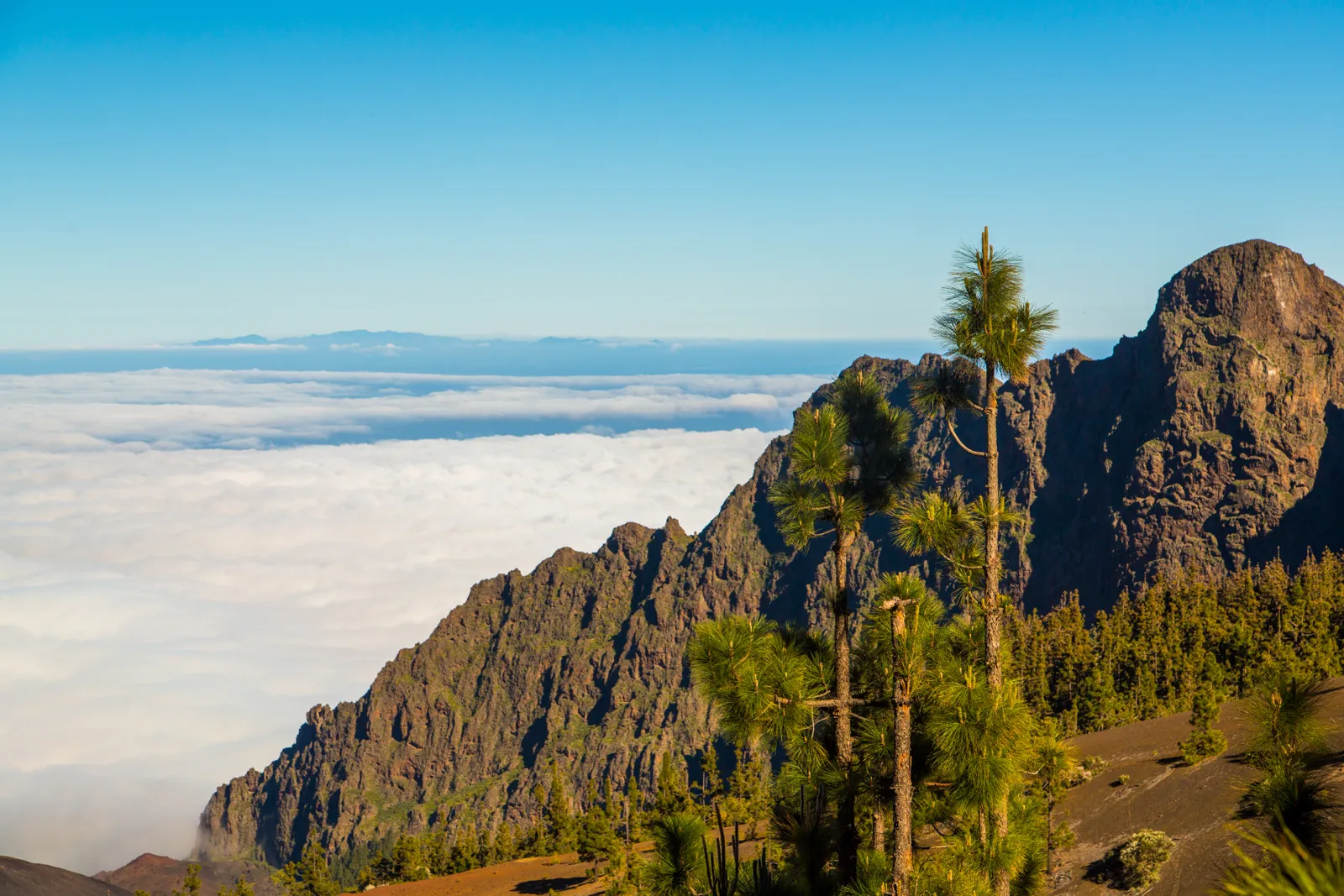
Mount Teide volcano above the clouds in Tenerife
Tenerife and Mount Teide
The largest and most visited island. Teide National Park, a World Heritage Site, surrounds the volcano, which rises to 3,715 m (12,188 ft), the highest point in Spain: lunar landscapes of lava and pumice, a cable car to near the summit and waymarked trails. Access to the summit itself is regulated: check the conditions and permits with the national park before you go. Add the colonial old town of San Cristóbal de La Laguna, the Anaga forest massif in the northeast, the village of Masca and the Los Gigantes cliffs in the west. The beach resorts (Costa Adeje, Los Cristianos) are in the south.
Gran Canaria
Often described as a « miniature continent », Gran Canaria packs a lot of variety into a few miles. Las Palmas, the largest city in the archipelago, has a historic quarter (Vegueta) and a long urban beach, Las Canteras. The south has the resorts and the Maspalomas dunes, protected as a nature reserve. The mountainous center, around Roque Nublo, is a favorite with hikers. Vegueta, Las Canteras and the Maspalomas dunes: knowing the best time to visit Gran Canaria helps you choose between beach and hiking.
Lanzarote
The island of volcanoes. Timanfaya National Park preserves the landscapes created by the 18th-century eruptions. The artist César Manrique shaped the island’s identity: the Jameos del Agua, set in a lava tube, the Mirador del Río facing the island of La Graciosa, and his house-museum. The vineyards of La Geria, planted in hollows of volcanic ash protected by low walls, are one of the most striking sights in the archipelago. Lava tube, Mirador del Río and La Geria vineyards: a stay on Lanzarote lets you see Manrique’s work in a few days.
Fuerteventura
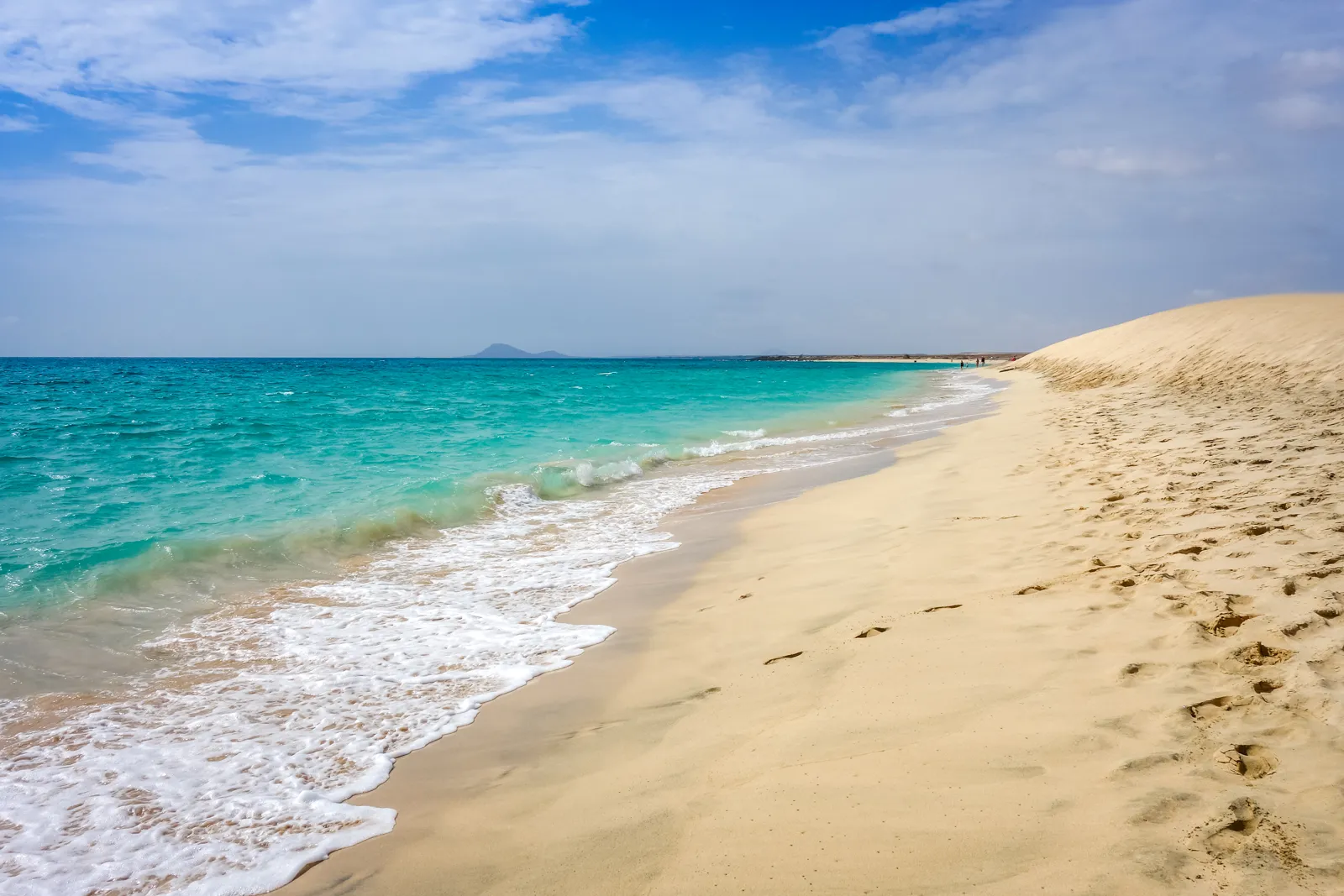
The closest to Africa and the most beach-oriented. The Corralejo dunes in the north, the long beaches of Sotavento and the Jandía peninsula in the south, and the steady wind that makes it a hotspot for windsurfing and kitesurfing: Fuerteventura is the island for water sports and quiet stays. The arid interior is best explored by car, around the former capital Betancuria. Windsurfing, kitesurfing and an arid interior to explore by car: our Fuerteventura travel guide helps you choose your coast.
La Palma
Nicknamed « la isla bonita », La Palma is green, steep and little developed. The Caldera de Taburiente, a vast volcanic cirque and national park, is its signature hike. At the top of the island, the Roque de los Muchachos observatory enjoys some of the clearest skies in Europe: the island is renowned for stargazing. In 2021, the Cumbre Vieja eruption affected the west of the island; check which areas are accessible before you go.
La Gomera and El Hierro
About an hour by ferry from Tenerife, La Gomera is an island of ravines and terraces, with the laurel forest of Garajonay National Park at its heart. The silbo gomero, a whistled language, is still practiced there. El Hierro, the smallest and most remote island, draws divers and travelers looking for peace and quiet.
Which Canary Island to choose?
Island
Best for
Highlights
Tenerife
First trip, hiking and beach
Teide, La Laguna, Anaga, Masca, southern resorts
Gran Canaria
City, beach and mountains
Las Palmas (Vegueta, Las Canteras), Maspalomas dunes, Roque Nublo
Lanzarote
Volcanic landscapes and architecture
Timanfaya, César Manrique sites, La Geria vineyards
Fuerteventura
Beach, windsurfing and kitesurfing
Corralejo dunes, Sotavento, Jandía
La Palma
Hiking and stargazing
Caldera de Taburiente, Roque de los Muchachos
La Gomera
Quiet hiking, combined with Tenerife
Garajonay National Park, silbo gomero
El Hierro
Diving and remoteness
The smallest and most remote island
Itinerary ideas for the Canary Islands
7 to 10 days: Tenerife and La Gomera
Days 1 and 2: northern Tenerife (La Laguna, Anaga massif, Puerto de la Cruz)
Day 3: Teide National Park
Days 4 and 5: the west and south (Masca, Los Gigantes, south coast)
Days 6 and 7: La Gomera by ferry (Garajonay, Valle Gran Rey)
Days 8 to 10: back to Tenerife, beach in the south or hiking
2 weeks: three islands
Days 1 to 5: Tenerife (Teide, Anaga, La Laguna, south coast)
Days 6 to 9: Gran Canaria (Las Palmas, Roque Nublo, Maspalomas dunes)
Days 10 to 14: Lanzarote (Timanfaya, César Manrique sites, La Geria) or Fuerteventura to end on the beach
To travel between islands, compare ferry and plane: the ferry is convenient between neighboring islands, while flying saves time over longer distances.
Budget for a trip to the Canary Islands
On the ground, prices are generally close to those of mainland Spain. Accommodation rises sharply in high season. Indicative amounts per person per day, excluding international flights:
Item
Budget
Comfort
Accommodation (based on a shared double room)
roughly €25–45
roughly €60–120
Meals
roughly €20–30 (menú del día, tapas)
roughly €40–60
Transport (bus, car rental, ferries)
roughly €10–20
roughly €25–40
Activities and sightseeing
roughly €5–10
roughly €15–30
Total per day
roughly €60–90
roughly €130–220
Indicative estimates, varying with the island and the season. Allow more during the winter, Easter and summer holidays.
The Canaries have their own tax system, so some goods may be cheaper than on the mainland; before flying home, check your home country’s customs allowances (e.g. CBP in the US, HMRC in the UK).
Who are the Canary Islands for?
Our verdicts by traveler profile, based on the information in this guide:
Winter sun: ideal: a mild climate all year round and the euro; the southern resorts are the safest bet for the beach in winter.
Families: yes: the resorts of southern Tenerife and Gran Canaria, the Maspalomas dunes.
Hiking: yes: Teide National Park, the Caldera de Taburiente on La Palma, the Garajonay forest on La Gomera.
Board sports: ideal on Fuerteventura for windsurfing and kitesurfing.
Couples: yes: Lanzarote’s landscapes and César Manrique sites, casas rurales in the islands’ interiors.
Budget travelers: yes: roughly €60–90 per person per day; accommodation rises during the holidays.
Getting around the Canary Islands
Getting there: each main island has an international airport (Tenerife has two, North and South).
Rental car: the freest way to explore each island, especially Lanzarote, Fuerteventura and inland Tenerife. Mountain roads are narrow and winding: allow plenty of time. A UK photocard licence is valid in Spain (UK FCDO, GOV.UK, updated 12 August 2026); US drivers must get an International Driving Permit before arriving and need one to rent a car, or risk a fine and the car being impounded (U.S. Department of State, travel.state.gov, last updated August 11, 2025).
Bus: each island has its own intercity bus network (called guaguas), handy between the main towns and resorts, less so for remote sites.
Ferries: sea links connect the islands, for example Tenerife and La Gomera or Lanzarote and Fuerteventura. Check the timetables, which vary with the season and the weather.
Plane: short inter-island flights link the archipelago’s main airports.
At Teide: roads cross the national park; leave nothing visible in your car at viewpoints and trailhead parking areas.
Where to stay in the Canary Islands
For beach and sun in winter, the southern resorts are the safest bet: Costa Adeje and Los Cristianos on Tenerife, Maspalomas and Puerto de Mogán on Gran Canaria, Puerto del Carmen on Lanzarote, Corralejo or the Jandía peninsula on Fuerteventura. For a more local feel and hiking, choose northern Tenerife (Puerto de la Cruz, La Orotava), Las Palmas, or the smaller islands such as La Palma and La Gomera. Sunny south or greener north, your choice of base also depends on Lanzarote’s climate month by month and its winds.
Options range from large resort hotels to rental apartments and rural houses (casas rurales) inland. During the winter holidays and in July–August, book several months ahead. Hotels and car rental companies have a legal duty to register your passport details: wait until staff have done so rather than leaving your passport at reception (UK FCDO).
Entry requirements for the Canary Islands
The Canary Islands are part of Spain, so Spanish (Schengen) rules apply. Entry requirements checked on 24 October 2026; check them again before you travel.
US citizens
According to the U.S. Department of State (travel.state.gov, last updated August 11, 2025), your passport should be valid for at least 3 months beyond your stay, and at least 6 months is recommended.
You will need sufficient proof of funds and a return plane ticket.
UK citizens
According to the UK FCDO (GOV.UK, updated 12 August 2026), you can travel without a visa to the Schengen area, including Spain, for up to 90 days in any 180-day period.
Your passport must have been issued less than 10 years before you arrive and be valid for at least 3 months after you plan to leave the Schengen area.
At the border you may be asked for proof of travel insurance, enough money for your stay, a return ticket and a hotel booking or proof of address. The EU Entry/Exit System (EES) is being rolled out: you may have to register your fingerprints and photo.
Health and safety
Health: UK travelers need a GHIC or EHIC for medically necessary state healthcare (UK FCDO); insurance covering medical costs and repatriation is still recommended. Altitude sickness can be a risk on Tenerife (UK FCDO): bring warm clothes to go up Teide.
Swimming: every year, people drown in Spain; some beaches, especially around the islands, have strong undercurrents. Follow the flag system (red flag: do not enter the water) and take extra care where there are no lifeguards (UK FCDO).
Wildfires: they happen often in summer, including on the islands; causing one, even unintentionally, is a criminal offense. Check the risk with the Spanish Meteorological Agency (AEMET) and follow the authorities’ instructions (UK FCDO).
Theft: thieves use distraction techniques, especially at airports and when collecting a hire car; keep your passport safe at all times (UK FCDO, U.S. Department of State).
Local rules: in some areas, it is illegal to walk in the street in swimwear or bare-chested, and drinking alcohol in the street can bring an on-the-spot fine (UK FCDO).
Emergencies: 112.
Practical tips for the Canary Islands
Money: the euro. You may be asked for ID when paying by card (UK FCDO). Estimate your spending with our currency converter.
Internet: check your provider’s roaming rates before you leave; an eSIM can be a cheaper option.
Meal times: lunch is around 2 p.m. and dinner late, often after 8:30 p.m., as on the Spanish mainland.
Clothing: even in summer, bring a jacket for windy evenings and for altitude; in winter, a fleece is essential on Teide.
Etiquette: appropriate clothing is expected in churches.
Nature: stay on marked trails in the national parks, do not take volcanic stones, never light fires outdoors.
Mistakes to avoid on a trip to the Canary Islands
Picking the wrong coast in winter: for beach and sun, the southern resorts are the safest bet (Costa Adeje, Maspalomas, Puerto del Carmen, Jandía).
Going up Teide in summer clothes: at altitude, a fleece is essential in winter and a jacket useful even in summer.
Leaving belongings visible in the car: especially at viewpoints and trailhead parking areas.
Underestimating the Atlantic: swell and currents are powerful, especially on north coasts; follow the flags.
Planning tight connections: mountain roads are narrow and winding, and ferry timetables vary with the season and weather.
Taking volcanic stones home: take nothing from the national parks.
Exceeding your customs allowances: the Canaries have their own tax system; check what you can bring home.
Not for a short stay if you are a US or British citizen: the Canaries are part of Spain and the Schengen area, and UK citizens can stay up to 90 days in any 180-day period without a visa (GOV.UK, 12 August 2026). US citizens need a passport valid at least 3 months beyond their stay, ideally 6 (travel.state.gov, August 11, 2025). Checked on 24 October 2026.
What is the best time to visit the Canary Islands?
The climate is mild all year round, 21 to 29 °C (70 to 84 °F) in the afternoon on the coasts. April to June and September to November offer the best balance of weather, prices and crowds. Winter is high season for sun-seekers.
Which Canary Island should I choose?
Tenerife for variety (Teide, hiking, southern beaches); Gran Canaria to combine city, dunes and mountains; Lanzarote for volcanic landscapes; Fuerteventura for beaches and board sports; La Palma and La Gomera for hiking and peace.
How much does a week in the Canary Islands cost?
Excluding flights, allow roughly €60–90 per person per day on a budget and €130–220 in comfort. Prices rise during the winter, Easter and summer holidays.
How many days do you need in the Canary Islands?
A week is enough to get to know one island such as Tenerife, possibly with a trip to La Gomera. With two weeks, you can combine two or three islands by ferry or plane.
What is the most beautiful Canary Island?
There is no single answer: it depends on what you are looking for. Tenerife and Gran Canaria are the most varied, Lanzarote the most volcanic, Fuerteventura the most beach-oriented, La Palma and La Gomera the greenest for quiet hiking.
Our sources
Entry, health, safety and driving information read on 24 October 2026: U.S. Department of State, Spain country information (travel.state.gov, last updated August 11, 2025), and UK FCDO, foreign travel advice for Spain (GOV.UK, updated 12 August 2026)
Spanish State Meteorological Agency (AEMET): climate normals for the Santa Cruz de Tenerife, Tenerife South, Gran Canaria, Lanzarote, Fuerteventura and La Palma stations
Transparency: this page contains affiliate links, labelled as such. If you book through them we may earn a commission at no extra cost to you; it does not influence our content or recommendations. How we fund the site.