ℹ️ Safety: check before you go. According to the U.S. Department of State (travel.state.gov, last updated September 17, 2026), violent crime such as armed robberies, burglaries and sexual assaults can occur anywhere in the Bahamas, and most crime occurs in Nassau (New Providence) and Freeport (Grand Bahama). The UK FCDO (GOV.UK, updated 28 May 2026) advises not to go on foot outside the main tourist areas and beaches, especially alone, and to travel in groups after dusk. Details in the safety section below.
To locate cities, regions, terrain, national parks and airports, see our map of the Bahamas.
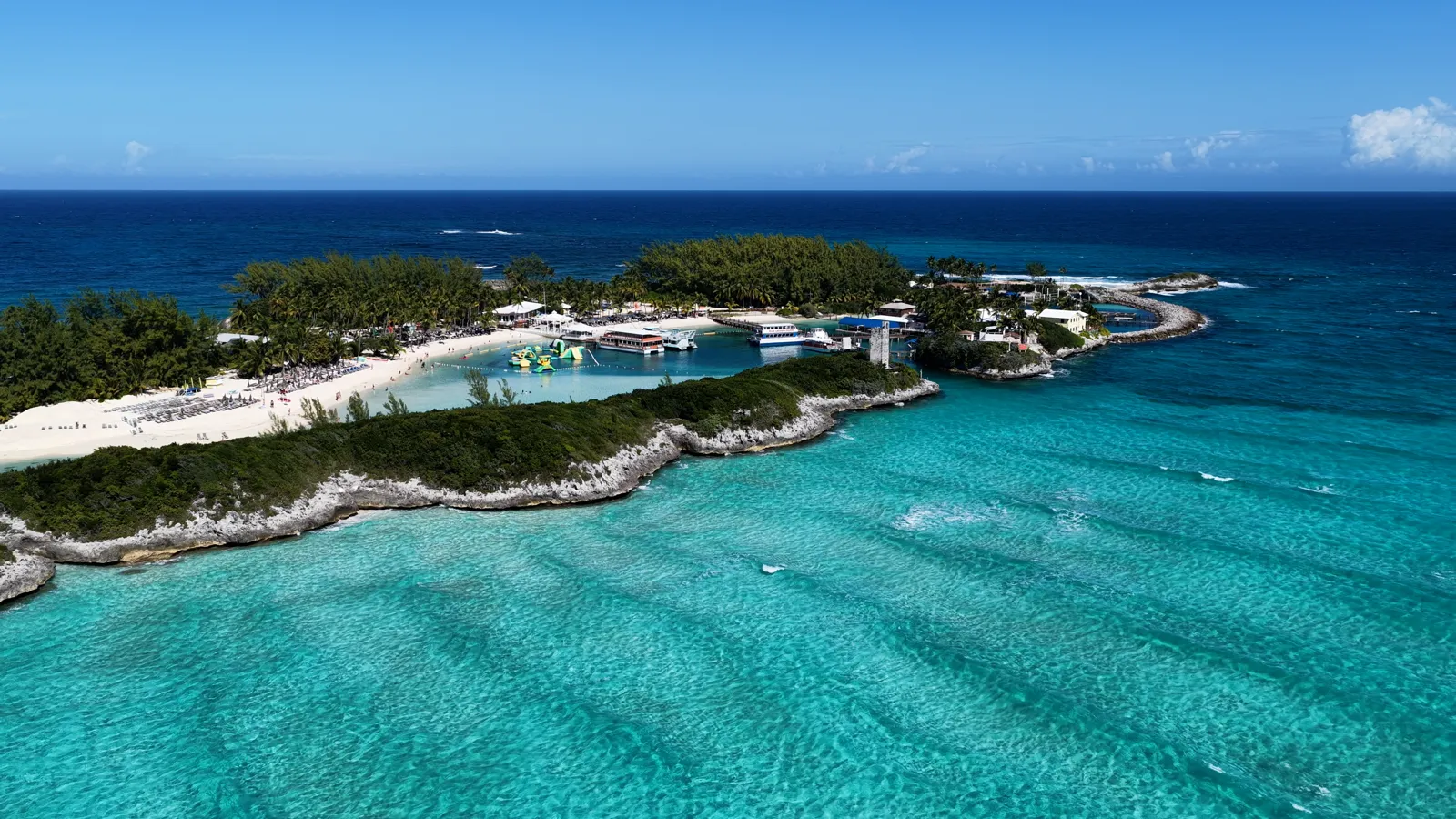
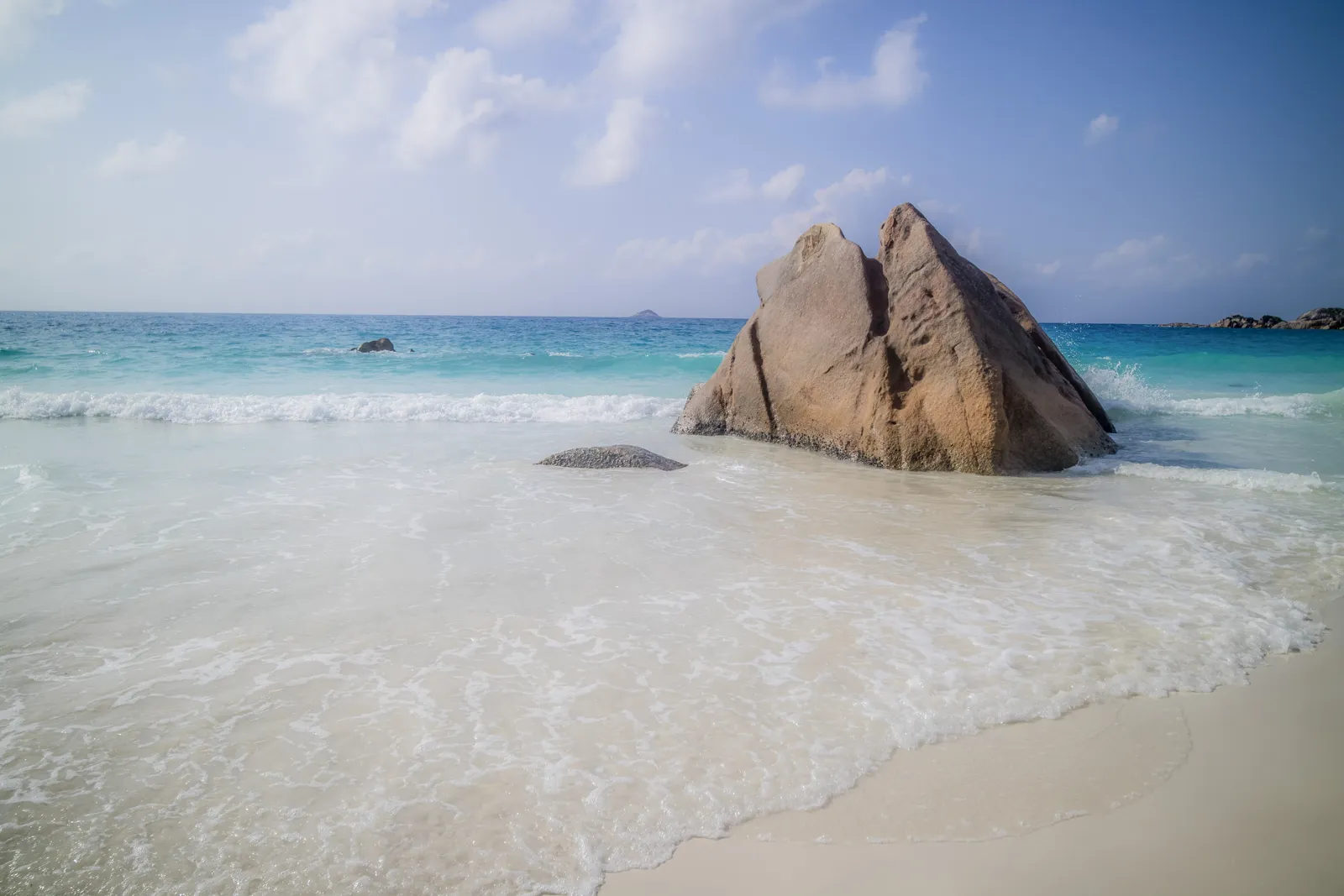
This Bahamas travel guide starts with geography: around 700 islands and cays spread between Florida and Cuba, shallow turquoise waters, sandbars exposed at low tide and long coral reefs. Nassau concentrates city life and the large hotels; the outer islands, known as the “Out Islands” or “Family Islands”, move at a slower pace. It is also an expensive destination, where travel between islands needs to be planned ahead.
The Bahamas at a glance
CapitalNassau, on New Providence island
LanguageEnglish
Currencythe Bahamian dollar · currencies(BSD), kept at the same level as the US dollar; both are accepted on all islands (Bahamas Ministry of Tourism)
Time zoneUTC−5, UTC−4 with daylight saving timeEastern Time, same as New York; London is 5 hours ahead
AirportsNassau Lynden Pindling International · detailsDomestic flights and ferries serve the other islands
EntryUS: no visa up to 90 days; UK: no visa up to 30 days, passport valid 6 months after departure · travel.state.gov · GOV.UK
Electricity120 V, 60 Hz · plugsUS devices plug straight in; UK travellers need a two-pin flat adapter, and the tourism board also advises a voltage converter (Bahamas Ministry of Tourism)
The best period runs from December to April, during the dry season: around 26 to 29 °C (79 to 84 °F) in the afternoon in Nassau and less than 75 mm (3.0 in) of rain per month. April and May offer the best balance between heat, pleasant sea and prices. From June to November it is hotter (32-33 °C, 90-91 °F), storms are frequent and the hurricane season runs from early June to the end of November; prices are lower then. Winter is cooler than in the rest of the Caribbean, with nights around 18 °C (64 °F). All the details, month by month with the official climate normals, are in our article best time to visit the Bahamas.
Things to do in the Bahamas: the must-see islands
Nassau on New Providence island, the Bahamas
Nassau and Paradise Island
The capital holds most of the archipelago’s heritage: the colonial buildings of Bay Street and Parliament Square, Fort Fincastle and the Queen’s Staircase, a stairway cut into the limestone, Fort Charlotte, and the Straw Market for crafts. Arawak Cay, the “Fish Fry”, gathers restaurants serving local food (conch, grilled fish). Linked by bridges, Paradise Island is home to large resorts and Cabbage Beach. Nassau is also a major cruise port: on days when ships are in, downtown is very crowded.
The Exumas
Southeast of Nassau, this chain of more than 300 islands is the best-known image of the Bahamas: white sandbars, turquoise water and small deserted islands. Boat trips from George Town or Staniel Cay go to Thunderball Grotto, a sea cave for snorkeling, to Big Major Cay and its swimming pigs, and to the Exuma Cays Land and Sea Park, a protected area where fishing is banned. Follow the guides’ instructions around the animals: do not feed them unless it is allowed.
Eleuthera and Harbour Island
Eleuthera stretches for more than 150 km (93 mi). People come for its quiet beaches, its cliffs on the Atlantic side and the Glass Window Bridge, where the island narrows to a few meters between the dark ocean and a turquoise sea. Just to the north, Harbour Island is known for the colorful houses of Dunmore Town and its pink-sand beach. Getting around is by electric golf cart or bicycle.
Andros
The largest island in the archipelago is also one of the least populated. A long barrier reef runs along its east coast, and its blue holes, deep cavities in the limestone, attract divers and the curious. Andros is a renowned fly-fishing destination. Accommodation is scattered: arrange your transfers in advance.
Grand Bahama
The second tourist hub, Grand Bahama is centered on Freeport and Lucaya. Lucayan National Park protects underwater caves, mangroves and Gold Rock Beach. The island was hit hard by Hurricane Dorian in 2019: check the condition of sites and accommodation before booking. The U.S. Department of State (travel.state.gov, last updated September 17, 2026) notes that most crime occurs in Nassau and Freeport.
The Abacos
In the north of the archipelago, the Abacos are sailing country: a string of cays protected by a reef, villages with colorful houses (Hope Town and its striped lighthouse, on Elbow Cay) and many marinas. Devastated by Hurricane Dorian in 2019, they are gradually rebuilding; check which services are available before you go.
Long Island and Bimini
Long Island, in the south, is home to Dean’s Blue Hole, a very deep marine blue hole that hosts freediving competitions, and long, calm beaches. At the other end, Bimini, less than 100 km (62 mi) from Florida, is a hotspot for big-game fishing and diving. Both islands suit travelers looking for a quieter Bahamas.
Itinerary ideas for the Bahamas
8 to 10 days: Nassau and the Exumas
Days 1 to 3: Nassau, historic center, Queen’s Staircase, Arawak Cay Fish Fry, Cabbage Beach on Paradise Island
Day 4: domestic flight or ferry to the Exumas
Days 5 to 8: boat trips (Thunderball Grotto, Big Major Cay, marine park), beaches of Great Exuma
Days 9 and 10: back to Nassau, departure
2 weeks: three islands
Days 1 to 3: Nassau and Paradise Island
Days 4 to 7: Eleuthera and Harbour Island (Glass Window Bridge, Atlantic beaches)
Days 8 to 12: the Exumas, boat trips and beaches
Days 13 and 14: back to Nassau, departure
Inter-island connections shape the itinerary: domestic flights, fast ferries to some islands close to Nassau, or “mailboats”, slow but cheap. Schedules change with the seasons and the weather: allow a margin, especially before your international flight.
Who is the Bahamas for?
Here is our view by traveler profile, based on the stops, budget and conditions covered in this guide to the Bahamas.
Profile
Our view
Beach
✅ Turquoise water, the sandbars of the Exumas, quiet beaches on Eleuthera and Long Island.
Diving and snorkeling
✅ The barrier reef and blue holes of Andros, Thunderball Grotto, Dean’s Blue Hole.
Couples
✅ Harbour Island and Eleuthera, with their boutique hotels and villas.
Families
⚠️ House rentals on the outer islands are practical, but costs and inter-island logistics add up.
Tight budget
❌ One of the most expensive destinations in the Caribbean: roughly US$135 to US$200 per person per day on a budget.
Sailing and fishing
✅ The Abacos for sailing, Andros for fly fishing, Bimini for big-game fishing.
Budget for a trip to the Bahamas
The Bahamas is among the most expensive destinations in the Caribbean: most goods are imported, accommodation is expensive and travel between islands adds up. Indicative amounts per person per day, based on two travelers, excluding international flights, in US dollars (the Bahamian dollar is kept at the same level as the US dollar):
Item
Budget
Comfort
Accommodation
roughly US$65 to US$110 (guesthouse, rental, small hotel)
roughly US$200 to US$390 (upscale hotel, resort)
Meals
roughly US$35 to US$50 (Fish Fry, snacks, grocery store)
roughly US$80 to US$135 (restaurants)
Transport
roughly US$15 to US$30 (jitneys in Nassau, bicycle, mailboat)
roughly US$45 to US$90 (taxis, car rental, domestic flights spread over the trip)
Activities
roughly US$15 to US$35 (beaches, museums, snorkeling)
roughly US$65 to US$170 (boat trips, diving)
Total per day
roughly US$135 to US$200 per person per day
roughly US$335 to US$560 per person per day
Indicative estimates converted from euros at the European Central Bank rate of 23 October 2026, varying by island and season: rates are highest from mid-December to April and lower from June to November.
To cut costs: travel in May or November, stay in rentals with a kitchen, shop in Nassau’s supermarkets before heading to the smaller islands, and group your boat trips. A day in the Exumas on a private boat is expensive: shared excursions from Nassau or Great Exuma are more affordable.
Getting around the Bahamas
Domestic flights: the fastest way to reach the islands from Nassau. Small planes often limit baggage weight: check the allowances.
Ferries and mailboats: fast ferries link Nassau with some nearby islands (Eleuthera, Harbour Island); mailboats, cargo ships that supply the islands, take passengers on long, slow crossings.
In Nassau: “jitneys”, public minibuses, stop frequently and often without warning; taxi fares are based on zones, surcharges can apply for extra passengers and luggage, and you should agree on the fare before setting off (U.S. Department of State, travel.state.gov, last updated September 17, 2026).
Car rental: useful on Eleuthera, Andros, Long Island or Great Exuma. Traffic drives on the left, but most vehicles, including rental cars, are left-hand drive imports from the USA (UK FCDO, GOV.UK, updated 28 May 2026). Traffic congestion in Nassau is severe, rural roads can be narrow and in poor condition, roads often flood during and after rainstorms, and seatbelts are compulsory, as are helmets on scooters and motorbikes (U.S. Department of State). UK citizens can drive on a UK photocard licence for up to 3 months (GOV.UK).
Golf carts and bicycles: the usual way to get around on small islands such as Harbour Island or Elbow Cay.
Where to stay in the Bahamas
In Nassau, Cable Beach groups beach hotels west of downtown, while Paradise Island is home to the large resorts. Downtown has a few more modest hotels, handy for exploring on foot during the day. In the Exumas, George Town and Staniel Cay are the most practical bases for boat trips. Harbour Island and Eleuthera offer boutique hotels and villas, Andros fishing and diving lodges. House rentals are very common on the outer islands and good value for families.
Break-ins and thefts are increasing, including at short-term vacation rentals: lock doors and windows, especially where there are no security guards (UK FCDO, GOV.UK, updated 28 May 2026; U.S. Department of State).
Entry requirements, health and safety
Entry requirements for the Bahamas. The Bahamian authorities set and enforce entry rules; see the Bahamas Immigration website for the latest visa information.
US citizens: according to the U.S. Department of State (travel.state.gov, last updated September 17, 2026), you need a valid U.S. passport and proof of anticipated departure from the Bahamas. No visa is required for tourism stays of up to 90 days. Cruise passengers may use another WHTI-compliant document such as a U.S. passport card, but a passport is strongly recommended in case you need to disembark and fly home.
UK citizens: according to the UK FCDO (GOV.UK foreign travel advice, updated 28 May 2026), your passport must have an expiry date at least 6 months after the date you plan to leave. You can usually stay up to 30 days without a visa, with extensions up to a maximum of 8 months; overstaying can lead to a fine, detention and deportation. If you arrive from the USA on an ESTA, your time in the Bahamas counts towards the 90 days of that ESTA. A yellow fever vaccination certificate is required if you are coming from a country listed as a transmission risk.
Connections and customs: if you connect through another country, check its transit rules with your airline. The Bahamas has strict rules on goods brought in or out, and you must declare anything prohibited or subject to duty (GOV.UK); check your home country’s customs allowances (e.g. CBP in the US, HMRC in the UK). Entry requirements checked on 24 October 2026; check them again before you travel.
Health: health risks include Zika and dengue (UK FCDO, GOV.UK, updated 28 May 2026): use repellent and cover up, and seek medical advice before traveling if you are pregnant. The U.S. Department of State advises being up to date on all vaccinations recommended by the CDC. Carry prescription medication in its original packaging with your doctor’s prescription, and check that it is legal in the Bahamas (travel.state.gov).
Medical costs: medical care is available on New Providence and Grand Bahama, but the outer islands have only small clinics; serious cases are transferred to Nassau, Freeport or Miami by air ambulance, and evacuation can cost tens of thousands of dollars (GOV.UK; travel.state.gov). Take out travel insurance covering medical costs and evacuation. Emergency number: 911 or 919.
Safety: armed robberies, burglaries and sexual assaults also affect tourist areas, mainly in Nassau and Freeport; the U.S. Department of State advises staying alert in the “Over the Hill” area of Nassau, south of Shirley Street (travel.state.gov, last updated September 17, 2026). Keep valuables out of sight, do not walk alone outside the main tourist areas, and avoid unlit areas after dark (GOV.UK). Do not leave drinks unattended.
Water sports: the industry is poorly regulated (GOV.UK; travel.state.gov). Deaths and serious injuries involving jet skis and boats occur, and sexual assaults by jet ski operators in Nassau have been reported: use only registered, insured operators, check their credentials and avoid going out in rough seas. Never enter water baited to attract sharks.
Local laws: marijuana and products containing CBD or THC are illegal, even with a medical prescription, and drug offenses can lead to prison. Firearms and ammunition are illegal, including a few rounds brought by mistake in luggage (U.S. Department of State).
Hurricanes: the season normally runs from 1 June to 30 November (UK FCDO, GOV.UK, updated 28 May 2026), although hurricanes can occur outside that period (travel.state.gov); check forecasts before you leave and follow the authorities’ instructions.
Practical tips for the Bahamas
Money: the Bahamian dollar is kept at the same level as the US dollar, and both are accepted interchangeably on all islands. ATMs are found in banks on Nassau/Paradise Island, Grand Bahama and most major Out Islands; some places take credit cards, but carry cash when exploring the Out Islands (Bahamas Ministry of Tourism, read on 24 October 2026). Our currency converter helps you estimate your spending.
Tipping: customary; porters usually receive $1 per bag and most other services (waiters, taxis) 15%. Many establishments already include the gratuity in the bill: check before paying (Bahamas Ministry of Tourism).
Internet and phone: wifi is common in hotels. An eSIM or local SIM card is handy for booking a taxi and finding your way, especially on the outer islands.
Etiquette: Bahamians value politeness: say hello before asking for anything. Neat dress is expected in town and in churches; keep swimwear for the beach. Public displays of affection are uncommon (GOV.UK).
Environment: do not touch the coral, use reef-safe sunscreen and do not take conch or shells in the marine parks.
Read also: To pick dates outside the hurricane season, see our article best time to visit the Bahamas. As Nassau is a major port of call, our page Bahamas cruises covers this other way of exploring the archipelago. For the best balance between heat and prices, see also where to go in April.
Frequently asked questions
Do I need a visa to visit the Bahamas?
US citizens: no visa for tourism stays of up to 90 days, with a valid passport and proof of onward or return travel (U.S. Department of State, travel.state.gov, last updated September 17, 2026). UK citizens: usually no visa for up to 30 days, extendable to a maximum of 8 months, with a passport valid at least 6 months after the date you plan to leave (UK FCDO, GOV.UK, updated 28 May 2026). Check the Bahamas Immigration website before you travel.
Is the Bahamas safe?
Most visits are trouble-free, but violent crime, including armed robberies, burglaries and sexual assaults, occurs, mostly in Nassau and Freeport (U.S. Department of State, travel.state.gov, last updated September 17, 2026; UK FCDO, GOV.UK, updated 28 May 2026). The Family or Out Islands have lower crime rates. Keep valuables out of sight, avoid walking alone outside the main tourist areas and after dark, and only use registered water sports operators.
Which island should I choose for a first trip to the Bahamas?
Nassau and Paradise Island for easy access, combined with the Exumas for the sandbars and boat trips. Eleuthera and Harbour Island suit travelers looking for more peace and quiet.
Is the Bahamas expensive?
Yes. Accommodation, meals and travel between islands are expensive. Allow roughly US$135 to US$200 per person per day on a budget, and roughly US$335 to US$560 per person per day for a comfortable trip, excluding international flights.
When is the best time to visit the Bahamas?
From December to April, during the dry season, with a very good compromise in April and May. The hurricane season normally runs from 1 June to 30 November.
How many days do you need in the Bahamas?
Allow 8 to 10 days to combine Nassau and the Exumas, and two weeks to add a third island such as Eleuthera and Harbour Island. Inter-island connections (domestic flights, ferries, mailboats) take time and depend on the weather: keep a margin before your flight home.
How much does a week in the Bahamas cost?
Excluding international flights, allow roughly US$135 to US$200 per person per day on a budget, or about US$940 to US$1,410 for 7 days, and roughly US$335 to US$560 per day for a comfortable trip (about US$2,350 to US$3,920). Domestic flights to the Out Islands come on top if you leave Nassau.
Our sources
Entry, health, safety and transport information read on 24 October 2026: U.S. Department of State, Bahamas country information (travel.state.gov, last updated September 17, 2026), and UK FCDO, foreign travel advice for the Bahamas (GOV.UK, updated 28 May 2026)
Bahamas Ministry of Tourism, frequently asked questions (bahamas.com, read on 24 October 2026): currency, ATMs, electricity, time zone, tipping
European Central Bank: euro reference rates of 23 October 2026 (budget conversion)
Bahamas Department of Meteorology, 1991–2020 climate normals for Nassau (Lynden Pindling International Airport), published by the World Meteorological Organization (NOAA archive)
Transparency: this page contains affiliate links, labelled as such. If you book through them we may earn a commission at no extra cost to you; it does not influence our content or recommendations. How we fund the site.