Saint-Barthélemy, better known as St Barts, is a small French island in the Lesser Antilles, about 25 km (16 mi) south-east of St Martin. Dry hills, sheltered bays and around fifteen public beaches on 21 km² (8 sq mi): it is one of the most expensive destinations in the Caribbean, known for its tranquillity and its harbour at Gustavia. You reach it by small plane or ferry, after a connection. This St Barts travel guide covers what to do, where to stay, what budget to plan and how to get there.
To locate the villages, bays, relief, nature reserve and airport, see our map of Saint-Barthélemy.
Saint-Barthélemy at a glance
CapitalGustaviaFrench overseas collectivity
LanguageFrench (official)English is very widely spoken
CurrencyEuro (EUR), US dollars often accepted · currencies
AirportsSaint-Barthélemy Rémy de Haenen (SBH), small planes only; long-haul flights land at Princess Juliana, St Maarten (SXM) or Pointe-à-Pitre, Guadeloupe (PTP)
EntryUS: passport valid 6 months, no visa up to 90 days; UK: passport valid 3 months after departure, no visa up to 3 months · travel.state.gov · GOV.UK
Electricitycheck voltage and plug type before you travel · plugs
Budgetroughly €200–300 per person per day on a tight budget, €500 and more for comfort · details
When to go to St Barts
The best time is the carême, the dry season, from December to April: little rain (38 to 53 mm, or 1.5 to 2.1 in, per month from January to April in Gustavia), steady trade winds and no hurricanes. It is the peak season, with record prices over the holidays. May and June are an excellent compromise. From late August to October, at the heart of the hurricane season, many businesses close. Details, Météo-France normals and month-by-month advice are in our article on when to go to Saint-Barthélemy.
Things to do in St Barts: the highlights
Gustavia
The capital surrounds a natural harbour where sailing boats and yachts anchor. Its streets are lined with shops, restaurants and a few buildings from the Swedish period (the island was Swedish from 1784 to 1878), such as the old town hall and the Swedish bell tower. The Wall House, at the end of the harbour, houses a museum devoted to the island’s history. Climb to Fort Karl or to the Fort Gustave lighthouse for the view over the harbour.
Shell Beach
A few minutes’ walk from the centre of Gustavia, this small beach is covered in tiny shells. Sheltered from the trade winds, it is popular for swimming and at sunset.
Saint-Jean
Saint-Jean bay, split in two by the Eden Rock outcrop, is the liveliest on the island. Its shallow lagoon, protected by a reef, is suitable for children. You can also watch the spectacular landings of small planes on the nearby runway, which come in just above the road.
Anse de Colombier
At the north-western tip, Colombier can only be reached on foot, by a trail of about 20 to 30 minutes from the end of the Flamands road, or by boat. Its bay, inside the nature reserve, is one of the best snorkelling spots on the island, with turtles and reef fish. Bring water and a hat: there are no facilities.
Saline and Gouverneur
In the south, these two large white-sand beaches have no buildings on the seafront. Saline is backed by old salt ponds, Gouverneur by a bay surrounded by hills. There is no shade and no shops: come in the morning and bring sun protection. The sea can be rougher than at Saint-Jean.
Grand Cul-de-Sac and the east coast
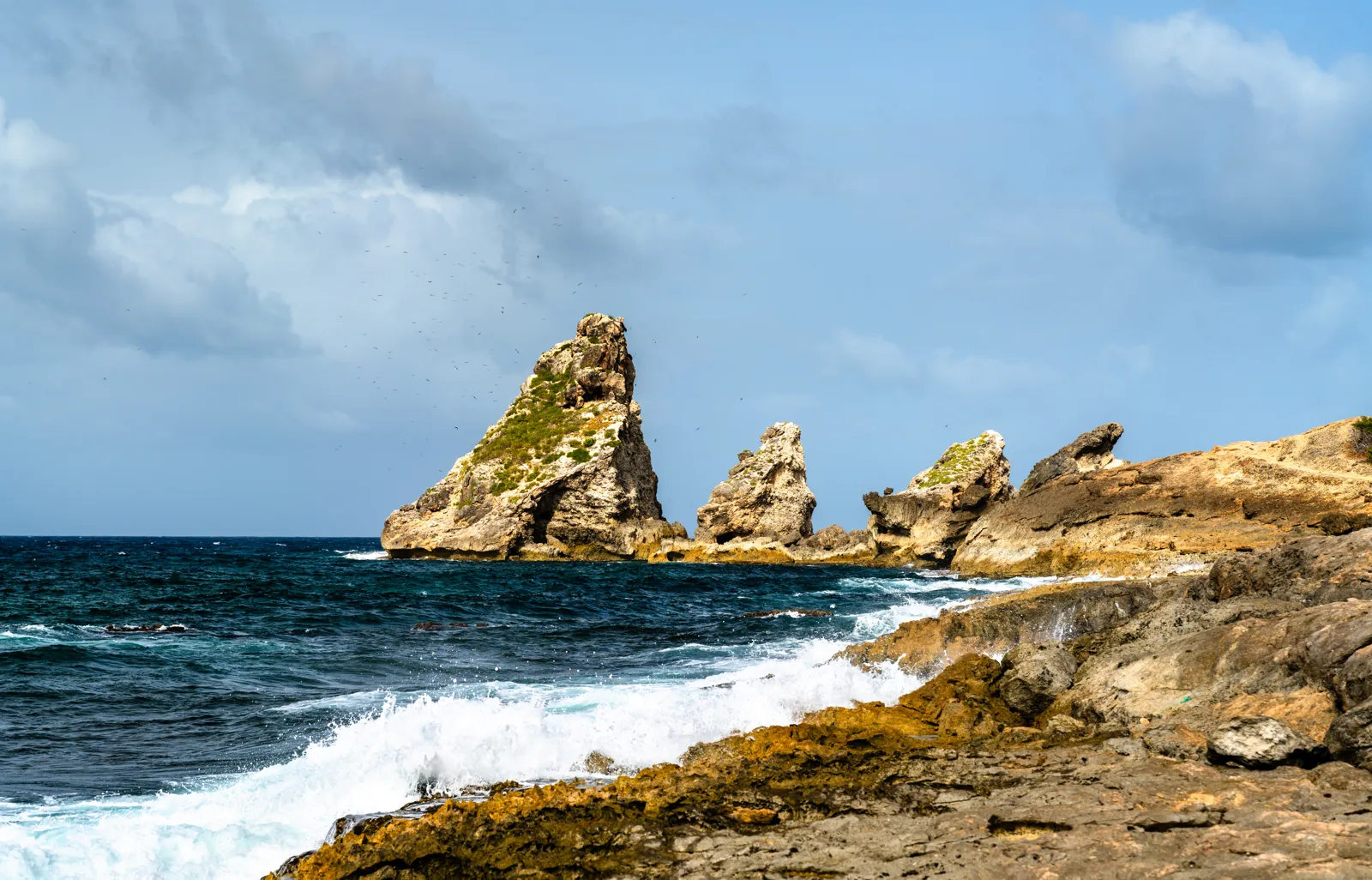
Grand Cul-de-Sac has a shallow lagoon protected by the reef, ideal for kitesurfing, windsurfing, paddleboarding and snorkelling with turtles. Further south, the wild Toiny coast offers views over the Atlantic; swimming there is often dangerous.
Lorient and Corossol
Lorient, the island’s first settlement, has kept a small beach popular with residents and a cemetery with flower-decorated graves. Corossol is a fishing village on the west coast, where a tradition of weaving latania palm leaves lives on.
The nature reserve
Created in 1996, the Saint-Barthélemy nature reserve protects several marine areas around the island, including Colombier and some islets. Mooring buoys have been installed to protect the seagrass beds and corals. Follow the rules: no anchoring outside designated areas, no taking anything away.
Itinerary ideas for St Barts (1 week, 2 weeks)
5 to 7 days: the island essentials
Day 1: arrival, Saint-Jean and Eden Rock bay
Day 2: Gustavia on foot, the Wall House, Fort Karl, sunset at Shell Beach
Day 3: hike to Anse de Colombier and snorkelling
Day 4: southern beaches, Saline in the morning, Gouverneur in the afternoon
Day 5: east coast: Lorient, Grand Cul-de-Sac (water sports), Toiny viewpoints
Days 6 and 7: boat trip around the island and the islets, relaxing
10 days to 2 weeks: St Barts and St Martin
Days 1 to 7: the programme above, at a slower pace
Days 8 to 10: ferry to St Martin: Marigot, Grand-Case, Orient Bay beaches
Days 11 to 14: excursion to Anguilla or Saba from St Martin (each island has its own entry rules: check them before you go), then fly home from St Martin’s airport
Budget for a trip to St Barts
Item (per day)
Tight budget
Comfort
Accommodation (double room or studio)
Roughly €200–400
Roughly €600 and more
Meals (per person)
Roughly €40–70
Roughly €120–250
Car hire
Roughly €50–80
Roughly €80–150
Activities (boat trips, water sports)
Roughly €0–50
Roughly €100–300
Indicative ranges excluding flights, varying widely by season: prices from mid-December to early January are much higher.
St Barts is one of the most expensive islands in the Caribbean: allow roughly €200–300 per person per day on a tight budget, and €500 and more for comfort. Accommodation is scarce and upmarket, and most goods are imported. To keep costs down, travel in May, June or November, rent a studio with a kitchen and shop at the supermarkets in Saint-Jean and Gustavia. All beaches are public and free.
Getting around St Barts
There is no bus network. A hire car, often a small automatic, is the most practical option: roads are narrow, steep and winding. Book it at the same time as your accommodation in high season. According to the UK FCDO (GOV.UK, updated 10 December 2025), French driving rules apply and you can drive with your UK licence; the U.S. Department of State (travel.state.gov, French West Indies page, last updated September 9, 2026) notes that traffic drives on the right, seatbelt laws are strictly enforced and children under 12 may not sit in the front seat. Taxis exist but are few and fairly expensive. Scooters are an option for experienced riders only.
Getting there: connecting flights from St Martin take about ten minutes; there are also flights from Pointe-à-Pitre. Ferries from St Martin (Philipsburg or Marigot depending on the company) take about an hour, and the sea can be rough. Check timetables and conditions with the companies when you book. As these ferries leave from Philipsburg or Marigot, our St Martin travel guide helps you plan a night there before the crossing. Philipsburg, Marigot and Princess Juliana airport are on our map of St Martin.
Where to stay in St Barts
Gustavia: convenient for getting by without a car, close to restaurants and the harbour
Saint-Jean: beach, shops and close to the airport; a good base for a first stay
Flamands and the north-west: quieter, close to the Colombier trail
Grand Cul-de-Sac and Lorient: the east coast, for water sports and a residential feel
Types of accommodation: villa rentals dominate, often with a pool; hotels are few and upmarket; a few apartment hotels and studios offer more affordable prices
Entry requirements for St Barts
US citizens: St Barts is covered by the U.S. Department of State’s French West Indies page (travel.state.gov, last updated September 9, 2026): you need a U.S. passport with at least 6 months’ validity. No visa is required for stays of up to 90 days if you have an onward or return ticket, confirmation of accommodation and evidence that you can support yourself.
UK citizens: according to the UK FCDO (GOV.UK, St Martin and St Barthélemy page, updated 10 December 2025), St Barts is a French overseas territory and you can visit without a visa for up to 3 months. Your passport must have an expiry date at least 3 months after the date you plan to leave. A yellow fever vaccination certificate is required only if you arrive from a country listed as a transmission risk. You must be able to prove your identity when asked, or within 4 hours at a police station.
The two sources differ on passport validity (6 months on the US page, 3 months after departure on GOV.UK): if in doubt, check with the French embassy or consulate and your airline.
Connections: if you fly in via Princess Juliana airport on the Dutch side of St Martin (Sint Maarten), check that territory’s own entry rules with your airline. For what you can bring home, check your home country’s customs allowances (e.g. CBP in the US, HMRC in the UK).
Health and safety
Health: the UK FCDO lists Zika and dengue among the health risks, and the U.S. Department of State lists chikungunya and dengue: protect yourself from mosquitoes and from the sun, which is strong all year round. According to GOV.UK, healthcare is of a standard equivalent to mainland France, but some specialist treatment is only available in Guadeloupe or Martinique. GOV.UK also states that St Barts is not part of the EU for healthcare purposes: a GHIC or EHIC gives no access to free care there, so UK travellers need adequate travel insurance covering treatment and repatriation. The U.S. Department of State reminds US travellers that Medicare and Medicaid do not apply overseas and strongly recommends medical evacuation insurance. Do not shelter under a manchineel tree, a coastal tree with toxic sap.
Safety: according to GOV.UK, crime levels are low, but take sensible precautions: avoid isolated areas, including beaches, after dark, and use hotel safes. The main dangers are the roads (steep slopes, tight bends) and the sea on beaches exposed to the swell. The hurricane season normally runs from June to November (GOV.UK): follow Météo-France and local authority alerts. Emergency number (GOV.UK): 112.
Practical tips for St Barts
Money: the euro; bank cards are accepted almost everywhere, with ATMs in Gustavia and Saint-Jean. If you are offered to pay in dollars, compare the exchange rate applied.
Internet and phone: check your carrier’s roaming charges for St Barts before you leave; be careful if your phone picks up a network from the Dutch side of St Martin, which may be billed differently. A local SIM card or an eSIM is an alternative.
Etiquette: nudity is not allowed on the island’s beaches; avoid beachwear in Gustavia and in shops.
Opening hours: many shops close at lunchtime, and many businesses close between late August and October.
What to pack: reef-safe sunscreen, mask and snorkel, walking shoes for Colombier, mosquito repellent.
St Barts: who is it for?
Couples: yes: an island known for its tranquillity, public beaches such as Shell Beach at sunset, villa rentals with pools.
Families: yes for swimming: the shallow Saint-Jean lagoon, protected by a reef, is suitable for children.
Snorkelling and water sports: yes: Anse de Colombier in the nature reserve, the Grand Cul-de-Sac lagoon for kitesurfing, windsurfing and paddleboarding.
Budget travellers: no: it is one of the most expensive islands in the Caribbean, roughly €200–300 per person per day on a tight budget, excluding flights. May, June and November keep costs down.
Travelling without a car: difficult: no bus network and few taxis; only Gustavia is easy to enjoy on foot.
There are no long-haul flights to the island. Fly to St Martin (Princess Juliana airport, on the Dutch side) or Pointe-à-Pitre in Guadeloupe, then take a small plane to Saint-Jean, or a ferry from St Martin (about an hour).
Do I need a passport or visa for St Barts?
US and UK citizens need a passport but no visa for a short stay. According to the U.S. Department of State (last updated September 9, 2026), US citizens need a passport valid for at least 6 months and can stay up to 90 days with an onward ticket, proof of accommodation and of funds. According to the UK FCDO (updated 10 December 2025), UK citizens can stay up to 3 months with a passport valid at least 3 months after departure.
How much does a stay in St Barts cost?
Excluding flights, allow at least roughly €200–300 per person per day on a tight budget, and often over €500 for comfort. Prices are highest from mid-December to early January.
How many days should you spend in St Barts?
Five to seven days are enough to discover the beaches, Gustavia and Anse de Colombier. For a longer stay, combine it with St Martin, an hour away by ferry.
When is the best time to visit St Barts?
From December to April, during the dry season. May and June are a good compromise between weather and prices; avoid September and October, at the heart of the hurricane season.
What budget should I plan for a week in St Barts?
Excluding flights, on a tight budget allow roughly €200–400 a night for a double room or studio, €40–70 for meals per person and €50–80 a day for car hire, or roughly €330–620 a day for two before activities. For comfort, accommodation alone often exceeds €600 a night. Prices peak at Christmas and New Year.
Do I need to rent a car in St Barts?
It is the most practical option: beaches and viewpoints are spread all over the island. Allow roughly €50–80 a day for a small car, more in high season, and book early for Christmas and February.
Our sources
Météo-France: 1991-2020 climate normals for Gustavia
Transparency: this page contains affiliate links, labelled as such. If you book through them we may earn a commission at no extra cost to you; it does not influence our content or recommendations. How we fund the site.