This Guadeloupe travel guide covers what to see and do, which itineraries to follow and what budget to plan. A French archipelago in the Lesser Antilles, Guadeloupe uses the euro and French is spoken everywhere. Its butterfly-shaped main island combines two worlds: Grande-Terre, flat and lined with beaches, and Basse-Terre, volcanic and covered in rainforest. Around them, Marie-Galante, Les Saintes and La Désirade complete the trip.
To locate the towns, regions, relief, national park and airports, see our map of Guadeloupe.
Guadeloupe at a glance
CapitalBasse-Terre (prefecture)French overseas region and department; the main urban area is Pointe-à-Pitre – Les Abymes
EntryUS and UK: no visa for up to 90 days; US: passport valid 6 months; UK: passport valid 3 months after departure · travel.state.gov · GOV.UK
Electricitycheck voltage and plug type before you travel · plugs
Budgetroughly €70–110 per person per day on a budget, €150–250 for comfort · details
When to go to Guadeloupe
The best time is the carême, the dry season, from roughly December to April: less rain, steady trade winds and no hurricane risk. It is also the high season, expensive at Christmas and in February. The hivernage, from June to November, is hotter and wetter, with the highest hurricane risk from August to October. June is often a good compromise between weather and prices. Details, Météo-France climate normals and month-by-month advice are in our article on when to go to Guadeloupe. For the heart of the dry season, our page on Guadeloupe in February covers the weather, the carnival and peak-season prices.
What to see in Guadeloupe: the highlights
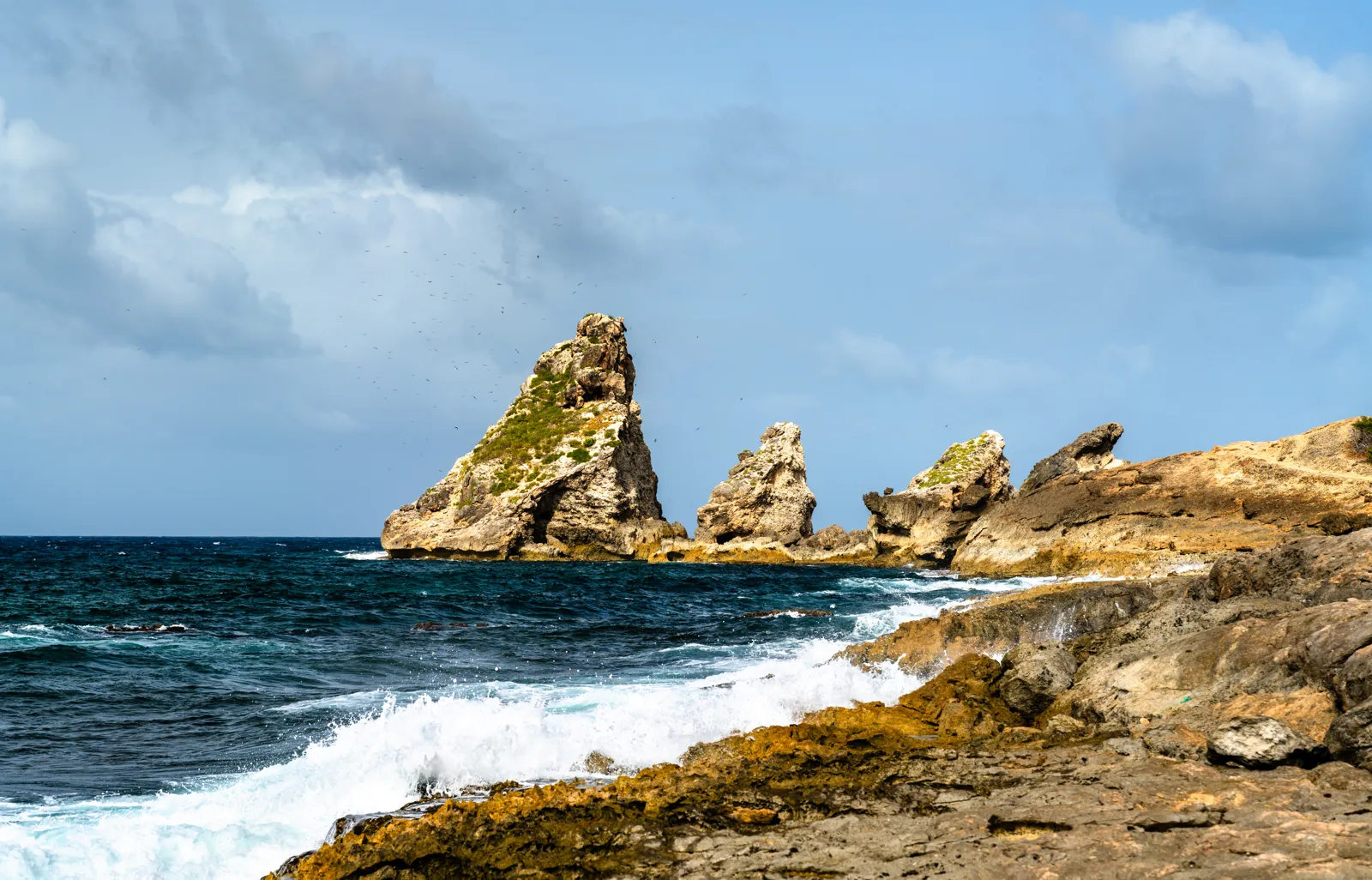
Rocky coast and limestone pinnacles of Pointe des Châteaux, Guadeloupe
Pointe-à-Pitre
The archipelago’s main town and port can be visited in half a day: the spice market and the Darse market, Place de la Victoire, Creole houses and above all the Mémorial ACTe, a centre devoted to the history of the slave trade and slavery. Go in the morning, when the town is at its busiest.
Sainte-Anne and Saint-François
On the south coast of Grande-Terre, these two towns have beaches sheltered by the coral reef, shallow lagoons and a wide choice of accommodation. Saint-François is also the departure point for boats to La Désirade and for the road to Pointe des Châteaux.
Pointe des Châteaux and northern Grande-Terre
Pointe des Châteaux, at the eastern tip of Grande-Terre, offers a wide view over the Atlantic and La Désirade from its cross. In the north, Pointe de la Grande Vigie and the Porte d’Enfer, at Anse-Bertrand, show a wilder coastline with cliffs pounded by the swell. Swimming there is often dangerous.
La Soufrière and the national park
La Soufrière volcano, the highest point in the Lesser Antilles (1,467 m / 4,813 ft), can be climbed in a few hours there and back from the Bains-Jaunes car park, above Saint-Claude. Guadeloupe National Park also protects the Carbet Falls, the Route de la Traversée and many trails through the rainforest. Check trail openings and any instructions related to volcanic activity on the park’s website before you set off.
The Route de la Traversée and the waterfalls
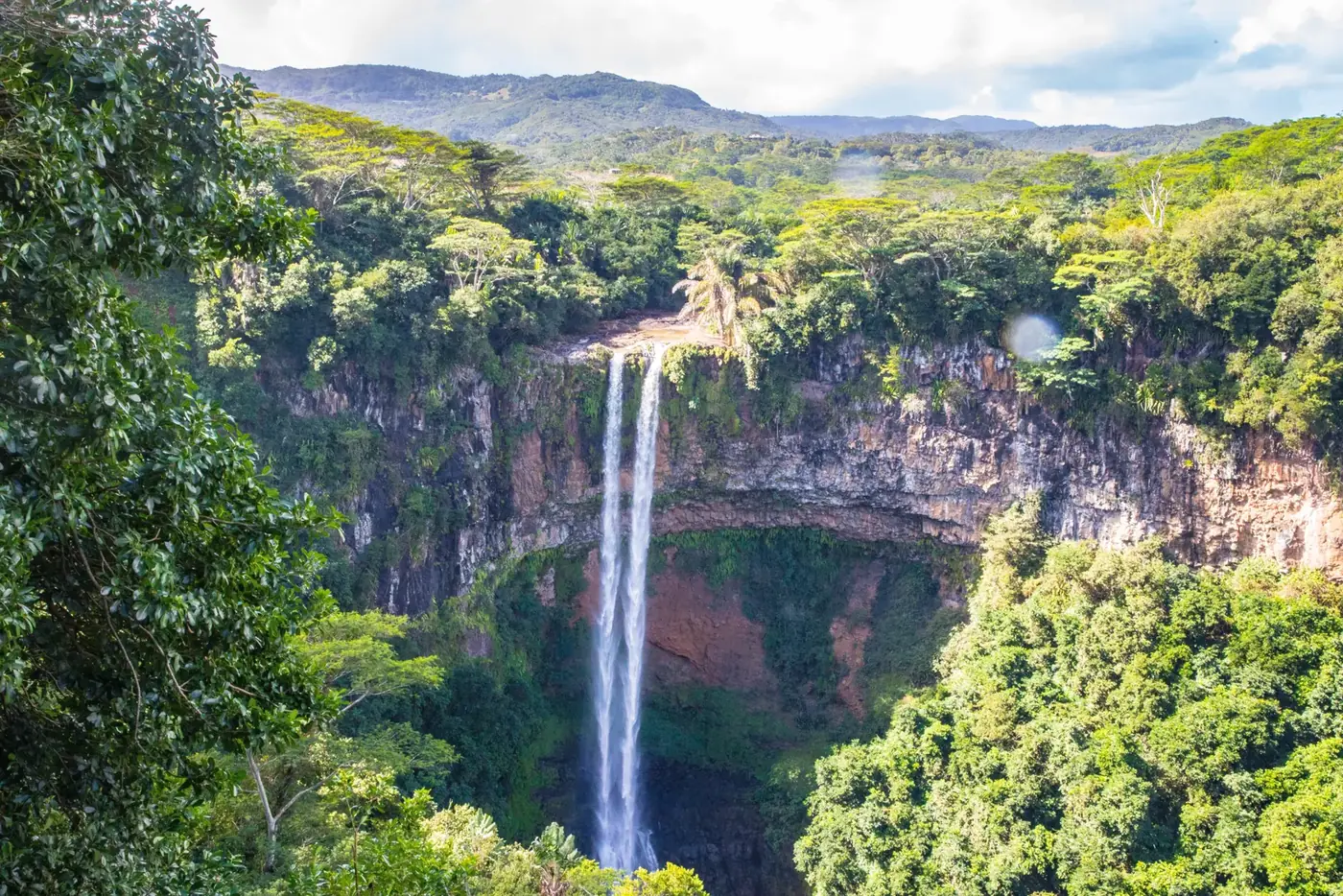
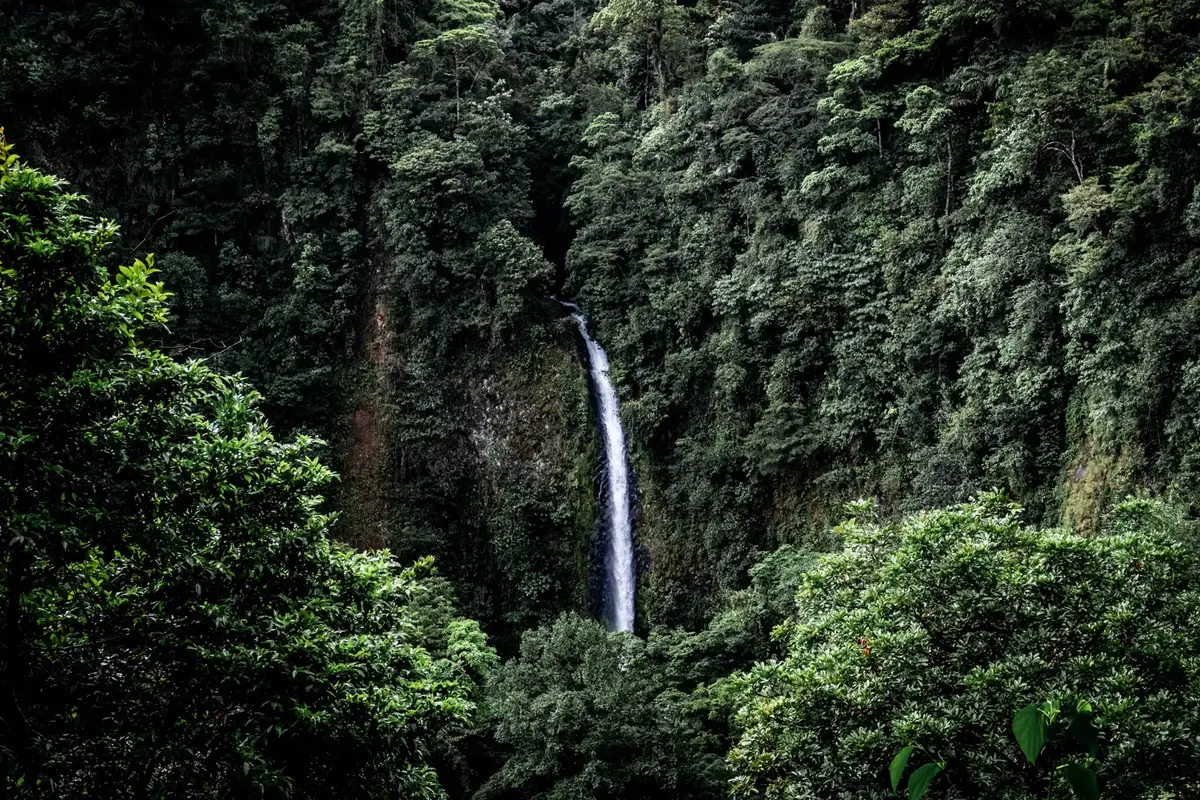
The Route de la Traversée crosses Basse-Terre from east to west through the rainforest. Stop at the Cascade aux Écrevisses, a few minutes’ walk from the road, and at the Maison de la Forêt, the starting point for short waymarked trails. On the east side, the Carbet Falls, in Capesterre-Belle-Eau, are among the most visited natural sites in the archipelago; access to some of the falls may be closed after heavy rain or for works. Bring good shoes: the trails are often muddy.
Deshaies and the leeward coast
In the north-west of Basse-Terre, Deshaies has Grande Anse beach, one of the largest in the archipelago, and a botanical garden. Further south, Bouillante and Malendure beach give access to the Cousteau Reserve around the Pigeon Islets, a well-known spot for diving and snorkelling with turtles.
Les Saintes
A small archipelago south of Basse-Terre, Les Saintes are explored from Terre-de-Haut: a village of colourful houses, a bay listed among the most beautiful bays in the world by an international club, Fort Napoléon and coves reached on foot or by electric scooter. Allow at least a day, ideally a night there.
Marie-Galante
Nicknamed « the big pancake » for its flat relief, Marie-Galante has kept a slow pace: roads lined with sugarcane fields, old windmills, agricultural rum distilleries and long, quiet beaches, such as those at Capesterre and Petite Anse. The boat crossing from Pointe-à-Pitre takes about an hour.
La Désirade
The easternmost and least visited island of the archipelago. A single road runs along the south coast, and a trail leads to the Notre-Dame-du-Calvaire chapel, with a view of Grande-Terre. The island has a geological nature reserve. Boats leave from Saint-François.
Things to do in Guadeloupe
Beyond the beaches, the archipelago lends itself to a wide range of activities. Our list of experiences to plan during your stay:
Climb La Soufrière from Bains-Jaunes, early in the morning, before clouds cover the summit
Snorkel or dive in the Cousteau Reserve, around the Pigeon Islets, from Malendure (Bouillante)
Paddle through the mangroves of the Grand Cul-de-Sac Marin, the lagoon north of Basse-Terre, by kayak or on a guided trip
Spend a day at Petite-Terre, a nature reserve off Saint-François, reached on a boat excursion
Learn about the archipelago’s history: Mémorial ACTe in Pointe-à-Pitre, Fort Delgrès in Basse-Terre, the Edgar-Clerc museum (pre-Columbian archaeology) in Le Moule, Habitation Murat on Marie-Galante
Visit an agricultural rum distillery, particularly on Marie-Galante, and taste Creole food at the Pointe-à-Pitre market
Swim at the foot of the falls and pools of Basse-Terre (Cascade aux Écrevisses, Carbet Falls depending on trail openings)
Listen to gwoka, traditional music and dance added to UNESCO’s Intangible Cultural Heritage list in 2014, and experience the carnival from January to February or March
See the Gueule Grand Gouffre, a natural arch on the north coast of Marie-Galante, and the Deshaies botanical garden
Itinerary ideas for Guadeloupe (10 days, 2 weeks)
7 to 10 days: Grande-Terre and Basse-Terre
Days 1 to 3: Sainte-Anne or Saint-François, southern beaches, Pointe des Châteaux, half a day in Pointe-à-Pitre and at the Mémorial ACTe
Day 4: tour of northern Grande-Terre (Le Moule, Porte d’Enfer, Grande Vigie)
Days 5 to 7: move to Deshaies or Bouillante, Grande Anse beach, snorkelling at Malendure
Days 8 and 9: Route de la Traversée, climb of La Soufrière, Carbet Falls
Day 10: day trip to Les Saintes from Trois-Rivières
2 weeks: the whole archipelago
Days 1 to 4: Grande-Terre (Sainte-Anne, Saint-François, Pointe des Châteaux, Pointe-à-Pitre)
Days 5 and 6: Marie-Galante, staying overnight
Days 7 to 10: south and east of Basse-Terre (La Soufrière, Carbet Falls, Trois-Rivières), then the leeward coast (Bouillante, Deshaies)
Days 11 and 12: Les Saintes, with a night on Terre-de-Haut
Days 13 and 14: a day on La Désirade from Saint-François and a last swim on Grande-Terre
With a car, changing accommodation once or twice (Grande-Terre then Basse-Terre) avoids long daily drives, as traffic is heavy around Pointe-à-Pitre at rush hour.
Budget for a trip to Guadeloupe
Item (per day)
Budget
Comfort
Accommodation (double room or holiday rental)
Roughly €60–90
Roughly €130–250
Meals (per person)
Roughly €20–35
Roughly €50–80
Car hire
Roughly €30–45
Roughly €50–80
Activities (boat trips, diving, entry fees)
Roughly €0–20
Roughly €30–80
Indicative ranges excluding flights, varying by season: prices are noticeably higher at Christmas and in February.
Overall, allow roughly €70–110 per person per day on a budget and €150–250 for a comfortable trip. Imported goods in supermarkets are expensive. Markets, lolos (small grocery stalls) and beach restaurants offering a dish of the day help keep costs down. The international flight is often the biggest expense, and its price varies widely with the season.
Getting around Guadeloupe
A hire car is almost essential: there is a bus network, but it is impractical for visitors, with irregular timetables and few services in the evening and on Sundays. Traffic drives on the right. According to the UK FCDO (GOV.UK, updated 22 October 2026), French driving rules apply and UK travellers should check with the hire company what documents they need, as an international driving permit (IDP) may be required in addition to a UK licence. The U.S. Department of State (travel.state.gov, last updated September 9, 2026) notes that seatbelt laws are strictly enforced, children under 12 may not sit in the front seat and night driving can be dangerous on winding mountain roads. On Basse-Terre, roads are twisty and distances are best counted in time rather than kilometres.
For the islands, regular boats link Pointe-à-Pitre with Marie-Galante and Les Saintes, Trois-Rivières with Les Saintes, and Saint-François with La Désirade. Book ahead in high season. On Marie-Galante you get around by bike, electric scooter or hire car; on Les Saintes, walking and scooters are enough. There are also short flights to Marie-Galante. Bike, electric scooter or car: our Marie-Galante travel guide helps you choose how to explore the island.
Where to stay in Guadeloupe
Sainte-Anne, Saint-François, Le Gosier: the widest choice (hotels, apartment hotels, holiday rentals), close to the beaches and the airport; ideal for a first stay
Deshaies, Bouillante, Pointe-Noire: the leeward coast, quieter, with sunsets over the sea, convenient for diving and Basse-Terre
Southern Basse-Terre (Trois-Rivières, Saint-Claude): a base for La Soufrière and Les Saintes, with cooler rentals at altitude
Marie-Galante and Les Saintes: small properties, guesthouses and rentals; limited capacity, book early
Types of accommodation: holiday rentals (gîtes) are very common and often better value than a hotel for a week-long stay
Entry requirements for Guadeloupe
US citizens: according to the U.S. Department of State (travel.state.gov, French West Indies page, last updated September 9, 2026), you need a U.S. passport with at least 6 months’ validity. No visa is required for stays of up to 90 days if you have an onward or return ticket, confirmation of accommodation and evidence that you can support yourself.
UK citizens: according to the UK FCDO (GOV.UK, updated 22 October 2026), Guadeloupe is an overseas department of France and part of the EU. You can visit without a visa for up to 90 days for tourism or business. Your passport must have an expiry date at least 3 months after the date you plan to leave. A yellow fever vaccination certificate is required only if you arrive from a country listed as a transmission risk.
The two sources differ on passport validity (6 months on the US page, 3 months after departure on GOV.UK): if in doubt, check with the French embassy or consulate and your airline.
Customs: GOV.UK states that you cannot bring meat, milk or products containing them into EU territory (with a few exceptions such as powdered baby milk). For what you can bring home, check your home country’s customs allowances (e.g. CBP in the US, HMRC in the UK).
Health and safety
Health: the UK FCDO (updated 22 October 2026) lists Zika and dengue among the health risks, and the U.S. Department of State (last updated September 9, 2026) lists chikungunya and dengue: use repellent and cover up at the end of the day. According to GOV.UK, healthcare facilities are very good, equivalent to mainland France, and UK travellers need a GHIC or EHIC for medically necessary state healthcare; it does not replace travel insurance. The U.S. Department of State reminds US travellers that Medicare and Medicaid do not apply overseas and strongly recommends insurance covering medical evacuation. Never shelter under a manchineel tree, a coastal tree whose sap and fruit are toxic (they are often marked with a red band). When large amounts of sargassum seaweed wash ashore, avoid staying close to it for long and follow local health authority advice.
Safety: take care in the sea, as the Atlantic coast has strong currents and swell, and respect the swimming flags. GOV.UK advises avoiding isolated areas, including beaches, after dark, and the U.S. Department of State warns of petty crime and advises not leaving valuables visible in vehicles. According to GOV.UK, the hurricane season normally runs from June to November: follow Météo-France and local authority alerts. The FCDO also notes an increased likelihood of demonstrations, sometimes at short notice. Emergency number (GOV.UK): 112.
Practical tips for Guadeloupe
Money: the euro; bank cards are widely accepted and there are ATMs in most towns. Keep some cash for markets and small shops.
Internet and phone: check your carrier’s roaming charges before you leave, or use a local SIM card or an eSIM; coverage can be weak in the forest and on some islands.
Etiquette: say hello (bonjour) when entering a shop, and avoid beachwear in towns and villages. A few words of Creole are appreciated, but French is understood everywhere; English is less widely spoken.
Opening hours: the day starts early; many shops close between midday and mid-afternoon, and Sundays are very quiet outside carnival time.
Food: try colombo, accras, fish court-bouillon, bokit (fried sandwich) and coconut sorbet; agricultural rum, made from sugarcane juice, is a speciality of the archipelago’s distilleries, to be enjoyed in moderation.
What to pack: reef-safe sunscreen, mosquito repellent, closed shoes for hiking, a light rain jacket.
Guadeloupe: who is it for?
Our verdict by type of traveller, based on the information in this guide:
Families: yes: shallow lagoons at Sainte-Anne and Saint-François, good healthcare facilities.
Couples: yes: Les Saintes with a night on Terre-de-Haut, Marie-Galante and its quiet beaches, sunsets on the leeward coast.
Budget travellers: moderately: roughly €70–110 a day, staying in holiday rentals and using markets and lolos; the flight is often the biggest expense.
Hiking and nature: yes: La Soufrière, the Route de la Traversée, the Carbet Falls, the Grand Cul-de-Sac Marin mangroves.
Diving and snorkelling: yes: the Cousteau Reserve around the Pigeon Islets, Petite-Terre.
Culture: yes: Mémorial ACTe, Fort Delgrès, Edgar-Clerc museum, gwoka and carnival.
US and UK citizens need a passport but no visa for stays of up to 90 days. According to the U.S. Department of State (last updated September 9, 2026), US citizens need a passport valid for at least 6 months, plus an onward or return ticket, proof of accommodation and of sufficient funds. According to the UK FCDO (updated 22 October 2026), a UK passport must be valid for at least 3 months after the date you leave.
How much does a week in Guadeloupe cost?
Excluding flights, allow roughly €70–110 per person per day on a budget and €150–250 for comfort. The price of the flight varies widely with the season and often weighs as much as the stay itself.
When is the best time to visit Guadeloupe?
From December to April, during the dry season (carême). June is a good compromise for lower prices. September and October, at the heart of the hurricane and rainy season, are the least favourable months.
How many days do you need in Guadeloupe?
A week to ten days lets you see Grande-Terre and Basse-Terre. Allow two weeks to add Marie-Galante, Les Saintes and La Désirade without rushing.
Do I need to rent a car in Guadeloupe?
Yes, it is strongly recommended: public transport is poorly suited to visitors. Book early in high season, and check with the hire company which licence documents you need.
What budget should I plan for two weeks in Guadeloupe?
Excluding flights, based on our daily ranges per person, allow roughly €1,050–1,650 on a budget and €2,250–3,750 for comfort for two weeks. Add the flight, whose price varies widely with the season.
Is Guadeloupe safe?
Yes, with the usual precautions: respect the swimming flags on the Atlantic coast, follow official alerts during the hurricane season (June to November according to GOV.UK, updated 22 October 2026), avoid isolated beaches after dark and leave nothing visible in your car parked near beaches.
What can you do in Guadeloupe in a week?
Split the week between Grande-Terre (beaches at Sainte-Anne and Saint-François, Pointe des Châteaux, Mémorial ACTe) and Basse-Terre (La Soufrière, waterfalls, Cousteau Reserve), and add a day on Les Saintes if you can.
Our sources
Météo-France: climate normals and sargassum monitoring bulletins
Guadeloupe Islands Tourist Board (lesilesdeguadeloupe.com): sites and activities, consulted on 5 October 2026
Transparency: this page contains affiliate links, labelled as such. If you book through them we may earn a commission at no extra cost to you; it does not influence our content or recommendations. How we fund the site.