White-sand beaches in Punta Cana, the Colonial Zone of Santo Domingo, humpback whales in Samaná Bay, the mountains of the Cordillera Central: the Dominican Republic offers far more than its all-inclusive resorts. This Dominican Republic travel guide brings together the essentials: what to see and do, itineraries, budget, transport and entry requirements.
AirportsPunta Cana (PUJ), Santo Domingo Las Américas (SDQ), Puerto Plata (POP), Santiago (STI)
EntryUS and UK: no visa for tourist stays of up to 30 days; online eTicket for entry and exit · travel.state.gov · GOV.UK
Electricitycheck voltage and plug type before you travel · plugs
Budgetroughly US$55–100 per person per day on a budget, US$170–335 for comfort · details
When to go to the Dominican Republic
The best time is from December to April, the driest season in Punta Cana and Santo Domingo, ideally from February to April. The hurricane season normally runs from June to November (GOV.UK, updated 7 August 2026), with the highest risk from mid-August to mid-October. The north coast (Puerto Plata, Cabarete) is the exception: it is wetter from November to January and drier in summer. Humpback whales can be seen in Samaná from January to March. All the details, with official climate normals, are in our article on when to go to the Dominican Republic. The Samaná whales between January and March are also a good reason to pick the best time to visit Punta Cana in winter.
What to see in the Dominican Republic: the highlights
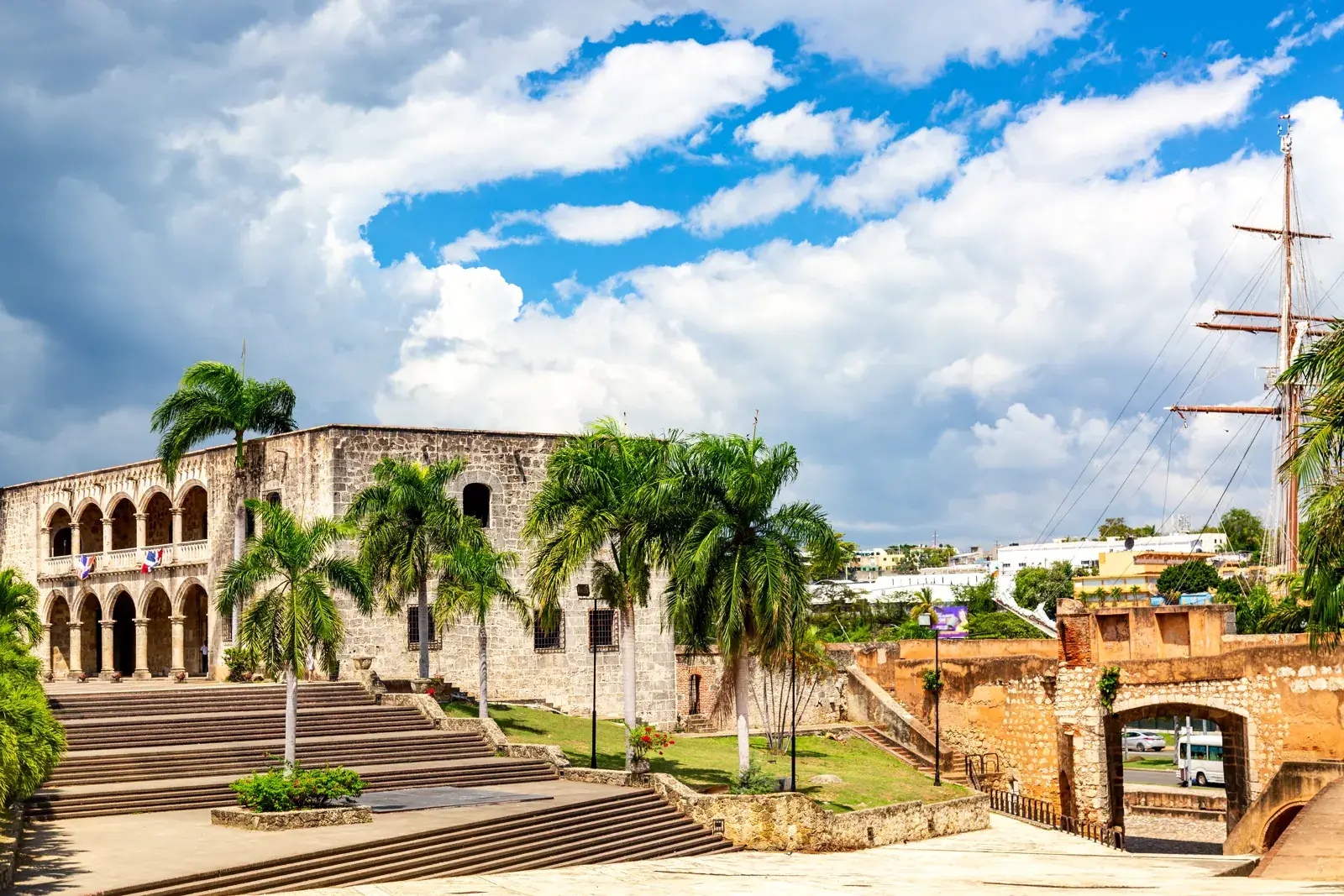
The Alcázar de Colón in the Colonial Zone of Santo Domingo
Santo Domingo and the Colonial Zone
Founded at the end of the 15th century, Santo Domingo is the oldest European city in the Americas. Its Colonial Zone, a UNESCO World Heritage Site, is explored on foot: the cathedral, the Alcázar de Colón, the Ozama Fortress, Calle Las Damas and squares that come alive in the evening. Allow one or two days. Keep valuables at the hotel: GOV.UK (updated 7 August 2026) reports muggings of foreigners in daytime and bag-snatching by thieves on motorcycles.
Punta Cana and Bávaro
The country’s eastern tip is home to most of the all-inclusive resorts, along long beaches lined with coconut palms. It is a convenient base for relaxing, golf, diving and catamaran trips. Punta Cana International Airport receives a large share of international flights. Relaxing, golf, diving or catamaran: a stay in Punta Cana is easy to build around the Bávaro beaches.
Bayahibe and Saona Island
A former fishing village on the south-east coast, Bayahibe is the main departure point for trips to Saona Island, in Parque Nacional del Este: beaches, shallow natural pools and coconut palms. The village is also a popular diving base. Not far away, Altos de Chavón, near La Romana, recreates a Mediterranean-style village above the Chavón river.
Greener and wilder, the peninsula attracts those who prefer small properties to large resorts. Las Terrenas and Las Galeras have beautiful beaches, El Limón waterfall is reached on foot or on horseback, and the islet of Cayo Levantado lies in the bay. From January to March, Samaná Bay welcomes humpback whales that come to breed.
Los Haitises National Park
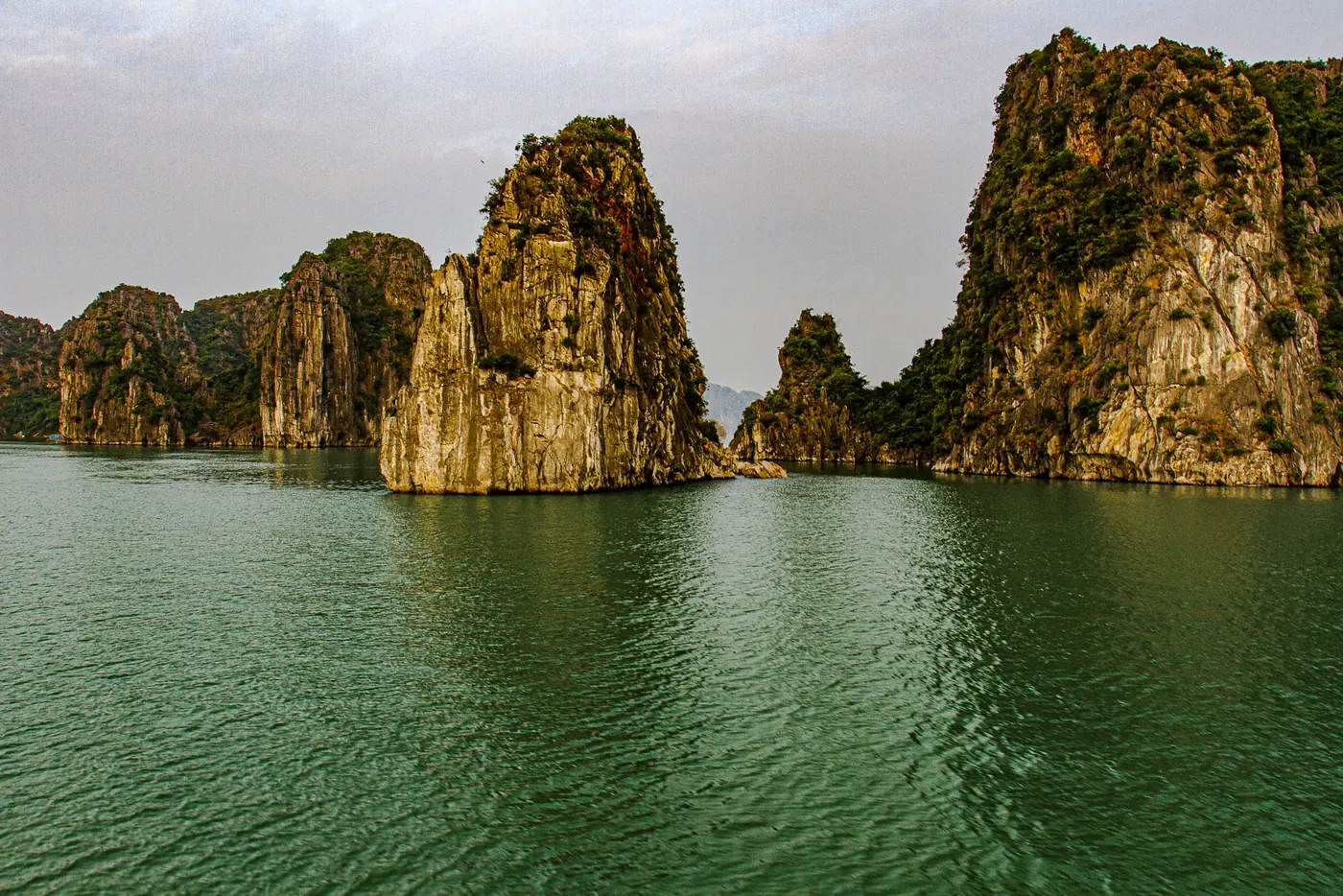
On the south shore of Samaná Bay, this park is explored by boat from Samaná or Sabana de la Mar: mangroves, limestone islets covered in vegetation, caves decorated with Taíno drawings and many seabirds. It is an easy day trip to combine with a stay on the peninsula.
Puerto Plata, Sosúa and Cabarete
On the north coast, Puerto Plata has kept an old centre with Victorian houses and a cable car that climbs to the top of Pico Isabel de Torres. Sosúa is known for its bay and dive trips, Cabarete for kitesurfing and windsurfing. Inland, the 27 Waterfalls of Damajagua are descended by jumping and sliding, with a guide.
Jarabacoa and the Cordillera Central
In the centre of the country, Jarabacoa and Constanza offer a cooler climate, rivers, waterfalls and activities such as rafting and canyoning. It is also the starting point for the climb of Pico Duarte, the highest peak in the Caribbean, a multi-day trek done with a guide.
Barahona and the south-west
The least touristy region, the south-west alternates pebble beaches, cliffs and arid landscapes. Lake Enriquillo, below sea level, is home to crocodiles and iguanas. GOV.UK (updated 7 August 2026) states that the land and sea borders with Haiti are closed and that the FCDO advises against all travel to Haiti, so do not plan any crossing into the neighbouring country.
Things to do in the Dominican Republic
The most popular activities, region by region, to build your trip:
Explore the Colonial Zone of Santo Domingo, the capital’s historic centre.
Spend a day on Saona Island, from Bayahibe, in Parque Nacional del Este.
Watch humpback whales in Samaná Bay, from January to March.
Explore Los Haitises National Park by boat: mangroves, limestone islets and caves.
Go kitesurfing or windsurfing in Cabarete, on the north coast.
Descend the 27 Waterfalls of Damajagua, with a guide, near Puerto Plata.
Ride the Pico Isabel de Torres cable car in Puerto Plata.
Go rafting or canyoning around Jarabacoa, or climb Pico Duarte with a guide.
Get off the beaten track in the south-west: Lake Enriquillo, the Barahona coast.
Enjoy the beaches of Punta Cana and Bávaro for a relaxing all-inclusive stay.
Days 5 to 9: Punta Cana or Bávaro, beach and water sports
January to March variant: swap two beach days for a trip to Samaná to see the whales
2 weeks: round the country
Days 1 and 2: Santo Domingo
Days 3 to 5: Bayahibe and Saona Island, then Punta Cana
Days 6 to 8: the Samaná peninsula (Las Terrenas, El Limón, whales in season) and Los Haitises
Days 9 and 10: Cabarete, Sosúa and Puerto Plata
Days 11 and 12: Jarabacoa, waterfalls and rivers of the Cordillera Central
Days 13 and 14: back to Santo Domingo or a last beach stop before your flight
Distances are reasonable, but avoid driving at night outside the cities: GOV.UK (updated 7 August 2026) warns of poor lighting, animals and pedestrians on the road and cars without headlights. Plan short stages and arrive before dark. The same advice applies on the neighbouring island: our guide to things to do in Puerto Rico completes this Caribbean trip.
Budget for a trip to the Dominican Republic
The country is more expensive than many Latin American destinations, especially in beach areas. Many travellers book an all-inclusive package with flights, which simplifies the budget. Indicative amounts per person per day, excluding international flights:
Item
Budget
Comfort
Accommodation (shared double room)
roughly US$20–45 (guesthouse, small hotel)
roughly US$90–225 (boutique hotel, all-inclusive)
Meals
roughly US$10–20 (comedores, dish of the day)
roughly US$35–65
Local transport
roughly US$5–15 (buses, guaguas)
roughly US$35–65 (taxis, car with driver)
Activities and excursions
roughly US$10–35
roughly US$45–110
Total per day
roughly US$55–100
roughly US$170–335
Indicative estimates, varying by season and region. Prices are noticeably higher in Punta Cana and over the year-end holidays.
With an all-inclusive package, most expenses are paid in advance: budget mainly for excursions, tips and transfers.
Getting around the Dominican Republic
Buses: according to GOV.UK (updated 7 August 2026), private companies run good bus services between cities. It is the cheapest option for a tour.
Guaguas: local minibuses and shared vans, cheap but often crowded. The U.S. Department of State (travel.state.gov, last updated August 11, 2025) notes that public buses and guaguas do not meet US safety standards; GOV.UK adds that public buses and carros públicos are often uninsured and poorly maintained.
Taxis: use an authorised airport or hotel taxi or a registered provider rather than hailing one in the street (GOV.UK and the U.S. Department of State). Ride-hailing apps such as Uber are available in many areas. GOV.UK notes that motorbike taxis (motoconchos) are often driven badly and do not always provide a helmet.
Car: according to GOV.UK, you can drive on a UK photocard licence for up to 3 months; hire companies may have stricter requirements, such as an international driving permit. The U.S. Department of State reports a road death rate of 65.2 per 100,000 people, the highest in the world, and suggests hiring a professional driver. It also advises not leaving your passport with a rental agency. After an accident causing serious injury, the driver is taken into custody even if not at fault (GOV.UK).
Quads, motorbikes and water sports: GOV.UK notes a high death rate from motorbike and scooter accidents and that adventure tourism providers may not meet UK safety standards: rent only if you know how to ride and check that your insurance covers these activities.
Where to stay in the Dominican Republic
In Punta Cana, Bávaro and Cap Cana, large beachfront all-inclusive resorts dominate. Bayahibe and Juan Dolio, on the south coast, offer more varied accommodation. In Santo Domingo, staying in or near the Colonial Zone lets you see everything on foot; business districts such as Piantini have modern hotels. On the Samaná peninsula and the north coast (Las Terrenas, Cabarete, Sosúa), small properties, guesthouses and apartments are more common.
GOV.UK (updated 7 August 2026) reports sexual assaults against foreigners, including at beach resorts, and the U.S. Department of State notes that security outside resort areas is unpredictable, especially at night: use your room safe, do not leave drinks unattended and avoid walking alone at night on isolated beaches. Book early for the year-end holidays.
Entry requirements for the Dominican Republic
US citizens: according to the U.S. Department of State (travel.state.gov, last updated August 11, 2025), a visa is required only for visits longer than 30 days. A $10 tourist card fee is included in airline charges and allows stays of up to 30 days, extendable through the Migration Department in Santo Domingo; overstays are fined on departure, from about $56 for one month to more than $1,660. Visitors must have a round-trip ticket, enough funds for their stay and an address where they will stay. Proof of yellow fever vaccination is required for travellers from Brazil and other high-risk countries.
UK citizens: according to the UK FCDO (GOV.UK, updated 7 August 2026), you can visit for tourism without a visa for 30 days and can pay to extend your stay up to 120 days through the Immigration Service. Until 31 December 2026, your passport only needs to be valid for the duration of your visit; rules may change after that date. You may be refused entry without proof of onward or return travel, and border officials take fingerprints and a photograph. Depending on your circumstances, a yellow fever certificate may be required.
eTicket: both sources state that you must complete the online entry and exit form (eTicket), which includes the customs declaration, for every entry and exit, on eticket.migracion.gob.do. According to GOV.UK, you can fill it in up to 7 days before arrival and receive a QR code to show at check-in or at the border.
Customs: GOV.UK states that you must declare anything that may be prohibited or subject to tax or duty. The U.S. Department of State warns that counterfeit goods may be seized when you return to the US. For what you can bring home, check your home country’s customs allowances (e.g. CBP in the US, HMRC in the UK).
Health and safety
Health: GOV.UK (updated 7 August 2026) lists malaria, Oropouche virus disease and dengue among health risks; the U.S. Department of State lists dengue, malaria and tuberculosis. Protect yourself against mosquito bites and check vaccine recommendations at least 8 weeks before travel (GOV.UK). Tap water is not drinkable (GOV.UK): drink bottled water and, as the U.S. Department of State suggests, ask for drinks without ice.
Healthcare and insurance: public facilities are limited; private hospitals offer good care but are expensive and require a deposit or proof of insurance before admission (GOV.UK and the U.S. Department of State). GOV.UK notes that visitors who cannot pay their hospital bills are sometimes stopped from leaving the country. Medicare and Medicaid do not apply overseas, and the U.S. Department of State strongly recommends insurance covering medical evacuation.
Crime: GOV.UK describes the crime rate as high, from bag-snatching and pickpocketing to violent crime and carjacking. Do not wear expensive jewellery, keep your phone out of sight, keep car windows shut and doors locked and do not resist a robbery. Bank card cloning is a risk: keep your card in view when paying. The U.S. Department of State notes that tourist areas are more policed and that there is a dedicated tourist police force (POLITUR).
ID checks: GOV.UK advises carrying copies of your passport photo page and entry stamp; the U.S. Department of State advises US citizens to carry their passport at all times because of frequent checkpoints.
Drugs: GOV.UK states that there are severe penalties for all drug offences, and that possession of even small quantities can lead to a fine and a prison sentence. Pack your own luggage.
Sea and natural hazards: lifeguards may not be present on beaches or at pools (GOV.UK), and the U.S. Department of State advises against swimming alone because of strong currents. The country is exposed to hurricanes (June to November), earthquakes and the risk of tsunamis: follow the instructions of the local authorities. GOV.UK mentions Spanish-language alerts from the COE emergency centre via the AlertaCOE app.
Emergency numbers: 911; GOV.UK notes that 911 does not cover the whole country and that outside Santo Domingo you can call the tourist police (Politur) on +1 809 200 3500.
Practical tips for the Dominican Republic
Money: the Dominican peso is the local currency, but US dollars are often accepted in tourist areas, at a rate that is not always favourable. Never let your card out of sight in shops (card cloning, see above). Our currency converter helps you estimate your spending.
Internet: wifi is widespread in hotels and mobile coverage is good in towns and tourist areas. A local SIM card or an eSIM is handy for maps and taxi apps. Comparison of offers and networks: Dominican Republic eSIM.
Language: a few words of Spanish help outside the hotels, especially on buses, in comedores and in small guesthouses.
Tipping: restaurant bills often include tax and a 10% service charge; check before adding a tip, left according to the quality of service.
Medicines: the U.S. Department of State advises carrying prescription medication in its original packaging with a copy of your prescription, and caution when buying medicines locally because of counterfeit pills.
Excursions: for rafting, canyoning or boat trips, check that the operator provides proper safety equipment; the U.S. Department of State notes that the tourism industry is unevenly regulated.
The Dominican Republic: who is it for?
Our view, profile by profile, based on the information in this guide:
Profile
Our verdict
Families
Ideal: all-inclusive resorts in Punta Cana and Bávaro, with the budget paid in advance.
Nature
Yes: humpback whales in Samaná from January to March, Los Haitises National Park, El Limón waterfall.
Sport and adventure
Yes: kitesurfing in Cabarete, the 27 Waterfalls of Damajagua, rafting in Jarabacoa, Pico Duarte with a guide.
Culture
Yes: the UNESCO-listed Colonial Zone of Santo Domingo, keeping your valuables at the hotel.
Couples
Yes: the Samaná peninsula and its small properties, or Cap Cana.
Budget travellers
Possible: roughly US$55–100 a day in guesthouses and using guaguas; the country is more expensive than many Latin American destinations.
No, not for US or UK citizens on a tourist stay of up to 30 days (U.S. Department of State, last updated August 11, 2025; GOV.UK, updated 7 August 2026). You must, however, complete the online eTicket form for entry and exit; it generates a QR code to show when you arrive and leave.
When is the best time to visit the Dominican Republic?
From December to April, and more precisely February to April in Punta Cana, the driest months. The hurricane season runs from June to November. On the north coast, summer is often drier than winter.
How much does a trip to the Dominican Republic cost?
Excluding the international flight, allow roughly US$55–100 per person per day on a budget and US$170–335 for comfort. All-inclusive packages with flights are common and their price varies widely with the season.
Is the Dominican Republic safe?
The country welcomes many tourists, but GOV.UK (updated 7 August 2026) describes the crime rate as high, and the U.S. Department of State notes that crime is a threat throughout the country, although tourist areas are more policed. The main risks are theft, road and quad accidents, and swimming at beaches without lifeguards.
How many days do you need in the Dominican Republic?
A week to ten days lets you combine Santo Domingo, Saona Island and the eastern beaches. Two weeks leave time to add Samaná, the north coast and the Cordillera Central.
What is the currency of the Dominican Republic?
The Dominican peso (DOP). To estimate your budget in your own currency, use our currency converter.
What time zone is the Dominican Republic in?
The Dominican Republic is on UTC−4. Details on our page about the time difference.
Our sources
World Meteorological Organization: ONAMET 1991-2020 climate normals (NOAA/NCEI archive)
Presidency of the Dominican Republic: humpback whale-watching season in Samaná
Transparency: this page contains affiliate links, labelled as such. If you book through them we may earn a commission at no extra cost to you; it does not influence our content or recommendations. How we fund the site.