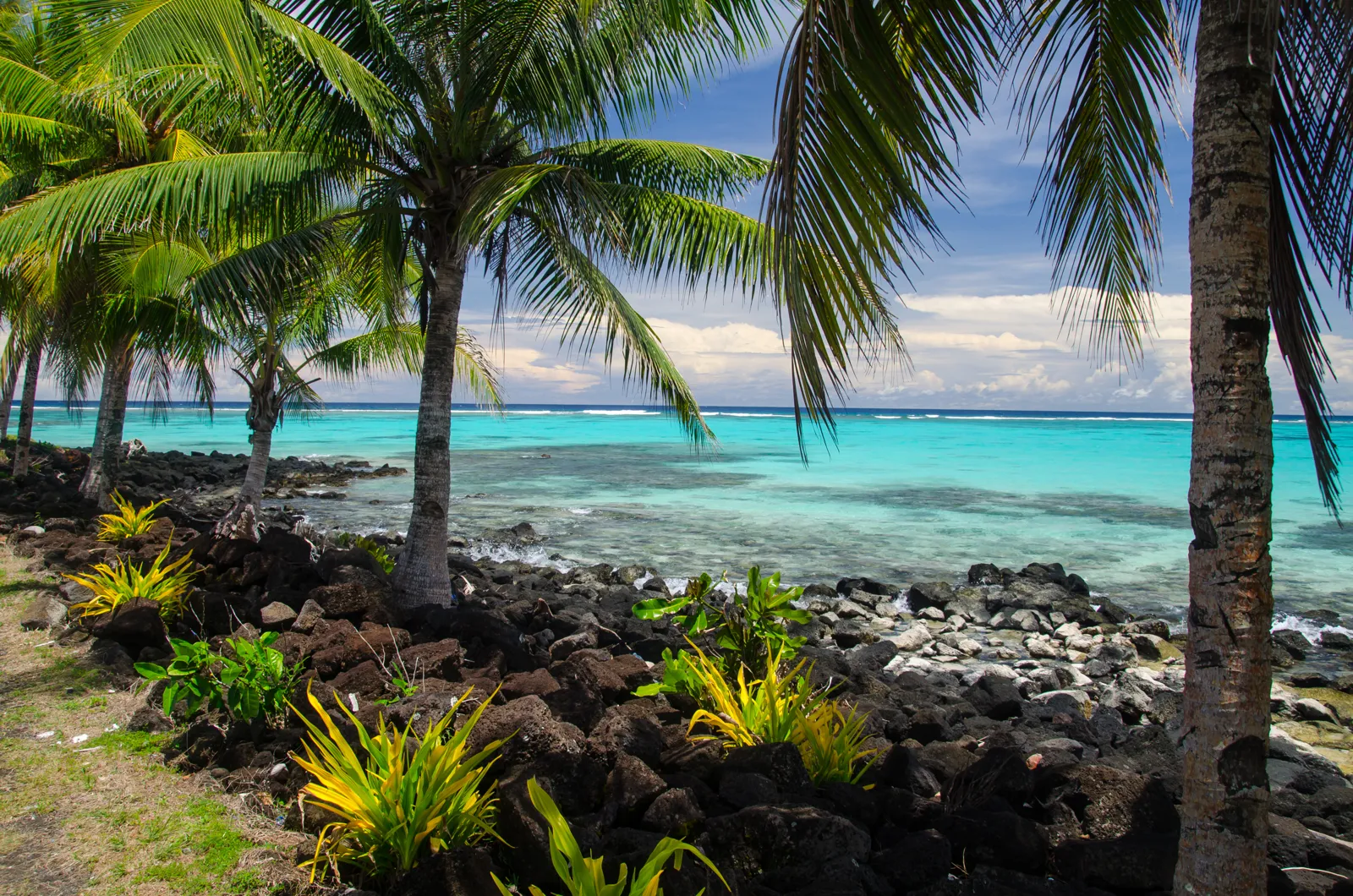
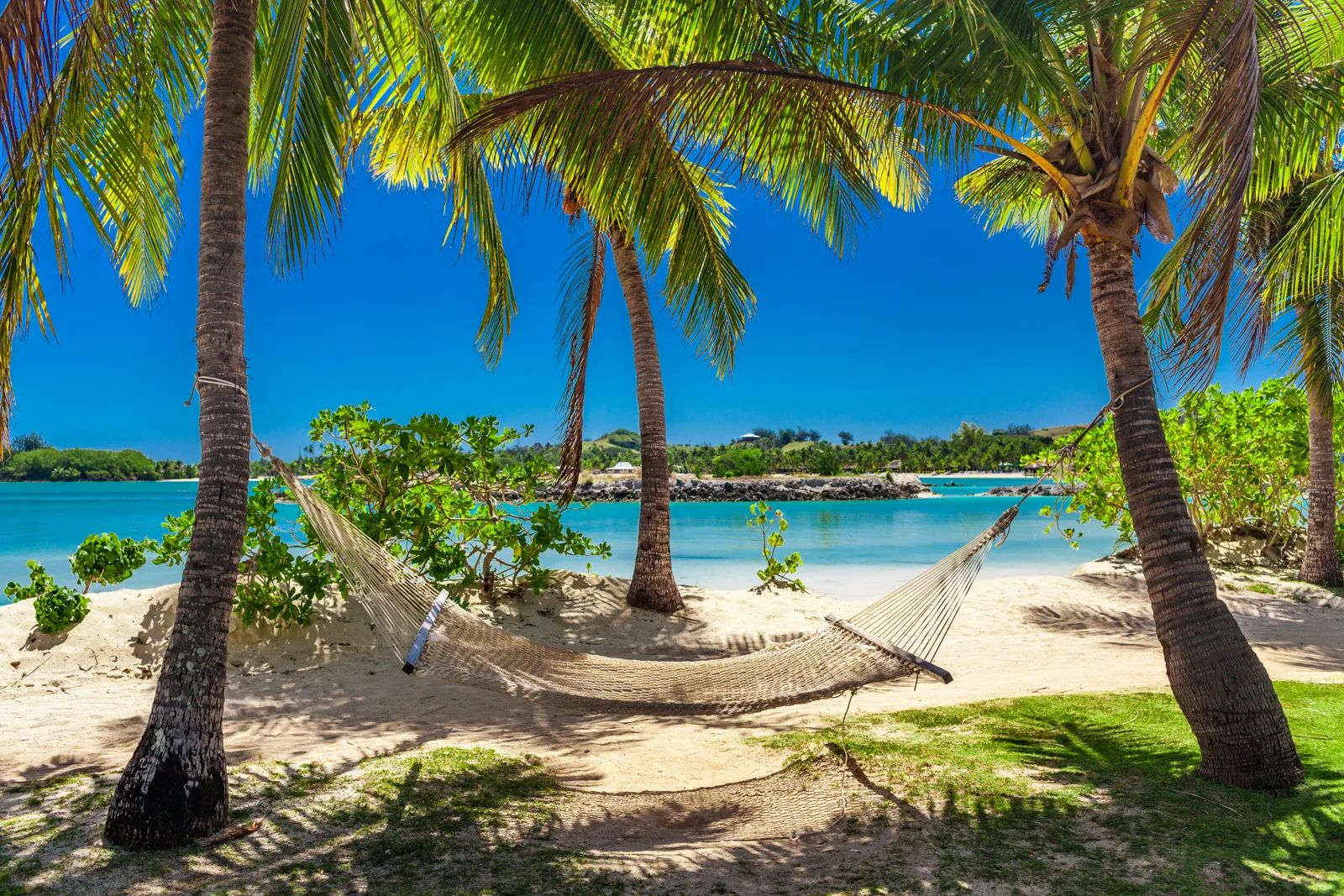
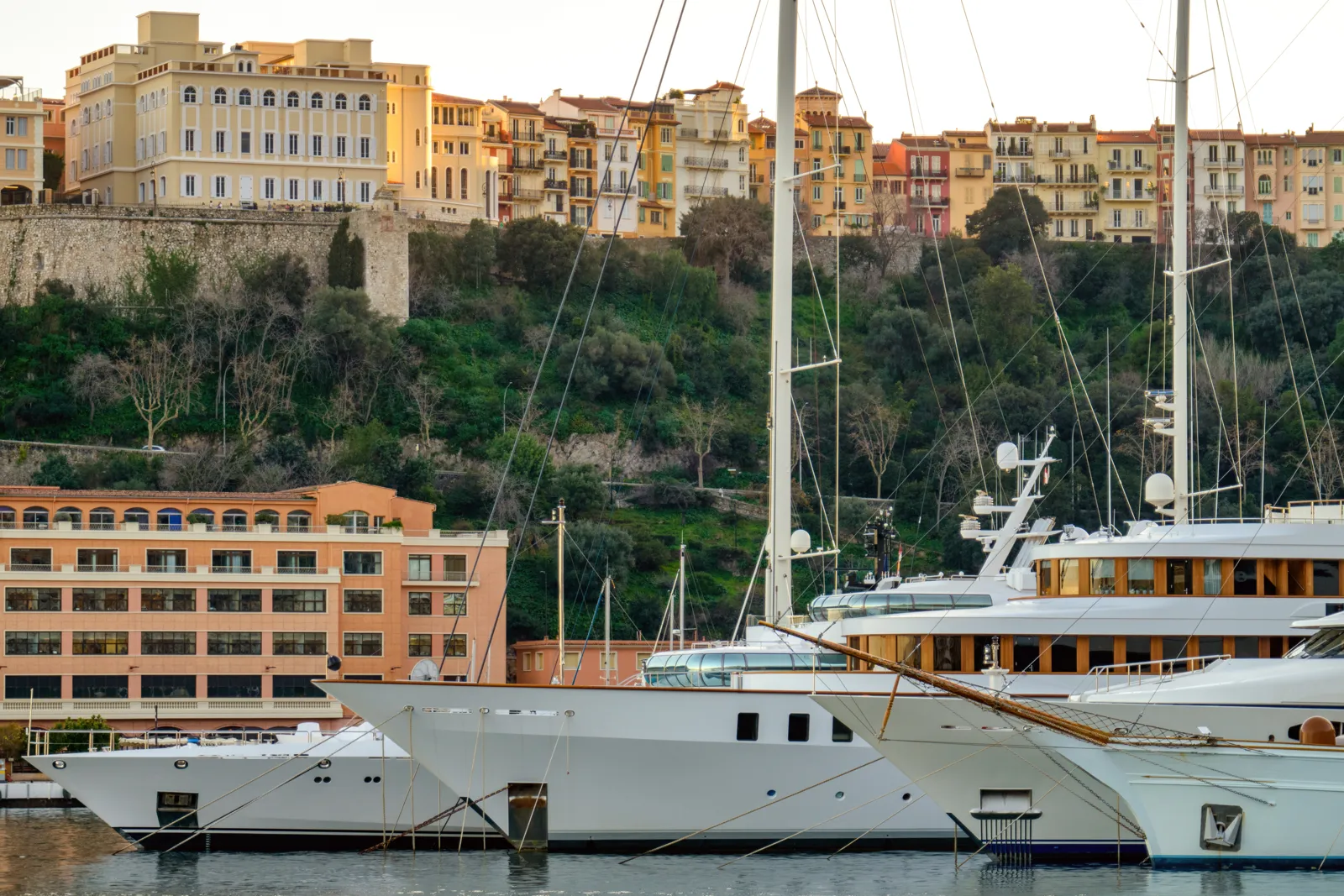
Barbados is the easternmost island of the Lesser Antilles, an independent country of 439 km² (170 sq mi) whose capital is Bridgetown. This Barbados travel guide covers west coast beaches, the wild Atlantic coast, limestone caves and a UNESCO-listed colonial heritage. The best time to visit is December to May, during the dry season and outside hurricane season.
It brings together the places to see, entry requirements and safety advice checked on 24 October 2026 with the U.S. Department of State and the UK FCDO, the official climate normals of the Barbados Meteorological Services, and a calculation we have not found elsewhere: the number of rainy days to expect in a one-week stay, month by month.
Barbados at a glance
- Capital Bridgetown, on the southwest coast
- Language English (official); Bajan Creole is spoken day to day
- Currency the Barbados dollar (BBD) · currency converter
- Time zone UTC−4 all year
- Airports Grantley Adams International Airport · detailsCheck current routes with the airlines
- Entry US and UK: no visa for a visit; onward or return ticket required · travel.state.gov · GOV.UK
- Electricity check voltage and plug type with your accommodation · plugs
When to go to Barbados
Go from December to May. This is the dry season: at Grantley Adams Airport, 39 mm (1.5 in) of rain falls in March, the driest month, against 180 mm (7.1 in) in October, the wettest. Temperatures vary little: highs range from 29.1 to 31.0 °C (84 to 88 °F) and lows never drop below 23.0 °C (73 °F). The real difference between seasons is rain and hurricane risk, not heat.
According to the UK FCDO (GOV.UK, updated 23 January 2026), the hurricane season normally runs from June to November. A trip at that time is still possible, but monitor local news, World Meteorological Organization weather reports and the National Hurricane Center, and check your insurance’s cancellation terms.
| Month | High °C (°F) | Low °C (°F) | Rain mm (in) | Rainy days | Rainy days per 7 days | Sun / day | Hurricanes | Verdict |
|---|---|---|---|---|---|---|---|---|
| January | 29.1 (84) | 23.3 (74) | 68.1 (2.7) | 11 | 2.5 | 8.5 h | No | ✅ Dry season, trade winds |
| February | 29.2 (85) | 23.0 (73) | 41.7 (1.6) | 9 | 2.2 | 8.9 h | No | ✅ Dry |
| March | 29.7 (85) | 23.4 (74) | 38.9 (1.5) | 8 | 1.8 | 8.8 h | No | ✅ Driest month |
| April | 30.2 (86) | 24.2 (76) | 58.1 (2.3) | 8 | 1.9 | 8.7 h | No | ✅ Dry |
| May | 30.6 (87) | 25.0 (77) | 74.1 (2.9) | 8 | 1.8 | 8.5 h | No | ✅ End of the dry season |
| June | 30.7 (87) | 25.2 (77) | 101.2 (4.0) | 11 | 2.6 | 7.5 h | Yes | ⚠️ Start of hurricane season |
| July | 30.7 (87) | 25.1 (77) | 121.5 (4.8) | 15 | 3.4 | 8.1 h | Yes | ⚠️ More rain, hurricanes possible |
| August | 30.9 (88) | 24.8 (77) | 150.6 (5.9) | 16 | 3.6 | 8.4 h | Yes | ⚠️ Wet, hurricanes possible |
| September | 31.0 (88) | 24.8 (77) | 162.6 (6.4) | 13 | 3.0 | 7.8 h | Yes | ❌ Peak of hurricane season |
| October | 30.8 (87) | 24.7 (76) | 179.6 (7.1) | 15 | 3.4 | 7.7 h | Yes | ❌ Wettest month |
| November | 30.3 (87) | 24.5 (76) | 172.6 (6.8) | 14 | 3.3 | 7.6 h | Yes | ⚠️ End of hurricane season |
| December | 29.6 (85) | 23.9 (75) | 91.0 (3.6) | 11 | 2.5 | 8.2 h | No | ✅ Dry season returns |
A week in Barbados: rain and sun, our calculation
Climate normals give a number of rainy days per month. We converted it to a one-week stay (rainy days in the month × 7 / days in the month). Destination de Voyage calculation based on Barbados Meteorological Services data.
- In March, expect about 1.8 rainy days in 7: often brief showers.
- In August, about 3.6 days in 7, in the middle of hurricane season.
- The sun shines 7.5 to 8.9 hours a day depending on the month.
- In practice: to escape a northern winter, December to March combine the dry season with the most sunshine.
Things to do in Barbados: the highlights
Bridgetown and its Garrison
The capital grew up around the Careenage, the inlet where the Constitution River meets the sea, in front of the Parliament Buildings. Since 25 June 2011, « Historic Bridgetown and its Garrison » has been on the UNESCO World Heritage List. Bridgetown is also a cruise port of call.
Holetown and the west coast
Holetown, in the parish of Saint James, is where the first English settlers landed, on 17 February 1627; the town was then called Jamestown. The west coast faces the Caribbean Sea. Two protected marine parks lie off this coast, and nearly 90 km (56 mi) of coral reefs fringe the island.
Speightstown and the north
Speightstown, in the parish of Saint Peter, is the main town in the north. It has a bus terminal with services to the rest of the island, handy for exploring the north without a car.
Oistins and the south coast
Oistins, in the parish of Christ Church, gave its name to the treaty signed on 17 January 1652 at the Mermaid’s Inn, which set the terms of the island’s surrender to the English Parliamentary forces.
Bathsheba and the Atlantic coast
To the east, the coast is pounded by the Atlantic: wilder scenery, swell and rocks. The UK FCDO (GOV.UK, updated 23 January 2026) advises against swimming on many east-coast beaches, where currents are particularly strong: follow local warnings.
Harrison’s Cave and the centre of the island
Barbados is a coral island: a layer of coral about 90 m (295 ft) thick sits on sediments. This highly permeable limestone has formed caves, including Harrison’s Cave. Its coral floor is estimated to be 400,000 to 500,000 years old.
Scotland District and Mount Hillaby
The island rises gently towards a central hilly area called the Scotland District. The highest point, Mount Hillaby, reaches 340 m (1,115 ft). It is the greenest, most rural part of Barbados.
Itinerary ideas for Barbados
- One week: base yourself on the west or south coast; one day in Bridgetown and the Garrison, one day at Harrison’s Cave and the Scotland District, one day on the Atlantic coast at Bathsheba, and the rest on beaches and boat trips.
- 10 days to 2 weeks: split your stay between the west coast (Holetown, Speightstown) and the south coast (Oistins) for different beaches and atmospheres.
- Combined trip: Barbados pairs with Saint Lucia, Martinique or Guadeloupe, depending on the air and sea links available when you travel.
The island is small: changing accommodation is only worth it if you really want both atmospheres, west coast and south coast.
Getting around Barbados
- By car: driving is on the left. Main roads are generally safe and well marked but often potholed; rural roads are narrow, rough and full of blind curves, so take care, especially at night. After an accident, vehicles must stay where they are until the police arrive (U.S. Department of State, travel.state.gov, last updated July 23, 2026).
- By taxi: use licensed taxis only. Taxis have no meters: there are standard fares for most destinations, so agree the fare in Barbados dollars before setting off, and carry cash as drivers do not always accept cards (UK FCDO, GOV.UK, updated 23 January 2026).
- By bus: the network runs mainly from Bridgetown and Speightstown, with terminals in Bridgetown, Speightstown, Oistins and Mangrove. Registered taxis and large public buses are generally safe; the U.S. Department of State advises avoiding private minibuses known as « Zed buses », whose drivers frequently drive erratically.
- By boat: the U.S. Coast Guard has concerns about security practices in Barbados ports and advises mariners and passengers to exercise caution; boaters should be wary of unfamiliar people or craft approaching (travel.state.gov, last updated July 23, 2026).
Where to stay in Barbados
- West coast (Saint James, Saint Peter): on the Caribbean Sea side, near the protected marine parks.
- South coast (Christ Church): around Oistins, in the parish that is home to Grantley Adams Airport.
- East coast: for the Atlantic scenery, around Bathsheba.
- Safety tip: the UK FCDO (GOV.UK, updated 23 January 2026) advises making sure your accommodation is secure and leaving valuables and travel documents in a safety deposit box or hotel safe.
Entry requirements, health and safety
Entry requirements for Barbados. The Barbados authorities set and enforce entry rules (GOV.UK).
- US citizens: according to the U.S. Department of State (travel.state.gov, last updated July 23, 2026), you need a valid U.S. passport to enter Barbados and no visa for stays up to 6 months. You must also show proof of anticipated departure. Cruise passengers may use another WHTI-compliant document, but a passport is strongly recommended in case you have to fly home.
- UK citizens: according to the UK FCDO (GOV.UK foreign travel advice, updated 23 January 2026), you do not need a visa to visit; you are told on arrival how long you can stay, and extensions are handled by the Barbados Immigration Department. Your passport must be valid for the length of your stay, and you must be able to show an onward or return ticket.
- All travellers: fill in the immigration and customs form online before arrival, and carry a yellow fever vaccination certificate if you are coming from a country listed as a transmission risk (GOV.UK). A departure tax of 55 Barbados dollars (27.50 US dollars) applies from age 2, plus 70 US dollars for travel outside the Caribbean or 20 US dollars within it; most airlines include it in the ticket price (GOV.UK).
- Customs: declare anything that may be prohibited or dutiable (GOV.UK). For what you can bring home, check your home country’s customs allowances (e.g. CBP in the US, HMRC in the UK). Entry requirements checked on 24 October 2026; check them again before you travel.
- Safety: the UK FCDO (GOV.UK, updated 23 January 2026) reports incidents of violent crime, including armed robbery, sexual assault, gang-related shootings and carjackings, with an increase in gang-related murders involving guns. Take care when walking alone off busy roads and at ATMs, avoid isolated areas and beaches after dark, and do not carry large amounts of cash. The U.S. Department of State (travel.state.gov, last updated July 23, 2026) advises extra vigilance at night on party cruises and downtown.
- Hurricanes: June to November (GOV.UK); follow the National Hurricane Center and local authorities.
- Kick ’em Jenny volcano: check the alert level of this underwater volcano 5 miles (8 km) off Grenada and observe any maritime exclusion zones (GOV.UK).
- Earthquakes: a potential risk, with occasional tremors; follow the advice of the local authorities (GOV.UK).
- Swimming: currents can be strong even on popular south and west coast beaches, some beaches have no lifeguards, and jet skis, dive boats and catamarans may operate close to shore (GOV.UK, updated 23 January 2026).
- Local laws: wearing camouflage clothing is illegal, even for children, and penalties for drug offences are severe (GOV.UK; travel.state.gov).
- Health: Zika, dengue and chikungunya are present (GOV.UK; travel.state.gov): use repellent and cover up. The U.S. Department of State advises being up to date on CDC-recommended vaccines; UK travellers should check TravelHealthPro at least 8 weeks before the trip.
- Medical costs: serious cases may need evacuation, treatment can be expensive and some private clinics require prepayment (GOV.UK, updated 23 January 2026). Take out travel insurance covering medical costs and evacuation.
- Emergency numbers: police 211, fire 311, ambulance 511 (GOV.UK; travel.state.gov).
Practical tips for Barbados
- Money: take care when withdrawing cash from ATMs and do not carry large sums (GOV.UK).
- Documents: leave your passport and valuables in the hotel safe (GOV.UK) and keep copies.
- At night: avoid walking alone or in isolated places (GOV.UK; travel.state.gov).
- Consular help: US citizens can contact the U.S. Embassy at (246) 227-4000 (travel.state.gov); for British nationals, friends and family can call the FCDO in London on 020 7008 5000 (24 hours, GOV.UK).
- Weather: during the wet season, follow local and international media.
Checklist before you go to Barbados
- Check your passport and the entry pages of travel.state.gov or GOV.UK.
- Complete the online immigration and customs form before arrival.
- If travelling between June and November, bookmark the National Hurricane Center and local authority websites.
- Take out insurance covering medical care, evacuation and, if needed, diving.
- Pack repellent and covering clothes against mosquitoes (dengue, chikungunya, Zika).
- If renting a car, get ready to drive on the left.
- Sign up for travel advice updates from the U.S. Department of State or the FCDO.
Frequently asked questions
What is the best time to visit Barbados?
From December to May, during the dry season. March is the driest month at Grantley Adams Airport (38.9 mm, or 1.5 in; Barbados Meteorological Services 1991-2020 normals).
When is hurricane season in Barbados?
According to the UK FCDO (GOV.UK, updated 23 January 2026), the hurricane season normally runs from June to November. Monitor local news and the National Hurricane Center.
Do I need a visa for Barbados?
Not for a visit if you are a US or British citizen. US citizens need a valid passport and no visa for stays up to 6 months (travel.state.gov, last updated July 23, 2026); British citizens do not need a visa and are told how long they can stay on arrival (GOV.UK, updated 23 January 2026). Both must be able to show proof of onward or return travel. Checked on 24 October 2026.
What time zone is Barbados in?
Barbados is on UTC−4 all year round.
Is Barbados safe?
Most visits are trouble-free, but both governments report violent crime, including armed robbery and gang-related shootings (GOV.UK, updated 23 January 2026; travel.state.gov, last updated July 23, 2026). Avoid isolated areas and beaches after dark, use licensed taxis and keep valuables in a hotel safe.
What language is spoken in Barbados?
English is the official language; Bajan Creole is the everyday language.
Our sources
- Entry, health and safety information read on 24 October 2026: U.S. Department of State, Barbados country information (travel.state.gov, last updated July 23, 2026), and UK FCDO, foreign travel advice for Barbados (GOV.UK, updated 23 January 2026)
- Barbados Meteorological Services, 1991-2020 normals for Grantley Adams International Airport, via the Wikipedia climate box (article « Bridgetown »), consulted on 23 October 2026
- Wikipedia (en): « Barbados » and « Bridgetown », consulted on 23 October 2026
- Destination de Voyage calculations: rainy days per 7 days, sun per day, cross-referenced with hurricane season
- Our methodology
Updated October 2026.
Discover our other destinations in the Caribbean.
Transparency: this page contains affiliate links, labelled as such. If you book through them we may earn a commission at no extra cost to you; it does not influence our content or recommendations. How we fund the site.