A South Korea trip combines an ultra-modern capital, palaces and Buddhist temples, forested mountains and a volcanic island in the south. The country is compact, safe and very well served by high-speed trains, so you can see a lot in a short time. This South Korea travel guide gathers the essentials for planning your stay. For the electronic travel authorization, see our page K-ETA for South Korea.
To locate cities, regions, terrain, national parks and airports, see our map of South Korea.
Safety: according to the UK FCDO (GOV.UK, updated 14 May 2026), the level of tension on the Korean Peninsula can change with little notice, for example after North Korean missile tests or during military exercises. The demilitarized zone (DMZ) separates the two Koreas: if you visit the area, exercise caution and follow the advice of local authorities. For most visitors, South Korea remains a very safe country, according to the U.S. Department of State (travel.state.gov, last updated August 11, 2025).
South Korea at a glance
CapitalSeoul
LanguageKoreanEnglish on transport signage, less in conversation
The best periods are April–May and late September to early November: dry weather, mild temperatures, cherry blossoms in spring and red foliage in autumn. Summer combines humid heat, the rainy season (jangma, roughly late June to late July) and a risk of typhoons until late September. Winter is dry but cold, with lows below freezing in Seoul from December to February. The details, month by month and with data from the Korea Meteorological Administration, are in our article best time to visit South Korea.
Where to go in South Korea: the highlights
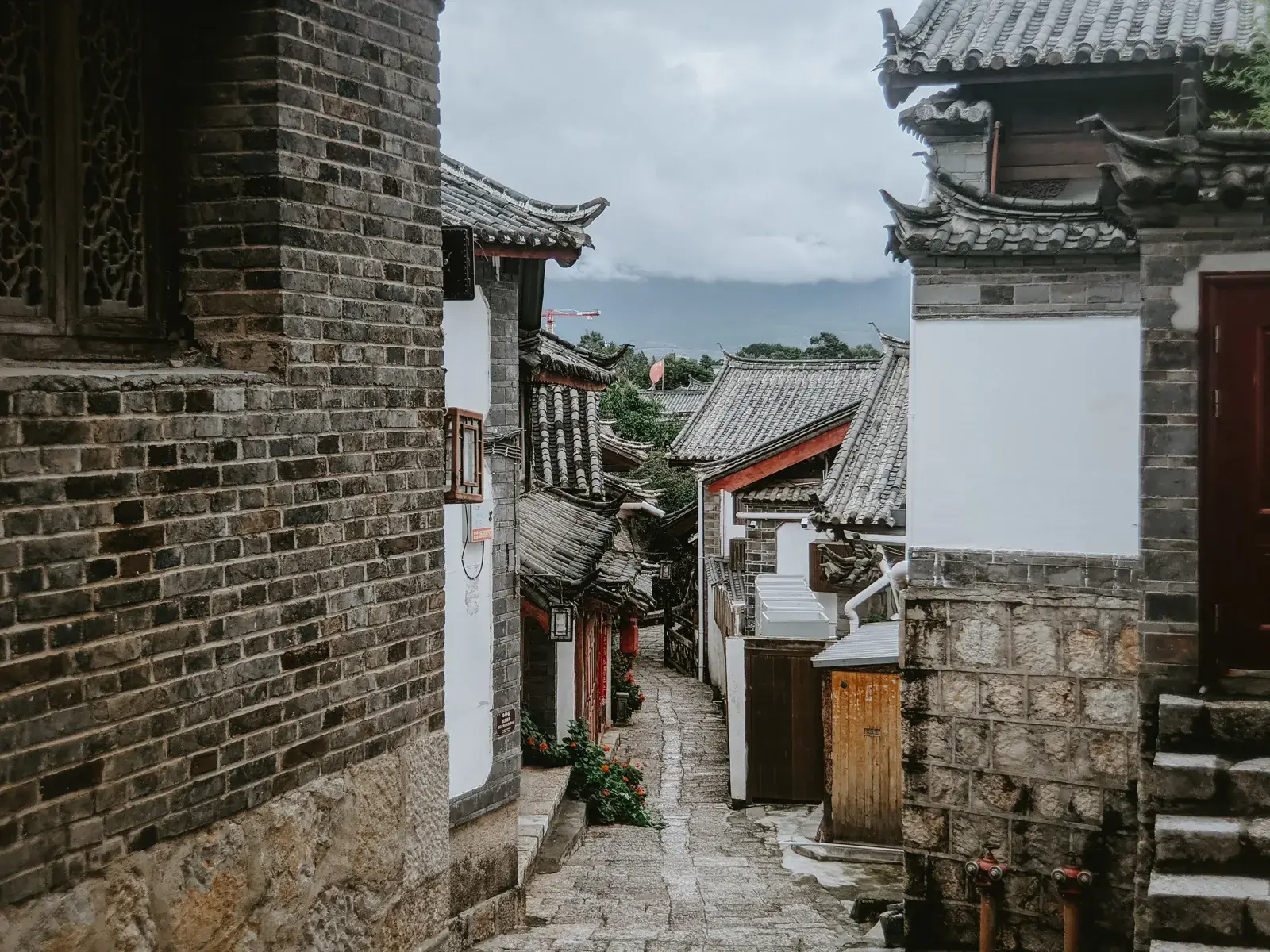
Lane of traditional houses in Bukchon Hanok Village, Seoul
Seoul
The capital deserves at least three or four days (see our Seoul guide). The royal palaces of the Joseon dynasty, including Gyeongbokgung and Changdeokgung, are in the city center, next to Bukchon village and its traditional hanok houses. Add Gwangjang and Namdaemun markets, Namsan Tower, the Cheonggyecheon stream walk, the lively districts of Myeongdong, Hongdae and Gangnam, and the National Museum of Korea. Palaces, markets and nightlife districts are more comfortable at the best time to visit Seoul, outside the humid summer.
The DMZ
The demilitarized zone between the two Koreas lies north of Seoul. It can only be visited on an organized tour. The UK FCDO advises caution in the area and following local authorities’ instructions; check the latest advice before booking.
Suwon
Reached by train or subway from Seoul, Suwon is known for Hwaseong Fortress, built in the late 18th century. Walking the full circuit of the walls takes a few hours.
Gyeongju
The former capital of the Silla kingdom, Gyeongju has royal burial mounds, the Cheomseongdae observatory, Wolji pond, Bulguksa temple and Seokguram grotto. The town is easy to explore by bike. Allow two days.
Busan
South Korea’s second city combines urban beaches (Haeundae, Gwangalli), the huge Jagalchi fish market, colorful Gamcheon village and Haedong Yonggungsa, a temple built by the sea. It is a few hours from Seoul by KTX. Our guide to things to do in Busan helps you plan this stop.
Jeju
This volcanic island south of the peninsula is about an hour’s domestic flight from Seoul. You can hike Mount Hallasan, the country’s highest peak, and the coastal Olle trails. The Seongsan Ilchulbong crater, lava tubes and beaches complete the visit. A rental car makes getting around easier.
Seoraksan National Park
In Gangwon province, in the northeast, Seoraksan is one of the country’s best-known mountain parks, with granite peaks, temples and a cable car. It is especially busy in October for the autumn foliage.
Jeonju and Andong
Jeonju is known for its hanok village and its food, especially bibimbap. Further east, Hahoe historic village near Andong keeps traditional houses that are still lived in. These two stops show a more rural side of Korea.
Things to do in South Korea: experiences to plan
Beyond the places to see, here are the activities found on most trips:
Visit Seoul’s Joseon palaces (Gyeongbokgung, Changdeokgung), then wander the hanok lanes of Bukchon.
Eat at the markets: Gwangjang and Namdaemun in Seoul, Jagalchi in Busan for seafood.
Walk the Hwaseong walls in Suwon, in a few hours.
Cycle around Gyeongju between royal tombs, Bulguksa temple and Seokguram grotto.
Discover traditional houses in Bukchon in Seoul, the Jeonju hanok village and Hahoe village near Andong.
Hike in Seoraksan (especially in October) or on Mount Hallasan and the coastal Olle trails of Jeju.
Travel by KTX: the high-speed train links Seoul and Busan in a few hours.
Itinerary ideas for South Korea
7 to 10 days: the essentials
Days 1 to 4: Seoul (palaces, Bukchon, markets, neighborhoods), day trip to Suwon
Days 5 and 6: KTX to Gyeongju, Silla sites and Bulguksa
Days 7 to 9: Busan (beaches, Gamcheon, Jagalchi)
Day 10: back to Seoul by KTX for your flight
2 weeks: the peninsula and Jeju
Days 1 to 4: Seoul and Suwon
Days 5 and 6: Seoraksan (in spring or autumn) or Jeonju
Days 7 and 8: Andong and Hahoe village, then Gyeongju
Days 9 and 10: Busan
Days 11 to 14: fly to Jeju (Hallasan, coast, Seongsan), fly back to Seoul
Who is South Korea for?
Our verdicts by traveler profile, based on the information in this guide:
A compact, safe, well-connected country: the KTX links Seoul and Busan in a few hours.
Food
✅ Yes
Gwangjang and Namdaemun markets in Seoul, Jagalchi in Busan, Jeonju bibimbap.
Hiking
✅ Yes
Seoraksan, especially in October, Mount Hallasan and the coastal Olle trails of Jeju.
Budget travelers
⚠️ Possible
More expensive than Southeast Asia: roughly ₩90,000–135,000 a day; public transport and simple restaurants remain affordable.
Beaches
⚠️ Possible
Busan’s urban beaches and Jeju island, but summer combines humid heat and the rainy season.
Budget for a trip to South Korea
South Korea is more expensive than Southeast Asia, but public transport and simple meals remain affordable. Indicative amounts per person per day, excluding international flights (converted from our euro estimates at the ECB rate of 23 October 2026, roughly €1 = ₩1,480):
Indicative estimates, varying with the season and exchange rate. KTX journeys come on top of the transport budget.
Palaces and historic sites have modest entrance fees. The biggest expenses are accommodation in Seoul and Jeju in high season, and high-speed trains.
Getting around South Korea
Train: the KTX links Seoul with Busan, Daegu (for Gyeongju) or Jeonju in a few hours. Buy tickets early during the Seollal and Chuseok holidays.
Bus: express and intercity buses serve the whole country, including towns without KTX service, at moderate prices.
Plane: the simplest way to reach Jeju (about an hour from Seoul or Busan). Ferries also run from the mainland.
In town: the Seoul and Busan subways are efficient, with English signage. A rechargeable transit card (T-money) works on the subway, buses and many taxis. GOV.UK notes that taxi drivers speak little English: have your destination written in Korean.
Car: mainly useful on Jeju. UK drivers need the 1949 International Driving Permit plus their UK licence, obtained in the UK before travel (UK FCDO, GOV.UK, updated 14 May 2026); for US drivers, an International Driving Permit (or a Korean license) is required (U.S. Department of State, travel.state.gov, last updated August 11, 2025). The drink-driving limit is a blood-alcohol content of 0.03%, and drivers are presumed to be at least partly at fault in accidents involving pedestrians.
Where to stay in South Korea
In Seoul, stay near a subway station: Jongno and Insadong for the palaces and Bukchon, Myeongdong for shopping and transport, Hongdae for a student vibe and nightlife. In Busan, Haeundae is handy for the beach, Nampo and the station area for markets and trains. In Gyeongju, choose the historic center or Bomun Lake.
Options range from guesthouses and hostels to international hotels. For a local experience, spend at least one night in a hanok in Seoul, Jeonju or Gyeongju, or in a temple through a Templestay program.
Entry requirements for South Korea
US citizens
According to the U.S. Department of State (travel.state.gov, last updated August 11, 2025), you need a valid US passport; a visa is required for employment, teaching English and stays longer than 90 days. Overstaying can lead to detention and fines.
K-ETA: the State Department page still mentions an exemption that ran to December 31, 2024. A later notice from the Embassy of the Republic of Korea in the United States (overseas.mofa.go.kr, 29 December 2025) states that the temporary K-ETA exemption, which includes the USA, has been extended from January 1 to December 31, 2026.
UK citizens
According to the UK FCDO (GOV.UK foreign travel advice, updated 14 May 2026), you can enter for up to 90 days for tourism or short-term business, with an onward or return ticket. Your passport must have an expiry date after the date you leave South Korea.
British nationals are temporarily exempt from K-ETA until 31 December 2026. If you apply for one anyway, use only the official K-ETA website: other sites are generally scams. Approval can take up to 72 hours.
Without a K-ETA, you fill in an entry declaration (arrival card) on paper on arrival, or online as a free e-Arrival card up to 72 hours before arrival. If you have symptoms of illness, you must submit a Q-Code or paper health questionnaire, as the UK is a « Quarantine Inspection Required Area ».
Entry requirements checked on 24 October 2026; check them again before you travel.
Health and safety
Medication: according to GOV.UK (updated 14 May 2026), you can bring small amounts of medication for personal use in your carry-on baggage, with an English-language prescription from your doctor; check the Korean Ministry of Food and Drug Safety website. The U.S. Department of State notes that amphetamines are illegal and that prescription narcotics need written advance permission.
Health: check vaccine recommendations at least 8 weeks before your trip (TravelHealthPro); risks include malaria, insect and tick bites and tick-borne encephalitis, and air pollution, including yellow dust, is common in spring (GOV.UK). Medical care is good but can be expensive, and staff may not speak English.
Safety: crime against foreigners is rare, but there are occasional thefts, and assaults, including sexual assaults, around bars and nightlife areas (GOV.UK). Under Korean law, foreign nationals may not take part in political activities: avoid demonstrations and large gatherings.
Natural hazards: the typhoon season normally runs from June to November, and heavy rain in June and July can cause floods and landslides (GOV.UK). The government’s Emergency Ready App relays alerts in English.
Emergency numbers: police 112, ambulance and fire 119; the Korea Tourism Organization travel hotline (1330) offers help and interpretation in English (GOV.UK).
Practical tips for South Korea
Money: cards are widely accepted. Keep some cash for markets and some small restaurants, and check your bank’s foreign transaction fees. Estimate your spending with our currency converter.
Internet: mobile coverage is very good and Wi-Fi is widespread. An eSIM or a local SIM card is useful for maps and translation; Korean navigation apps (Naver Map, KakaoMap) are often more accurate than international ones.
Language: learning to read the Korean alphabet (hangeul) helps a lot with menus and signs. The 1330 tourist hotline can interpret for you (GOV.UK).
Etiquette: take off your shoes in homes, hanok and restaurants with low tables. Hold your glass with both hands when an older person pours for you.
Tipping: it is not customary in South Korea.
Laws: carrying some form of ID is a legal requirement (GOV.UK). Drug laws are strict, even for small amounts of marijuana.
Food: Korean barbecue, bibimbap, kimchi, soups and stews, market street food: the cuisine is varied and often spicy. Some dishes, such as barbecue, are often served for a minimum of two people, which can be tricky when traveling solo.
For a combined trip in East Asia, see our guides to Japan and Taiwan.
Frequently asked questions
Do I need a visa for South Korea?
Not for a tourist stay of up to 90 days if you are a US or British citizen (travel.state.gov, GOV.UK). The temporary K-ETA exemption, covering both the US and the UK, runs until 31 December 2026; without a K-ETA, you fill in an arrival card. Checked on 24 October 2026; check the latest rules before you leave.
How much does a trip to South Korea cost?
Excluding international flights, allow roughly ₩90,000–135,000 per person per day on a budget, and ₩220,000–370,000 in comfort. Seoul and Jeju are the most expensive stops.
What is the best time to visit South Korea?
April–May and late September to early November. Summer is hot and very rainy, with typhoons possible; winter is dry but cold in Seoul.
How many days do you need in South Korea?
About ten days lets you see Seoul, Gyeongju and Busan thanks to the KTX. Two weeks leaves time to add Jeju and a mountain or traditional-village stop.
Is South Korea safe?
Yes: for most visitors, South Korea remains a very safe country, according to the U.S. Department of State. Tension on the peninsula can change quickly, so take care near the DMZ, stay alert in nightlife areas and avoid large crowds and demonstrations.
What should you see in South Korea on a first trip?
For a first 10-day trip, combine Seoul (palaces, Bukchon, markets) with a day trip to Suwon, Gyeongju for the Silla sites, then Busan, linked to Seoul by KTX. With two weeks, add Jeju, Seoraksan or Jeonju.
To complete or compare, see our guides to Japan and Taiwan.
Transparency: this page contains affiliate links, labelled as such. If you book through them we may earn a commission at no extra cost to you; it does not influence our content or recommendations. How we fund the site.