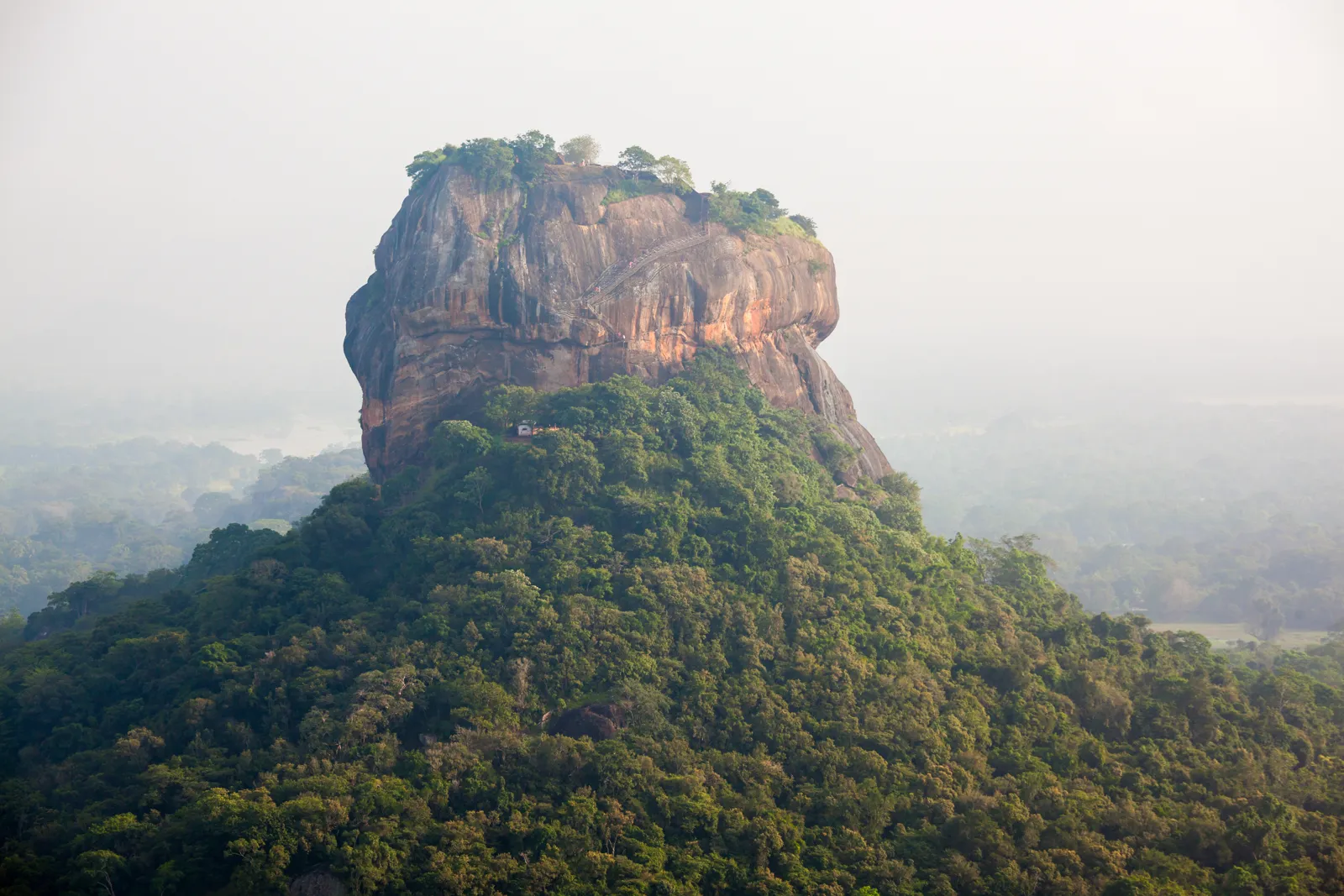
For a trip to Taiwan, allow about ten days for Taipei, the east coast and one or two western cities, and two weeks to circle the island by train, with a budget of roughly US$67–110 a day on a budget (excluding flights). Taiwan packs modern cities, lively temples, mountains close to 4,000 m (13,000 ft), marble gorges and tropical beaches into an island about the size of the Netherlands. Transport is efficient, safety is good and street food is part of the trip. This Taiwan travel guide brings together the essentials for planning your stay.
To locate cities, regions, terrain, national parks and airports, see our map of Taiwan.
Taiwan at a glance
CapitalTaipei
LanguagesMandarin ChineseTaiwanese (Hokkien) is widely spoken; English is used in transport and at tourist sites
The best periods are late October to early December and March to April: mild temperatures and little risk of typhoons. From May to September it is hot and humid with heavy rain, and the typhoon season runs from May to November according to the UK FCDO (GOV.UK, updated 28 August 2026), with the most active period from July to September. Winter is mild and dry in the south, but often gray in Taipei. All the details, region by region and with official climate normals, are in our article best time to visit Taiwan.
What to see in Taiwan: the highlights
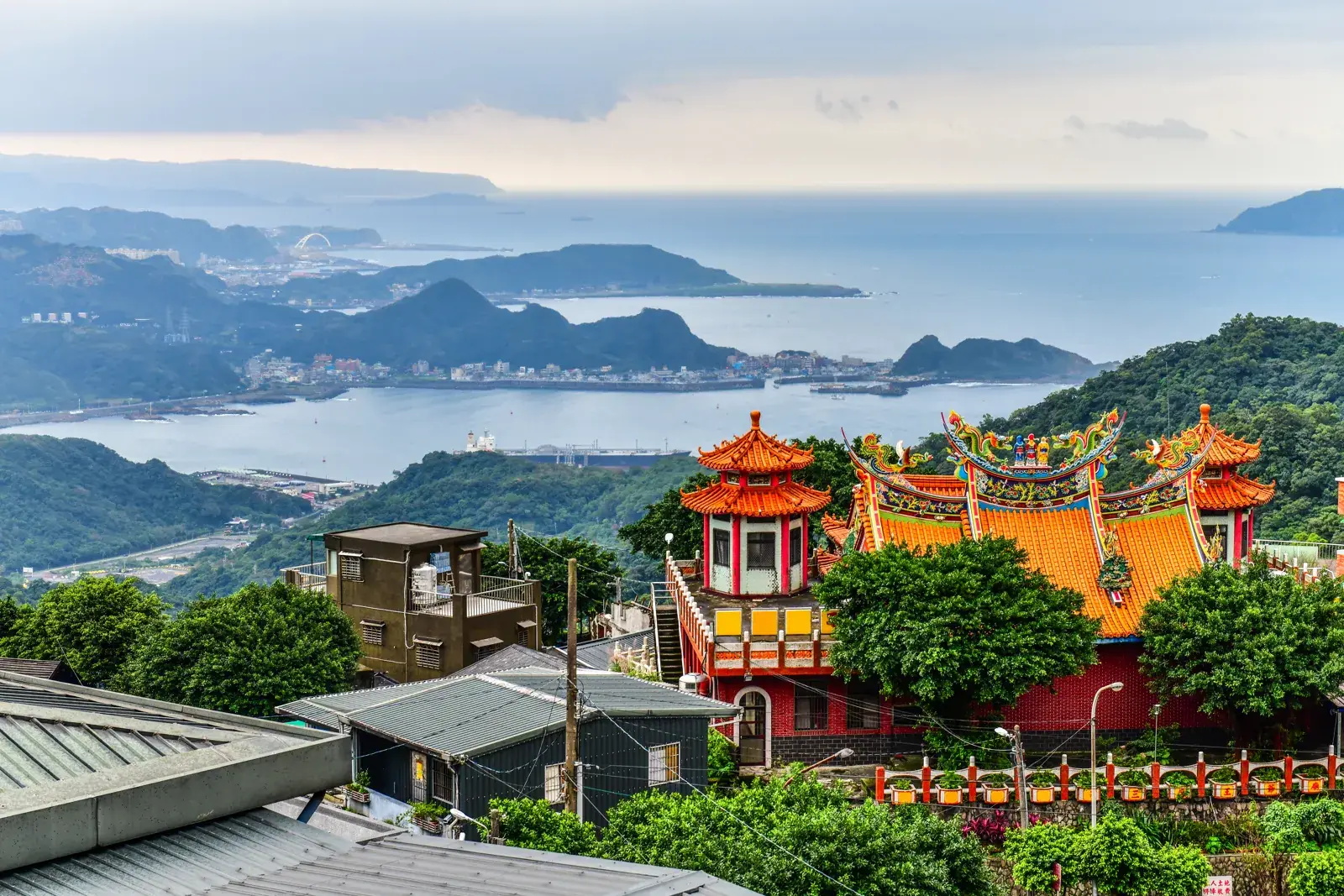
The old village of Jiufen clinging to the mountainside in northern Taiwan
Taipei
The capital deserves three to four days. Go up Taipei 101 or, for a view of it, climb Elephant Mountain. Visit Longshan Temple, the Chiang Kai-shek Memorial Hall, the National Palace Museum and its Chinese art collections, then the Ximending district. In the evening, night markets such as Raohe or Shilin are the place to try street food. The Beitou hot springs and Yangmingshan National Park are reached by metro and bus.
Jiufen, Shifen and the northeast coast
About an hour from Taipei, Jiufen is a former mining village clinging to the mountain, with stepped lanes and teahouses. Shifen and Pingxi, on a small branch railway, are known for their lantern releases and Shifen Waterfall. The nearby coast has spectacular rock formations, notably at Yehliu Geopark.
Taroko Gorge and Hualien
On the east coast, Taroko Gorge cuts through the mountains for kilometers, between marble walls and a turquoise river. The severe earthquake of April 3, 2024 (U.S. Department of State) damaged some roads and trails, and some sections were closed: check which areas are open with the national park before planning your visit. Hualien, the nearest town, is reached by train from Taipei.
Sun Moon Lake
In the center of the island, this large mountain lake surrounded by forest can be explored by boat, by bike on the lakeside trail or by cable car. It is a quiet stop, easy to combine with Taichung or Alishan.
Alishan
This mountain area is famous for its giant cypress forests, tea plantations, small forest railway and sunrises over a sea of clouds. It is cool all year at altitude: bring a warm jacket. The cherry blossom season draws big crowds in spring.
Tainan
The island’s former capital, Tainan is the city of temples, old lanes and traditional food. Visit Fort Zeelandia in Anping, Chihkan Tower and the many temples in the center. It is the best city for discovering Taiwan’s history.
Kaohsiung
The big southern city is lively and pleasant: the Pier-2 art district on the harbor, Lotus Lake and its pagodas, Cijin Island reached by ferry, and night markets. Kaohsiung is served by high-speed rail from Taipei (Zuoying station) and is the base for the south.
Kenting
At the island’s southern tip, Kenting National Park combines beaches, coral cliffs and tropical forest. It is Taiwan’s best-known beach destination, very busy on weekends and in summer. Outside the hot season, it offers a dry, mild winter.
Things to do in Taiwan: 10 experiences
To sum up what to see and do in Taiwan, here are the experiences described above:
See Taipei from above, from Taipei 101 or Elephant Mountain
Visit Longshan Temple and the National Palace Museum
Have dinner at a night market, such as Raohe or Shilin
Relax in the Beitou hot springs
Wander Jiufen’s stepped lanes and watch the lantern releases in Shifen
Discover Taroko Gorge, depending on which sections are open since the April 2024 earthquake
Circle Sun Moon Lake by bike or boat
Ride the Alishan forest railway and watch the sunrise over the sea of clouds
Explore the temples and Fort Zeelandia in Tainan
End on the beaches and coral cliffs of Kenting
Itinerary ideas: how many days in Taiwan?
7 to 10 days: the essentials
Days 1 to 4: Taipei, Beitou and a day trip to Jiufen and Shifen
Days 5 and 6: Hualien and Taroko Gorge (depending on open access)
Day 7: back west, Sun Moon Lake
Days 8 to 10: Tainan, then Kaohsiung, and back to Taipei by high-speed rail
2 weeks: around the island
Days 1 to 4: Taipei and around (Jiufen, Shifen, Yangmingshan)
Days 5 and 6: Taichung and Sun Moon Lake
Days 7 and 8: Alishan
Days 9 and 10: Tainan
Day 11: Kaohsiung
Day 12: Kenting
Days 13 and 14: up the east coast (Taitung, Hualien) by train, then back to Taipei
In summer, leave one or two spare days: according to the UK FCDO, there is a risk of road blockages and landslides after typhoons, especially in central and southern Taiwan, and transport may be delayed or cancelled.
Budget for a trip to Taiwan
Taiwan is more expensive than Southeast Asia, but much cheaper than Japan for food. Accommodation is the main expense, especially in Taipei. Indicative amounts per person per day, excluding international flights (converted from our euro estimates at the ECB rate of 23 October 2026, €1 = US$1.12):
Item
Budget
Comfort
Accommodation (based on a shared double room)
roughly US$28–50
roughly US$78–145
Meals
roughly US$17–28 (night markets, canteens)
roughly US$45–67
Transport (metro, trains)
roughly US$11–22
roughly US$22–45
Sightseeing and activities
roughly US$6–17
roughly US$22–34
Total per day
roughly US$67–110
roughly US$170–280
Indicative estimates, varying by season. Prices rise during Lunar New Year and long weekends.
High-speed rail is the biggest transport expense: on a tour, compare it with conventional trains, which are slower but cheaper.
Who is Taiwan for?
Our verdicts by traveler profile, based on the places, conditions and budget ranges in this guide:
First trip to Asia: a very good choice: efficient transport with English signage, and extremely low crime rates according to the UK FCDO.
Food lovers: ideal: the Raohe and Shilin night markets in Taipei, Tainan’s traditional cooking, Kaohsiung’s markets.
Nature and hiking: a good choice: Taroko Gorge depending on the sections open since the April 2024 earthquake, Alishan’s forests and sunrises, Sun Moon Lake by bike, Yangmingshan.
Culture: yes: Longshan Temple, the National Palace Museum, Tainan’s temples and Fort Zeelandia.
Couples: yes: Jiufen’s teahouses, the Beitou hot springs, lantern releases in Shifen.
Families: yes: a simple metro, fast trains, Cijin Island by ferry, Kenting’s beaches outside weekends. In summer, leave a margin for typhoons.
Budget travelers: so-so: roughly US$67–110 a day, more expensive than Southeast Asia but cheaper than Japan. Conventional trains cost less than high-speed rail.
Beach: as an extra: Kenting, at the southern tip, is the island’s beach destination, very busy on weekends and in summer.
Getting around Taiwan
High-speed rail (THSR): it runs down the west coast from Taipei to Kaohsiung (Zuoying station) via Taichung and Tainan. It is the fastest way to cross the west of the island.
Conventional trains (TRA): they circle the whole island and serve the east coast (Yilan, Hualien, Taitung). Book express trains ahead on weekends and holidays.
Metro: Taipei and Kaohsiung have modern, clean metro networks with English signage. A rechargeable transit card (EasyCard or iPASS) works on the metro, buses and in many convenience stores. The U.S. Department of State (travel.state.gov, last updated September 17, 2026) describes public transport as cheap, convenient and generally safe.
Buses:long-distance buses are comfortable and cheap. For Sun Moon Lake, Alishan or Kenting, they are often the most practical connections.
Scooters and cars: UK visitors need a 1949 International Driving Permit obtained in the UK plus their licence, and must have the IDP validated at a local Motor Vehicles Office (GOV.UK, updated 28 August 2026). Scooters weave through traffic, the drink-driving limit is about a quarter of England’s, and helmets are compulsory on scooters (U.S. Department of State). Check for mountain road closures after heavy rain.
Cycling: Taiwan is known for cycle touring, with bike-share schemes in the big cities and dedicated routes around the island.
Where to stay in Taiwan
In Taipei, stay near a metro station: Ximending is lively and central, Zhongshan convenient and close to the main station, Da’an and Xinyi more residential or upscale. In Tainan, the historic center lets you sightsee on foot. In Kaohsiung, choose an area near the metro. In the mountains and in Kenting, accommodation is often in family-run guesthouses (« minsu »).
Options range from hostels and compact hotels to large international hotels and hot-spring hotels, notably in Beitou. Book early for weekends, Lunar New Year and the blossom season in Alishan.
Mistakes to avoid on a trip to Taiwan
Forgetting the online arrival card (TWAC): it must be completed within the three days before arrival (GOV.UK).
Packing animal products: bringing them in without authorization can lead to a heavy fine, and inspections have been stepped up over African swine fever (GOV.UK).
Forgetting an adapter: the supply is 110 V, 60 Hz (Taiwan Tourism Administration).
Planning Taroko without checking access: some sections have been closed since the April 2024 earthquake.
According to the U.S. Department of State (travel.state.gov, last updated September 17, 2026), tourists and short-term visitors staying less than 90 days do not need a visa; no extensions or changes of status are allowed. For visa-waiver travel, your passport must be valid for the length of your stay: six-month validity is not required. All arriving passengers have their temperature screened.
UK citizens
According to the UK FCDO (GOV.UK foreign travel advice, updated 28 August 2026), you can visit Taiwan without a visa for up to 90 days, extendable by a further 90 days once in Taiwan. Your passport must have an expiry date at least 6 months after the day you arrive. You must complete a Taiwan Arrival Card (TWAC) online on the National Immigration Agency website within three days before arrival. The FCDO notes that the UK does not recognize Taiwan as a state, so limited support is available.
Customs: declare cash over 100,000 New Taiwan dollars or US$10,000 (GOV.UK). Taiwan strictly regulates imports of firearms, antiquities, medications, currency and ivory (U.S. Department of State).
Medication: bring the prescription showing personal use, in quantities matching it; cannabis oil and cannabis-derived medication are banned even if prescribed (GOV.UK).
Entry requirements checked on 24 October 2026; check them again before you travel.
Health and safety
Health: medical facilities are modern (U.S. Department of State); hospitals work on a pay-as-you-use basis (GOV.UK), so take out insurance covering medical costs and repatriation. Cases of dengue have increased significantly in the south, including Kaohsiung and Tainan (GOV.UK): protect yourself from mosquitoes. Check vaccine recommendations at least 8 weeks before your trip.
Safety: crime rates are extremely low (GOV.UK) and violent crime is rare (U.S. Department of State). Avoid demonstrations.
Natural hazards: earthquakes and typhoons (May to November); follow announcements from the Central Weather Administration and local authorities.
Drugs: penalties are severe and can include the death penalty, including in transit (GOV.UK).
Emergencies: police 110, ambulance and fire 119, coastguard 118; 0800 024 111 helpline for foreigners (GOV.UK). Travel information hotline: 0800-011-765 (Taiwan Tourism Administration).
Practical tips for Taiwan
Money: most ATMs in 7-Eleven stores accept international cards; other ATMs may not (GOV.UK). Cards are accepted in hotels, department stores and many restaurants, but night markets and small places work in cash. Our currency converter helps you estimate your spending.
Internet: the mobile network is excellent and Wi-Fi is widespread. A local SIM card (sold at the airport) or an eSIM lets you use maps and transport timetables.
Convenience stores: they are everywhere and offer many services: cash withdrawals, transit card top-ups, quick meals, printing.
Etiquette: on the metro, people do not eat or drink, and priority seats are respected. Lines are orderly. In temples, stay discreet and do not walk in front of worshippers.
Trash: public bins are rare: keep a bag for your trash and use those in convenience stores and stations.
Tipping: not customary; according to the Taiwan Tourism Administration, a 10% service charge is customary in hotels and restaurants.
Food: food is one of the country’s great draws. Try steamed soup dumplings (xiaolongbao), beef noodle soup, braised pork rice, scallion pancakes, egg crêpes and, for the curious, stinky tofu. Mountain oolong tea and bubble tea are local favorites. Night markets let you taste many dishes at low prices.
Read more
To avoid typhoons and humid heat, read the best time to visit Taiwan, region by region. Taiwan is 8 hours ahead of London and 13 hours ahead of New York in winter: our page on the time difference with Taiwan helps you plan your arrival. If you are hesitating with another East Asian country, our Japan travel guide lets you compare budgets and itineraries.
Frequently asked questions
Do I need a visa for Taiwan?
No, not for a short stay. US citizens can stay less than 90 days visa-free with a passport valid for the stay (travel.state.gov, last updated September 17, 2026); British citizens up to 90 days, extendable once there, with a passport valid 6 months after arrival (GOV.UK, updated 28 August 2026). The TWAC arrival card must be completed online within three days before arrival. Checked on 24 October 2026.
How many days do you need in Taiwan?
About ten days lets you see Taipei, the east coast and one or two western cities. Two weeks is ideal for circling the island by train, with Alishan, Tainan and Kenting.
Is Taiwan expensive?
It is more expensive than Southeast Asia but more affordable than Japan. Allow roughly US$67–110 per person per day on a budget and US$170–280 in comfort, excluding international flights.
Can you visit Taiwan without speaking Chinese?
Yes. Transport, signs and tourist sites have English signage, and translation apps help in restaurants and markets. Outside the big cities, less English is spoken.
What is the best time to visit Taiwan?
Late October to early December, then March and April. If possible, avoid the peak typhoon months and Lunar New Year if you want smooth transport.
What budget for two weeks in Taiwan?
Excluding international flights, allow roughly US$940–1,570 per person for 14 days on a budget (US$67–110 a day), and roughly US$2,350–3,920 in comfort (US$170–280 a day). Accommodation in Taipei and high-speed rail are the main expenses.
Which airport serves Taiwan?
Most international flights land at Taoyuan International Airport, near Taipei; Kaohsiung also has international flights. Flight times depend on your departure city and connections: check current routes with the airlines.
Our sources
Entry, health and safety information read on 24 October 2026: U.S. Department of State, Taiwan information (travel.state.gov, last updated September 17, 2026), and UK FCDO, foreign travel advice for Taiwan (GOV.UK, updated 28 August 2026)
Taiwan Tourism Administration, useful tips (last updated 7 August 2026): electricity, service charge, hotlines
Central Weather Bureau (now the Central Weather Administration), 1991–2020 monthly normals
European Central Bank, euro foreign exchange reference rates of 23 October 2026 (budget conversion)
Transparency: this page contains affiliate links, labelled as such. If you book through them we may earn a commission at no extra cost to you; it does not influence our content or recommendations. How we fund the site.