A trip to Malaysia brings together cities where Malay, Chinese and Indian cultures mix, some of the oldest rainforests in the world, clear-water islands on two seas and, on Borneo, Mount Kinabalu. It is an easy destination to organize: English is widely spoken, transport works well and the street food is renowned. This Malaysia travel guide gathers the essentials for planning your trip, including with children.
To locate cities, regions, terrain, national parks and airports, see our map of Malaysia.
⚠️ Safety: eastern Sabah. The UK FCDO advises against all but essential travel to all islands and dive sites off the coast of eastern Sabah from Sandakan to Tawau, including Lankayan Island, because of the threat of kidnapping; this does not apply to the mainland of Sabah (GOV.UK, updated 19 March 2026). The U.S. Department of State asks travelers to use caution in eastern Sabah (everything east of a line from Kudat to Tawau, including all islands), where dusk-to-dawn curfews at sea apply around Lahad Datu, Kunak, Semporna, Sandakan, Kinabatangan and Beluran (travel.state.gov, last updated February 26, 2026). The main tourist areas of the peninsula (Kuala Lumpur, Malacca, Penang, Langkawi, the east coast islands) are not concerned.
Malaysia at a glance
CapitalKuala Lumpur (seat of government in Putrajaya)
LanguageMalay (official language)English is widely spoken, as are Chinese and Tamil
It is hot all year round (32 to 34 °C, or 90 to 93 °F, in the afternoon in Kuala Lumpur), and everything depends on the rain. The west coast (Penang, Langkawi, Malacca) is driest from December to March. The east coast (Perhentian Islands, Redang, Tioman), on the other hand, is best avoided from November to February, during the northeast monsoon, and is visited from April to September. Kuala Lumpur can be visited all year, with the least rain from June to August, and on Borneo, Kota Kinabalu is driest from February to April. November is the wettest month almost everywhere. All the details, month by month and with official climate normals, are in our article best time to visit Malaysia. For the capital alone, our page on the best time to visit Kuala Lumpur lists its wettest and driest months.
Where to go in Malaysia: the highlights
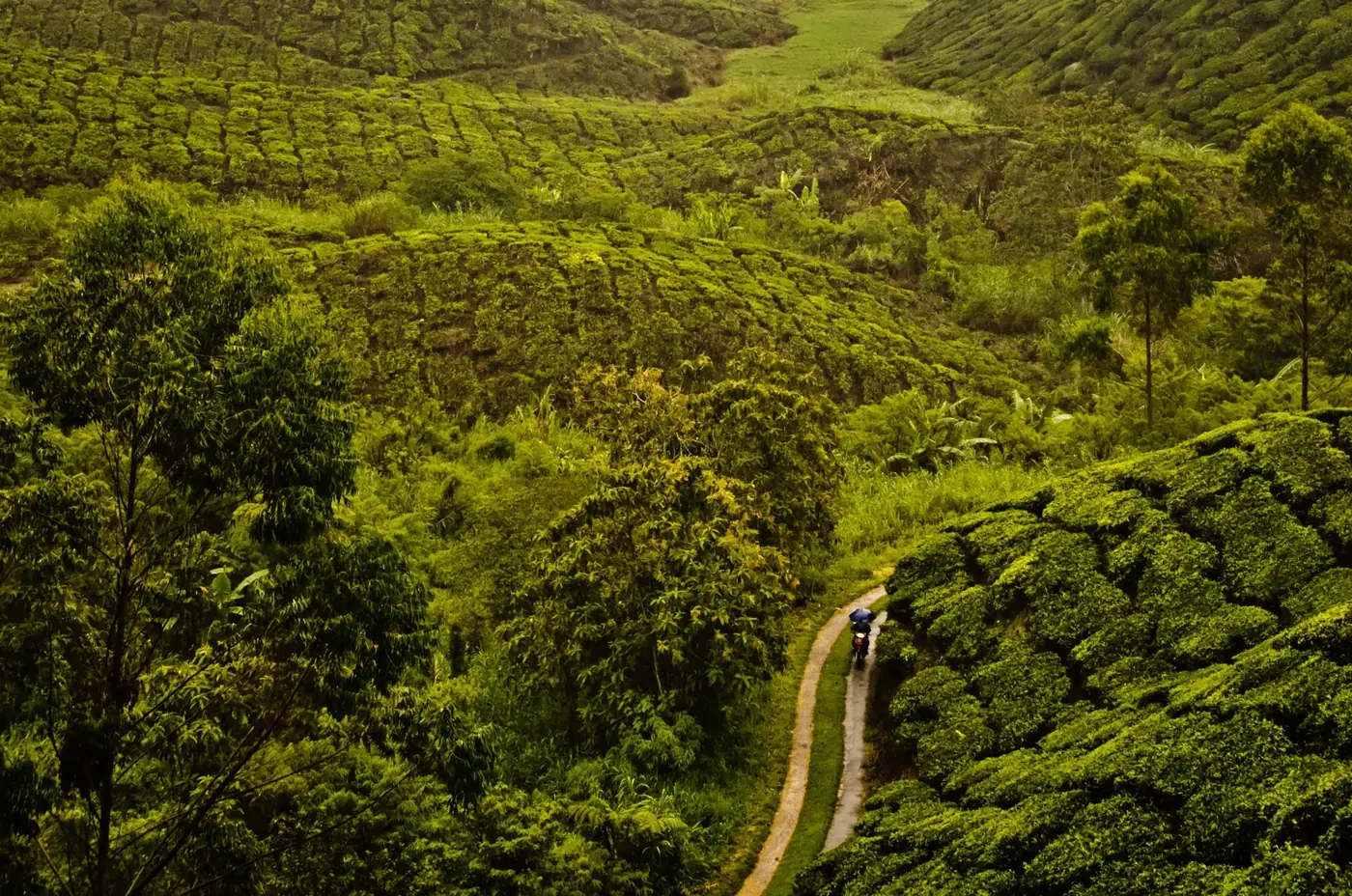
Tea plantation on the hills of Malaysia
Kuala Lumpur
The capital is the arrival point for most trips. Allow two or three days for the Petronas Towers and KLCC Park, Merdeka Square and its colonial buildings, Chinatown around Petaling Street, Little India in Brickfields, the Islamic Arts Museum and Bukit Bintang for shopping and the street food of Jalan Alor. The Batu Caves, a Hindu temple set in a limestone cave at the top of a long staircase, lie north of the city and can be reached by commuter train. The metro, the monorail and ride-hailing apps make getting around easy.
Malacca
A former Portuguese, Dutch and then British trading post, Malacca is a UNESCO World Heritage Site together with George Town. The historic center is best explored on foot: Dutch Square and its red church, the ruins of the A Famosa fortress, Jonker Street and its Peranakan shophouses, a walk along the river. Allow about two hours by bus from Kuala Lumpur. A night there lets you enjoy the weekend night market and the quieter town in the morning.
Penang and George Town
The capital of Penang Island is often described as the country’s food capital: hawker stalls serving char kway teow, laksa or nasi kandar. George Town’s historic center is lined with Chinese clan houses, temples, mosques and street art murals. Penang Hill, reached by funicular, offers views over the island and the strait. You get to Penang by plane, by train to Butterworth and then ferry, or by road over the bridges.
Cameron Highlands
At about 1,500 m (4,921 ft) above sea level, these highlands in the center of the peninsula are known for their tea plantations, strawberry farms and forest hiking trails. The air is much cooler than in the lowlands: bring a sweater for the evening. It is a logical stop between Kuala Lumpur and Penang. As trails are sometimes poorly marked, hike in the forest with a guide.
Langkawi
An archipelago off the northwest coast, Langkawi is the west coast’s main beach destination. The main island offers beaches (Pantai Cenang, Tanjung Rhu), a cable car and a suspended walkway above the forest, and boat trips into the mangroves. It is a duty-free zone: alcohol and some goods are cheaper than on the mainland. Best time: December to March.
Taman Negara
This national park in the center of the peninsula protects a very ancient rainforest. People come for the canopy walkway, guided hikes, boat rides on the river and, with a lot of luck, wildlife sightings. The village of Kuala Tahan, at the park entrance, is the base. Avoid the end-of-year rainy season, when floods can close some trails, and hire a licensed guide for multi-day treks.
The east coast islands: Perhentian, Redang, Tioman
The Perhentian Islands (Besar, quieter, and Kecil, more popular with budget travelers) are known for their clear water, snorkeling and learning to dive; they are reached by boat from the Kuala Besut jetty. Redang, further south, is mostly geared to resorts. Tioman, off Mersing, combines beaches and forest. All share the same constraint: the season runs from April to September, because from November to February the monsoon brings rough seas and many places to stay close.
Malaysian Borneo: Sabah and Sarawak
In Sabah, Kota Kinabalu is the base for Kinabalu Park, a World Heritage Site, and the climb of Mount Kinabalu (4,095 m, or 13,435 ft), done in two days with a guide and a permit to book well in advance; the UK FCDO notes that altitude sickness is a risk there (GOV.UK, updated 19 March 2026). The islands of Tunku Abdul Rahman Park, facing the city, are reached by boat. Eastern Sabah (Sandakan and the Sepilok orangutan center, the Kinabatangan River, Semporna and Sipadan Island) is covered by specific US and UK advice: the FCDO advises against all but essential travel to the islands and dive sites off the east coast, and U.S. government employees may travel to Sandakan, Sepilok and the Kinabatangan only with restrictions (see the safety section). In Sarawak, Kuching is a pleasant riverside city close to Bako National Park (proboscis monkeys, coastal trails) and the Semenggoh reserve, where semi-wild orangutans can be seen. Further north, Gunung Mulu National Park, known for its giant caves, is reached by plane from Miri.
Things to do in Malaysia: the experiences to plan
Beyond the places to see, here are the activities found on most trips (outside the areas of eastern Sabah covered by travel advice):
Climb up to the Batu Caves and see the Petronas Towers in Kuala Lumpur, then have dinner on Jalan Alor.
Eat at George Town’s hawker stalls (char kway teow, laksa, nasi kandar) and hunt for the street art murals.
Walk through Malacca’s historic center and enjoy the weekend night market.
Hike among the tea plantations of the Cameron Highlands, with a guide for forest trails.
Cross the Taman Negara canopy on the suspended walkway, and travel down the river by boat.
Snorkel in the Perhentians from April to September, or enjoy the beaches of Langkawi from December to March.
Watch the orangutans of Semenggoh and the proboscis monkeys of Bako National Park, near Kuching (Sarawak).
Itinerary ideas for Malaysia
7 to 10 days: the peninsula, city and beach
Days 1 to 3: Kuala Lumpur and the Batu Caves
Day 4: Malacca (one night there)
Days 5 to 7: Penang and George Town (flight, or train via Butterworth)
Days 8 to 10: Langkawi from December to March, or the Perhentian Islands from April to September (flight to Kota Bharu, then road and boat from Kuala Besut)
2 weeks: the peninsula and Borneo
Days 1 to 3: Kuala Lumpur
Day 4: Malacca
Days 5 and 6: Cameron Highlands
Days 7 to 9: Penang
Days 10 to 14: flight to Kota Kinabalu (Mount Kinabalu climb or the islands of Tunku Abdul Rahman Park) or to Kuching (Bako, Semenggoh); from April to September, the east coast islands are an alternative
With children: Malaysia works well for family trips. In Kuala Lumpur, KL Bird Park, the aquarium at the KLCC center and the Sunway Lagoon water park appeal to younger children, and Legoland Malaysia is in the state of Johor, in the south of the peninsula. For the beach, choose Langkawi in winter and the Perhentians in summer, picking a sheltered beach. Protect everyone against mosquitoes: dengue is among the health risks listed by the UK FCDO. Before Langkawi or the Perhentians, our Kuala Lumpur travel guide helps you organize a few days in the capital.
Budget for a trip to Malaysia
Malaysia is affordable once there, especially for street food. Alcohol, which is heavily taxed, and the east coast islands push the bill up. Indicative amounts per person per day, excluding international flights (converted from our euro estimates at the ECB rate of 23 October 2026, roughly €1 = MYR 4.57):
Item
Budget
Comfort
Accommodation (based on a shared double room)
roughly MYR 45–115
roughly MYR 230–500
Meals
roughly MYR 35–70 (hawker stalls, food courts)
roughly MYR 115–205
Local transport
roughly MYR 25–45
roughly MYR 70–135
Activities and sightseeing
roughly MYR 25–45
roughly MYR 70–185
Total per day
roughly MYR 160–250
roughly MYR 460–820
Indicative estimates, varying with the season and the region.
Domestic flights, offered in particular by low-cost airlines, are the fastest way to reach Penang, Langkawi, Kota Bharu or Borneo. Booked in advance, they are usually inexpensive.
Getting around Malaysia
Plane: essential for Borneo, and convenient for Penang, Langkawi or Kota Bharu. Kuala Lumpur International Airport (KLIA) has two main terminals: check which one is on your ticket. You must carry your passport and go through immigration when traveling between the peninsula and Sabah or Sarawak, even on a domestic flight (GOV.UK, updated 19 March 2026; travel.state.gov, last updated February 26, 2026).
Train: fast ETS trains link Kuala Lumpur with Ipoh and Butterworth (for Penang). The KLIA Ekspres links the airport with central Kuala Lumpur.
Bus: a dense, cheap network between the towns of the peninsula (Malacca, Cameron Highlands, Mersing, Kuala Besut). Long-distance buses are usually comfortable and heavily air-conditioned. The U.S. Department of State reports serious accidents involving long-distance buses, especially at night or in bad weather: choose a reputable company and avoid overnight routes (travel.state.gov, last updated February 26, 2026).
Boats: ferries to Penang, Langkawi, the Perhentians, Redang and Tioman. On the east coast, services are reduced or suspended during the monsoon.
In town: metro and monorail in Kuala Lumpur, ride-hailing apps (Grab) everywhere. The U.S. Department of State advises using a ride-hailing app or booking a taxi by phone rather than hailing one in the street in central Kuala Lumpur, especially after dark; many drivers refuse to use the meter (travel.state.gov, last updated February 26, 2026). At airports, taxis are paid with a fixed-price coupon bought at a counter in the terminal (GOV.UK).
Car: traffic drives on the left. According to the UK FCDO (GOV.UK, updated 19 March 2026), you need both a 1949 International Driving Permit and your UK driving licence, and the IDP must be bought in the UK before you travel. The U.S. Department of State (travel.state.gov, last updated February 26, 2026) says you can drive with an IDP, obtained outside Malaysia, along with a valid U.S. license; it describes road safety as a very serious concern, mainly because of undisciplined motorcyclists, and drink-driving checks are frequent.
Where to stay in Malaysia
In Kuala Lumpur, Bukit Bintang and the KLCC area are convenient for transport and restaurants; Chinatown and the Merdeka area suit smaller budgets and those who want to do everything on foot. In Penang, stay in George Town’s historic center for food and sightseeing, or at Batu Ferringhi for the beach. In Malacca, the historic center and the riverside are the most pleasant. On the islands, the choice ranges from simple bungalows to resorts, with limited supply: book early for July and August.
There is something for every budget: hostels and guesthouses, chain hotels, restored shophouses in George Town and Malacca, jungle lodges in Taman Negara and on Borneo.
Entry requirements for Malaysia, health and safety
US citizens
According to the U.S. Department of State (travel.state.gov, last updated February 26, 2026), you do not need a visa for tourism or business stays of 90 days or less: at the border your passport is stamped with a social visit pass of up to 90 days; extensions are possible but not guaranteed. Your passport must be valid for at least six months beyond your arrival date, with at least one blank page for the entry stamp. All travelers must complete the Malaysia Digital Arrival Card (MDAC). Travelers who registered for the MDAC can use the autogate at some airports, in which case no entry stamp is given. You must show your passport to enter or leave Sabah and Sarawak, even on a domestic flight. Overstays are taken very seriously (fines, arrest).
UK citizens
According to the UK FCDO (GOV.UK foreign travel advice, updated 19 March 2026), you can visit Malaysia without a visa for tourism and will normally be allowed to stay 90 days on arrival. Your passport must have an expiry date at least 6 months after the date you arrive, and be undamaged with no pages missing. You must submit an arrival card online before you travel (airlines may ask for it at check-in). Between Peninsular Malaysia and Sabah or Sarawak you pass through immigration control and must get entry and exit stamps. Overstaying, even by a few days, can lead to a fine, detention, deportation and a ban. Cash worth USD 10,000 or more must be declared on entry and exit.
Health: according to the UK FCDO (GOV.UK, updated 19 March 2026), a yellow fever vaccination certificate is required only if you arrive from a country with a transmission risk; check vaccine recommendations at least 8 weeks before your trip. Health risks include malaria, dengue and rabies in the states of Perlis, Kedah, Penang and Sarawak, and altitude sickness on Mount Kinabalu. The U.S. Department of State lists malaria, measles, dengue, chikungunya, leptospirosis and Zika, and recommends malaria prevention medicine for all travelers, even for short stays; tap water is not reliably safe to drink (travel.state.gov, last updated February 26, 2026). See a doctor or travel health clinic before you go.
Safety: the UK FCDO advises against all but essential travel to the islands and dive sites off eastern Sabah from Sandakan to Tawau, including Lankayan Island (threat of kidnapping); this does not apply to the mainland of Sabah (GOV.UK, updated 19 March 2026). The U.S. Department of State asks travelers to use caution in eastern Sabah, where U.S. government employees may not travel in most circumstances, and only with restrictions to Sandakan, Lahad Datu, Tawau, Sepilok and the Kinabatangan River (travel.state.gov, last updated February 26, 2026). In big cities, bag-snatching by thieves on motorbikes is common: carry your bag on the side away from the road (GOV.UK). The FCDO also warns about drink spiking and methanol poisoning from adulterated drinks.
Drugs: the authorities have a zero-tolerance policy, including for cannabis; drug trafficking can carry the death penalty, and you may be asked for a urine test on arrival if drug use is suspected, even for drugs taken outside Malaysia (GOV.UK, updated 19 March 2026). Never carry a bag or parcel for someone else.
Local laws: by law you must carry ID, so always carry your passport (GOV.UK). Same-sex sexual acts are illegal under federal law (GOV.UK).
Natural hazards: seasonal storms affect Malaysia, and flooding and landslides are common (GOV.UK, updated 19 March 2026). For diving and watersports, only use licensed operators (GOV.UK).
Emergencies: police and ambulance 999; ambulance from a mobile 112 (GOV.UK).
Entry requirements checked on 24 October 2026; they change often, so check them again before you travel.
Practical tips for Malaysia
Money: ATMs are plentiful in cities and scarcer on the islands: bring cash before heading to the Perhentians or Tioman. According to the U.S. Department of State (travel.state.gov, last updated February 26, 2026), credit cards are accepted throughout the country but fraud is a risk, so keep your card in sight; PINs in Malaysia have six digits, and some travelers have had trouble with four-digit PINs at ATMs. Our currency converter helps you estimate your spending.
Internet: mobile coverage is good in cities and along the main roads, patchier in the jungle and on some islands. A local SIM card or an eSIM is handy for Grab and maps.
Etiquette: Malaysia is a Muslim-majority country. According to the UK FCDO (GOV.UK, updated 19 March 2026), you may be refused entry to places of worship or government offices if your shoulders and knees are not covered or you are not wearing closed shoes. Take off your shoes before entering a place of worship or someone’s home, and use your right hand to give or receive. The east coast (Kelantan, Terengganu) is more conservative: dress modestly away from the beach.
Alcohol: available in cities and tourist areas, but expensive. The UK FCDO warns about methanol poisoning from adulterated alcoholic drinks (GOV.UK): avoid unlicensed venues.
Tipping: it is not customary; a service charge is often already included in the bill at hotel restaurants.
Food: hawker stalls and food courts are the best way to discover Malay (nasi lemak, satay, rendang), Chinese (char kway teow, dim sum) and Indian (roti canai, banana leaf rice) cooking. Choose the stalls busiest with locals, where ingredients turn over quickly.
Who is Malaysia for?
Our verdict by traveler profile, based on the information in this guide (places, budget, seasons).
Profile
Our verdict
Why
Couples
Suitable
Langkawi, the Perhentian Islands, restored shophouses in George Town.
Families
Very suitable
A destination that works well with children: KL Bird Park, the KLCC aquarium, beaches.
Budget travelers
Very suitable
Roughly MYR 160–250 a day, thanks to street food; alcohol and the east coast islands push the bill up.
Nature
Very suitable
Taman Negara, the Cameron Highlands, the orangutans of Semenggoh, Mount Kinabalu.
Culture and food
Very suitable
George Town and Malacca, both UNESCO-listed; Penang’s hawker stalls.
Beach and diving
Very suitable
Perhentian, Redang, Tioman from April to September; Langkawi from December to March.
Frequently asked questions
Do I need a visa for Malaysia?
No, not for tourism: US and UK citizens are normally allowed to stay up to 90 days on arrival. Your passport must be valid at least six months after arrival, and you must complete the Malaysia Digital Arrival Card (MDAC) online (travel.state.gov, last updated February 26, 2026; GOV.UK, updated 19 March 2026). Checked on 24 October 2026; check the latest rules before you leave.
What is the best time to visit Malaysia?
December to March for the west coast (Penang, Langkawi) and April to September for the east coast islands (Perhentian, Redang, Tioman). For a full tour, June to August is a good compromise. November is the wettest month.
How much does a two-week trip to Malaysia cost?
Excluding international flights, allow roughly MYR 160–250 per person per day on a budget, and MYR 460–820 in comfort. Domestic flights to Borneo and the islands, and alcohol, raise the budget.
Is Malaysia safe to visit?
The tourist areas of the peninsula are visited without particular difficulty, but the UK FCDO advises against all but essential travel to the islands and dive sites off eastern Sabah (GOV.UK, updated 19 March 2026), and the U.S. Department of State asks travelers to use caution in eastern Sabah. Bag-snatching is common in big cities, and drug laws are extremely strict.
Is Malaysia good for a family trip?
Yes: English is widely spoken, transport is simple and there are plenty of activities for children (bird park and aquarium in Kuala Lumpur, Legoland in Johor, the beaches of Langkawi and the Perhentians). Choose the region according to the season and protect children from mosquitoes.
What to do in Malaysia in two weeks?
A two-week itinerary links Kuala Lumpur (3 days), Malacca, the Cameron Highlands, Penang (3 days), then five days on Borneo: Kota Kinabalu and Mount Kinabalu, or Kuching, Bako and Semenggoh. From April to September, the east coast islands are an alternative to Borneo.
Entry, health, safety and driving information read on 24 October 2026: U.S. Department of State, Malaysia country information (travel.state.gov, last updated February 26, 2026), and UK FCDO, foreign travel advice for Malaysia (GOV.UK, updated 19 March 2026)
Malaysian Meteorological Department (MetMalaysia), 1991–2020 climate normals (via the World Meteorological Organization)
European Central Bank: euro reference rates of 23 October 2026 (budget conversions)
Discover our other destinations in Asia, including neighboring Thailand and Indonesia.
Transparency: this page contains affiliate links, labelled as such. If you book through them we may earn a commission at no extra cost to you; it does not influence our content or recommendations. How we fund the site.