⚠️ Safety notice (October 2026). Before using this Oman travel guide, note the current context. According to the UK FCDO (GOV.UK, updated 22 July 2026), the situation in the Middle East remains unpredictable: since 8 July there have been strikes and retaliatory attacks by Iran in several locations across the region, including Oman, and there is a risk of further attacks and escalation, with possible flight cancellations and airspace closures at short notice. The U.S. Department of State (travel.state.gov, last updated April 16, 2026) notes that residents and visitors generally find Oman safe, but that threats, including terrorism, remain. Read the latest US and UK advice before booking, and again before you leave.
To locate cities, regions, terrain, national parks and airports, see our map of Oman.
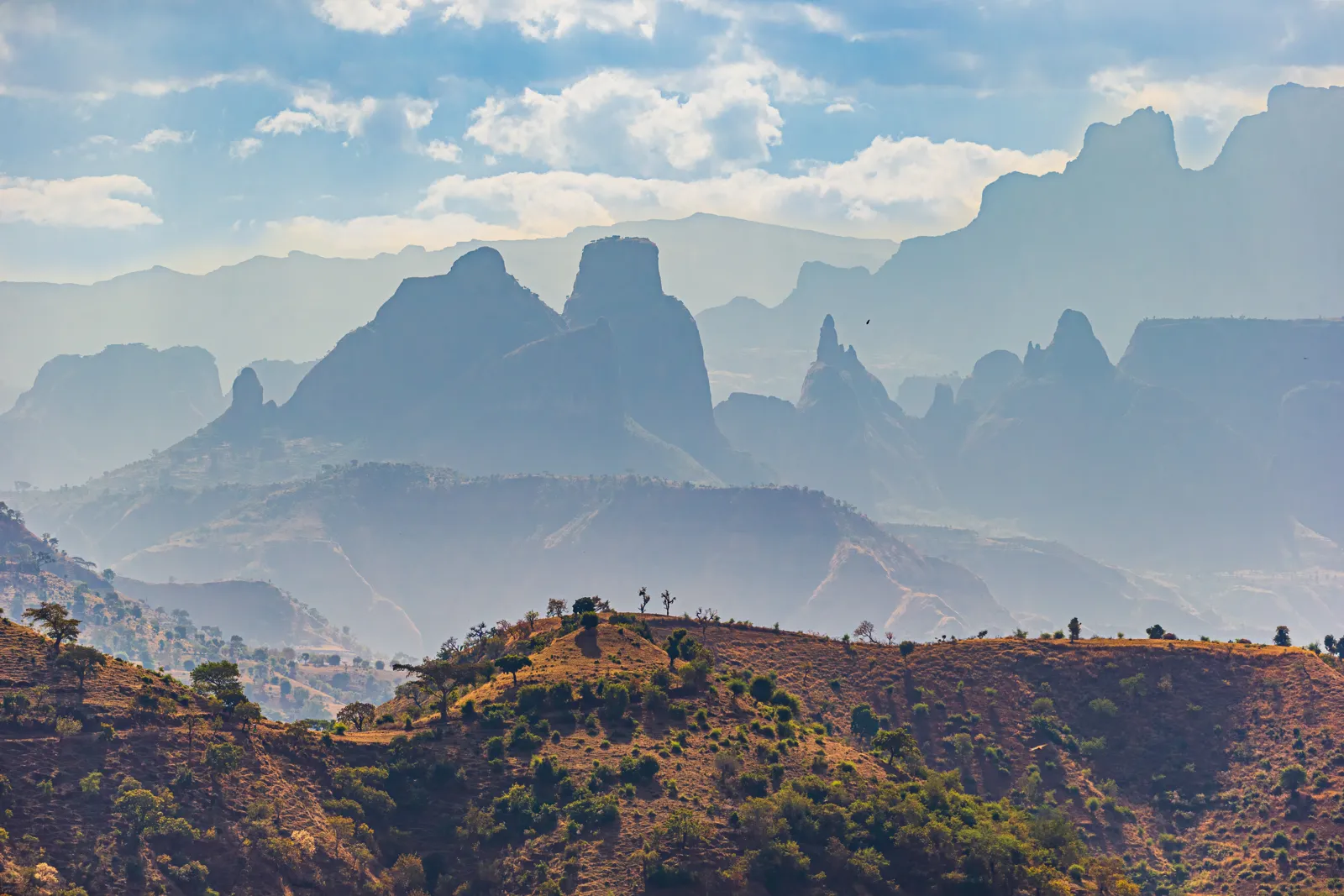
A trip to Oman takes you, on the Arabian Peninsula, to mountains over 2,000 m (6,562 ft), palm oases, mud-brick forts, a desert of dunes and more than 3,000 km (1,864 mi) of coastline. The country is easy to explore by car on a modern road network. This Oman travel guide gathers the essentials to plan your trip: where to go, which itinerary to follow, what budget to allow and what precautions to take in the current context.
Oman at a glance
CapitalMuscat
LanguageArabicEnglish is widely used in tourism and on road signs
The best period runs from November to March, with 25 to 30 °C (77 to 86 °F) in the afternoon in Muscat and cool nights inland. October and April are still possible but hot. From May to September, temperatures exceed 38 °C (100 °F) in the north and reach up to 43 °C (109 °F) in Nizwa. The south (Salalah) has a green season in summer, the khareef. According to the UK FCDO (GOV.UK, updated 22 July 2026), tropical cyclones from the Indian Ocean sometimes affect Oman in July and August. All the month-by-month details, with official climate data, are in our article best time to visit Oman.
Where to go in Oman: the highlights
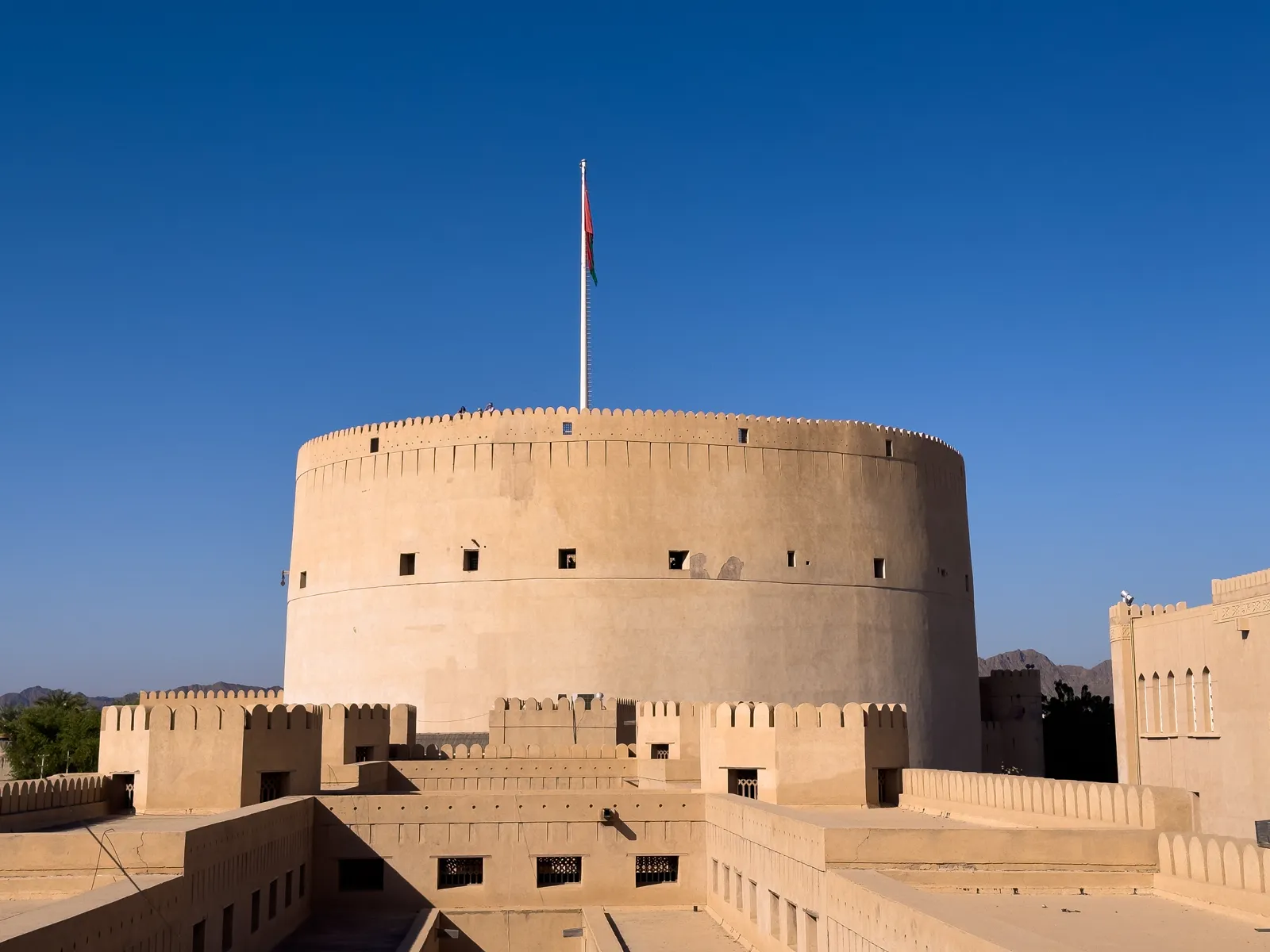
Nizwa Fort in Oman
Muscat
The capital stretches for about 50 km (31 mi) between the sea and the mountains. Highlights: the Sultan Qaboos Grand Mosque (open to non-Muslims in the morning, except Friday; covering clothes required), the Mutrah souk and its corniche, Old Muscat with Al Alam Palace framed by the Jalali and Mirani forts, and the Royal Opera House. Allow two days. From Muscat, boat trips let you watch dolphins or snorkel around the Daymaniyat Islands.
Nizwa and the inland forts
The former capital of the interior, less than two hours from Muscat, Nizwa is known for its fort with a large round tower and for its souk. On Friday mornings, the livestock market draws breeders and onlookers. Nearby: Bahla Fort, a UNESCO World Heritage Site, Jabrin Castle and its painted ceilings, and mud-brick villages such as Al Hamra and Misfat al Abriyeen, at the foot of the mountains.
Jebel Akhdar
The « Green Mountain » is a plateau at around 2,000 m (6,562 ft), reachable only by 4×4 (police checkpoint at the foot of the road). You will find villages clinging to the cliffs, terraced crops irrigated by falaj channels and marked hiking trails between villages. It is about 10 °C (18 °F) cooler than Nizwa: ideal in spring and autumn, chilly in winter.
Jebel Shams and Wadi Ghul
The country’s highest peak, Jebel Shams overlooks Wadi Ghul, often nicknamed the « Grand Canyon of Oman ». The Balcony Walk (W6) follows the cliff edge to the abandoned village of As Sab. The access road ends as a track: a 4×4 is recommended. Bring warm clothes for winter evenings. The UK FCDO (GOV.UK, updated 22 July 2026) advises sticking to marked hiking trails and notes that extreme heat has caused deaths from dehydration and heat exhaustion.
The wadis: Wadi Shab and Wadi Bani Khalid
Wadis are valleys where water forms turquoise pools between palm trees and cliffs. Wadi Shab, on the coast between Muscat and Sur, is reached by small boat and then on foot; you finish by swimming to a cave. Wadi Bani Khalid, inland, is easier to reach. Never go in when rain or storms are forecast: according to the UK FCDO (GOV.UK, updated 22 July 2026), wadis are prone to flash flooding after heavy rain from October to March, and flash floods can cause injuries and deaths; avoid places where heavy rain is expected and for at least one day afterwards.
Sur and Ras al-Jinz
Sur is a port known for building dhows, the traditional wooden boats. Further east, the Ras al-Jinz reserve protects a beach where sea turtles come to nest; sightings take place at night and at dawn, only on visits supervised by the reserve. Book ahead in high season.
Wahiba Sands (Sharqiya Sands)
This desert of orange dunes lies about three hours from Muscat. Most travelers spend a night in a camp, reached by 4×4 from the main road (camps often offer a transfer). On the program: sunset over the dunes, a camel ride, starry skies. Do not venture off the tracks alone: the UK FCDO (GOV.UK, updated 22 July 2026) says desert trips can be dangerous unless you are in a well-equipped 4×4, and advises traveling in convoy if possible, with water, a mobile or satellite phone, and a copy of your travel plans left with friends or relatives.
Salalah, Dhofar and Musandam
Dhofar, in the south, is known for its frankincense, its beaches and the green khareef season; Musandam, an enclave in the north separated by the United Arab Emirates, for its fjords. Both are far from the northern circuit described below. Given the regional tensions, check the latest US and UK advice before including them in your itinerary.
Things to do in Oman: the experiences to plan
Beyond the places to see, here are the activities most travelers put on their program, all in the north of the country:
Visit the Sultan Qaboos Grand Mosque in Muscat, in the morning (except Friday), in covering clothes.
Swim in a wadi: Wadi Shab (boat, walk, then a swim to a cave) or the more accessible Wadi Bani Khalid, never when storms are forecast.
Spend a night in a desert camp in the Wahiba Sands: sunset over the dunes, camels, starry skies.
Hike on Jebel Akhdar between the terraced villages, or on the Balcony Walk (W6) above Wadi Ghul, on Jebel Shams.
Watch the turtles at Ras al-Jinz, at night or at dawn, on a visit supervised by the reserve.
See the Nizwa livestock market on Friday morning, then visit the forts of Nizwa, Bahla and Jabrin.
Take a boat trip from Muscat to see dolphins or snorkel around the Daymaniyat Islands.
Itinerary ideas for Oman
These itineraries stay in the north of the country. A rental car (a 4×4 for the mountains) is the simplest way to follow them.
7 to 10 days: the essentials of the north
Days 1 and 2: Muscat (Grand Mosque, Mutrah, Old Muscat)
Day 3: coast road to Sur via Bimmah and Wadi Shab
Day 4: Sur, then Ras al-Jinz in the evening
Day 5: Wadi Bani Khalid, then a night in the Wahiba Sands
Day 6: drive to Nizwa via Ibra
Day 7: Nizwa, Bahla and Jabrin
Days 8 and 9 (optional): Jebel Akhdar or Jebel Shams, hiking
Day 10: back to Muscat (about 2 hours)
2 weeks: at a slower pace
Days 1 to 3: Muscat and a boat trip (dolphins or the Daymaniyat Islands)
Days 4 and 5: Wadi Shab, Sur and Ras al-Jinz
Days 6 and 7: Wadi Bani Khalid and two nights in the Wahiba Sands
Days 8 and 9: Nizwa, its Friday souk, Bahla and Jabrin
Days 10 and 11: Jebel Akhdar, hiking between the terraced villages
Days 12 and 13: Jebel Shams, Wadi Ghul, Al Hamra and Misfat al Abriyeen
Day 14: back to Muscat
Who is Oman for?
Our verdict by traveler profile, based on the places, budget and conditions presented in this guide to Oman.
Profile
Our verdict
Hiking
✅ Terraced villages of Jebel Akhdar, the Balcony Walk (W6) above Wadi Ghul.
Desert
✅ A night in a Wahiba camp, sunset over the dunes, staying on the tracks.
Culture
✅ Sultan Qaboos Grand Mosque, the forts of Nizwa, Bahla and Jabrin, Mutrah souk.
Road trip
✅ Modern road network signposted in English; a 4×4 is essential for Jebel Akhdar.
Nature and sea
✅ Wadi Shab and Wadi Bani Khalid (never when storms are forecast), Ras al-Jinz turtles, dolphins off Muscat.
Budget travelers
⚠️ A rather expensive destination: roughly US$80–135 per person per day, mainly because of accommodation and the car.
All profiles
⚠️ Check the safety notice at the top of the page: regional tensions can disrupt flights at short notice.
Budget for a trip to Oman
Oman is a rather expensive destination, especially for accommodation and car rental; fuel and simple meals remain affordable. Indicative amounts per person per day, excluding international flights (converted from our euro estimates into US dollars at the ECB rate of 23 October 2026, €1 = US$1.1193):
Item
Budget
Comfort
Accommodation (based on a shared double room)
roughly US$35–55
roughly US$100–225
Meals
roughly US$11–22 (Indian restaurants, shawarma)
roughly US$40–65
Transport
roughly US$22–40 (shared car)
roughly US$45–80 (4×4 or driver)
Sightseeing and activities
roughly US$6–17
roughly US$22–45 (boat, guides)
Total per day
roughly US$80–135
roughly US$200–390
Indicative estimates, varying with the season and price changes.
Wild camping is common among travelers to cut costs; if you head into the desert or mountains, the UK FCDO advises leaving a copy of your travel plans with friends or relatives (GOV.UK, updated 22 July 2026).
Getting around Oman
Rental car: the most practical option. Main roads are good and signposted in English. A 4×4 is essential to drive up Jebel Akhdar and recommended for Jebel Shams and the desert. The U.S. Department of State (travel.state.gov, last updated April 16, 2026) warns that travel between cities can be dangerous because of poor lighting, wandering livestock and speeding drivers, and that traffic laws are strictly enforced, with extensive use of traffic cameras; all fines must be paid before you can leave the country. Never cross a flooded road.
Driving licence: according to the UK FCDO (GOV.UK, updated 22 July 2026), you can drive a rental car on a UK photocard licence for the first 6 weeks; with an old paper licence you may need a 1949 International Driving Permit, and rental companies may ask for an IDP anyway. According to travel.state.gov (last updated April 16, 2026), short-term visitors with a U.S. driver’s license may drive rental vehicles, but not privately registered cars. All passengers must wear seatbelts and using a mobile phone while driving is illegal (GOV.UK). In an accident with injuries or damage, do not move your vehicle until the police allow it (travel.state.gov).
Driver or organized tour: useful if you do not want to drive, especially for the desert and mountain tracks.
Bus: the state-owned company Mwasalat links Muscat to the main towns, but remote sites remain hard to reach without a car.
Taxis: in Muscat, use local ride-hailing apps or agree on the fare before getting in.
Boat: for sea trips, the UK FCDO notes that tourist boats may not meet UK safety standards: make sure life jackets are available for all passengers (GOV.UK, updated 22 July 2026).
Where to stay in Oman
In Muscat, stay in Mutrah or Old Muscat for the atmosphere, or in the beach districts (Qurum, Al Khuwair) for the sea; the large beach resorts are further out. In Nizwa, guesthouses have been set up in old houses of the historic quarter. On Jebel Akhdar and Jebel Shams, options range from campsites to luxury hotels, in limited numbers. In the Wahiba Sands, choose between simple camps and more comfortable camps with private bathrooms. In Sur and Ras al-Jinz, accommodation is limited: book early.
In winter, check that your desert camp or mountain hotel provides enough blankets: nights can be cool.
Entry requirements for Oman, health and safety
US citizens
According to the U.S. Department of State (travel.state.gov, last updated April 16, 2026), you need a passport valid for at least six months and a visa. U.S. citizens should apply for a tourist visa in advance on the Royal Oman Police eVisa website; tourist visas are also available on arrival at airports and land crossings. Visa types and fees are listed on the Royal Oman Police website. You must have proof of adequate funds and an onward or return ticket. Penalties for expired passports or visas include fines and/or imprisonment. A yellow fever vaccination is required if you arrive from a country with yellow fever outbreaks.
UK citizens
According to the UK FCDO (GOV.UK foreign travel advice, updated 22 July 2026), you can visit Oman for up to 14 days without a visa. To stay longer, you must have a visa: it is better to apply online before travel (the « unsponsored visit visa » option for tourists), although a visit visa can also be obtained on arrival at an airport. Your passport must be valid for at least 6 months after the date you arrive. At border control you must be able to show a return or onward ticket, proof of accommodation and proof of travel health insurance. Overstaying can lead to fines of up to 10 rials a day (maximum 500 rials) and detention. A yellow fever certificate is required if you come from Rwanda, Tanzania or a country listed as a transmission risk.
Drones and customs: flying a drone without a valid licence, or in restricted airspace, is illegal, and importing or using e-cigarettes and vapes is illegal (GOV.UK). Non-Muslim travelers can bring in no more than two liters of alcohol bought at a duty-free shop (travel.state.gov). For your return, check your home country’s customs allowances (e.g. CBP in the US, HMRC in the UK).
Health: according to the UK FCDO (GOV.UK, updated 22 July 2026), check vaccine recommendations at least 8 weeks before your trip; health risks include dengue and Middle East respiratory syndrome coronavirus (MERS), altitude sickness in parts of the country, and extreme heat, which has caused deaths. Some UK prescription and over-the-counter medicines are illegal in Oman: carry a copy of your prescription and check with Oman’s Ministry of Health well before you travel. The U.S. Department of State recommends carrying medicines in their original packaging with your doctor’s prescription. Visitors must use private healthcare, so travel insurance is essential (GOV.UK).
Safety: the UK FCDO reports strikes and retaliatory attacks by Iran in the region, including Oman, since 8 July, and says terrorist attacks cannot be ruled out; stay away from security or military facilities and follow the advice of the Royal Oman Police (GOV.UK, updated 22 July 2026). The U.S. Department of State strongly advises against travel to Yemen: crossing the Yemen-Oman border can be dangerous (travel.state.gov, last updated April 16, 2026).
Natural hazards: sudden heavy rain causes flash floods in the wadis and on roads crossing dry riverbeds; if caught in one, go to high ground and do not try to cross the water (GOV.UK).
Desert: travel in a well-equipped 4×4, in convoy if possible, with water and a mobile or satellite phone (GOV.UK).
Emergencies: 9999 for ambulance, fire and police (GOV.UK, travel.state.gov); operators mostly speak Arabic (travel.state.gov).
Entry requirements checked on 24 October 2026; they change often, so check them again before you travel.
Practical tips for Oman
Money: local currency is easily available from ATMs and exchange counters, and U.S. bills printed before 2006 are often not accepted (travel.state.gov, last updated April 16, 2026). Bring cash for souks, small restaurants and villages. Our currency converter helps you estimate your spending.
Internet: mobile coverage is good in towns and along the main roads, but not in some mountain and desert areas. A local SIM card or an eSIM is handy for GPS navigation. VPN and VoIP use is restricted and could result in penalties (travel.state.gov).
Dress: dress modestly in public areas, including malls: clothing should cover the tops of the arms and the legs below the knee; beachwear only on tourist beaches and at pools (GOV.UK, updated 22 July 2026). In wadis used by Omani families, swim in a T-shirt and long shorts.
Etiquette: hospitality is renowned; Omani coffee and dates are part of the welcome. Do not photograph people without their permission, and do not photograph some government buildings and military sites (GOV.UK). Swearing and rude gestures, including while driving, are illegal, and public displays of affection are frowned upon (GOV.UK).
Alcohol: visitors can drink only in licensed venues such as hotels, restaurants and clubs; the legal drinking age is 21, and drinking or being drunk in public is illegal (GOV.UK, updated 22 July 2026).
Ramadan: do not eat, drink, smoke or chew gum in public in the daytime, including in your car (GOV.UK).
Weekend: it falls on Friday and Saturday; on Friday at midday, many shops close for prayers.
Read more: Our article best time to visit Oman details the climate month by month, with marked differences between the coast and the interior. Since the best period runs from November to March, our selections where to go in November and where to go in February help you compare.
Frequently asked questions
Do I need a visa for Oman?
Yes for US citizens, who need a visa: apply in advance on the Royal Oman Police eVisa website, or get one on arrival, with a passport valid for at least six months (travel.state.gov, last updated April 16, 2026). UK citizens can visit for up to 14 days without a visa, need a visa for longer stays and a passport valid at least 6 months after arrival (GOV.UK, updated 22 July 2026). Checked on 24 October 2026; check the latest rules before you leave.
How many days do you need to visit Oman?
Seven to ten days let you see Muscat, the coast to Sur, the Wahiba Sands, Nizwa and one mountain. With two weeks, you can add Jebel Akhdar and Jebel Shams at a more relaxed pace.
Do you need a 4×4 in Oman?
Not for the main roads, which are good. But a 4×4 is compulsory to drive up Jebel Akhdar and recommended for Jebel Shams and access to the desert camps.
Is Oman safe to visit right now?
The U.S. Department of State notes that visitors generally find Oman safe, but that threats, including terrorism, remain (travel.state.gov, last updated April 16, 2026). The UK FCDO reports strikes and retaliatory attacks by Iran in the region, including Oman, since 8 July, and a risk of further escalation and flight disruption (GOV.UK, updated 22 July 2026). Read the latest advice before booking.
What budget should you allow for a week in Oman?
Excluding flights, allow roughly US$80–135 per person per day on a budget, and US$200–390 in comfort, or roughly US$560–945 per person for a week on a budget. Car rental and accommodation make up most of the spending.
What to see in Oman in one week?
In 7 days, stay in the north: two days in Muscat, the coast road via Wadi Shab to Sur and Ras al-Jinz, Wadi Bani Khalid and a night in the Wahiba Sands, then Nizwa, Bahla and Jabrin before returning to Muscat. Add two or three days for Jebel Akhdar or Jebel Shams.
Entry, health, safety, local laws and driving information read on 24 October 2026: U.S. Department of State, Oman country information (travel.state.gov, last updated April 16, 2026), and UK FCDO, foreign travel advice for Oman (GOV.UK, updated 22 July 2026)
World Meteorological Organization, World Weather Information Service: climate normals supplied by Oman’s Directorate General of Meteorology (Muscat, Nizwa, Sur, Saiq, Salalah)
European Central Bank: euro reference rates of 23 October 2026 (budget conversions)
Transparency: this page contains affiliate links, labelled as such. If you book through them we may earn a commission at no extra cost to you; it does not influence our content or recommendations. How we fund the site.