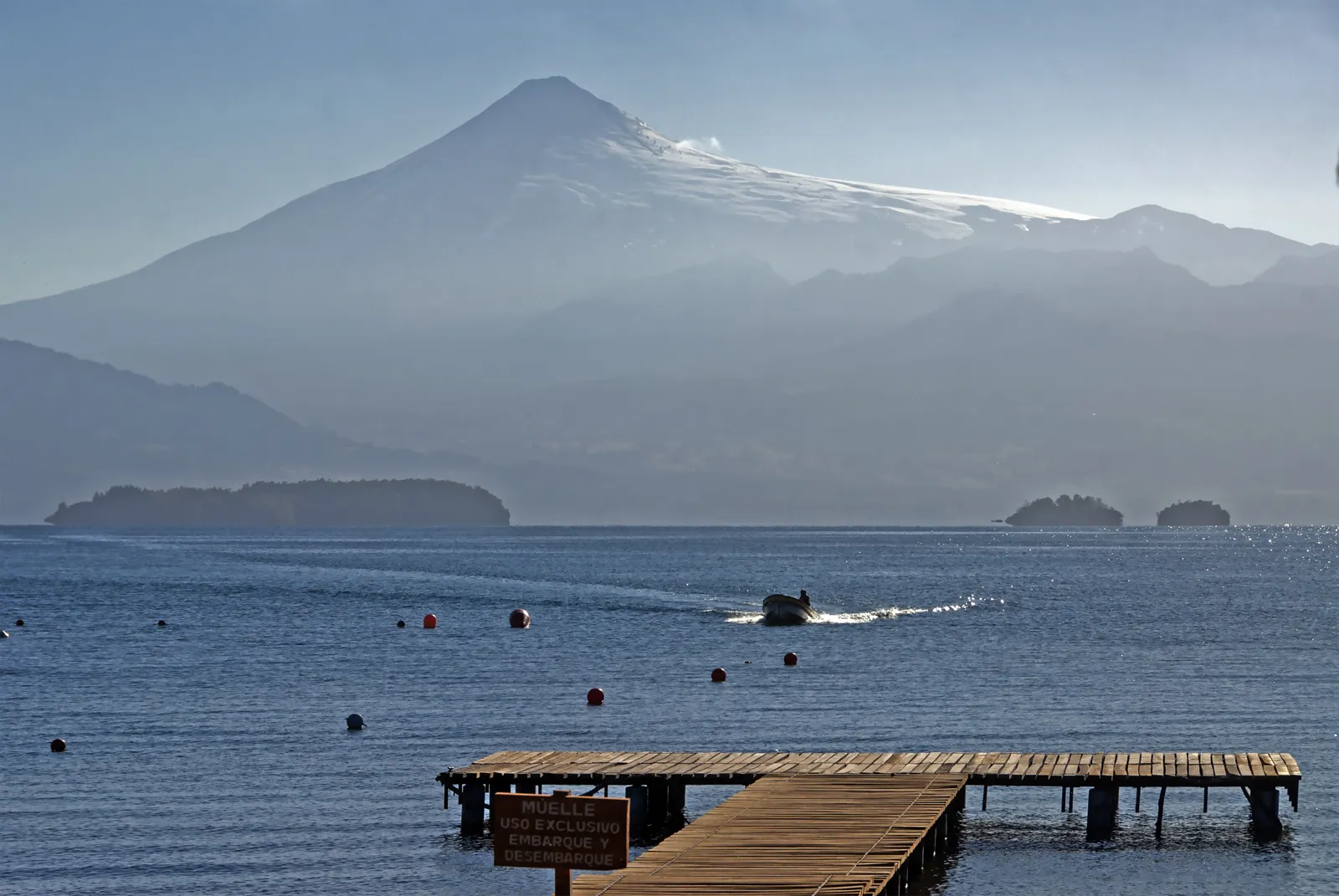
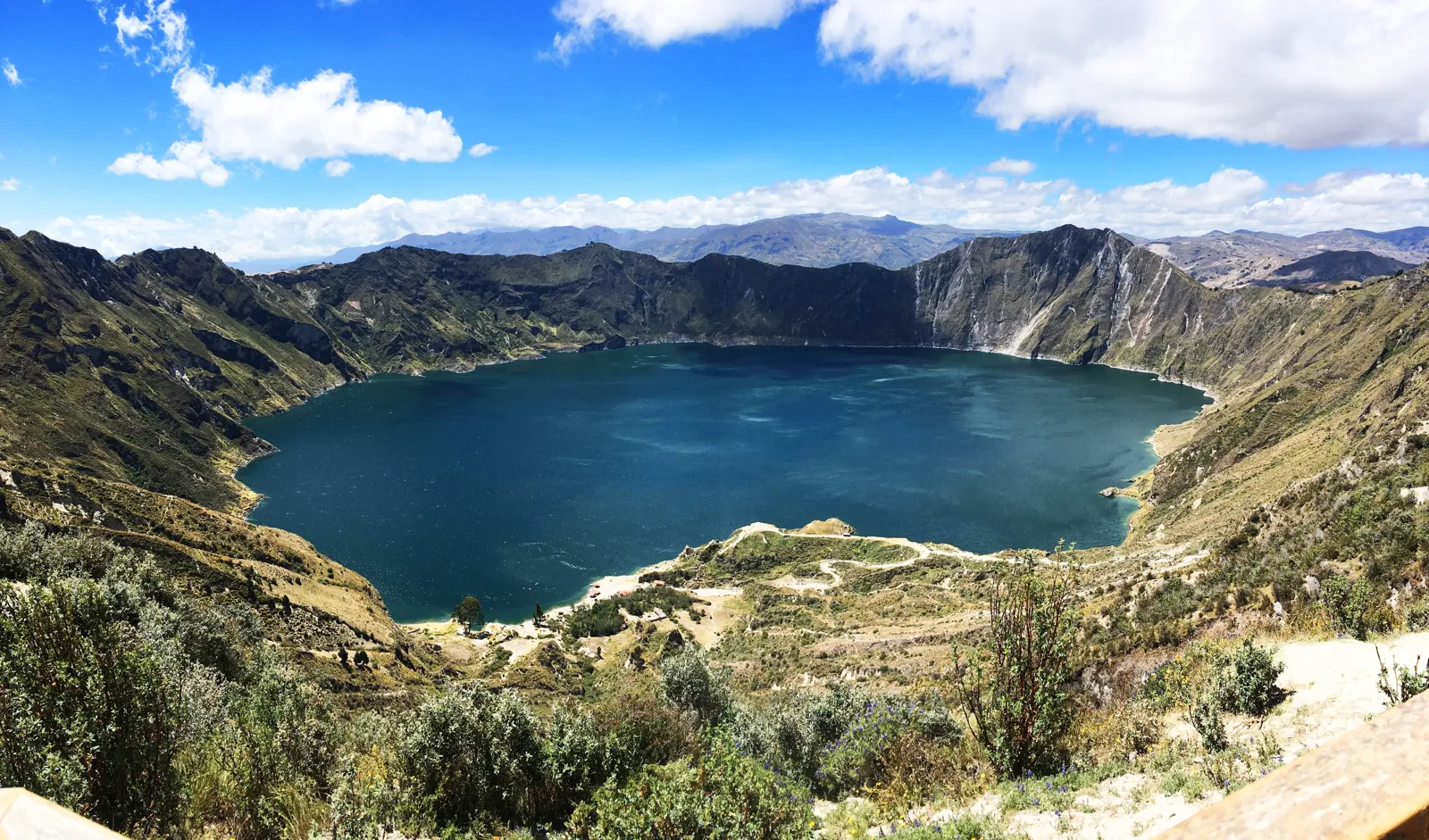
Active volcanoes, huge lakes, colonial cities and Pacific beaches: Nicaragua packs into a compact territory much of what draws travelers to Central America, with fewer visitors than its neighbors. It is also a country with an authoritarian government and a tense political climate, which both the US and UK governments highlight in their travel advice. This Nicaragua travel guide helps you choose what to see, which itinerary to follow and what budget to plan.
To locate cities, regions, terrain, national parks and airports, see our map of Nicaragua.
Nicaragua at a glance
CapitalManagua
LanguageSpanish (official)Creole English, Miskito and other languages on the Caribbean coast
Currencythe córdoba (NIO) · currenciesThe US dollar is the only foreign currency freely exchangeable (GOV.UK)
Time zoneUTC−6, no daylight saving6 h behind London and 1 h behind New York in winter
AirportsManagua Augusto C. Sandino (MGA) · detailsCheck current routes with the airlines
EntryUS and UK: visa-free up to 90 days; US$10 entry fee in cash · travel.state.gov · GOV.UK
Electricitycheck voltage and plug types before you leave · plugs
Political risk: the U.S. Department of State (travel.state.gov, last updated June 4, 2026) describes the government as authoritarian. It has denied entry to and expelled US citizens, monitors social media for political content, and the Department has determined there is a risk of wrongful detention of US nationals. Avoid any comment on Nicaraguan politics.
No political activity: according to the UK FCDO (GOV.UK, updated 10 December 2025), it is illegal for foreigners to take part in any political activity, including protests or using the national flag or colors for campaigning; you can be arrested, detained or deported.
Equipment: drones are prohibited, and customs may seize photography and video equipment and binoculars; since April 2024, observing flora and fauna, including birdwatching, requires approval from the Ministry of the Environment (MARENA), according to travel.state.gov.
Night travel: both governments advise against road travel after dark.
Consular help: there is no resident British diplomatic mission in Nicaragua; British nationals should contact the British Embassy in San José, Costa Rica (GOV.UK). Reread both governments’ advice just before you leave.
When to go to Nicaragua
The best period is the dry season, from December to April, and especially January and February. The Pacific side (Granada, León, Ometepe, San Juan del Sur) is then almost rain-free, and the heat stays bearable before the March–April peak. The rainy season, from May to November, peaks in September–October; according to GOV.UK, the hurricane season normally runs from June to November. For the Corn Islands, on the Caribbean coast, aim for March and April instead. All the details, month by month, are in our article best time to visit Nicaragua.
What to see in Nicaragua: the highlights
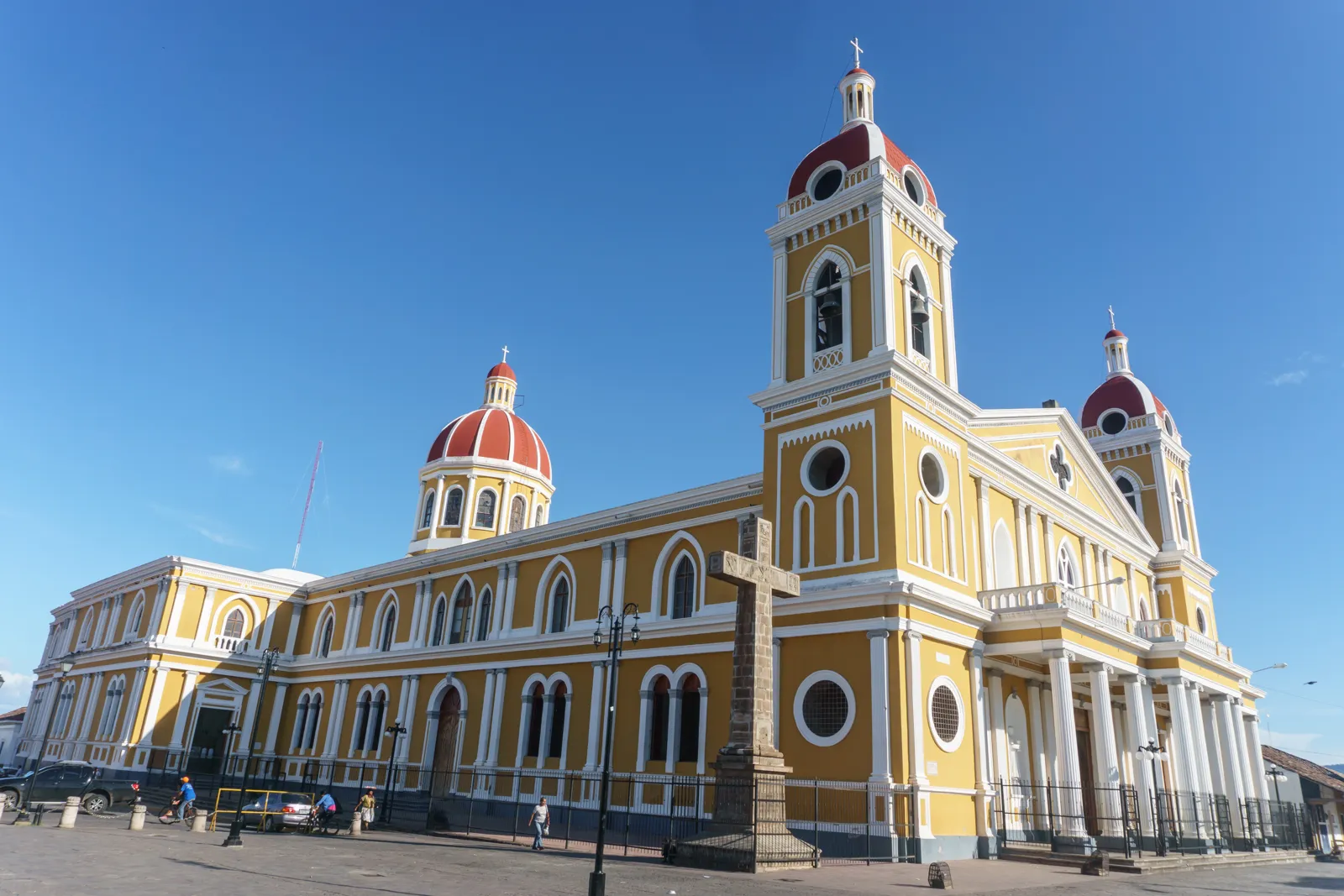
Granada Cathedral, Nicaragua
Granada
Founded in the 16th century on the shore of Lake Nicaragua, Granada is the country’s most visited colonial city: colorful facades, a yellow cathedral, churches and convents, horse-drawn carriages around the central park. It is the most practical base for boat trips to the lake’s islets (« isletas »), Mombacho volcano and its cloud forest, or the Apoyo lagoon, a water-filled former crater where you can swim.
León
Granada’s historic rival, León is a lively university city shaped by the country’s political history. Its large white cathedral, a UNESCO World Heritage Site, can be visited right up to the roof. León is the starting point for the Maribios range, a chain of volcanoes including Cerro Negro, famous for volcano boarding down its ash slopes, and Telica. The ruins of León Viejo, the first colonial city, are nearby.
Ometepe Island
In the middle of Lake Nicaragua, Ometepe is formed by two volcanoes joined by an isthmus: Concepción, active and cone-shaped, and Maderas, covered in forest. People come for the hikes (demanding: according to the U.S. Department of State, Nicaraguan law requires tourists to hire a local guide for most volcanic hikes, including both volcanoes on Ometepe), waterfalls, natural springs, kayaking and petroglyphs. Crossings leave mainly from San Jorge, near Rivas.
Masaya and the white villages
Between Managua and Granada, Masaya Volcano National Park lets you approach the rim of an active crater, whose lava lake is sometimes visible at night on supervised visits. The town of Masaya is known for its crafts market, and the nearby « pueblos blancos » (Catarina, San Juan de Oriente) for their pottery and views over the Apoyo lagoon. Access to the volcano depends on its activity.
San Juan del Sur and the Pacific coast
This bay in the southwest is the country’s busiest beach resort, with many surrounding beaches popular with surfers. According to GOV.UK, there are strong currents off sections of the Pacific coast and people have drowned; there are no warning signs or lifeguards. Further north, the Pacific coast has other surf spots and wilder beaches, where sea turtles nest at certain times of year.
Matagalpa, Estelí and the highlands
In the north, the mountains are covered with coffee plantations and forests. Matagalpa and Jinotega are the heart of coffee country, and Estelí is known for its cigars and the Miraflor nature reserve. The climate is cooler than on the Pacific. These regions suit travelers who want to walk and discover rural life.
Río San Juan
In the southeast, the Río San Juan links Lake Nicaragua to the Caribbean along the border with Costa Rica. The El Castillo fortress and the Indio Maíz reserve are the main attractions. It is an isolated region, reached mostly by boat, best visited with an agency and plenty of time. Want to continue into Costa Rica after the Río San Juan? Check the best time to visit Costa Rica before crossing the border.
The Corn Islands
About 70 km (43 mi) off the Caribbean coast, Big Corn and Little Corn offer white sand beaches, reefs for snorkeling and diving, and an English-speaking Creole culture. They are usually reached by domestic flight from Managua. GOV.UK notes that there have been diving fatalities off the Caribbean coast and that the country’s only hyperbaric chamber is in Puerto Cabezas, a 5-hour speedboat ride from Corn Island: choose a reputable dive operator. The U.S. Department of State adds that the Caribbean coast’s isolation limits emergency assistance.
Things to do in Nicaragua: experiences not to miss
Discover Granada, the lake’s islets and Mombacho volcano
Look into the crater of Masaya volcano and tour the white villages
Explore Ometepe Island and its two volcanoes
Visit León and slide down the slopes of Cerro Negro
Surf or relax around San Juan del Sur
Head to the Corn Islands on the Caribbean side
Itinerary ideas for Nicaragua
The Pacific side is compact: the main sites are 1 to 3 hours’ drive from each other. Do not travel by road at night, as both the US and UK governments advise.
10 days: the Pacific essentials
Days 1 to 3: Granada, the lake’s islets, Mombacho and the Apoyo lagoon
Day 4: Masaya volcano and the white villages
Days 5 to 7: Ometepe Island
Days 8 and 9: San Juan del Sur
Day 10: back to Managua
2 weeks: the full loop
Days 1 to 3: León, Cerro Negro and León Viejo
Days 4 and 5: Matagalpa or Estelí (coffee, hiking)
Days 6 to 8: Granada, Masaya and the Apoyo lagoon
Days 9 to 11: Ometepe Island
Days 12 and 13: San Juan del Sur, or a flight to the Corn Islands in March–April
Day 14: back to Managua
Budget for a trip to Nicaragua
Nicaragua is one of the cheapest countries in Central America, but tourist areas (Granada, San Juan del Sur, the Corn Islands) are pricier. Indicative amounts per person per day, excluding international flights, converted from our euro estimates into US dollars at the ECB rate of 23 October 2026 (€1 = US$1.12) and rounded:
Item
Budget
Comfort
Accommodation (based on a shared double room)
roughly US$11–28 (hostal, guesthouse)
roughly US$45–100
Meals
roughly US$11–17
roughly US$28–45
Transport
roughly US$6–11 (buses, shared shuttles)
roughly US$17–39 (private driver)
Activities and sightseeing
roughly US$6–11
roughly US$17–34
Total per day
roughly US$40–65
roughly US$100–200
Indicative estimates. Guided volcano tours, flights to the Corn Islands and the US$10 entry fee come on top.
To save money, eat at « comedores » and « fritangas » (small eateries and grill stalls), and travel outside holiday periods. Bring US dollars in small bills: the entry fee is payable in cash (exact change is recommended, according to travel.state.gov).
Getting around Nicaragua
Tourist shuttles: the easiest way to travel between Granada, León, San Jorge (the port for Ometepe) and San Juan del Sur. Book them through your accommodation or established agencies.
Buses: cheap but slow. GOV.UK advises avoiding public transport after dark and taking care around markets and bus stations; the U.S. Department of State reports pickpocketing and occasional armed robberies on public transport and in Managua’s Oriental and Huembes markets.
Taxis: according to GOV.UK, use radio-dispatched taxis or authorized taxis with red plates, check that the driver’s ID is displayed, never take a taxi called for you by a stranger, and avoid colectivos (minibuses): there is a risk of « express kidnapping » in unauthorized taxis.
Car: main roads between major cities are generally paved, but other roads are poorly lit and signposted, and livestock and pedestrians are common (travel.state.gov). You can drive with a UK photocard licence (GOV.UK). Drivers must carry a licence, proof of insurance, registration, an emergency triangle and a fire extinguisher; the blood alcohol limit is 0.05%, and drivers involved in serious accidents are taken into custody (travel.state.gov). Never drive at night; hiring a professional driver is an option.
Boat and plane: ferries to Ometepe from San Jorge; domestic flights from Managua to the Corn Islands. Check that boat operators carry insurance and life jackets (GOV.UK; travel.state.gov).
Where to stay in Nicaragua
In Granada and León, stay in the historic center so you can do everything on foot. On Ometepe, the Moyogalpa area is practical for the ferry, Santo Domingo for the isthmus beaches, and the slopes of Maderas for nature. In San Juan del Sur, choose between the lively town and the quieter nearby beaches, where a vehicle is useful. In Managua, if you need to spend a night, choose a hotel near the airport or in the business districts.
Keep your passport in the hotel safe and carry a copy of the photo page and entry stamp.
Entry requirements for Nicaragua
US citizens
According to the U.S. Department of State (travel.state.gov, last updated June 4, 2026), you need a US passport valid for the length of your stay and must pay US$10 in cash for a tourist entry stamp on arrival, valid for up to 90 days. You should have an onward or return ticket and evidence of funds. Under the CA-4 agreement, you can travel among Nicaragua, Guatemala, El Salvador and Honduras for up to 90 days in total. Travelers from countries with a risk of yellow fever transmission must show proof of vaccination, given at least 10 days before travel. The government has denied entry to US citizens, including people who had previously traveled without problems; volunteer, NGO and religious groups must request advance permission.
UK citizens
According to the UK FCDO (GOV.UK foreign travel advice, updated 10 December 2025), you can visit for up to 90 days without a visa, and you may be refused entry without an onward ticket. Your passport must have an expiry date at least 6 months after the date you arrive. The 90 days are shared with Guatemala and El Salvador (British nationals need a visa for Honduras) and do not restart when you cross borders; you can extend your stay in Nicaragua by up to 30 days for a fee. A yellow fever certificate is required if you arrive from a country with a transmission risk. You must pay a US$10 arrival tax in cash.
For all visitors
Departure tax: usually included in your air ticket; GOV.UK gives US$35 and travel.state.gov US$42, so check with your airline.
Banned items: e-cigarettes (GOV.UK), drones, and any weapons, ammunition or military-type equipment (travel.state.gov). Customs may seize cameras, video equipment and binoculars.
Money: according to GOV.UK, the US dollar is the only foreign currency freely exchangeable, and banks do not exchange British pounds.
Entry requirements checked on 24 October 2026; check them again before you travel.
Health and safety in Nicaragua
Health: according to the UK FCDO (GOV.UK, updated 10 December 2025), check vaccine recommendations at least 8 weeks before your trip; health risks include malaria, dengue and Zika. The U.S. Department of State also lists chikungunya, typhoid, leptospirosis and rabies, and advises drinking only purified bottled water. See a doctor or travel clinic before departure.
Medical care: public hospitals are poorly equipped outside some in Managua, and private hospitals usually want payment up front (GOV.UK). According to travel.state.gov, only basic emergency services exist outside Managua, and medical evacuation to the US can cost from US$15,000 to US$100,000 or more: take insurance covering medical costs and evacuation.
Crime: foreign nationals have been affected by violent crime, often in vehicles: keep windows closed and doors locked, and do not resist if robbed (GOV.UK). Do not walk around markets, bus stations or poorer areas after dark. Change money at banks or with official changers, not on the street. Watch your drinks in bars.
Natural hazards: several active volcanoes (including Masaya, Cerro Negro, Telica and Concepción), earthquakes and hurricanes from June to November (GOV.UK). In the rainy season (May to November), floods and landslides can develop suddenly (travel.state.gov). Do not hike on volcanoes without an experienced guide.
Emergencies: 911 (GOV.UK); travel.state.gov gives 118 for the police.
Practical tips for Nicaragua
Money: US dollars are accepted in many hotels and agencies and are needed for the entry fee. Have córdobas for small purchases, markets and buses. You can withdraw dollars or córdobas from ATMs (GOV.UK). Keep cards and cash out of sight when traveling. Our currency converter helps you estimate your spending.
Internet: coverage is reasonable in towns, but many remote areas lack good cell coverage (travel.state.gov). Tell your family before heading to Ometepe or the Caribbean coast; a local SIM or eSIM helps.
Documents: if your passport is lost or stolen, you will need a new entry stamp from Nicaraguan immigration before you can leave (travel.state.gov). British nationals get passport help from the British Embassy in Costa Rica, and replacement documents may take up to 4 weeks longer than usual (GOV.UK).
Etiquette: a few words of Spanish make a big difference. Avoid political discussions in public and on social media, and stay away from gatherings.
Tipping: in restaurants, check whether service is already included on the bill before leaving a tip.
Who is Nicaragua for?
Our verdicts by traveler profile, based on the information in this guide:
Adventure: yes: the Maribios volcanoes, volcano boarding on Cerro Negro, guided hikes on Ometepe, the Masaya crater.
Budget travelers: yes: one of the cheapest countries in Central America, roughly US$40–65 per person per day on a budget.
Culture: yes: Granada, León and its UNESCO-listed cathedral, the ruins of León Viejo, the white villages.
Couples: yes, between colonial cities, the Apoyo lagoon and the beaches of San Juan del Sur.
Families: with caution: political risks, no night travel, beaches rarely supervised; choose tourist shuttles and a compact Pacific itinerary.
Beach and surf: yes: San Juan del Sur and the Pacific coast for surfing, the Corn Islands for snorkeling in March–April.
Not for US or British tourists staying up to 90 days (shared with other CA-4 countries). You pay a US$10 entry fee in cash and should have an onward ticket; British passports must be valid for 6 months after arrival (travel.state.gov, last updated June 4, 2026; GOV.UK, updated 10 December 2025). Checked on 24 October 2026; check the latest rules before you travel.
Is Nicaragua safe for tourists?
The main risks are political and criminal. The U.S. Department of State reports entry denials, expulsions and a risk of wrongful detention, and foreigners are banned from political activity (GOV.UK). Avoid night travel, taxis called by strangers and demonstrations, and read both governments’ advice before you go.
How much does a trip to Nicaragua cost?
Excluding international flights, allow roughly US$40–65 per person per day on a budget and US$100–200 in comfort. Granada, San Juan del Sur and the Corn Islands are more expensive than the rest of the country.
How many days do you need in Nicaragua?
Ten days is enough for Granada, Masaya, Ometepe and San Juan del Sur. Two weeks lets you add León, the northern highlands or the Corn Islands.
What is the best time to visit Nicaragua?
The dry season, from December to April, especially January and February. The rainy season runs from May to November, peaking in September–October.
What can you see in Nicaragua in 10 days?
The Pacific essentials: Granada and Mombacho, Masaya volcano and the white villages, Ometepe Island and San Juan del Sur. With two weeks, add León and Cerro Negro, or the highlands of Matagalpa and Estelí.
1991–2020 normals for Managua (Augusto C. Sandino airport) published by the Deutscher Wetterdienst (German weather service); 1971–1990 normals for Chinandega published by NOAA; normals for Rivas, Bluefields and Puerto Cabezas published by the Hong Kong Observatory
European Central Bank: euro reference rate of 23 October 2026, used to convert our budgets
Transparency: this page contains affiliate links, labelled as such. If you book through them we may earn a commission at no extra cost to you; it does not influence our content or recommendations. How we fund the site.