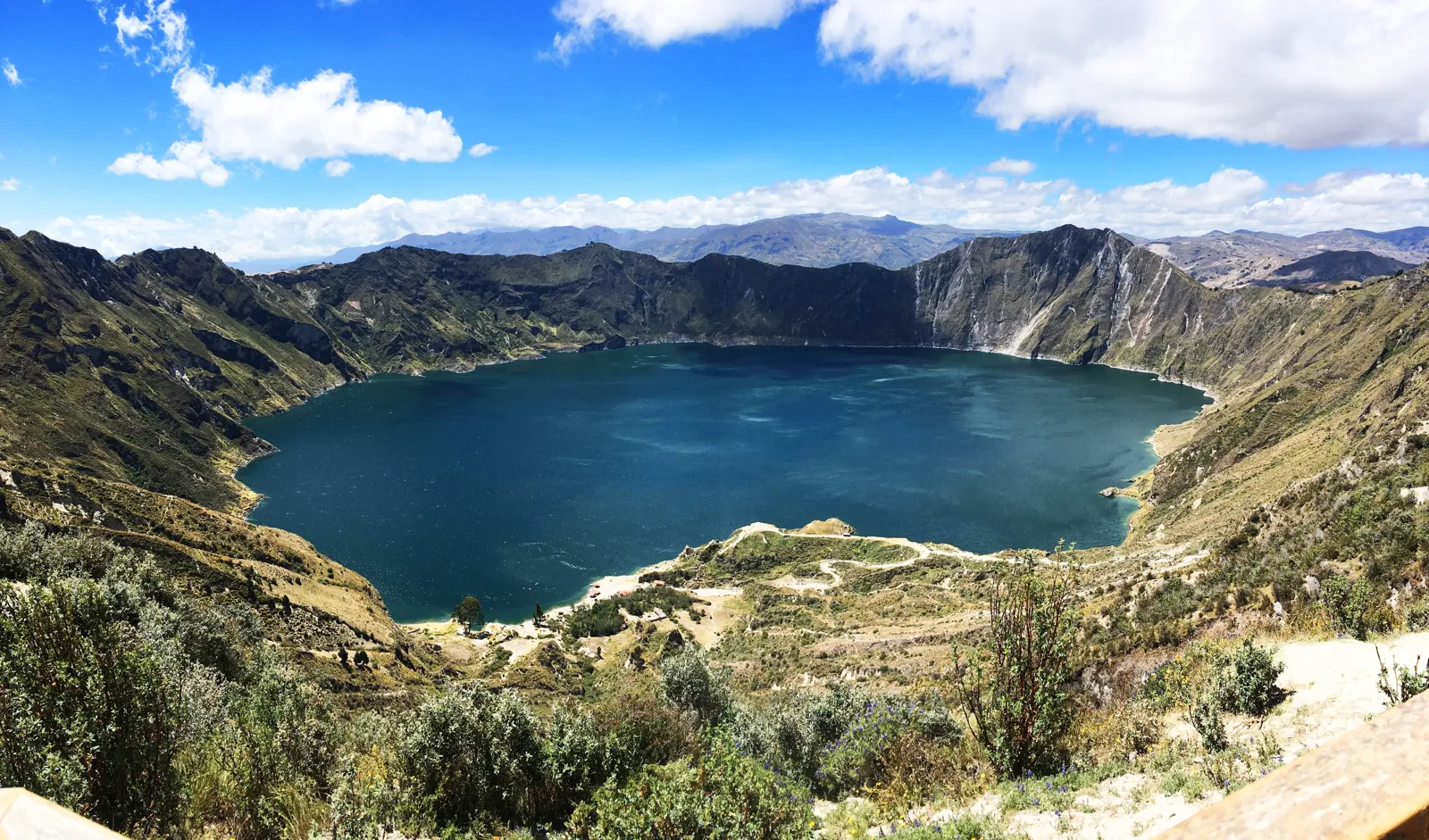
This Colombia travel guide in short: allow about ten days for Bogotá, Medellín and Cartagena, two weeks to add the coffee region and Tayrona National Park, and roughly US$45–80 per person per day on a budget trip (excluding flights). Colombia combines colonial cities, coffee-covered mountains, the Caribbean Sea and part of the Amazon. The country has opened up a lot to tourism, but safety remains a serious issue: parts of the country are advised against and urban crime is high. This guide brings together the essentials to plan a trip on the most traveled routes.
To locate cities, regions, terrain, national parks and airports, see our map of Colombia.
Colombia at a glance
CapitalBogotá
LanguageSpanishEnglish is little spoken outside tourist areas
Venezuelan border and the north: the UK FCDO advises against all but essential travel to the Catatumbo region of Norte de Santander, Arauca Department (except the city of Arauca), Puerto Carreño municipality (except the town) and within 5 km of the rest of the border with Venezuela; do not use the Colombia–Venezuela land crossings (GOV.UK, updated 15 October 2026).
Pacific coast and Panama border: Chocó Department (except Quibdó, Nuquí, Bahía Solano and Capurganá), western Valle del Cauca including Buenaventura, Jamundí, western Cauca, parts of Nariño, southern Córdoba, the Urabá and Bajo Cauca regions of Antioquia, southern Bolívar. Reach Nuquí and Bahía Solano by air only. Avoid crossing to Panama by land (Darién Gap).
Central and southern Colombia: Guaviare (except San José del Guaviare), several municipalities of Caquetá and Putumayo, the Ariari region of Meta (except Caño Cristales, reached by air), and within 5 km of the Ecuadorian border (except Rumichaca and Ipiales).
Major cities: pickpocketing, mugging and armed robbery are a problem in Bogotá, Medellín, Cali and on the Caribbean coast; criminals use drugs such as scopolamine to rob victims (GOV.UK).
The situation changes: check the latest advice before booking and during your trip.
When to go to Colombia
The best period runs from December to March: the dry season both in the Andes (Bogotá, Medellín, the coffee region) and on the Caribbean coast (Cartagena, Santa Marta). July and August form a second good window for the Andes. Temperatures change little through the year, but a lot with altitude: around 19 °C (66 °F) in the afternoon in Bogotá, 28 °C (82 °F) in Medellín and 31 °C (88 °F) in Cartagena. All the details, with official IDEAM normals, are in our article best time to visit Colombia.
What to see in Colombia: the highlights
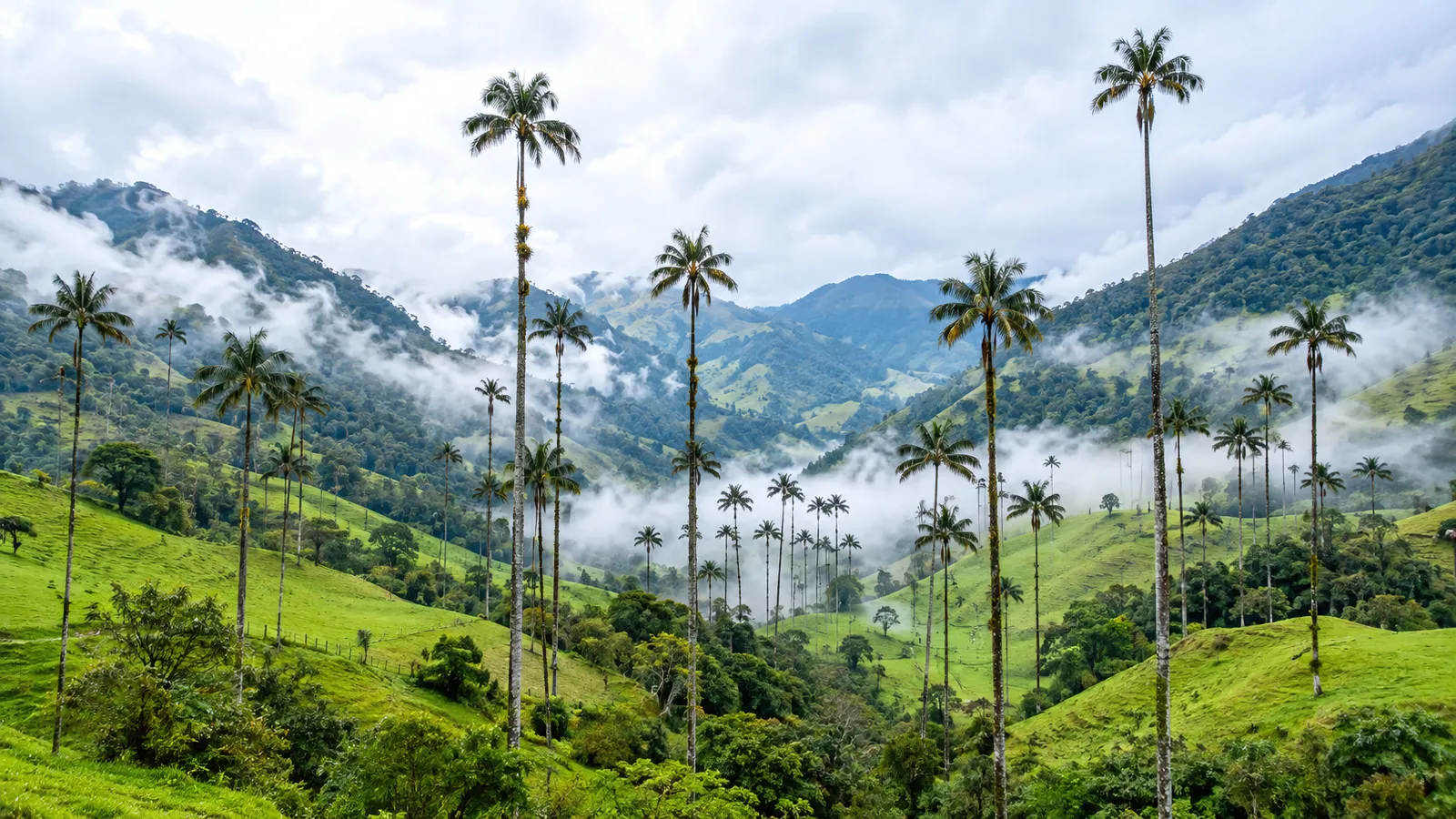
The wax palms of the Cocora Valley, Colombia
The places below are outside the areas the UK FCDO advises against, but several call for extra caution. Check the situation before each stop.
Bogotá
The capital, perched at more than 2,500 m (8,200 ft), is the arrival point for most trips. The colonial La Candelaria district has the Gold Museum, the Botero Museum and Plaza Bolívar; the funicular or cable car takes you up to the Monserrate sanctuary, which overlooks the city. The UK FCDO reports British nationals robbed at gunpoint in the Candelaria area (GOV.UK): carry little, avoid walking after dark and use a taxi booked by app.
Villa de Leyva and Zipaquirá
A few hours’ drive north of Bogotá, Villa de Leyva is a colonial village with cobbled streets and a huge central square. Zipaquirá is known for its salt cathedral, carved into a former mine. The two combine well in two or three days from the capital, traveling by day.
Medellín and Guatapé
The country’s second city, Medellín spreads across a valley with a mild climate all year round. The metro and its cable cars (Metrocable) offer views over the hillside neighborhoods; Comuna 13 is best visited with a guide. Medellín is among the cities where the UK FCDO reports street crime and armed robbery, and the U.S. Department of State warns that criminals use dating apps to drug and rob victims. About two hours away, the colorful village of Guatapé and the El Peñol rock overlook a vast reservoir.
The coffee region: Salento and the Cocora Valley
The coffee-growing area, between Pereira, Armenia and Manizales, is a UNESCO World Heritage Site. Salento is the base for the Cocora Valley and its wax palms, among the tallest in the world, and for visiting a coffee finca. The climate is humid for much of the year. Stay on the tourist routes and ask for local advice.
Cartagena
The walled city, a UNESCO World Heritage Site, is the country’s best-known image: ramparts, flower-filled balconies, lively squares. Be careful at night in deserted streets. From Cartagena, boats go to the Rosario Islands and the road leads to Mompox, a colonial town on the Magdalena River. The U.S. Department of State advises caution on small tourist boats between Cartagena and the islands, especially in December and January, when seas can be dangerous: check for life jackets.
Santa Marta and Tayrona Park
Santa Marta is the gateway to Tayrona National Park, where the forest runs down to rock-fringed beaches. Currents can be strong: only swim on authorized beaches. The UK FCDO notes that you may be asked to show a yellow fever vaccination certificate in areas of Colombia considered high risk: carry it with you (GOV.UK).
Ciudad Perdida (Lost City)
In the Sierra Nevada de Santa Marta, this Tayrona archaeological site is reached by a multi-day trek through the forest. The UK FCDO advises going only as part of an organized tour (GOV.UK). Book with a licensed operator and go in the dry season.
La Guajira
In the northeast, the desert peninsula of La Guajira (Cabo de la Vela, Punta Gallinas) offers landscapes of dunes and cliffs above the sea. Tracks are poor: go with a reliable agency. The border area with Venezuela remains advised against.
What to see and do in Colombia: 8 experiences
Go up Monserrate and visit the Gold Museum in Bogotá
Descend into the salt cathedral of Zipaquirá, then stroll through Villa de Leyva
Ride the Metrocable in Medellín and climb the El Peñol rock in Guatapé
Walk among the wax palms of the Cocora Valley and visit a coffee finca around Salento
Walk the ramparts of Cartagena and the Getsemaní district
Spend a day on the Rosario Islands from Cartagena
Reach the beaches of Tayrona Park (carry your yellow fever certificate)
Do the Ciudad Perdida trek in the dry season, with a licensed guide
Itinerary ideas for Colombia
Distances are long and mountain roads slow and sometimes cut. The itineraries below fly between the main regions; the U.S. Department of State advises against road travel outside cities at night.
7 to 10 days: Bogotá, Medellín and Cartagena
Days 1 to 3: Bogotá (La Candelaria, Gold Museum, Monserrate), day trip to Zipaquirá
Days 4 to 6: fly to Medellín, the city and a day trip to Guatapé
Days 7 to 10: fly to Cartagena, the old town and a day on the Rosario Islands
2 weeks: the Andes, coffee and the Caribbean
Days 1 to 3: Bogotá, then Villa de Leyva
Days 4 and 5: back to Bogotá and fly to Pereira or Armenia
Days 6 to 8: Salento, the Cocora Valley, a coffee finca
Days 9 and 10: Medellín and Guatapé
Days 11 to 14: fly to Santa Marta or Cartagena; Tayrona Park, beaches, old town
With three weeks, add the Ciudad Perdida trek (4 to 6 days depending on the option) in the dry season.
Budget for a trip to Colombia
Once there, Colombia is affordable, but Cartagena is noticeably more expensive than the rest of the country. Indicative amounts per person per day, excluding international flights (converted from our euro estimates at the ECB rate of 23 October 2026, €1 = US$1.12):
Item
Budget
Comfort
Accommodation (based on a shared double room)
roughly US$15–35
roughly US$65–135
Meals
roughly US$11–17 (set menu, « corrientazo »)
roughly US$30–50
Local transport
roughly US$6–11
roughly US$15–30 (app taxis)
Activities and sightseeing
roughly US$11–17
roughly US$20–45
Total per day
roughly US$45–80
roughly US$125–225
Indicative estimates, varying by season and city. Prices rise sharply from mid-December to mid-January, especially on the coast.
Budget separately for domestic flights, essential to save time and limit long road journeys, and for guided excursions (Ciudad Perdida, La Guajira), which take up a large share of the budget.
Getting around Colombia
Plane: the fastest way between Bogotá, Medellín, Pereira, Cartagena and Santa Marta. According to the UK FCDO, the departmental capitals of Amazonas, Vaupés and Guainía are only accessible by air.
Road: according to the U.S. Department of State (travel.state.gov, last updated August 11, 2025), road travel can be dangerous, especially at night: poorly maintained roads, mudslides, fog, livestock. The UK FCDO advises avoiding driving at night and notes that main roads are generally safe in daylight (GOV.UK, updated 15 October 2026). UK visitors can drive with a UK photocard licence; rental companies may require an International Driving Permit. If you have an accident, stay at the scene without moving your vehicle until the police arrive.
Buses:long-distance buses serve the whole country, but the UK FCDO reports several recent armed robberies on buses: travel by day, keep valuables out of sight, and avoid traveling alone or at night.
In the city: do not hail taxis in the street (risk of « express kidnapping »): use licensed app-based services or taxis booked by your hotel or restaurant (GOV.UK, U.S. Department of State). At Bogotá’s El Dorado airport, only authorized yellow taxis pick up at the terminals. The Medellín metro is practical by day.
Boat: for the Rosario Islands and some beaches; check life jackets before boarding.
Where to stay in Colombia
In Bogotá, travelers often stay in La Candelaria to be close to the museums, or in the north (Chapinero, Usaquén, Zona T), more residential. In Medellín, El Poblado and Laureles are the most popular neighborhoods; stay alert at night away from busy areas. In Cartagena, the old town and Getsemaní are the most convenient; Bocagrande has seafront hotels.
Options range from youth hostels to boutique hotels in colonial houses and coffee fincas in the coffee region. Choose guarded accommodation with a 24-hour reception, and book early for the year-end holidays and Holy Week. Do not invite strangers to your accommodation (GOV.UK).
Mistakes to avoid in Colombia
Doing everything by road: distances are long and mountain roads slow; fly between regions.
Hailing a taxi in the street: book it by app or through your hotel.
Accepting food, drinks, cigarettes or flyers from strangers: criminals use them to administer drugs such as scopolamine (GOV.UK).
Forgetting the Check-Mig form: the U.S. Department of State recommends completing it 72 hours before your flight to or from Colombia.
Leaving without your yellow fever certificate if you are going to areas considered high risk.
Ignoring official travel advice: several border areas and much of the Pacific coast are advised against.
Entry requirements for Colombia
US citizens
According to the U.S. Department of State (travel.state.gov, last updated August 11, 2025), US citizens do not need a visa for tourism or business stays of 90 days or less, and cumulative stays of 180 days or less per calendar year. You need a valid US passport, and you may be denied entry without a return ticket. Complete the free online Check-Mig form 72 hours before your flight; a 90-day extension can be requested from Migración Colombia.
Cash over US$10,000 must be declared on entry and exit.
UK citizens
According to the UK FCDO (GOV.UK foreign travel advice, updated 15 October 2026), you can visit Colombia for up to 90 days without a visa for business or tourism, at the discretion of the immigration officer, and must show an onward or return ticket within that period. Your passport must be valid on entry; the authorities recommend at least 6 months’ validity after your departure date.
The Check-Mig form (72 hours to one hour before travel) speeds up entry but is not mandatory. A yellow fever certificate is required if you arrive from certain countries with a transmission risk. For San Andrés, Providencia or Santa Catalina, buy a tourist card at the boarding gate.
The two sources differ on whether Check-Mig is required: complete it to be safe and check with the Colombian embassy. Entry requirements checked on 24 October 2026; check them again before you travel. For customs allowances on your return, check your home country’s rules (e.g. CBP in the US, HMRC in the UK).
Health and safety
Health: the UK FCDO (GOV.UK, updated 15 October 2026) lists yellow fever, Zika, malaria, dengue and chikungunya among the health risks, and altitude sickness in Bogotá and parts of Cundinamarca, Boyacá, Nariño and Antioquia; check vaccine recommendations at least 8 weeks before your trip. Tap water is safe to drink only in Bogotá. In the Amazon region, malaria prevention is recommended even for short stays (U.S. Department of State). Private clinics in large cities are good, but hospitals often require payment up front: insurance covering medical costs and evacuation is essential.
Areas advised against: border areas, much of the Pacific coast (except Nuquí and Bahía Solano by air) and parts of the center and south: see the box at the top of the page and GOV.UK.
Urban crime: pickpocketing, mugging and armed robbery are a problem in the major cities (GOV.UK). Keep a low profile, do not display your phone, use ATMs inside banks or shopping centers during business hours and never resist an attacker. Express kidnappings are common, often by criminals posing as taxi drivers.
Drugging and dating apps: criminals use scopolamine in food, drinks, cigarettes or flyers, and use dating apps to lure foreigners (GOV.UK, U.S. Department of State). Never leave your drink unattended, meet in public places and do not invite strangers to your accommodation.
Natural hazards: high risk of earthquakes, particularly in Santander and the Andean region; 25 active volcanoes are monitored (GOV.UK). An El Niño episode is expected to last until at least March 2027, with heavy rain, landslides, drought and wildfires. Emergency number: 123.
Practical tips for Colombia
Money: exchange US dollars or euros only at banks and authorized exchange offices, never in the street (GOV.UK). Use ATMs inside banks or shopping malls, by day, and carry only what you need. Cards are widely accepted in cities; keep cash for small shops and rural areas. Our currency converter helps you estimate your spending.
Internet: the mobile network covers cities well. A local SIM card or an eSIM is very useful to book taxis by app, which is genuine safety advice here.
Phone: avoid using it in the street; ride-by phone snatching is common (U.S. Department of State).
Documents: always carry a color printout of your passport photo page and keep the passport in a safe place (GOV.UK).
Language: some basic Spanish makes travel much easier; English remains rare outside tourist businesses.
Etiquette: Colombians value polite phrases (« buenos días », « con gusto »). Avoid jokes about drug trafficking, a sensitive subject. Drinking alcohol in public spaces is illegal (GOV.UK).
Tipping: in restaurants, a service charge of about 10% is often suggested on the bill; it is optional.
Colombia combines well with its Andean neighbors: see our guides to Ecuador and Peru, or Costa Rica for another nature destination. Before you leave, read our travel insurance guide: hospitals often require payment up front.
Who is Colombia for?
Our view by traveler profile, based on the information in this guide (places, budget, seasons).
Profile
Our view
Why
Couples
Suitable
Cartagena, the Rosario Islands, coffee fincas in the coffee region.
Families
With reservations
Extra caution in big cities, domestic flights needed, yellow fever certificate for high-risk areas.
Budget travelers
Very suitable
Roughly US$45–80 a day on the ground, excluding domestic flights; Cartagena is more expensive.
Adventure and hiking
Very suitable
The Ciudad Perdida trek, the Cocora Valley, La Guajira with an operator.
Culture
Very suitable
The Gold Museum, colonial Cartagena, Villa de Leyva, the Zipaquirá salt cathedral.
Beaches
Suitable
Tayrona Park, the Rosario Islands.
Frequently asked questions
Do I need a visa for Colombia?
Not for a stay of up to 90 days if you are a US or British citizen (travel.state.gov, GOV.UK). You need a valid passport and an onward or return ticket; completing the online Check-Mig form before your flight is recommended. Checked on 24 October 2026; check the latest rules before you leave.
Is Colombia dangerous for tourists?
It can be visited, but not everywhere and not without precautions. The UK FCDO advises against all but essential travel to several border areas, much of the Pacific coast and parts of the center and south, and reports street crime, armed robbery, express kidnappings and drugging with scopolamine in the major cities. Fly between regions and use app taxis in cities.
What is the best time to visit Colombia?
From December to March, the dry season both in the Andes and on the Caribbean coast. July–August is a good second option for Bogotá, Medellín and the coffee region.
How many days do you need in Colombia?
About ten days lets you see Bogotá, Medellín and Cartagena by plane. Two weeks leaves time to add the coffee region and Tayrona Park.
Do I need vaccines for Colombia?
A yellow fever certificate is required if you arrive from certain countries with a transmission risk, and you may be asked for it in high-risk areas of Colombia (GOV.UK). Yellow fever, malaria, dengue and Zika are among the health risks: see a travel health clinic at least 8 weeks before departure.
What to see in Colombia on a first trip?
Bogotá and Zipaquirá, Medellín and Guatapé, the coffee region around Salento and the Cocora Valley, then Cartagena and Tayrona Park on the Caribbean coast. With more time, add Villa de Leyva and the Ciudad Perdida trek.
What budget should you plan for Colombia?
Excluding international flights, roughly US$45–80 per person per day on a budget, and US$125–225 in comfort. Add domestic flights and guided excursions; Cartagena is more expensive than the rest of the country.
Entry, health and safety information read on 24 October 2026: U.S. Department of State, Colombia country information (travel.state.gov, last updated August 11, 2025), and UK FCDO, foreign travel advice for Colombia (GOV.UK, updated 15 October 2026)
Colombia’s official tourism website (colombia.travel), « About Colombia » page, read on 24 October 2026: voltage, frequency and plug types
European Central Bank, euro reference rates of 23 October 2026: budget conversions
Instituto de Hidrología, Meteorología y Estudios Ambientales (IDEAM): 1991–2020 climate normals
Transparency: this page contains affiliate links, labelled as such. If you book through them we may earn a commission at no extra cost to you; it does not influence our content or recommendations. How we fund the site.