Peru packs Machu Picchu and the Inca heritage, colonial cities high in the Andes, Lake Titicaca, a coastal desert and a slice of the Amazon rainforest into a single trip. Distances and altitude call for a bit of planning. This Peru travel guide brings together the essentials to prepare your trip: what to see, which itinerary to follow, what budget to plan and which precautions to take.
To locate towns, regions, terrain, national parks and airports, see our map of Peru.
Peru at a glance
CapitalLima
LanguagesSpanishQuechua and Aymara are also official in the areas where they are spoken
Time zoneUTC−5, no daylight saving · detailsSame as New York in winter, 1 h behind in summer
AirportsLima Jorge Chávez International (LIM)Check current routes with the airlines
EntryUS and UK: passport valid 6 months from arrival; UK: visa-free, normally up to 90 days · travel.state.gov · GOV.UK
Electricitycheck voltage and plug types before you leave · plugs
Budgetroughly US$40–65 per person per day on a budget · details
Safety: the UK FCDO (GOV.UK, updated 9 October 2026) advises against all but essential travel to two areas, because of drug-trafficking gangs and armed groups: the Valley of the Apurímac, Ene and Mantaro Rivers (VRAEM), in the center of the country, and the area within 20 km (12 mi) south of the Putumayo River and the Colombian border (Loreto region), except the Amazon River itself and the triple-border area from Caballococha. The U.S. Department of State (travel.state.gov, last updated August 20, 2026) restricts its own staff’s travel to the VRAEM and parts of the Colombian border. The main tourist sites (Lima, Cusco, Machu Picchu, Arequipa, Lake Titicaca) lie outside these areas, but both governments report significant street crime in Lima, Cusco and Arequipa. Check the latest advice before you leave.
When to go to Peru
The best period runs from May to September: it is the dry season in the Andes, ideal for Cusco, Machu Picchu, Lake Titicaca and hiking, with cold nights at altitude. June to August is high season, the most expensive and the busiest. From December to March, the rainy season affects the Andes and the Amazon, and the Inca Trail closes in February. Lima and the coast, on the other hand, are sunny from December to April and often gray the rest of the year. GOV.UK (updated 9 October 2026) also warns that the 2026–2027 El Niño event is expected to bring heavy rain, flooding and landslides until April 2027, especially on the northern and central coast. All the details, month by month and with official climate data, are in our article best time to visit Peru.
What to see in Peru: the highlights
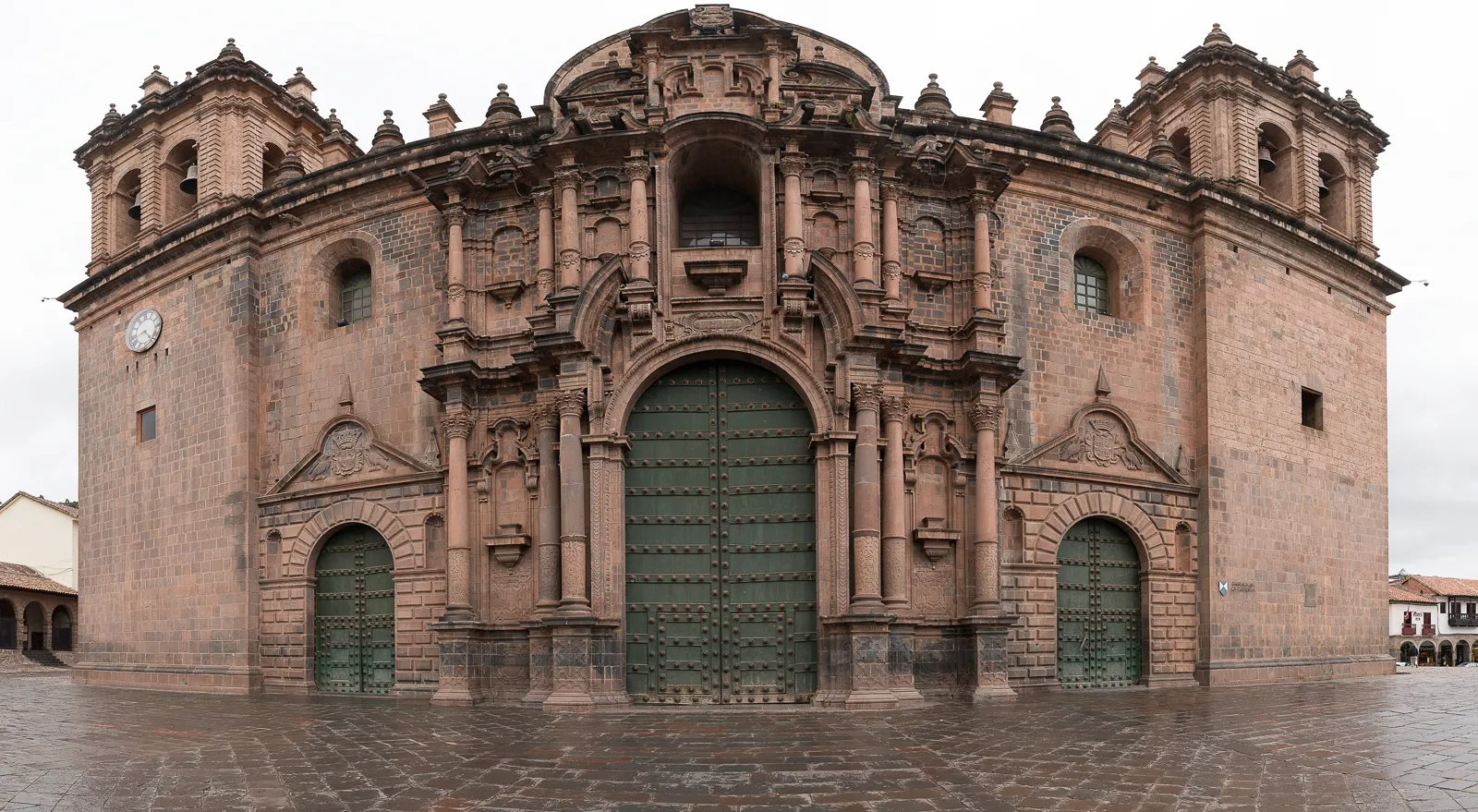
The Plaza de Armas in Cusco, Peru
Lima
Most international flights arrive in Lima. The historic center, a World Heritage Site, includes the Plaza de Armas, the cathedral and the San Francisco monastery with its catacombs. The Miraflores and Barranco districts, on the cliffs above the Pacific, have most of the hotels, restaurants and galleries. Lima is also famous for its food, from ceviche to fine dining. GOV.UK reports armed robberies of tourists even in Miraflores and Barranco and advises not walking alone in quiet areas or at night. Districts, sights and climate are covered in our guide things to do in Lima.
Cusco
The former capital of the Inca Empire, at about 3,400 m (11,155 ft), Cusco mixes Inca walls and colonial churches. Sights include the Plaza de Armas, the Qoricancha (a Sun temple turned convent), the San Blas district and, above the town, the Sacsayhuamán fortress. It is the base for the Sacred Valley and Machu Picchu. Plan at least one quiet day on arrival to get used to the altitude.
The Sacred Valley
Between Cusco and Machu Picchu, the Urubamba Valley is lower than Cusco (around 2,800 to 3,000 m, or 9,186 to 9,843 ft), which makes it a good acclimatization stop. The main sights are the market and ruins of Pisac, the Ollantaytambo fortress, the circular terraces of Moray and the Maras salt pans. Ollantaytambo is also one of the departure stations for trains to Machu Picchu, so planning your trip to Machu Picchu often includes a night in the Sacred Valley.
Machu Picchu
The Inca citadel, at about 2,400 m (7,874 ft), stands above the village of Aguas Calientes, reached by train (from Cusco or Ollantaytambo); a shuttle bus then climbs to the site. Daily visitor numbers are capped and visits follow set circuits and time slots, with named tickets to be booked in advance on the official website. The Inca Trail lets you arrive on foot in about four days, only with an authorized agency; it closes every year in February. GOV.UK notes that only basic medical services are available at Machu Picchu and that climbers have died after falls on Huayna Picchu.
Arequipa and the Colca Canyon
Nicknamed the « White City » for its facades of volcanic stone (sillar), Arequipa, at about 2,300 m (7,546 ft), sits below El Misti volcano. Its historic center, a World Heritage Site, is home to the Santa Catalina monastery, a real town within the town. A few hours away by road, the Colca Canyon is known for its farming terraces and the Cruz del Cóndor viewpoint, where you can watch condors.
Puno and Lake Titicaca
Lake Titicaca, shared with Bolivia, lies at about 3,800 m (12,467 ft). From Puno, boat trips go to the floating reed islands of the Uros and to the islands of Taquile and Amantaní, where homestays are possible. Nights are cold all year and freezing from June to August. GOV.UK reports armed robberies of people walking alone and advises traveling in a group if walking at night at the southern end of the lake. As the lake is shared with Bolivia, check the best time to visit Bolivia if you continue to Copacabana.
Paracas, Huacachina and Nazca
South of Lima, the desert coast shows another side of the country. The Paracas National Reserve and the Ballestas Islands are home to sea lions, Humboldt penguins and seabirds. The Huacachina oasis, near Ica, is surrounded by huge dunes; GOV.UK warns that the sand buggies there are unregulated and have been involved in fatal accidents. Further south, the Nazca Lines, a World Heritage Site, can be seen from a sightseeing flight or from a roadside viewing tower; GOV.UK advises checking that the airline is licensed and has a good safety record, as there have been several fatal accidents.
The Amazon: Puerto Maldonado and Iquitos
There are two main gateways: Puerto Maldonado, less than an hour’s flight from Cusco, for the Tambopata reserve and its forest lodges; and Iquitos, a large city reached only by plane or boat, for trips on the Amazon. Yellow fever and malaria are among the health risks listed by GOV.UK: see a travel clinic. GOV.UK also reports « river pirates » and drug gangs on the Amazon River and advises traveling with a reputable company; the border area along the Putumayo is one of the areas it advises against.
Huaraz and the Cordillera Blanca
North of Lima, Huaraz (about 3,000 m, or 9,843 ft) is Peru’s hiking capital. The Cordillera Blanca, protected by Huascarán National Park, has glaciers and turquoise lakes such as Laguna 69. The Santa Cruz trek takes several days. The best season runs from May to September. GOV.UK notes that several hikers have died there, that much of the range is out of helicopter reach, and recommends contacting the iPerú office in Huaraz before setting off.
Itinerary ideas for Peru (10 days to 3 weeks)
10 days: Lima, Cusco and Machu Picchu
Days 1 and 2: Lima (historic center, Miraflores, Barranco)
Day 3: flight to Cusco, then straight down to the Sacred Valley to sleep lower
Days 4 and 5: Sacred Valley (Pisac, Moray, Maras, Ollantaytambo)
Day 6: train to Aguas Calientes
Day 7: Machu Picchu early in the morning, back to Cusco
Days 8 to 10: Cusco and its surroundings, then flight home via Lima
2 to 3 weeks: the southern loop
Days 1 and 2: Lima
Days 3 and 4: Paracas, the Ballestas Islands and Huacachina, possibly a Nazca flight
Days 5 to 7: Arequipa (about 2,300 m, or 7,546 ft), a good first step up in altitude
Days 8 and 9: Colca Canyon
Days 10 and 11: Puno and Lake Titicaca (homestay possible)
Days 12 to 16: Cusco, the Sacred Valley and Machu Picchu
Option: 3 or 4 days in the Amazon from Cusco (Puerto Maldonado)
This order, from the coast to Arequipa, then Puno and Cusco, lets you gain altitude gradually. Conversely, a direct flight from Lima to Cusco takes you from sea level to about 3,400 m (11,155 ft) in an hour.
Budget for a trip to Peru
Peru is affordable once you are there, but some expenses add up: domestic flights, the train and tickets for Machu Picchu, Amazon trips and guided treks. Indicative amounts per person per day, excluding international flights:
Item
Budget
Comfort
Accommodation (shared double room)
roughly US$10–30
roughly US$55–125
Meals
roughly US$10–15 (set lunch menus, markets)
roughly US$30–50
Local transport
roughly US$5–10
roughly US$15–35
Activities and sights
roughly US$10–15
roughly US$20–45
Total per day
roughly US$40–65
roughly US$110–200
Indicative estimates, excluding Machu Picchu, domestic flights and Amazon lodge stays. Prices rise from June to August and during holidays.
For Machu Picchu, add up the entry ticket, the round-trip train and the bus between Aguas Calientes and the site: it is one of the biggest expenses of the trip. Check current prices on the official websites when you book.
Getting around Peru
Plane: the main cities and tourist sites are served from Lima (Cusco, Arequipa, Puno via Juliaca airport, Iquitos, Puerto Maldonado). According to GOV.UK (updated 9 October 2026), passengers transiting or connecting through Lima airport must pay an airport use fee (TUUA) that is not currently included in tickets; it can be paid in advance online.
Bus:long-distance buses link most towns. Both GOV.UK and the U.S. Department of State (travel.state.gov, last updated August 20, 2026) say bus crashes are common, especially at night on mountain roads: use only reputable companies, avoid overnight trips where possible and keep your passport on you. GOV.UK also reports armed hold-ups of intercity buses.
Train: the usual way to reach Aguas Calientes, at the foot of Machu Picchu, from Cusco or Ollantaytambo. A tourist line also links Cusco and Puno. Both sources note that trains are occasionally disrupted by landslides or protests.
Taxis: do not hail them in the street. GOV.UK warns of robberies by fake taxi drivers, especially at Lima airport and bus terminals, and recommends licensed phone or app-based taxis, hotel-booked taxis, or the official taxi desks just outside the airport baggage hall. Travel.state.gov also mentions authorized flat-rate taxi booths at Lima airport.
Car: possible, but mountain roads are difficult and often dangerous. According to GOV.UK, a UK photocard licence is valid for up to 6 months if your immigration stay permit is valid (paper licences may need an IDP). According to travel.state.gov, an International Driving Permit is valid for one year, while other foreign licences are generally valid for 30 days; night driving is particularly hazardous. A car with a driver is simpler for day trips.
Where to stay in Peru
In Lima, most travelers stay in Miraflores or Barranco, more convenient and quieter in the evening than the historic center. In Cusco, the historic center and the San Blas district let you do everything on foot, but the streets are steep: bear that in mind at 3,400 m (11,155 ft). For your first night in the region, the Sacred Valley (Urubamba, Ollantaytambo), which is lower, makes acclimatization easier. Staying in Aguas Calientes lets you enter Machu Picchu at opening time.
Options range from youth hostels and family-run guesthouses (hostales) to boutique hotels in colonial mansions. On Lake Titicaca, homestays are common on the islands. In the Amazon, you usually stay in a lodge with excursions included. At altitude, check that your room is heated from June to August.
Entry requirements for Peru
US citizens
According to the U.S. Department of State (travel.state.gov, last updated August 20, 2026), your passport must be valid for at least six months from the date of entry, or you will be refused entry. Your length of stay is set by border officials on arrival, and overstays lead to fines that must be paid before you leave. Make sure your entry is recorded (for example with a passport stamp), even at remote land crossings: without an entry record you cannot leave until immigration confirms your entry, which can take weeks and lead to a fine and a 15-year re-entry ban. The page refers to the Embassy of Peru for the latest visa information. Cash over US$10,000 must be declared, and US$30,000 is the maximum allowed.
UK citizens
According to the UK FCDO (GOV.UK foreign travel advice, updated 9 October 2026), you can travel to Peru without a visa for tourism or short visits. You will normally be allowed to stay up to 90 days in a 180-day period, with a maximum of 183 days in 365 days as a visitor; overstaying leads to a fine and possible detention. Your passport must be valid for at least 6 months after the date you arrive. At international airports your entry is registered digitally (virtual Andean Migration Card, TAM); if you arrive by land, make sure you get an entry stamp, as you cannot leave Peru without one. Removing archaeological artifacts and souvenirs made from wild animal parts (including condor feathers) is illegal.
Entry requirements checked on 24 October 2026; check them again before you travel.
Health and safety
Altitude: GOV.UK (updated 9 October 2026) describes altitude sickness as a serious risk in places such as Cusco, Puno, the Colca Canyon and Kuélap, and travel.state.gov advises people with pre-existing conditions to see a doctor before traveling to high elevations. Go up gradually, drink regularly, avoid alcohol and heavy meals at first, and go down if symptoms appear.
Health: GOV.UK lists Oropouche virus, yellow fever, malaria and Zika among health risks and reports a major dengue outbreak; check vaccine recommendations at least 8 weeks before your trip. Travel.state.gov adds that tap water is not drinkable in many areas (ice may be made with tap water) and recommends CDC-approved repellents and insecticide-treated nets. Both governments warn against ayahuasca and similar « spiritual cleansing » ceremonies, which are unregulated and have led to serious illness, deaths and sexual assaults.
Medical care: treatment is harder to access outside Lima (GOV.UK); hospitals often require payment up front and specialized care can cost tens of thousands of dollars, so medical evacuation insurance is strongly recommended (travel.state.gov).
Safety: beyond the areas listed at the top of the page, street crime is a significant problem in Lima, Cusco, Arequipa and other big cities. Use ATMs inside banks or shopping centers, avoid using your phone at the roadside, keep car doors locked and windows shut, and beware of « express kidnappings » by fake taxi drivers (GOV.UK; travel.state.gov). Protests can block roads and trains without notice, and foreigners may not take part in political demonstrations. Peru is in an active earthquake zone.
Women traveling alone: GOV.UK reports assaults mainly in the Cusco and Arequipa areas and unscrupulous tour agents targeting young women traveling alone; buy your own drinks and keep sight of them. GOV.UK also warns of deaths from methanol in alcoholic drinks.
Emergencies: 105 (police), 106 (ambulance), 116 (fire), according to GOV.UK; travel.state.gov gives 113 for emergency services and 0800-22221 for the tourist police.
Practical tips for Peru
Money: withdraw soles from ATMs inside banks or shopping centers. GOV.UK warns of counterfeit US and Peruvian banknotes and of street money changers in Cusco passing old intis. Keep small notes for markets, tips and pay toilets. Our currency converter helps you estimate your spending.
Internet: mobile coverage is good in towns, much less so in the mountains and the Amazon. Check your provider’s roaming terms or consider a local SIM or eSIM for ride apps and offline maps.
Coca leaves: coca tea (mate de coca) is very common in the Andes, but GOV.UK says not to take coca leaves or coca tea out of the country, as importing them into the UK is illegal; for the US, check CBP rules. Drug possession is severely punished in Peru.
Antiques: exporting pre-Columbian objects and protected species is forbidden, even if they are sold in markets (GOV.UK; travel.state.gov).
Etiquette: always ask before photographing someone; some people ask for a small coin. Follow the visiting rules at archaeological sites (marked paths, no climbing on walls). Photographing anything military is illegal (GOV.UK).
Documents: always carry ID (GOV.UK), and keep a digital copy of your passport and insurance.
Customs: check your home country’s customs allowances for the return (e.g. CBP in the US, HMRC in the UK).
Food: Peruvian cuisine is one of the highlights of the trip: ceviche on the coast, lomo saltado, Andean potatoes and quinoa in the mountains, river fish in the Amazon. The set lunch menu (menú) in small restaurants is the cheapest option. Avoid raw vegetables and juices made with tap water.
Who is Peru for?
Culture and archaeology: yes: Machu Picchu, Cusco and the Sacred Valley, the historic centers of Lima and Arequipa, the Nazca Lines.
Hikers: yes, from May to September: the Inca Trail with an authorized agency (closed in February), the Cordillera Blanca and Laguna 69, the Santa Cruz trek, the Colca Canyon.
Food lovers: yes: ceviche on the coast, lomo saltado and Andean potatoes in the mountains, and Lima’s renowned restaurant scene.
Budget travelers: mostly yes: roughly US$40–65 per day, but Machu Picchu (entry, train, bus), domestic flights and the Amazon add up.
Families with young children: with care: altitude is a serious risk in Cusco and Puno; get medical advice before you go.
Nature and wildlife: yes: the Ballestas Islands, the condors of Colca, the Tambopata lodges in the Amazon.
UK citizens do not need a visa for tourism and are normally allowed up to 90 days in a 180-day period (GOV.UK, updated 9 October 2026). For US citizens, travel.state.gov (last updated August 20, 2026) says the length of stay is set at the border and refers to the Embassy of Peru for visa information. In both cases, your passport must be valid for at least 6 months from arrival. Checked on 24 October 2026.
How do you avoid altitude sickness in Peru?
Go up gradually: start with Arequipa or the Sacred Valley, which are lower than Cusco, or spend your first nights at lower altitude. Take it easy for the first few days, drink regularly, avoid alcohol and go down if symptoms appear. Get medical advice before you leave.
How many days do you need in Peru?
Ten days lets you see Lima, Cusco, the Sacred Valley and Machu Picchu. Allow two to three weeks to add Arequipa, the Colca Canyon and Lake Titicaca, or even a few days in the Amazon.
How much does a trip to Peru cost?
Excluding the international flight, allow roughly US$40–65 per person per day on a budget and US$110–200 in comfort. Add the cost of Machu Picchu (entry, train and bus), one of the biggest expenses of the trip.
Is Peru safe for tourists?
The main tourist sites can be visited with normal to increased caution, especially in Lima, Cusco and Arequipa, where street crime is significant. The UK FCDO advises against all but essential travel to the VRAEM, in the center of the country, and to the area along the Colombian border south of the Putumayo. Use official or app-based taxis and check the latest advice before you leave.
What to see in Peru in 2 weeks?
Two weeks is enough for the southern loop: Lima, Paracas and Huacachina, Arequipa and the Colca Canyon, Puno and Lake Titicaca, then Cusco, the Sacred Valley and Machu Picchu. This order lets you gain altitude gradually. With a few more days, add the Amazon from Cusco (see our itineraries above).
Our sources
Entry, safety, health and transport information read on 24 October 2026: U.S. Department of State, Peru country information (travel.state.gov, last updated August 20, 2026), and UK FCDO, foreign travel advice for Peru (GOV.UK, updated 9 October 2026)
National Meteorology and Hydrology Service of Peru (SENAMHI), climate normals via the World Meteorological Organization
Ministry of Culture of Peru: annual closure of the Inca Trail in February
Transparency: this page contains affiliate links, labelled as such. If you book through them we may earn a commission at no extra cost to you; it does not influence our content or recommendations. How we fund the site.