A Jordan travel guide covers a lot in a small country: the Nabataean city of Petra, the Wadi Rum desert, the Dead Sea and some of the best-preserved Roman sites in the Middle East. Distances are short, so you can see the essentials in about ten days. This guide brings together what you need to plan your trip: where to go, which itinerary to follow, what budget to plan and which precautions to take in the current regional context.
In the south of the country, our page on Wadi Rum covers safety, the Jordan Pass and how to organize the visit.
⚠️ Security warning (UK FCDO and U.S. Department of State, checked 24 October 2026). According to the UK FCDO (GOV.UK, updated 23 October 2026), since 8 July 2026 Iran has carried out strikes and retaliatory attacks in several locations across the region, including Jordan, against US military and civilian infrastructure, and renewed attacks and interceptions occurred in and around Aqaba in early September. The FCDO warns of a risk of further attacks and unforeseen escalation, with possible flight cancellations and airspace closures at short notice. The greatest risk is falling debris from interceptions: if advised to take shelter, stay inside a secure building, away from windows. The FCDO also reported a shooting at a church in Karak on 23 October 2026. Current advice:
UK FCDO advises against all travel to within 3 km (2 mi) of the border with Syria, and against all travel to the Iraqi provinces bordering Jordan (GOV.UK, updated 23 October 2026).
U.S. Department of State: U.S. government employees may not visit most border areas or any refugee camps on personal travel, and the Embassy advises US citizens to avoid both (travel.state.gov, last updated May 14, 2026).
Borders with Israel and the West Bank: roads and land crossings can close at no notice (GOV.UK).
Check the latest GOV.UK advice and travel.state.gov page just before you book and again before you leave, and sign up for travel advice email alerts or the State Department’s STEP program.
To locate cities, regions, terrain, national parks and airports, see our map of Jordan.
Jordan at a glance
CapitalAmman
LanguageArabicEnglish is common in hotels, with guides and at the sites
The best periods are spring (March to May) and autumn (late September to November), with April and October the pick. Summer is dry but hot, especially at the Dead Sea (over 40 °C / 104 °F in July) and in the desert. Winter is cool and rainy in Amman, with nights close to 0 °C (32 °F) in the south, but it is the best season for the Dead Sea. All the details, month by month with official climate data, are in our article best time to visit Jordan.
Where to go in Jordan: the highlights
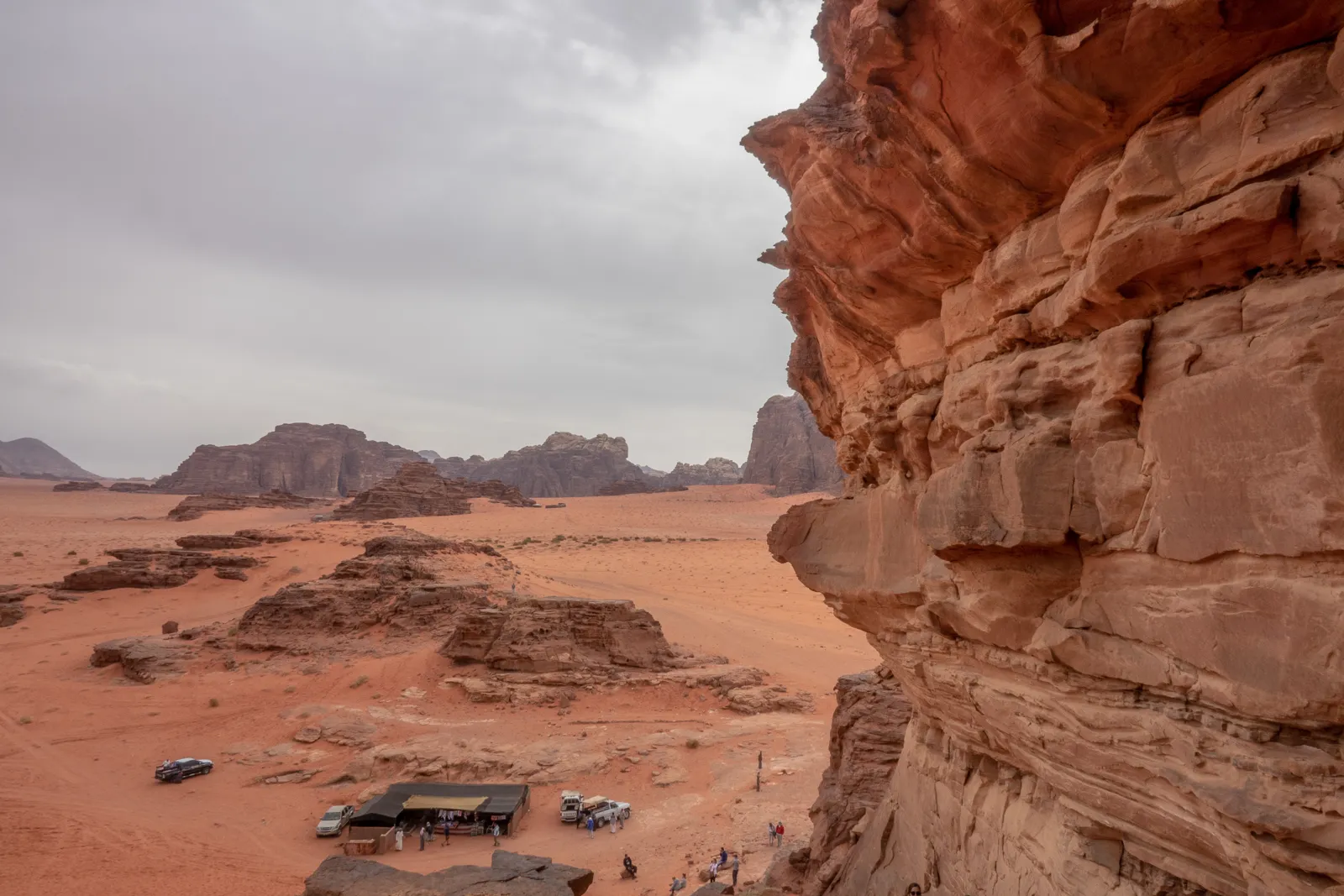
The Wadi Rum desert in Jordan
Amman
The capital spreads over a series of hills. In the old center, climb to the Citadel (Temple of Hercules, Umayyad Palace), then walk down to the Roman Theater and the shopping streets of downtown. The Jabal Amman and Jabal al-Weibdeh districts are full of cafés and galleries. One or two days are enough; Amman is also the base for day trips to the north.
Jerash and Ajloun
Less than an hour north of Amman, Jerash is a very well-preserved Roman city: Hadrian’s Arch, the Oval Plaza, the colonnaded street, theaters and the Temple of Artemis. Allow half a day, ideally in the morning. It is often combined with Ajloun Castle, a 12th-century fortress on wooded heights. Further north, the site of Umm Qais overlooks the Sea of Galilee, close to the Syrian border area: the UK FCDO advises against all travel within 3 km (2 mi) of that border, so check the map before you go.
Madaba and Mount Nebo
Madaba, about 30 km (19 mi) southwest of Amman, is known for its Byzantine mosaics, including the map of the Holy Land in St. George’s Church. Nearby, Mount Nebo offers a panorama over the Jordan Valley and the Dead Sea. Madaba is a practical, quieter base than Amman, close to the airport.
The Dead Sea
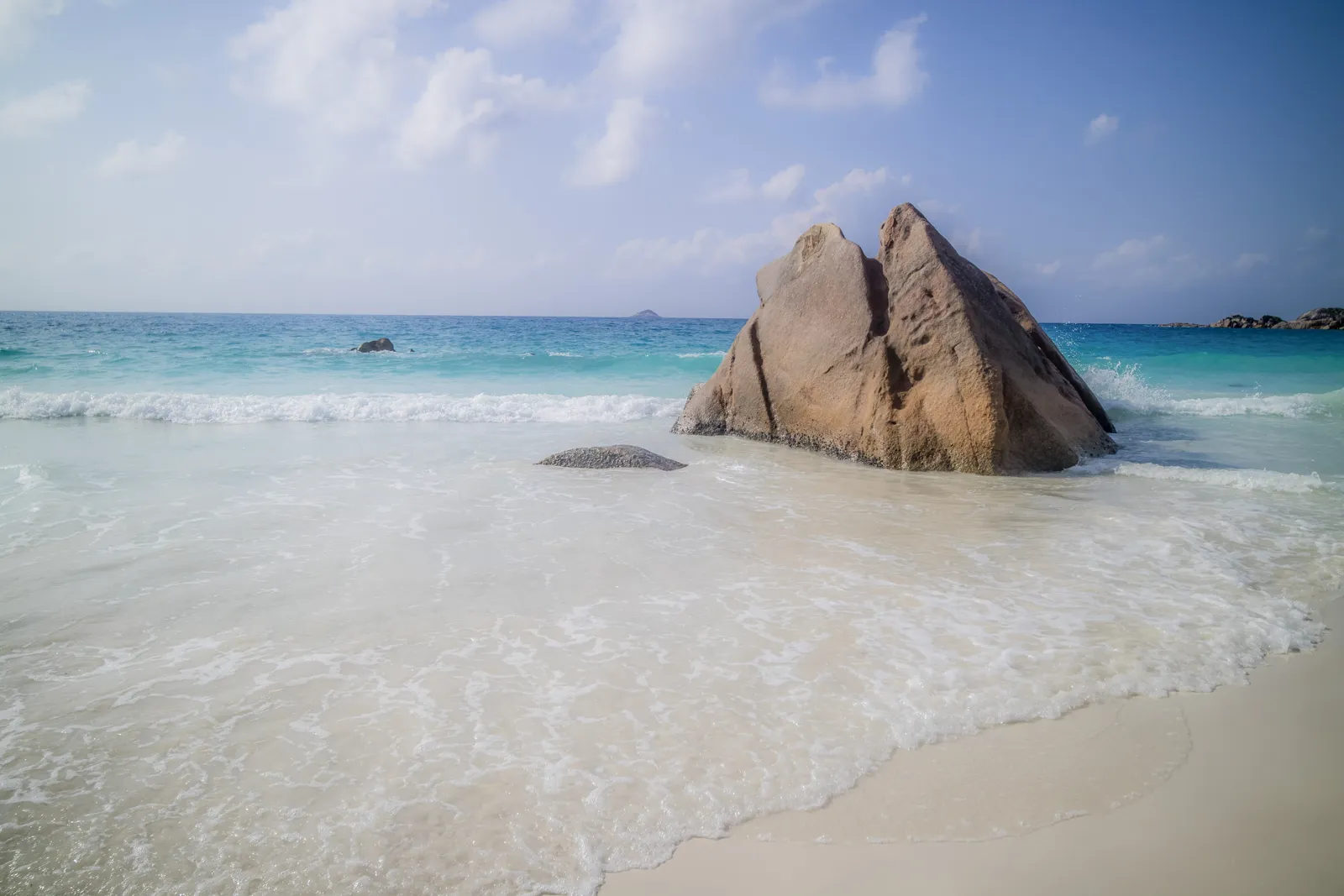
The lowest point on land, more than 430 m (1,411 ft) below sea level (a level that drops year after year). Its salinity lets you float effortlessly. The Jordanian shore has mostly resort hotels with beach access, plus a few paying public beaches. Don’t put your head under the water, avoid swimming with cuts, and rinse off with fresh water. The Dead Sea Highway from Amman is narrow, winding and busy with trucks: the U.S. Department of State advises avoiding it at night.
Karak and Dana Biosphere Reserve
Heading south along the King’s Highway, the Crusader castle of Karak overlooks the town of the same name. Further on, the Dana Biosphere Reserve covers mountains and canyons dropping down to the desert. You can hike for a few hours or several days, staying in Dana village or at an ecolodge. Avoid canyon trails in rainy weather.
Petra
The Nabataean city, carved into sandstone, is the country’s major site. You enter through the Siq, a narrow gorge about 1.2 km (0.7 mi) long that opens onto the Treasury (Al-Khazneh). Beyond are the Royal Tombs, the theater, the colonnaded street, then a staircase of some 800 steps up to the Monastery (Ad-Deir). Allow at least two days to walk without rushing; the High Place of Sacrifice trail and Little Petra (Siq al-Barid), a few kilometers north, complete the visit. You stay in Wadi Musa, the town at the foot of the site. According to the UK FCDO, the Petra Archaeological Park has strict opening and closing hours, and you risk arrest if you are in the park outside them.
Wadi Rum
This sandstone and granite desert, a World Heritage Site, is explored by 4×4, on foot or by camel with Bedouin guides. Most travelers spend a night in a camp, from simple campsites to tents with private bathrooms. Days are bright and nights cool, even cold in winter. Wadi Rum lies about 60 km (37 mi) from Aqaba, where the UK FCDO reported attacks and interceptions in early September 2026: reach it from the north, via Petra or the Desert Highway, in daylight.
Aqaba and the desert castles
The port of Aqaba, on the Red Sea, is usually popular for diving and snorkeling, and the Umayyad desert castles of the east (Qusayr Amra, Qasr Azraq) for their architecture and frescoes. Given the attacks and interceptions reported in and around Aqaba in early September 2026 (GOV.UK, updated 23 October 2026), check the latest UK and US advice before including Aqaba in your itinerary. For the eastern desert, the U.S. Department of State advises avoiding most border areas.
Things to do in Jordan
Beyond the sites to see, here is what most travelers put on their program:
Walk through Petra: the Siq to the Treasury, then the staircase to the Monastery and the High Place of Sacrifice trail; allow at least two days.
Sleep in a Wadi Rum camp after a day by 4×4, on foot or by camel with a Bedouin guide.
Float in the Dead Sea, without putting your head under, then rinse off with fresh water.
Hike in the Dana reserve, from a few hours to several days, avoiding canyons in rainy weather.
Follow the King’s Highway between Madaba, Mount Nebo and Karak Castle, in daylight.
Visit Jerash, a very well-preserved Roman city, preferably in the morning.
Stroll around Amman between the Citadel, the Roman Theater and the cafés of Jabal al-Weibdeh.
Itinerary ideas for Jordan: 7 to 14 days
These itineraries stay away from the border areas the UK and US advise against. Adapt them if the official advice changes.
7 to 10 days: the essentials
Days 1 and 2: Amman, then a day trip to Jerash and Ajloun
Day 3: Madaba, Mount Nebo, then the Dead Sea (overnight)
Day 4: the King’s Highway via Karak to Dana
Days 5 and 6: Petra, with Little Petra and the Monastery
Day 7: Wadi Rum by 4×4, night in a camp
Day 8: back to Amman via the Desert Highway (about 4 hours, in daylight)
Days 9 and 10 (optional): a second night in Wadi Rum or a relaxing day at the Dead Sea
2 weeks: at a slower pace
Days 1 to 3: Amman, Jerash, Ajloun
Days 4 and 5: Madaba and the Dead Sea
Days 6 and 7: Karak, then hikes in the Dana reserve
Days 8 to 10: Petra (three days with the Jordan Pass « Expert »), Little Petra
Days 11 and 12: Wadi Rum, two nights in a camp, hiking or 4×4
Days 13 and 14: back toward Amman, last night in Madaba near the airport
Organized tour or independent travel?
Both work in Jordan. Independently, a rental car (driving in daylight only) or a private driver is enough to follow the itinerary above; Wadi Rum is visited with a local guide in any case. An organized tour (agency or driver-guide) simplifies logistics. Either way, choose flexible bookings and check that the proposed itinerary avoids the border areas covered by UK and US advice.
Who is Jordan for?
Our verdict by traveler profile, based on the information in this guide:
Profile
Our verdict
Why
History and archaeology
✅ Ideal
Petra, Jerash, the Madaba mosaics, Karak Castle.
Desert and hiking
✅ Yes
A night in a Wadi Rum camp with a Bedouin guide, hikes in the Dana reserve.
Couples
✅ Yes
A Wadi Rum camp, floating in the Dead Sea, the King’s Highway.
Families
⚠️ Possible
Short distances, but Petra takes at least two days of walking and summer is very hot.
Budget travelers
⚠️ Possible
More expensive than most of its neighbors: roughly US$60–125 a day; the Jordan Pass quickly pays for itself.
Red Sea diving
⚠️ Check first
Attacks and interceptions were reported around Aqaba in early September 2026 (GOV.UK).
Whatever your profile, check the latest UK and US advice just before you book and again before you leave.
Budget for a trip to Jordan
Jordan is more expensive than most of its neighbors, especially for accommodation and entry fees. Indicative amounts per person per day, excluding international flights (converted from our euro estimates at the ECB rate of 23 October 2026, roughly €1 = US$1.12):
Item
Budget
Comfort
Accommodation (based on a shared double room)
roughly US$22–45
roughly US$90–200
Meals
roughly US$11–22 (falafel, hummus, canteens)
roughly US$40–67
Transport
roughly US$11–28 (buses, shared taxis)
roughly US$45–78 (rental or driver)
Sightseeing and activities
roughly US$17–28 (Jordan Pass paid off)
roughly US$28–45 (guides, 4×4 in Wadi Rum)
Total per day
roughly US$60–125
roughly US$200–390
Indicative estimates, varying with the season and price changes.
The Jordan Pass (JOD 70 to 80 depending on the number of days in Petra) quickly pays for itself: according to the UK FCDO (GOV.UK, updated 23 October 2026), it includes the visa fee if you stay at least 3 nights, and it covers entry to more than 40 sites, including Petra, Jerash, Karak and Wadi Rum (official Jordan Pass website). There is no child rate. Buy it before arrival, only on the official website. With Petra included, the Jordan Pass makes a trip to Petra cheaper, provided you buy it before you arrive.
Getting around Jordan
Rental car: the most flexible option for the King’s Highway. The U.S. Department of State (travel.state.gov, last updated May 14, 2026) describes the Desert Highway, the Dead Sea Highway and the King’s Highway as dangerous (narrow, winding, steep, busy with trucks) and advises avoiding them at night. UK drivers need the 1949 International Driving Permit plus their UK licence, obtained in the UK before travel (GOV.UK, updated 23 October 2026); US visitors should get an IDP before travel, and a US licence alone only allows renting « green-plated » rental cars (travel.state.gov).
Private driver: common and practical for a multi-day tour, or for trips between Amman, the Dead Sea and Petra.
Buses: private companies serve the main tourist destinations, such as JETT between Amman and Petra. The U.S. Department of State reports objects thrown at tourist buses on the Desert Highway.
Taxis: in cities, ride-hailing apps (Uber, Careem) are practical; the U.S. Department of State advises booking taxis through your hotel and asking drivers not to pick up other passengers. For regular taxis, ask for the meter or agree on the price first.
In Wadi Rum: visits are made with a local guide, by 4×4, on foot or by camel. Rental cars stay in the village.
Where to stay in Jordan
In Amman, stay downtown or in Jabal Amman to do everything on foot, or in Madaba if you want to stay near the airport in a quieter setting. On the Dead Sea, the choice is mostly resort hotels, some with spa and beach access. In Petra, Wadi Musa offers every level of comfort; hotels near the entrance let you reach the site at opening time. In Wadi Rum, choose between simple Bedouin camps, more comfortable tents and glass « bubbles » for stargazing. In Dana, accommodation is limited: book ahead.
In spring and October, book early for Wadi Musa and Wadi Rum. In winter, check that your camp is heated and bring a warm sleeping bag.
Entry requirements for Jordan, health and safety
US citizens
According to the U.S. Department of State (travel.state.gov, last updated May 14, 2026), you need a passport valid for at least six months and a visa. Visas are issued for a fee on arrival at Amman’s Queen Alia International Airport and most land crossings (but not at the King Hussein/Allenby Bridge), or through the Ministry of Interior’s online application. A 3-month single-entry visa costs JOD 40; visas on arrival are typically valid for a 30-day stay. To stay longer, register at a police station before your permitted stay expires; failing to do so costs JOD 3 per day, paid on departure. The Jordan Pass, bought in advance, includes visa costs.
UK citizens
According to the UK FCDO (GOV.UK foreign travel advice, updated 23 October 2026), you must have a visa. A single-entry visit visa can be bought on arrival at a Jordanian airport or the Sheikh Hussein/North Border crossing for JOD 40, valid for 3 months. If you stay at least 3 nights, the Jordan Pass (JOD 70 to 80) includes the visa fee. Your passport must be valid for at least 6 months after arrival. A departure tax of JOD 10 is payable in cash at all land border crossings. A stay of more than 30 days requires an HIV test.
Health: according to the UK FCDO (GOV.UK, updated 23 October 2026), check vaccine recommendations at least 8 weeks before your trip; health risks include biting insects and ticks, Middle East respiratory syndrome coronavirus (MERS) and schistosomiasis. The legal status of some medicines can differ from the UK: travel with your prescriptions. See a doctor or travel health clinic.
Safety: see the warning at the top of this page. If you hear sirens, stay indoors away from windows and call 911 if needed (GOV.UK). The U.S. Department of State considers the terrorism threat high and advises a high level of vigilance (travel.state.gov, last updated May 14, 2026). Landmines may be present near borders and military installations (GOV.UK).
Wadis and canyons: according to the UK FCDO, there is a risk of flash floods during the rainy season from November to March. Check the forecast, don’t go to a wadi for at least a day after heavy rain, and if caught in a flood, climb to high ground and don’t try to cross the water.
Emergencies: 911 for ambulance, fire and police (GOV.UK).
Entry requirements checked on 24 October 2026; check them again before you travel.
Practical tips for Jordan
Money: according to the UK FCDO, ATMs are widely available only in Amman and other major towns, and most places accept cards. Keep cash for small shops, taxis, camps and tips. Our currency converter helps you estimate your spending.
Internet: the mobile network covers cities and main roads well, the desert less so. A local SIM card or an eSIM is useful for maps, ride-hailing and staying reachable.
Dress: modest clothing is expected outside resorts: shoulders covered, no shorts or short skirts. Cover up more to enter a mosque.
Etiquette: hospitality is everywhere; accepting tea is part of the custom. Ask permission before photographing someone, and don’t photograph military installations.
Documents: always carry your passport when traveling around the country.
Friday: it is the day of rest; some shops and services close or open later.
For other trips in the region, see our guides to Oman and Egypt.
Frequently asked questions
Do I need a visa for Jordan?
Yes. US and UK citizens can get a single-entry visa on arrival at Amman airport for JOD 40, or apply online; the passport must be valid for at least six months (travel.state.gov, last updated May 14, 2026; GOV.UK, updated 23 October 2026). The Jordan Pass, bought before you leave, includes the visa fee if you stay at least 3 nights. Checked on 24 October 2026.
Is the Jordan Pass worth it?
In most cases, yes: for JOD 70 to 80 depending on the number of days in Petra, it covers the visa fee and entry to more than 40 sites. It pays off mainly if you visit Petra. You must stay at least 3 nights for the visa fee to be included.
How many days do you need in Jordan?
Seven to ten days let you see Amman, Jerash, the Dead Sea, Petra and Wadi Rum. With two weeks, you can add the Dana reserve and spend more time in Petra.
Is Jordan safe to visit right now?
According to the UK FCDO (GOV.UK, updated 23 October 2026), Iran has carried out strikes in the region, including in Jordan, since 8 July 2026, with renewed attacks and interceptions around Aqaba in early September; there is a risk of further escalation and airspace closures. The FCDO advises against all travel within 3 km of the Syrian border, and the U.S. Department of State advises avoiding most border areas and refugee camps. Check the latest advice before you book.
What budget for a week in Jordan?
Excluding flights, allow roughly US$60–125 per person per day on a budget, and US$200–390 in comfort. The Jordan Pass significantly reduces the cost of sightseeing.
What to see in Jordan in a week?
In seven days: Amman and Jerash, Madaba and Mount Nebo, a night at the Dead Sea, the King’s Highway via Karak and Dana, two days in Petra, then a night in a Wadi Rum camp, before heading back to Amman on the Desert Highway, in daylight.
Do you need a guided tour in Jordan?
No, it is not required: the country can be visited independently with a rental car or a driver. Only Wadi Rum is explored with a local guide. An organized tour remains practical for logistics.
Our sources
Entry, safety, health and driving information read on 24 October 2026: UK FCDO, foreign travel advice for Jordan (GOV.UK, updated 23 October 2026), and U.S. Department of State, Jordan country information (travel.state.gov, last updated May 14, 2026)
Jordan Pass, official website of the Jordanian Ministry of Tourism and Antiquities (prices and conditions)
Jordan Meteorological Department (Amman and Aqaba normals) and World Meteorological Organization (Ma’an and Dead Sea normals, NOAA archive)
European Central Bank: euro reference rates of 23 October 2026 (budget conversions)
Transparency: this page contains affiliate links, labelled as such. If you book through them we may earn a commission at no extra cost to you; it does not influence our content or recommendations. How we fund the site.