Kyrgyzstan is a country of mountains, lakes and high pastures in the heart of Central Asia. People come to hike in the Tian Shan, sleep in a yurt on the shore of Song-Kol lake, tour Issyk-Kul or explore the bazaars of Osh, one of the oldest cities in the region. Infrastructure remains basic outside the cities: this Kyrgyzstan travel guide brings together the essentials to plan your trip: what to see, what to do, itineraries and budget. Kyrgyzstan is only one possible stop: our guide to Central Asia helps you combine it with its neighbors, country by country.
To locate cities, regions, terrain, national parks and airports, see our map of Kyrgyzstan.
Kyrgyzstan at a glance
CapitalBishkek
LanguagesKyrgyz(state language) and Russian (official language), widely used in cities
The best period runs from mid-June to mid-September: mountain passes and high lakes are accessible, shepherds are on the summer pastures with their yurts and treks are open. July and August are the driest and busiest months. May, September and October suit the cities and low valleys (Bishkek, Osh, Issyk-Kul). Winter, from November to March, is long and cold in the mountains; it mainly attracts skiers. All the details, month by month and by region, are in our article best time to visit Kyrgyzstan.
What to see in Kyrgyzstan: the highlights
Bishkek and Ala-Archa National Park
The capital, with its Soviet-era grid layout, is a practical base for organizing your trip: Ala-Too Square, the history museum, shady parks and Osh Bazaar, the city’s big market (where pickpockets target tourists, according to the UK FCDO). About 40 km (25 mi) south, Ala-Archa National Park offers day hikes in a mountain valley, with trails to glaciers for fit hikers. It is a good first stop for acclimatization.
Issyk-Kul lake
The world’s second-largest mountain lake by area, Issyk-Kul lies at about 1,600 m (5,249 ft), surrounded by snow-capped peaks. The north shore, around Cholpon-Ata, has most of the beach resorts and a field of petroglyphs. The wilder south shore offers Skazka canyon (« fairy tale »), with its colorful eroded rocks, and quieter beaches. The lake does not freeze in winter.
Karakol, Jeti-Oguz and Altyn-Arashan
At the eastern end of the lake, Karakol is Kyrgyzstan’s trekking capital. The town has a wooden Orthodox cathedral and a Dungan mosque built without nails, in a style close to Chinese temples. The nearby valleys are ideal for hiking: the red cliffs of Jeti-Oguz, the hot springs of Altyn-Arashan, and the high-altitude trek to Ala-Kol lake, for fit hikers only. In winter, Karakol is also a ski resort.
Song-Kol lake
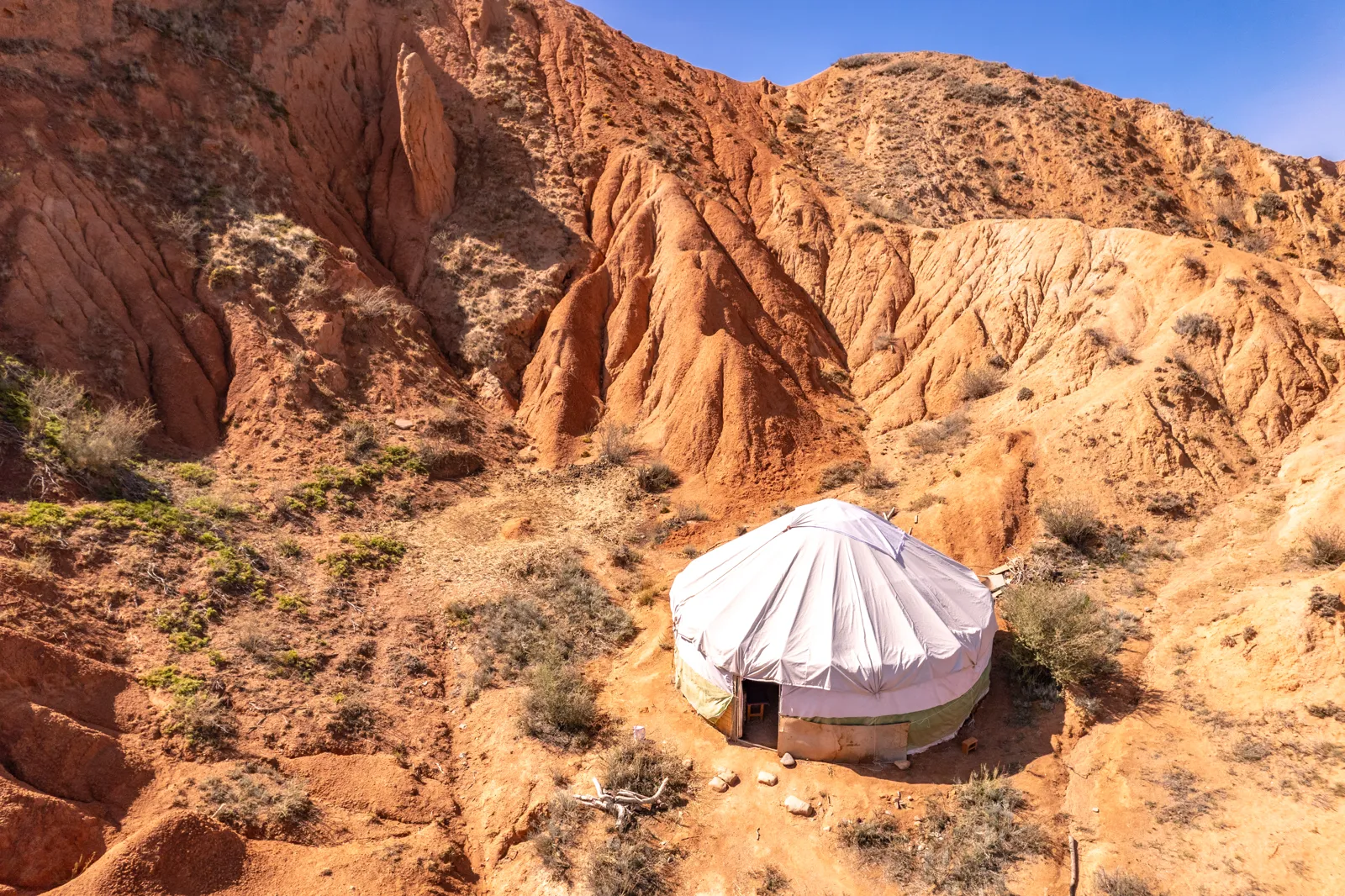
Perched at about 3,000 m (9,843 ft), this lake surrounded by pastures is the image of nomadic Kyrgyzstan. In summer, shepherds set up their yurts and herds there, and several camps host travelers. You get there by 4×4 or on horseback from Kochkor. Nights are cold, even in July: bring warm clothes. Access depends on snow, usually from June to September.
Naryn and Tash-Rabat
On the road to China via the Torugart Pass, Naryn is a stop in a deep valley. Further south, the stone caravanserai of Tash-Rabat, in an isolated valley at over 3,000 m (9,843 ft), recalls the caravan routes that crossed the region. You can sleep in a yurt there in summer.
Osh and the south
The country’s second city, Osh is one of the oldest cities in Central Asia. The sacred mountain Sulaiman-Too, a UNESCO World Heritage Site, overlooks the city and offers a panorama over the Fergana Valley. The big bazaar is one of the liveliest in the region. The south is more conservative: dress modestly.
Arslanbob
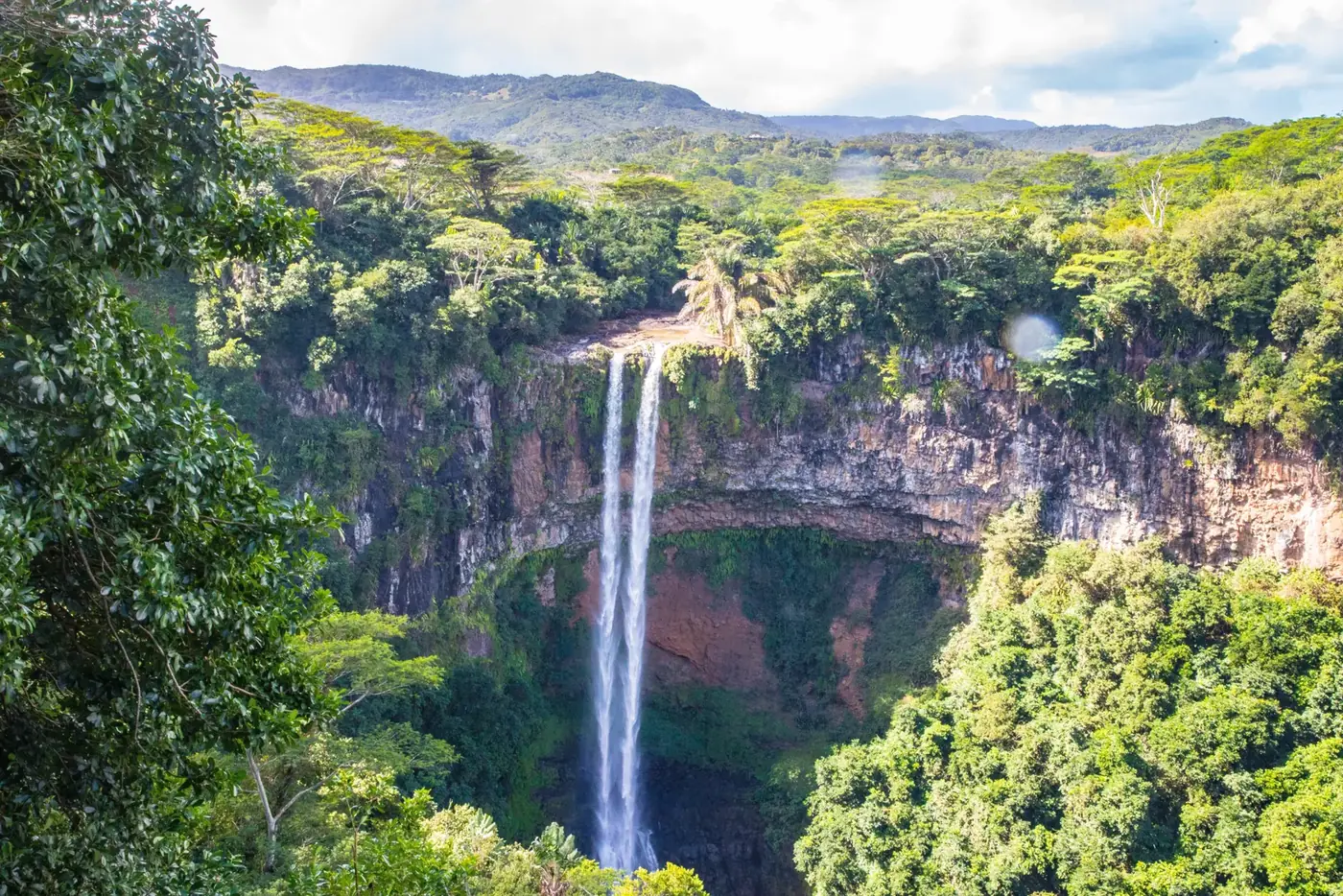
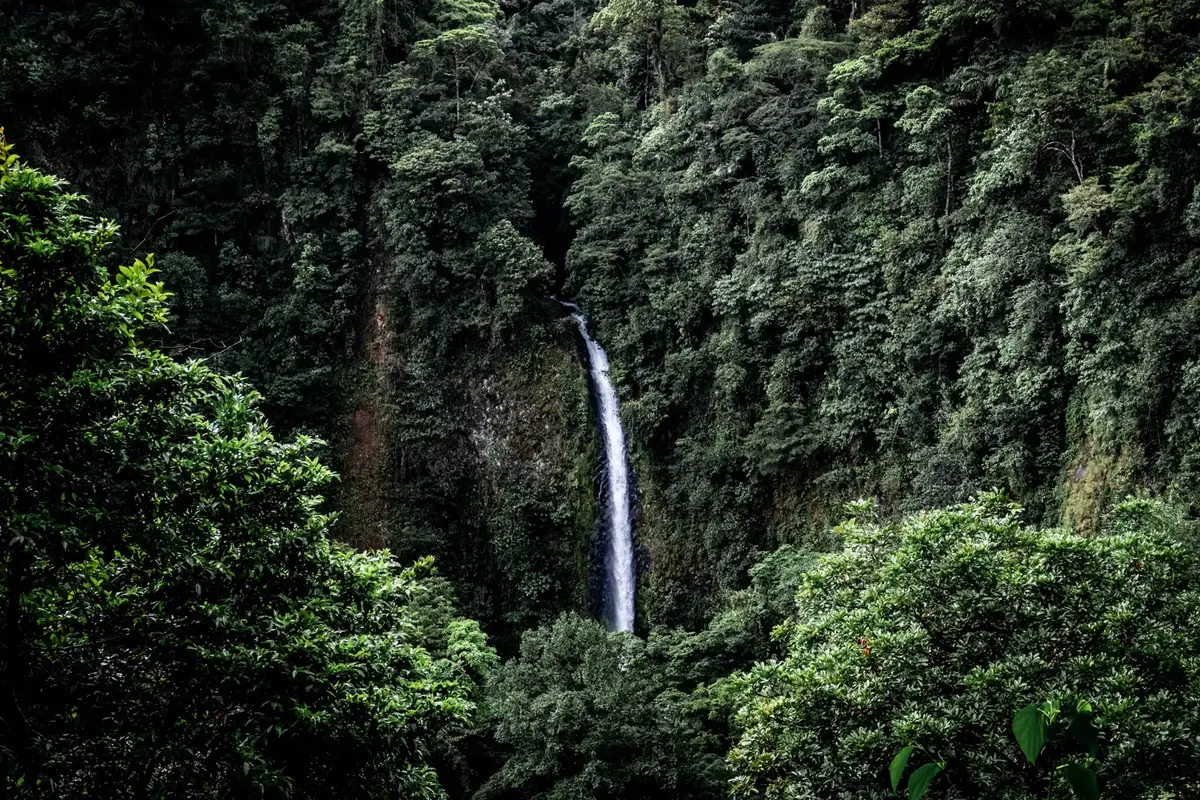
North of Jalal-Abad, this village is surrounded by one of the world’s largest wild walnut forests. People come to walk through the walnut groves to waterfalls and stay with local families. Autumn, the walnut harvest season, is the most beautiful time.
The Alay Valley and Lenin Peak
In the far south, the Alay Valley, around Sary-Mogol, faces the Trans-Alay range and Lenin Peak, one of the country’s three summits over 7,000 m (22,966 ft). The base camp attracts hikers and climbers in summer. Driving up to around 4,000 m (13,123 ft) does not allow acclimatization: the UK FCDO warns that altitude sickness is a risk in parts of the country.
Things to do in Kyrgyzstan
Hike in Ala-Archa National Park, around Karakol (Jeti-Oguz, Altyn-Arashan) or, for fit hikers, up to Ala-Kol lake
Sleep in a yurt at Song-Kol lake and ride up on horseback from Kochkor, from June to September
Tour Issyk-Kul: the Cholpon-Ata petroglyphs in the north, Skazka canyon and quiet beaches in the south
Soak in the hot springs of Altyn-Arashan
Explore the bazaars of Bishkek and Osh, and climb Sulaiman-Too
Walk through the walnut forests of Arslanbob, with a homestay night
Ski around Karakol in winter
Kyrgyzstan itinerary ideas
8 to 10 days: Bishkek, Issyk-Kul and Song-Kol
Days 1 and 2: Bishkek, Osh Bazaar, hike in Ala-Archa
Days 3 and 4: north shore of Issyk-Kul (Cholpon-Ata, petroglyphs), then Karakol
Days 5 and 6: hike at Jeti-Oguz or Altyn-Arashan
Day 7: south shore of the lake, Skazka canyon
Days 8 and 9: Kochkor and a night in a yurt at Song-Kol lake
Day 10: back to Bishkek
2 weeks: the country from north to south
Days 1 and 2: Bishkek and Ala-Archa
Days 3 to 6: Issyk-Kul and Karakol, 2- to 3-day trek (Altyn-Arashan, Ala-Kol for fit hikers)
Days 7 and 8: Song-Kol lake in a yurt
Day 9: Naryn and Tash-Rabat
Days 10 to 12: road south, Arslanbob
Days 13 and 14: Osh and Sulaiman-Too, flight back to Bishkek or international departure
Distances are long and mountain roads slow. According to the UK FCDO (GOV.UK, updated 14 September 2026), many roads are poorly lit and not maintained, and roads outside Bishkek are often blocked by snow in winter. Plan short stages and leave a margin for bad weather.
Budget for a trip to Kyrgyzstan
Kyrgyzstan remains an affordable destination. The biggest costs are often private transport (driver, 4×4) and mountain support (guide, horses, porters). Indicative amounts per person per day, based on two travelers, excluding international flights (converted from our euro estimates at the ECB rate of 23 October 2026, roughly €1 = US$1.12):
Item
Budget
Comfort
Accommodation
roughly US$11–22 (guesthouse, yurt, homestay)
roughly US$45–90 (comfortable hotel in Bishkek and Karakol)
Meals
roughly US$9–17 (canteens, local dishes)
roughly US$22–39 (restaurants)
Transport
roughly US$6–11 (marshrutkas, shared taxis)
roughly US$22–56 (private driver, 4×4)
Activities
roughly US$6–17 (hikes, park fees)
roughly US$22–56 (guide, horse, excursions)
Total per day
roughly US$34–56
roughly US$90–170
Indicative estimates, varying with the season and region: prices are higher in July–August and at the busiest sites.
Yurt stays often include dinner and breakfast. A guided multi-day trek (guide, horses, equipment) is the biggest expense: compare offers from local agencies and community-based tourism networks, and check what is included.
Who is Kyrgyzstan for?
Our verdicts by traveler profile, based on the places, conditions and budget ranges in this guide:
Hiking and adventure: ideal: Ala-Archa, the Karakol valleys, the Ala-Kol trek for fit hikers, Lenin Peak base camp. A guide is strongly advised away from easy trails.
Nature and wide open spaces: an excellent choice: Issyk-Kul, the pastures and yurts of Song-Kol from June to September, the walnut forests of Arslanbob.
Budget travelers: very well suited: roughly US$34–56 a day in guesthouses, yurts and marshrutkas. A private driver and guided treks push up the bill.
Culture: as a complement: the bazaars of Bishkek and Osh, the UNESCO-listed sacred mountain Sulaiman-Too, the Tash-Rabat caravanserai, Karakol’s Dungan mosque.
Families: possible with children used to walking and basic comfort: yurt nights, rudimentary bathrooms, long mountain roads. The shores of Issyk-Kul are the easiest stop.
Couples: yes for a nature trip: nights in a yurt, horse rides, the hot springs of Altyn-Arashan.
Comfort and relaxation: no: outside Bishkek and a few hotels in Karakol, electricity, hot water and mobile coverage can be limited.
Getting around Kyrgyzstan
Marshrutkas and shared taxis: the cheapest way to travel between towns. The UK FCDO (GOV.UK, updated 14 September 2026) advises avoiding local buses and minibuses where possible, as they are not always properly maintained and pickpockets operate on them; check the vehicle’s condition.
Private driver: the most comfortable way to reach Song-Kol, Tash-Rabat or the Alay Valley, often by 4×4.
Train: the Bishkek–Balykchy line reaches the western end of Issyk-Kul.
Domestic flights: useful between Bishkek and Osh to avoid a long mountain road. The UK FCDO advises checking the UK Air Safety List before choosing an airline.
Car rental: possible, but demanding. According to the UK FCDO, a UK photocard licence is valid for up to 30 days; for longer stays you need the 1968 International Driving Permit plus your UK licence, obtained in the UK. Third-party insurance is compulsory, and any trace of alcohol can lead to a fine and a one-year licence suspension. The U.S. Department of State notes that international driving permits are recognized (travel.state.gov, last updated June 11, 2026). Snow and landslides often block mountain roads, and fuel stations are limited in rural areas (GOV.UK).
In Bishkek: taxis ordered by app are simple and cheap; the UK FCDO advises using licensed pre-ordered taxis rather than flagging them down.
Where to stay in Kyrgyzstan
In Bishkek, options range from hostels to international hotels, mostly in the center. In Karakol and around Issyk-Kul, family guesthouses dominate, with a few hotels and beach resorts on the north shore. In the mountains and on the high plateaus (Song-Kol, Tash-Rabat), you sleep in a yurt, in a simple camp with rudimentary bathrooms. In Arslanbob and the villages, homestays are the norm. In Osh, hotels and guesthouses are near the center and the bazaar.
In rural areas, electricity, hot water and mobile coverage can be limited. Bring a warm sleeping bag for nights at altitude and a way to purify water.
Entry requirements for Kyrgyzstan, health and safety
US citizens
According to the U.S. Department of State (travel.state.gov, last updated June 11, 2026), US citizens can stay up to 60 days without a visa, but must then remain outside the country for an equal period (60 days in any 120-day period). For longer stays, apply for the appropriate visa online and register your stay. Make sure your passport is stamped on entry: officials have sometimes failed to stamp passports, leaving visitors unable to prove legal entry. Overstaying leads to a fine and an exit visa.
UK citizens
According to the UK FCDO (GOV.UK foreign travel advice, updated 14 September 2026), you can stay up to 30 calendar days without a visa in each 60-day period. Your passport must be valid for at least 6 months after the day you arrive. To stay longer than 30 days, you must leave before the period ends or register online with the State Registration Service within 5 days of entry; an e-visa service is available. Don’t overstay, even briefly: you could be fined and deported. Bring a doctor’s prescription for prescription medicines and declare them on your customs form.
Borders: according to the UK FCDO, there have been no further clashes on the Kyrgyz–Tajik border since the 2025 border agreement, but there may be unexploded ordnance and mines, particularly in the Batken region, and crossings can close at short notice. The U.S. Department of State states that border areas in Batken province are closed to foreigners and that permits are required along the Chinese and Tajik borders.
Health: according to the UK FCDO (GOV.UK, updated 14 September 2026), check vaccine recommendations at least 8 weeks before your trip; altitude sickness is a risk in parts of the country, and there have been cases of anthrax, mainly in the south. Medical facilities are basic in remote areas. Take out insurance covering medical costs, repatriation and high-altitude activities.
Safety: street crime (bag-snatching, mugging) and pickpocketing at Bishkek’s bazaars are the main risks, and drink spiking can lead to sexual assault (GOV.UK). The U.S. Department of State reports harassment and extortion by impostors and genuine officials. There is a high risk of earthquakes (GOV.UK).
Mountains: according to the UK FCDO, there is a high risk of avalanches, landslides and rockfalls, and snow is possible at altitude even in summer. Use a reputable trekking agency, never trek alone and tell someone when you plan to return. Mountain rescue (volunteers, limited equipment): +996 312 651 404.
Emergencies: ambulance 103, police 102, rescue 112 (GOV.UK). In Issyk-Kul province, the tourist police speak English and Russian: +996 705 00 91 02.
Entry requirements checked on 24 October 2026; check them again before you travel.
Practical tips for Kyrgyzstan
Money: according to the UK FCDO, ATMs are widely available in main cities and usually dispense som and US dollars, but may not be available in rural areas: bring cash before heading to the mountains. US dollars are the easiest foreign currency to exchange; notes from before 2007 are usually not accepted. The som is usually not available outside Kyrgyzstan. Our currency converter helps you estimate your spending.
Internet and phone: an eSIM or local SIM card works well in cities and along main roads; there is no coverage in parts of the mountains.
Language: Russian is useful to make yourself understood; English is spoken in tourist businesses in Bishkek and Karakol, much less elsewhere. An offline translation app helps.
Etiquette: hospitality is everywhere. In a yurt, take off your shoes and accept tea or kymyz (fermented mare’s milk), even a little. Ask before photographing people; the U.S. Department of State notes that photographing some buildings is illegal and advises asking before photographing anything of military or security interest, including people in uniform. In the more conservative south, dress modestly.
Horse riding: a very common activity. Check the horse’s condition and cross rivers with an experienced guide.
Medication: carry a doctor’s prescription and declare your medicines on arrival (GOV.UK), with a kit suited to altitude.
Read more
The Kyrgyz mountains are only accessible part of the year: before booking, see the best time to visit Kyrgyzstan, with the climate region by region and when the high lakes open. If you can only travel in summer, our selection where to go in July compares the country with other hiking destinations. For a wider tour of Central Asia, our Uzbekistan travel guide covers the Silk Road cities.
Frequently asked questions
Do I need a visa for Kyrgyzstan?
Not for a short stay. US citizens can stay up to 60 days visa-free in any 120-day period (travel.state.gov, last updated June 11, 2026); UK citizens up to 30 days in each 60-day period, with a passport valid at least 6 months after arrival (GOV.UK, updated 14 September 2026). Checked on 24 October 2026; check the latest rules before you leave.
Is Kyrgyzstan safe to visit?
According to the UK FCDO, the main risks are street crime in Bishkek, the roads and the mountains (avalanches, landslides, altitude). Choose vehicles in good condition, use a reputable trekking agency and never trek alone. Border areas in Batken province are closed to foreigners (travel.state.gov).
Do you need an agency to travel in Kyrgyzstan?
It is not required: you can travel independently with marshrutkas, shared taxis and guesthouses. For multi-day treks, high mountains or Song-Kol, a guide or local agency is strongly advised; the UK FCDO recommends a reputable trekking agency.
How many days do you need in Kyrgyzstan?
Ten days let you see Bishkek, Issyk-Kul, Karakol and Song-Kol. Two weeks or more are needed to add Naryn, Tash-Rabat, Arslanbob and Osh, or a multi-day trek.
What is the best time to visit Kyrgyzstan?
Mid-June to mid-September for the mountains, lakes and yurts. May and September–October suit the cities and low valleys. Winter is for skiing and city stays.
What is there to do in Kyrgyzstan?
Hiking (Ala-Archa, Karakol, Altyn-Arashan), sleeping in a yurt at Song-Kol, horse riding, touring Issyk-Kul, visiting the bazaars of Osh and Bishkek and, in winter, skiing around Karakol.
How do you do a road trip in Kyrgyzstan?
The easiest option is a private driver, often by 4×4, for Song-Kol or Tash-Rabat. Car rental is possible but demanding: UK licence holders need a 1968 IDP for stays over 30 days, third-party insurance is compulsory, and many roads are poorly lit and maintained (GOV.UK). Plan short stages.
Kyrgyz Hydrometeorological Service (Kyrgyzhydromet), normals published by the World Meteorological Organization (NOAA archive): 1991–2020 mean temperatures for the Bishkek, Cholpon-Ata, Kyzyl-Suu, Naryn, Jalal-Abad and Sary-Tash stations; 1961–1990 precipitation for the Bishkek (Frunze) and Naryn stations (latest precipitation normals published for these stations)
European Central Bank: euro reference rates of 23 October 2026 (budget conversions)
Discover our other destinations in Asia, including Uzbekistan, Kyrgyzstan’s neighbor, Georgia and Nepal, or Mongolia for another nomadic trip.
Transparency: this page contains affiliate links, labelled as such. If you book through them we may earn a commission at no extra cost to you; it does not influence our content or recommendations. How we fund the site.