
Traveler’s diarrhea (often called « turista ») is a clinical syndrome caused by intestinal pathogens; it is usually defined as at least three loose stools in 24 hours during a trip or just after returning. It is usually mild and clears up by itself in a few days. The key step: drink plenty of fluids from the first loose stools, ideally with oral rehydration solution. Antibiotics are not a reflex: US and French guidance reserve them for specific cases.
This guide draws on the CDC Yellow Book (2026 edition, traveler’s diarrhea chapter, dated March 24, 2026), the UK’s TravelHealthPro (NaTHNaC) factsheet, and the French Haut Conseil de la santé publique (HCSP) travel health recommendations (2026 edition, published July 2026), all read for this page (CDC and TravelHealthPro checked 12 November 2026; HCSP read 23 October 2026). These documents are meant for health professionals. This guide does not replace a consultation: before a trip to the tropics, talk to your doctor, a travel clinic or a pharmacist.
Traveler’s diarrhea: the essentials
- Common: the CDC gives attack rates of roughly 30% to 70% of travelers over a 2-week period, depending on destination and season.
- Causes: bacteria cause most cases (the CDC says at least 75% to 90%), and viruses (norovirus especially) and protozoa such as Giardia the rest.
- Prevention: hand hygiene (soap, or alcohol-based sanitizer with at least 60% alcohol), hot food, sealed or treated drinking water.
- Treatment: oral rehydration first; loperamide can help adults with mild to moderate symptoms (not with fever or bloody stools); antibiotics only for moderate to severe cases, on medical advice.
- See a doctor: fever of 38 °C (100.4 °F) or more, blood or mucus in the stools, dehydration, symptoms not improving after three days, or diarrhea lasting more than two weeks.
What is traveler’s diarrhea?
The French HCSP defines it as at least three loose stools in 24 hours, or stools more frequent than usual (a definition better suited to infants), during or after a trip. It is usually a mild, acute episode that appears during the trip or within 7 days of returning, and clears up by itself in 1 to 3 days. The risk rises with the length of the trip, and tourism and « adventure » travel are considered risk factors. In child travelers, diarrhea is reported in 13.5% to 39% of cases, more often under age 2 and in adolescence (HCSP, 2026).
Where does it come from?
According to the CDC, bacteria cause most cases (diarrheagenic E. coli, especially enterotoxigenic, Campylobacter jejuni, Shigella and Salmonella are the most common), viruses at least 10% to 25% (norovirus above all) and protozoa about 10% (Giardia mainly, then Cryptosporidium, more common on longer trips). Contamination spreads through water, food and hands (fecal-oral route).
Mild, moderate or severe: how doctors classify it
| Form | Definition (by functional impact) | What to do |
|---|---|---|
| Mild | Tolerable, does not interfere with planned activities | Fluids; antibiotics are not recommended (CDC) |
| Moderate | Distressing, interferes with planned activities | Fluids; a doctor may consider an antibiotic (CDC) |
| Severe | Incapacitating or prevents planned activities; any dysentery (bloody stools) | Medical care; antibiotics are advised (CDC); no loperamide alone with blood or fever |
| Persistent | Lasts more than two weeks | Medical consultation (stool tests) |
How to avoid traveler’s diarrhea
Prevention rests on hygiene. The CDC notes that careful food and drink choices help, but that advice alone may not reduce risk, and that no vaccine is available in the US for the pathogens that commonly cause it. The rules below, which follow the HCSP, are turned into a checklist:
- Wash your hands before meals, before handling food and after using the toilet; if there is no soap and water, use an alcohol-based sanitizer (at least 60% alcohol, according to the CDC).
- Prefer dishes served hot; avoid street food when the hot or cold chain looks uncertain.
- Drink sealed bottled water opened in front of you; otherwise boil it at a rolling boil for 1 minute or disinfect it (tablets based on sodium dichloroisocyanurate or hypochlorite), after filtering if cloudy (HCSP).
- Avoid ice cubes, freshly squeezed street juices, raw vegetables, shellfish (especially raw), reheated dishes and homemade ice cream.
- Wash or peel fruit yourself, after washing your hands.
- Eat eggs, meat, fish and shellfish well cooked; prefer pasteurized or boiled milk.
- Tap water can be drunk in countries where it is treated and safe: ask locally.
Should you take preventive medication?
Not as a rule. The CDC says bismuth subsalicylate reduced incidence by about 50% in studies, but it has contraindications (for example aspirin allergy or anticoagulant use) and is not recommended for children under 12 or pregnant women; probiotics lack sufficient evidence, and prophylactic antibiotics are generally not recommended. The HCSP likewise does not currently recommend bismuth, rifaximin or probiotics, except in particular risk situations (immune deficiency, chronic inflammatory bowel disease). For infants under 6 months, rotavirus vaccination is recommended in France (HCSP). Ask your clinician what applies to you.
What to do if you have traveler’s diarrhea
1. Drink, right away
Fluid replacement is the priority. According to the CDC, oral rehydration solution (ORS) is the main treatment, especially for children, older adults and people with chronic illness: use only sealed, chlorine-treated, boiled or otherwise purified water, and mix one WHO-style ORS packet per about 1 liter (about 34 fl oz) of treated water. Sports drinks are acceptable for mild cases; very sugary drinks can worsen diarrhea. TravelHealthPro also recommends oral rehydration solutions for more severe symptoms and for people at higher risk of dehydration. If you are vomiting, give small amounts often (by the spoonful). Return early to a varied diet.
2. Medicines for diarrhea
| Medicine | What the sources say |
|---|---|
| Oral rehydration solution | The main treatment (CDC, TravelHealthPro) |
| Loperamide (slows the gut) | The CDC says it reduces the number of bowel movements and may help on long trips such as flights or bus rides; it is not recommended alone for bloody diarrhea or diarrhea with fever. Usual adult dose: 4 mg initially, then 2 mg after each loose stool, maximum 16 mg in 24 hours; rarely given to children under 6. TravelHealthPro says it may be considered by adults for mild to moderate diarrhea for a maximum of two days. |
| Bismuth subsalicylate | About 50% lower incidence in studies; contraindications apply (CDC) |
| Probiotics | Not enough evidence to recommend (CDC, HCSP) |
| Racecadotril (anti-secretory, used in France) | The HCSP says it can ease mild or moderate symptoms; avoid during pregnancy. Availability depends on the country: ask a pharmacist. |
3. And antibiotics?
The CDC advises no antibiotics for mild diarrhea; for moderate diarrhea they may be used (azithromycin, fluoroquinolones, or rifaximin for noninvasive cases); for severe diarrhea, including all dysentery, they are advised, with azithromycin preferred. Antibiotics shorten illness by about 1 to 2 days but carry risks, including colonization with resistant bacteria and C. difficile infection, and fluoroquinolone resistance (especially in Campylobacter) limits their use in parts of South and Southeast Asia. The HCSP stresses a high risk of acquiring multidrug-resistant bacteria while traveling (carriage of 21% to 51% depending on the area, up to 85% for Southeast Asia and especially the Indian subcontinent). The choice of drug is a medical decision.
When to see a doctor: decision tree
| Situation | What to do |
|---|---|
| Fever | Seek urgent care for a fever of 38 °C (100.4 °F) or more (TravelHealthPro). Malaria can resemble a febrile gastroenteritis, especially in children; typhoid is the other diagnosis to consider |
| Blood or mucus in the stools | Seek medical care; no loperamide alone (CDC, TravelHealthPro) |
| Signs of dehydration, or unable to keep fluids down | Prompt medical attention, possibly for an IV drip |
| Infant or young child not tolerating fluids | Get early medical advice |
| No improvement after three days | Seek medical care (TravelHealthPro) |
| Diarrhea lasting more than two weeks | See a doctor (stool tests); this suggests protozoa (CDC) |
| Mild diarrhea, no fever, you are drinking well | Fluids and rest; see a doctor if it does not clear up |
For children, the HCSP asks parents to recognize dehydration: thirst, an apathetic or less active child, pallor or a grayish complexion, cold extremities, mottled skin, very dark or sunken eyes, dry mouth.
At-risk countries and malaria
If you travel in a malaria-endemic area, diarrhea with fever should make you think of malaria: see our guide to malaria. For dengue, another cause of fever after returning from the tropics, see our guide to dengue.
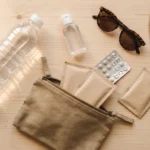
The anti-diarrhea kit to pack
Based on the advice above, to check with your doctor or pharmacist:
- oral rehydration solution sachets (essential with children);
- alcohol-based hand sanitizer;
- water purification tablets, or even a portable filter for off-the-beaten-track travel;
- an antidiarrheal suited to your age and situation, on medical advice;
- a thermometer, to spot a fever that means you should see a doctor;
- your insurer’s contact details: a consultation or an IV drip abroad can be expensive (see travel insurance).
Frequently asked questions
How long does traveler’s diarrhea last?
Most often 1 to 3 days, clearing up by itself, according to the HCSP; TravelHealthPro advises seeing a doctor if there is no improvement after three days. Beyond two weeks it is called persistent diarrhea, which needs a consultation.
How do you prevent traveler’s diarrhea?
Wash your hands, eat hot food, drink sealed bottled water opened in front of you, and avoid ice cubes, raw vegetables, raw shellfish and homemade ice cream.
What medicine should you take for traveler’s diarrhea?
Rehydrate first. Loperamide can help adults with mild to moderate symptoms for a short time, but never with fever or bloody stools. Ask a health professional for advice.
Should you travel with an antibiotic?
Not routinely. The CDC advises antibiotics only for moderate to severe cases, and the HCSP reserves them for severe diarrhea or frail people who cannot see a doctor quickly, because of the risk of multidrug-resistant bacteria.
Do probiotics prevent traveler’s diarrhea?
Evidence is insufficient: the CDC says there is not enough evidence to recommend them, and the HCSP does not recommend them for now, except in particular risk situations.
Our sources
- Centers for Disease Control and Prevention, CDC Yellow Book 2026, « Travelers’ Diarrhea » (page dated March 24, 2026), checked 12 November 2026.
- National Travel Health Network and Centre (TravelHealthPro), « Travellers’ diarrhoea » factsheet, checked 12 November 2026.
- Haut Conseil de la santé publique (France), « Recommandations sanitaires aux voyageurs, édition 2026 » (document of 28 May 2026, published 7 July 2026), chapter 4 « Diarrhée du voyageur et autres risques alimentaires », read 23 October 2026.
- Our methodology
Updated November 2026.