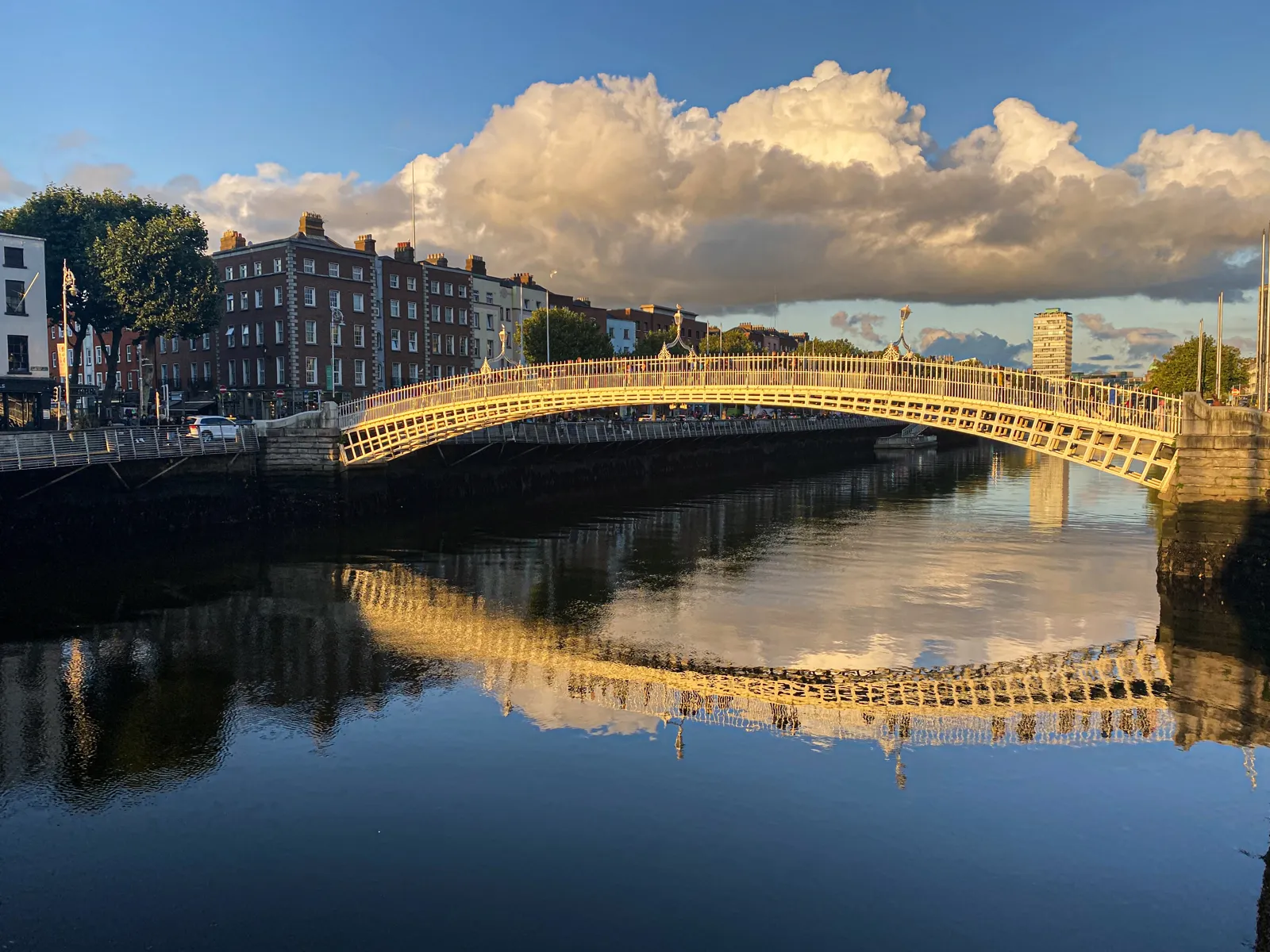
Jaipur, the capital of Rajasthan, is worth visiting for its walled old city with pink façades, its maharaja’s palace, the Hawa Mahal and the Jantar Mantar observatory and, in the nearby hills, Amber Fort. Three sites in or around the city are Unesco World Heritage listed. If you plan to visit Jaipur, here is the essential: what to see, how many days to allow, when to go according to IMD normals and what precautions to take according to the UK FCDO and the U.S. State Department, with the official sources.
Jaipur is one of the stops on the « Golden Triangle » with Delhi and Agra: see also our page on the Taj Mahal, our India travel guide and our calendar of when to go to India.

Our travel deals for Jaipur
Affiliate links: we earn a commission, at no extra cost to you.
 FlightsKiwi.comCompare flights and airline combinations to Jaipur.Compare flights
- Airport transferKiwitaxiPrivate driver booked in advance at a fixed price.Book a transfer
- Tickets and toursTiqetsEntry tickets and guided tours to book online; compare with the official price.See tickets
- eSIMAiraloData plan to install before you leave (eSIM-compatible phone).See plans




Jaipur: the essentials
- Unesco: Jantar Mantar (listed in 2010), Jaipur City (2019) and Amber Fort, part of the « Hill Forts of Rajasthan » property (2013)
- Best time: October to March, dry and mild; April to June very hot (highs over 37 °C / 99 °F), monsoon from July to September
- Entry: visa, e-visa or OCI card required for US and UK citizens, plus an online e-arrival card before arrival (GOV.UK)
- Safety: the U.S. State Department warns that some vendors sell jewellery and gemstones that are not as promised
- Recommended length: two full days for the city and Amber; one more day for Jaigarh and Nahargarh forts
- Time zone: UTC+5:30 all year: 5 h 30 ahead of London in winter, 4 h 30 in summer
What to see in Jaipur: the highlights
The old city, or « Pink City »
Unesco describes the walled city of Jaipur as founded in 1727 by Sawai Jai Singh II. Unlike other cities in the region, built on hilly terrain, it was laid out on the plain according to a grid plan interpreted in the light of Vedic architecture. The main streets are lined with continuous colonnaded market arcades with uniform façades, which meet at large squares called chaupars. Designed as a trading capital, the city has kept its craft traditions: walking the bazaars, or riding a rickshaw through them, is the way to understand its layout.
The City Palace
In the heart of the old city, the maharaja’s palace brings together courtyards, gardens and ceremonial buildings, including the Chandra Mahal and the Mubarak Mahal. Part of it is still the residence of the royal family; the rest houses a museum (textiles, weapons, court objects). Opening hours and visit options change depending on which areas are open: check the palace’s official website before you go.
The Hawa Mahal (Palace of the Winds)
Its honeycombed façade, pierced with many small windows, allowed the women of the court to watch the street without being seen. It is the best-known image of Jaipur. Come early: the street is calmer before the shops open (see sunrise times in our climate table).
The Jantar Mantar
Right next to the City Palace, the Jantar Mantar observatory is, according to Unesco, an astronomical observation site built in the early 18th century, with some twenty fixed monumental masonry instruments designed for naked-eye observation. Unesco presents it as the most significant, most comprehensive and best preserved of India’s historic observatories. A guide or audio guide helps a great deal in understanding the role of each instrument.
Amber Fort (Amer)
In the hills north of the city, the Amber fort-palace overlooks Maota Lake. It is part of the serial property « Hill Forts of Rajasthan », listed by Unesco in 2013, which groups six forts; Unesco highlights the forts’ water-harvesting structures, largely still in use. Allow half a day and good shoes: ramps, stairs and courtyards follow one another.
Jaigarh, Nahargarh and the Jal Mahal
Above Amber, Jaigarh fort guards the heights; Nahargarh fort, on the ridge overlooking the old city, is popular for the view at the end of the day. On the road to Amber, the Jal Mahal, a palace set in the middle of a lake, is viewed from the shore. These sites round off a second day.
Booking your visits: official or reseller?
Monument tickets are sold at the ticket offices or on the official platforms of the authorities that manage them. Resellers mainly offer guided tours and day trips with a driver: check what is included (entry fees, guide, actual time at each site) and beware of compulsory « shopping » stops; GOV.UK notes that scammers and touts target foreign nationals in tourist areas.
Itinerary: Jaipur in two days
- Day 1, morning: the Hawa Mahal early, then the neighbouring City Palace and Jantar Mantar.
- Day 1, afternoon: the old city bazaars, on foot or by rickshaw.
- Day 2, morning: Amber Fort early, before the midday heat.
- Day 2, afternoon: the Jal Mahal from the shore, then Jaigarh or Nahargarh for sunset.
- Day 3 (optional): museums, temples in the area or departure for Agra and the Taj Mahal.
When to go to Jaipur
Jaipur has a hot semi-arid climate shaped by the monsoon. The table below uses the official India Meteorological Department normals for the Jaipur airport (Sanganer) station, supplemented by our sunrise and sunset calculations, useful for timing visits before the heat.
| Month | High °C (°F) | Low °C (°F) | Rain mm (in) | Sunrise / sunset on the 15th | Day length | Rainy days | Verdict |
|---|---|---|---|---|---|---|---|
| January | 22.5 (72) | 8.4 (47) | 5.9 (0.2) | 7:17 am / 5:54 pm | 10 h 38 | 0.6 | ✅ Mild by day, cool nights |
| February | 26.1 (79) | 12.0 (54) | 10 (0.4) | 7:03 am / 6:18 pm | 11 h 15 | 0.9 | ✅ Very pleasant |
| March | 32.0 (90) | 17.4 (63) | 4.4 (0.2) | 6:36 am / 6:35 pm | 11 h 58 | 0.7 | ✅ Good, heat at the end of the month |
| April | 37.6 (100) | 22.8 (73) | 7.1 (0.3) | 6:03 am / 6:50 pm | 12 h 47 | 0.9 | ⚠️ Very hot (over 37 °C / 99 °F) |
| May | 41.1 (106) | 27.1 (81) | 12 (0.5) | 5:39 am / 7:07 pm | 13 h 28 | 1.3 | ❌ The hottest month |
| June | 39.7 (103) | 27.9 (82) | 62 (2.4) | 5:32 am / 7:21 pm | 13 h 50 | 4.2 | ❌ Heat, monsoon arrives |
| July | 34.8 (95) | 26.2 (79) | 190 (7.5) | 5:42 am / 7:22 pm | 13 h 41 | 9.8 | ⚠️ Monsoon, humid heat |
| August | 32.7 (91) | 24.9 (77) | 203 (8.0) | 5:57 am / 7:04 pm | 13 h 06 | 9.4 | ⚠️ The wettest month |
| September | 34.2 (94) | 24.0 (75) | 80 (3.1) | 6:11 am / 6:31 pm | 12 h 20 | 4.8 | ⚠️ End of monsoon, still hot |
| October | 34.1 (93) | 20.1 (68) | 19 (0.7) | 6:25 am / 5:58 pm | 11 h 33 | 1.2 | ✅ Dry, end of the big heat |
| November | 29.6 (85) | 14.4 (58) | 1.9 (0.1) | 6:46 am / 5:36 pm | 10 h 50 | 0.2 | ✅ Dry and mild |
| December | 25.1 (77) | 9.9 (50) | 3.8 (0.1) | 7:07 am / 5:35 pm | 10 h 28 | 0.3 | ✅ Mild by day, cool nights |
How to read it: from October to March, it rains on less than one day a month on average and highs stay between 22.5 and 34.1 °C (73 and 93 °F); nights in December-January drop to around 8 to 10 °C (46 to 50 °F), so bring a jacket. May is the hottest month (average high of 41.1 °C / 106 °F). In July-August, the monsoon brings nearly 200 mm (7.9 in) a month: over a 7-day stay in August, expect on average about 2.1 rainy days (Destination de Voyage calculation based on IMD rainy days), against almost none in November.
To compare with Delhi, Goa, Kerala or Ladakh, see our page on when to go to India. Hindu festivals (Holi, Diwali) follow a lunar calendar: our page on Holi in India explains the festival; check the dates each year.
Getting to Jaipur and getting around
From the airport: transfers
Jaipur International Airport is at Sanganer, south of the city. International travellers usually arrive with a connection, or by road and rail from Delhi and Agra. To reach your hotel, use prepaid taxis, ride-hailing apps or a transfer booked in advance; in all cases, agree the price before setting off or check that it is shown in the app.
In the city
The historic centre can be explored on foot, but the distances between the old city, Amber and the forts call for a vehicle: rickshaw, taxi, ride-hailing or a driver for the day. The U.S. State Department warns about scams by taxi drivers and others offering cheap transport at airports, stations and tourist sites. For a Rajasthan road trip, many travellers hire a car with a driver rather than drive themselves; GOV.UK notes that India has a high death rate from road accidents.
Where to stay in Jaipur
Staying in or near the old city lets you start early with the Hawa Mahal and the bazaars. The newer districts, to the south and west, have quieter hotels that are easier to reach by car. Jaipur also has many havelis (traditional mansions) and former palaces turned into hotels. In high season (October-March) and during festivals, book ahead.
If you… then…
| If you… | Then… |
|---|---|
| only have one day | Hawa Mahal early, City Palace, Jantar Mantar, then Amber in the afternoon |
| come between April and June | sightseeing at sunrise and late afternoon, a break at midday |
| come during the monsoon | allow some slack: heavy showers are possible, but monuments stay open |
| love photography | the Hawa Mahal façade early in the morning, the view from Nahargarh at the end of the day |
| want to buy jewellery or gemstones | buy only from reputable shops and be wary of goods « not as promised » (travel.state.gov) |
Entry requirements, health and safety
US citizens
- According to the U.S. Department of State (travel.state.gov, last updated August 11, 2025), you need a valid US passport and a valid Indian visa or an Overseas Citizen of India (OCI) card to enter and exit. You can apply for an eVisa at least 4 days before arriving; eVisas are not valid at land border crossings. Visa rules change often and with little warning.
UK citizens
- According to the UK FCDO (GOV.UK foreign travel advice, updated 7 October 2026), you must have a visa unless you hold an OCI card; you may be able to apply for an e-visa (check restrictions on ports of entry). Your passport must have an expiry date at least 6 months after your arrival and at least 2 blank pages.
- All foreign nationals must complete an e-arrival card online, up to 72 hours before arrival; it is not a visa. Make sure your passport is stamped on arrival.
Health and safety
- Health: GOV.UK lists dengue and malaria among the health risks in India and advises checking vaccine recommendations with TravelHealthPro at least 8 weeks before you travel; see a travel health clinic before you leave and protect yourself against mosquitoes.
- Terrorism: GOV.UK states that terrorists are very likely to try to carry out attacks in India; stay alert in crowded places.
- Monsoon: according to GOV.UK, the monsoon season usually runs from June to November and can cause flash floods, landslides and disruption in big cities due to flooding.
- Women travellers: GOV.UK reports that female travellers often experience verbal and physical harassment, and the U.S. State Department advises women against travelling alone in India.
- Road safety: India has a high death rate from road accidents (GOV.UK); take care crossing streets, especially at night.
- Emergencies: dial 112 (ambulance, fire, police).
- Shopping scams: the U.S. State Department warns that some vendors sell expensive items such as carpets, jewellery and gemstones that are not as promised.
- Restricted areas: parts of Rajasthan near the Pakistani border require a special permit (travel.state.gov); Jaipur itself is not concerned.
Our travel documents guide summarises the formalities.
Practical tips for Jaipur
- Dress: shoulders and knees covered for temples; hat and water for Amber.
- Shopping: haggle in the bazaars and decline shop visits imposed by a guide or driver.
- Money: the currency is the Indian rupee; our currency converter helps you follow the rate.
- Time: see our page on time in India.
- Insurance: cover for medical costs and repatriation is strongly recommended (see our travel insurance guide).
- Mobile data: an eSIM or local SIM card avoids roaming charges (see our eSIM guide).
Frequently asked questions
How many days do you need to visit Jaipur?
Two full days let you see the old city, the City Palace, the Jantar Mantar, the Hawa Mahal and Amber Fort; a third day leaves time for Jaigarh and Nahargarh forts.
When is the best time to go to Jaipur?
From October to March: it rains on less than one day a month and highs stay between 22 and 34 °C (72 and 93 °F) according to the IMD 1991-2020 normals. Avoid May and June, above 39 °C (102 °F).
Why is Jaipur called the Pink City?
Because of the colour of the façades of its walled old city, founded in 1727 and listed as a Unesco World Heritage Site in 2019.
Do you need a visa for Jaipur?
Yes: US and UK citizens need an Indian visa or e-visa, or an OCI card (travel.state.gov, GOV.UK), and all foreign nationals must complete the e-arrival card online before arrival.
Is Jaipur safe?
The usual precautions apply: GOV.UK warns that scammers and touts target foreign nationals in tourist areas, and the U.S. State Department warns about jewellery and gemstone scams. Dial 112 in an emergency.
Our sources
- Unesco World Heritage Centre: « Jantar Mantar, Jaipur », « Jaipur City, Rajasthan » and « Hill Forts of Rajasthan », consulted on 24 October 2026
- Entry requirements, health and safety checked on 26 October 2026: U.S. Department of State, India country information (last updated August 11, 2025) and UK FCDO, GOV.UK foreign travel advice for India (updated 7 October 2026)
- India Meteorological Department: 1991-2020 normals for the Jaipur (airport) station, as given in the climate table of the Wikipedia article « Jaipur »
- Astronomical calculations: NOAA solar algorithm, applied by Destination de Voyage to the coordinates of Jaipur (15th of each month)
- Our methodology
Updated October 2026.