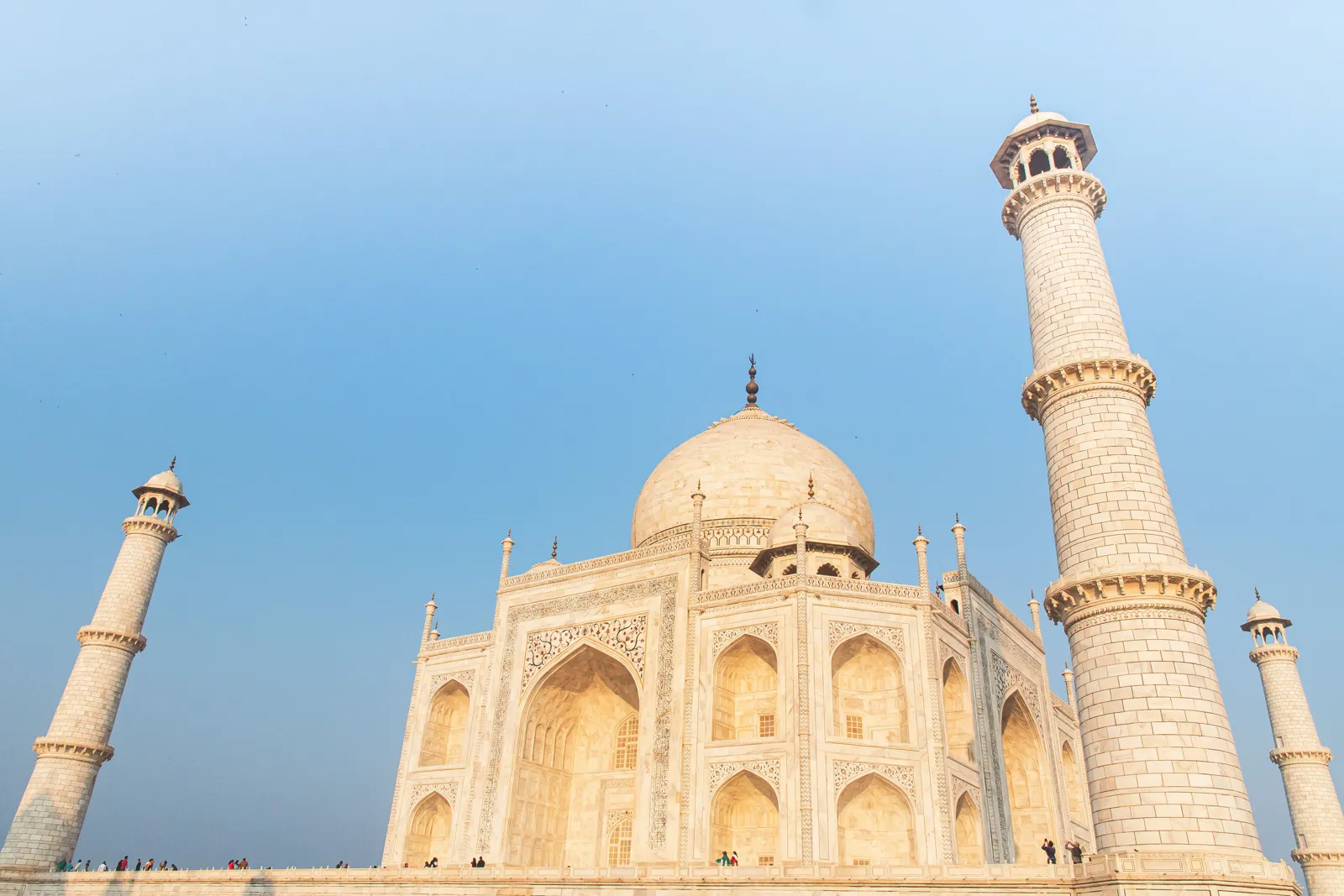
When is the best time to visit India? October to March: it is the dry season over most of the country, with pleasant temperatures in Rajasthan, Delhi and Agra, and sunny weather in Goa and Kerala. Ladakh is the exception: at high altitude, the favorable season runs from June to September, when the rest of the country is under the monsoon.
India is a subcontinent: between the Himalayas and the southern tip, the climates have nothing in common. Yet three periods structure the year over most of the territory: a cool, dry season (roughly November to February), a hot season (March to May, even June in the north) and the southwest monsoon (roughly June to September). Here is how to choose, based on the official climate normals of the India Meteorological Department (IMD). If you are combining with the eastern Himalayas, the best time to visit Bhutan is covered on its own page, with its own normals.

Our travel deals for India
Affiliate links: we earn a commission, at no extra cost to you.
 Learn the languageTargumiLearn a few words of Hindi before you go — 30% off via our link.See the course
- FlightsKiwi.comCompare flights and airline combinations to India.Compare flights
- eSIMAiraloData plan to install before you leave (eSIM-compatible phone).See plans



When to go to India: the essentials
- Best time overall: October to March, the dry season in the north and the south
- Rajasthan, Delhi, Agra, Varanasi: October to March; cool nights from December to February (8 to 10 °C (46 to 50 °F) minimum in Delhi)
- Goa and the west coast: November to March; very strong monsoon from June to September (nearly 900 mm (35.4 in) in June and July in Panaji)
- Kerala: December to March; heavy rain from May to November
- Ladakh (Leh): June to September; very cold winter (-13 °C (9 °F) minimum in January)
- Avoid in the northern plain: May and June, with an average high above 40 °C (104 °F) in Delhi and Jaipur
- Watch out for: air pollution, which the UK FCDO says is a major health hazard, especially from October to February, with North Indian cities most affected
When to go to India by priority
- Best weather: October to March for most of the country; June to September for Ladakh
- Cheapest: May to July and September (low prices), in the middle of the heat or the monsoon
- Fewer crowds: March and October (medium crowds), on either side of the high season
- Events: Republic Day on January 26 in New Delhi, Holi in February or March, Onam in August or September in Kerala, Diwali and the Pushkar fair in October or November
India: the calendar at a glance
✅ Best months: January, February, March, October, December
❌ Period to avoid: may, June
India’s climate month by month
The table below gives the normals for New Delhi, the arrival point for most tours and representative of the northern plain (Agra, Varanasi, much of Rajasthan). The south, the west coast and the Himalayas are covered further down. To picture these big regions, see the map of India.
| Month | Max | Min | Rain | Crowds | Prices | Verdict |
|---|---|---|---|---|---|---|
| January | 19.0 °C (66 °F) | 8.7 °C (48 °F) | 20 mm (0.8 in) | High | High | Cool and dry, cold nights ✅ |
| February | 24.4 °C (76 °F) | 12.1 °C (54 °F) | 20 mm (0.8 in) | High | High | Mild and sunny ✅ |
| March | 31.0 °C (88 °F) | 16.8 °C (62 °F) | 18 mm (0.7 in) | Medium | Medium | Pleasant, heat rises at the end of the month ✅ |
| April | 37.0 °C (99 °F) | 22.0 °C (72 °F) | 8 mm (0.3 in) | Low | Medium | Very hot ⚠️ |
| May | 40.7 °C (105 °F) | 25.9 °C (79 °F) | 34 mm (1.3 in) | Low | Low | The hottest month ❌ |
| June | 39.8 °C (104 °F) | 27.0 °C (81 °F) | 61 mm (2.4 in) | Low | Low | Extreme heat, monsoon arrives at the end of the month ❌ |
| July | 35.1 °C (95 °F) | 26.1 °C (79 °F) | 190 mm (7.5 in) | Low | Low | Monsoon, humid heat ⚠️ |
| August | 33.9 °C (93 °F) | 25.5 °C (78 °F) | 190 mm (7.5 in) | Low | Medium | Monsoon, frequent showers ⚠️ |
| September | 34.0 °C (93 °F) | 24.1 °C (75 °F) | 119 mm (4.7 in) | Low | Low | End of the monsoon ⚠️ |
| October | 33.4 °C (92 °F) | 20.3 °C (69 °F) | 27 mm (1.1 in) | Medium | Medium | Dry weather returns ✅ |
| November | 28.0 °C (82 °F) | 15.1 °C (59 °F) | 2 mm (0.1 in) | High | High | Ideal for weather, but air pollution peaks ⚠️ |
| December | 22.5 °C (73 °F) | 9.9 °C (50 °F) | 6 mm (0.2 in) | Very high (holidays) | Very high | Dry and cool, pollution possible ✅ |
The contrast is clear: less than 30 mm (1.2 in) of rain a month from October to April (barely 2 mm (0.1 in) in November), then nearly 190 mm (7.5 in) in July and August. Before the monsoon, May and June exceed 40 °C (104 °F) in the afternoon. In winter, days are mild but nights are cool: pack a sweater and a jacket from December to February.
India’s seasons: pros and cons
Cool, dry season (October to March): high season
This is the period most travelers aim for, in the north as in the south. In Jaipur, less than 20 mm (0.8 in) of rain falls a month from October to May, and highs stay between 22 to 32 °C (72 to 90 °F) from November to March. In Goa, it hardly rains from December to April.
- Pros: clear skies, bearable heat for sightseeing, ideal conditions for combining Rajasthan, Agra and the southern beaches
- Cons: prices and crowds at their highest, especially from mid-December to early January; cold nights in the north; marked air pollution in Delhi in winter
- Good to know: the UK FCDO (GOV.UK, updated 7 October 2026) says severe air pollution is a major health hazard, especially from October to February, with North Indian cities and metros across the country most affected; children, the elderly and people with pre-existing conditions may be especially affected
- Our tip: February and March offer a very good compromise, with mild temperatures and often cleaner air than in November–December
Hot season (April to June): the northern plain to avoid
Temperatures rise very quickly in spring. In Delhi, the average high reaches 40.7 °C (105 °F) in May; in Jaipur, 41.1 °C (106 °F). On the west coast and in the south, the heat is less extreme (about 33 to 34 °C (91 to 93 °F) in Mumbai and Goa) but humidity increases.
- Pros: low prices on the plain, a good time for the Himalayan foothills and the start of the season in Ladakh (from June)
- Cons: crushing heat in Rajasthan, Agra and Varanasi; first rains in Kerala as early as May (225 mm (8.9 in) in Kochi)
- Who is it for? Travelers heading for the mountains (Ladakh, Himachal Pradesh)
Southwest monsoon (June to September): the rainy season
The monsoon arrives from the southwest of the country in early June, then moves north. The west coast is by far the wettest: 920 mm (36.2 in) in July in Mumbai, 955 mm (37.6 in) in Panaji (Goa), nearly 600 mm (23.6 in) in June in Kochi. On the northern plain, rain is more moderate (about 190 mm (7.5 in) in July–August in Delhi and 200 mm (7.9 in) in August in Jaipur), but the heat stays humid. The UK FCDO says the monsoon season in India usually runs from June to November and that monsoon rains can cause flooding, landslides, road closures and disruption to services.
- Pros: very green landscapes, low prices, the ideal season for Ladakh, a special atmosphere in Kerala
- Cons: possible flooding, landslides in the mountains; dangerous swimming in Goa and elsewhere along the coast because of strong currents
- Health: mosquitoes are more numerous during the monsoon; dengue and chikungunya are present in several regions
- Who is it for? Travelers going in July–August who choose Ladakh, or those who accept showers in exchange for lower prices
Cyclones: according to the UK FCDO, tropical cyclones are a risk in India, particularly on the east coast from September to December, in the Bay of Bengal from April to June and September to December, and in south India from June to November. Watch the weather bulletins if you are staying on the coast during these periods.
When to go to India by region
The country can be read in three large groups: the northern plain and desert (Delhi, Agra, Rajasthan), very hot in spring and cool in winter; the west coast and the south (Mumbai, Goa, Kerala), hot all year and heavily watered by the monsoon; and the Himalayas (Ladakh), where winter is harsh. Comparison of the normals for five cities:
| Month | Jaipur (Rajasthan) | Mumbai | Panaji (Goa) | Kochi (Kerala) | Leh (Ladakh) |
|---|---|---|---|---|---|
| January | 22.5 °C (73 °F), 6 mm (0.2 in) | 31.2 °C (88 °F), 0 mm (0.0 in) | 32.5 °C (91 °F), 1 mm (0.0 in) | 33.7 °C (93 °F), 2 mm (0.1 in) | 1.5 °C (35 °F), 10 mm (0.4 in) |
| February | 26.1 °C (79 °F), 10 mm (0.4 in) | 31.7 °C (89 °F), 0 mm (0.0 in) | 32.4 °C (90 °F), 0 mm (0.0 in) | 34.6 °C (94 °F), 15 mm (0.6 in) | 4.2 °C (40 °F), 8 mm (0.3 in) |
| March | 32.0 °C (90 °F), 4 mm (0.2 in) | 33.1 °C (92 °F), 0 mm (0.0 in) | 32.6 °C (91 °F), 0 mm (0.0 in) | 34.8 °C (95 °F), 40 mm (1.6 in) | 9.7 °C (49 °F), 11 mm (0.4 in) |
| April | 37.6 °C (100 °F), 7 mm (0.3 in) | 33.4 °C (92 °F), 0 mm (0.0 in) | 33.4 °C (92 °F), 5 mm (0.2 in) | 34.4 °C (94 °F), 116 mm (4.6 in) | 15.3 °C (60 °F), 9 mm (0.4 in) |
| May | 41.1 °C (106 °F), 12 mm (0.5 in) | 33.7 °C (93 °F), 7 mm (0.3 in) | 33.8 °C (93 °F), 77 mm (3.0 in) | 33.2 °C (92 °F), 225 mm (8.9 in) | 20.0 °C (68 °F), 9 mm (0.4 in) |
| June | 39.7 °C (103 °F), 62 mm (2.4 in) | 32.5 °C (91 °F), 526 mm (20.7 in) | 30.9 °C (88 °F), 890 mm (35.0 in) | 30.7 °C (87 °F), 596 mm (23.5 in) | 24.4 °C (76 °F), 4 mm (0.2 in) |
| July | 34.8 °C (95 °F), 191 mm (7.5 in) | 30.4 °C (87 °F), 920 mm (36.2 in) | 29.3 °C (85 °F), 955 mm (37.6 in) | 30.0 °C (86 °F), 571 mm (22.5 in) | 28.5 °C (83 °F), 15 mm (0.6 in) |
| August | 32.7 °C (91 °F), 203 mm (8.0 in) | 30.2 °C (86 °F), 561 mm (22.1 in) | 29.5 °C (85 °F), 572 mm (22.5 in) | 30.2 °C (86 °F), 458 mm (18.0 in) | 28.1 °C (83 °F), 15 mm (0.6 in) |
| September | 34.2 °C (94 °F), 80 mm (3.1 in) | 30.9 °C (88 °F), 384 mm (15.1 in) | 30.2 °C (86 °F), 304 mm (12.0 in) | 30.9 °C (88 °F), 359 mm (14.1 in) | 23.4 °C (74 °F), 9 mm (0.4 in) |
| October | 34.1 °C (93 °F), 19 mm (0.7 in) | 33.6 °C (92 °F), 91 mm (3.6 in) | 32.0 °C (90 °F), 156 mm (6.1 in) | 31.8 °C (89 °F), 343 mm (13.5 in) | 16.7 °C (62 °F), 8 mm (0.3 in) |
| November | 29.6 °C (85 °F), 2 mm (0.1 in) | 34.1 °C (93 °F), 11 mm (0.4 in) | 33.5 °C (92 °F), 21 mm (0.8 in) | 32.6 °C (91 °F), 176 mm (6.9 in) | 10.6 °C (51 °F), 4 mm (0.2 in) |
| December | 25.1 °C (77 °F), 4 mm (0.2 in) | 32.6 °C (91 °F), 2 mm (0.1 in) | 33.1 °C (92 °F), 3 mm (0.1 in) | 32.9 °C (91 °F), 53 mm (2.1 in) | 4.5 °C (40 °F), 5 mm (0.2 in) |
In one table: the recommended period for each major region, month by month.
| Region | Jan | Feb | Mar | Apr | May | Jun | Jul | Aug | Sep | Oct | Nov | Dec |
|---|---|---|---|---|---|---|---|---|---|---|---|---|
| Delhi, Agra and Rajasthan | ✅ | ✅ | ✅ | ⚠️ | ❌ | ❌ | ⚠️ | ⚠️ | ⚠️ | ✅ | ⚠️ | ✅ |
| Mumbai and Goa | ✅ | ✅ | ✅ | ⚠️ | ⚠️ | ❌ | ❌ | ❌ | ❌ | ⚠️ | ✅ | ✅ |
| Kerala and the south | ✅ | ✅ | ✅ | ⚠️ | ⚠️ | ❌ | ❌ | ⚠️ | ⚠️ | ⚠️ | ⚠️ | ✅ |
| Ladakh | ❌ | ❌ | ❌ | ❌ | ⚠️ | ✅ | ✅ | ✅ | ✅ | ⚠️ | ❌ | ❌ |
Delhi, Agra and Rajasthan
The ideal window runs from October to March. In December–January, expect 19 to 25 °C (66 to 77 °F) in the afternoon but 8 to 10 °C (46 to 50 °F) at night in Delhi and Jaipur, and more cold in the Thar desert. April becomes very hot, and May–June exceed 40 °C (104 °F). The monsoon (July–August) stays moderate in Rajasthan, but the air is heavy.
Mumbai and Goa (west coast)
The west coast is one of the wettest regions in the country during the monsoon: from June to September, Panaji receives more than 2700 mm (106.3 in) of rain in total, and the sea is dangerous. From November to March, on the other hand, it hardly rains and highs stay around 32 to 34 °C (90 to 93 °F). This is Goa’s beach high season. These rain-free months from November to March are the beach season: our page when to go to Goa details the rest of the year.
Kerala and the south
Kerala has a longer rainy season than the rest of the country: in Kochi, more than 100 mm (3.9 in) of rain falls a month from April to November, peaking in June–July. The driest months are December to March, with 33 to 35 °C (91 to 95 °F) in the afternoon. October and November remain wet (343 mm (13.5 in) and 176 mm (6.9 in) in Kochi). The south’s east coast (Tamil Nadu, Puducherry) receives part of its rain at the end of the year: check the weather if you go from October to December.
Ladakh and the Himalayas
At 3,500 m (11,483 ft) above sea level, Leh lives to the opposite rhythm of the plain. The favorable season runs from June to September: 24 to 28 °C (75 to 82 °F) in the afternoon in June–August, very little rain (less than 16 mm (0.6 in) a month), because the region is sheltered from the monsoon by the Himalayan range. Winter is very cold: an average low of -13 °C (9 °F) in January. For treks at high altitude, the UK FCDO says hazards exist throughout the year, especially above 3,000 m (altitude sickness, sudden weather changes, avalanches, landslides), and advises making sure your insurance covers altitudes over 2,400 m and mountain rescue and helicopter costs.

When to go to India by type of trip
| Your trip | Best time | Where? |
|---|---|---|
| First trip (Golden Triangle) | October to March | Delhi, Agra, Jaipur |
| Rajasthan tour | October to March | Jaipur, Jodhpur, Udaipur, Jaisalmer |
| Beach | November to March | Goa, Kerala coast |
| Backwaters and tea plantations | December to March | Alleppey, Kochi, Munnar |
| Mountains and high-altitude trekking | June to September | Ladakh (Leh, Nubra Valley) |
| Trip in July–August | July–August | Ladakh; the rest of the country is under the monsoon |
| Festivals | February–March (Holi), October–November (Diwali) | Varanasi, Jaipur, Delhi |
| Budget | April, July to September | Northern plain and south, accepting heat or rain |
| Family trip | School holiday periods | Rajasthan, Goa, Kerala |
Major events to plan your trip around
| Period | Event | Location |
|---|---|---|
| January 26 | Republic Day (parade) | New Delhi |
| February or March (lunar calendar) | Holi, the festival of colors | The whole north, especially Mathura, Vrindavan, Varanasi |
| June or July (lunar calendar) | Hemis Festival | Hemis Monastery, Ladakh |
| August or September (lunar calendar) | Onam and snake boat races | Kerala |
| October or November (lunar calendar) | Diwali, the festival of lights | Nationwide |
| October or November (lunar calendar) | Pushkar Fair | Pushkar, Rajasthan |
| Late December – early January | Year-end festivities (highest prices) | Goa, Rajasthan |
India month by month: what to expect
January: Excellent for Rajasthan, Agra and the south: dry everywhere except in the mountains. Cold nights in Delhi (8.7 °C (48 °F) minimum). Goa and Kerala are in full season.
February: One of the best months: mild in the north, dry weather in Goa and Kerala. Holi sometimes falls in late February, more often in March.
March: Still very pleasant, but the heat rises (31 °C (88 °F) in Delhi, 32 °C (90 °F) in Jaipur). The last ideal month before the hot season.
April: Very hot on the plain (37 °C (99 °F) in Delhi). The first rains arrive in Kerala. Prices fall.
May: The hottest month in the north, more than 40 °C (104 °F) in Delhi and Jaipur. To avoid for a classic tour. Start of the season in the Himalayas.
June: The monsoon reaches the west coast: 526 mm (20.7 in) in Mumbai, 890 mm (35.0 in) in Panaji. Start of the good season in Ladakh.
July: Monsoon over almost the whole country, very strong on the west coast (920 mm (36.2 in) in Mumbai). Ladakh is at its best.
August: Rains still heavy, humid heat in the north. Still the right time for Ladakh.
September: The monsoon weakens in the north. End of the season in Ladakh, low prices elsewhere. Flooding still possible.
October: Dry weather returns in the north (27 mm (1.1 in) in Delhi), Diwali in some years. Kerala stays rainy (343 mm (13.5 in) in Kochi).
November: Very dry in the north and in Goa, but pollution peaks in Delhi. Pushkar Fair in some years.
December: High season everywhere except in the mountains: cool nights in the north, beaches in the south. Prices and crowds very high over the holidays.
Can’t decide between several countries? See our destination ideas for where to go in November, in February or in July.
When to book your trip to India
For the high season, and in particular for the year-end holidays in Goa or Rajasthan, book your flights 3 to 6 months ahead. Boutique hotels in Rajasthan and Kerala backwater houseboats fill up fast in December–January. Also plan for visa and entry paperwork well before departure: see the entry requirements page linked below.
Planning your trip to India
- Entry requirements: they depend on your nationality; see our entry requirements for India in the India travel guide.
- Time difference: India is UTC+5:30 all year and does not change its clocks.
- Currency: the Indian rupee (INR). Use our currency converter to estimate your budget.
- Health: the UK FCDO (GOV.UK, updated 7 October 2026) lists dengue and malaria, Zika, chikungunya and poor air quality among the health risks in India, and altitude sickness in parts of the country; the U.S. State Department (travel.state.gov, last updated August 11, 2025) says dengue peaks from July to December. Check vaccine recommendations with a travel health service before departure.
- Regional safety: the UK FCDO advises against all travel within 10 km of the India–Pakistan border and against all travel to the Union Territory of Jammu and Kashmir (with limited exceptions); check the current advice before you go.
To go further, see our complete India travel guide. For a neighboring destination with a comparable climate, see also when to go to Sri Lanka, or when to go to Nepal to extend a trip in the north. Locals appreciate the effort: learn a few words of Hindi before you go with Targumi, with 30% off via our link.
Frequently asked questions
What is the best month to visit India?
For a first trip to the north (Delhi, Agra, Rajasthan), February and March are a very good choice: dry weather, mild temperatures and pollution often lower than in November–December. For Goa and Kerala, December to March are the driest months.
Can you go to India in July or August?
Yes, but the monsoon affects almost the whole country, very strongly on the west coast (more than 900 mm (35.4 in) in July in Mumbai and Panaji). The best option is then Ladakh, sheltered from the monsoon, where July and August are the most favorable months.
When should you go to southern India?
December to March for Kerala, and November to March for Goa. Kerala receives heavy rain from May to November, peaking in June–July.
When should you go to northern India?
October to March. Avoid May and June, when the average high exceeds 40 °C (104 °F) in Delhi and Jaipur. In winter, pack warm clothes for the evenings.
When should you go to Ladakh?
June to September. Winters are very harsh (-13 °C (9 °F) average low in January).
What is the climate of India?
India has three main seasons: a cool, dry season from October to March, a hot season from April to June (more than 40 °C (104 °F) in May in Delhi) and the southwest monsoon from June to September, very strong on the west coast (920 mm (36.2 in) in July in Mumbai). Ladakh, at high altitude, follows its own rhythm: its good season runs from June to September.
Can you go to India in November?
Yes: the weather is very dry in the north and in Goa, and the high season is starting. Note, however, the air pollution peaks in Delhi at this time of year.
Once you have chosen your season, our guides to Kolkata, Chennai, Hyderabad and Amritsar cover each of those cities in detail.
Our sources
- India Meteorological Department (IMD): 1991–2020 climatological normals for the New Delhi (Ridge), Jaipur, Mumbai (Santacruz), Panaji and Kochi stations; 1951–2020 normals for Leh
- Monsoon, cyclone, health and safety information read on 26 October 2026: UK FCDO, foreign travel advice for India (GOV.UK, updated 7 October 2026), and U.S. Department of State, India country information (travel.state.gov, last updated August 11, 2025)
- Our methodology
Updated November 2026.