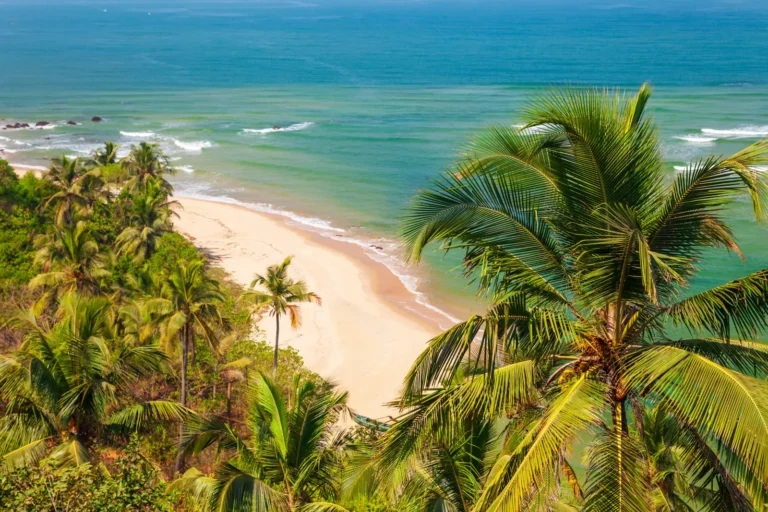
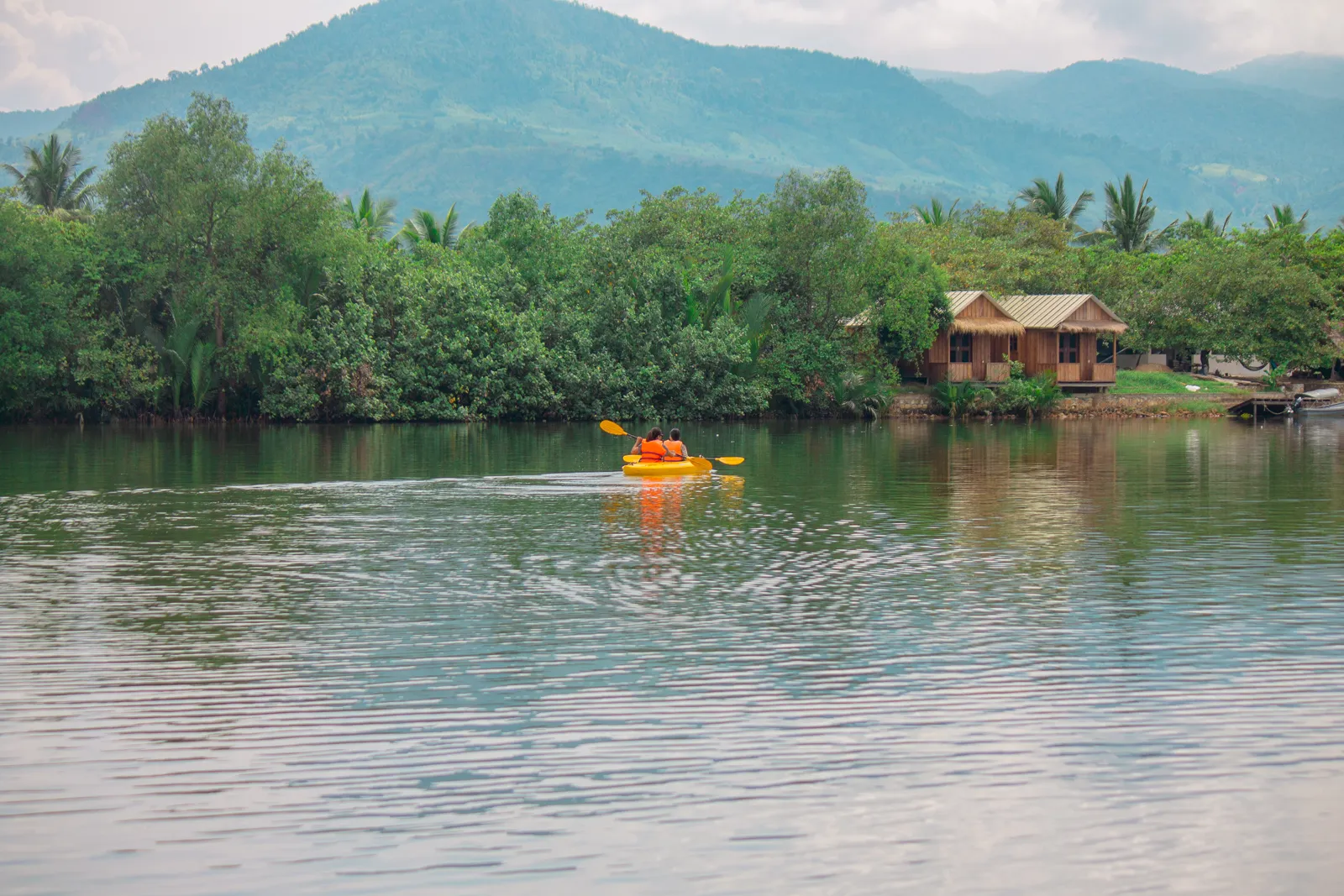
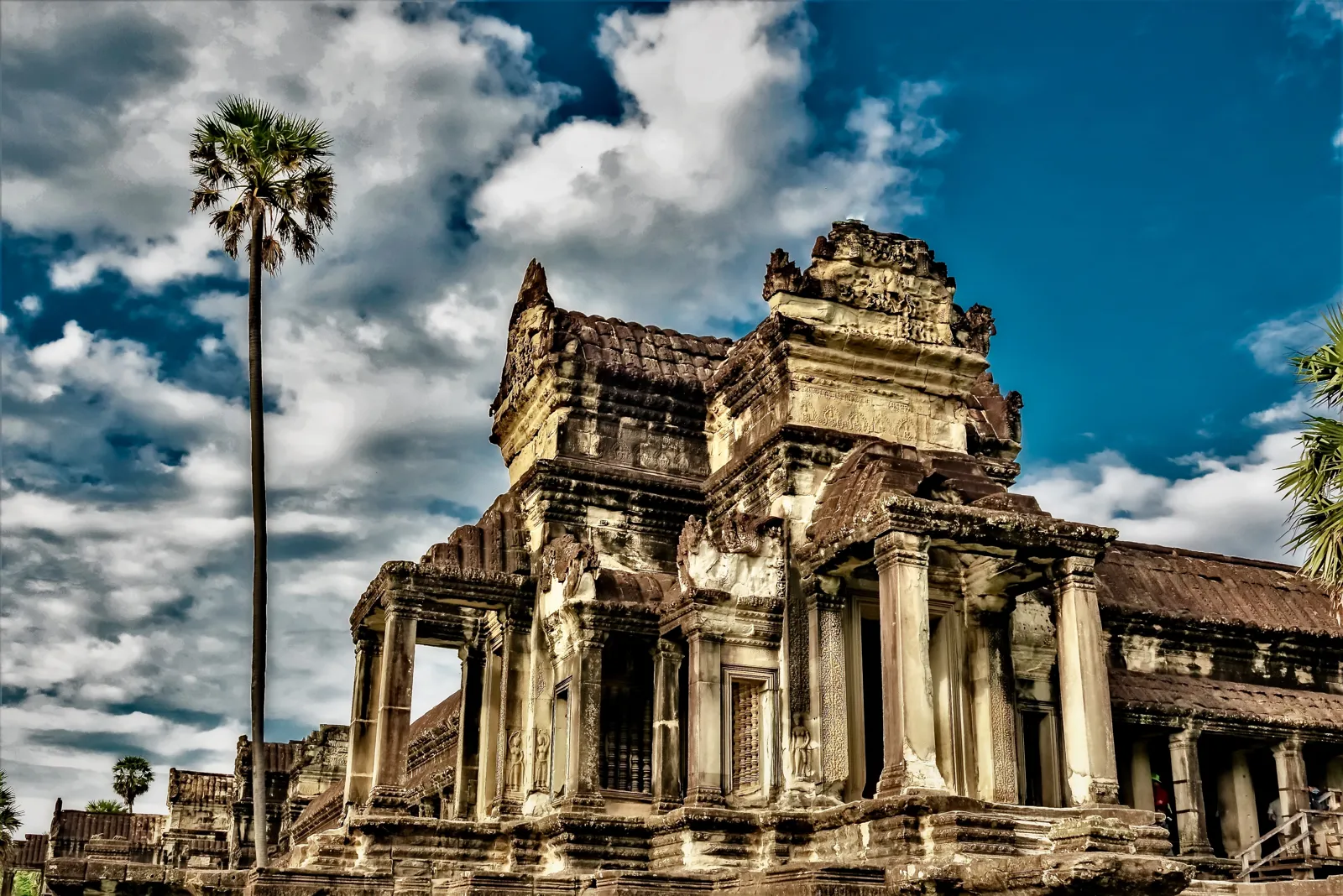
The best time to visit Cambodia is November to February: it is the start of the dry season, with often clear skies, almost no rain in Siem Reap in December–January and temperatures still bearable for visiting the temples of Angkor. March, April and May are very hot (close to 35 °C (95 °F) in the afternoon), then the monsoon brings the rainy season, from May–June to October, peaking in September.
⚠️ Safety: the UK FCDO advises against all but essential travel to within 20 km (12 mi) of the land border with Thailand (GOV.UK, updated 19 March 2026). Heavy fighting took place along parts of the border in 2025; a ceasefire was signed on December 27, but the situation remains tense. Land borders and crossings between Cambodia and Thailand continue to be suspended, some tourist sites in border areas (such as Preah Vihear) are closed, and unexploded ordnance, including landmines, remains in the border area. Phnom Penh, Siem Reap and Angkor, Kampot, Kep and Sihanoukville are far from this zone. Check the latest advice before you travel. Our guide to visiting Kampot presents the town and its surroundings.
To decide when to go to Cambodia, remember that it is hot all year: the choice comes down to rain, the pre-monsoon heat and the level of Tonlé Sap lake. Here is how to choose, based on the official climate normals of Cambodia’s meteorological service, published by the World Meteorological Organization.

Our travel deals for Cambodia
Affiliate links: we earn a commission, at no extra cost to you.
 Learn the languageTargumiLearn a few words of Khmer before you go — 30% off via our link.See the course
- FlightsKiwi.comCompare flights and airline combinations to Cambodia.Compare flights
- eSIMAiraloData plan to install before you leave (eSIM-compatible phone).See plans



When to go to Cambodia at a glance
- Best time November to February (dry season and the least hot)
- For Angkor December to February, the driest months in Siem Reap (less than 10 mm (0.4 in) of rain a month)
- Hot season March to May, about 35 °C (95 °F) in the afternoon in Siem Reap and Phnom Penh
- Rainy season roughly May–June to October, peaking in September; GOV.UK notes monsoon storms from June to October that disrupt roads, and travel.state.gov notes serious flooding from June through November
- Beaches (Koh Rong, Kep, Kampot) December to March; avoid June to September in Sihanoukville, with more than 480 mm (18.9 in) of rain a month
- Best value June to August (green season, outside the rain peak)
- Major festivals Khmer New Year (mid-April), Pchum Ben (September or October), Water Festival (October or November)
When to go to Cambodia by priority
- Best weather: November to February, with an optimum in December–January
- Cheapest: May, June, September and October, in the rainy season
- Fewest crowds: May, June, September and October; in the dry season, November and February are a little less crowded than December–January
- Events: Khmer New Year in mid-April, Pchum Ben from October 10 to 12, 2026, Water Festival (Bon Om Touk) from November 23 to 25, 2026
Cambodia: the calendar at a glance
✅ Best months: January, February, November, December
❌ Period to avoid: September
Climate in Cambodia month by month
The table below gives the normals for Siem Reap, the gateway to the temples of Angkor and a stop on almost every trip. Phnom Penh and the rest of the central plain have a very similar climate. The coast is detailed further down. Siem Reap, Phnom Penh and the coast are easy to find on our map of Cambodia.
| Month | Avg. max | Avg. min | Rain | Crowds | Prices | Verdict |
|---|---|---|---|---|---|---|
| January | 30.9 °C (88 °F) | 20.0 °C (68 °F) | 4 mm (0.2 in) | High | High | ✅ Dry, cool mornings: the ideal month for Angkor |
| February | 32.3 °C (90 °F) | 21.3 °C (70 °F) | 4 mm (0.2 in) | High (Chinese New Year) | High | ✅ Dry and sunny |
| March | 34.6 °C (94 °F) | 22.6 °C (73 °F) | 41 mm (1.6 in) | Moderate | Moderate | ⚠️ Rising heat, visit temples early |
| April | 34.8 °C (95 °F) | 23.9 °C (75 °F) | 48 mm (1.9 in) | Moderate (Khmer New Year) | Moderate | ⚠️ Very hot, first thunderstorms |
| May | 35.3 °C (96 °F) | 24.6 °C (76 °F) | 143 mm (5.6 in) | Low | Low | ⚠️ The hottest month, rains arrive |
| June | 32.7 °C (91 °F) | 25.1 °C (77 °F) | 195 mm (7.7 in) | Low | Low | ⚠️ Green season, frequent showers |
| July | 32.8 °C (91 °F) | 23.7 °C (75 °F) | 170 mm (6.7 in) | Moderate (summer holidays) | Moderate | ⚠️ Rainy, very green landscapes |
| August | 31.8 °C (89 °F) | 24.8 °C (77 °F) | 170 mm (6.7 in) | Moderate (summer holidays) | Moderate | ⚠️ Rainy, prices still gentle |
| September | 31.9 °C (89 °F) | 24.6 °C (76 °F) | 305 mm (12.0 in) | Low | Low | ❌ The wettest month, flooded roads possible |
| October | 31.3 °C (88 °F) | 22.4 °C (72 °F) | 227 mm (8.9 in) | Low | Low | ⚠️ Still very wet, clearing late in the month |
| November | 31.6 °C (89 °F) | 22.3 °C (72 °F) | 62 mm (2.4 in) | High | High | ✅ Dry season returns, Tonlé Sap at its highest |
| December | 30.7 °C (87 °F) | 20.3 °C (69 °F) | 7 mm (0.3 in) | Very high (holidays) | Very high | ✅ Dry and the least hot |
Worth noting: even in the rainy season, it rarely rains all day. Rain falls mostly as violent but fairly short thunderstorms, often in the afternoon or evening. The real nuisances are muddy dirt roads, flash floods and flooded streets, especially in September and October.
Cambodia’s seasons: pros and cons
The country has two main seasons, driven by the monsoon: a dry season, from about November to April, which divides into a « cool » period (November to February) and a hot period (March to May), then a rainy season, linked to the southwest monsoon, from about May–June to October. Exact dates vary from year to year.
Dry and « cool » season (November to February): the high season
The most comfortable period: in Siem Reap, 4 mm (0.2 in) of rain in January and February, 7 mm (0.3 in) in December. Highs stay around 31 to 32 °C (88 to 90 °F) and nights fall to about 20 °C (68 °F).
- Pros: clear skies, comfortable temple visits in the morning, passable roads everywhere, calm sea on the coast
- Cons: maximum crowds at Angkor, especially at sunrise; hotel prices at their highest from mid-December to mid-January and during Chinese New Year
Hot season (March to May): sun and crushing heat
In Siem Reap, the average high reaches 34.6 °C (94 °F) in March, 34.8 °C (95 °F) in April and 35.3 °C (96 °F) in May, with growing humidity. The first thunderstorms arrive in April, the month of Khmer New Year.
- Pros: fewer people than in winter, still little rain in March, often beautiful sea on the coast until April
- Cons: heat that makes afternoon temple-walking hard; Tonlé Sap is at its lowest, which changes boat excursions
- Who is it for? Travelers who handle heat well and schedule visits early in the morning and late in the day
Rainy season (May–June to October): the green season
The monsoon brings regular rain. In Siem Reap it exceeds 140 mm (5.5 in) a month from May and peaks in September (305 mm (12.0 in)). GOV.UK notes that heavy storms during the monsoon season from June to October disrupt and damage the road network, with landslides restricting travel to some provinces and flooded roads in Phnom Penh, and travel.state.gov notes serious flooding throughout Cambodia from June through November.
- Pros: intensely green rice paddies, Angkor’s moats and basins full, far fewer tourists, much lower prices
- Cons: muddy tracks to remote temples and in the northeast, rough seas and sometimes disrupted boat links on the coast, mosquitoes
- Who is it for? Budget travelers, photographers and flexible travelers, particularly from June to August, before the September peak
When to go to Cambodia by region
The interior (Siem Reap, Phnom Penh, Battambang) broadly follows the same rhythm. The Gulf of Thailand coast is much wetter during the monsoon, especially around Sihanoukville, while Kep is much less exposed. Comparison of the normals for four towns:
| Month | Phnom Penh | Siem Reap (Angkor) | Sihanoukville | Kep |
|---|---|---|---|---|
| January | 31.2 °C (88 °F) / 20 mm (0.8 in) | 30.9 °C (88 °F) / 4 mm (0.2 in) | 31.0 °C (88 °F) / 27 mm (1.1 in) | 31.6 °C (89 °F) / 19 mm (0.7 in) |
| February | 32.7 °C (91 °F) / 3 mm (0.1 in) | 32.3 °C (90 °F) / 4 mm (0.2 in) | 31.3 °C (88 °F) / 31 mm (1.2 in) | 32.4 °C (90 °F) / 20 mm (0.8 in) |
| March | 34.5 °C (94 °F) / 63 mm (2.5 in) | 34.6 °C (94 °F) / 41 mm (1.6 in) | 31.0 °C (88 °F) / 76 mm (3.0 in) | 32.6 °C (91 °F) / 77 mm (3.0 in) |
| April | 34.9 °C (95 °F) / 54 mm (2.1 in) | 34.8 °C (95 °F) / 48 mm (1.9 in) | 32.4 °C (90 °F) / 145 mm (5.7 in) | 33.1 °C (92 °F) / 89 mm (3.5 in) |
| May | 34.3 °C (94 °F) / 117 mm (4.6 in) | 35.3 °C (96 °F) / 143 mm (5.6 in) | 32.6 °C (91 °F) / 293 mm (11.5 in) | 33.5 °C (92 °F) / 108 mm (4.3 in) |
| June | 33.1 °C (92 °F) / 138 mm (5.4 in) | 32.7 °C (91 °F) / 195 mm (7.7 in) | 31.2 °C (88 °F) / 509 mm (20.0 in) | 32.9 °C (91 °F) / 136 mm (5.4 in) |
| July | 32.4 °C (90 °F) / 149 mm (5.9 in) | 32.8 °C (91 °F) / 170 mm (6.7 in) | 30.8 °C (87 °F) / 562 mm (22.1 in) | 32.0 °C (90 °F) / 198 mm (7.8 in) |
| August | 32.2 °C (90 °F) / 153 mm (6.0 in) | 31.8 °C (89 °F) / 170 mm (6.7 in) | 30.5 °C (87 °F) / 617 mm (24.3 in) | 31.7 °C (89 °F) / 298 mm (11.7 in) |
| September | 31.7 °C (89 °F) / 253 mm (10.0 in) | 31.9 °C (89 °F) / 305 mm (12.0 in) | 30.3 °C (87 °F) / 487 mm (19.2 in) | 31.9 °C (89 °F) / 201 mm (7.9 in) |
| October | 30.8 °C (87 °F) / 242 mm (9.5 in) | 31.3 °C (88 °F) / 227 mm (8.9 in) | 30.7 °C (87 °F) / 310 mm (12.2 in) | 31.5 °C (89 °F) / 107 mm (4.2 in) |
| November | 30.4 °C (87 °F) / 94 mm (3.7 in) | 31.6 °C (89 °F) / 62 mm (2.4 in) | 30.6 °C (87 °F) / 118 mm (4.6 in) | 31.3 °C (88 °F) / 92 mm (3.6 in) |
| December | 30.2 °C (86 °F) / 29 mm (1.1 in) | 30.7 °C (87 °F) / 7 mm (0.3 in) | 30.4 °C (87 °F) / 41 mm (1.6 in) | 30.9 °C (88 °F) / 26 mm (1.0 in) |
Siem Reap and the temples of Angkor
The best window runs from November to February, with an optimum in December–January. From March to May, visit early in the morning and late in the afternoon. In the rainy season, the temples stay open and showers fall mostly in the afternoon: it is the quietest period at Ta Prohm or the Bayon. Our Angkor travel guide explains how to split the temples by season.
Phnom Penh and the center
The capital has a climate close to that of Siem Reap, slightly less dry in December–January. The most pleasant period runs from November to February. September and October, the wettest months (about 250 mm (9.8 in)), can cause street flooding during heavy storms.
Tonlé Sap lake: a landscape that changes with the seasons
During the monsoon, the rise of the Mekong makes the Tonlé Sap River reverse its flow, filling the lake: its surface area then multiplies several times. The lake peaks around November, then drains toward the Mekong until May. For the floating or stilt villages around Siem Reap, October to December offers the most spectacular landscapes. In April–May, the water is at its lowest and some boat trips are shortened. GOV.UK also notes that river levels are high from June to October, making currents faster and more dangerous.
The coast: Sihanoukville, Koh Rong, Kampot and Kep
This is the region where the choice of season matters most. Around Sihanoukville, the departure point for boats to Koh Rong and Koh Rong Samloem, rainfall exceeds 480 mm (18.9 in) every month from June to September, peaking at 617 mm (24.3 in) in August: rough seas, reduced visibility and sometimes canceled crossings. Aim for December to March, the driest months. Kep is much less wet (less than 300 mm (11.8 in) even in August), and Kampot lies in between.
The northeast (Kratie, Mondulkiri, Ratanakiri)
To watch Irrawaddy dolphins in the Mekong at Kratie or to hike in the hills of Mondulkiri and Ratanakiri, the dry season (November to April) is the most practical: in the rainy season, many red-earth tracks become difficult. GOV.UK lists malaria and dengue among the health risks in Cambodia, and travel.state.gov calls malaria and dengue serious health concerns: speak to your doctor if you plan to trek.
Which region of Cambodia by month?
This table summarizes the best period for each main region, based on the MOWRAM normals and the detailed advice above.
| Region | Jan | Feb | Mar | Apr | May | Jun | Jul | Aug | Sep | Oct | Nov | Dec |
|---|---|---|---|---|---|---|---|---|---|---|---|---|
| Siem Reap and Angkor | ✅ | ✅ | ⚠️ | ⚠️ | ⚠️ | ⚠️ | ⚠️ | ⚠️ | ❌ | ⚠️ | ✅ | ✅ |
| Phnom Penh and the center | ✅ | ✅ | ⚠️ | ⚠️ | ⚠️ | ⚠️ | ⚠️ | ⚠️ | ❌ | ⚠️ | ✅ | ✅ |
| Sihanoukville and Koh Rong | ✅ | ✅ | ✅ | ⚠️ | ❌ | ❌ | ❌ | ❌ | ❌ | ❌ | ⚠️ | ✅ |
| Kep and Kampot | ✅ | ✅ | ✅ | ⚠️ | ⚠️ | ⚠️ | ⚠️ | ⚠️ | ⚠️ | ⚠️ | ✅ | ✅ |
| Northeast (Kratie, Mondulkiri) | ✅ | ✅ | ✅ | ✅ | ⚠️ | ⚠️ | ⚠️ | ⚠️ | ⚠️ | ⚠️ | ✅ | ✅ |
To split your temple visits, see our Angkor travel guide.
When to go to Cambodia by trip type
| Your trip | Best time | Where? |
|---|---|---|
| First trip (temples, capital, coast) | November to February | Siem Reap, Phnom Penh, Kampot or Kep |
| Angkor temples without the crowds | June to August | Siem Reap |
| Beach and islands | December to March | Koh Rong, Koh Rong Samloem, Kep |
| Tonlé Sap floating villages | October to December | Around Siem Reap |
| Dolphins and northeast nature | December to April | Kratie, Mondulkiri |
| Budget | May to October (preferably not September) | Whole country, except the coast |
| Traditional festivals | Mid-April, October–November | Phnom Penh, Siem Reap |
| Family trip | School holiday periods around Christmas, February and October | Siem Reap, Kampot, Kep |
| Combined with Vietnam or Thailand | December to March | Siem Reap, Phnom Penh, then Saigon or Bangkok |
Combining Cambodia with its neighbors
Southern Vietnam (Saigon, the Mekong Delta) has a similar dry season, from December to April: see our article when to go to Vietnam. For Thailand, the best time for Bangkok, the north and Phuket runs from November to February, as in Cambodia: details in when to go to Thailand. Because land borders and crossings between Cambodia and Thailand are suspended (GOV.UK, updated 19 March 2026), plan for a flight between the two countries and check the latest status before booking. For Laos, see when to go to Laos.
Major events to plan your trip around
| Period | Event | Location |
|---|---|---|
| Late January or February (lunar calendar) | Chinese New Year (heavy regional tourist traffic) | Phnom Penh, Siem Reap |
| Mid-April (April 14 to 16 in 2026) | Khmer New Year (Chaul Chnam Thmey): many Cambodians on leave, festive atmosphere, some shops closed | Nationwide |
| May (May 5 in 2026) | Royal Ploughing Ceremony, marking the start of the farming season | Phnom Penh |
| September or October (October 10 to 12 in 2026) | Pchum Ben, festival of the dead: offerings in pagodas, very busy transport | Nationwide |
| November 9 | Independence Day | Phnom Penh |
| October or November (November 23 to 25 in 2026) | Bon Om Touk, the Water Festival: boat races, celebration of the reversal of the Tonlé Sap flow | Phnom Penh, Siem Reap |
Cambodia month by month: what to expect
Cambodia in January: The reference month: dry, 31 °C (88 °F) in the afternoon, about 20 °C (68 °F) at night. Heavy crowds at Angkor. Very good on the coast too. See also our ideas for where to go in January.
Cambodia in February: Dry and sunny, with rising heat. Chinese New Year can push prices up. Excellent for the islands.
Cambodia in March: Close to 35 °C (95 °F) in Siem Reap and Phnom Penh, little rain. Visit the temples at dawn.
Cambodia in April: Very hot, first thunderstorms. Khmer New Year in mid-April enlivens the country but crowds transport.
Cambodia in May: The hottest month in Siem Reap (35.3 °C (96 °F)) and the arrival of the monsoon. Prices fall.
Cambodia in June: Green season: often short showers, flooded rice paddies, few tourists. The very wet months begin on the coast.
Cambodia in July: Rainy but workable inland (170 mm (6.7 in) in Siem Reap). A good compromise for Angkor in summer, not for the beach.
Cambodia in August: Like July inland. Monsoon peak on the coast: more than 600 mm (23.6 in) in Sihanoukville.
Cambodia in September: The wettest month in Siem Reap (305 mm (12.0 in)) and in Phnom Penh: risk of flooding and cut roads.
Cambodia in October: Still very wet, improving late in the month. A transition month, for flexible travelers.
Cambodia in November: Dry season returns, landscapes still green, lake at its highest and the Water Festival. See also our ideas for where to go in November.
Cambodia in December: Dry and the least hot month. Crowds and prices at their peak over the holidays. See also our ideas for where to go in December.
When to book your trip to Cambodia
For the high season, and in particular for the period from Christmas to New Year, book flights 3 to 5 months ahead and Siem Reap hotels as soon as your dates are fixed. The same logic applies around Chinese New Year. In the rainy season, 1 to 2 months is generally enough. Before you leave, you can pick up some basic Khmer with Targumi’s online lessons, with 30% off via our link.
Planning your trip to Cambodia
- Entry requirements: visa and passport rules depend on your nationality: see the entry requirements for Cambodia.
- Time difference: Cambodia is on UTC+7 all year: 7 hours ahead of London in winter and 6 in summer; 12 hours ahead of New York in winter and 11 in summer (details).
- Currency: the riel (KHR), but according to the U.S. State Department (travel.state.gov, last updated June 4, 2026) the U.S. dollar is widely used, especially for larger transactions, and ripped, torn or stained dollar bills are not accepted. Use our currency converter to estimate your budget.
- Health: GOV.UK (updated 19 March 2026) lists malaria, dengue and Zika virus among the health risks in Cambodia; check vaccination advice at least 8 weeks before you travel and protect yourself from mosquito bites.
- Insurance: GOV.UK advises having travel insurance that covers local treatment and unexpected medical evacuation.
To go further, see our complete Cambodia travel guide.
Frequently asked questions
What is the best month to visit Cambodia?
December and January are the most favorable months: almost no rain in Siem Reap, highs around 31 °C (88 °F) and nights around 20 °C (68 °F). November and February are also excellent choices, with slightly smaller crowds.
Can you visit Angkor during the rainy season?
Yes. The temples stay open and showers fall mostly in the afternoon. From June to August, the landscapes are green and attendance is low. September and October are the wettest months.
What is the cheapest time to go to Cambodia?
The rainy season, from May to October, outside peak holiday periods. Siem Reap hotels cut their rates noticeably, and the sites are far less crowded.
When should you go to Koh Rong?
From December to March, the driest months on the coast. From June to September, Sihanoukville receives more than 480 mm (18.9 in) of rain a month: the sea is often rough and crossings can be disrupted.
Is Cambodia safe right now?
The main tourist areas (Phnom Penh, Siem Reap, the coast) remain accessible with care. The UK FCDO advises against all but essential travel to within 20 km (12 mi) of the land border with Thailand (GOV.UK, updated 19 March 2026), and land crossings with Thailand are suspended. Check the latest advice.
When is the rainy season in Cambodia?
It runs roughly from May–June to October, with the southwest monsoon. In Siem Reap, more than 140 mm (5.5 in) a month falls from May and 305 mm (12.0 in) in September, the wettest month. On the coast, Sihanoukville exceeds 480 mm (18.9 in) a month from June to September. Rain falls mostly as short thunderstorms, in the afternoon or evening.
Can you go to Cambodia in July or August?
Yes, for the interior: in Siem Reap, July and August get about 170 mm (6.7 in) of rain, in often short showers, with highs around 32 °C (90 °F), very green landscapes and gentler prices. It is, however, the monsoon peak on the coast (more than 600 mm (23.6 in) in Sihanoukville in August): avoid the islands.
What is the weather like in Cambodia in November?
November marks the return of the dry season: 62 mm (2.4 in) of rain in Siem Reap, about 32 °C (90 °F) in the afternoon and 22 °C (72 °F) at night. Landscapes are still green, Tonlé Sap lake is at its highest and the Water Festival falls in October or November. For the islands, prefer December to March.
Our sources
- Cambodia’s Ministry of Water Resources and Meteorology (MOWRAM), via the World Meteorological Organization’s World Weather Information Service: 1982–2024 normals for the Siem Reap, Phnom Penh (Pochentong), Preah Sihanouk and Kep stations
- Safety, health and practical information read on 26 October 2026: UK FCDO, foreign travel advice for Cambodia (GOV.UK, updated 19 March 2026), and U.S. Department of State, Cambodia country information (travel.state.gov, last updated June 4, 2026)
- Royal Government of Cambodia, Sub-Decree No. 167 of September 18, 2025 setting the 2026 public holidays (summary published by Andersen Cambodia)
- Mekong River Commission: hydrological data on the Tonlé Sap reversal (as reported in the encyclopedia article « Tonlé Sap »)
- Our methodology
Updated November 2026.