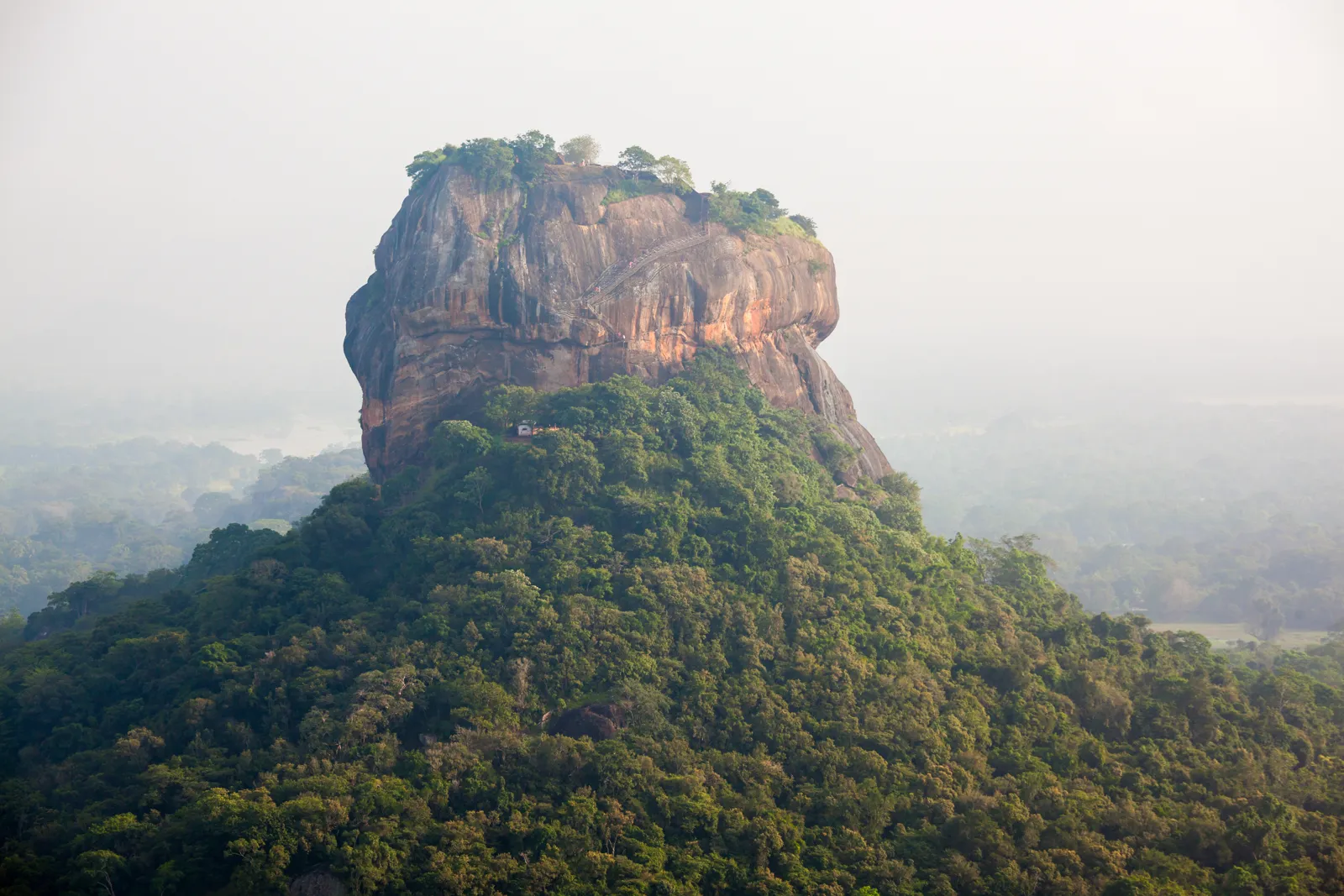
When is the best time to visit Sri Lanka? There is not one good season but two: December to March for the southwest coast (Colombo, Galle, Mirissa) and the hill country, and April to September for the east coast (Trincomalee, Arugam Bay) and the north. The island receives two staggered monsoons: the southwest monsoon from May to September, then the northeast monsoon, from October–November to February. The right choice therefore depends first on the coast you are aiming for. To tell the two coasts apart, use the map of Sri Lanka.
With a little planning, the weather is fine somewhere on the island almost all year. The trickiest months are October and November, a transition period between the two monsoons, when it rains heavily over a large part of the country. Here is how to choose, based on the official 1991–2020 climate normals published by the World Meteorological Organization.

Our travel deals for Sri Lanka
Affiliate links: we earn a commission, at no extra cost to you.
 FlightsKiwi.comCompare flights and airline combinations to Sri Lanka.Compare flights
- eSIMAiraloData plan to install before you leave (eSIM-compatible phone).See plans


When to go to Sri Lanka at a glance
- South and west coast (Colombo, Galle, Mirissa) December to March
- East coast (Trincomalee, Pasikudah, Arugam Bay) April to September
- Cultural Triangle (Sigiriya, Anuradhapura, Polonnaruwa) January to March, and June to September (dry but very hot)
- Hill country (Kandy, Nuwara Eliya, Ella) January to March; cool all year
- Wettest months October and November across most of the island
- Best compromise for a full tour February–March
When to go to Sri Lanka by priority
- Best weather: February for a full tour; December to March for the southwest coast and the hill country, April to September for the east coast
- Cheapest: May–June and September to November, outside the southwest coast’s high season; the year-end holidays are the most expensive period
- Fewest crowds: May, June and September, with favorable weather on the east coast
- Events: Sinhala and Tamil New Year in mid-April, Vesak usually at the May full moon, Esala Perahera in Kandy in July or August depending on the lunar calendar
Sri Lanka: the calendar at a glance
✅ Best months: January, February, March, December
❌ Period to avoid: may, October, November
Climate in Sri Lanka month by month
The table below gives the normals for Colombo, the arrival point for international flights and representative of the southwest coast, the most visited. The east coast, the north and the mountains, which follow a different rhythm, are detailed further down.
| Month | Avg. high | Avg. low | Rain | Crowds | Prices | Verdict |
|---|---|---|---|---|---|---|
| January | 31.4 °C (89 °F) | 23.1 °C (74 °F) | 80 mm (3.1 in) | High | High | ✅ Dry and sunny |
| February | 31.6 °C (89 °F) | 23.6 °C (74 °F) | 77 mm (3.0 in) | High | High | ✅ The driest month |
| March | 32.0 °C (90 °F) | 24.8 °C (77 °F) | 103 mm (4.1 in) | Moderate | Moderate | ✅ Still fine, heat rising |
| April | 32.0 °C (90 °F) | 25.3 °C (78 °F) | 249 mm (9.8 in) | Moderate (local New Year) | Moderate | ⚠️ Late-day thunderstorms, transition |
| May | 31.5 °C (89 °F) | 26.2 °C (79 °F) | 314 mm (12.4 in) | Low | Low | ❌ Southwest monsoon arrives |
| June | 30.7 °C (87 °F) | 26.1 °C (79 °F) | 197 mm (7.8 in) | Low | Low | ⚠️ Monsoon, rough sea |
| July | 30.3 °C (87 °F) | 25.9 °C (79 °F) | 123 mm (4.8 in) | Moderate | Moderate | ⚠️ Moderate rain, sea still strong |
| August | 30.3 °C (87 °F) | 25.9 °C (79 °F) | 116 mm (4.6 in) | Moderate | Moderate | ⚠️ Moderate rain, sea still strong |
| September | 30.4 °C (87 °F) | 25.4 °C (78 °F) | 264 mm (10.4 in) | Low | Low | ⚠️ Rain increasing |
| October | 30.4 °C (87 °F) | 24.7 °C (76 °F) | 359 mm (14.1 in) | Low | Low | ❌ The wettest month |
| November | 30.6 °C (87 °F) | 23.9 °C (75 °F) | 346 mm (13.6 in) | Low | Low | ❌ Very rainy |
| December | 30.9 °C (88 °F) | 23.5 °C (74 °F) | 171 mm (6.7 in) | High (holidays) | Very high | ✅ Good weather returns, especially late in the month |
Note: temperatures vary very little through the year on the coasts (30 to 32 °C (86 to 90 °F) in the afternoon). It is the rain, the state of the sea and the humidity that make the difference. Even in the monsoon, showers often alternate with sunny spells.
The seasons in Sri Lanka: pros and cons
Rather than summer and winter, Sri Lanka has monsoons. The southwest monsoon (Yala), from about May to September, mainly waters the west, the south and the western slopes of the mountains. The northeast monsoon (Maha), from about November to February, mainly affects the north and the east. Between the two, two transition periods (March–April and October–November) bring thunderstorms almost everywhere.
December to March: the southwest’s high season
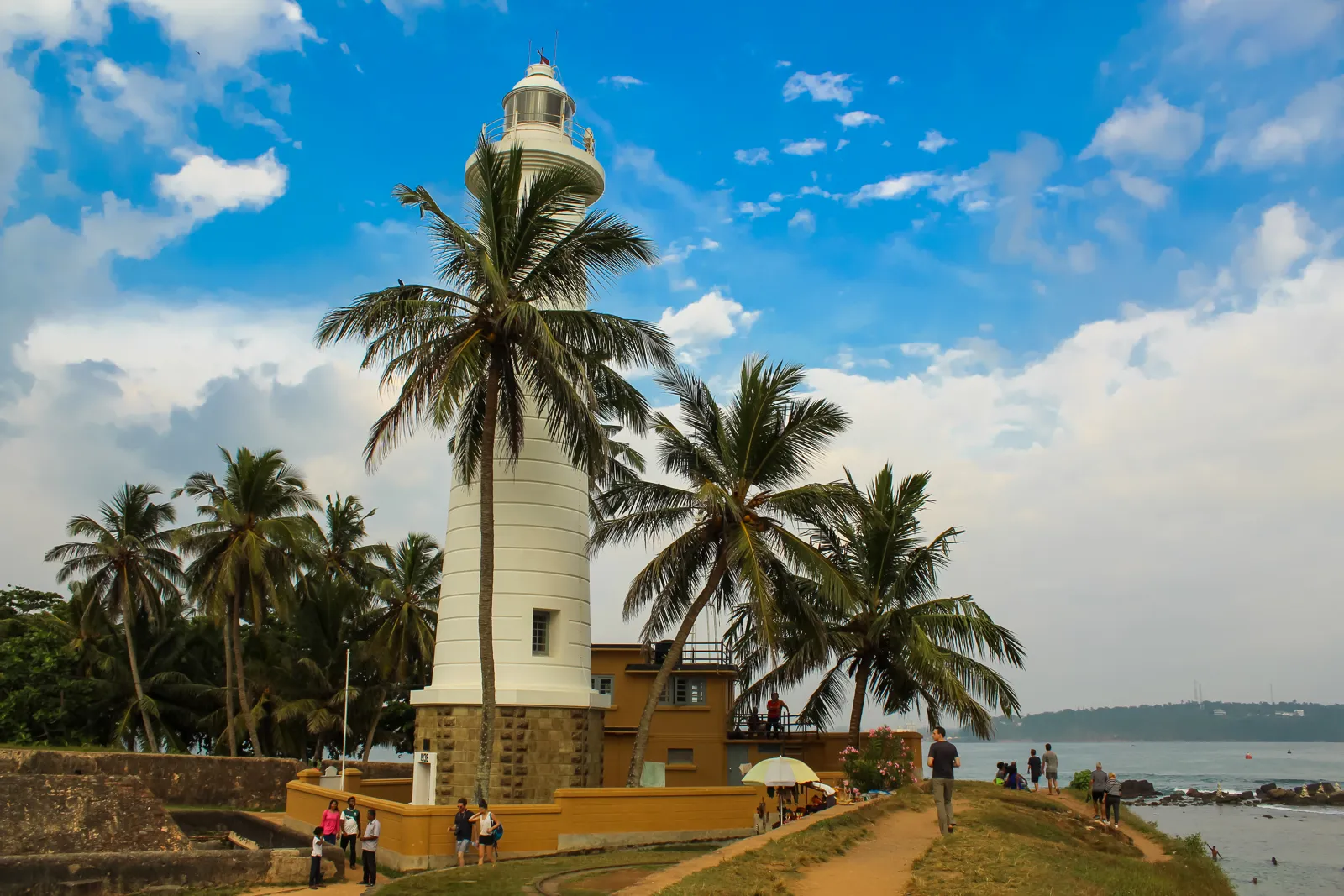
This is the most popular period. In Colombo, less than 80 mm (3.1 in) of rain falls per month in January and February, and the sea is calm on the southern beaches (Unawatuna, Mirissa, Tangalle). The hill country is clear, with cool nights: around 10 °C (50 °F) at night in Nuwara Eliya in January–February.
- Pros: calm sea on the south and west coasts, clear skies in the mountains and the Cultural Triangle, ideal conditions for a first tour
- Cons: highest prices, especially from mid-December to early January; crowds at famous sites such as Sigiriya
- Watch out: the east coast and the north are then in the middle of the northeast monsoon (especially December and January)
- Our tip: February and March combine good weather over much of the island with slightly lighter crowds than in December–January
May to September: the east coast’s season
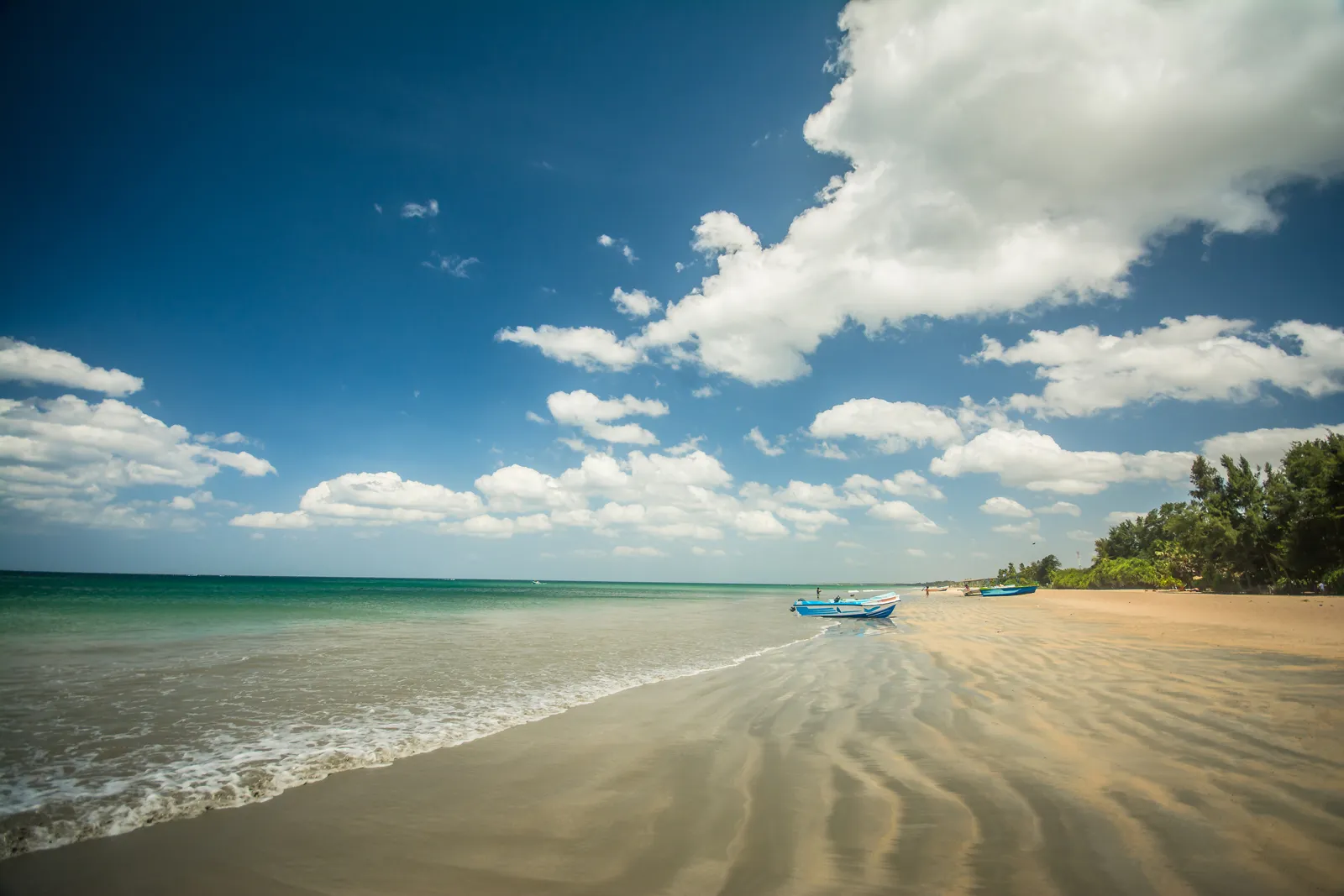
When the southwest monsoon reaches Colombo and Galle, the east and north turn dry: in Trincomalee, less than 70 mm (2.8 in) falls per month from March to August, and only 26 mm (1.0 in) in June. It is, however, very hot there, with average highs above 35 °C (95 °F) from May to August.
- Pros: east beaches at their best (Trincomalee, Nilaveli, Pasikudah), surf season at Arugam Bay, dry Cultural Triangle, lower prices on the southwest coast
- Cons: strong sea on the west and south coasts, frequent rain on the western side of the mountains, intense heat in the north and east
- Who is it for? July–August travelers, who can combine the Cultural Triangle, the mountains and the east coast
October–November and April: the transitions
These are the most uncertain months. In October–November, rainfall is heavy almost everywhere: more than 340 mm (13.4 in) per month in Colombo and Galle, more than 370 mm (14.6 in) in November in Trincomalee and Jaffna. April also has afternoon thunderstorms, especially in the southwest. Prices are low, but the risk of floods and landslides is real: the UK FCDO (GOV.UK, updated 21 September 2026) notes that heavy rainfall during the inter-monsoon season has increased the risk of flooding and landslides across Sri Lanka, with possible disruption to transport, and that there is a risk of tropical cyclones.
- Pros: low rates, very green landscapes, fewer visitors
- Cons: rainy days, mountain roads sometimes cut off, rough sea
- Who is it for? Flexible travelers, ready to adapt their itinerary to the weather
When to go to Sri Lanka by region
The big difference is between the west and the east of the island, separated by the central massif that blocks part of the rain of each monsoon. Here is a comparison of the normals for four towns:
| Month | Colombo (southwest) | Trincomalee (east) | Anuradhapura (Cultural Triangle) | Nuwara Eliya (hill country, 1,894 m (6,214 ft)) |
|---|---|---|---|---|
| January | 31.4 °C (89 °F) / 80 mm (3.1 in) | 28.9 °C (84 °F) / 152 mm (6.0 in) | 30.4 °C (87 °F) / 86 mm (3.4 in) | 19.9 °C (68 °F) / 116 mm (4.6 in) |
| February | 31.6 °C (89 °F) / 77 mm (3.0 in) | 30.1 °C (86 °F) / 96 mm (3.8 in) | 32.2 °C (90 °F) / 60 mm (2.4 in) | 21.0 °C (70 °F) / 73 mm (2.9 in) |
| March | 32.0 °C (90 °F) / 103 mm (4.1 in) | 31.7 °C (89 °F) / 72 mm (2.8 in) | 34.8 °C (95 °F) / 62 mm (2.4 in) | 22.3 °C (72 °F) / 72 mm (2.8 in) |
| April | 32.0 °C (90 °F) / 249 mm (9.8 in) | 33.4 °C (92 °F) / 55 mm (2.2 in) | 34.7 °C (94 °F) / 180 mm (7.1 in) | 22.5 °C (73 °F) / 134 mm (5.3 in) |
| May | 31.5 °C (89 °F) / 314 mm (12.4 in) | 35.2 °C (95 °F) / 48 mm (1.9 in) | 33.7 °C (93 °F) / 94 mm (3.7 in) | 21.5 °C (71 °F) / 172 mm (6.8 in) |
| June | 30.7 °C (87 °F) / 197 mm (7.8 in) | 35.4 °C (96 °F) / 26 mm (1.0 in) | 33.2 °C (92 °F) / 15 mm (0.59 in) | 19.2 °C (67 °F) / 168 mm (6.6 in) |
| July | 30.3 °C (87 °F) / 123 mm (4.8 in) | 35.3 °C (96 °F) / 51 mm (2.0 in) | 33.5 °C (92 °F) / 24 mm (0.94 in) | 18.6 °C (65 °F) / 155 mm (6.1 in) |
| August | 30.3 °C (87 °F) / 116 mm (4.6 in) | 35.3 °C (96 °F) / 67 mm (2.6 in) | 33.8 °C (93 °F) / 43 mm (1.7 in) | 19.0 °C (66 °F) / 132 mm (5.2 in) |
| September | 30.4 °C (87 °F) / 264 mm (10.4 in) | 34.8 °C (95 °F) / 113 mm (4.4 in) | 33.9 °C (93 °F) / 67 mm (2.6 in) | 19.5 °C (67 °F) / 161 mm (6.3 in) |
| October | 30.4 °C (87 °F) / 359 mm (14.1 in) | 32.4 °C (90 °F) / 216 mm (8.5 in) | 32.5 °C (91 °F) / 259 mm (10.2 in) | 19.7 °C (67 °F) / 247 mm (9.7 in) |
| November | 30.6 °C (87 °F) / 346 mm (13.6 in) | 29.8 °C (86 °F) / 376 mm (14.8 in) | 30.8 °C (87 °F) / 281 mm (11.1 in) | 19.8 °C (68 °F) / 226 mm (8.9 in) |
| December | 30.9 °C (88 °F) / 171 mm (6.7 in) | 28.8 °C (84 °F) / 339 mm (13.3 in) | 29.8 °C (86 °F) / 225 mm (8.9 in) | 19.4 °C (67 °F) / 183 mm (7.2 in) |
Colombo and the south coast (Galle, Unawatuna, Mirissa, Tangalle)
The ideal season runs from December to March. In Galle, rainfall exceeds 200 mm (7.9 in) per month in April–May and again from September to November (344 mm (13.5 in) in October). From May to September, the sea is often strong on these beaches. The far southeast, toward Hambantota and Yala park, is drier: less than 100 mm (3.9 in) per month for most of the year, with a peak in November (222 mm (8.7 in)).
The east coast (Trincomalee, Pasikudah, Batticaloa, Arugam Bay)
This is the key point to remember: the east coast has its favorable season when the west is under the monsoon. From April to September, the weather there is dry and the sea calm. From October to January, however, the rains are very heavy: 376 mm (14.8 in) in November at Trincomalee, and nearly 470 mm (18.5 in) in December at Batticaloa. January often stays wet (152 mm (6.0 in) at Trincomalee).
The north (Jaffna) and the Cultural Triangle (Anuradhapura, Sigiriya, Polonnaruwa)
Dry, hot plains. The best windows are January to March, and June to September if you can handle the heat (more than 33 °C (91 °F) in the afternoon at Anuradhapura). Jaffna is very dry from June to September (less than 85 mm (3.3 in) per month) but receives 437 mm (17.2 in) in November. Avoid October to December in this area.
The hill country (Kandy, Nuwara Eliya, Ella)
At altitude, it is cool all year: about 19 to 22 °C (66 to 72 °F) in the afternoon and 10 to 14 °C (50 to 57 °F) at night in Nuwara Eliya. It rains in every season, but January to March is the driest period (less than 75 mm (3.0 in) in February and March). From October to December, rainfall exceeds 180 mm (7.1 in) per month. Bring a sweater and a rain jacket whatever the season.
Which region by month?
The table summarizes, month by month, conditions in the island’s four main climate zones.
| Region | Jan | Feb | Mar | Apr | May | June | Jul | Aug | Sep | Oct | Nov | Dec |
|---|---|---|---|---|---|---|---|---|---|---|---|---|
| Southwest coast (Colombo, Galle, Mirissa) | ✅ | ✅ | ✅ | ⚠️ | ❌ | ⚠️ | ⚠️ | ⚠️ | ⚠️ | ❌ | ❌ | ✅ |
| East coast (Trincomalee, Arugam Bay) | ❌ | ⚠️ | ✅ | ✅ | ✅ | ✅ | ✅ | ✅ | ✅ | ❌ | ❌ | ❌ |
| Cultural Triangle and north (Sigiriya, Jaffna) | ✅ | ✅ | ✅ | ⚠️ | ⚠️ | ✅ | ✅ | ✅ | ✅ | ❌ | ❌ | ❌ |
| Hill country (Kandy, Ella, Nuwara Eliya) | ✅ | ✅ | ✅ | ⚠️ | ⚠️ | ⚠️ | ⚠️ | ⚠️ | ⚠️ | ❌ | ❌ | ⚠️ |
To plan your stops, see also our page on Kandy and our Sri Lanka travel guide.

When to go to Sri Lanka by trip type
| Trip | Best time | Where? |
|---|---|---|
| First full tour (sites, tea, beaches) | February – March | Cultural Triangle, Kandy, Ella, south coast |
| Beach in winter | December – March | Unawatuna, Mirissa, Tangalle, Bentota |
| Beach in summer (July–August) | May – September | Trincomalee, Nilaveli, Pasikudah |
| Surfing | May – September (east); November – April (south) | Arugam Bay; Weligama, Hiriketiya |
| Historic sites | January – March, June – September | Sigiriya, Dambulla, Polonnaruwa, Anuradhapura |
| Hiking and tea plantations | January – March | Ella, Nuwara Eliya, Haputale |
| Safari | Generally February – July (Yala may partly close in the dry season, check) | Yala, Udawalawe, Minneriya |
| Budget | May – June, September – November | Southwest coast, Kandy |
| Honeymoon | February – March, or July – August on the east side | Galle, Tangalle, Trincomalee |
Major events in Sri Lanka
| Date | Event | Location |
|---|---|---|
| Every month, full moon day | Poya: Buddhist holiday; alcohol is not usually available on religious holidays (UK FCDO, GOV.UK, updated 21 September 2026) | Nationwide |
| Mid-April | Sinhala and Tamil New Year (heavy transport demand) | Nationwide |
| May full moon (usually) | Vesak, major Buddhist festival (lanterns, illuminations) | Nationwide, especially Colombo |
| July or August (lunar calendar) | Esala Perahera (processions of elephants and dancers) | Kandy |
| Late December – early January | Year-end holidays (highest prices) | South and west coast |
Sri Lanka month by month: what to expect
Sri Lanka in January: Very good for the southwest coast, the Cultural Triangle and the mountains (cool nights). Still rainy on the east coast and in the north.
Sri Lanka in February: The best month for a full tour: the driest in Colombo, clear mountains, falling rain in the east.
Sri Lanka in March: Still fine almost everywhere, heat rising in the Cultural Triangle (nearly 35 °C (95 °F) at Anuradhapura). The east coast begins its good season.
Sri Lanka in April: Transition: afternoon thunderstorms in the southwest (249 mm (9.8 in) in Colombo). Local New Year in mid-April. A good start to the season in the east.
Sri Lanka in May: The southwest monsoon arrives: more than 300 mm (11.8 in) in Colombo and Galle, rough sea. Aim for the east coast and the north. Vesak usually at the full moon.
Sri Lanka in June: Very dry in the east and north (26 mm (1.0 in) at Trincomalee), but very hot. Rainy southwest coast, low prices.
Sri Lanka in July: A good time to combine the Cultural Triangle and the east coast. Sea still rough in the southwest. Esala Perahera possible in Kandy depending on the year.
Sri Lanka in August: Same situation as July. Crowds linked to the holidays on the east coast.
Sri Lanka in September: End of the season in the east, rain increasing in the west (264 mm (10.4 in) in Colombo). A quiet, inexpensive month.
Sri Lanka in October: The wettest month in Colombo (359 mm (14.1 in)); rain also spreads to the east and north. Best avoided if possible.
Sri Lanka in November: Heavy rain almost everywhere (346 mm (13.6 in) in Colombo, 437 mm (17.2 in) in Jaffna). Risk of floods and landslides.
Sri Lanka in December: Gradual return of good weather in the southwest, especially after mid-December. East coast in the middle of the monsoon. High prices during the holidays.
To compare with other Indian Ocean and Asian destinations: when to go to the Maldives, when to go to India and when to go to Thailand. To plan the tour, see our Sri Lanka travel guide.
When to book your trip to Sri Lanka
For the high season (December to March) and especially the year-end holidays, book your accommodation and transport 3 to 5 months ahead: boutique hotels in Galle and the tea plantations fill up quickly. If you plan to hire a driver for the whole tour, book one early too. In the low season, 1 to 2 months is generally enough.
Planning your trip to Sri Lanka
- Entry requirements: rules depend on your nationality and can change, so check the entry requirements for Sri Lanka before you book.
- Currency: the Sri Lankan rupee (LKR). Cards are accepted in hotels and large restaurants, but keep cash for tuk-tuks, markets and small shops. Our currency converter helps you estimate your budget.
- Health: the UK FCDO (GOV.UK, updated 21 September 2026) lists dengue and chikungunya among the health risks in Sri Lanka, and the U.S. State Department (travel.state.gov, last updated October 16, 2025) says dengue fever is widespread in the Western Province, where Colombo is located, and strongly advises mosquito protection. Check current vaccine advice with a doctor or travel clinic before you leave.
To go further, see our complete Sri Lanka travel guide. For another Indian Ocean destination with two staggered beach seasons, see also when to go to the Maldives.
Frequently asked questions
What is the best month to visit Sri Lanka?
February is the best compromise for a full tour: it is the driest month in Colombo, the mountains are clear and rain eases on the east coast. January and March are also very good choices for the southwest and the center.
Which coast should you choose by season?
From December to March, favor the south and west coast (Galle, Mirissa, Bentota). From April to September, the east coast (Trincomalee, Pasikudah, Arugam Bay) is the sunniest, while the southwest monsoon affects the other side of the island.
Can you visit Sri Lanka in July or August?
Yes. The southwest coast gets rain and the sea there is often strong, but the Cultural Triangle and the east coast are dry. A route of Sigiriya, Kandy, Ella and then Trincomalee or Arugam Bay works well in summer. For the Cultural Triangle’s top stop, see our guide to Sigiriya Rock.
When should you not go to Sri Lanka?
October and November are the wettest months across much of the island, with risks of flooding. Also avoid the east coast from November to January and the southwest coast in May.
What is the cheapest time to go to Sri Lanka?
May–June and September to November, outside the southwest coast’s high season. The year-end holidays are the most expensive period.
Is Sri Lanka cold?
Not on the coasts, where highs stay around 29 to 35 °C (84 to 95 °F) all year. In the mountains, however, nights are cool: about 10 °C (50 °F) in January–February at Nuwara Eliya, at nearly 1,900 m (6,234 ft).
When is the rainy season in Sri Lanka?
The island has two monsoons: the southwest one from May to September (west and south coast, mountains), then the northeast one from October–November to February (east coast and north). October and November, between the two, are the wettest months across much of the country.
Our sources
- Department of Meteorology of Sri Lanka, via the World Meteorological Organization 1991–2020 climate normals (NOAA archive): Colombo, Galle, Hambantota, Trincomalee, Batticaloa, Jaffna, Anuradhapura and Nuwara Eliya stations
- Weather, health and holiday information read on November 11, 2026: UK FCDO, foreign travel advice for Sri Lanka (GOV.UK, updated 21 September 2026), and U.S. Department of State, Sri Lanka country information (travel.state.gov, last updated October 16, 2025); festival timing checked on Sri Lanka Tourism
- Our methodology
Updated November 2026.