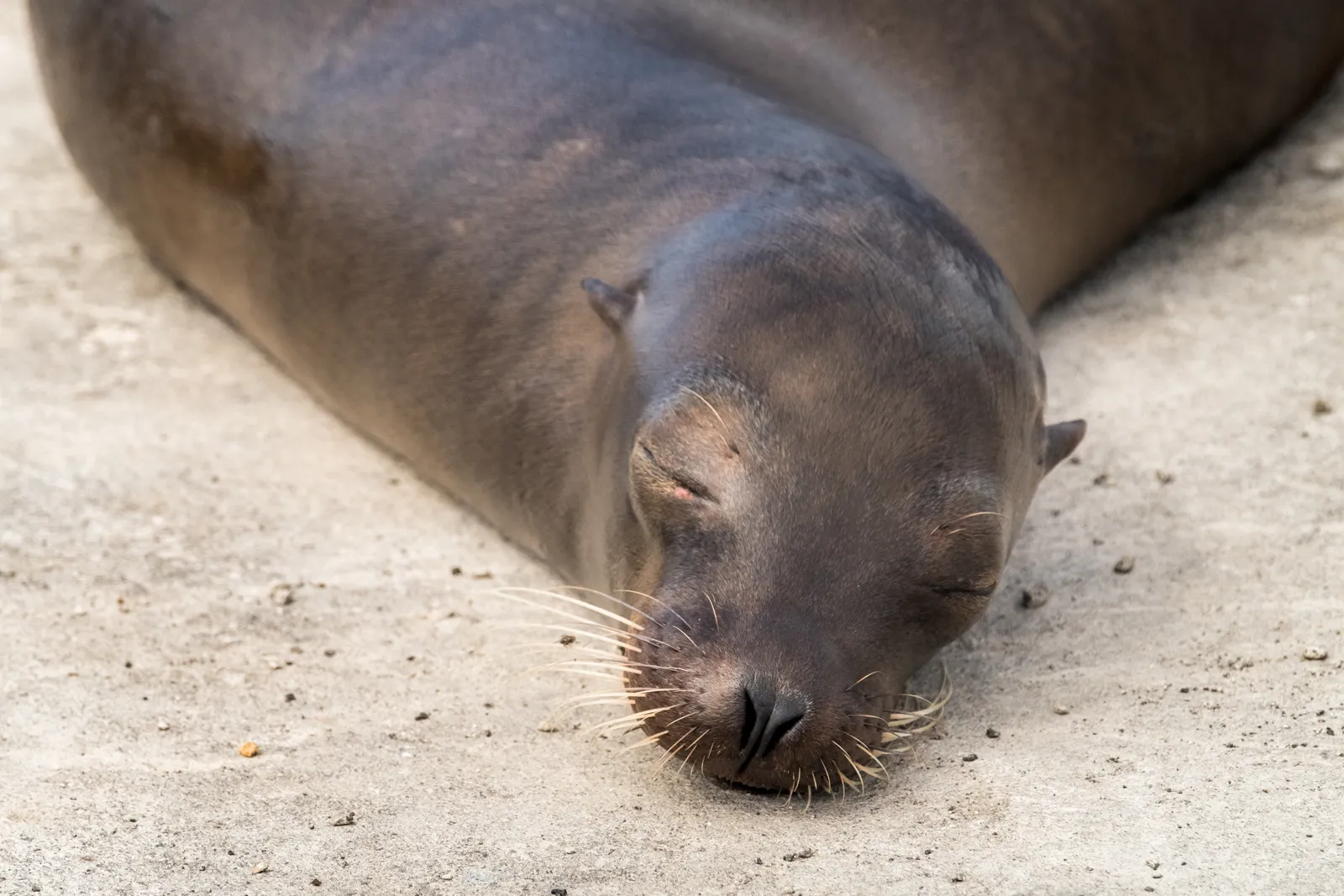
Yellowstone National Park lies mostly in Wyoming, with edges in Montana and Idaho. People come for hundreds of geysers and hot springs, a grand canyon with powerful waterfalls and free-roaming wildlife: bison, elk, wolves, bears. This guide to visiting Yellowstone explains how to get there, when the roads open, which fees to pay (including the surcharge for non-US residents), where to stay and which itinerary to follow.

Our travel deals for Yellowstone
Affiliate links: we earn a commission, at no extra cost to you.
 FlightsKiwi.comCompare flights and airline combinations to Yellowstone.Compare flights
- eSIMAiraloData plan to install before you leave (eSIM-compatible phone).See plans


Yellowstone at a glance
- Location northwestern Wyoming, with parts in Montana and IdahoFive entrances (North, Northeast, East, South, West)
- Airports Bozeman(Montana) and Jackson Hole (Wyoming) are the most used
- Entrance fee US$35 per private vehicle for 7 daysPlus a US$100 surcharge per non-US resident aged 16 and over (NPS fees checked 26 October 2026)
- Entry reservation not requiredLodging and campgrounds, however, are booked months ahead
- Season most roads are open from mid-April or May to late OctoberIn winter, only the North – Northeast road stays open to cars
- Time zone Mountain Time (UTC-7, UTC-6 in summer): 2 hours behind New York, 7 hours behind London · detailsLocal time now: –:–
- Entry US citizens: domestic travel; UK citizens: approved ESTA or US visa before departure · UK: GOV.UK
- Budget see our budget section
Yellowstone fees and reservations
No reservation is needed to enter the park, but you must buy an entrance pass. The National Park Service now charges a surcharge to visitors who are not US residents, which changes the sums considerably for international travelers, including those from the UK.
| Pass | Price | What it covers |
|---|---|---|
| Private vehicle | US$35 | One non-commercial vehicle with the driver and all passengers, 7 days |
| Motorcycle | US$30 | Up to 2 motorcycles and 4 passengers, 7 days |
| On foot or by bike (16 and over) | US$20 | One person; under-16s need no pass |
| Non-resident surcharge | US$100 per person aged 16 and over | On top of the standard pass for non-US residents; waived for holders of an Annual or America the Beautiful pass |
| America the Beautiful Non-Resident | US$250 | Annual pass for national parks and federal lands |
The sums for a couple of non-US residents (from the UK, for example): US$35 for the vehicle pass plus 2 × US$100 surcharge, or US$235 for Yellowstone alone. US residents pay only the US$35. If you are also visiting Grand Teton or other fee-charging national parks on the same trip, compare with the America the Beautiful Non-Resident annual pass (US$250), which waives the surcharge according to the NPS.
- Lodging in the park: nine lodges, all run by the official concessioner Yellowstone National Park Lodges. Book as early as possible.
- Campgrounds: 11 campgrounds and more than 2,000 sites. Five are booked through Yellowstone National Park Lodges (Bridge Bay, Canyon, Fishing Bridge RV Park, Grant Village, Madison), six on Recreation.gov (Indian Creek, Lewis Lake, Mammoth, Pebble Creek, Slough Creek, Tower Fall). Reservations open on a rolling basis six months before your stay. Pebble Creek remains closed until further notice for recovery work after the 2022 floods.
- Guided trips: wildlife watching, snowmobile or snowcoach in winter: use operators authorized by the park.
Getting to Yellowstone: access and roads
The park is explored by car. The main road, the Grand Loop, traces a figure eight linking the main sights. Allow far more time than the distance suggests: low speed limits, roadworks and animals on the road.
| Entrance | Nearby town | For |
|---|---|---|
| North | Gardiner, Montana; Bozeman airport | Mammoth Hot Springs; open all year |
| Northeast | Cooke City, Montana | Lamar Valley (wildlife); Beartooth Highway in summer |
| East | Cody, Wyoming | Yellowstone Lake, via Sylvan Pass |
| South | Jackson, Wyoming | Arriving from Grand Teton National Park |
| West | West Yellowstone, Montana | Quickest access to the geysers (Old Faithful, Grand Prismatic) |
Road opening dates in 2026
| Section | Open to vehicles |
|---|---|
| North Entrance – Northeast Entrance (via Tower Junction) | All year |
| West Entrance – Madison – Old Faithful; Madison – Norris; Mammoth – Norris – Canyon | April 17 – October 31 |
| East Entrance – Fishing Bridge (Sylvan Pass); Canyon – Bridge Bay | May 1 – October 31 |
| South Entrance – West Thumb – Old Faithful; West Thumb – Lake Village; Tower-Roosevelt – Tower Fall | May 8 – October 31 |
| Canyon – Tower Fall (Dunraven Pass) | May 22 – around October 12 |
| Beartooth Highway (US-212, outside the park) | May 22 – around October 12 |
In 2026, the NPS also reports construction with delays of up to 15 to 30 minutes on several bridges and parkwide chip sealing. Check the « Park Roads » page and the park alerts on the morning of your visit.
What to see in Yellowstone: the highlights
Old Faithful and the Upper Geyser Basin
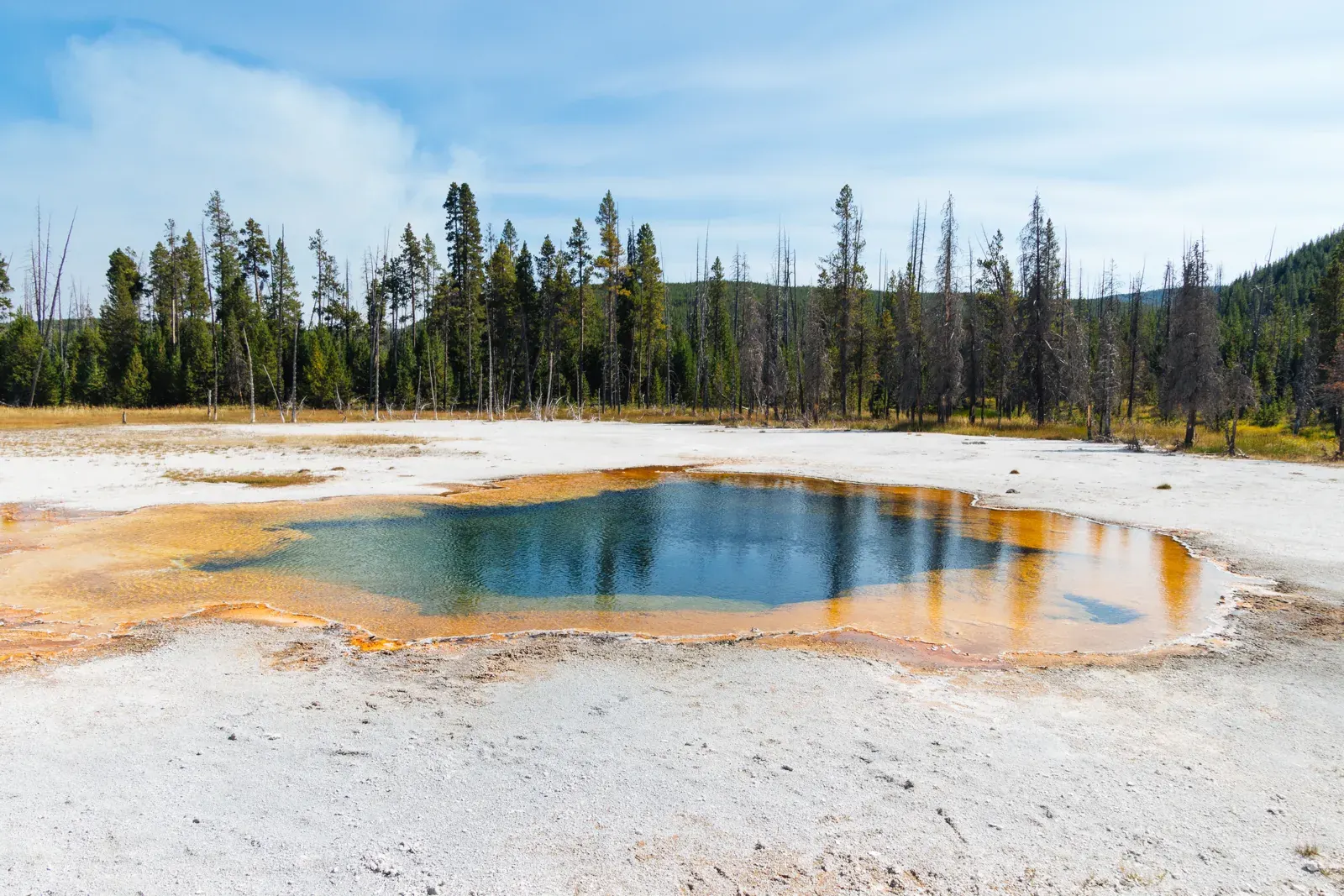
The park’s most famous geyser, with predicted eruption times posted at the Old Faithful visitor center. Around it, boardwalks wind through a vast group of geysers and colorful pools. Stay on the boardwalks: the ground is thin and the water scalding.
Grand Prismatic Spring (Midway Geyser Basin)
The park’s largest hot spring, with blue, orange and yellow rings. The Midway Geyser Basin boardwalks run alongside it; for the overview, take the overlook trail from the Fairy Falls parking area. The parking lot is full in the middle of the day: come early or late in the afternoon.
Grand Canyon of the Yellowstone
A canyon of yellow and ochre rock, with the Upper Falls and Lower Falls. The Artist Point (south rim) and Lookout Point (north rim) viewpoints are reached by car and then on foot, near Canyon Village.
Mammoth Hot Springs
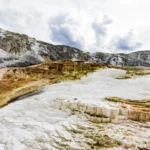
Travertine terraces formed by the hot springs, in the north of the park near the Gardiner entrance. Elk often wander through the village. It is one of the few areas reachable by car in winter.
Lamar and Hayden valleys
The two great wildlife-watching valleys: herds of bison, elk, sometimes wolves and bears, especially at dawn and dusk. Binoculars are almost essential. Lamar Valley remains accessible all year via the North – Northeast road.
Yellowstone Lake and West Thumb
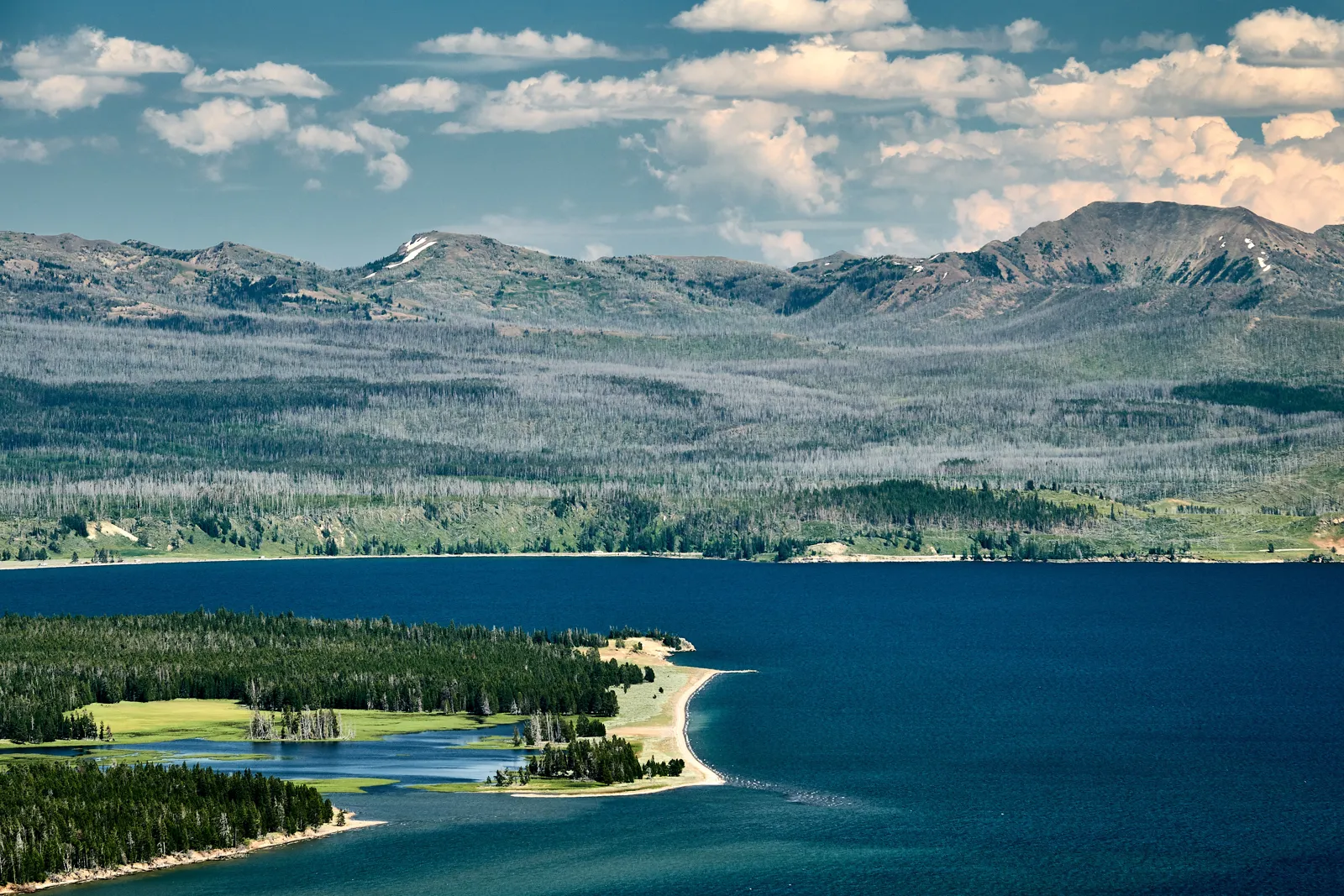
A large high-altitude lake ringed by mountains. On its western shore, West Thumb Geyser Basin lines up hot springs at the water’s edge. This area opens later in spring than the west of the park.
Norris Geyser Basin
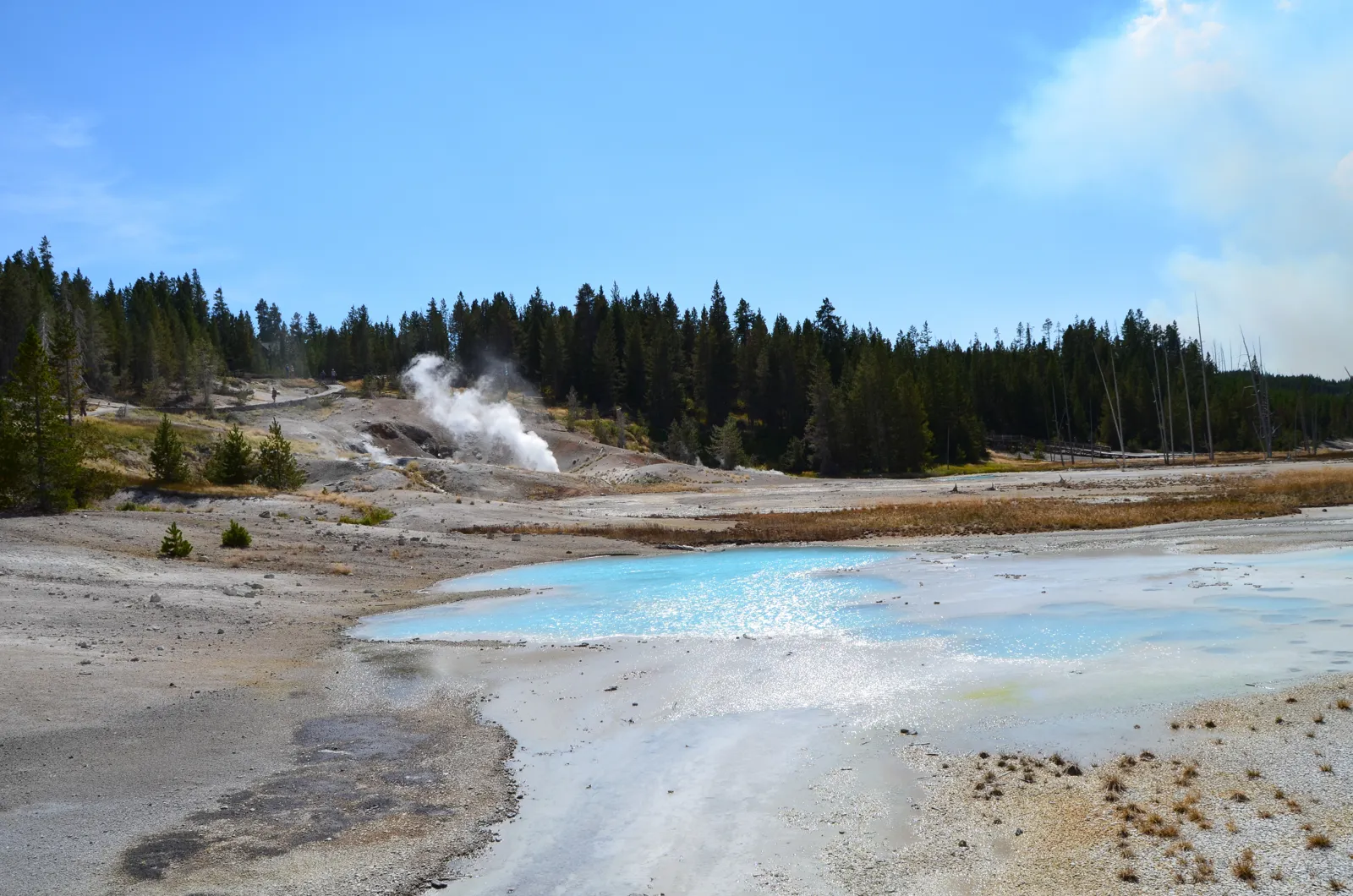
A very active geothermal basin, home to Steamboat Geyser. Two boardwalk loops take you around it in one to two hours.
Itinerary ideas for Yellowstone
3 days in Yellowstone
- Day 1: West Entrance, Grand Prismatic Spring, Old Faithful and the Upper Geyser Basin
- Day 2: Norris, Grand Canyon of the Yellowstone, Hayden Valley late in the day
- Day 3: Lamar Valley at dawn, Mammoth Hot Springs, exit via Gardiner
5 to 7 days: Yellowstone and Grand Teton
- Days 1-2: the western geysers (Old Faithful, Midway, Biscuit and Black Sand Basins)
- Day 3: Norris and Canyon
- Day 4: Lamar and Mammoth
- Day 5: Yellowstone Lake and West Thumb
- Days 6-7: exit south to Grand Teton National Park and Jackson
Change lodging once or twice to avoid long back-and-forth drives. For a wider road trip in the West, see our guides to the United States, Colorado and Las Vegas, and our tips for a multi-stop trip.
When to go to Yellowstone
The best time to visit Yellowstone is June to September, when all roads and most services are open. July and August are the warmest months but also the busiest. September offers the best balance: roads still open, fewer people and active wildlife. The park sits at high altitude: nights stay cool even in summer, and snow can fall in May as well as October.
| Month | High | Low | Precipitation | Crowds | Prices | Verdict |
|---|---|---|---|---|---|---|
| January | -0.3 °C (31 °F) | -11.2 °C (12 °F) | 23 mm (0.9 in) | Very low | Low | ❌ Winter: only the North – Northeast road is open |
| February | 1.2 °C (34 °F) | -10.9 °C (12 °F) | 20 mm (0.8 in) | Very low | Low | ❌ Winter, limited access (snowmobile, snowcoach) |
| March | 5.5 °C (42 °F) | -7.2 °C (19 °F) | 28 mm (1.1 in) | Very low | Low | ❌ Roads closed, very few services |
| April | 9.8 °C (50 °F) | -3.2 °C (26 °F) | 36 mm (1.4 in) | Low | Low | ⚠️ Partial road opening from April 17 |
| May | 15.3 °C (60 °F) | 1.4 °C (35 °F) | 46 mm (1.8 in) | Medium | Medium | ⚠️ Roads open, cool, snow possible |
| June | 20.8 °C (69 °F) | 5.6 °C (42 °F) | 47 mm (1.9 in) | High | High | ✅ Everything open, active wildlife |
| July | 27.1 °C (81 °F) | 9.1 °C (48 °F) | 32 mm (1.3 in) | Very high | Very high | ✅ Warmest, book early |
| August | 26.6 °C (80 °F) | 8.1 °C (47 °F) | 27 mm (1.1 in) | Very high | Very high | ✅ Warm, wildfire smoke possible |
| September | 20.4 °C (69 °F) | 3.9 °C (39 °F) | 31 mm (1.2 in) | High | High | ✅ Best balance, elk rut |
| October | 12.0 °C (54 °F) | -1.7 °C (29 °F) | 34 mm (1.3 in) | Medium | Medium | ⚠️ Cold, gradual closures, season ends October 31 |
| November | 4.1 °C (39 °F) | -7.1 °C (19 °F) | 29 mm (1.1 in) | Very low | Low | ❌ Roads closed except North – Northeast |
| December | -0.9 °C (30 °F) | -11.2 °C (12 °F) | 23 mm (0.9 in) | Low | Medium | ❌ Winter, limited access |
Mammoth, in the north, is one of the mildest parts of the park. Old Faithful, higher up, is colder: an average high of 24.4 °C (76 °F) in July but a low of 4.0 °C (39 °F), and an average January low of -17.2 °C (1 °F).
| Month | Mammoth (high / low) | Old Faithful (high / low) |
|---|---|---|
| January | -0.3 / -11.2 °C (31 / 12 °F) | -2.1 / -17.2 °C (28 / 1 °F) |
| April | 9.8 / -3.2 °C (50 / 26 °F) | 7.5 / -7.2 °C (46 / 19 °F) |
| May | 15.3 / 1.4 °C (60 / 35 °F) | 12.9 / -1.8 °C (55 / 29 °F) |
| June | 20.8 / 5.6 °C (69 / 42 °F) | 18.4 / 1.5 °C (65 / 35 °F) |
| July | 27.1 / 9.1 °C (81 / 48 °F) | 24.4 / 4.0 °C (76 / 39 °F) |
| September | 20.4 / 3.9 °C (69 / 39 °F) | 18.2 / -1.2 °C (65 / 30 °F) |
| October | 12.0 / -1.7 °C (54 / 29 °F) | 9.9 / -5.6 °C (50 / 22 °F) |
| Plan | Best time |
|---|---|
| See everything, all roads open | Late May to late September |
| Fewer people | May or the second half of September |
| Watching bison, wolves, bears | May-June and September, at dawn and dusk |
| Elk rut | September-October |
| Snowy landscapes and steaming geysers | Winter, on a guided trip |
To compare with other destinations at this time of year, see where to go in September.
Budget for a trip to Yellowstone
Scarce summer lodging and an essential car make Yellowstone expensive, and non-US residents also pay the surcharge on top of the pass. Rough amounts per person per day, excluding flights:
| Item | Tight budget | Comfort |
|---|---|---|
| Accommodation (shared double room or campsite) | roughly US$20 to 65 (camping, motel outside the park) | roughly US$135 to 280 |
| Meals | roughly US$35 to 50 | roughly US$65 to 110 |
| Rental car and fuel (shared by two) | roughly US$45 to 65 | roughly US$55 to 90 |
| Activities (wildlife tour, rafting) | roughly US$0 to 20 | roughly US$35 to 90 |
| Total per day | roughly US$125 to 200 | roughly US$280 to 450 |
To keep costs down: sleep in the gateway towns (West Yellowstone, Gardiner, Cody), shop for food before entering the park and favor May or September.
Where to stay in Yellowstone
- In the park: Old Faithful Inn, Old Faithful Lodge Cabins, Old Faithful Snow Lodge, Lake Yellowstone Hotel, Lake Lodge Cabins, Canyon Lodge, Grant Village Lodge, Mammoth Hot Springs Hotel and Roosevelt Lodge Cabins. Only Mammoth Hot Springs Hotel and Old Faithful Snow Lodge open in winter (the latter reachable only by snowcoach or snowmobile), according to the NPS.
- West Yellowstone: the most convenient gateway town for the geysers, with a wide choice of hotels and motels.
- Gardiner: at the North Entrance, accessible all year, handy for Mammoth and Lamar.
- Cody and Jackson: further from the heart of the park, but more choice; Jackson lets you combine with Grand Teton.
- Camping: 11 campgrounds in the park, bookable six months ahead; opening dates vary by campground.
Entry requirements, health and safety
- US citizens: a trip to Yellowstone is domestic travel, with no entry formalities.
- UK citizens: according to the UK FCDO (GOV.UK, updated 18 August 2026), you need an approved ESTA (applied for only via the official ESTA website or the ESTA Mobile app) or a US visa before you travel; travel to Cuba on or after 12 January 2021 makes you ineligible for an ESTA. Your passport must be valid for the length of your stay.
- Health and insurance: take out insurance that covers medical costs; GOV.UK reminds UK travellers that UK prescriptions are not valid in the US. In the park, help can be far away.
- Wildlife: according to the NPS (checked 26 October 2026), stay at least 25 yards (23 m) from bison and elk and 100 yards (91 m) from bears, wolves and cougars. Each hiker should carry a can of bear spray in an accessible holster; it cannot be taken on airplanes, so buy it locally.
- Thermal areas: stay on boardwalks and marked trails; do not touch thermal features or their runoff (NPS).
- Natural hazards: GOV.UK lists wildfires as a danger in many dry areas of the US; for hiking, it advises checking the weather, being properly equipped, not going alone and leaving your itinerary with someone. Emergencies: 911.
To choose the right cover, read our travel insurance guide.
Practical tips for Yellowstone
- Fuel and groceries: fill up and shop in the gateway towns; most park roads close to regular vehicles from early November to late April.
- Mobile coverage: limited to a few areas; download offline maps before entering.
- Timing: visit the headline sights before 9 a.m. or late in the day; the Old Faithful and Grand Prismatic parking lots fill quickly.
- Clothing: wear layers, even in July: at Mammoth, the average gap between day and night exceeds 15 °C (27 °F) in summer.
Frequently asked questions
Do you need a reservation to enter Yellowstone?
No, no vehicle reservation is required: you just buy an entrance pass. Lodging and campgrounds in the park, however, are booked well in advance, up to six months ahead for campgrounds.
How much does it cost to enter Yellowstone?
US$35 per private vehicle for 7 days. Non-US residents aged 16 and over also pay a US$100 surcharge each, unless they hold the America the Beautiful Non-Resident annual pass (US$250).
What is the best time to visit Yellowstone?
June to September, when all roads are open. September is the best balance of weather, crowds and wildlife.
How many days do you need in Yellowstone?
Three days for the main sights (geysers, canyon, Mammoth, Lamar), five to seven days to take your time and add Grand Teton.
Is Yellowstone open in winter?
The park stays open, but only the road between the North and Northeast entrances is open to cars. The rest is visited by snowmobile or snowcoach with authorized operators.
Which airport should you use for Yellowstone?
Bozeman for the North and West entrances, Jackson Hole for the South Entrance and Grand Teton. From abroad, these airports are usually reached with a connection via a major US hub.
Our sources
- National Park Service, official Yellowstone National Park site: fees, park roads, lodging, campgrounds and safety, checked 26 October 2026
- Entry, health and safety checked on 26 October 2026: UK FCDO, GOV.UK foreign travel advice for the USA (updated 18 August 2026)
- Climate: NOAA (National Oceanic and Atmospheric Administration) 1991-2020 normals, Mammoth and Old Faithful stations (Yellowstone National Park); values converted to °C and mm
- European Central Bank euro reference rates, 23 October 2026 (budget conversions)
- Our methodology
Updated October 2026.