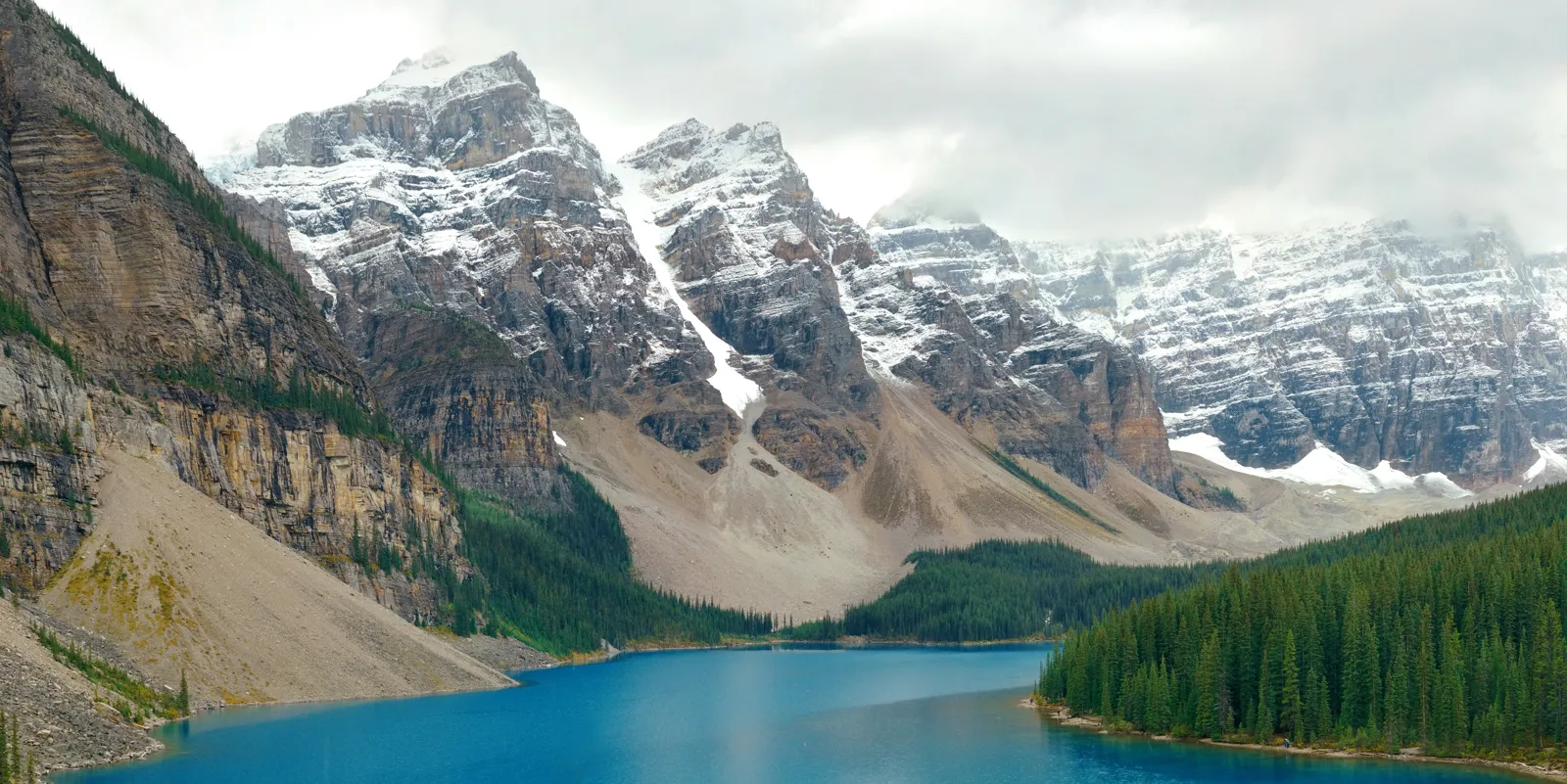
Travel in North America, as covered in this section, means the United States and Canada. Distances are huge: crossing either country takes several days by road, and both span several time zones. The main tourist areas are the East Coast (New York, Boston, Quebec City, Montreal), Florida, the parks of the American West (Grand Canyon, Yellowstone, Yosemite), California, the Canadian Rockies and British Columbia.
The climate ranges from subarctic in northern Canada to subtropical in Florida, by way of the desert of the American Southwest. The interior of the continent has harsh winters and hot summers. The Pacific coast is milder. The Atlantic coast and the Gulf of Mexico are exposed to hurricanes from summer into fall. In high-altitude parks, some roads are only open part of the year.
Which destination for which season?
The broad trends below are general. The table of countries by month, above, and our « when to go » guides give the details destination by destination.
Spring (April–June): a good time for East Coast cities and the parks of the Southwest before the big heat.
Summer (July–August): the ideal season for Canada, the Rockies and the parks of the northern United States. The desert is then very hot and the parks very busy.
Fall (September–October): fall foliage in Quebec and New England, pleasant temperatures in the West. Keep an eye on the hurricane risk in Florida.
Winter (November–March): skiing in the Rockies and Quebec; relatively mild weather in Florida, Southern California and Arizona.
Culture and cities: New York, Washington, Chicago, New Orleans, Montreal and Quebec City (French-speaking).
Hiking and wide open spaces: the national parks of the American West, the Canadian Rockies, British Columbia.
Tight budget: expensive destinations once there. A road trip with motels or camping, outside July–August, helps keep costs down.
Families: Florida and its theme parks, the national parks.
Honeymoon: a California road trip, Hawaii, or New York combined with Florida.
Planning your trip
Entry requirements: rules differ by country and change over time; check them on travel.state.gov (US) or GOV.UK foreign travel advice (UK) before booking. According to the UK FCDO, British citizens need an approved ESTA or a visa to enter or transit through the US (GOV.UK, updated 18 August 2026), and generally an eTA rather than a visa for short visits to Canada by air (GOV.UK, updated 2 June 2026). According to the U.S. Department of State, US citizens do not need a tourist visa to visit Canada for less than 180 days and can enter with a valid passport, passport card or NEXUS card (travel.state.gov, last updated August 11, 2025). Our United States and Canada guides detail the requirements with the date of the check.
Health: medical treatment is expensive in both countries, with no special arrangements for British visitors (GOV.UK). Check what your health insurance covers abroad and take out travel insurance with a high medical expenses limit.
Hurricanes and wildfires: follow the US National Hurricane Center for the Atlantic coast, and park and local authority alerts in case of wildfires in the West.
National parks: some US parks require timed-entry reservations in high season. Check each park’s official website.
Our seasonal recommendations are based on climate normals published by national weather services. To see how we select and update them, read our methodology.