
Choose Madeira for a simpler trip: one island to explore from Funchal, a drier and warmer climate, and the levada trails. Choose the Azores for wilder nature: crater lakes, hot springs, Pico volcano, whale and dolphin watching and nine islands to combine, at the price of more logistics and more changeable weather. The budget is close.
Madeira or the Azores? The two Portuguese Atlantic archipelagos share the euro, green volcanic landscapes, spectacular hiking and a lack of true sandy beaches (except on an outlying island). They differ in access, climate and organisation. Madeira, off the coast of Morocco, is a compact island that is sunny on its south coast. The Azores, in the middle of the Atlantic, about 1,500 km (932 mi) from Lisbon, form an archipelago of nine islands with an oceanic climate, mild but wet. This comparison uses only data published in our guides to Madeira and the Azores.
Madeira or the Azores: key points
- Climate: Madeira drier and warmer (about 20 °C (68 °F) in January in Funchal, against 17.5 °C (64 °F) in Ponta Delgada)
- Hiking: a tie; levadas and Pico Ruivo in Madeira, crater lakes, fajãs and Pico volcano in the Azores
- Whales and hot springs: the Azores (Ponta Delgada, Lajes do Pico, Furnas)
- Budget: almost identical, about 70 to 100-120 € a day on a tight budget
- Beach: neither; Porto Santo for Madeira, Santa Maria for the Azores
- Time zone: Madeira is on the same time as London (UTC+0, UTC+1 in summer); the Azores are one hour behind London (UTC-1, UTC+0 in summer)
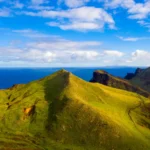
Madeira or the Azores: the criterion-by-criterion comparison
| Criterion | Madeira | Azores | Advantage |
|---|---|---|---|
| Best time | April to September; May and September as a compromise | June to September; May and October for hiking | Madeira (longer season) |
| January climate | 20 °C (68 °F) high, 67 mm (2.6 in) (Funchal) | 17.5 °C (64 °F) high, 102 mm (4.0 in) (Ponta Delgada) | Madeira |
| August climate | 26.8 °C (80 °F), 1 mm (0.0 in) | 26 °C (79 °F), 46 mm (1.8 in) | Madeira |
| Ideal length | 7 to 10 days, 2 weeks with Porto Santo | 7 days for São Miguel, 10 to 14 days with the central group | Depends on your time |
| Daily budget (tight / comfortable) | About 70 to 100 € / 150 to 250 € | About 70 to 120 € / 155 to 300 €, inter-island flights extra | Madeira |
| Hiking | Levadas, Pico do Arieiro – Pico Ruivo, São Lourenço; fee-charging classified trails | Sete Cidades, Lagoa do Fogo, São Jorge fajãs, climbing Pico | Tie |
| Volcanic nature | Cliffs, laurel forest (UNESCO), Porto Moniz pools | Crater lakes, fumaroles and hot pools at Furnas, Capelinhos | Azores |
| Town | Funchal, old town, market, wine cellars | Ponta Delgada; Angra do Heroísmo (UNESCO) | Tie |
| Logistics | One island, a single base in Funchal possible | Inter-island flights and ferries sometimes cancelled by bad weather | Madeira |
| Entry rules | Same (Portugal, Schengen area): see below | Same (Portugal, Schengen area): see below | Tie |
| Risks | Steep trails, closures after bad weather | Earthquakes are a risk in Portugal, including the Azores | Tie |
Entry requirements and safety
Madeira and the Azores are part of Portugal, so the same rules apply on both archipelagos. Check the official pages before you book, as rules change.
US citizens
According to the U.S. State Department (travel.state.gov, last updated December 11, 2025), Portugal is in the Schengen area and the EU. US citizens may enter for up to 90 days for tourism or business without a visa. Your passport should be valid for at least three months beyond the period of stay, and you need proof of sufficient funds and a return ticket. If you are not staying in a hotel or similar tourist accommodation, the Department says you must register your presence with the Portuguese immigration authorities within three working days of entering.
UK citizens
According to the UK FCDO (GOV.UK, updated 11 August 2026; the advice covers Madeira, Porto Santo and the Azores), Portugal follows Schengen rules: your passport must have been issued less than 10 years before you arrive and have an expiry date at least three months after the day you plan to leave the Schengen area. You can travel without a visa for up to 90 days in any 180-day period. At the border you may need to show an onward or return ticket and proof of funds.
Safety: GOV.UK says hiking in Madeira and the Azores can be challenging; choose paths that suit your fitness, wear suitable clothing and walking boots, take extra care after rain, when the ground may be slippery and unstable, and check with your guide or organiser that it is safe. Earthquakes are a risk in Portugal, and GOV.UK refers to the Earthquake Information and Surveillance Centre for the Azores.
Climate: Madeira drier, the Azores more changeable
This is the clearest criterion. According to the IPMA 1991-2020 normals used in our guides, Funchal, on the most sheltered south coast of Madeira, is almost dry from June to August (1 mm (0.0 in) to 8 mm (0.3 in) a month) and stays around 20 °C (68 °F) in the afternoon in winter. Ponta Delgada, in the Azores, has a cooler, wetter oceanic climate: 17 °C (63 °F) to 18 °C (64 °F) in winter, more than 100 mm (3.9 in) of rain in January, October and December, and weather that changes quickly, even in summer. July is its driest month (26 mm (1.0 in)).
| Month | Madeira (Funchal): high / rain | Azores (Ponta Delgada): high / rain |
|---|---|---|
| January | 20 °C (68 °F) / 67 mm (2.6 in) | 17.5 °C (64 °F) / 102 mm (4.0 in) |
| April | 21 °C (70 °F) / 45 mm (1.8 in) | 18.8 °C (66 °F) / 80 mm (3.1 in) |
| May | 22 °C (72 °F) / 27 mm (1.1 in) | 20.2 °C (68 °F) / 61 mm (2.4 in) |
| June | 23.7 °C (75 °F) / 8 mm (0.3 in) | 22.4 °C (72 °F) / 44 mm (1.7 in) |
| July | 25.4 °C (78 °F) / 2 mm (0.1 in) | 24.7 °C (76 °F) / 26 mm (1.0 in) |
| August | 26.8 °C (80 °F) / 1 mm (0.0 in) | 26 °C (79 °F) / 46 mm (1.8 in) |
| September | 26.6 °C (80 °F) / 23 mm (0.9 in) | 25 °C (77 °F) / 78 mm (3.1 in) |
| October | 25.2 °C (77 °F) / 91 mm (3.6 in) | 22.6 °C (73 °F) / 118 mm (4.6 in) |
| December | 21 °C (70 °F) / 95 mm (3.7 in) | 18.3 °C (65 °F) / 153 mm (6.0 in) |
Two nuances. In Madeira, the north of the island and the summits are cooler and wetter than Funchal: judge the weather by slope. In the Azores, clouds often cover the craters; morning is frequently the clearest time at Sete Cidades. On events, Madeira has the Flower Festival in May and the fireworks on December 31, two expensive periods. Details: when to go to Madeira and when to go to the Azores.
What to see: levadas versus crater lakes
Madeira
Madeira is explored from Funchal, a capital built like an amphitheatre above its bay: old town, Mercado dos Lavradores, Madeira wine cellars, the Monte cable car and the wicker toboggan ride. Hiking is the main reason for the trip: the levadas, irrigation channels more than two thousand kilometres (1,243 mi) long, offer often nearly flat paths (Rabaçal and the 25 Fontes, Caldeirão Verde, Levada do Rei); the trail from Pico do Arieiro to Pico Ruivo, more exposed, is regularly closed after bad weather. Add the Fanal laurel forest, a UNESCO World Heritage Site, the north coast (Porto Moniz, Seixal, Santana), the São Lourenço point and the glass-floored Cabo Girão skywalk. Porto Santo, about two and a half hours away by ferry, has a sandy beach of nearly 9 km (6 mi).
The Azores
In the Azores most travellers start with São Miguel: the Sete Cidades caldera and its two lakes, Lagoa do Fogo, the volcanic valley of Furnas with its fumaroles, the cozido cooked in the ground and the Terra Nostra thermal pools, the Gorreana tea plantations. The central group adds Pico, the highest peak in Portugal (2,351 m / 7,713 ft), whose climb is supervised, and its UNESCO-listed lava vineyards; Faial, Horta and the Capelinhos volcano; São Jorge and its fajãs; Terceira and Angra do Heroísmo, a World Heritage town. Whale and dolphin watching trips leave from Ponta Delgada and Lajes do Pico.
Budget: close, but the Azores multiply the journeys
| Item (per person per day) | Madeira | Azores |
|---|---|---|
| Accommodation, tight / comfortable | About 30 to 50 € / 80 to 150 € | About 30 to 50 € / 70 to 140 € |
| Meals | About 20 to 30 € / 40 to 60 € | About 20 to 30 € / 40 to 70 € |
| Transport | About 10 to 20 € / 20 to 30 € | About 15 to 25 € / 25 to 40 € |
| Activities | About 5 to 15 € / 15 to 40 € | About 5 to 15 € / 20 to 50 € |
| Total | About 70 to 100 € / 150 to 250 € | About 70 to 120 € / 155 to 300 € |
In Madeira, allow for the access fee on classified trails (4.5 € per trail for the general public since 2026, according to visitmadeira.com) and booking a slot on the SIMplifica platform. In the Azores, the rental car is the first item to watch in summer: book it at the same time as your flights. In both archipelagos accommodation climbs in July-August, and in Madeira at New Year and during the Flower Festival.
Madeira or the Azores by profile
| Profile | Verdict | Why |
|---|---|---|
| First trip | Madeira | One island, a more reliable climate |
| Hiking | Tie | Levadas and summits in Madeira; craters, fajãs and Pico in the Azores |
| Whale and dolphin watching | Azores | Trips from Ponta Delgada and Lajes do Pico |
| Winter sun | Madeira | About 20 °C (68 °F) in the afternoon in winter in Funchal |
| Couples | Tie | Quintas and Cabo Girão; or Furnas thermal pools and Angra do Heroísmo |
| Families | Madeira | Monte cable car, Porto Moniz pools, Porto Santo beach in summer |
| Short stay (one week) | Tie | All of Madeira, or São Miguel alone |
| Beach | Madeira (Porto Santo) | Nearly 9 km (6 mi) of sand; in the Azores, Santa Maria has a few rare beaches |
Hikers
Our guides rate both archipelagos as ideal for hiking. Madeira is more regulated: classified trails with fees and booking, and dizzying stretches on some levadas where a local guide is worth considering. The Azores offer more varied trails from island to island, from the Sete Cidades crest to the São Jorge fajãs, with the long, steep Pico climb by registration. In both cases go equipped (windproof, warm layer) and check trail conditions on the day.
Families
Madeira is simpler with children: a single base in Funchal is possible, with easy activities (cable car, natural pools) and the Porto Santo beach. The Azores also suit families, with a car: thermal pools, boat trips, the descent into the Algar do Carvão. Keep a spare day for flights and ferries cancelled by bad weather.
Wild nature lovers
The Azores win: nine islands, few buildings around some lakes, Flores and Corvo at the western end for the most adventurous. Madeira is busier at its flagship sites (São Lourenço point, Pico do Arieiro at sunrise): leave early.
Why not both?
Our guides do not detail a direct link between Madeira and the Azores; check flights before building an itinerary. The simplest way is via Lisbon, a frequent stopover for the Azores, adding a few days there: see our guide to Lisbon and our Portugal guide. With only a week, choose a single archipelago: Madeira, or São Miguel in the Azores.
Frequently asked questions
Madeira or the Azores for a first trip?
Madeira is simpler: one island to explore and a drier climate. The Azores need more organisation, but offer wilder nature and whale and dolphin watching.
Where is the weather better?
In Madeira, especially on the south coast: Funchal is almost dry from June to August and keeps about 20 °C (68 °F) in the afternoon in winter, according to IPMA normals. The Azores have a cooler, wetter and very changeable climate.
Which is cheaper?
The budgets are close: about 70 to 100 € per person per day on a tight budget in Madeira and 70 to 120 € in the Azores, excluding flights. In the Azores, inter-island flights and summer car rental push the bill up.
Do you need a passport?
Yes, for US and UK citizens. Portugal is in the Schengen area: travel.state.gov says US citizens can stay up to 90 days without a visa with a passport valid at least three months beyond their stay; GOV.UK says UK passports need at least three months after departure and under 10 years since issue.
Can you swim?
Yes, but neither Madeira nor the Azores is a beach destination. Madeira has natural pools (Porto Moniz) and the Porto Santo beach; in the Azores the sea is cool and Santa Maria has a few light-sand beaches.
When is the best time to go?
April to September for Madeira, June to September for the Azores. May and September are good compromises in both archipelagos.
Our sources
- Our published guides, the source of all data on this page: Madeira, when to go to Madeira, Azores, when to go to the Azores
- Sources cited in those guides: 1991-2020 normals from the Instituto Português do Mar e da Atmosfera (IPMA), official site visitmadeira.com
- U.S. Department of State, Portugal country information (travel.state.gov, last updated December 11, 2025)
- UK FCDO, foreign travel advice for Portugal, covering Madeira, Porto Santo and the Azores (GOV.UK, updated 11 August 2026)
- Our methodology
Updated November 2026.
More head-to-heads await in our destination comparisons, including Porto or Lisbon.