
Choose Mauritius for a gentler budget and a varied island where you alternate beaches, hikes, culture and excursions, ideally from September to mid-December. Choose the Seychelles for nature, granite beaches and a circuit between Mahé, Praslin and La Digue, in April-May or October-November, accepting a higher budget.
Mauritius or Seychelles? Two Indian Ocean destinations that share a French-friendly language environment but differ greatly in budget, logistics and climate. This comparison draws on our guides to Mauritius and the Seychelles.
Mauritius or Seychelles: key points
- Mauritius: best from September to mid-December, then April-May; cyclone season from November to April, riskier from January to March.
- Seychelles: April-May and October-November; the main islands lie outside the cyclone zone.
- Budget: Mauritius about $65 to $110 a day on a tight budget, $170 to $335 for comfort; Seychelles $135 to $225 tight, $335 and more for comfort.
- Entry: no visa for either for US and UK tourists, but Mauritius needs an online travel form and the Seychelles a paid Travel Authorisation (see below).
- Languages: French spoken daily in Mauritius; official in the Seychelles alongside Creole and English.
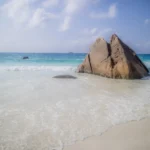
Mauritius or Seychelles: the criterion-by-criterion comparison
| Criterion | Mauritius | Seychelles | Advantage |
|---|---|---|---|
| Best time | September to mid-December, then April-May | April-May and October-November | Tie (October-November suits both) |
| Climate | Dry, cooler austral winter (May-October), 26 °C (79 °F)-28 °C (82 °F); hot, humid summer | Warm all year, 29 °C (84 °F)-31 °C (88 °F); wetter from December to March | Tie |
| Cyclones | Cyclone season from November to April, mainly January-March | Main islands outside the cyclone zone | Seychelles |
| On-the-ground budget | About $65 to $110 a day (tight), $170 to $335 (comfortable) | About $135 to $225 a day (tight), $335 and more (comfortable) | Mauritius |
| Entry rules | No visa for short stays; online form before departure | No visa; paid electronic Travel Authorisation before departure | Mauritius (lighter) |
| Type of trip | One varied island: beaches, mountains, culture, excursions | Several islands: nature, granite beaches, ferry hopping | Depends on the project |
| Safety | Considered safe; petty theft, currents in the south | Generally safe; petty theft, strong currents from June to September | Tie |
Entry requirements
US citizens
Mauritius: according to the U.S. State Department (travel.state.gov, last updated December 8, 2025), you need a valid passport with at least one blank page, evidence of onward or return travel and proof of sufficient funds. No visa is required, and your passport is stamped on arrival for 60 days. The Department recommends filling in the online « Mauritius All-in-One Travel Digital Form » no more than 72 hours before travel.
Seychelles: according to the U.S. State Department (travel.state.gov, last updated December 9, 2025), the Seychelles is visa-free, but all travelers must apply for a Travel Authorization before travelling. The standard fee is EUR 10.90 and you can apply up to 30 days before your flight. You also need a valid passport, an onward or return ticket, sufficient funds and confirmed accommodation.
UK citizens
Mauritius: according to the UK FCDO (GOV.UK, updated 19 October 2026), your passport must be valid for your whole stay and have one blank page. You can visit without a visa for up to 60 days and must show proof of onward or return travel. Fill in the Mauritius All in One travel form online before you arrive.
Seychelles: according to the UK FCDO (GOV.UK, checked 12 November 2026), your passport must be valid for your whole stay. You do not need a visa but must get a travel authorisation online before you travel, and you must show a valid return or onward ticket when you apply. On arrival you receive a three-month visitor’s permit.
Which destination to choose for your profile
Tight budget
Advantage Mauritius, clearly. Our ranges go from single to double: about $65 to $110 a day in Mauritius (apartments, guesthouses, street food, buses), against $135 to $225 in the Seychelles, where hotel supply is limited and much of what is sold is imported. In the Seychelles, guesthouses and self-catering apartments reduce the bill; add the cost of ferries between the islands.
First trip to the Indian Ocean
Advantage Mauritius. A lighter entry process, French spoken everywhere in daily life and a single island to organise, with a good bus network and car rental.
Couples and honeymoon
Advantage Seychelles for the natural setting: La Digue by bike, Anse Source d’Argent and Anse Lazio, the outer islands reached by small plane, often with a single hotel. Advantage Mauritius for comfort and the variety of beach hotels, at more accessible prices.
Families
Advantage Mauritius. The budget and the variety of activities (Chamarel and the Black River Gorges, Île aux Cerfs, Grand Bassin, catamaran trips) make a stay with children easier. Respect the swimming flags: some areas in the south have dangerous currents. In the Seychelles, the beaches on the east coast of La Digue are often dangerous for swimming.
Nature, hiking and diving
Advantage Seychelles for nature. The Vallée de Mai (UNESCO) and its coco de mer, the Morne Seychellois National Park, the giant tortoises of Curieuse, the Cousin bird reserve, the Sainte Anne marine park. Mauritius answers with Le Morne, the Black River Gorges, Île aux Aigrettes and whales off the west coast from about July to October.
Travelling in winter (December to March)
Neither is ideal. In Mauritius it is the austral summer, hot and humid, with cyclone risk mainly from January to March. In the Seychelles it is the wettest season, but with no cyclone risk on the main islands. For December, Mauritius stays pleasant until mid-December. For February-March, also look at our comparison Maldives or Seychelles: it is the Maldives’ best season.
Detailed budget: Mauritius or Seychelles?
| Item (per day per person) | Mauritius | Seychelles |
|---|---|---|
| Accommodation, tight | About $30 to $55 | About $55 to $100 (guesthouse, self-catering) |
| Accommodation, comfortable | About $110 to $280 | About $170 to $335 |
| Meals, tight | About $10 to $20 (street food, snacks) | About $20 to $40 (take-away, groceries) |
| Meals, comfortable | About $45 to $80 | About $65 to $110 |
| Transport | About $5 to $10 (bus); $35 to $55 (car or taxi) | About $5 to $15 (bus, bike); $45 to $80 (car, taxis), ferries not included |
| Activities | About $10 to $30; $45 to $110 (catamaran, diving) | About $10 to $35; $55 to $135 (boat, diving) |
On every item Mauritius is cheaper, especially for accommodation and meals on a tight budget. The gap widens further once you add flights, which depend on where you start from: check fares for both destinations.
Getting around and where to stay
Mauritius: you drive on the left; a rental car is the most practical option, with short distances (about 1 h 30 from north to south). The bus network is dense and very cheap, but slow; the Metro Express links Port-Louis to Curepipe. For accommodation, the west coast (Flic en Flac, Tamarin, Le Morne) is the driest, the north (Grand Baie, Trou aux Biches) is the liveliest and practical without a car, the east coast (Belle Mare) has the big beach hotels but more wind in the austral winter, and the south-east (Mahébourg, Blue Bay) has a more local feel. If hiking tempts you as much as the beach, our Mauritius or Réunion comparison puts these two neighbouring islands head to head.
Seychelles: fast ferries between Mahé, Praslin and La Digue, public buses on Mahé and Praslin, car rental (also on the left) and bikes on La Digue. Accommodation, the biggest expense, is split between guesthouses and apartments run by Seychellois, mid-sized hotels and high-end resorts, some occupying a whole island.
In short: Mauritius can be visited from one or two bases, while the Seychelles require splitting your stay between several islands.
Why not both?
A Mauritius-Seychelles combination remains an option for a long stay, provided you aim for October-November, when both destinations are in good season. Allow at least two weeks and check flights between the two archipelagos when you book. The most common combination from Mauritius is, however, neighbouring Réunion.
When to go: which periods for each island?
Mauritius: the austral winter (May to October) is dry and mild, with stronger trade winds in the east and south; the west coast and the north are driest. The best period runs from September to mid-December. Prices are highest during French school holidays (Christmas, February, Easter, All Saints) and in July-August. Details: when to go to Mauritius.
Seychelles: the shoulder seasons (April-May, October-November) offer a calm sea and the best underwater visibility. December to March is wetter; June to September is windier, with a rough sea on exposed coasts. Details: when to go to the Seychelles.
Frequently asked questions
Is Mauritius cheaper than the Seychelles?
Yes: our guides give about $65 to $110 per person per day on a tight budget in Mauritius, against $135 to $225 in the Seychelles, excluding flights. The gap also shows at the comfortable level ($170 to $335 against $335 and more).
What is the difference between Mauritius and the Seychelles?
Mauritius is a single varied island with a gentler budget. The Seychelles are an archipelago of 115 islands, more expensive, where you move between Mahé, Praslin and La Digue for nature and granite beaches.
What is the best time for each destination?
September to mid-December then April-May for Mauritius; April-May and October-November for the Seychelles. October-November suits both.
Are there cyclones in Mauritius and the Seychelles?
In Mauritius the cyclone season covers the austral summer (November to April), with a higher risk from January to March. The main islands of the Seychelles are outside the cyclone zone.
Which is better for diving and snorkeling?
The Seychelles, for water clarity in the shoulder seasons (April-May, October-November) and sites such as the Sainte Anne marine park. Mauritius also offers diving and catamaran trips, and whale watching off the west coast from about July to October.
Do you need a visa for Mauritius or the Seychelles?
Not for short tourist stays for US and UK citizens. Mauritius allows 60 days and asks for an online travel form; the Seychelles requires a Travel Authorisation applied for online before travel (EUR 10.90 according to travel.state.gov). Check the official pages before you go.
Further reading
- Mauritius travel guide
- When to go to Mauritius
- Seychelles travel guide
- When to go to the Seychelles
- Comparison: Maldives or Seychelles
- All our comparisons
Our sources
- Our published guides, the source of all data on this page (climate, budget): Mauritius and when to go to Mauritius (Mauritius Meteorological Services and World Meteorological Organization), Seychelles and when to go to the Seychelles (Victoria station normals)
- U.S. Department of State, travel.state.gov: Mauritius (last updated December 8, 2025) and Seychelles (last updated December 9, 2025)
- UK FCDO, GOV.UK: Mauritius (updated 19 October 2026) and Seychelles (checked 12 November 2026)
- Exchange rate: European Central Bank reference rate of 23 October 2026 (€1 = US$1.1193)
- Our methodology
Updated November 2026.