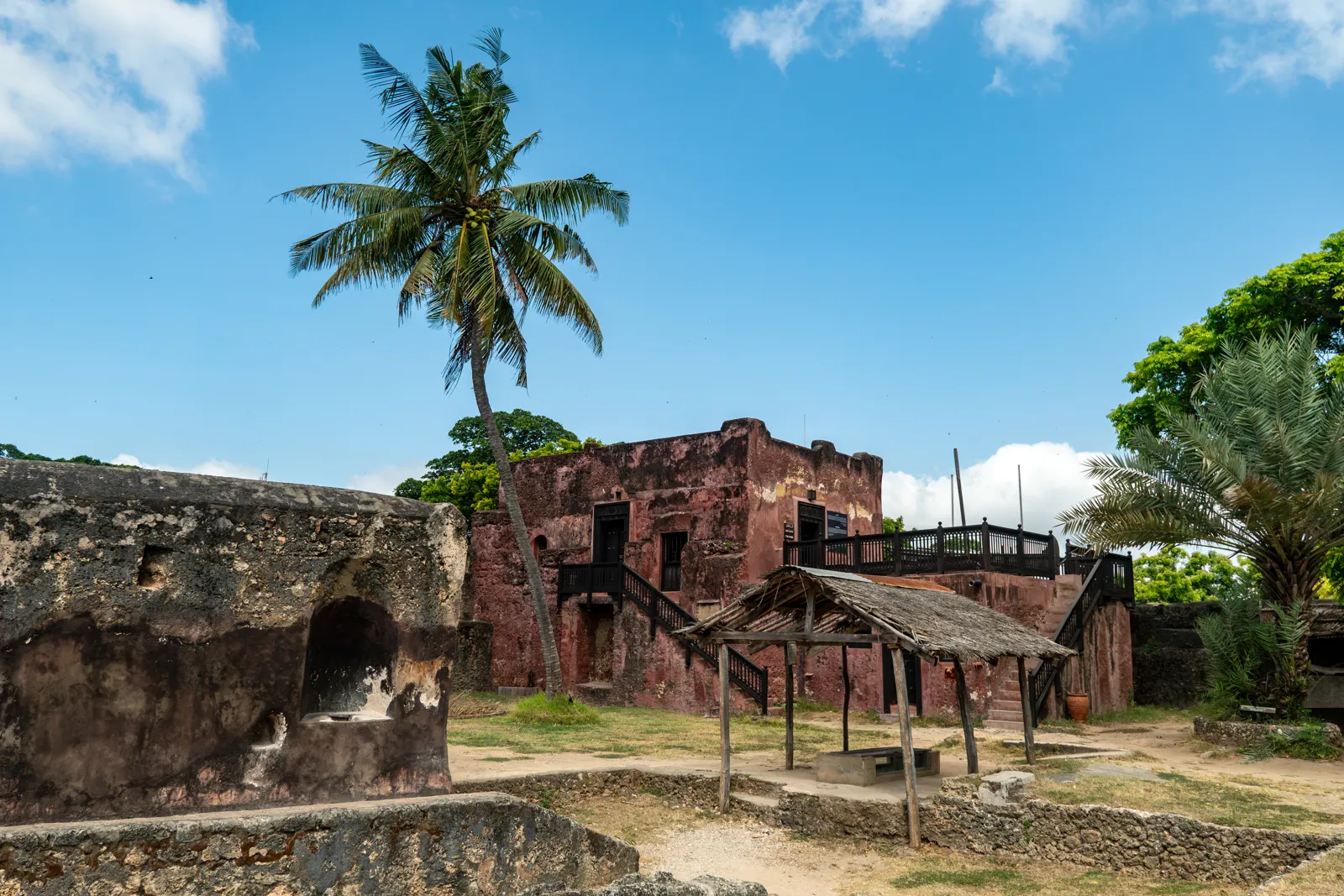
Plovdiv, Bulgaria’s second city, is often described as the oldest continuously inhabited city in Europe: within a few streets you walk from a 1st-century Roman theatre to an Ottoman mosque and then to houses of the Bulgarian National Revival. Built on syenite hills beside the Maritsa river and a European Capital of Culture in 2019, it can be visited on foot in one or two days. This Plovdiv travel guide explains what to see, in what order, when to go and what the US and UK governments say about entry and safety.
To place Plovdiv in a trip, see our guide to travel in Bulgaria, the calendar for when to go to Bulgaria, the map of Bulgaria and our page on Sofia.

Our travel deals for Plovdiv
Affiliate links: we earn a commission, at no extra cost to you.
 FlightsKiwi.comCompare flights and airline combinations to Plovdiv.Compare flights

Plovdiv at a glance
- Time zone UTC+2 (Eastern European Time; UTC+3 in summer): 2 hours ahead of London and 7 hours ahead of New York in standard time
- Currency the euro, which Bulgaria adopted on 1 January 2026 (UK FCDO, updated 11 August 2026)
- Entry no visa for stays of up to 90 days for US and UK citizens; passport rules differ slightly (U.S. Department of State, last updated December 4, 2025; UK FCDO, updated 11 August 2026)
- Safety the UK FCDO and the U.S. State Department list no area of Bulgaria to avoid; take usual precautions against pickpockets and take care on the roads
- Main sights Roman theatre, Roman stadium, old town, Nebet Tepe, Djumaya Mosque, Kapana
What to see in Plovdiv: the highlights
The Roman theatre
This is probably the best-known ancient monument in Bulgaria. An inscription found on the site dates its construction to the 90s AD, under the emperor Domitian. Set in a natural saddle between two of the three hills, it had two tiers of seats and could hold about 7,000 spectators. Studied and restored between 1968 and 1984, it is still used as a stage, notably for an opera festival. Check visiting hours on the official site of the municipality or of the venue, as they change with performances.
The Roman stadium and Djumaya Square
Built in the 2nd century under Hadrian on the model of the stadium at Delphi, the ancient stadium could hold up to 30,000 spectators. It lies beneath the main street, between Djumaya Square and Kamenitsa Square: only one end is visible, uncovered below the square. Just above it, the Djumaya Mosque recalls five centuries of Ottoman rule, which began with the capture of the city in 1364.
The old town and the Revival houses
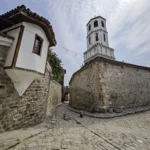
Across the three hills, the old town combines cobbled lanes, remains of the ramparts and 19th-century houses built by merchant families at a time when Plovdiv was one of the great economic centres of the Balkans. Several can be visited, such as the Kuyumdzhioglu House, now the Regional Ethnographic Museum, or the Balabanov House. Lamartine stayed in Plovdiv during his journey to the East, and a house near the theatre keeps his memory. The district was entirely restored in the 1970s and 1980s.
Nebet Tepe
On top of Nebet Tepe hill, archaeologists have uncovered traces of continuous settlement since the end of the 4th millennium BC and the walls of the Thracian city of Eumolpias, part of them in large syenite blocks. It is also a viewpoint over the city and the Maritsa. Go up late in the day for the light: the sun sets around 8:58 pm in mid-June and around 4:49 pm in mid-December (calculated).
Kapana and Knyaz Alexander I Street
At the foot of the old town, Kapana (“the trap”), a district of small streets converted into a creative quarter, concentrates cafés, galleries and workshops. The pedestrian Knyaz Alexander I Street, the main shopping artery, links Djumaya Square to the rest of the centre. The Eirene Residence, reached through the archaeological underpass, preserves mosaics from a 3rd–4th-century house.
Around Plovdiv
Plovdiv is a base for the Bachkovo Monastery to the south, for the Rhodope Mountains and the Pamporovo resort, or for the spa towns of the north such as Hisarya. These excursions need a car or an organised tour; check road conditions in winter (see safety).
Plovdiv in 1 or 2 days
- Day 1, morning: Djumaya Square, the Roman stadium and the mosque, then up to the Roman theatre.
- Day 1, afternoon: old-town houses and the Ethnographic Museum, sunset on Nebet Tepe, dinner in Kapana.
- Day 2: Eirene Residence and the archaeological museum, or an excursion to the Bachkovo Monastery.
When to go to Plovdiv
Plovdiv lies in the Thracian plain: summers are hot and winters cold. We found no recent official normals published for the Plovdiv station (it is not in the 1991–2020 normals distributed by the World Meteorological Organization): rather than copy unofficial figures, we refer you to our page on when to go to Bulgaria, built on the WMO normals for Sofia, Sandanski and the coast. For a walking visit of the old town, spring and early autumn are generally the most comfortable periods; in summer, visit the theatre and Nebet Tepe early in the morning or late in the day.
Our own data: daylight in Plovdiv, useful for planning outdoor visits and sunsets.
| Month | Sunrise (15th) | Sunset (15th) | Daylight |
|---|---|---|---|
| January | 7:47 am | 5:13 pm | 9 h 27 min |
| February | 7:17 am | 5:53 pm | 10 h 35 min |
| March | 6:33 am | 6:26 pm | 11 h 53 min |
| April | 6:41 am | 8:01 pm | 13 h 21 min |
| May | 6:00 am | 8:34 pm | 14 h 34 min |
| June | 5:44 am | 8:58 pm | 15 h 14 min |
| July | 5:57 am | 8:55 pm | 14 h 58 min |
| August | 6:28 am | 8:22 pm | 13 h 54 min |
| September | 7:00 am | 7:31 pm | 12 h 31 min |
| October | 7:33 am | 6:39 pm | 11 h 07 min |
| November | 7:10 am | 4:59 pm | 9 h 49 min |
| December | 7:42 am | 4:49 pm | 9 h 08 min |
Reading the table: in mid-June the day lasts 15 h 14 min, against 9 h 08 min in mid-December, so a December sightseeing day has almost six hours less daylight than one in June.
Getting to Plovdiv and getting around
Most travellers arrive via Sofia airport and then reach Plovdiv by train, bus or car; Plovdiv also has its own airport, whose connections vary by season: check them on the airport’s website and with the airlines. The central station links the city to the rest of the Bulgarian rail network. On site, the centre and the old town are explored on foot; cobbled streets and hill slopes call for good shoes.
Transfer, train or car rental?
For a visit limited to the city, the train or bus from Sofia is enough. A car becomes useful for Bachkovo, the Rhodopes or the villages. Before booking a transfer or a rental, compare the operator’s official site and resellers: cancellation terms, insurance, excess. The UK FCDO (GOV.UK, updated 11 August 2026) says a digital vignette, a form of toll, must be bought in advance to use motorways and main roads outside towns, and that traffic police fine drivers without one; ask your rental company how it is handled.
Where to stay in Plovdiv
The old town offers guesthouses in historic houses, quiet but on a slope and sometimes without car access. Kapana and Knyaz Alexander I Street are convenient for evenings out, at the cost of some noise. Hotels farther from the centre suit those arriving by car. During the big summer performances at the Roman theatre, book ahead.
Entry requirements, health and safety
Rules checked in the official sources read on 26 October 2026. Rules can change: confirm with the Bulgarian embassy before you travel.
US citizens
According to the U.S. Department of State (travel.state.gov, last updated December 4, 2025), a valid U.S. passport is required and must be valid for at least three months from the expected date of departure from Bulgaria. U.S. citizens on regular tourist passports cannot stay more than 90 days in a six-month period without a Bulgarian visa, and this is described as strictly enforced. Visitors must keep medical insurance for the duration of the stay and may be asked to show proof at the port of entry. The State Department also advises carrying your passport while in Bulgaria, and notes that a passport card is not sufficient for international air travel.
UK citizens
According to the UK FCDO (GOV.UK, updated 11 August 2026), you can travel to Bulgaria without a visa for up to 90 days in any 180-day period, as a tourist or to visit family and friends. Bulgaria follows Schengen area rules: your passport must have been issued less than 10 years before arrival and must expire at least 3 months after the day you plan to leave the Schengen area. At the border you may be asked for proof of accommodation, travel insurance, a return or onward ticket and enough money for your stay. The EU’s Entry/Exit System (EES) may require you to register fingerprints and a photo on your first entry.
The two sources agree on the 90-day limit. Their wording on passport validity differs slightly (three months after departure in both, with the UK adding the 10-year issue-date rule): follow the stricter of the two and confirm with the Bulgarian embassy. See also our guide to entry requirements.
Safety in town and on the road
- Crime: the UK FCDO advises sensible precautions against street crime, particularly in larger cities and late at night, and warns of pickpockets and bag thefts in tourist areas, on public transport and at transport hubs. The U.S. State Department says most crime in Bulgaria takes place in Sofia and lists Plovdiv among the districts with a slightly lower level of crime; it does not bar U.S. government personnel from any area of Bulgaria because of crime.
- On the road: the UK FCDO says road conditions can be dangerous, particularly at night and outside major cities, with many roads in poor repair and unmarked, unlit roadworks, and that driving standards are generally poor. Allow extra care on mountain roads in winter.
- Protests: occasional political protests can disrupt transport; the UK FCDO advises avoiding them.
Staying connected
Bulgaria is a member of the European Union, but roaming conditions for US and UK plans depend on your operator. An eSIM can be a backup or a way to get a lot of data: see our travel eSIM guide.
If you… then…
| If you… | Then… |
|---|---|
| Have only one day | Djumaya and the stadium in the morning, theatre and old town in the afternoon, Nebet Tepe at sunset |
| Travel on a US passport | Check it is valid for three months after you leave Bulgaria (U.S. Department of State) |
| Want to leave the city | Bachkovo or the Rhodopes by car, avoiding night driving outside towns |
| Come in December | Expect barely more than 9 hours of daylight (calculated): start early |
| Like live performances | Check the Roman theatre’s programme before fixing your dates |
| Pay on site | Bring euros or a card: Bulgaria adopted the euro on 1 January 2026 |
Frequently asked questions
How many days do you need in Plovdiv?
One day is enough for the Roman theatre, the stadium, the old town and Kapana; a second lets you add the museums or the Bachkovo Monastery.
What currency is used in Plovdiv?
The euro: Bulgaria adopted it on 1 January 2026 (UK FCDO, updated 11 August 2026). Older prices in leva that you may still find online are therefore out of date.
Do you need a visa for Plovdiv?
Not for stays of up to 90 days for US citizens (U.S. Department of State, last updated December 4, 2025) or UK citizens (UK FCDO, updated 11 August 2026). Your passport must be valid for at least three months after you leave.
Is Plovdiv the oldest city in Europe?
It is often described as the oldest continuously inhabited city in Europe: excavations at Nebet Tepe show settlement since the end of the 4th millennium BC.
Can you see a show at the Roman theatre?
Yes, the Roman theatre still hosts performances, including an opera festival. Check the official programme before your trip.
When is the best time to visit Plovdiv?
Spring and early autumn suit a walking visit best; in summer, prefer the morning and the end of the day. Detailed normals for Bulgaria are on our page on when to go to Bulgaria.
Our sources
- UK FCDO, Bulgaria foreign travel advice (GOV.UK, updated 11 August 2026): entry requirements, safety and security, road travel; read 26 October 2026
- U.S. Department of State, Bulgaria country information (travel.state.gov, last updated December 4, 2025): entry and exit requirements, safety and security; read 26 October 2026
- Wikipedia articles “Plovdiv” (FR and EN): history, ancient monuments, old town
- World Meteorological Organization, 1991–2020 normals (NOAA/NCEI archive): the Plovdiv station is not included
- Astronomical calculations: NOAA solar algorithm, applied by Destination de Voyage to the coordinates of Plovdiv (15th of each month, year 2027)
- Our methodology
Updated November 2026.