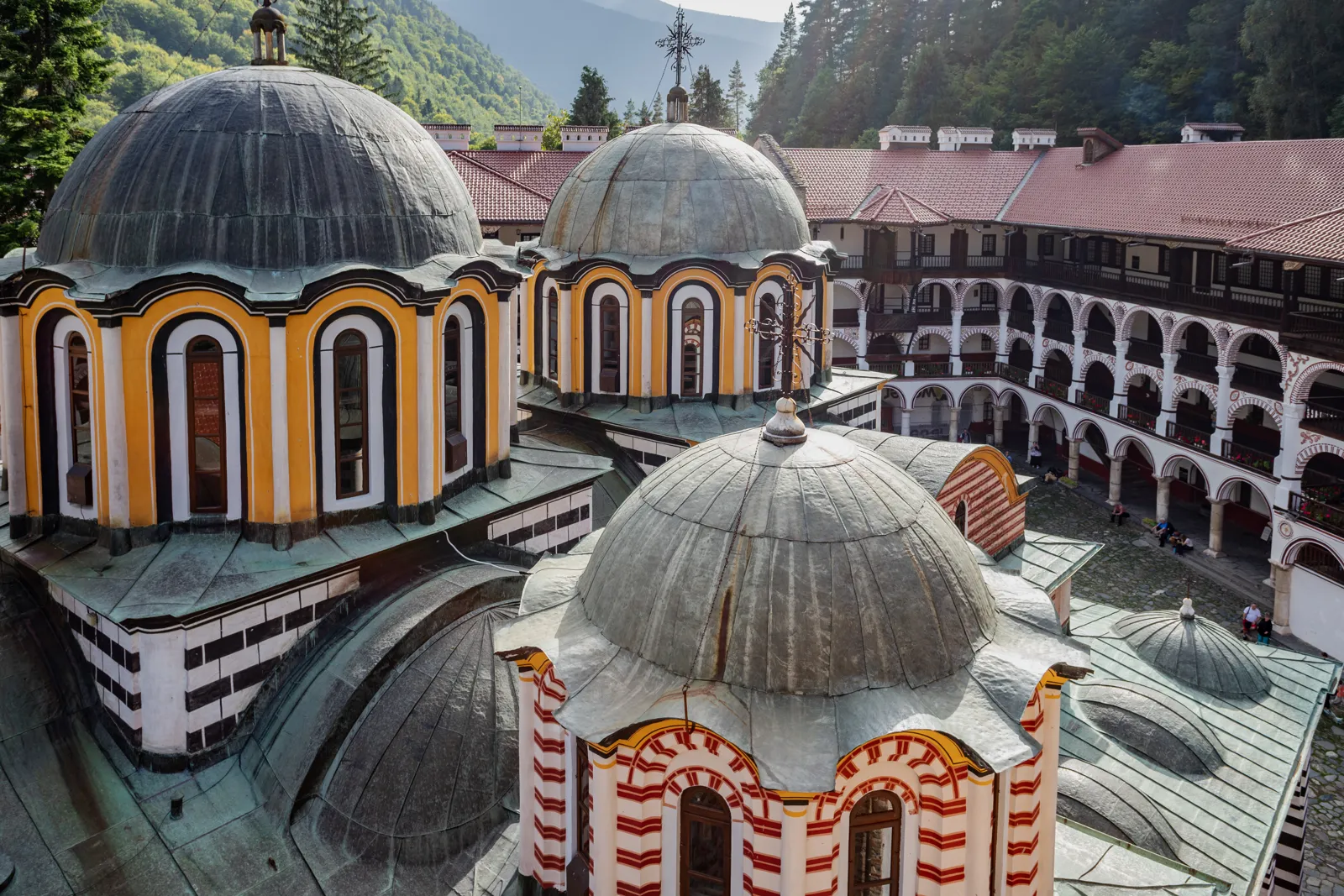
The best time to visit Bulgaria is May to June and September: afternoons are 21 to 25 °C (70 to 77 °F) in Sofia, the monasteries and old towns can be visited without excessive heat, and the Black Sea is already (or still) pleasant. July and August are the high season for beaches and the mountains; from December to March it is ski season in Bansko, Borovets and Pamporovo. Bansko, Borovets and Pamporovo are easy to find on our map of Bulgaria.
Bulgaria has a continental climate, softened on the coast by the Black Sea and in the southwest by Mediterranean influences. Sofia, at almost 600 m (1,969 ft) above sea level, has cold winters and moderate summers; the coast around Varna and Burgas is milder in winter and drier; the Rila and Pirin mountains stay snowy for much of the year. Here is how to choose your month, based on the official climate normals.

Our travel deals for Bulgaria
Affiliate links: we earn a commission, at no extra cost to you.
 FlightsKiwi.comCompare flights and airline combinations to Bulgaria.Compare flights

When to go to Bulgaria at a glance
- Best times May–June and September
- For Sofia, Plovdiv and Veliko Tarnovo May–June and September–October
- For the Black Sea (Varna, Burgas, Nessebar, Sozopol) late June to early September
- For hiking (Rila, Pirin, Rhodopes) July to September
- For the Rose Valley late May to early June, during the harvest
- For skiing December to March
- Best value May, late September and October
When to go to Bulgaria by priority
- Best weather: May–June and September for cities and monasteries; July–August for the Black Sea; December to March for skiing
- Cheapest: May, late September and October
- Fewest crowds: March, April, October and November; on the coast, late June and early September
- Events: Surva masquerade festival in Pernik in late January, Baba Marta on March 1, Rose Festival in Kazanlak in late May to early June (check dates every year)
- Other destinations: see our ideas for where to go in September
Bulgaria: the calendar at a glance
✅ Best months: may, June, July, August, September, October
❌ Period to avoid: January
Climate in Bulgaria month by month
The table below gives the normals for Sofia, the capital, where most international flights arrive and from where excursions leave for Rila Monastery and Plovdiv. The coast and the southwest are compared further down.
| Month | Avg. max | Avg. min | Rain | Crowds | Prices | Verdict |
|---|---|---|---|---|---|---|
| January | 3.5 °C (38 °F) | −3.9 °C (25 °F) | 35 mm (1.4 in) | Moderate (skiing) | Low in cities | ❌ Cold, frost at night (except for skiing) |
| February | 6.5 °C (44 °F) | −2.4 °C (28 °F) | 36 mm (1.4 in) | Moderate (skiing) | Low in cities | ⚠️ Still cold, a good month for skiing |
| March | 11.4 °C (53 °F) | 1.1 °C (34 °F) | 45 mm (1.8 in) | Low | Low | ⚠️ Mild afternoons, cold nights |
| April | 16.7 °C (62 °F) | 5.3 °C (42 °F) | 52 mm (2.0 in) | Low to moderate | Moderate | ⚠️ Spring, snowy mountains |
| May | 21.4 °C (71 °F) | 9.8 °C (50 °F) | 73 mm (2.9 in) | Moderate | Moderate | ✅ Ideal for cities and monasteries |
| June | 25.2 °C (77 °F) | 13.4 °C (56 °F) | 79 mm (3.1 in) | Moderate to high | Moderate | ✅ Roses, start of the beach season |
| July | 27.8 °C (82 °F) | 15.3 °C (60 °F) | 64 mm (2.5 in) | Very high on the coast | High on the coast | ✅ Black Sea and mountains |
| August | 28.3 °C (83 °F) | 15.0 °C (59 °F) | 55 mm (2.2 in) | Very high on the coast | High on the coast | ✅ Black Sea, heat on the plains |
| September | 23.3 °C (74 °F) | 10.9 °C (52 °F) | 53 mm (2.1 in) | Moderate | Moderate | ✅ Mild, sea still pleasant, grape harvest |
| October | 17.6 °C (64 °F) | 6.3 °C (43 °F) | 54 mm (2.1 in) | Low | Low | ✅ Autumn colors, low prices |
| November | 10.7 °C (51 °F) | 1.9 °C (35 °F) | 38 mm (1.5 in) | Low | Low | ⚠️ Cool and often gray |
| December | 4.6 °C (40 °F) | −2.4 °C (28 °F) | 40 mm (1.6 in) | Moderate (holidays, skiing) | Moderate | ⚠️ Cold, start of the ski season |
Worth noting: rain falls mostly in May and June, often as thunderstorms (79 mm (3.1 in) in June in Sofia). Winter is cold in Sofia: average minimums fall below 0 °C (32 °F) from December to February.
Bulgaria’s seasons: pros and cons
Spring (April to June): greenery, roses and monasteries
Spring is a very good season for a cultural tour. In Sofia, highs rise from 16.7 °C (62 °F) in April to 25 °C (77 °F) in June. The hills are green, the old towns (Plovdiv, Veliko Tarnovo, Koprivshtitsa) are pleasant on foot, and the Rose Valley, around Kazanlak, comes into bloom around late May and early June. The peaks of Rila and Pirin keep their snow until early summer.
- Pros: mild temperatures, green landscapes, moderate prices, few crowds outside weekends
- Cons: frequent thunderstorms in May–June, high-altitude trails still snowy, sea too cool for most swimmers before mid-June
- Our tip: late May to early June to combine Sofia, Rila, Plovdiv and the Rose Valley
Summer (July–August): Black Sea and mountains
Summer is the main season on the Black Sea. In Varna and Burgas, average highs approach 29 °C (84 °F) in July–August, and August is the driest month on the coast (24 mm (0.9 in) in Burgas, 29 mm (1.1 in) in Varna). It is also the best time to hike in Rila and Pirin. On the plains and in the southwest it is hotter: more than 33 °C (91 °F) in the afternoon in Sandanski in July–August.
- Pros: swimming, long days, mountain trails open, nightlife on the coast
- Cons: very busy beach resorts, higher prices on the coast, heat on the plains
- Who is it for? Families, beach lovers and hikers
Autumn (September–October): mild weather and the grape harvest
September is an excellent month: 23 °C (73 °F) in the afternoon in Sofia, nearly 25 °C (77 °F) on the coast, and clearly smaller crowds after the summer holidays. The grape harvest takes place in the vineyards, notably around Melnik. October is still pleasant (17.6 °C (64 °F) in Sofia) and the Balkan forests take on their autumn colors. On the coast, October is the wettest month (65 mm (2.6 in) in Burgas).
- Pros: mild climate, falling prices, colorful forests, sea still swimmable in early September
- Cons: shorter days, many beach businesses close after the season
- Our tip: September for a full tour of mountains, old towns and coast
Winter (November to March): skiing and cities
Winter is cold inland: 3.5 °C (38 °F) in the afternoon in January in Sofia and −3.9 °C (25 °F) at night. At the summit of Musala (2,925 m, or 9,596 ft), the country’s highest point, average highs stay below 0 °C (32 °F) from November to April. This is ski season, at Bansko (Pirin), Borovets (Rila) and Pamporovo (Rhodopes). On the coast winter is milder, but the beach resorts are dormant. According to the U.S. State Department (travel.state.gov, last updated December 4, 2025), roads are icy in winter, and the UK FCDO (GOV.UK, updated 11 August 2026) notes that avalanches are a risk in some areas: check local snow and weather conditions if you ski off-piste, and ski with a guide.
- Pros: skiing at moderate prices, quiet Sofia and Plovdiv, New Year and kukeri traditions
- Cons: cold, snowy roads, short days, closed coast
- Who is it for? Skiers and city-break fans
When to go to Bulgaria by region
Comparison of the normals for four representative towns:
| Month | Sofia | Varna | Burgas | Sandanski |
|---|---|---|---|---|
| January | 3.5 °C (38 °F) / 35 mm (1.4 in) | 6.6 °C (44 °F) / 45 mm (1.8 in) | 6.6 °C (44 °F) / 48 mm (1.9 in) | 7.7 °C (46 °F) / 39 mm (1.5 in) |
| February | 6.5 °C (44 °F) / 36 mm (1.4 in) | 8.1 °C (47 °F) / 33 mm (1.3 in) | 8.8 °C (48 °F) / 42 mm (1.7 in) | 11.1 °C (52 °F) / 34 mm (1.3 in) |
| March | 11.4 °C (53 °F) / 45 mm (1.8 in) | 11.2 °C (52 °F) / 42 mm (1.7 in) | 12.2 °C (54 °F) / 43 mm (1.7 in) | 15.5 °C (60 °F) / 44 mm (1.7 in) |
| April | 16.7 °C (62 °F) / 52 mm (2.0 in) | 15.5 °C (60 °F) / 38 mm (1.5 in) | 16.2 °C (61 °F) / 42 mm (1.7 in) | 20.3 °C (69 °F) / 43 mm (1.7 in) |
| May | 21.4 °C (71 °F) / 73 mm (2.9 in) | 21.2 °C (70 °F) / 38 mm (1.5 in) | 21.7 °C (71 °F) / 47 mm (1.9 in) | 25.6 °C (78 °F) / 45 mm (1.8 in) |
| June | 25.2 °C (77 °F) / 79 mm (3.1 in) | 26.1 °C (79 °F) / 52 mm (2.0 in) | 26.5 °C (80 °F) / 50 mm (2.0 in) | 30.4 °C (87 °F) / 47 mm (1.9 in) |
| July | 27.8 °C (82 °F) / 64 mm (2.5 in) | 28.9 °C (84 °F) / 48 mm (1.9 in) | 28.8 °C (84 °F) / 45 mm (1.8 in) | 33.3 °C (92 °F) / 34 mm (1.3 in) |
| August | 28.3 °C (83 °F) / 55 mm (2.2 in) | 29.4 °C (85 °F) / 29 mm (1.1 in) | 28.8 °C (84 °F) / 24 mm (0.9 in) | 33.6 °C (92 °F) / 30 mm (1.2 in) |
| September | 23.3 °C (74 °F) / 53 mm (2.1 in) | 24.8 °C (77 °F) / 49 mm (1.9 in) | 24.7 °C (76 °F) / 50 mm (2.0 in) | 28.1 °C (83 °F) / 37 mm (1.5 in) |
| October | 17.6 °C (64 °F) / 54 mm (2.1 in) | 19.0 °C (66 °F) / 56 mm (2.2 in) | 19.2 °C (67 °F) / 65 mm (2.6 in) | 21.4 °C (71 °F) / 51 mm (2.0 in) |
| November | 10.7 °C (51 °F) / 38 mm (1.5 in) | 13.2 °C (56 °F) / 49 mm (1.9 in) | 13.5 °C (56 °F) / 51 mm (2.0 in) | 14.6 °C (58 °F) / 46 mm (1.8 in) |
| December | 4.6 °C (40 °F) / 40 mm (1.6 in) | 8.2 °C (47 °F) / 47 mm (1.9 in) | 8.1 °C (47 °F) / 49 mm (1.9 in) | 8.6 °C (47 °F) / 55 mm (2.2 in) |
Sofia and the west
Sofia is the coolest of the four towns because of its altitude. The best windows there are May–June and September–October. Summer remains bearable (28 °C (82 °F) in the afternoon in August), which makes it a good base for Rila Monastery and the Seven Rila Lakes. In winter the city is cold, but the nearby Vitosha massif allows skiing.
The Black Sea coast
Varna and Burgas have very similar profiles: mild winters (about 6.6 °C (44 °F) in the afternoon in January), hot but not excessive summers and little summer rain. The beach season runs from late June to early September, with attendance peaking from mid-July to mid-August. To visit Nessebar and Sozopol without the crowds, choose June or September. GOV.UK advises following lifeguards’ instructions and flag indicators where present, and obeying warning signs at beaches.
The southwest: Pirin, Melnik and Sandanski
Sandanski, in the Struma valley, is the hottest town in the table: more than 30 °C (86 °F) in the afternoon from June to August, and an early spring (20 °C (68 °F) as early as April). This is the Melnik wine region. Aim for April–May and September–October to avoid the heat. Just above, the Pirin massif and the resort of Bansko offer hiking in summer and skiing in winter.
The mountains: Rila, Pirin and the Rhodopes
At altitude, the hiking season is short. On Musala peak, average highs exceed 5 °C (41 °F) only from June to September (9.7 °C (49 °F) in August) and fall below 0 °C (32 °F) from November to April. Aim for July to mid-September for high-mountain trails, such as the Seven Rila Lakes or the ascent of Musala. GOV.UK recommends that your travel insurance cover mountain rescue services if you hike or ski.
Region-by-region summary: the right month depending on the part of the country you are visiting.
| Month | Sofia, Plovdiv, Veliko Tarnovo | Black Sea (Varna, Burgas) | Mountains (Rila, Pirin, Rhodopes) | Southwest (Melnik, Sandanski) |
|---|---|---|---|---|
| January | ❌ Cold, frost at night | ❌ Resorts closed | ✅ Skiing | ⚠️ Cool |
| February | ⚠️ Cold | ❌ Resorts closed | ✅ Skiing | ⚠️ Cool |
| March | ⚠️ Cold nights | ❌ Resorts closed | ✅ Skiing | ⚠️ Early spring |
| April | ⚠️ Cool spring | ❌ Cold sea | ❌ Snowy peaks | ✅ Mild (20 °C (68 °F)) |
| May | ✅ Ideal | ⚠️ Cool sea | ⚠️ Snow at altitude | ✅ Ideal |
| June | ✅ Mild, thunderstorms | ✅ Start of the beach season | ⚠️ Snow on high trails | ⚠️ Hot (30 °C (86 °F)) |
| July | ⚠️ Hot (28 °C (82 °F)) | ✅ Beach, very busy | ✅ Hiking | ⚠️ Very hot (33 °C (91 °F)) |
| August | ⚠️ Hot (28 °C (82 °F)) | ✅ Driest, very busy | ✅ Hiking | ⚠️ Very hot (34 °C (93 °F)) |
| September | ✅ Mild | ✅ Sea still pleasant | ✅ Hiking until mid-September | ✅ Grape harvest |
| October | ✅ Autumn colors | ⚠️ Wettest, closures | ⚠️ Cold at altitude | ✅ Mild |
| November | ⚠️ Cool and gray | ❌ Resorts closed | ❌ Between seasons | ⚠️ Cool |
| December | ⚠️ Cold | ❌ Resorts closed | ✅ Skiing depending on snow cover | ⚠️ Cool |
✅ favorable conditions, ⚠️ possible with caveats, ❌ best avoided. Summary based on the normals cited on this page and the regional advice above.
When to go to Bulgaria by trip type
| Your trip | Best time | Where? |
|---|---|---|
| Cultural tour | May–June, September–October | Sofia, Rila, Plovdiv, Veliko Tarnovo |
| Beach and swimming | July–August | Varna, Burgas, Nessebar, Sozopol |
| Beach without the crowds | Late June, early September | Sozopol, south coast |
| Mountain hiking | July to mid-September | Rila, Pirin, Rhodopes |
| Rose Valley | Late May to early June | Kazanlak, Karlovo |
| Wine tourism | September–October | Melnik, Struma valley |
| Skiing | December to March | Bansko, Borovets, Pamporovo |
| Budget | May, October, outside holidays | Sofia, Plovdiv, Veliko Tarnovo |
| Family trip | June to August | Black Sea coast, Rila |
Major events to plan your trip around
| Period | Event | Location |
|---|---|---|
| Late January | Surva masquerade festival (kukeri) | Pernik |
| March 1 | Baba Marta: people give martenitsi, red and white thread good-luck charms | Nationwide |
| March 3 | National Day | Nationwide |
| Spring (date varies) | Orthodox Easter | Nationwide |
| Late May to early June | Rose Festival | Kazanlak and the Rose Valley |
| May 24 | Day of the Cyrillic alphabet and Bulgarian culture | Nationwide |
Bulgaria month by month: what to expect
Bulgaria in January: The coldest month: 3.5 °C (38 °F) in the afternoon and −3.9 °C (25 °F) at night in Sofia. Peak ski season. In late January, the masquerade festival in Pernik.
Bulgaria in February: Still cold, few visitors in the cities. A good month for skiing and for visiting Sofia on a budget.
Bulgaria in March: Afternoons soften (11 °C (52 °F) in Sofia), nights stay cool. People wear the martenitsa from March 1; National Day on March 3.
Bulgaria in April: Spring (16.7 °C (62 °F) in Sofia, 20 °C (68 °F) in Sandanski). Orthodox Easter often falls in April; the peaks remain snowy.
Bulgaria in May: One of the best months: 21 °C (70 °F) in Sofia, green countryside, pleasant monasteries and old towns. A few thunderstorms.
Bulgaria in June: Warm (25 °C (77 °F) in Sofia) and stormy. Roses bloom around Kazanlak and the beach season opens.
Bulgaria in July: High season: nearly 29 °C (84 °F) on the coast, 28 °C (82 °F) in Sofia. Hiking at altitude, very busy beaches.
Bulgaria in August: The hottest and driest month on the coast. Book early in Nessebar, Sozopol or Varna.
Bulgaria in September: An excellent month: 23 °C (73 °F) in Sofia, nearly 25 °C (77 °F) on the coast, smaller crowds and the grape harvest.
Bulgaria in October: Pleasant (17.6 °C (64 °F) in Sofia), colorful forests, low prices. The wettest month on the coast.
Bulgaria in November: Cool and often gray (10.7 °C (51 °F) in Sofia). Beach resorts closed; a quiet season.
Bulgaria in December: Cold (4.6 °C (40 °F) in the afternoon in Sofia). Ski resorts open depending on snow cover, festive atmosphere in the cities.
Which periods should you avoid in Bulgaria?
- July–August on the coast if you want to avoid crowds: very high attendance and the highest prices on the Black Sea
- November to March for cities and the beach: cold (3.5 °C (38 °F) in the afternoon in Sofia in January) and the beach season is over; it is, however, ski season
- April in the mountains: peaks still snowy in Rila and Pirin
When to book your trip to Bulgaria
For a tour in May, June or September, book flights, car rental and accommodation 1 to 3 months ahead. For the coast in July–August and for ski resorts during peak holiday periods, allow 2 to 4 months. Sofia has the country’s main international airport; in summer, the airports of Varna and Burgas are more convenient for the coast.
Planning your trip to Bulgaria
- Entry requirements: passport and visa rules depend on your nationality: see the entry requirements for Bulgaria.
- Time difference: Bulgaria is on UTC+2 (UTC+3 in summer), 2 hours ahead of London and usually 7 hours ahead of New York.
- Currency: the euro, since January 1, 2026 (GOV.UK, updated 11 August 2026). You may still come across old prices in leva; to compare with other currencies, use our currency converter.
- Health: GOV.UK lists biting insects and ticks among the health risks in Bulgaria: protect yourself from ticks in spring and summer, especially in rural or forested areas.
- Roads: in winter, roads are icy and potholes proliferate (U.S. State Department, travel.state.gov, last updated December 4, 2025): equip your vehicle accordingly.
To go further, see our complete Bulgaria travel guide. Hesitating with a neighboring country? See also when to go to Romania or when to go to Greece.
To organize your tour, read our Bulgaria travel guide. For a combined trip: when to go to Romania, when to go to Greece and when to go to Turkey.
Frequently asked questions
What is the best month to visit Bulgaria?
May, June and September are the most balanced months: 21 to 25 °C (70 to 77 °F) in the afternoon in Sofia according to the official normals, pleasant cultural sites and reasonable crowds. June and September also let you enjoy the Black Sea.
When can you swim in the Black Sea in Bulgaria?
From late June to early September. July and August are the warmest months (nearly 29 °C (84 °F) in the afternoon in Varna and Burgas) and the busiest.
When can you see the Rose Valley?
The rose harvest takes place around late May and early June, around Kazanlak. The exact date depends on the spring weather; the Rose Festival is held at this time.
Is Bulgaria cold in winter?
Yes, inland: in Sofia, average highs are 3.5 °C (38 °F) in January and average minimums fall below 0 °C (32 °F) from December to February. The coast is milder, around 6 to 8 °C (43 to 46 °F) in the afternoon.
When can you ski in Bulgaria?
From December to March, at Bansko, Borovets or Pamporovo. The opening and closing of the slopes depend on each season’s snow cover.
What is the cheapest time to visit Bulgaria?
May and October offer the best compromise between price and weather. November and March are the quietest months, outside the ski resorts.
Is Bulgaria a good idea in September?
Yes: about 23 °C (73 °F) in the afternoon in Sofia, a still pleasant sea, the grape harvest and moderate crowds. It is one of the best months to combine cities, mountains and beach.
Is May a good time to visit Bulgaria?
Yes for cities and monasteries: about 21 °C (70 °F) in the afternoon in Sofia and moderate crowds. The Black Sea is still cool for swimming and the peaks may remain snowy.
Our sources
- World Meteorological Organization, 1991–2020 normals for the Sofia, Varna, Burgas, Sandanski and Musala peak stations, distributed by NOAA (NCEI)
- Safety, health and practical information read on 26 October 2026: UK FCDO, foreign travel advice for Bulgaria (GOV.UK, updated 11 August 2026), and U.S. Department of State, Bulgaria country information (travel.state.gov, last updated December 4, 2025)
- Our methodology
Updated November 2026.