When is the best time to visit the Canary Islands? You can go all year: afternoons at the seaside are between 21 and 30 °C (70 and 86 °F) from January to December. For the best balance of weather, prices and crowds, aim for April to June and September to November. Winter (December to March) is the peak season for Europeans looking for mild weather, and July–August is the family holiday peak: two periods that are pricier and busier. For that winter peak, the weather in the Canary Islands in December gives temperatures island by island and holiday prices.
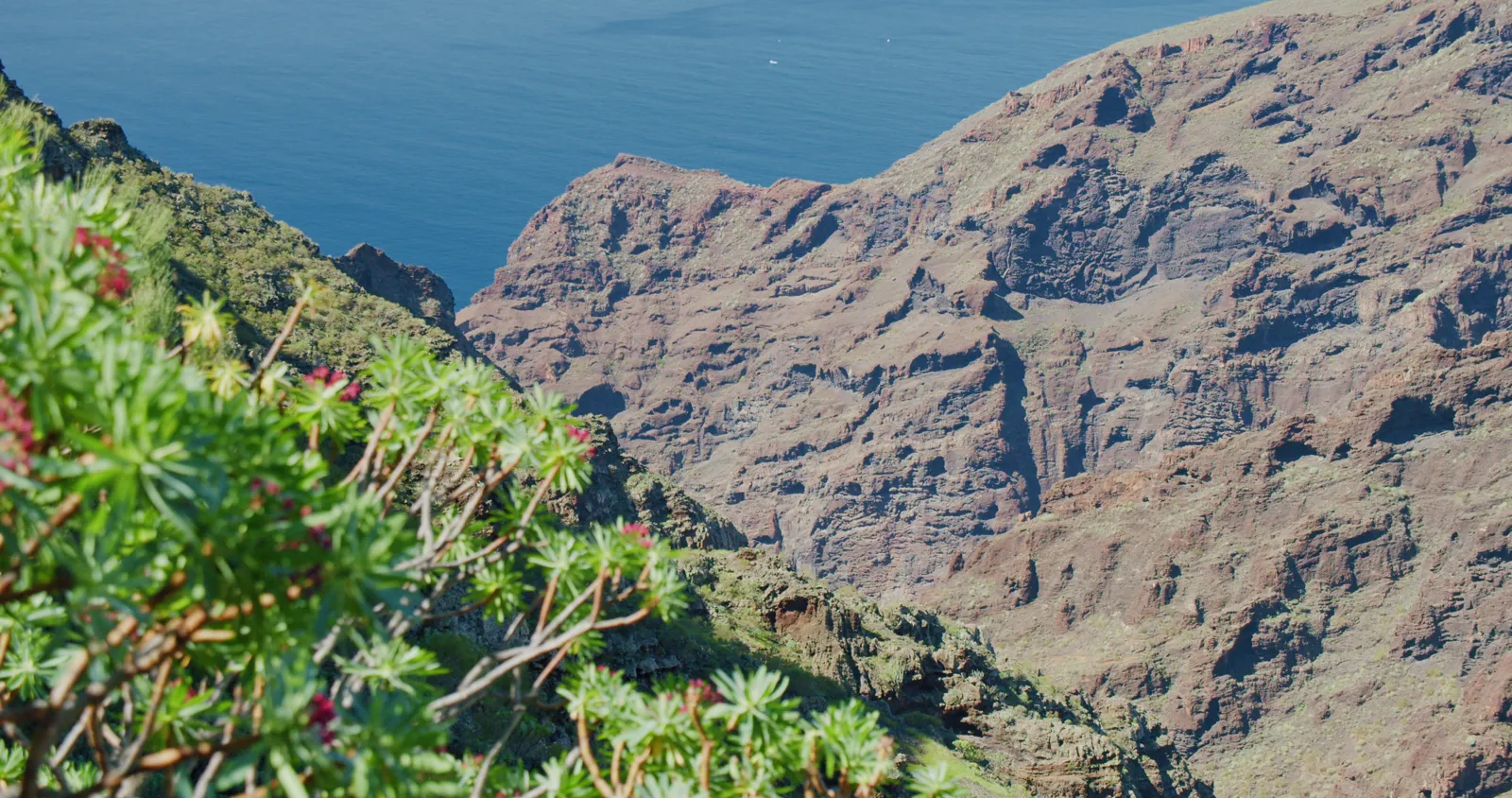
Nicknamed the islands of « eternal spring », the Canaries owe their stable climate to the trade winds, steady north-easterly winds, and to a cool ocean current that limits summer heat. But the weather changes a lot from one island to the next, and even between the north and south of a single island: the mountainous western islands (Tenerife, La Palma, La Gomera) have a green, cloudy north and a dry, sunny south; Lanzarote and Fuerteventura, low-lying and close to Africa, are almost desert. Here is how to choose, based on the climate normals of Spain’s State Meteorological Agency (AEMET).

Our travel deals for Canary Islands
Affiliate links: we earn a commission, at no extra cost to you.
 FlightsKiwi.comCompare flights and airline combinations to Canary Islands.Compare flights

When to go to the Canary Islands at a glance
- Best times April to June and September to November (good weather, moderate prices and crowds)
- To escape the winter December to March, about 21 to 23 °C (70 to 73 °F) in the afternoon at the seaside; choose the south of the islands, which is drier and sunnier
- For the beach in summer July to September, 28 to 30 °C (82 to 86 °F), without oppressive heat
- Pricier and busier Christmas and New Year, February–March (winter school holidays in Europe), Easter and July–August
- South rather than north in Tenerife, winter rainfall is about five times lower at the south airport than at the north airport
- Keep an eye on calima episodes (Saharan dust), possible all year, and AEMET weather warnings
When to go to the Canary Islands by priority
- Best weather: April to June and September to November; from December to March, choose the drier south of the islands
- Cheapest: May–June, then late September and October, between the winter season and the summer holidays
- Fewest crowds: May, the quietest month in our table, then June and September–October
- Events: the Santa Cruz de Tenerife and Las Palmas carnivals (February–March, date varies), Canary Islands Day on May 30, Corpus Christi in La Orotava in June
Canary Islands: the calendar at a glance
🔎 Month by month: Canary Islands in January · Canary Islands in February · Canary Islands in April · Canary Islands in November · Canary Islands in December
✅ Best months: January, February, March, April, may, June, September, October, November
Climate in the Canary Islands month by month
The table below gives the normals for Santa Cruz de Tenerife, the capital of the most visited island, on the east coast. The other islands are covered further down. Tenerife and the other islands of the archipelago appear on the map of the Canary Islands.
| Month | Avg. max | Avg. min | Rain | Crowds | Prices | Verdict |
|---|---|---|---|---|---|---|
| January | 21.5 °C (71 °F) | 15.5 °C (60 °F) | 29 mm (1.1 in) | High | High | Mild winter weather, Europeans’ peak season ✅ |
| February | 21.6 °C (71 °F) | 15.4 °C (60 °F) | 33 mm (1.3 in) | High (carnival) | High | Carnival, a few showers possible ✅ |
| March | 22.4 °C (72 °F) | 15.9 °C (61 °F) | 28 mm (1.1 in) | High | High | Mild, still some rain in the north ✅ |
| April | 23.3 °C (74 °F) | 16.8 °C (62 °F) | 10 mm (0.4 in) | Moderate (high at Easter) | Moderate | Dry spring, good value ✅ |
| May | 24.8 °C (77 °F) | 18.2 °C (65 °F) | 4 mm (0.2 in) | Low | Low | Excellent compromise, almost no rain ✅ |
| June | 26.9 °C (80 °F) | 19.9 °C (68 °F) | 1 mm (0.04 in) | Moderate | Moderate | Dry and sunny before the summer holidays ✅ |
| July | 29.2 °C (85 °F) | 21.6 °C (71 °F) | 0 mm (0.0 in) | Very high | Very high | Hot and dry, but prices and crowds at their peak ⚠️ |
| August | 29.7 °C (85 °F) | 22.4 °C (72 °F) | 4 mm (0.2 in) | Very high | Very high | Hottest and most expensive month ⚠️ |
| September | 28.6 °C (83 °F) | 22.1 °C (72 °F) | 5 mm (0.2 in) | Moderate | Moderate | Warm sea, crowds easing ✅ |
| October | 27.0 °C (81 °F) | 20.7 °C (69 °F) | 24 mm (0.9 in) | Moderate | Moderate | Still warm, first rains ✅ |
| November | 24.5 °C (76 °F) | 18.6 °C (65 °F) | 36 mm (1.4 in) | Moderate → high | Moderate → high | Mild, start of the winter season ✅ |
| December | 22.6 °C (73 °F) | 16.8 °C (62 °F) | 37 mm (1.5 in) | High (holidays) | High at Christmas | Mild, but the wettest and, over the holidays, the priciest ⚠️ |
Note: the gap between the coolest and the warmest month is only about 8 °C (14 °F), and there is almost no rain from May to September. Even in winter, rain falls on few days: about 5 days of rain (at least 1 mm (0.04 in)) a month in November–December at Santa Cruz, compared with less than one from June to September. The Canary Islands are also very sunny: about 3,000 hours of sunshine a year at Santa Cruz de Tenerife, from 178 hours in December to 346 hours in July (same WMO 1991–2020 normals).
The seasons in the Canary Islands: pros and cons
Winter (December to March): sunshine while Europe is cold
This is the Canaries’ big season. With 21 to 22 °C (70 to 72 °F) in the afternoon at the seaside and nights around 15 °C (59 °F), it is one of the warmest winter destinations in Europe. The sky is more changeable than in summer, especially on the north slopes of the mountainous islands, and the modest rains are concentrated from November to March. At altitude, winter is a real winter: snow is not unusual on the heights of Teide.
- Pros: mild weather that is rare in Europe at this time of year, carnival, pleasant hiking
- Cons: peak season, so high prices and bookings to make early; the sea feels cool to some swimmers; shorter days
- Our tip: stay in the south of Tenerife or Gran Canaria, or in Lanzarote and Fuerteventura, the driest and sunniest areas in winter
Spring (April to June): the most balanced period
Spring combines the advantages: it almost stops raining (less than 5 mm (0.2 in) in May at Santa Cruz de Tenerife), temperatures climb from 23 to 27 °C (73 to 81 °F) and crowds drop sharply after Easter. May and June are often among the cheapest months of the year, between the winter season and the summer holidays.
- Pros: dry weather, moderate prices, few people, landscapes still green in the north of the islands after the winter
- Cons: the sea is still cool; skies sometimes overcast on the north coasts
- Our tip: May is the best month for combining hiking, sightseeing and the beach without the crowds
Summer (July to September): hot, dry and windy
Summer is hot without excess: an average high of about 29.5 °C (85 °F) in August at Santa Cruz de Tenerife and in Lanzarote, and 28 °C (82 °F) in Gran Canaria and Fuerteventura. The trade winds blow most steadily then: they cool the air but make some beaches windy, especially in Fuerteventura and Lanzarote, which delight windsurfers and kitesurfers. Calima episodes, when hot, dust-laden air arrives from the Sahara, can push temperatures up sharply for a few days.
- Pros: near-guaranteed sunshine, the sea at its warmest in late summer, all water sports open
- Cons: Spanish and European holidays, so prices peak in July–August; strong wind on some beaches; wildfire risk on the wooded islands
- Our tip: September offers the same weather as August, with a warm sea and far fewer people
Autumn (October–November): late-season mildness
October is still summery (about 26 to 27 °C (79 to 81 °F) in the afternoon on the coasts, 27.0 °C (81 °F) at Santa Cruz), then the first rains return at the end of the month, especially in the north and on La Palma. November opens the winter season: it is still 24 to 25 °C (75 to 77 °F) at the seaside, and prices rise gradually as Christmas approaches.
- Pros: the sea is still pleasant, gentle warmth, good value before the holidays
- Cons: first showers; autumn school holidays are in higher demand
When to go to the Canary Islands, island by island
Temperatures vary little from one island to another at sea level; rainfall and sunshine make the difference. Here is a comparison of the normals from five stations, all located near the coast:
| Month | Tenerife South | Gran Canaria | Lanzarote | Fuerteventura | La Palma |
|---|---|---|---|---|---|
| January | 22.8 °C (73 °F) / 17 mm (0.7 in) | 21.1 °C (70 °F) / 23 mm (0.9 in) | 20.9 °C (70 °F) / 15 mm (0.6 in) | 20.8 °C (69 °F) / 13 mm (0.5 in) | 20.6 °C (69 °F) / 49 mm (1.9 in) |
| February | 22.9 °C (73 °F) / 19 mm (0.7 in) | 21.3 °C (70 °F) / 20 mm (0.8 in) | 21.5 °C (71 °F) / 16 mm (0.6 in) | 21.1 °C (70 °F) / 10 mm (0.4 in) | 20.7 °C (69 °F) / 57 mm (2.2 in) |
| March | 23.6 °C (74 °F) / 13 mm (0.5 in) | 22.2 °C (72 °F) / 12 mm (0.5 in) | 22.9 °C (73 °F) / 12 mm (0.5 in) | 22.3 °C (72 °F) / 10 mm (0.4 in) | 21.2 °C (70 °F) / 33 mm (1.3 in) |
| April | 24.0 °C (75 °F) / 8 mm (0.3 in) | 22.9 °C (73 °F) / 5 mm (0.2 in) | 23.8 °C (75 °F) / 4 mm (0.2 in) | 23.2 °C (74 °F) / 5 mm (0.2 in) | 21.6 °C (71 °F) / 19 mm (0.7 in) |
| May | 25.0 °C (77 °F) / 1 mm (0.04 in) | 24.0 °C (75 °F) / 1 mm (0.04 in) | 25.2 °C (77 °F) / 1 mm (0.04 in) | 24.7 °C (76 °F) / 1 mm (0.04 in) | 22.6 °C (73 °F) / 7 mm (0.3 in) |
| June | 26.2 °C (79 °F) / 0 mm (0.0 in) | 25.6 °C (78 °F) / 0 mm (0.0 in) | 26.7 °C (80 °F) / 0 mm (0.0 in) | 26.3 °C (79 °F) / 0 mm (0.0 in) | 24.1 °C (75 °F) / 2 mm (0.08 in) |
| July | 28.2 °C (83 °F) / 0 mm (0.0 in) | 27.2 °C (81 °F) / 0 mm (0.0 in) | 28.5 °C (83 °F) / 0 mm (0.0 in) | 27.5 °C (82 °F) / 0 mm (0.0 in) | 25.5 °C (78 °F) / 1 mm (0.04 in) |
| August | 28.8 °C (84 °F) / 2 mm (0.08 in) | 27.8 °C (82 °F) / 1 mm (0.04 in) | 29.5 °C (85 °F) / 1 mm (0.04 in) | 27.9 °C (82 °F) / 0 mm (0.0 in) | 26.3 °C (79 °F) / 1 mm (0.04 in) |
| September | 28.1 °C (83 °F) / 3 mm (0.1 in) | 27.2 °C (81 °F) / 5 mm (0.2 in) | 28.6 °C (83 °F) / 2 mm (0.08 in) | 27.5 °C (82 °F) / 2 mm (0.08 in) | 26.6 °C (80 °F) / 12 mm (0.5 in) |
| October | 27.3 °C (81 °F) / 13 mm (0.5 in) | 26.3 °C (79 °F) / 21 mm (0.8 in) | 27.0 °C (81 °F) / 13 mm (0.5 in) | 26.4 °C (80 °F) / 11 mm (0.4 in) | 25.5 °C (78 °F) / 41 mm (1.6 in) |
| November | 25.4 °C (78 °F) / 11 mm (0.4 in) | 24.3 °C (76 °F) / 17 mm (0.7 in) | 24.3 °C (76 °F) / 16 mm (0.6 in) | 24.2 °C (76 °F) / 13 mm (0.5 in) | 23.5 °C (74 °F) / 70 mm (2.8 in) |
| December | 23.7 °C (75 °F) / 33 mm (1.3 in) | 22.3 °C (72 °F) / 29 mm (1.1 in) | 22.0 °C (72 °F) / 21 mm (0.8 in) | 22.1 °C (72 °F) / 21 mm (0.8 in) | 21.8 °C (71 °F) / 80 mm (3.1 in) |
Tenerife: the green north, the sunny south
Tenerife is a perfect illustration of the north-south contrast. The trade winds push the clouds against the north slope of the island, which stays green and often overcast; the sheltered south is dry and bright. At Tenerife North airport (La Laguna, at 632 m (2,073 ft) above sea level), about 80 mm (3.1 in) of rain falls in January and the thermometer does not rise above 16 °C (61 °F) in the afternoon; at Tenerife South airport, 17 mm (0.7 in) falls and it is close to 23 °C (73 °F). For a winter beach holiday, the south (Los Cristianos, Costa Adeje) is therefore the safest choice; the north (Puerto de la Cruz, La Orotava, the Anaga massif) is better suited to hiking and sightseeing.
Teide and the highlands: a different climate
Teide, the highest point in Spain at 3,715 m (12,188 ft), has its own climate. At the Izaña observatory (2,371 m (7,779 ft)), the average high is only 7.5 °C (45 °F) in January, with 1 °C (34 °F) at night, compared with 23 °C (73 °F) in July. Bring warm clothing all year for the trip up into the national park, and check whether the roads and the cable car are open in winter, when snow can close them.
Gran Canaria
Same pattern as Tenerife: Las Palmas, in the north-east, has a hazier sky more often, while the south (Maspalomas, Playa del Inglés) gets the sun and the beach resorts.
Lanzarote and Fuerteventura: the dry islands
Low-lying and close to the African continent, these are the most arid islands of the archipelago: less than 25 mm (1.0 in) of rain a month, even in the depths of winter, and few rainy days (about two to three a month from December to February). Lanzarote is slightly warmer in summer (29.5 °C (85 °F) in August). They are also the windiest islands, an asset for windsurfing and kitesurfing. The windiest islands attract windsurfers; a stay in Lanzarote is also pleasant in summer, at around 29 °C (84 °F).
La Palma, La Gomera and El Hierro: the green islands
Further west, these more mountainous and wetter islands are geared toward hiking. At La Palma airport, 70 to 80 mm (2.8 to 3.1 in) of rain falls a month in November–December, and there is noticeably less sunshine than on the eastern islands. For walking there, aim for April to June or September–October, when the trails are dry and the days are long. April is covered in our page on the Canary Islands in April.
Which island for which month?
At sea level it is mild all year; rainfall, altitude and the activity you choose make the difference.
| Region | Jan | Feb | Mar | Apr | May | Jun | Jul | Aug | Sep | Oct | Nov | Dec |
|---|---|---|---|---|---|---|---|---|---|---|---|---|
| South of Tenerife and Gran Canaria (beach) | ✅ | ✅ | ✅ | ✅ | ✅ | ✅ | ✅ | ✅ | ✅ | ✅ | ✅ | ✅ |
| Lanzarote and Fuerteventura | ✅ | ✅ | ✅ | ✅ | ✅ | ✅ | ✅ | ✅ | ✅ | ✅ | ✅ | ✅ |
| La Palma, La Gomera, El Hierro (hiking) | ⚠️ | ⚠️ | ⚠️ | ✅ | ✅ | ✅ | ✅ | ✅ | ✅ | ✅ | ⚠️ | ⚠️ |
| Teide and the highlands (climbing) | ⚠️ | ⚠️ | ⚠️ | ⚠️ | ✅ | ✅ | ✅ | ✅ | ✅ | ✅ | ⚠️ | ⚠️ |
Island-by-island details: when to go to Tenerife, to Gran Canaria and to Lanzarote.
When to go to the Canary Islands by trip type
| Trip | Best time | Where? |
|---|---|---|
| Sun and warmth in winter | December to March | South of Tenerife and Gran Canaria, Lanzarote, Fuerteventura |
| Beach and swimming | June to October | Fuerteventura, Lanzarote, south of Gran Canaria and Tenerife |
| Hiking | March to June, October–November | Tenerife (Anaga, Teide), La Palma, La Gomera |
| Climbing Teide | May to October (snow possible in winter) | Teide National Park, Tenerife |
| Windsurfing and kitesurfing | June to September (steadiest trade winds) | Fuerteventura, Lanzarote, Pozo Izquierdo (Gran Canaria) |
| Surfing | October to March (bigger swell) | North of Fuerteventura and Lanzarote |
| Budget | May–June, late September–October | All islands |
| Family trip | Spring and autumn school holidays | Tenerife, Gran Canaria, Fuerteventura |
| Carnival | February–March (date varies) | Santa Cruz de Tenerife, Las Palmas |
Note: the Atlantic swell can be strong, especially in winter on the north coasts. Respect the flags on supervised beaches.
Major events in the Canary Islands
| Period | Event | Location |
|---|---|---|
| February–March (date varies, before Lent) | Carnival, one of the biggest in Spain | Santa Cruz de Tenerife, Las Palmas de Gran Canaria |
| March–April (date varies) | Holy Week, processions and strong hotel demand | Throughout the archipelago, notably La Laguna |
| May 30 | Canary Islands Day, regional holiday | Throughout the archipelago |
| June (date varies) | Corpus Christi, carpets of flowers and sand | La Orotava (Tenerife) |
| July–August | Spanish and European holidays: peak crowds | Throughout the archipelago |
| Late December | End-of-year holidays: strong demand and high prices | Throughout the archipelago |
The Canary Islands month by month: what to expect
January: About 21 to 22 °C (70 to 72 °F) in the afternoon, 15 °C (59 °F) at night. Winter peak season; snow possible on Teide.
February: Close to January, with the carnival in some years. Book early for the winter holidays.
March: 22 °C (72 °F) on the coasts, some rain in the north. In high demand during school holidays.
April: Start of the dry season, 23 °C (73 °F). Excellent for hiking. Prices rise during Holy Week and Easter.
May: One of the best months: almost no rain, 24 to 25 °C (75 to 77 °F), few people and some of the lowest prices of the year.
June: Dry and sunny, 26 to 27 °C (79 to 81 °F), crowds still reasonable.
July: Pleasant heat (28 to 29 °C (82 to 84 °F)), steady trade winds, holidays: book early.
August: The hottest and busiest month. Watch for calima episodes and the risk of wildfires in wooded areas.
September: Same weather as August, the sea at its warmest, crowds receding. Excellent for the beach.
October: Still 26 to 27 °C (79 to 81 °F), first rains at the end of the month. Good value.
November: 24 to 25 °C (75 to 77 °F) on the coasts, showers more frequent in the north. Start of the winter season and higher prices.
December: Mild (22 to 23 °C (72 to 73 °F)), but the wettest month in Tenerife and La Palma. Prices at their highest over the holidays.
When to book your trip to the Canary Islands
For Christmas and New Year, February–March, Easter and July–August, book flights and accommodation 3 to 6 months ahead: well-located hotels in the south of the islands fill up quickly. In May–June and in October, 1 to 2 months is usually enough. For the smaller islands, you will often need a connecting flight or a ferry.
Planning your trip to the Canary Islands
- Entry requirements: the Canary Islands are part of Spain. For passport and visa rules, see our entry requirements for Spain.
- Currency: the euro. Bank cards are widely accepted.
- Health: protect yourself from the sun, which is strong even when the air is cool, and take it easy during calima episodes if you have respiratory sensitivities.
- Weather and emergencies: follow AEMET warnings in case of bad weather, strong wind or calima. The emergency number is 112 (UK FCDO, GOV.UK, updated 12 August 2026; U.S. Department of State, travel.state.gov, last updated August 11, 2025).
To go further, see our complete Canary Islands travel guide. Looking for another winter-sun destination in the Atlantic? See also when to go to Cape Verde, when to go to Madeira or when to go to Morocco. For mainland Spain, read when to go to Spain.
Frequently asked questions
What is the best month to visit the Canary Islands?
There is no bad month for the climate. May, June, September and October offer the best balance of dry, sunny weather, a pleasant sea, moderate prices and reasonable crowds.
Is it warm in the Canary Islands in winter?
Yes, for the season: about 21 to 23 °C (70 to 73 °F) in the afternoon at the seaside from December to March, and 14 to 16 °C (57 to 61 °F) at night, according to AEMET normals. It is cold at altitude, though, and the north slope of the mountainous islands is cloudier and cooler.
Which Canary Island should I choose in winter?
To maximize sunshine, choose the driest areas: the south of Tenerife (Costa Adeje, Los Cristianos), the south of Gran Canaria (Maspalomas), Lanzarote or Fuerteventura. La Palma and the north of Tenerife are wetter in winter.
Can you swim in the Canary Islands all year?
Yes, but the Atlantic stays cooler than air temperatures suggest, especially in winter and spring. It is most pleasant from late summer to autumn. Beware of swell and currents: swim preferably on supervised beaches.
What is the calima?
It is a spell of dust-laden wind from the Sahara. The sky turns yellowish, visibility drops and the temperature can rise noticeably for a few days. These episodes are possible all year; follow AEMET warnings and limit exertion if you have respiratory sensitivities.
What is the cheapest time to go to the Canary Islands?
May and June, then late September and October, between the winter season and the summer holidays, are generally the periods when flights and accommodation are cheapest.
What is the weather like in the Canary Islands in April?
The dry spring begins: at Santa Cruz de Tenerife, about 23 °C (73 °F) in the afternoon and 17 °C (63 °F) at night, with only about ten millimeters (0.4 in) of rain, according to the AEMET’s WMO 1991–2020 normals. It is a very good month for hiking, but prices rise during Holy Week and Easter.
What is the weather like in the Canary Islands in November?
It is still mild: about 24.5 °C (76 °F) in the afternoon and 18 to 19 °C (64 to 66 °F) at night at Santa Cruz de Tenerife, according to the AEMET’s WMO 1991–2020 normals. Showers return, especially in the north of the islands and on La Palma; Lanzarote, Fuerteventura and the south of Tenerife remain the driest areas.
How many hours of sunshine do the Canary Islands get?
At Santa Cruz de Tenerife, the AEMET’s WMO 1991–2020 normals give about 3,000 hours of sunshine a year: from 178 hours in December to 346 hours in July. The north slope of the mountainous islands is noticeably cloudier.
Our sources
- World Meteorological Organization: 1991–2020 normals for the AEMET stations at Santa Cruz de Tenerife (WMO 60020: temperatures, rain, rainy days, sunshine) and Tenerife South (WMO 60025), archive published by NOAA; Spain’s State Meteorological Agency (AEMET): 1991–2020 normals for the Gran Canaria, Lanzarote and Fuerteventura airports; 1981–2010 normals for the Tenerife North and La Palma airports and the Izaña observatory
- Emergency number read on 26 October 2026: UK FCDO, foreign travel advice for Spain (GOV.UK, updated 12 August 2026) and U.S. Department of State, Spain country information (travel.state.gov, last updated August 11, 2025)
- Our methodology
Updated November 2026.