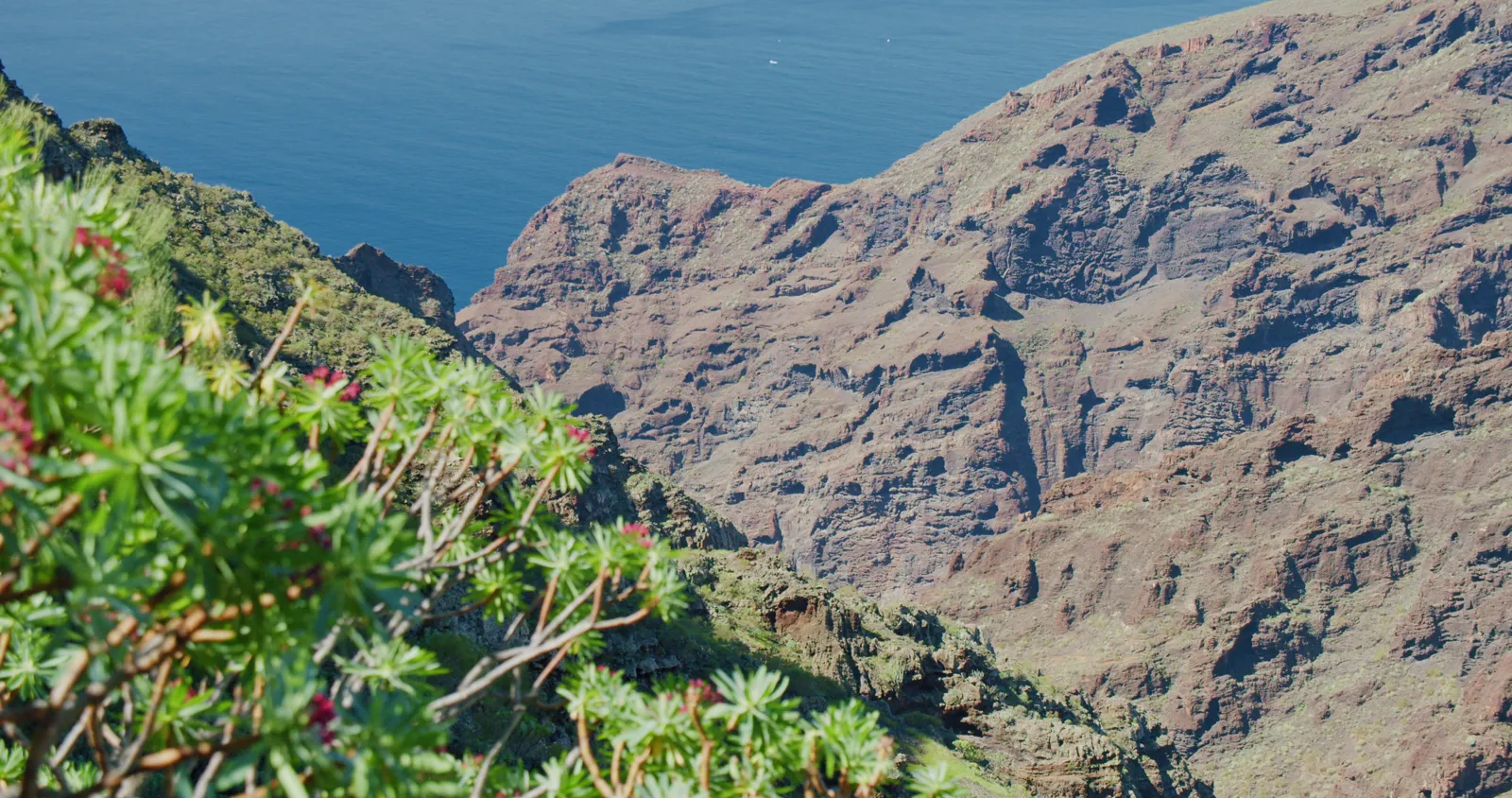
The Canary Islands in January: ✅ a very good winter sun destination. It is 21 °C (70 °F) to 23 °C (73 °F) in the afternoon and 14 °C (57 °F) to 15.5 °C (60 °F) at night by the sea, according to the 1991-2020 normals of the Spanish meteorological agency (AEMET). Rainfall stays low: from 13 mm (0.5 in) in Fuerteventura to 29 mm (1.1 in) in Santa Cruz de Tenerife. The sea, however, is cool for long swims.
January is one of the coolest months in the archipelago. The choice of island and slope matters more than the month: the south of Tenerife and Gran Canaria, Lanzarote and Fuerteventura are the driest. To compare all twelve months, see our page on the best time to visit the Canary Islands.

Our travel deals for January
Affiliate links: we earn a commission, at no extra cost to you.
 FlightsKiwi.comCompare flights and airline combinations to January.Compare flights

The Canary Islands in January: key facts
- Verdict: ✅ winter sun, coastal hiking, sightseeing; ⚠️ swimming (cool sea) and summits (snow possible)
- Tenerife South: 22.8 °C (73 °F) in the afternoon, 15.2 °C (59 °F) at night, 16.5 mm (0.6 in) of rain in fewer than 2 days
- Santa Cruz de Tenerife: 21.5 °C (71 °F), 29 mm (1.1 in) of rain
- Holidays: 1 and 6 January are public holidays (Epiphany, with the Three Kings parade the evening before)
- Time difference: in January, the Canary Islands (UTC+0) are on the same time as London (GMT) and 5 hours ahead of New York (EST)
Weather in the Canary Islands in January, island by island
| Station | Island | Max | Min | Rain | Rainy days | Per 7 days | Sunshine (h) |
|---|---|---|---|---|---|---|---|
| Santa Cruz de Tenerife (WMO 60020) | Tenerife (north-east) | 21.5 °C (71 °F) | 15.5 °C (60 °F) | 28.8 mm (1.1 in) | 4.0 | 1 | 188 |
| Tenerife South, airport (WMO 60025) | Tenerife (south) | 22.8 °C (73 °F) | 15.2 °C (59 °F) | 16.5 mm (0.6 in) | 1.6 | 0 | 222 |
| Gran Canaria, airport (C649I) | Gran Canaria (east) | 21.1 °C (70 °F) | 15.2 °C (59 °F) | 23.4 mm (0.9 in) | 5.7 | 1 | – |
| Lanzarote, airport | Lanzarote | 20.9 °C (70 °F) | 14.2 °C (58 °F) | 15.4 mm (0.6 in) | 2.8 | 1 | 205 |
| Fuerteventura, airport | Fuerteventura | 20.8 °C (69 °F) | 14.9 °C (59 °F) | 12.6 mm (0.5 in) | 2.3 | 1 | 195 |
Destination de Voyage calculation from these normals: in January, the temperature gap between the islands does not exceed 2 °C (4 °F) in the afternoon; what changes is the rain. Santa Cruz de Tenerife, on the north-east coast, receives 1.7 times more rain than Tenerife South airport and has 2.5 times more rainy days. Lanzarote and Fuerteventura are the driest; Tenerife South is the sunniest (222 hours of sunshine in the month), ahead of Lanzarote and Fuerteventura (about 200 hours). Everywhere, the day-night gap is about 6 to 7.5 °C (11 to 14 °F): evenings are cool, so pack a sweater.
These values are those of our page on the best time to visit the Canary Islands: same stations and same 1991-2020 period.
January compared with December and February
| Santa Cruz de Tenerife | December | January | February |
|---|---|---|---|
| Max | 22.6 °C (73 °F) | 21.5 °C (71 °F) | 21.6 °C (71 °F) |
| Min | 16.8 °C (62 °F) | 15.5 °C (60 °F) | 15.4 °C (60 °F) |
| Rain | 36.8 mm (1.4 in) | 28.8 mm (1.1 in) | 32.9 mm (1.3 in) |
January and February are the two coolest months; January is a little less rainy than December in Santa Cruz. For a carnival atmosphere, see the Canary Islands in February instead.
Which island to choose in January
- Tenerife: the south (Los Cristianos, Costa Adeje) for sun; the north (La Laguna, Anaga, Puerto de la Cruz) for greenery, with more cloud. See the best time to visit Tenerife.
- Gran Canaria: Maspalomas and Playa del Inglés in the south, cloudier Las Palmas in the north-east. See the best time to visit Gran Canaria.
- Lanzarote: volcanic landscapes, skies most often clear. See the best time to visit Lanzarote.
- Fuerteventura: the driest in the table; big beaches, wind and a winter swell that surfers enjoy.
- La Palma, La Gomera: hiking, but high-altitude trails are damper and cloudier in winter.
Things to do in the Canary Islands in January
- Coastal hikes and walks in the laurel forests (Anaga, Garajonay), starting early
- Teide National Park: snow is possible at altitude in winter; check access and mountain weather before going up
- Surfing on the north coast of Fuerteventura and Lanzarote, in swell season
- Night-sky watching (La Palma, Teide), when skies are clear
- Swimming: the sea is cool in winter; choose sheltered, supervised beaches
Holidays in January
According to the official calendar of public holidays published in the Spanish Official State Gazette (BOE) for 2026, 1 January (New Year’s Day) and 6 January (Epiphany) are public holidays in the Canary Islands; on the evening of the 5th, towns hold their Three Kings parades. The 2027 calendar will be published in the BOE, so check it before you leave. The same text lists 2 February, the feast of the Virgen de la Candelaria, as a public holiday in Tenerife. The carnival is held rather in February or March, depending on the date of Easter.
Booking for January
The first and sixth of January are public holidays (BOE); the first week of the month follows the end-of-year festivities. For prices and availability, compare hotel and rental sites directly: we do not publish unsourced average prices.
What to pack for the Canary Islands in January
- Summer clothes for daytime in the south
- A sweater and windproof jacket for evenings and the north
- Warm clothes if you are going up Teide
- Hiking shoes
- Sunscreen: the sun is still strong in winter
- Swimwear and possibly a light wetsuit for the cool water
Entry requirements and safety
For passport and entry rules, see our entry requirements for the Canary Islands. Time difference: the Canary Islands keep Western European Time (UTC+0) in winter and UTC+1 in summer, so they are on the same time as London all year, and 5 hours ahead of New York in January (UTC−5, EST).
On safety, the UK FCDO (GOV.UK, updated 12 August 2026) advises taking care when swimming in the sea, noting that some beaches, especially around Spanish islands, may have strong undercurrents, and recommends checking weather warnings from the Spanish Meteorological Office (AEMET). It also notes that UK travellers need a Global Health Insurance Card (GHIC) or European Health Insurance Card (EHIC) to get medically necessary state healthcare in Spain, which is not an alternative to travel insurance; the U.S. State Department encourages U.S. citizens to buy medical evacuation insurance (travel.state.gov, last updated August 11, 2025).
If January does not suit you
Neighbouring months: the Canary Islands in December are a little milder; the Canary Islands in February bring the carnival. For warmer water, aim for autumn: see the Canary Islands in November.
Other destinations in January: Madeira, with a similar climate, Cape Verde in January, hotter, or Egypt in January. All our ideas: where to go in January. To plan your stay: our Canary Islands travel guide.
Frequently asked questions
What is the weather like in the Canary Islands in January?
Mild: 21 °C (70 °F) to 23 °C (73 °F) in the afternoon and 14 °C (57 °F) to 15.5 °C (60 °F) at night by the sea, with 13 mm (0.5 in) to 29 mm (1.1 in) of rain depending on the island (AEMET 1991-2020 normals).
Which is the warmest Canary Island in January?
The gaps are small. Among the stations compared, Tenerife South airport is the warmest (22.8 °C (73 °F)); Fuerteventura and Lanzarote are the driest.
Can you swim in the Canary Islands in January?
Yes, but the sea is cool in winter. Choose sheltered, supervised beaches in the south, and respect the flags.
Does it rain a lot in the Canary Islands in January?
No: 2 to 3 rainy days in the month in southern Tenerife, Lanzarote and Fuerteventura; more in the north of the mountainous islands.
Where can you check entry requirements for the Canary Islands?
Entry rules depend on your nationality: see our page on the entry requirements for the Canary Islands, which links to the official U.S. and UK government sources.
Our sources
- World Meteorological Organization: 1991-2020 normals for the AEMET stations of Santa Cruz de Tenerife (60020) and Tenerife South airport (60025), archive published by NOAA; Spanish State Meteorological Agency (AEMET): 1991-2020 normals for the airports of Gran Canaria, Lanzarote and Fuerteventura (from our best time to visit the Canary Islands page)
- NOAA: sunshine at Santa Cruz de Tenerife and Tenerife South (same archive)
- Official State Gazette (BOE), resolution of 17 October 2025 setting the 2026 public holidays, read on 23 October 2026
- Health and safety information: UK FCDO, foreign travel advice for Spain (GOV.UK, updated 12 August 2026), and U.S. Department of State, Spain country information (travel.state.gov, last updated August 11, 2025), both read on 26 October 2026
- Time rules: GOV.UK, When do the clocks change; NIST, Daylight Saving Time; EU Directive 2000/84/EC on summer-time arrangements
- Our methodology
Updated November 2026.