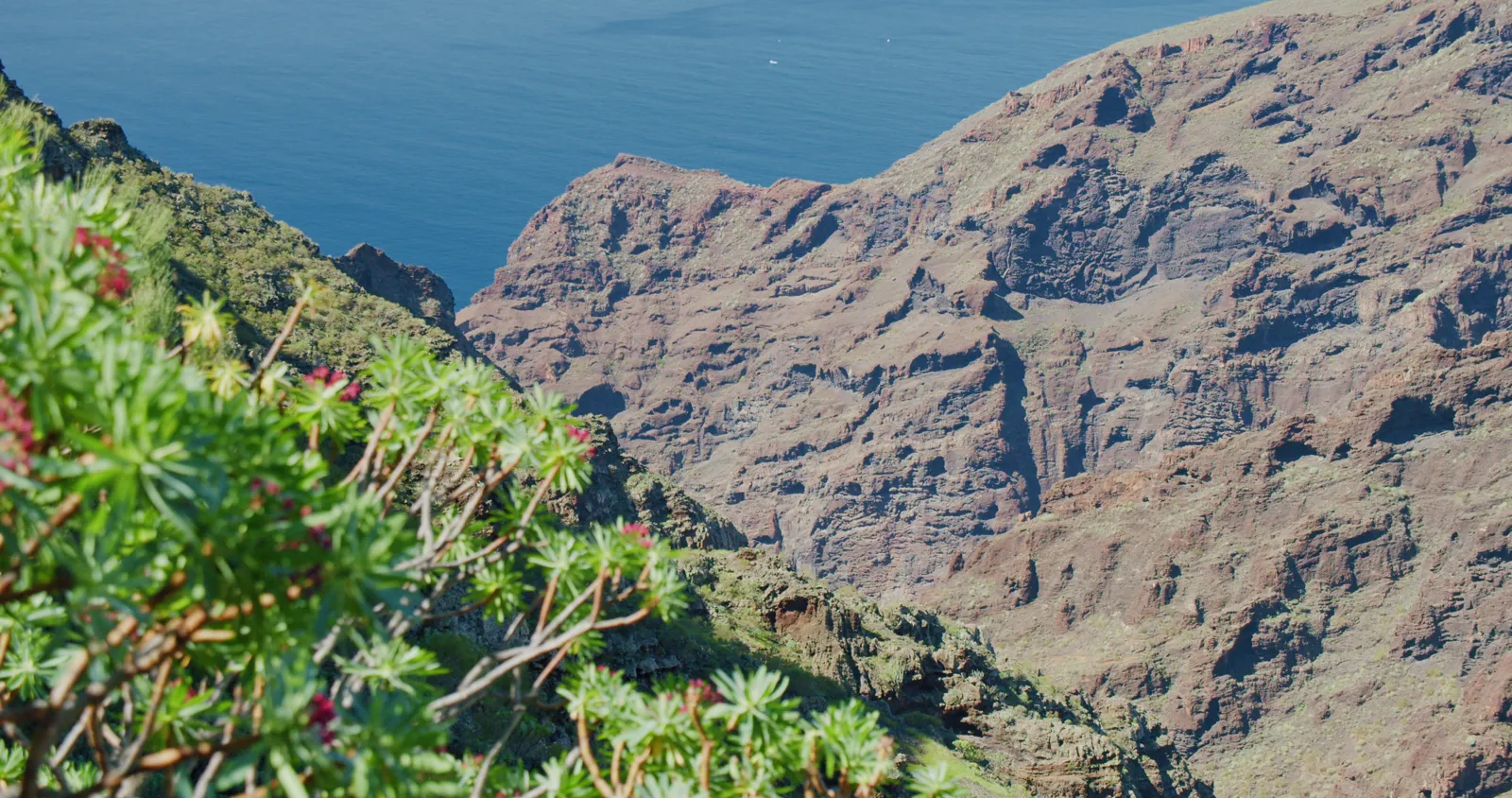
The Canary Islands in February are a good choice for finding mild weather in the depths of winter: around 21 °C (70 °F) to 23 °C (73 °F) in the afternoon by the sea, 15 °C (59 °F) at night and little rain, especially in the south of the islands. Verdict: ✅ an ideal month for winter sun, hiking and the carnival, with two caveats: a sea that is cool for many swimmers and high prices during the winter school holidays. To compare with other months, see our page on the best time to visit the Canary Islands.
February is one of the coolest months of the year in the archipelago, but the gap with summer remains small. What really changes from one island to another is rain and sun: the south of Tenerife and Gran Canaria, Lanzarote and Fuerteventura are clearly drier than the north of the mountainous islands and La Palma. For spring, see our page on the Canary Islands in April.

Our travel deals for February
Affiliate links: we earn a commission, at no extra cost to you.
 FlightsKiwi.comCompare flights and airline combinations to February.Compare flights

The Canary Islands in February: key facts
- Temperatures: 21 °C (70 °F) to 23 °C (73 °F) in the afternoon on the coasts, about 15 °C (59 °F) at night (AEMET normals)
- Rain: 10 mm (0.4 in) to 20 mm (0.8 in) in the south and the eastern islands, 33 mm (1.3 in) in Santa Cruz, 57 mm (2.2 in) at La Palma airport
- Sea: cool for many swimmers; heated pools and sheltered beaches are the most pleasant
- Event: Santa Cruz de Tenerife and Las Palmas carnivals, on variable dates
- Prices: high season, with a peak during the winter school holidays
- Time difference: in February, the Canary Islands (UTC+0) are on the same time as London (GMT) and 5 hours ahead of New York (EST)
Weather in the Canary Islands in February: island by island
At sea level, temperatures vary little from one island to another. The table below uses the normals from coastal stations of the Spanish State Meteorological Agency (AEMET), already published on our best time to visit page.
| Station | Max | Min | Rain |
|---|---|---|---|
| Santa Cruz de Tenerife (north-east) | 21.6 °C (71 °F) | 15.4 °C (60 °F) | 33 mm (1.3 in) |
| Tenerife South (airport) | 22.9 °C (73 °F) | — | 19 mm (0.7 in) |
| Gran Canaria (airport) | 21.3 °C (70 °F) | — | 20 mm (0.8 in) |
| Lanzarote (airport) | 21.5 °C (71 °F) | — | 16 mm (0.6 in) |
| Fuerteventura (airport) | 21.1 °C (70 °F) | — | 10 mm (0.4 in) |
| La Palma (airport) | 20.7 °C (69 °F) | — | 57 mm (2.2 in) |
In February, Santa Cruz de Tenerife receives about 33 mm (1.3 in) of rain, spread over a few days of showers: most days stay dry. Fuerteventura is the driest island (10 mm (0.4 in)), La Palma the wettest. At altitude it is still winter: at the Izaña observatory, on the slopes of Teide, the average maximum does not exceed 7.5 °C (46 °F) in January, and snow can close the national park roads or the cable car. For the previous month, our page on the Canary Islands in January compares islands and slopes.
Which island to choose in February
- Sun and beach: southern Tenerife (Los Cristianos, Costa Adeje), southern Gran Canaria (Maspalomas), Lanzarote or Fuerteventura, the driest areas.
- Carnival: Santa Cruz de Tenerife or Las Palmas de Gran Canaria, provided you book early.
- Hiking: Tenerife (Anaga and Teno massifs) and La Gomera; La Palma is beautiful but wetter at this time of year.
- Teide: possible in good weather, but with warm clothes and after checking whether roads and the cable car are open.
For more detail by island, see also the best time to visit Tenerife, Gran Canaria and Lanzarote.
Things to do in the Canary Islands in February
- The carnival: the one in Santa Cruz de Tenerife is among the biggest in Spain, and so is the one in Las Palmas. Parades, contests and street parties take place over several weeks before Lent.
- Hiking: cool temperatures and green countryside in the north of the islands after the winter rains; start early and bring a warm layer for the highlands.
- The beach in the south: sunbathing is easy, and swimming is for those who can bear cool water.
- Sightseeing: La Laguna, La Orotava, Teguise or the César Manrique creations in Lanzarote are best visited without the summer heat.
- Surfing: the winter swell favours the spots in the north of Fuerteventura and Lanzarote (for experienced surfers only).
The carnival in February: dates and tips
The Canary Islands carnival follows the Easter calendar. In 2027, Easter falls on 28 March, Mardi Gras on 9 February and Ash Wednesday on 10 February: the highlights should therefore fall in February, although some towns extend the festivities beyond that. Official programmes are published by the municipalities a few months ahead: check them before booking. During the carnival, accommodation in Santa Cruz and Las Palmas is in high demand and the centres are noisy at night. For a quieter carnival or a less lively island, our page on Lanzarote in February covers conditions on the neighbouring island.
Crowds and prices in February
February is in the middle of the winter high season. Winter school holidays in Europe and North America, spread over several weeks, add strong demand for flights and for hotels in the south of Tenerife and Gran Canaria. To pay less, aim for early February or the end of the month, outside the school holidays, and book as early as possible: 3 to 6 months ahead for holiday periods.
What to pack for the Canary Islands in February
- Summer clothes for the day and a sweater or light jacket for the evenings (15 °C (59 °F) at night).
- A warm jacket, a hat and closed shoes if you are going up Teide.
- A windbreaker and a light rain jacket for the north of the islands.
- Sunscreen, sunglasses and a hat: the sun remains strong, even when the air is cool.
- Swimwear and possibly a light wetsuit for swimming or snorkelling.
Before you go
For passport and entry rules, see our entry requirements for the Canary Islands. Time difference: the Canary Islands keep Western European Time (UTC+0) in winter and UTC+1 in summer, so they are on the same time as London all year, and 5 hours ahead of New York in February (UTC−5, EST). Health: UK travellers need a Global Health Insurance Card (GHIC) or European Health Insurance Card (EHIC) to get medically necessary state healthcare in Spain, and it is not an alternative to travel insurance (UK FCDO, GOV.UK, updated 12 August 2026); the U.S. State Department encourages U.S. citizens to buy medical evacuation insurance (travel.state.gov, last updated August 11, 2025).
If February does not suit you
March is very close to February (22 °C (72 °F), a little more rain in the north); April marks the start of the dry season with gentler prices outside Easter. At the end of the year, see our page on the Canary Islands in November, quieter and cheaper than the festive season.
To plan your stay (islands, budget, transport), read our Canary Islands travel guide.
Other sunny destinations in February: Cape Verde (hotter, dry and windy), Madeira (close in climate, greener) or Marrakech (mild by day, cool at night). All our ideas are in our guide where to go in February.
Frequently asked questions
Is it hot in the Canary Islands in February?
Mild rather than hot: around 21 °C (70 °F) to 23 °C (73 °F) in the afternoon by the sea and 15 °C (59 °F) at night, according to AEMET normals. It is clearly colder at altitude, on Teide in particular.
Which is the warmest Canary Island in February?
The gaps are small. According to AEMET normals, Tenerife South airport is the warmest of the stations compared (22.9 °C (73 °F) average maximum), ahead of Lanzarote (21.5 °C (71 °F)). Southern Tenerife is also one of the driest areas.
Can you swim in the Canary Islands in February?
Yes, but the Atlantic is cool at this time of year and many travellers stick to pools, often heated. Swim at supervised beaches: the winter swell can be strong, especially on north-facing coasts.
Does it rain a lot in the Canary Islands in February?
No. On average about 10 mm (0.4 in) falls in Fuerteventura, 16 mm (0.6 in) in Lanzarote, 19 mm (0.7 in) in Tenerife South and 33 mm (1.3 in) in Santa Cruz de Tenerife. La Palma is wetter (57 mm (2.2 in)).
When is the Canary Islands carnival in 2027?
The date follows Easter: in 2027, Mardi Gras falls on 9 February. The festivities in Santa Cruz de Tenerife and Las Palmas should therefore be concentrated in February; check the municipalities’ official programmes.
Is it expensive to visit the Canary Islands in February?
It is the winter high season, and school holidays push prices up further. Book early and, if possible, choose weeks outside the school holidays.
Our sources
- World Meteorological Organization: 1991-2020 normals for the AEMET stations of Santa Cruz de Tenerife and Tenerife South (NOAA archive); Spanish State Meteorological Agency (AEMET): 1991-2020 normals for the airports of Gran Canaria, Lanzarote and Fuerteventura; 1981-2010 normals for La Palma airport and the Izaña observatory (data published on our best time to visit the Canary Islands page)
- Liturgical calendar: date of Easter 2027 (28 March), on which Mardi Gras and the carnival depend
- Health and insurance information: UK FCDO, foreign travel advice for Spain (GOV.UK, updated 12 August 2026), and U.S. Department of State, Spain country information (travel.state.gov, last updated August 11, 2025), both read on 26 October 2026
- Time rules: GOV.UK, When do the clocks change; NIST, Daylight Saving Time; EU Directive 2000/84/EC on summer-time arrangements
- Our methodology
Updated November 2026.