When is the best time to visit Cape Verde? The best period runs from November to June: this is the dry season, with almost no rain, 25 to 28 °C (77 to 82 °F) in the afternoon and a steady wind. For warmer water and even warmer days, October and November are a very good compromise. The short rainy season, from August to October, stays modest: a few showers, mostly in September.
Cape Verde is an archipelago of ten islands off Senegal, with a dry, sunny climate all year. The real differences lie elsewhere: the strength of the trade winds, the dust haze from the Sahara in winter, the water temperature and the type of island you choose. The flat islands (Sal, Boa Vista) suit the beach and kitesurfing, the mountainous islands (Santo Antão, Fogo) suit hiking. Here is how to choose, based on the official climate normals.

Our travel deals for Cape Verde
Affiliate links: we earn a commission, at no extra cost to you.
 FlightsKiwi.comCompare flights and airline combinations to Cape Verde.Compare flights
- eSIMAiraloData plan to install before you leave (eSIM-compatible phone).See plans


When to go to Cape Verde at a glance
- Best overall period November to June (dry season)
- Warmest sea, rain still low October – November
- Kitesurfing and windsurfing December to April, when the trade winds blow hardest
- Hiking on Santo Antão and Fogo November to March (mild temperatures); greener landscapes just after the rains
- Rainy season August to October, peaking in September (about 35 mm (1.4 in) at Sal, 75 mm (3.0 in) at Praia)
- Dry haze (harmattan) possible from December to March, veiling the sky on some days
- Sea turtle nesting in summer and early autumn, on Sal and Boa Vista
When to go to Cape Verde by priority
- Best weather: November to June, the dry season; November, May and June are among the best months
- Cheapest: May and June: dry weather, low prices and few crowds
- Fewest crowds: May, June and September (the wettest month, but with simple showers)
- Events: Mindelo carnival in February or March, Gamboa festival usually in May, Independence Day on July 5, turtle nesting from about July to October
Cape Verde: the calendar at a glance
🔎 Month by month: Cape Verde in January · Cape Verde in February · Cape Verde in March · Cape Verde in April · Cape Verde in may · Cape Verde in October · Cape Verde in November · Cape Verde in December
✅ Best months: January, February, March, April, may, June, July, October, November, December
Climate in Cape Verde month by month
The table below gives the normals for Sal (Amílcar Cabral airport), the island where most travelers arrive. Boa Vista, its equally flat neighbor, has a very similar climate. Santiago (Praia) and São Vicente (Mindelo) are compared further down.
| Month | Avg. max | Avg. min | Rain | Crowds | Prices | Verdict |
|---|---|---|---|---|---|---|
| January | 25.0 °C (77 °F) | 19.2 °C (67 °F) | 3 mm (0.1 in) | High | High | Dry, windy, cool water ✅ |
| February | 24.9 °C (77 °F) | 18.8 °C (66 °F) | 0.5 mm (0.02 in) | High (winter holidays) | High | Coolest month, ideal for kitesurfing ✅ |
| March | 25.2 °C (77 °F) | 18.9 °C (66 °F) | 0.5 mm (0.02 in) | Moderate | Moderate | Dry and windy ✅ |
| April | 25.5 °C (78 °F) | 19.6 °C (67 °F) | 1 mm (0.04 in) | Moderate (Easter) | Moderate | Dry, wind still strong ✅ |
| May | 26.1 °C (79 °F) | 20.6 °C (69 °F) | 0.5 mm (0.02 in) | Low | Low | Dry, very good value ✅ |
| June | 27.0 °C (81 °F) | 21.6 °C (71 °F) | 0 mm (0.0 in) | Low | Low | Dry, wind easing ✅ |
| July | 28.1 °C (83 °F) | 22.8 °C (73 °F) | 2 mm (0.08 in) | High (summer holidays) | High | Hot and still dry ✅ |
| August | 29.6 °C (85 °F) | 24.2 °C (76 °F) | 13 mm (0.5 in) | High | High | First showers, muggy air ⚠️ |
| September | 30.1 °C (86 °F) | 24.8 °C (77 °F) | 35 mm (1.4 in) | Low | Low | Wettest and hottest month ⚠️ |
| October | 29.6 °C (85 °F) | 24.1 °C (75 °F) | 16 mm (0.6 in) | Moderate (autumn holidays) | Moderate | Warm sea, rains receding ✅ |
| November | 28.1 °C (83 °F) | 22.5 °C (73 °F) | 1 mm (0.04 in) | Moderate | Moderate | Excellent: warm and dry ✅ |
| December | 26.1 °C (79 °F) | 20.5 °C (69 °F) | 3 mm (0.1 in) | High (holidays) | Very high | Pleasant, high prices over the holidays ✅ |
Note: even in September, Sal averages less than 40 mm (1.6 in) of rain, a modest amount. The rain arrives in a few showers or storms, sometimes violent, separated by long sunny spells. The differences between months are small: only about 5 °C (9 °F) between February and September. Our page Cape Verde in May details a dry month with less wind.
The seasons in Cape Verde: pros and cons
Cape Verde has two seasons. The dry season, from about November to July, is dominated by the north-east trade winds, a cool, constant wind. The rainy season, from August to October, corresponds to the northward shift of West African rains: it brings heat, humidity and irregular showers, more marked on the southern islands and the high ground. To place the southern islands such as Santiago, Fogo and Brava, see our map of Cape Verde.
Dry, windy season (November to June): the high season
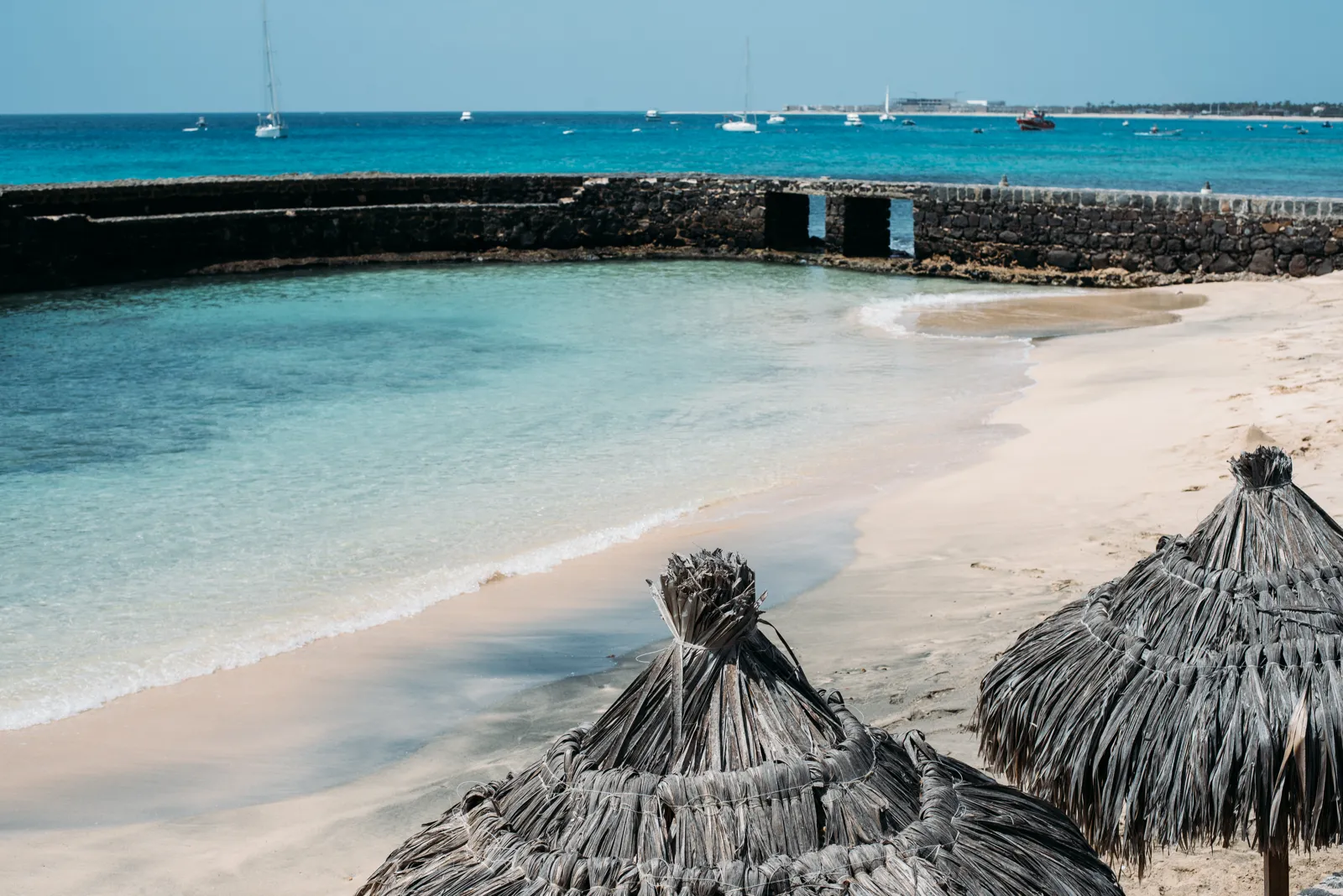
This is the period most in demand with European travelers, particularly from December to April. It hardly rains: less than 5 mm (0.2 in) a month at Sal and at Praia. Highs are around 25 °C (77 °F) at Sal and 27 to 28 °C (81 to 82 °F) at Praia, and the wind makes the heat very bearable. It is sometimes cool in the evening: bring a light sweater.
- Pros: near-guaranteed sunshine, moderate heat, ideal conditions for kitesurfing and windsurfing, good temperatures for hiking
- Cons: the water is cooler from January to April; the wind can interfere with swimming and lift sand on the exposed beaches of Sal and Boa Vista
- Dry haze: mostly from December to March, the harmattan can bring a haze of Saharan dust (bruma seca) that veils the sun and reduces visibility, sometimes for several days
- Our tip: May and June offer the same fine weather as winter, with less wind, warming water and lower prices
Rainy season (August to October): heat and green landscapes
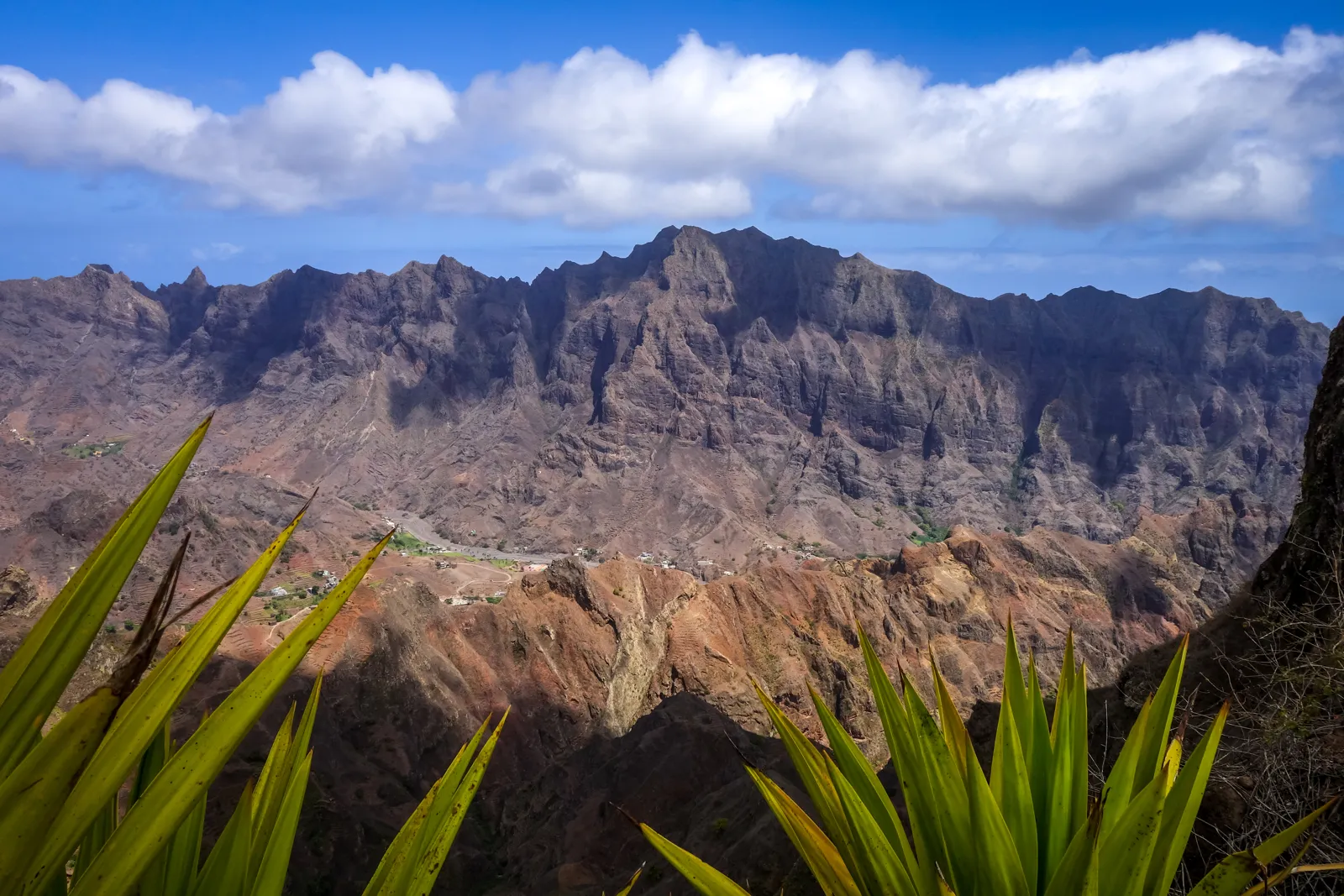
The rainy season is short and irregular. Depending on the year, it can be almost dry or bring a few strong storms. The southern islands, which are more mountainous, get the most rain: at Praia, it averages 55 mm (2.2 in) in August and 75 mm (3.0 in) in September. Highs then exceed 30 °C (86 °F), and humidity makes the air heavier, especially as the wind drops.
- Pros: the warmest sea of the year, the valleys of Santo Antão and Santiago turning green after the first rains, loggerhead turtle nesting on Sal and Boa Vista, lower prices in September
- Cons: muggy heat, possible showers and storms, trails that are slippery or roads cut in the mountains after a storm
- Who is it for? Travelers who want a warm sea and little wind, and those who want to watch the turtles
When to go to Cape Verde, island by island
Temperature differences between the islands remain small. The difference is mostly in rainfall, heavier in the south (Santiago, Fogo, Brava) and on the high ground, and in the type of trip each island allows. Here is a comparison of the normals from three stations:
| Month | Sal | Praia (Santiago) | Mindelo (São Vicente) |
|---|---|---|---|
| January | 25.0 °C (77 °F) / 3 mm (0.1 in) | 26.7 °C (80 °F) / 1 mm (0.04 in) | 24.4 °C (76 °F) / 5 mm (0.2 in) |
| February | 24.9 °C (77 °F) / 0.5 mm (0.02 in) | 26.9 °C (80 °F) / 0.4 mm (0.02 in) | 24.0 °C (75 °F) / 2 mm (0.08 in) |
| March | 25.2 °C (77 °F) / 0.5 mm (0.02 in) | 27.8 °C (82 °F) / 0.1 mm (0.004 in) | 24.4 °C (76 °F) / 0.4 mm (0.02 in) |
| April | 25.5 °C (78 °F) / 1 mm (0.04 in) | 28.1 °C (83 °F) / 0 mm (0.0 in) | 24.9 °C (77 °F) / 0.4 mm (0.02 in) |
| May | 26.1 °C (79 °F) / 0.5 mm (0.02 in) | 28.7 °C (84 °F) / 0.3 mm (0.01 in) | 25.8 °C (78 °F) / 0 mm (0.0 in) |
| June | 27.0 °C (81 °F) / 0 mm (0.0 in) | 29.5 °C (85 °F) / 0 mm (0.0 in) | 26.5 °C (80 °F) / 0 mm (0.0 in) |
| July | 28.1 °C (83 °F) / 2 mm (0.08 in) | 29.7 °C (85 °F) / 6 mm (0.2 in) | 27.9 °C (82 °F) / 3 mm (0.1 in) |
| August | 29.6 °C (85 °F) / 13 mm (0.5 in) | 30.5 °C (87 °F) / 55 mm (2.2 in) | 29.3 °C (85 °F) / 16 mm (0.6 in) |
| September | 30.1 °C (86 °F) / 35 mm (1.4 in) | 30.8 °C (87 °F) / 75 mm (3.0 in) | 29.7 °C (85 °F) / 36 mm (1.4 in) |
| October | 29.6 °C (85 °F) / 16 mm (0.6 in) | 31.0 °C (88 °F) / 27 mm (1.1 in) | 29.1 °C (84 °F) / 15 mm (0.6 in) |
| November | 28.1 °C (83 °F) / 1 mm (0.04 in) | 29.8 °C (86 °F) / 4 mm (0.2 in) | 27.5 °C (82 °F) / 6 mm (0.2 in) |
| December | 26.1 °C (79 °F) / 3 mm (0.1 in) | 27.8 °C (82 °F) / 8 mm (0.3 in) | 25.8 °C (78 °F) / 1 mm (0.04 in) |
Sal and Boa Vista: the flat islands of beaches and wind
These are the driest and most touristy islands, with long beaches of pale sand. Fine weather is almost constant: the dry season, from November to July, is ideal. The trade winds blow hard there from December to April, which suits kitesurfers (Kite Beach and Ponta Preta on Sal, for example) but can make some exposed beaches less pleasant for sunbathing. For calmer swimming, aim for May–June or October–November. Our page Cape Verde in October details rain and sea conditions island by island.
Santiago (Praia): the warmest of the big islands
Santiago, the capital’s island, is mountainous and wetter than Sal in the rainy season: 75 mm (3.0 in) in September at Praia. It is also the warmest, with highs between 27 and 31 °C (81 and 88 °F). The best months for combining Praia, Cidade Velha and hikes in the interior run from November to June.
São Vicente (Mindelo) and Santo Antão: culture and hiking
Mindelo, the cultural and musical city of the archipelago, has slightly milder temperatures than Sal. From there, a ferry reaches Santo Antão, the hiking island, with its terraced valleys and ridges. The months from November to March are the most comfortable for walking. At the end of the rainy season (October–November), the valleys are greener, but some trails may have suffered from storms. On the heights, the north-east of the island is often in cloud and wetter than the south. For a stay in late winter, our page Cape Verde in March reviews the trade winds and the sea.
Fogo: the volcano
Fogo is dominated by Pico do Fogo, the country’s highest peak (about 2,830 m (9,285 ft)). The climb is best from November to June, early in the morning to avoid the heat. In the caldera (Chã das Caldeiras) and at the summit, nights are cool: bring warm clothing. In the rainy season, the weather is less stable on the slopes.

When to go to Cape Verde by trip type
| Trip | Best time | Where? |
|---|---|---|
| Beach and relaxing | May – June, October – November | Sal (Santa Maria), Boa Vista |
| Kitesurfing and windsurfing | December to April | Sal, Boa Vista |
| Surfing (swell) | December to March | Sal (Ponta Preta) |
| Hiking | November to March | Santo Antão, Fogo, Santiago |
| Climbing Pico do Fogo | November to June | Fogo |
| Diving | June to November (warmer water, calmer sea) | Sal, Boa Vista |
| Watching turtles | July to October (nesting, guided outings) | Sal, Boa Vista |
| Culture and music | February or March (carnival), or all year | Mindelo, Praia |
| Winter sun | December to March | Sal, Boa Vista, Santiago |
| Budget | May – June, September | All islands |
Major events in Cape Verde
| Period | Event | Location |
|---|---|---|
| February or March (before Lent) | Carnival, the best known in the country | Mindelo (São Vicente), also Praia and São Nicolau |
| Usually in May | Gamboa music festival | Praia (Santiago) |
| July 5 | Independence Day | Nationwide |
| About July to October | Loggerhead turtle nesting season | Sal, Boa Vista, Maio |
| Usually in August | Baía das Gatas music festival | São Vicente |
| Late December – early January | Year-end holidays (prices at their highest) | Sal, Boa Vista |
Cape Verde weather month by month: what to expect
Cape Verde in January: Dry, 25 °C (77 °F) at Sal, steady trade winds. A good month for kitesurfing and hiking. The water is cool and dry haze can veil the sky on some days.
Cape Verde in February: The coolest month (below 19 °C (66 °F) at night at Sal) and one of the windiest. Mindelo carnival in February or March. Strong demand during the winter holidays.
Cape Verde in March: Still dry and windy, temperatures steady at around 25 °C (77 °F). A very good time for hiking on Santo Antão and Fogo.
Cape Verde in April: Conditions close to March, with more crowds at Easter. The water remains among the coolest of the year.
Cape Verde in May: One of the best months: dry, less wind, pleasant warmth and moderate prices. Gamboa festival in Praia.
Cape Verde in June: The driest month of the year (0 mm on average at Sal, Praia and Mindelo). The sea is warming, few tourists: excellent value.
Cape Verde in July: Hot (28 °C (82 °F) at Sal) and still dry, less wind. Start of the turtle nesting season. Prices rise with the summer holidays.
Cape Verde in August: First showers, especially on Santiago (55 mm (2.2 in) at Praia). Hot, humid air, warm sea, turtle watching. Baía das Gatas festival.
Cape Verde in September: The hottest and wettest month, with about 35 mm (1.4 in) at Sal and 75 mm (3.0 in) at Praia. Few people and low prices: for flexible travelers.
Cape Verde in October: Rains recede (16 mm (0.6 in) at Sal), the sea is still very warm and the high ground is green. A good month for combining beach and hiking.
Cape Verde in November: The dry season returns, 28 °C (82 °F) at Sal, sea still warm. One of our favorite months, before the holiday price rises.
Cape Verde in December: Dry and pleasant, 26 °C (79 °F) at Sal. The trade winds strengthen. Strong demand and high prices over the Christmas holidays.
When to avoid going to Cape Verde
No month is truly to be ruled out, but each period has its limits:
- September, the hottest and wettest month, if you dislike muggy heat and storms, especially on Santiago and Fogo
- December to March if you want a warm, calm sea: the water is then at its coolest of the year, the wind blows hard and dry haze can veil the sky
- School holidays (Christmas, February, Easter, summer) if you are after the lowest prices
Can you swim in Cape Verde all year?
Yes, swimming is possible all year. The water is warmest in late summer and early autumn and coolest from January to April. On the exposed beaches of Sal and Boa Vista, wind and currents matter as much as temperature: follow local advice.
When to book your trip to Cape Verde
For peak holiday periods (autumn, Christmas, February, Easter), book flights and accommodation 3 to 5 months ahead: the best-located hotels on Sal and Boa Vista fill up quickly. Outside holidays, 1 to 2 months is usually enough. If you plan to visit several islands, also book domestic flights and check ferry timetables, which are often irregular.
Planning your trip to Cape Verde
- Entry requirements: rules vary by nationality and can change. See our entry requirements for Cape Verde.
- Time difference: Cape Verde is on UTC−1 all year, with no daylight saving time (details).
- Currency: the Cape Verdean escudo (CVE). Use our currency converter to estimate your budget.
- Health: protect yourself from the sun: the wind masks the sensation of heat.
- Sea: currents can be strong on some exposed beaches: ask locally and follow the advice given.
To go further, see our complete Cape Verde travel guide. Hesitating with another island in the sun? Compare with when to go to Mauritius, to Réunion or to Guadeloupe. To compare with other destinations, see also our selection where to go in November.
Frequently asked questions
What is the best month to visit Cape Verde?
November, May and June are among the best months: it hardly rains, the heat is pleasant and prices stay reasonable. October is also a good choice for the warm sea, with rains already receding.
When is the rainy season in Cape Verde?
It runs from August to October, peaking in September. Rain stays low: about 35 mm (1.4 in) in September at Sal and 75 mm (3.0 in) at Praia according to the 1991–2020 normals. It falls as a few showers or storms.
Is Cape Verde warm in winter?
It is mild: about 25 °C (77 °F) in the afternoon at Sal from December to March and 19 to 20 °C (66 to 68 °F) at night. The wind and cooler water, however, make it feel less warm than the Caribbean at the same time of year.
When can you kitesurf in Cape Verde?
From December to April, when the north-east trade winds are strongest and most consistent, on Sal and Boa Vista. The wind also blows the rest of the year, but less strongly.
Which island should I choose depending on the season?
Sal and Boa Vista suit the beach all year, especially from November to July. For hiking on Santo Antão or climbing Pico do Fogo, favor November to March, which is cooler and dry.
When should you avoid going to Cape Verde?
September is the hottest and wettest month, with possible storms, especially on Santiago. From December to March, the water is cooler and the wind strong, which suits kitesurfing but less so swimming.
Can you swim in Cape Verde all year?
Yes. The water is warmest in late summer and early autumn, and coolest from January to April. On the wind-exposed beaches of Sal and Boa Vista, follow local advice: currents can be strong.
When can you see turtles in Cape Verde?
Loggerhead turtle nesting takes place in summer and early autumn, roughly from July to October, on the beaches of Sal, Boa Vista and Maio. Watching outings are done with guides.
What is the weather like in Cape Verde in July?
Hot and still dry: about 28 °C (82 °F) in the afternoon and 23 °C (73 °F) at night at Sal, with barely 2 mm (0.08 in) of rain on average. Showers tend to arrive from August.
What is the hottest month in Cape Verde?
September, with about 30 °C (86 °F) in the afternoon and 25 °C (77 °F) at night at Sal. It is also the wettest month, even if rainfall stays low (35 mm (1.4 in) on average).
When is the best time to go to Cape Verde for value?
May and June: dry weather, 26 to 27 °C (79 to 81 °F) in the afternoon, few crowds and low prices. November is also an excellent month, warm and dry, outside the autumn school holidays.
Our sources
- World Meteorological Organization, 1991–2020 climate normals (NOAA archive): stations of Sal (Amílcar Cabral airport), Praia (Nelson Mandela airport) and Mindelo
- Our methodology
Updated November 2026.