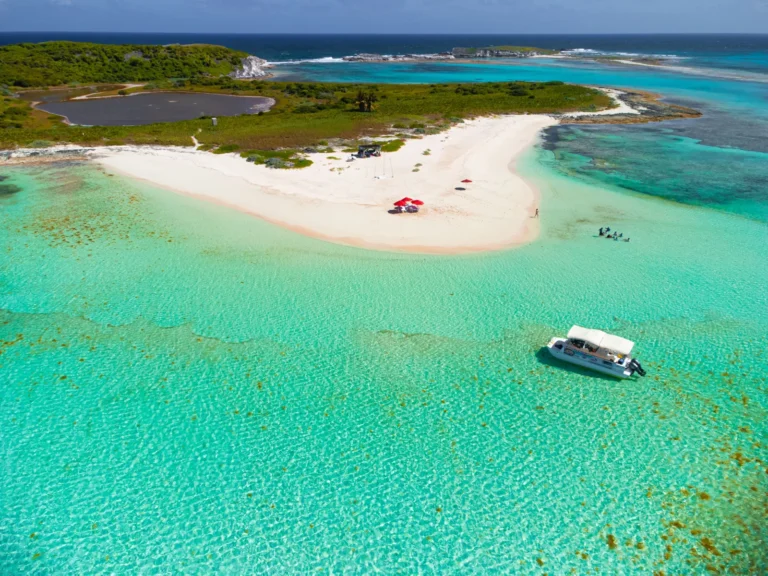
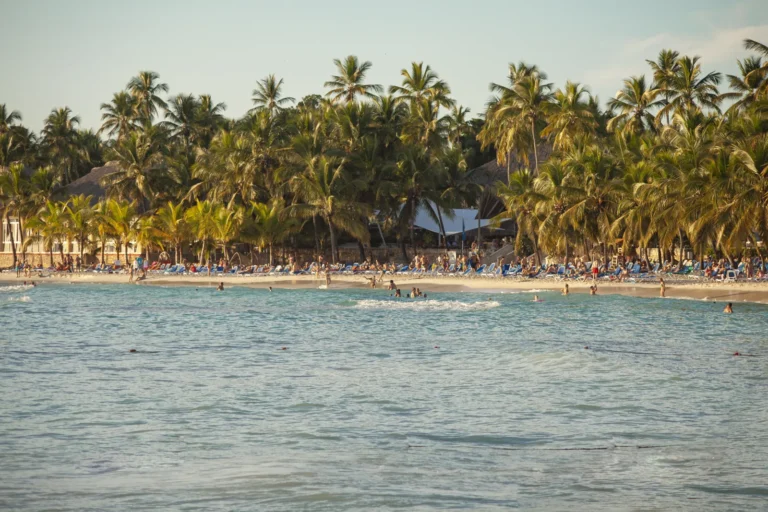
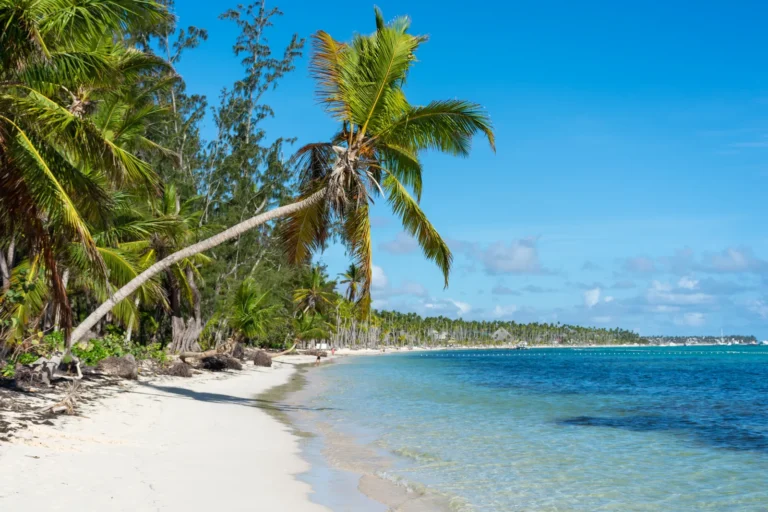
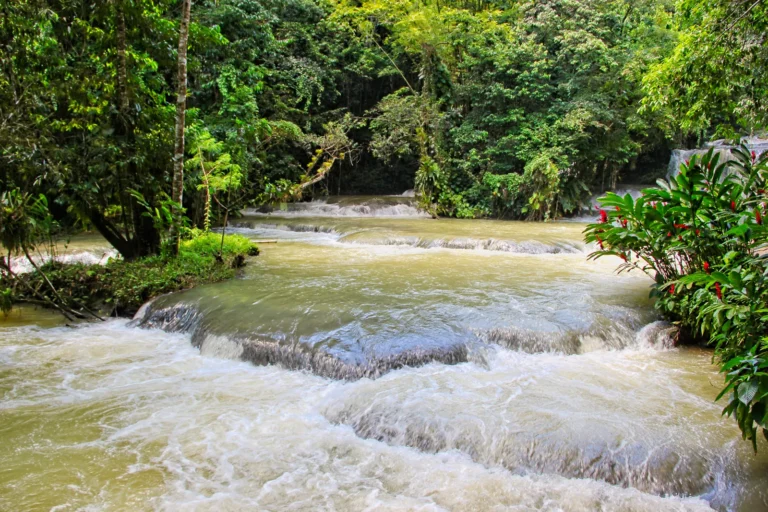
The best time to visit Guadeloupe is the carême, the dry season, which runs from about December to April: less rain, slightly less humid air, steady trade winds and nights around 21 °C (70 °F). The trade-off is that it is also the high season, with the highest prices at Christmas and during winter school holidays. The hivernage, from June to November, is hotter and wetter and coincides with the hurricane season, with the highest risk from August to October. Because the two islands share similar seasons, our comparison to help you choose between Guadeloupe and Martinique mostly comes down to the style of trip you want.
Guadeloupe is warm all year: in Pointe-à-Pitre, the average high varies only from 29 to 32 °C (84 to 90 °F) depending on the month. What really changes is rainfall, hurricane risk, crowds and prices. Here is how to choose your month, based on the official climate normals from Météo-France, France’s national weather service, which covers Guadeloupe.

Our travel deals for Guadeloupe
Affiliate links: we earn a commission, at no extra cost to you.
 FlightsKiwi.comCompare flights and airline combinations to Guadeloupe.Compare flights

When to go to Guadeloupe: the essentials
- Best time: mid-December to April (carême, the dry season)
- Best value: late April to June, when rainfall stays moderate and the high season is over
- Wettest months: September, October and November (about 185 to 205 mm (7.3 to 8.1 in) a month in Pointe-à-Pitre)
- Hurricane season: June 1 to November 30, with the highest risk from August to October
- Sargassum: seaweed landings are possible for much of the year and vary greatly from year to year; check the official bulletins before choosing a beach
- Carnival: from early January to Ash Wednesday (February or March depending on the year)
- Planning: see our Guadeloupe guide for entry requirements, currency and practical details
When to go to Guadeloupe by priority
- Best weather: mid-December to April (carême); February is the driest month in Pointe-à-Pitre
- Cheapest: May, June and September to mid-November, outside school holidays; June offers the best compromise between price and weather
- Fewer crowds: May–June; during the dry season, early January (after the holidays), March and April outside school holidays
- Events: carnival from early January to Ash Wednesday, the commemoration of the abolition of slavery on May 27, the Fête des Cuisinières in August, chanté Nwel in December; check dates every year
Guadeloupe: the calendar at a glance
🔎 Month by month: Guadeloupe in February · Guadeloupe in April
✅ Best months: January, February, March, April, June, December
❌ Period to avoid: September, October
Guadeloupe’s climate month by month
The table below gives the normals for the Pointe-à-Pitre – Le Raizet station, at the airport in the commune of Les Abymes. It is representative of Grande-Terre and the coast, where most accommodation is located. Mountainous Basse-Terre, which is much wetter, is covered further down.
| Month | Max | Min | Rain | Crowds | Prices | Verdict |
|---|---|---|---|---|---|---|
| January | 29.1 °C (84 °F) | 20.9 °C (70 °F) | 89 mm (3.5 in) | High | High | Dry season, trade winds, carnival begins ✅ |
| February | 29.1 °C (84 °F) | 20.9 °C (70 °F) | 58 mm (2.3 in) | Very high (winter school holidays) | Very high | The driest month ✅ |
| March | 29.6 °C (85 °F) | 21.1 °C (70 °F) | 72 mm (2.8 in) | High | High | Dry and sunny ✅ |
| April | 30.2 °C (86 °F) | 22.4 °C (72 °F) | 99 mm (3.9 in) | High (Easter) | High | End of the dry season, still dry ✅ |
| May | 30.8 °C (87 °F) | 23.7 °C (75 °F) | 122 mm (4.8 in) | Medium | Medium | Transition, more frequent showers ⚠️ |
| June | 31.4 °C (89 °F) | 24.5 °C (76 °F) | 105 mm (4.1 in) | Low | Low | Good compromise, start of hurricane season ✅ |
| July | 31.6 °C (89 °F) | 24.5 °C (76 °F) | 135 mm (5.3 in) | High (school holidays) | High | Hot and humid, hurricane risk ⚠️ |
| August | 31.8 °C (89 °F) | 24.3 °C (76 °F) | 163 mm (6.4 in) | High (school holidays) | High | Hot, start of the period most exposed to hurricanes ⚠️ |
| September | 31.6 °C (89 °F) | 24.0 °C (75 °F) | 198 mm (7.8 in) | Low | Low | Peak of hurricane season ❌ |
| October | 31.3 °C (88 °F) | 23.5 °C (74 °F) | 203 mm (8.0 in) | Low | Low | The wettest month ❌ |
| November | 30.5 °C (87 °F) | 22.6 °C (73 °F) | 186 mm (7.3 in) | Low | Low | Still rainy, end of hurricane season ⚠️ |
| December | 29.6 °C (85 °F) | 21.6 °C (71 °F) | 127 mm (5.0 in) | Medium, then very high (holidays) | Medium, then very high | Dry season returns, Christmas songs ✅ |
Note: even in the rainy season, it rarely rains all day on the coast. Tropical showers are often heavy but brief, followed by sunny spells. As for sunshine, Météo-France records roughly 180 to 220 hours of sunshine a month in Pointe-à-Pitre throughout the year: the difference between seasons is small.
Sea temperature month by month
The sea is warm all year: about 25 to 26 °C (77 to 79 °F) from January to April and 28 °C (82 °F) from July to October, according to the German weather service (DWD). This sea temperature of 25 to 26 °C (77 to 79 °F) at the end of the dry season is covered in our Guadeloupe in April page, including the Easter holidays.
| Month | Pointe-à-Pitre |
|---|---|
| January | 26 °C (79 °F) |
| February | 25 °C (77 °F) |
| March | 26 °C (79 °F) |
| April | 26 °C (79 °F) |
| May | 27 °C (81 °F) |
| June | 27 °C (81 °F) |
| July | 28 °C (82 °F) |
| August | 28 °C (82 °F) |
| September | 28 °C (82 °F) |
| October | 28 °C (82 °F) |
| November | 27 °C (81 °F) |
| December | 27 °C (81 °F) |
Guadeloupe’s seasons: pros and cons
In the French Caribbean, two seasons are distinguished: the carême, the dry season, and the hivernage, the wet season. The limits vary from year to year, and May and November often serve as transition months.
The carême (December to April): high season

This is the most pleasant season. Pointe-à-Pitre gets between 58 to 99 mm (2.3 to 3.9 in) of rain a month from January to April, compared with nearly 200 mm (7.9 in) in autumn. The trade winds blow steadily, which makes the heat more bearable, and nights are a little cooler (an average low of about 21 °C (70 °F) in January–February). These cooler nights and steady trade winds are covered in our page on the weather in Guadeloupe in February, in the middle of carnival.
- Pros: the driest weather, no hurricane risk, good conditions for hiking in Basse-Terre and for crossings to the other islands, carnival every weekend from January to February or March
- Cons: flights and rentals at their most expensive, especially at Christmas, New Year and during winter school holidays; book early
- Good to know: the sea can be rougher on the Atlantic coast when the trade winds are strong
- Our tip: early January (after the holidays), March and April outside school holidays offer the same conditions with slightly fewer people
The hivernage, the rainy season (June to November): heat and hurricanes
The hivernage is hotter and wetter: about 31 to 32 °C (88 to 90 °F) in the afternoon and 24 °C (75 °F) at night, with humidity that makes it feel hotter. It coincides with the Atlantic hurricane season, which normally runs from June to November according to the UK FCDO (GOV.UK, updated 22 October 2026), which advises monitoring weather updates from the World Meteorological Organization and the US National Hurricane Center. In most years the archipelago is not directly hit, but storms and hurricanes can pass nearby, especially from August to October.
- Pros: lower prices (outside July–August), fewer people on the beaches, well-fed rivers and waterfalls, sea often calmer on some coasts
- Cons: frequent showers, hurricane risk, Basse-Terre trails sometimes slippery or closed after heavy rain
- Good to know: when an alert is issued, the prefecture and Météo-France publish vigilance levels; follow them and respect the instructions
- Who is it for? Flexible travelers who go in June or accept some weather risk in exchange for lower prices
What about sargassum?
Since 2011, banks of sargassum seaweed have regularly washed up on Caribbean coasts. As it decomposes, it releases gases (including hydrogen sulfide) with an unpleasant smell, which can be a health nuisance at high concentrations. The east- and southeast-facing coasts are the most affected: the Atlantic coast of Grande-Terre, Marie-Galante, La Désirade and the east coast of Basse-Terre. Landings vary greatly from one year and one week to the next: there is no guaranteed “sargassum-free” month. Before booking a seaside rental, check the forecast and monitoring bulletins published by Météo-France, the regional health agency (ARS) and the Guadeloupe prefecture. The leeward coast (Deshaies, Bouillante, Malendure) is generally less exposed. These three leeward communes can be found on our map of Guadeloupe.
When to go to Guadeloupe by island or region
The archipelago combines very different landscapes. Comparison of the official normals available:
| Month | Pointe-à-Pitre – Le Raizet | Le Moule (eastern Grande-Terre) |
|---|---|---|
| January | 29.1 / 20.9 °C (84 / 70 °F), 89 mm (3.5 in) | 28.4 / 21.8 °C (83 / 71 °F), 78 mm (3.1 in) |
| February | 29.1 / 20.9 °C (84 / 70 °F), 58 mm (2.3 in) | 28.5 / 21.7 °C (83 / 71 °F), 50 mm (2.0 in) |
| April | 30.2 / 22.4 °C (86 / 72 °F), 99 mm (3.9 in) | 29.6 / 22.8 °C (85 / 73 °F), 85 mm (3.3 in) |
| July | 31.6 / 24.5 °C (89 / 76 °F), 135 mm (5.3 in) | 30.9 / 25.0 °C (88 / 77 °F), 112 mm (4.4 in) |
| September | 31.6 / 24.0 °C (89 / 75 °F), 198 mm (7.8 in) | 31.0 / 24.0 °C (88 / 75 °F), 158 mm (6.2 in) |
| October | 31.3 / 23.5 °C (88 / 74 °F), 203 mm (8.0 in) | 30.6 / 23.6 °C (87 / 74 °F), 179 mm (7.0 in) |
Grande-Terre (Sainte-Anne, Saint-François, Le Moule)
A low limestone plateau, this is the driest and sunniest part: the Le Moule station gets less rain than Le Raizet, especially in the hivernage. This is the area of the big white-sand beaches. December to May is ideal here, and June is often still pleasant.
Basse-Terre (Soufrière, Deshaies, Bouillante)
A volcanic, mountainous island covered in rainforest. The relief blocks the clouds carried by the trade winds: rainfall increases sharply with altitude and on the windward coast (Capesterre-Belle-Eau), while the leeward coast in the west is drier. The summit of La Soufrière (1,467 m (4,813 ft)) is often in cloud and noticeably cooler than the seaside, whatever the season. For hiking, favor February to April, start early in the morning and check trail conditions with the Guadeloupe National Park. For the climb, read our guide to La Soufrière in Guadeloupe.
Marie-Galante, Les Saintes and La Désirade
These lower, drier islands broadly follow the rhythm of Grande-Terre (see also our Marie-Galante guide). The dry season is the best time for boat crossings, but the sea can be rough when the trade winds blow hard: build some leeway into your schedule. In the hivernage, ferry services can be suspended during weather alerts. La Désirade and Marie-Galante, which face east, are also affected by sargassum.
When to go to Guadeloupe by type of trip
| Your trip | Best time | Where? |
|---|---|---|
| Beach and relaxing | December to May | Sainte-Anne, Saint-François, Deshaies (Grande Anse) |
| Hiking and volcano | February to April | Soufrière, Carbet Falls, Trace des Crêtes |
| Diving and snorkeling | December to June | Cousteau Reserve (Pigeon Islands, Malendure) |
| Budget | May–June, September to mid-November | All of Guadeloupe |
| Carnival | January to February or March (jours gras) | Pointe-à-Pitre, Basse-Terre, Le Moule |
| Island hopping (Les Saintes, Marie-Galante, La Désirade) | January to May | Departures from Pointe-à-Pitre, Trois-Rivières, Saint-François |
| Family trip | School holidays in February or at Easter (high prices), June for younger children | Grande-Terre, leeward coast |
| Honeymoon | April, May or June | Les Saintes, Marie-Galante, Deshaies |
Major events to plan your trip around
| Period | Event | Location |
|---|---|---|
| Early January to Ash Wednesday | Carnival: parades of groupes à peau and groupes à caisses every Sunday, jours gras, Vaval burned on Ash Wednesday | All of Guadeloupe, especially Pointe-à-Pitre and Basse-Terre |
| May 27 | Commemoration of the abolition of slavery (public holiday in Guadeloupe) | Throughout the archipelago |
| August | Fête des Cuisinières | Pointe-à-Pitre |
| December | Chanté Nwel: evenings of Creole Christmas carols | Throughout the archipelago |
| November, every 4 years (start on November 1, 2026) | Finish of the Route du Rhum, a solo sailing race from Saint-Malo | Pointe-à-Pitre |
Guadeloupe month by month: what to expect
January: Peak dry season: 29 °C (84 °F) in the afternoon, nights around 21 °C (70 °F), moderate rain. Carnival parades begin. Avoid the first week (end of the holidays) for better prices.
February: The driest month in Pointe-à-Pitre (58 mm (2.3 in)). Carnival’s jours gras, depending on the year. Very busy high season during winter school holidays: book well in advance.
March: Dry and sunny, with steady trade winds. One of the best months of the year, especially outside school holidays. Carnival can end in early March depending on the date of Easter.
April: End of the dry season, still little rain (about 99 mm (3.9 in)). Easter holidays push prices up; the end of the month gets more affordable.
May: A transition month: more frequent rain and heavier heat, but falling prices and few crowds. Commemoration of the abolition of slavery on May 27.
June: A good compromise: about 105 mm (4.1 in) of rain, less than in May in Pointe-à-Pitre; the hurricane season officially begins but the risk is still low; low prices before the summer holidays.
July: Hot and humid (31.6 °C (89 °F)). School holidays: flights and rentals cost more and many visitors arrive.
August: The hottest month (31.8 °C (89 °F) average high). Fête des Cuisinières in Pointe-à-Pitre. Start of the period most exposed to hurricanes: take out suitable insurance.
September: Peak of the hurricane season and heavy rain (198 mm (7.8 in)). Lowest prices, but book only if you can stay flexible.
October: The wettest month (203 mm (8.0 in)) and still in the most active hurricane period. Vegetation and waterfalls at their fullest.
November: Still rainy (186 mm (7.3 in)); the hurricane season officially ends on November 30. Low prices. Route du Rhum finish in race years (the 2026 edition starts from Saint-Malo on November 1).
December: The dry season gradually returns, with chanté Nwel across the archipelago. Reasonable prices until mid-December, then very high over the holidays.
When to book your trip to Guadeloupe
For Christmas, New Year, winter school holidays and Easter, book flights and accommodation 4 to 6 months ahead: seats and well-located rentals go quickly, and prices rise sharply. Also think about your rental car, which is essential and sometimes hard to find in high season. In the low season (May–June, September to mid-November), 1 to 3 months is generally enough.
Planning your trip to Guadeloupe
- Entry requirements: they depend on your nationality; see our entry requirements for Guadeloupe in the Guadeloupe travel guide.
- Time difference: Guadeloupe is UTC−4 all year and does not change its clocks.
- Currency: the euro. Cards are accepted almost everywhere and there are ATMs in the towns.
- Health: dengue is among the health risks listed for Guadeloupe by the UK FCDO (GOV.UK, updated 22 October 2026), and the U.S. State Department (travel.state.gov, last updated September 9, 2026) lists chikungunya and dengue as prevalent. Protect yourself against mosquito bites and follow the information from the regional health agency (ARS Guadeloupe).
To organize your stay, see our complete Guadeloupe travel guide. If you can only travel in July–August and want to avoid the hivernage, the Indian Ocean offers an alternative: it is the dry season in Mauritius. To compare with the neighboring island, see also when to go to Martinique and our other Caribbean destinations.
Frequently asked questions
What is the best month to visit Guadeloupe?
February, March and April are the most favorable months: this is the heart of the dry season, with the lowest rainfall of the year in Pointe-à-Pitre (58 to 99 mm (2.3 to 3.9 in)) and no hurricane risk. Outside school holidays, March is often the best choice.
When is hurricane season in Guadeloupe?
The hurricane season normally runs from June to November according to the UK FCDO, with the highest risk from August to October. If there is a threat, Météo-France and the prefecture issue vigilance alerts: follow them and respect the instructions.
What is the cheapest time to go to Guadeloupe?
May, June and September to mid-November are generally the cheapest periods, outside school holidays. June offers the best compromise between low prices and still-decent weather.
Is there sargassum all year in Guadeloupe?
Sargassum landings are possible for much of the year, but vary greatly from year to year and week to week. East-facing coasts are the most affected. Check the bulletins from Météo-France, the ARS and the prefecture before choosing your beach or accommodation.
When is carnival in Guadeloupe?
Carnival starts in early January and ends on Ash Wednesday, in February or March depending on the date of Easter. Parades take place every Sunday, then follow one another during the jours gras.
Which month should you avoid for Guadeloupe?
September and October are the least favorable: they combine the peak of the hurricane season with the heaviest rainfall (198 mm (7.8 in) and 203 mm (8.0 in) on average in Pointe-à-Pitre). November is still rainy, but the hurricane season ends on the 30th.
What is the wettest month in Guadeloupe?
October, with 203 mm (8.0 in) of rain on average at Pointe-à-Pitre – Le Raizet (Météo-France 1991–2020 normals), closely followed by September (198 mm (7.8 in)) and November (186 mm (7.3 in)). In the highlands of Basse-Terre, it rains much more.
Is the weather good in Guadeloupe in February?
Yes: February is the driest month in Pointe-à-Pitre (58 mm (2.3 in) of rain on average), with 29 °C (84 °F) in the afternoon and about 21 °C (70 °F) at night. It is also one of the most expensive months, because of the winter school holidays.
Our sources
- Météo-France: climate normals for Pointe-à-Pitre – Le Raizet and Le Moule – Laureal, hurricane vigilance and sargassum bulletins
- Deutscher Wetterdienst (DWD), climate tables: average sea temperature at Pointe-à-Pitre
- Health and hurricane information read on 26 October 2026: UK FCDO, foreign travel advice for Guadeloupe (GOV.UK, updated 22 October 2026), and U.S. Department of State, French West Indies country information (travel.state.gov, last updated September 9, 2026)
- Our methodology
Updated November 2026.