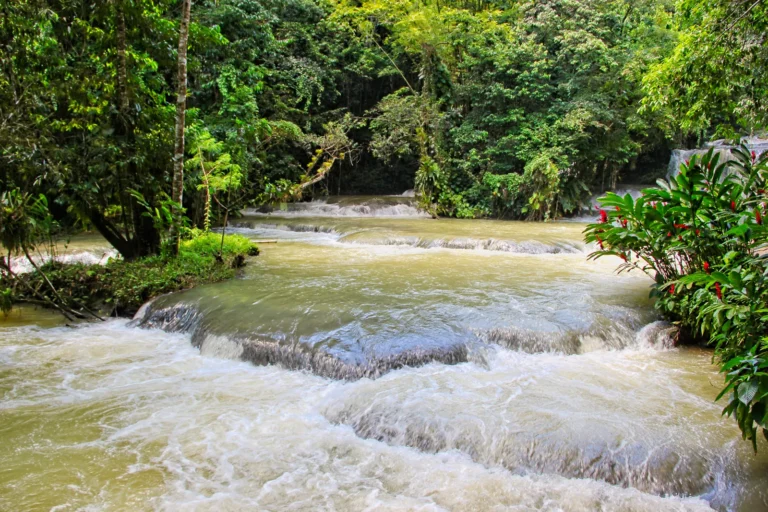
The best time to visit Martinique is the dry season (carême), which runs from about December to April: lighter rainfall, steady trade winds and no hurricane risk. It is also the high season, with prices at their highest at Christmas and during the winter holidays. The wet season (hivernage), from June to November, is more humid and coincides with the hurricane season, whose risk peaks from August to October.
It is hot all year in Martinique: in Fort-de-France, the average high only varies from 27.7 to 30.5 °C (82 to 87 °F) depending on the month. What changes is rainfall, hurricane risk, crowds and prices. Here is the climate of Martinique month by month and how to choose your dates, based on the official climate normals from Météo-France. To discover the capital itself, see our guide what to do in Fort-de-France.

Our travel deals for Martinique
Affiliate links: we earn a commission, at no extra cost to you.
 FlightsKiwi.comCompare flights and airline combinations to Martinique.Compare flights

When to go to Martinique at a glance
- Best time mid-December to April (dry season)
- Driest months February and March (about 70 to 77 mm (2.8 to 3.0 in) of rain in Fort-de-France)
- Best value late April to June, after the high season and before the heavy rains
- Wettest months August to November (more than 210 mm (8.3 in) a month in Fort-de-France)
- Hurricane season June 1 to November 30, with the highest risk from August to October
- Sargassum landings possible much of the year, highly variable; check the official bulletins before choosing your beach
- Entry requirements see our country page for the entry requirements for Martinique; the currency is the euro
When to go to Martinique by priority
- Best weather: mid-December to April (dry season); March is the driest month in Fort-de-France
- Cheapest: May, June and September to mid-November, outside school holidays; June offers the best compromise between price and weather
- Fewest crowds: May–June; in the dry season, early January (after the holidays), March and April outside school holidays
- Events: carnival from January to Ash Wednesday, commemoration of the abolition of slavery on May 22, Tour des Yoles Rondes in late July – early August, Chanté Nwel in December; check dates every year
Martinique: the calendar at a glance
🔎 Month by month: Martinique in February · Martinique in April
✅ Best months: January, February, March, April, June, December
❌ Period to avoid: September, October
The climate in Martinique month by month
The table below gives the normals for the Fort-de-France station, representative of the center of the island and the bay, where most travelers arrive. The mountainous, much wetter north and the drier south are detailed further down. Fort-de-France, the mountainous north and the south stand out clearly on our map of Martinique.
| Month | High (°C) | Low (°C) | Rainfall (mm) | Crowds | Prices | Verdict |
|---|---|---|---|---|---|---|
| January | 27.7 °C (82 °F) | 22.2 °C (72 °F) | 114 mm (4.5 in) | High | High | ✅ Dry season, trade winds, weekend carnival |
| February | 27.9 °C (82 °F) | 22.0 °C (72 °F) | 77 mm (3.0 in) | Very high (winter holidays) | Very high | ✅ Dry, carnival’s final days some years |
| March | 28.5 °C (83 °F) | 22.3 °C (72 °F) | 71 mm (2.8 in) | High | High | ✅ The driest month |
| April | 29.3 °C (85 °F) | 23.1 °C (74 °F) | 109 mm (4.3 in) | High (Easter) | High | ✅ End of the dry season, still dry |
| May | 29.8 °C (86 °F) | 23.6 °C (74 °F) | 133 mm (5.2 in) | Medium | Medium | ⚠️ Transition, more frequent showers |
| June | 29.6 °C (85 °F) | 24.3 °C (76 °F) | 154 mm (6.1 in) | Low | Low | ✅ Good compromise, start of the hurricane season |
| July | 29.7 °C (85 °F) | 24.2 °C (76 °F) | 206 mm (8.1 in) | High (school holidays) | High | ⚠️ Humid, hurricane risk |
| August | 30.2 °C (86 °F) | 24.4 °C (76 °F) | 247 mm (9.7 in) | High (school holidays) | High | ⚠️ The wettest month, entering the most exposed period |
| September | 30.5 °C (87 °F) | 24.5 °C (76 °F) | 214 mm (8.4 in) | Low | Low | ❌ Peak of the hurricane season |
| October | 30.2 °C (86 °F) | 24.2 °C (76 °F) | 243 mm (9.6 in) | Low | Low | ❌ Very rainy, hurricanes still possible |
| November | 29.2 °C (85 °F) | 23.7 °C (75 °F) | 237 mm (9.3 in) | Low | Low | ⚠️ Still rainy, end of the hurricane season |
| December | 28.2 °C (83 °F) | 23.0 °C (73 °F) | 148 mm (5.8 in) | Medium, then very high (holidays) | Medium, then very high | ✅ Dry season returns, Chanté Nwel |
Worth knowing: even in the wet season, it rarely rains all day on the coast. Tropical downpours are heavy but often brief. Sunshine varies little: Météo-France records between about 183 and 225 hours of sunshine a month in Fort-de-France, with a maximum in March and August.
Sea temperature month by month
The sea is warm all year: about 26 °C (79 °F) in January–February and 28 °C (82 °F) from July to November, according to the German weather service. This 26 °C (79 °F) sea early in the year is covered in our page on the weather in Martinique in February, with carnival and crowds.
| Month | Le Lamentin |
|---|---|
| January | 26 °C (79 °F) |
| February | 26 °C (79 °F) |
| March | 27 °C (81 °F) |
| April | 27 °C (81 °F) |
| May | 27 °C (81 °F) |
| June | 27 °C (81 °F) |
| July | 28 °C (82 °F) |
| August | 28 °C (82 °F) |
| September | 28 °C (82 °F) |
| October | 28 °C (82 °F) |
| November | 28 °C (82 °F) |
| December | 27 °C (81 °F) |
The seasons in Martinique: pros and cons
As throughout the Caribbean, there are two seasons: the dry season (carême) and the wet season (hivernage). The limits change from year to year; May and November often serve as transition months.
The dry season (December to April): high season
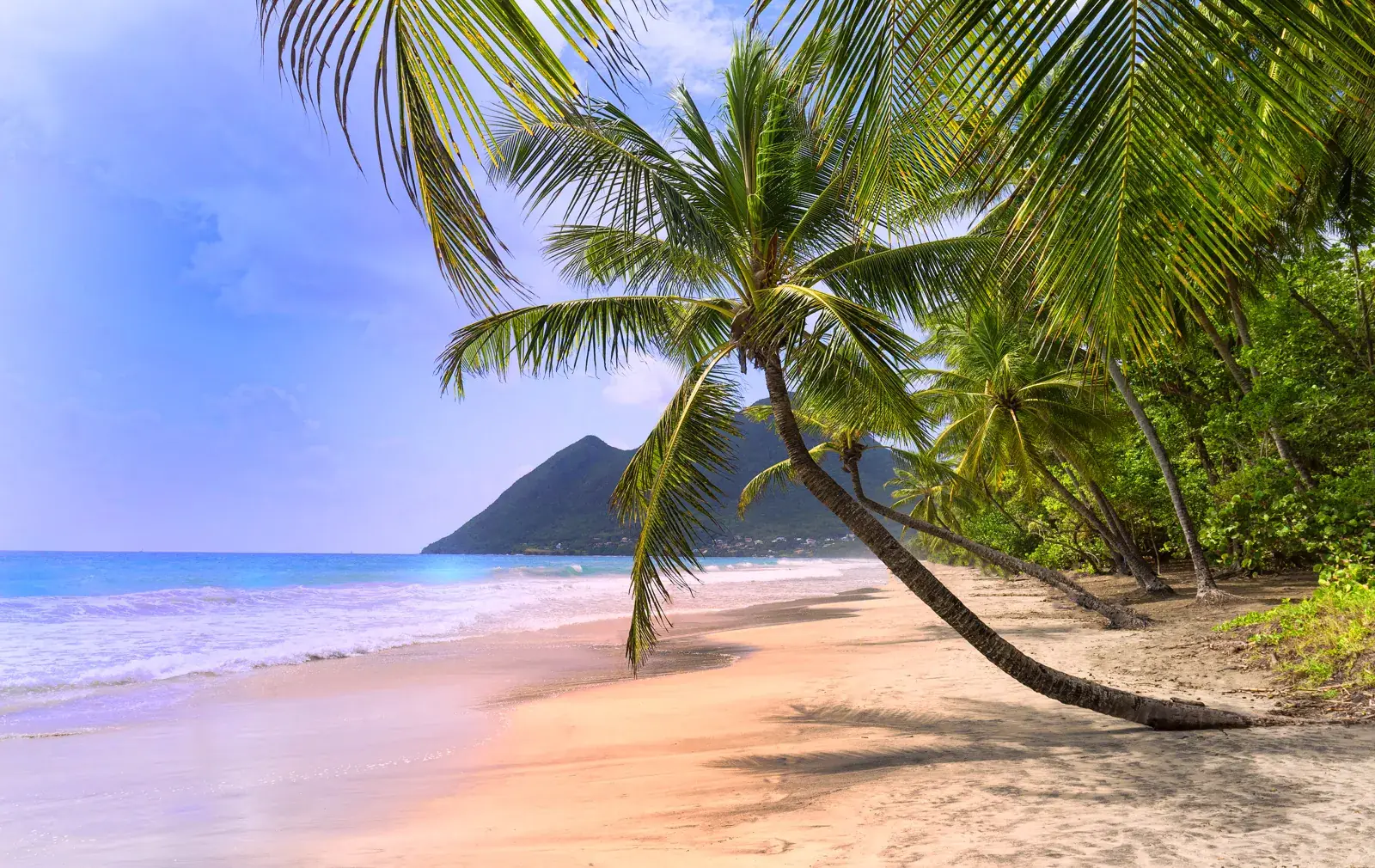
This is the most pleasant season. About 70 to 115 mm (2.8 to 4.5 in) of rain falls per month in Fort-de-France from January to April, two to three times less than in autumn. The trade winds blow steadily from the east, making the heat more bearable, and nights drop to around 22 °C (72 °F). For the end of this dry season, our page Martinique in April details the weather, the Easter holidays and price levels.
- Pros: driest weather, no hurricane risk, good conditions for hiking on Mount Pelée or the Caravelle peninsula, carnival in January and February
- Cons: flights, car rentals and accommodation at their most expensive, especially at Christmas, New Year and during the winter holidays
- Good to know: the Atlantic coast can be very rough when the trade winds are strong; prefer the Caribbean coast or the sheltered beaches of the south for swimming
- Our tip: early January (after the holidays), March and April outside school holidays offer the same conditions with slightly fewer people
The wet season (June to November): humid heat, rain and hurricanes
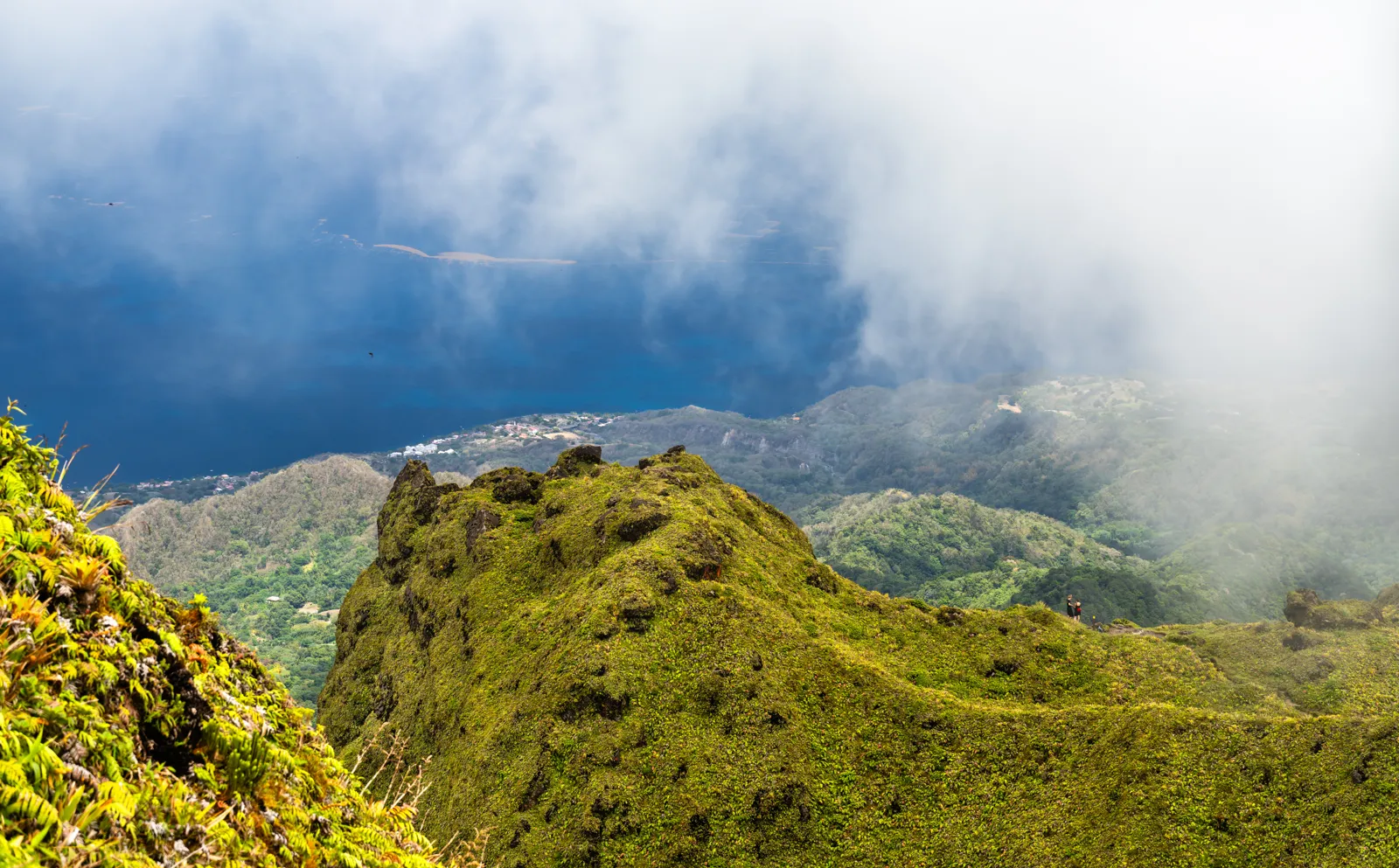
The wet season is more humid: more than 200 mm (7.9 in) of rain a month in Fort-de-France from July to November, with a peak in August (247 mm (9.7 in)). Temperatures rise little (about 30 °C (86 °F) in the afternoon, 24 °C (75 °F) at night), but humidity increases the perceived heat. This period corresponds to the Atlantic hurricane season, officially June 1 to November 30. According to the UK FCDO (GOV.UK, updated 22 October 2026), the hurricane season in neighboring Guadeloupe normally runs from June to November. Most years the island is not directly hit, but storms and hurricanes can pass nearby, especially from August to October.
- Pros: lower prices (outside July–August), quieter beaches, vegetation and waterfalls at their peak
- Cons: frequent showers, hurricane risk, northern trails slippery and sometimes closed after heavy rain
- Good to know: in case of a threat, the prefecture and Météo-France issue alert levels; follow them and comply with the instructions
- Who is it for? Flexible travelers, who go in June or accept some weather risk in exchange for lower prices
What about sargassum?
Since 2011, banks of sargassum seaweed have regularly washed up on the coasts of the Caribbean. As it decomposes, it releases gases, including hydrogen sulfide, with a rotten-egg smell, which can be a health nuisance at high concentrations. In Martinique, the Atlantic coast and the southeast, exposed to currents from the east, are generally the most affected; the Caribbean coast, to the west, less so. Landings vary greatly from one year and one week to the next: no month is guaranteed « sargassum-free ». Before booking a seaside rental, check the monitoring and forecast bulletins published by the state services and ARS Martinique.
When to go to Martinique by region
The island is small (about 70 km (43 mi) long), but its terrain creates real contrasts. Comparison of the official normals available:
| Month | Fort-de-France | Le Lamentin (airport) | Sainte-Anne (south) |
|---|---|---|---|
| January | 27.7 °C (82 °F) / 22.2 °C (72 °F) – 114 mm (4.5 in) | 29.0 °C (84 °F) / 22.3 °C (72 °F) | 28.6 °C (83 °F) / 22.7 °C (73 °F) – 96 mm (3.8 in) |
| March | 28.5 °C (83 °F) / 22.3 °C (72 °F) – 71 mm (2.8 in) | 29.6 °C (85 °F) / 22.4 °C (72 °F) | 29.3 °C (85 °F) / 22.9 °C (73 °F) – 62 mm (2.4 in) |
| May | 29.8 °C (86 °F) / 23.6 °C (74 °F) – 133 mm (5.2 in) | 30.9 °C (88 °F) / 24.3 °C (76 °F) | 30.3 °C (87 °F) / 24.6 °C (76 °F) – 109 mm (4.3 in) |
| August | 30.2 °C (86 °F) / 24.4 °C (76 °F) – 247 mm (9.7 in) | 31.4 °C (89 °F) / 24.7 °C (76 °F) | 30.5 °C (87 °F) / 24.7 °C (76 °F) – 196 mm (7.7 in) |
| October | 30.2 °C (86 °F) / 24.2 °C (76 °F) – 243 mm (9.6 in) | 31.4 °C (89 °F) / 23.8 °C (75 °F) | 30.5 °C (87 °F) / 24.2 °C (76 °F) – 189 mm (7.4 in) |
| November | 29.2 °C (85 °F) / 23.7 °C (75 °F) – 237 mm (9.3 in) | 30.5 °C (87 °F) / 23.5 °C (74 °F) | 29.9 °C (86 °F) / 23.8 °C (75 °F) – 199 mm (7.8 in) |
The south (Sainte-Anne, Le Diamant, Les Anses-d’Arlet)
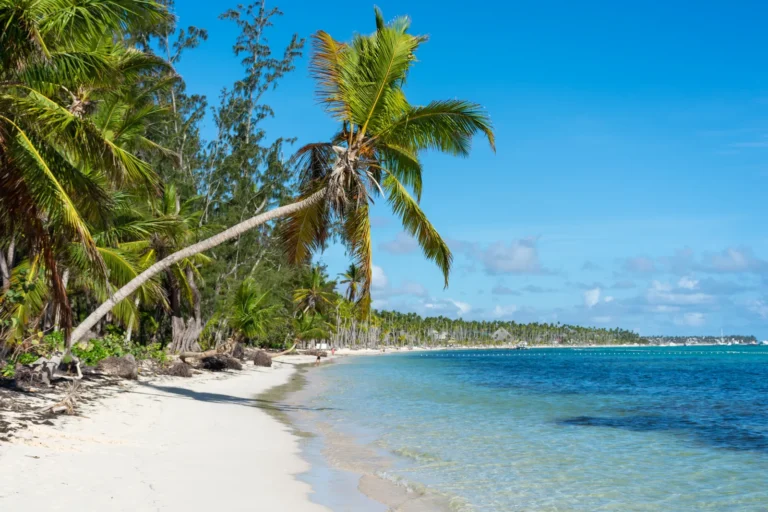
This is the driest and sunniest part of the island: Sainte-Anne receives about 20% less rain than Fort-de-France over the year. This is where the big pale-sand beaches are, including Les Salines. December to May is ideal here, and June is often still pleasant.
Fort-de-France, Le Lamentin and the bay
The center of the island follows the pattern described in the main table. The Lamentin plain, around the airport, is a little hotter in the afternoon (more than 31 °C (88 °F) on average from August to October). Les Trois-Îlets and Anse Mitan, across from Fort-de-France, enjoy a climate close to that of the south.
The north (Mount Pelée, Saint-Pierre, Grand’Rivière)
The volcanic north, covered in tropical forest, is markedly wetter, especially at altitude and on the Atlantic side, where the terrain blocks the clouds brought by the trade winds. The summit of Mount Pelée (1,397 m (4,583 ft)) is often in cloud and much cooler than the coast, whatever the season. For hiking, favor February to April, start early in the morning and check trail conditions before setting out. As no official normals are published for these stations in our sources, we do not show figures.
The Atlantic coast (Le François, Le Vauclin, the Caravelle)
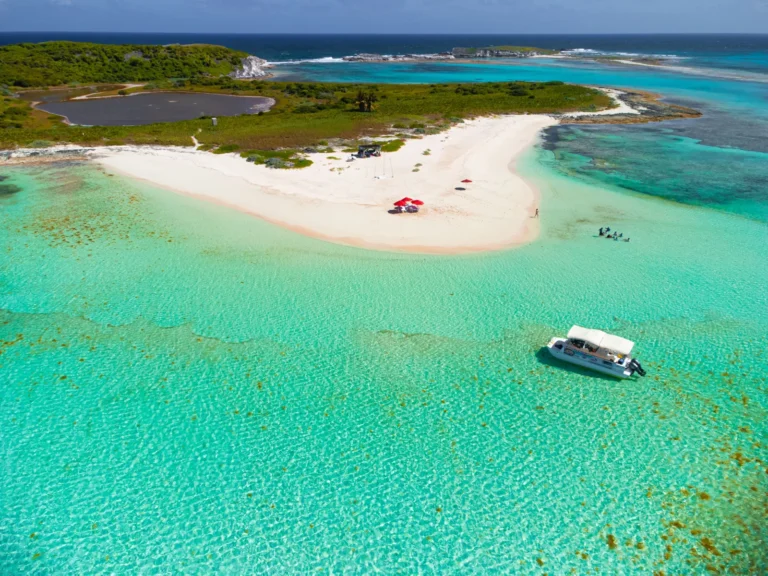
Exposed to the trade winds, the east coast is windy and the sea is often rough, with dangerous currents outside sheltered areas. This is the home of the white-bottomed shallows (fonds blancs) and islets, reachable by boat from Le François, and of board sports (kitesurfing at Le Vauclin). It is also the coast most exposed to sargassum.

When to go to Martinique by type of trip
| Trip | Best time | Where? |
|---|---|---|
| Beach and relaxation | December to May | Les Salines, Anse Noire and Anse Dufour, Grande Anse d’Arlet |
| Hiking and volcano | February to April | Mount Pelée, Caravelle, Jesuits’ Trail |
| Diving and snorkeling | December to June | Les Anses-d’Arlet, Diamond Rock, Saint-Pierre (wrecks) |
| Tight budget | May–June, September to mid-November | The whole island |
| Carnival | January to February or March (final days) | Fort-de-France and other towns |
| White-bottomed shallows and islets | January to June, in calm seas | Le François, Le Robert |
| Family trip | Winter or Easter school holidays (high prices), June for the youngest | South and Les Trois-Îlets |
| Honeymoon | April, May or June | Les Anses-d’Arlet, Sainte-Anne, Le Diamant |
Major events to plan your trip around
| Period | Event | Where |
|---|---|---|
| From January to Ash Wednesday | Carnival: weekend parades, then four final days; Vaval burned on Ash Wednesday | The whole island, especially Fort-de-France |
| May 22 | Commemoration of the abolition of slavery | The whole island |
| Late July – early August (July 26 to August 2 in 2026; July 25 to August 1 announced for 2027) | Tour de la Martinique des Yoles Rondes, traditional sailboat race | Around the island, in stages |
| December | Chanté Nwel: evenings of Creole Christmas carols | The whole island |
Martinique month by month
January: Right in the dry season, 28 °C (82 °F) in the afternoon and 22 °C (72 °F) at night. Carnival parades begin. Avoid the first week (end of the holidays) for better prices.
February: Dry (about 77 mm (3.0 in)) and sunny. Carnival’s final days depending on the year. A very busy high season during the winter holidays: book well in advance.
March: The driest month in Fort-de-France (71 mm (2.8 in)) and one of the sunniest. One of the best months of the year, especially outside school holidays.
April: End of the dry season, rainfall still moderate (about 109 mm (4.3 in)). Easter pushes prices up; the end of the month becomes more affordable.
May: Transition month: more frequent showers, heavier heat, but falling prices and few people. Commemoration of the abolition of slavery on May 22.
June: A good compromise: about 154 mm (6.1 in) of rain, official start of the hurricane season with a still low risk, low prices before the summer holidays.
July: Rainfall exceeds 200 mm (7.9 in). School holidays: flights and rentals more expensive. Start of the Tour des Yoles Rondes at the end of the month in some years.
August: The wettest month in Fort-de-France (247 mm (9.7 in)) and the start of the period most exposed to hurricanes. Take out suitable insurance.
September: The hottest month (average high of 30.5 °C (87 °F)) and the peak of the hurricane season. Lowest prices: worth booking if you stay flexible.
October: Still very rainy (243 mm (9.6 in)) and in the most active hurricane period. Vegetation and rivers at their peak.
November: Rainy (237 mm (9.3 in)), official end of the hurricane season on November 30. Low prices, quiet island.
December: Gradual return of the dry season, Chanté Nwel in the towns. Reasonable prices until mid-December, then very high over the holidays.
When to book your trip to Martinique
For Christmas, New Year, the winter holidays and Easter, book flights and accommodation 4 to 6 months ahead: seats on flights and well-located rentals go quickly, and fares rise sharply. Also think about a rental car, in high demand in high season. In the low season (May–June, September to mid-November), 1 to 3 months is generally enough. If Guadeloupe also tempts you, our comparison to choose between Guadeloupe and Martinique sets beaches, hiking and budget side by side.
Planning your trip to Martinique
- Entry requirements: see the entry requirements for Martinique on our country page, and check the official sources there before you travel.
- Time difference: see our page on the time difference between Martinique and your home country.
- Currency: the euro.
- Health: the U.S. State Department (travel.state.gov, last updated September 9, 2026) lists chikungunya and dengue as prevalent in the French West Indies, and the UK FCDO (GOV.UK, updated 22 October 2026) lists dengue among the health risks for neighboring Guadeloupe: protect yourself against mosquitoes.
To plan your stay, see our complete travel guide to Martinique. Hesitating with the neighboring island? The climate follows the same calendar there: see when to go to Guadeloupe and our Guadeloupe guide. To compare with other islands, see also when to go to the Dominican Republic, when to go to Cuba and all our Caribbean destinations.
Frequently asked questions
What is the best month to visit Martinique?
February, March and April are the most favorable months: this is the heart of the dry season, with the lowest rainfall of the year in Fort-de-France (71 to 109 mm (2.8 to 4.3 in)) and no hurricane risk. Outside school holidays, March is often the best choice.
When is the hurricane season in Martinique?
The hurricane season officially runs from June 1 to November 30, with the highest risk from August to October. In case of a threat, Météo-France and the prefecture issue alerts: follow them and comply with the instructions.
What is the cheapest time to go to Martinique?
May, June and the period from September to mid-November are generally the cheapest, outside school holidays. June offers the best compromise between low prices and still decent weather.
Is there sargassum all year in Martinique?
Landings are possible much of the year, but highly variable from one year and one week to the next. The Atlantic coast and the southeast are the most affected, the Caribbean coast less so. Check the official bulletins before choosing your beach or accommodation.
When is carnival in Martinique?
Carnival runs from January to Ash Wednesday, in February or March depending on the date of Easter. Parades take place on weekends, then follow one another over the four final days.
What are the entry requirements for Martinique?
They depend on your nationality: see the entry requirements for Martinique on our country page and check the official sources before you travel.
When is the rainy season in Martinique?
It is the wet season, from June to November. In Fort-de-France, more than 200 mm (7.9 in) of rain falls per month from July to November, with a peak in August (247 mm (9.7 in)), against 71 mm (2.8 in) in March, the driest month. Showers are heavy but often brief on the coast.
What is the worst time to go to Martinique?
August to October: these are the wettest months in Fort-de-France (247 mm (9.7 in) in August, 243 mm (9.6 in) in October) and the peak of the hurricane season. It is, however, the cheapest period: it suits flexible travelers who are well insured and attentive to Météo-France alerts.
Our sources
- Météo-France: 1991–2020 climate normals for Fort-de-France and Le Lamentin, 1981–2010 normals for Sainte-Anne (relayed by Meteociel)
- Entry, safety and health information read on 26 October 2026: U.S. Department of State, French West Indies country information (travel.state.gov, last updated September 9, 2026), and UK FCDO, foreign travel advice for Guadeloupe (GOV.UK, updated 22 October 2026)
- La Première (Outre-mer La 1ère): dates of the Tour de Martinique des Yoles Rondes 2026 and 2027
- Deutscher Wetterdienst (DWD), climate tables: average sea water temperature at Le Lamentin
- Our methodology
Updated November 2026.