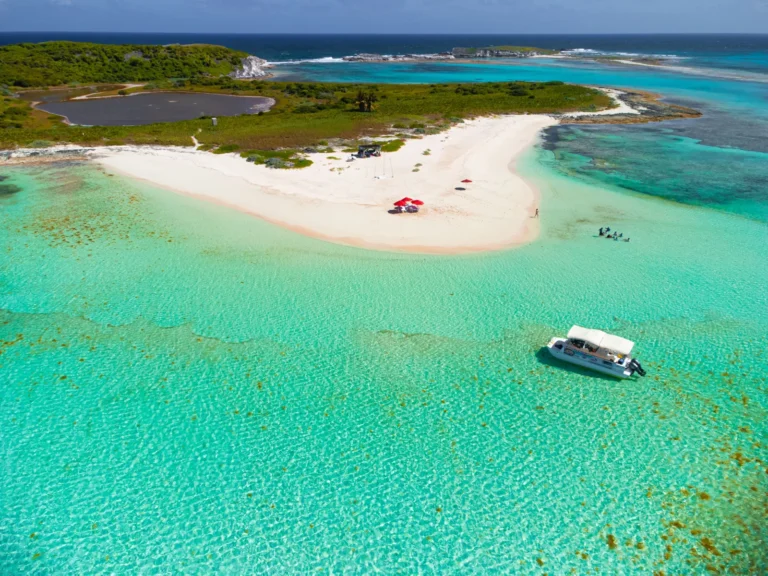
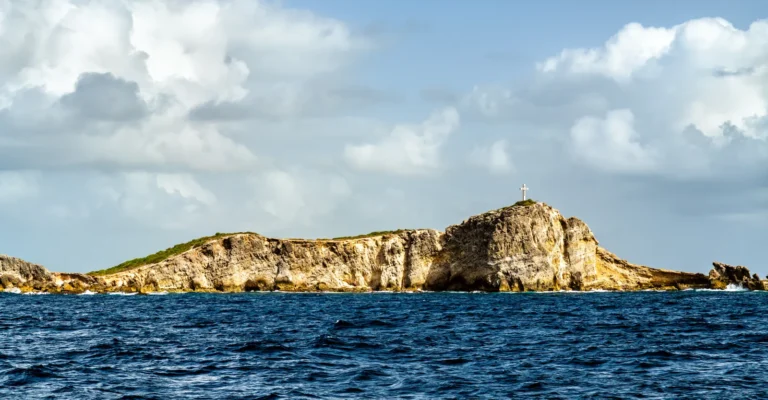
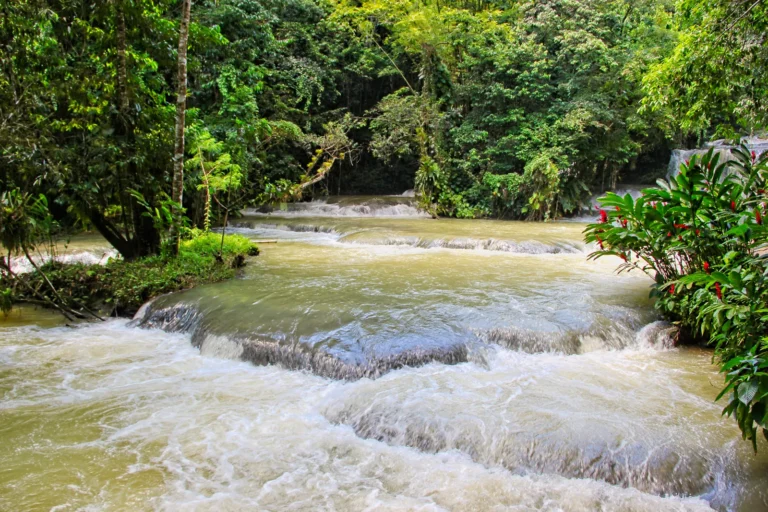
The best time to visit the Dominican Republic is from December to April: it is the driest season in Punta Cana and on the south coast, with afternoons of about 28.5 to 30 °C (83 to 86 °F) and nights around 21 to 22 °C (70 to 72 °F). By contrast, September and October combine more frequent rain with the peak of hurricane season, which officially runs from June 1 to November 30. The hurricane season also affects the neighboring island: the best time to visit Puerto Rico is covered month by month in our guide. Punta Cana and Santo Domingo appear on our map of the Dominican Republic.
The country occupies two thirds of the island of Hispaniola, and not all its coasts share the same rhythm. The north coast (Puerto Plata) gets its heaviest rain from November to January, the Samaná peninsula is rained on almost all year, and Punta Cana remains the driest region. Here is how to choose your month, based on the 1991–2020 climate normals of the Oficina Nacional de Meteorología (ONAMET) published by the World Meteorological Organization (WMO). For itineraries and activities, see our Dominican Republic travel guide; to compare, see when to go to Mexico or to Martinique.

Our travel deals for Dominican Republic
Affiliate links: we earn a commission, at no extra cost to you.
 FlightsKiwi.comCompare flights and airline combinations to Dominican Republic.Compare flights
- eSIMAiraloData plan to install before you leave (eSIM-compatible phone).See plans


When to go to the Dominican Republic at a glance
- Best time December to April, with an optimum from February to April in Punta Cana (50 to 65 mm (2.0 to 2.6 in) of rain a month)
- North coast (Puerto Plata, Cabarete) driest from June to September, wettest from November to January
- Humpback whales in Samaná January to March, with dates set every year by the Dominican Ministry of Environment
- Hurricane season June 1 to November 30, with most activity between mid-August and mid-October
- Avoid if possible September and October
- Best value May, June and November (outside holidays)
- Entry requirements check our page on the entry requirements for the Dominican Republic before you travel
When to go to the Dominican Republic by priority
- Best weather: December to April, with March the driest month
- Cheapest: May, June, September and October (low prices); April after Easter
- Fewest crowds: May, June, September and October (low crowds)
- Events: humpback whales from January to March in Samaná, carnival on February weekends, Independence Day on February 27; hurricane season from June 1 to November 30
March, the driest month, features in our selection of where to go in March.
Dominican Republic: the calendar at a glance
✅ Best months: January, February, March, April, December
❌ Period to avoid: September, October
Dominican Republic climate month by month
The table below gives the normals for Punta Cana, where most visitors stay. They are also representative of the east coast (Bávaro, Cap Cana, Bayahibe). Other regions are detailed below.
| Month | Avg. max | Avg. min | Rain | Crowds | Prices | Verdict |
|---|---|---|---|---|---|---|
| January | 28.5 °C (83 °F) | 21.2 °C (70 °F) | 84.7 mm (3.3 in) | High | High | Sunny, brief showers, high season ✅ |
| February | 29.0 °C (84 °F) | 21.2 °C (70 °F) | 62.8 mm (2.5 in) | High (winter holidays) | High | Among the driest months ✅ |
| March | 29.0 °C (84 °F) | 21.7 °C (71 °F) | 50.4 mm (2.0 in) | High | High | The driest month ✅ |
| April | 29.8 °C (86 °F) | 22.5 °C (73 °F) | 64.9 mm (2.6 in) | High (Easter) | High (Easter), then moderate | Still dry, rising heat ✅ |
| May | 30.3 °C (87 °F) | 23.5 °C (74 °F) | 129.3 mm (5.1 in) | Low | Low | Rains return, frequent showers ⚠️ |
| June | 31.2 °C (88 °F) | 24.2 °C (76 °F) | 93.7 mm (3.7 in) | Low | Low | Start of hurricane season ⚠️ |
| July | 31.8 °C (89 °F) | 24.2 °C (76 °F) | 84.7 mm (3.3 in) | High (holidays) | High | Hot, showers, hurricane risk ⚠️ |
| August | 32.0 °C (90 °F) | 24.3 °C (76 °F) | 106.7 mm (4.2 in) | High (holidays) | High | Very hot, hurricane risk rising ⚠️ |
| September | 31.9 °C (89 °F) | 24.1 °C (75 °F) | 135.3 mm (5.3 in) | Low | Low | The wettest month, peak of hurricane season ❌ |
| October | 31.5 °C (89 °F) | 23.8 °C (75 °F) | 123.6 mm (4.9 in) | Low | Low | Still very wet, hurricanes possible ❌ |
| November | 30.3 °C (87 °F) | 22.9 °C (73 °F) | 131.1 mm (5.2 in) | Moderate | Moderate | Rain still frequent, end of hurricane season ⚠️ |
| December | 29.4 °C (85 °F) | 21.9 °C (71 °F) | 91.3 mm (3.6 in) | Moderate, then very high | Moderate, then very high (holidays) | Drier weather returns, high prices at Christmas ✅ |
In the wet season, rain falls mostly as showers or thunderstorms, often brief: it rarely rains all day, except when a tropical storm passes.
The Dominican Republic’s seasons: pros and cons
Dry season (December to April): the high season
This is the most in-demand period. In Punta Cana, between 50 and 91 mm (3.6 in) of rain falls per month from December to April, compared with 85 to 135 mm (5.3 in) from May to November. Highs range from 28.5 °C (83 °F) to 30 °C (86 °F), nights hover around 21 to 22 °C (70 to 72 °F), and the air is a little less heavy than in summer.
- Pros: mostly dry and sunny weather in Punta Cana, Bayahibe and Santo Domingo, whale season in Samaná, sea excursions rarely canceled
- Cons: prices at their highest over the year-end holidays, in February and at Easter; this is, on the contrary, the wettest period on the north coast
- Our tip: March and the second half of January offer a good balance between weather and prices
Wet season (May to November): heat, showers and hurricanes
The rains return in May (129 mm (5.1 in) in Punta Cana), ease a little in June and July, then increase until September, the wettest month (135 mm (5.3 in)). The heat becomes more humid. According to the UK FCDO (GOV.UK, updated 7 August 2026), the hurricane season in the Caribbean normally runs from June to November, and hurricanes can cause localized flooding and damage to buildings; the U.S. State Department (travel.state.gov, last updated August 11, 2025) says tropical storms and hurricanes with heavy rain and wind generally occur from May through November. According to the US National Hurricane Center, activity is concentrated mostly between mid-August and mid-October, with a statistical peak around September 10.
- Pros: lower prices in May, June, September and October, very green countryside, north coast drier from June to September
- Cons: showers, sticky heat, risk of a tropical storm or hurricane, roads that flood quickly, crowds in July–August
- Who is it for? Flexible travelers, with insurance that covers cancellations and extra nights caused by the weather
When to go to Punta Cana
For Punta Cana and Bávaro, the best time is from December to April, and more precisely from February to April, the driest months (50 to 65 mm (2.0 to 2.6 in) of rain a month according to the 1991–2020 normals). It is the least rainy of the country’s major tourist areas: about 1,160 mm (45.7 in) a year, compared with nearly 1,500 mm (59.1 in) in Santo Domingo and more than 2,100 mm (82.7 in) in Samaná. As the country’s driest coast, it suits beach holidays well; to plan your trip to Punta Cana, our guide covers the rest.
In July and August, Punta Cana remains a decent option for a beach holiday: rainfall stays moderate (85 to 107 mm (3.3 to 4.2 in) a month) and showers are often short. You do have to accept the hurricane risk and high prices.
- The ideal months: February, March and April (outside Easter for prices)
- The decent months: December, January, July and August
- The months to avoid: September and October (rain and hurricanes), May and November if you want to limit the risk of rain
- Good to know: the UK FCDO (GOV.UK, updated 7 August 2026) notes that lifeguards may not be present at swimming pools or on beaches, and that the sea can be dangerous, especially during the hurricane season
When to go to the Dominican Republic by region
Relief and exposure to the trade winds create real contrasts. The north coast gets its heaviest rain in winter, when the rest of the country is dry. Comparison of recent normals from four stations:
| Month | Punta Cana (east) | Santo Domingo (south) | Puerto Plata (north) | Samaná (northeast) |
|---|---|---|---|---|
| January | 28.5 °C (83 °F) / 84.7 mm (3.3 in) | 30.0 °C (86 °F) / 68.1 mm (2.7 in) | 28.9 °C (84 °F) / 191.8 mm (7.6 in) | 30.0 °C (86 °F) / 142.6 mm (5.6 in) |
| February | 29.0 °C (84 °F) / 62.8 mm (2.5 in) | 30.0 °C (86 °F) / 59.1 mm (2.3 in) | 29.2 °C (85 °F) / 131.7 mm (5.2 in) | 30.5 °C (87 °F) / 95.2 mm (3.7 in) |
| March | 29.0 °C (84 °F) / 50.4 mm (2.0 in) | 30.5 °C (87 °F) / 54.1 mm (2.1 in) | 29.5 °C (85 °F) / 143.3 mm (5.6 in) | 31.0 °C (88 °F) / 108.0 mm (4.3 in) |
| April | 29.8 °C (86 °F) / 64.9 mm (2.6 in) | 30.9 °C (88 °F) / 86.3 mm (3.4 in) | 30.4 °C (87 °F) / 151.7 mm (6.0 in) | 31.5 °C (89 °F) / 142.1 mm (5.6 in) |
| May | 30.3 °C (87 °F) / 129.3 mm (5.1 in) | 31.3 °C (88 °F) / 151.3 mm (6.0 in) | 31.5 °C (89 °F) / 151.1 mm (5.9 in) | 31.8 °C (89 °F) / 207.2 mm (8.2 in) |
| June | 31.2 °C (88 °F) / 93.7 mm (3.7 in) | 31.9 °C (89 °F) / 119.0 mm (4.7 in) | 33.1 °C (92 °F) / 54.1 mm (2.1 in) | 32.4 °C (90 °F) / 133.4 mm (5.3 in) |
| July | 31.8 °C (89 °F) / 84.7 mm (3.3 in) | 32.2 °C (90 °F) / 156.7 mm (6.2 in) | 33.2 °C (92 °F) / 71.6 mm (2.8 in) | 32.4 °C (90 °F) / 183.0 mm (7.2 in) |
| August | 32.0 °C (90 °F) / 106.7 mm (4.2 in) | 32.3 °C (90 °F) / 195.0 mm (7.7 in) | 33.4 °C (92 °F) / 77.7 mm (3.1 in) | 32.4 °C (90 °F) / 229.3 mm (9.0 in) |
| September | 31.9 °C (89 °F) / 135.3 mm (5.3 in) | 32.4 °C (90 °F) / 191.7 mm (7.5 in) | 33.3 °C (92 °F) / 91.2 mm (3.6 in) | 32.5 °C (91 °F) / 232.5 mm (9.2 in) |
| October | 31.5 °C (89 °F) / 123.6 mm (4.9 in) | 32.0 °C (90 °F) / 176.9 mm (7.0 in) | 32.2 °C (90 °F) / 145.9 mm (5.7 in) | 32.2 °C (90 °F) / 239.6 mm (9.4 in) |
| November | 30.3 °C (87 °F) / 131.1 mm (5.2 in) | 31.3 °C (88 °F) / 147.5 mm (5.8 in) | 30.7 °C (87 °F) / 257.6 mm (10.1 in) | 31.0 °C (88 °F) / 272.3 mm (10.7 in) |
| December | 29.4 °C (85 °F) / 91.3 mm (3.6 in) | 30.6 °C (87 °F) / 76.5 mm (3.0 in) | 29.7 °C (85 °F) / 195.3 mm (7.7 in) | 30.4 °C (87 °F) / 182.0 mm (7.2 in) |
In one table: the recommended period for each major region, month by month.
| Region | Jan | Feb | Mar | Apr | May | Jun | Jul | Aug | Sep | Oct | Nov | Dec |
|---|---|---|---|---|---|---|---|---|---|---|---|---|
| Punta Cana and the east coast | ✅ | ✅ | ✅ | ✅ | ⚠️ | ⚠️ | ⚠️ | ⚠️ | ❌ | ❌ | ⚠️ | ✅ |
| Santo Domingo and the south coast | ✅ | ✅ | ✅ | ✅ | ⚠️ | ⚠️ | ⚠️ | ⚠️ | ❌ | ❌ | ⚠️ | ✅ |
| North coast (Puerto Plata, Cabarete) | ⚠️ | ⚠️ | ⚠️ | ⚠️ | ⚠️ | ✅ | ✅ | ⚠️ | ⚠️ | ⚠️ | ❌ | ⚠️ |
| Samaná (whales) | ✅ | ✅ | ✅ | ⚠️ | ⚠️ | ⚠️ | ⚠️ | ⚠️ | ⚠️ | ❌ | ❌ | ⚠️ |
Punta Cana, Bávaro and the east coast
The driest region, with highs of 28.5 to 32 °C (83 to 90 °F). The best window is from December to April, and July–August remain acceptable.
Santo Domingo and the south coast
The capital has a sharper contrast: 54 to 86 mm (2.1 to 3.4 in) of rain a month from January to April, then more than 150 mm (5.9 in) in May, July, August, September and October (195 mm (7.7 in) in August). Highs exceed 32 °C (90 °F) from July to September. To explore the Colonial Zone on foot, choose December to April.
Puerto Plata, Sosúa and Cabarete (north coast)
This is the exception to remember: the north coast has a reversed rainfall pattern. At Puerto Plata airport, November (258 mm (10.2 in)), December (195 mm (7.7 in)) and January (192 mm (7.6 in)) are the wettest months, while June, July and August stay under 80 mm (3.1 in). For this region, summer is therefore often a better choice than winter, as long as you accept the heat (33 °C (91 °F) in the afternoon) and the hurricane risk.
The Samaná peninsula (Las Terrenas, Las Galeras)
Samaná is the wettest of the four regions, with nearly 2,170 mm (85.4 in) a year at the Arroyo Barril station. The least rainy months are February and March (95 to 108 mm (3.7 to 4.3 in)), which coincide with humpback whale season. In October and November, more than 230 mm (9.1 in) falls each month.

When to go to the Dominican Republic by trip type
| Your trip | Best time | Where? |
|---|---|---|
| Beach and all-inclusive hotel | December – April | Punta Cana, Bávaro, Cap Cana, Bayahibe |
| Summer beach (July–August) | June – August | Puerto Plata, Sosúa, Cabarete; Punta Cana if you accept a few showers |
| Humpback whale watching | January – March | Samaná Bay |
| Visiting Santo Domingo | December – April | Colonial Zone of Santo Domingo |
| Mountain hiking | December – March | Jarabacoa, Constanza, Armando Bermúdez National Park |
| Budget | May, June, November | Punta Cana and the south coast |
| Honeymoon | February – April | Punta Cana, Samaná, Bayahibe |
| Family trip | February and Easter school holidays; north coast in July–August | Punta Cana, Bayahibe, Puerto Plata |
Major events to plan your trip around
| Period | Event | Location |
|---|---|---|
| January to March | Humpback whale watching season (trips run by authorized operators) | Samaná Bay |
| February (weekends) | Dominican carnival, mask parades | La Vega, Santo Domingo and many towns |
| February 27 | Independence Day (national public holiday) | Nationwide |
| March or April (varies) | Holy Week: beaches and roads very busy with Dominicans | Nationwide |
| August 16 | Restoration Day (public holiday) | Nationwide |
| June 1 – November 30 | Atlantic hurricane season | Nationwide |
| Late December – early January | Year-end holidays (highest prices) | Beach resorts |
The Dominican Republic month by month: what to expect
January: High season in Punta Cana: average high of 28.5 °C (83 °F), 85 mm (3.3 in) of rain in brief showers. Start of the whale season in Samaná. A very wet month on the north coast.
February: One of the driest months in Punta Cana (63 mm (2.5 in)) and the least rainy in Samaná: excellent for combining beach and whales. Carnival on weekends and Independence Day on the 27th. Winter school holidays: book early.
March: The driest month in Punta Cana (50 mm (2.0 in), 29 °C (84 °F)). Last weeks of whale watching. One of the best months of the year.
April: Rising heat (29.8 °C (86 °F) in Punta Cana) and still little rain. Holy Week and the Easter holidays push up prices and crowds.
May: Rains return (129 mm (5.1 in) in Punta Cana, more than 150 mm (5.9 in) in Santo Domingo). Prices fall, few tourists.
June: Official start of hurricane season on June 1, but the risk generally remains limited early in the season. Low prices, dry north coast.
July: Hot (31.8 °C (89 °F) in Punta Cana) with often brief showers. A good period for the north coast. School holidays: crowds and prices rise.
August: Very hot (average high of 32 °C (90 °F) in Punta Cana), hurricane risk rising and 195 mm (7.7 in) of rain in Santo Domingo.
September: Peak of hurricane season and the wettest month in Punta Cana (135 mm (5.3 in)). Lowest prices, but a tropical storm can disrupt flights and excursions for several days.
October: Still very wet in Punta Cana (124 mm (4.9 in)) and one of the wettest in Samaná (240 mm (9.4 in)). Hurricanes still possible. With September, the least favorable month.
November: Hurricane season ends on the 30th. Rain remains heavy in Punta Cana (131 mm (5.2 in)) and peaks on the north coast (258 mm (10.2 in) in Puerto Plata). Prices still moderate outside holidays.
December: Drier weather returns in Punta Cana (91 mm (3.6 in)) and on the south coast. Reasonable prices until mid-December, then very high over the holidays.
Looking for a destination for a specific month? See our selections of where to go in November, where to go in December and where to go in January.
When to book your trip to the Dominican Republic
For the year-end holidays, February and Easter school holidays, book flights and accommodation 4 to 6 months ahead: all-inclusive stays in Punta Cana go quickly in these periods. Outside school holidays, 2 to 3 months is usually enough. Punta Cana and Santo Domingo are the main international gateways; compare airlines and keep your dates flexible if you travel in hurricane season.
Planning your trip to the Dominican Republic
- Entry requirements: see our page with the entry requirements for the Dominican Republic.
- Time difference: the Dominican Republic is on UTC-4 all year (no daylight saving time): 4 hours behind London in winter and 5 in summer; 1 hour ahead of New York in winter and the same time in summer.
- Currency: the Dominican peso (DOP). Use our currency converter to estimate your budget.
- Health: the UK FCDO (GOV.UK, updated 7 August 2026) lists dengue among the health risks in the Dominican Republic: protect yourself from mosquitoes, especially in the rainy season. It also advises appropriate travel insurance covering your itinerary, planned activities and emergency expenses.
- During hurricane season: the UK FCDO advises monitoring local news and the US National Hurricane Center; Spanish-language alerts are available from the Dominican Emergency Management Centre (COE) via its AlertaCOE app. Avoid traveling during tropical storms, as roads flood quickly.
To go further, see our complete Dominican Republic travel guide. If you are torn between islands, compare with the best time to visit Guadeloupe or to visit Cuba.
Frequently asked questions
What is the best month to visit the Dominican Republic?
February, March and April are the best months in Punta Cana and on the south coast: little rain (about 50 to 65 mm (2.0 to 2.6 in) a month in Punta Cana) and 29 to 30 °C (84 to 86 °F) in the afternoon. December and January are also pleasant, but more expensive over the holidays.
When is the best time to visit Punta Cana?
From December to April, with an optimum from February to April. July and August remain possible for the beach, with often short showers. Avoid September and October if you can, at the peak of hurricane season.
When is hurricane season in the Dominican Republic?
It runs from June 1 to November 30. According to the US National Hurricane Center, most activity is concentrated between mid-August and mid-October. During this period, follow the weather and the instructions of the local authorities.
When can you see whales in Samaná?
From January to March, when humpback whales come to breed in Samaná Bay. The exact dates are set every year by the Dominican Ministry of Environment, which also authorizes operators: choose a trip with an authorized operator.
When is the cheapest time to visit the Dominican Republic?
May, June, September and October, as well as November outside holidays. In return, you have to accept more frequent rain and, from June to November, the hurricane risk.
When is the rainy season in Punta Cana?
From May to November. According to the 1991–2020 normals for the Punta Cana station (ONAMET, published by the WMO), between 85 and 135 mm (5.3 in) of rain falls per month from May to November, peaking in September, compared with 50 to 65 mm (2.0 to 2.6 in) a month from February to April. Showers are often brief.
What is the weather like in the Dominican Republic in March, August and December?
In Punta Cana, March is the driest month (50 mm (2.0 in), 29 °C (84 °F) in the afternoon), August is the hottest (32 °C (90 °F)) with about 107 mm (4.2 in) of rain and a hurricane risk, and December brings drier weather again (91 mm (3.6 in), 29 °C (84 °F)), with high prices over the holidays.
Our sources
- World Meteorological Organization, 1991–2020 climate normals supplied by the Oficina Nacional de Meteorología (ONAMET), NOAA/NCEI archive: stations of Punta Cana, Santo Domingo, La Unión (Puerto Plata) and Arroyo Barril (Samaná)
- National Hurricane Center (NOAA): climatology of the Atlantic hurricane season
- Presidency of the Dominican Republic: announcement of the humpback whale watching season in Samaná (Ministry of Environment)
- Information read on 26 October 2026: UK FCDO, foreign travel advice for the Dominican Republic (GOV.UK, updated 7 August 2026), and U.S. Department of State, Dominican Republic country information (travel.state.gov, last updated August 11, 2025)
- Our methodology
Updated November 2026.