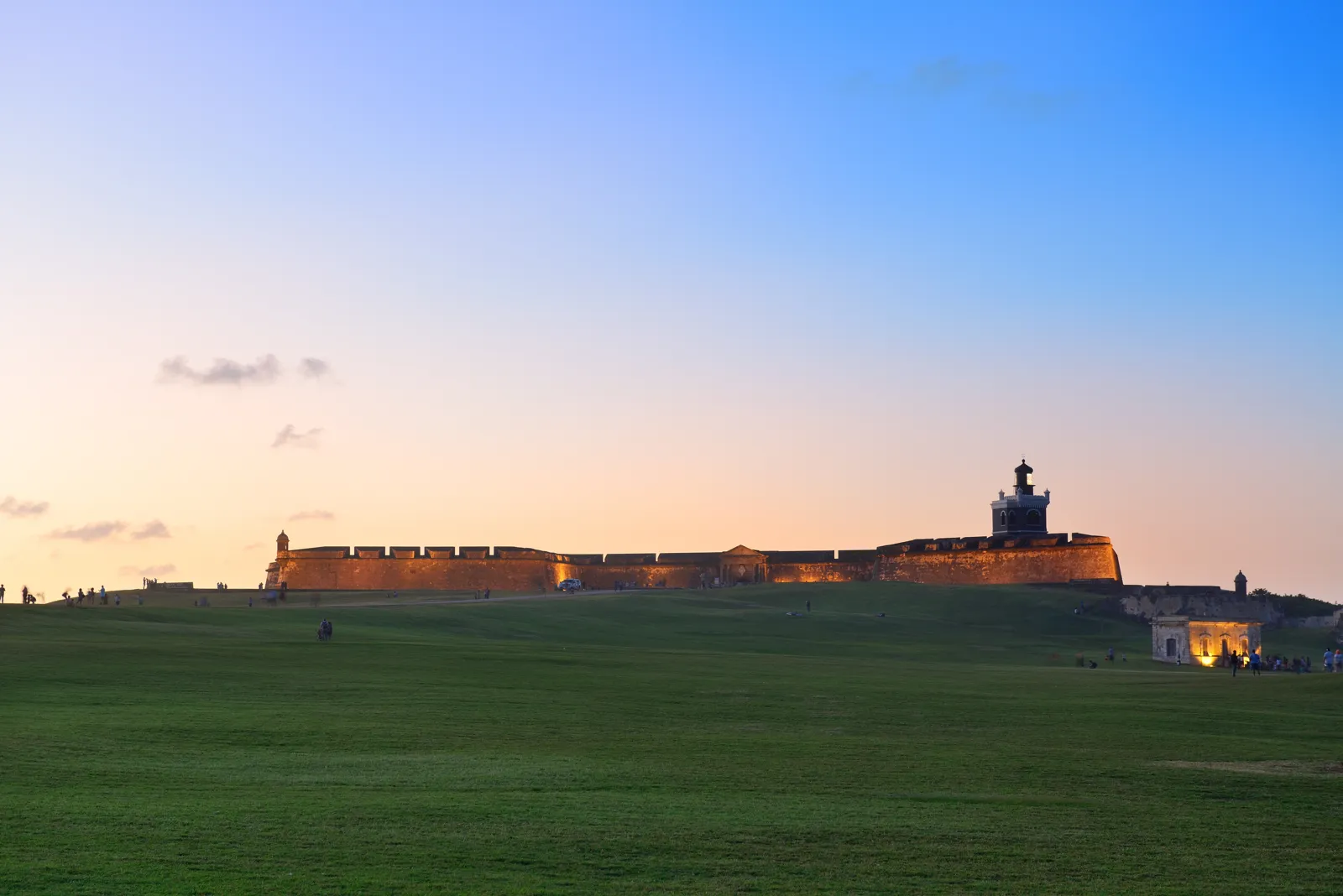
The best time to visit Puerto Rico is December to April, peaking in February and March: these are the driest months in San Juan (55 mm (2.2 in) to 66 mm (2.6 in) of rain), with 29 °C (84 °F) in the afternoon and nights around 22 °C (72 °F). From August to November, rainfall increases and the hurricane season, which runs from June 1 to November 30, reaches its peak.
Puerto Rico is a U.S. territory in the Greater Antilles, east of the Dominican Republic. It is warm all year: the gap between the coolest and warmest months is less than 4 °C (39 °F) in San Juan. What changes is the rain, which differs greatly from coast to coast, and the hurricane risk. Here is how to choose your month, based on the 1991-2020 climate normals from NOAA, the U.S. federal weather agency.

Our travel deals for Puerto Rico
Affiliate links: we earn a commission, at no extra cost to you.
 FlightsKiwi.comCompare flights and airline combinations to Puerto Rico.Compare flights
- eSIMSailyAnother eSIM plan to compare: data, validity, network.See Saily plans


When to go to Puerto Rico at a glance
- Best time December to April, peaking in February and March (less than 70 mm (2.8 in) of rain a month in San Juan)
- South coast (Ponce) the driest part of the island, less than 1,000 mm (39.4 in) a year; very little rain from December to April
- Hurricane season June 1 to November 30, peaking from mid-August to mid-October
- Wettest months in San Juan November (187 mm (7.4 in)), September and August
- Avoid if possible September and October
- Best value May, June and early December
When to go to Puerto Rico by priority
- Best weather: December to April, peaking in February and March
- Cheapest: May, June and early December
- Fewest crowds: June, September and October, in the middle of hurricane season for the last two
- Events: Fiestas de la Calle San Sebastián in mid-January, Ponce carnival in February, Noche de San Juan on June 23 and 24
To plan your stay, see our Puerto Rico travel guide.
Puerto Rico: the calendar at a glance
✅ Best months: January, February, March, April, December
❌ Period to avoid: September, October
Climate and weather in Puerto Rico month by month
The table below gives the normals for San Juan (Luis Muñoz Marín airport station), where almost all international flights arrive and where most travelers stay. They are representative of the northeast coast (Condado, Isla Verde, Luquillo). The other regions are covered in more detail below. San Juan, the northeast coast and the central mountain range appear on our map of Puerto Rico.
| Month | Avg. max | Avg. min | Rain | Crowds | Prices | Verdict |
|---|---|---|---|---|---|---|
| January | 28.4 °C (83 °F) | 22.2 °C (72 °F) | 103.4 mm (4.1 in) | High | High | ✅ Dry and sunny, peak season |
| February | 28.8 °C (84 °F) | 22.1 °C (72 °F) | 65.5 mm (2.6 in) | High | High | ✅ The 2nd driest month |
| March | 29.3 °C (85 °F) | 22.4 °C (72 °F) | 55.4 mm (2.2 in) | High | High | ✅ The driest month |
| April | 30.1 °C (86 °F) | 23.3 °C (74 °F) | 116.8 mm (4.6 in) | High (Easter) | High (Easter), then moderate | ✅ Still pleasant, showers increasing |
| May | 30.8 °C (87 °F) | 24.3 °C (76 °F) | 140.7 mm (5.5 in) | Moderate | Moderate | ⚠️ Rains return |
| June | 31.7 °C (89 °F) | 25.1 °C (77 °F) | 118.4 mm (4.7 in) | Low | Low | ⚠️ Start of the hurricane season |
| July | 31.5 °C (89 °F) | 25.3 °C (78 °F) | 152.9 mm (6.0 in) | High (holidays) | High | ⚠️ Hot, showers, hurricane risk |
| August | 31.7 °C (89 °F) | 25.4 °C (78 °F) | 159.8 mm (6.3 in) | Moderate | Moderate | ⚠️ Wet, hurricane risk rising |
| September | 31.8 °C (89 °F) | 25.3 °C (78 °F) | 165.1 mm (6.5 in) | Low | Low | ❌ Peak of the hurricane season |
| October | 31.4 °C (89 °F) | 24.8 °C (77 °F) | 132.3 mm (5.2 in) | Low | Low | ❌ Rain and hurricanes still possible |
| November | 30.1 °C (86 °F) | 23.8 °C (75 °F) | 187.2 mm (7.4 in) | Moderate | Moderate | ⚠️ The wettest month in San Juan |
| December | 29.0 °C (84 °F) | 22.9 °C (73 °F) | 123.2 mm (4.9 in) | Moderate, then very high | Moderate, then very high (holidays) | ✅ Dry weather returns, high prices at Christmas |
San Juan receives about 1,520 mm (59.8 in) of rain a year. Even in the wet season, rain mostly arrives as showers or thunderstorms, often brief and followed by sunny spells. Whole days of rain are rare, except when a tropical wave or storm passes.
The seasons in Puerto Rico: pros and cons
Dry season (December to April): peak season
This is the most in-demand period, especially for North Americans fleeing winter. In San Juan, February and March are the driest months (65.5 mm (2.6 in) and 55.4 mm (2.2 in)), with highs of 28 to 29 °C (82 to 84 °F) and nights around 22 °C (72 °F). January and December remain pleasant, even though they get a little over 100 mm (3.9 in).
- Pros: mostly sunny weather, more bearable heat, generally calm sea on the south coast and at Culebra, outside hurricane season
- Cons: prices at their highest, especially over the year-end holidays and Holy Week, San Juan hotels and ferries to Culebra in heavy demand; winter swell sometimes strong on the north coast
- Our tip: the second half of January, February and March offer the best weather; book early
Wet season (May to November): heat, showers and hurricanes
The rains return in April-May, with a first rise in May (141 mm (5.6 in) in San Juan), a slight lull in June, then totals of 150 mm (5.9 in) to 165 mm (6.5 in) a month from July to September and a maximum in November (187 mm (7.4 in)). Highs exceed 31 °C (88 °F) from June to October. According to the National Hurricane Center, the Atlantic season runs from June 1 to November 30, with most activity between mid-August and mid-October.
- Pros: lower prices in June, September and October, very green vegetation, few people at the sites outside July
- Cons: muggy heat, showers, risk of tropical storm or hurricane, power cuts possible after a storm
- Who is it for? Flexible travelers, with insurance that covers cancellation and extended stays caused by weather
When to go to Puerto Rico by region
The central mountain range blocks part of the moisture brought by the easterly trade winds. As a result, the north coast and the west are much wetter than the south coast. Here are the normals for four stations:
| Month | San Juan (northeast) | Ponce (south) | Isabela (northwest) | Mayagüez (west), rain only |
|---|---|---|---|---|
| January | 28.4 °C (83 °F) / 103.4 mm (4.1 in) | 31.0 °C (88 °F) / 18.5 mm (0.7 in) | 27.2 °C (81 °F) / 95.0 mm (3.7 in) | 38.6 mm (1.5 in) |
| February | 28.8 °C (84 °F) / 65.5 mm (2.6 in) | 30.9 °C (88 °F) / 30.7 mm (1.2 in) | 27.3 °C (81 °F) / 63.5 mm (2.5 in) | 44.4 mm (1.7 in) |
| March | 29.3 °C (85 °F) / 55.4 mm (2.2 in) | 30.9 °C (88 °F) / 47.5 mm (1.9 in) | 28.1 °C (83 °F) / 98.0 mm (3.9 in) | 60.5 mm (2.4 in) |
| April | 30.1 °C (86 °F) / 116.8 mm (4.6 in) | 31.6 °C (89 °F) / 57.4 mm (2.3 in) | 28.5 °C (83 °F) / 125.2 mm (4.9 in) | 157.0 mm (6.2 in) |
| May | 30.8 °C (87 °F) / 140.7 mm (5.5 in) | 31.9 °C (89 °F) / 106.2 mm (4.2 in) | 29.3 °C (85 °F) / 182.9 mm (7.2 in) | 249.4 mm (9.8 in) |
| June | 31.7 °C (89 °F) / 118.4 mm (4.7 in) | 32.9 °C (91 °F) / 54.9 mm (2.2 in) | 30.0 °C (86 °F) / 141.0 mm (5.6 in) | 222.8 mm (8.8 in) |
| July | 31.5 °C (89 °F) / 152.9 mm (6.0 in) | 33.1 °C (92 °F) / 72.1 mm (2.8 in) | 30.1 °C (86 °F) / 128.0 mm (5.0 in) | 324.1 mm (12.8 in) |
| August | 31.7 °C (89 °F) / 159.8 mm (6.3 in) | 33.2 °C (92 °F) / 115.8 mm (4.6 in) | 30.4 °C (87 °F) / 170.9 mm (6.7 in) | 311.7 mm (12.3 in) |
| September | 31.8 °C (89 °F) / 165.1 mm (6.5 in) | 33.0 °C (91 °F) / 176.3 mm (6.9 in) | 30.6 °C (87 °F) / 170.9 mm (6.7 in) | 352.8 mm (13.9 in) |
| October | 31.4 °C (89 °F) / 132.3 mm (5.2 in) | 32.7 °C (91 °F) / 136.7 mm (5.4 in) | 30.1 °C (86 °F) / 177.0 mm (7.0 in) | 269.5 mm (10.6 in) |
| November | 30.1 °C (86 °F) / 187.2 mm (7.4 in) | 32.1 °C (90 °F) / 100.1 mm (3.9 in) | 28.8 °C (84 °F) / 162.6 mm (6.4 in) | 148.6 mm (5.9 in) |
| December | 29.0 °C (84 °F) / 123.2 mm (4.9 in) | 31.3 °C (88 °F) / 36.8 mm (1.4 in) | 27.7 °C (82 °F) / 112.0 mm (4.4 in) | 56.4 mm (2.2 in) |
San Juan and the northeast coast
Rain is spread through the year, with a clear dip from January to March. This is the best time to explore Old San Juan and the forts on foot, then combine them with the beaches of Luquillo and El Yunque forest.
Ponce and the south coast
The driest region: 953 mm (37.5 in) a year at the Ponce station, with less than 50 mm (2.0 in) a month from December to March (only 18.5 mm (0.7 in) in January). It is also hotter: 31 °C (88 °F) in the afternoon in winter, 33 °C (91 °F) in summer. Nights are cooler than in San Juan (17 °C (63 °F) on average in winter at this station, which is a little inland). The south coast remains a good option even in June-July.
Aguadilla, Isabela, Rincón and the west coast
The northwest coast (Crash Boat, Jobos) receives more than 1,600 mm (63.0 in) a year, with a minimum in February. Further south, Mayagüez has a very contrasting pattern: less than 60 mm (2.4 in) a month from December to February, then more than 300 mm (11.8 in) in July, August and September, from afternoon thunderstorms. For surfing in Rincón and Aguadilla, winter (roughly November to March) brings the northern swells, a season best checked with local surf schools.
El Yunque and the interior
El Yunque National Forest is the wettest area of the island: rain falls all year, often in daily showers. At altitude it is cooler: at the Pico del Este station (1,051 m (3,450 ft)), average minimums range from 18.8 °C (66 °F) in February to 22.1 °C (72 °F) in September. Pack a rain jacket whatever the month, and set out in the morning.
Which coast by month?
The south coast is the driest part of the island; the west and El Yunque are much wetter in summer.
| Region | Jan | Feb | Mar | Apr | May | Jun | Jul | Aug | Sep | Oct | Nov | Dec |
|---|---|---|---|---|---|---|---|---|---|---|---|---|
| San Juan and the northeast coast | ✅ | ✅ | ✅ | ✅ | ⚠️ | ⚠️ | ⚠️ | ⚠️ | ❌ | ❌ | ⚠️ | ✅ |
| Ponce and the south coast | ✅ | ✅ | ✅ | ✅ | ⚠️ | ✅ | ✅ | ⚠️ | ❌ | ❌ | ⚠️ | ✅ |
| West coast (Rincón, Aguadilla, Mayagüez) | ✅ | ✅ | ✅ | ⚠️ | ⚠️ | ⚠️ | ❌ | ❌ | ❌ | ❌ | ⚠️ | ✅ |
| El Yunque and the interior | ⚠️ | ✅ | ✅ | ✅ | ⚠️ | ⚠️ | ⚠️ | ⚠️ | ❌ | ❌ | ⚠️ | ⚠️ |
✅ recommended period, ⚠️ possible with reservations, ❌ less favorable. Summary of the normals and the detailed recommendations on this page.

When to go to Puerto Rico by trip type
| Your trip | Best time | Where? |
|---|---|---|
| Beach and relaxing | December – April | Isla Verde, Luquillo, Culebra (Flamenco), Vieques |
| Old San Juan and the forts | January – March | San Juan |
| Hiking in El Yunque | February – April (rain all year) | El Yunque National Forest |
| Surfing | November – March (winter swell, confirm locally) | Rincón, Aguadilla, Isabela |
| Humpback whale watching | January – February (festival in March) | Off Rincón |
| Bioluminescent bays | All year, preferably away from the full moon | Vieques, Fajardo, La Parguera |
| Budget | May, June, September | San Juan and the south coast |
| Honeymoon | February – April | Old San Juan, Vieques, Culebra |
| Family trip | Winter and Easter holiday periods | San Juan, Luquillo, Ponce |
Major events in Puerto Rico
| Period | Event | Location |
|---|---|---|
| Mid-January (dates vary) | Fiestas de la Calle San Sebastián: music, crafts, parades | Old San Juan |
| February (before Lent) | Ponce carnival, with vejigante masks | Ponce |
| March or April | Holy Week: beaches, ferries and hotels very busy | Island-wide |
| June 23 – 24 | Noche de San Juan: midnight swim for St. John’s Eve | San Juan and the beaches |
| July 4 and July 25 | U.S. Independence Day and Puerto Rico Constitution Day (public holidays) | Island-wide |
| June 1 – November 30 | Atlantic hurricane season | Island-wide |
| Late December – early January | Year-end holidays, prices at their highest | Island-wide |
Puerto Rico month by month: what to expect
Puerto Rico in January: Peak season: 28.4 °C (83 °F) average maximum in San Juan, 103 mm (4.1 in) of rain in often short showers. Very dry south coast (18.5 mm (0.7 in) in Ponce). Fiestas de la Calle San Sebastián in Old San Juan.
Puerto Rico in February: The second driest month in San Juan (65.5 mm (2.6 in)) and the least rainy on the northwest coast. Carnival in Ponce. An excellent month, but book early for the winter holidays.
Puerto Rico in March: The driest month in San Juan (55.4 mm (2.2 in)), 29.3 °C (85 °F) in the afternoon. One of the best months of the year to combine everything: city, beaches, El Yunque.
Puerto Rico in April: Rising heat (30.1 °C (86 °F)) and rising rain (117 mm (4.6 in) in San Juan). Holy Week and Easter holidays: high crowds and prices.
Puerto Rico in May: A clear return of the rains (141 mm (5.6 in) in San Juan, 249 mm (9.8 in) in Mayagüez). Prices falling, few tourists. The south coast stays drier.
Puerto Rico in June: Official start of the hurricane season on June 1, with generally limited risk early in the season. Slightly less rain than in May. Noche de San Juan on the 23rd.
Puerto Rico in July: Hot (31.5 °C (89 °F)), frequent showers (153 mm (6.0 in) in San Juan). School holidays in Europe and North America: crowds and prices rise.
Puerto Rico in August: 31.7 °C (89 °F) and 160 mm (6.3 in) of rain in San Juan, more than 300 mm (11.8 in) in Mayagüez. Hurricane risk rising.
Puerto Rico in September: Peak of the hurricane season. Lowest prices, but a storm can disrupt flights, ferries and electricity for several days. The wettest month in Ponce (176 mm (6.9 in)).
Puerto Rico in October: Still hot (31.4 °C (89 °F)) and wet (132 mm (5.2 in) in San Juan). Hurricanes still possible. An unfavorable month.
Puerto Rico in November: The wettest month in San Juan (187 mm (7.4 in)). End of the hurricane season on the 30th. Moderate prices outside Thanksgiving.
Puerto Rico in December: Drier weather returns (123 mm (4.8 in) in San Juan, 37 mm (1.5 in) in Ponce). Reasonable prices until mid-December, then very high over the holidays.
Looking for a destination for a specific month? See our selections for where to go in January, where to go in February and where to go in March.
When to book your trip to Puerto Rico
For the year-end holidays, the February holidays and Holy Week, book flights and accommodation 4 to 6 months ahead: San Juan is also a very popular destination for Americans and a port of call for cruises. Outside holidays, 2 to 3 months is generally enough. Offers and any seasonal direct flights vary from year to year: compare options before booking. Ferry seats and small planes to Culebra and Vieques also need booking early in peak season.
Planning your trip to Puerto Rico
- Entry requirements: Puerto Rico applies U.S. entry rules, which depend on your nationality and change over time: see the entry requirements for Puerto Rico in our country guide.
- Time difference: Puerto Rico is on UTC-4 all year (no daylight saving time): 4 hours behind London in winter and 5 in summer; 1 hour ahead of New York in winter and the same time in summer.
- Currency: the U.S. dollar (USD). Use our currency converter to estimate your budget.
- During hurricane season: follow National Hurricane Center bulletins and the two alert levels, « Hurricane Watch » (hurricane conditions possible) then « Hurricane Warning » (hurricane conditions expected), and follow the instructions of the authorities.
To go further, see our complete Puerto Rico travel guide. If you are hesitating with a neighboring island, compare with the best time to visit the Dominican Republic or Guadeloupe.
Frequently asked questions
What is the best month to visit Puerto Rico?
February and March are the driest months in San Juan (55 mm (2.2 in) to 66 mm (2.6 in) of rain), with about 29 °C (84 °F) in the afternoon. January, April and December are also pleasant, but with a few more showers and high prices over the holidays.
When is the hurricane season in Puerto Rico?
It runs from June 1 to November 30. According to the National Hurricane Center, activity is concentrated mainly between mid-August and mid-October.
Is the weather good in Puerto Rico all year?
It is warm all year: 28 to 32 °C (82 to 90 °F) in the afternoon in San Juan depending on the season. Rain varies more: light from January to March, more frequent from May to November, but mostly in short showers. The south coast, around Ponce, is markedly drier than the north.
What is the cheapest time to go to Puerto Rico?
May, June, September and October, outside U.S. long weekends. In return, you must accept more frequent showers and, from June to November, the risk of hurricanes.
Can you go to Puerto Rico in summer?
Yes, if you accept the heat (31 to 32 °C (88 to 90 °F)), the showers and the hurricane risk, which rises from August. June and July are the least risky summer months. Take out insurance that covers weather disruptions.
Do you need a visa or travel authorization for Puerto Rico?
Puerto Rico is a U.S. territory and applies U.S. entry rules, which depend on your nationality and change over time. See the entry requirements in our Puerto Rico guide and check the latest official rules before you travel.
When can you see whales in Puerto Rico?
Humpback whales can be seen off Rincón, on the west coast, mainly in January and February, and a festival is devoted to them in March. This period coincides with the dry season and the surfing season, from about November to March. If you are comparing islands, also see when to go to Jamaica.
Our sources
- NOAA, National Centers for Environmental Information: 1991-2020 climate normals (U.S. Climate Normals) for the San Juan – Luis Muñoz Marín airport, Ponce 4 E, Isabela Substation, Mayagüez – airport and Pico del Este stations
- National Hurricane Center (NOAA): Atlantic hurricane season climatology
- Wikipedia, « Rincón, Puerto Rico » article (whales, surfing), consulted 5 October 2026
- Our methodology
Updated November 2026.