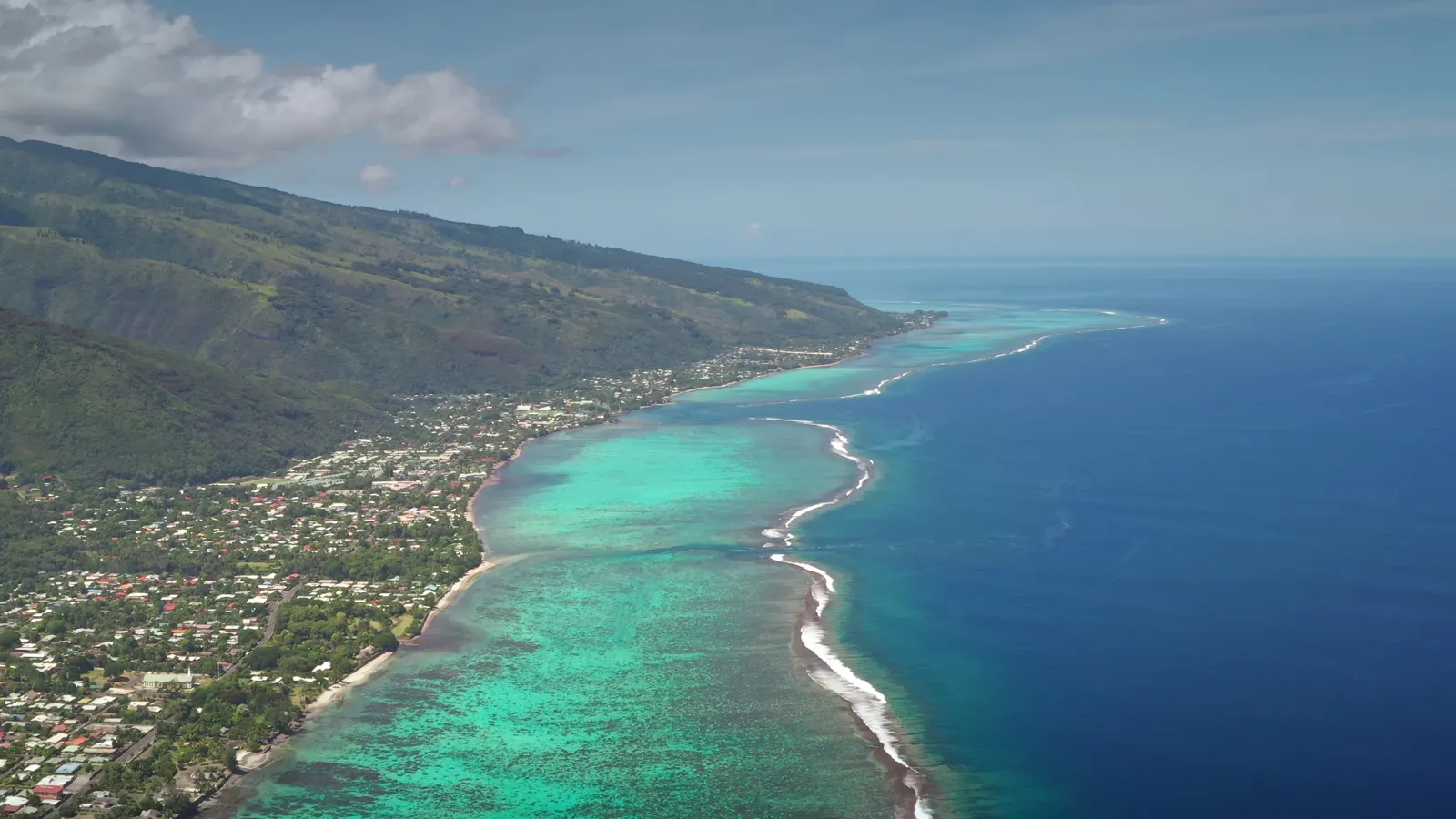
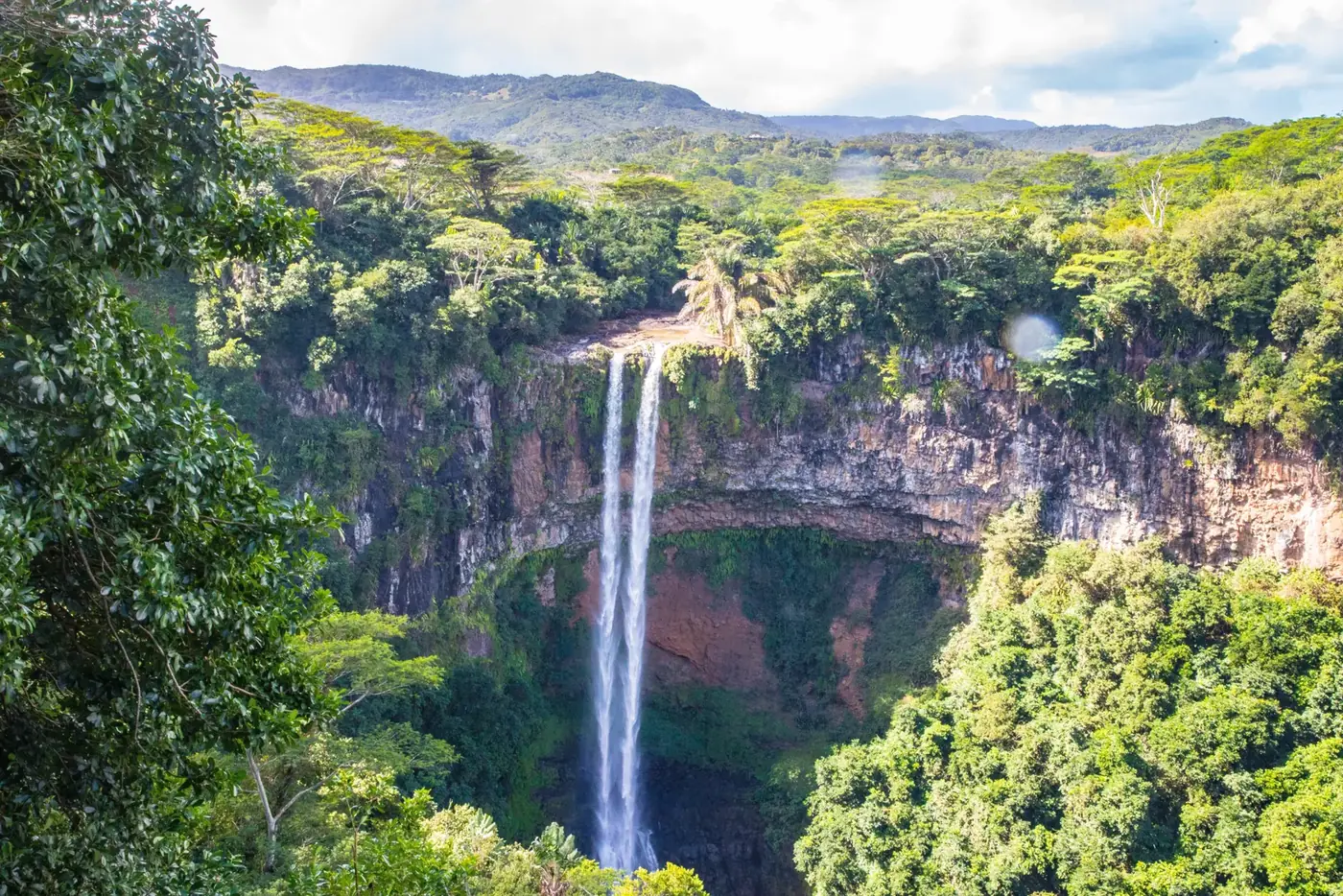
This Marie-Galante travel guide is about Guadeloupe in slow motion. A boat crossing from Pointe-à-Pitre, this round, flat island of about 158 km² (61 sq mi) lives to the rhythm of sugar cane, its agricultural rum distilleries and its ox carts. People come for long, quiet beaches, stone windmills, wild cliffs in the north and a village atmosphere. This guide covers what to do on Marie-Galante, when to go, how to get there, where to stay and what budget to plan.
Our travel deals for Marie-Galante
Affiliate links: we earn a commission, at no extra cost to you.
FlightsKiwi.comCompare flights and airline combinations to Marie-Galante.
The best time to visit Marie-Galante is January to April, during the carême (the dry season): 28 to 30 °C (82 to 86 °F) in the afternoon, steady trade winds and 50 to 85 mm (2.0 to 3.3 in) of rain a month. February is the driest month. May and June are still good compromises, with fewer people. From July to November, the wet season (hivernage) is hotter and rainier and coincides with the hurricane season, which GOV.UK says normally runs from June to November, with the peak from August to October.
To our knowledge, no official normals are published for a station on Marie-Galante. The table below therefore uses those of the Météo-France station at Le Moule, on the east coast of Grande-Terre, about 40 km (25 mi) away: like Marie-Galante, it sits on a low limestone plateau exposed to the trade winds. The figures show the trend, not a measurement on the island itself.
Month
Avg max
Avg min
Rain
Rainy days
Crowds
Prices
Verdict
January
28.4 °C (83 °F)
21.8 °C (71 °F)
78 mm (3.1 in)
14
High
High
✅ Dry season, trade winds
February
28.5 °C (83 °F)
21.7 °C (71 °F)
50 mm (2.0 in)
11
Very high (holidays)
Very high
✅ Driest month
March
28.9 °C (84 °F)
21.9 °C (71 °F)
68 mm (2.7 in)
10
High
High
✅ Dry and sunny
April
29.6 °C (85 °F)
22.8 °C (73 °F)
85 mm (3.3 in)
12
High (Easter)
High
✅ Still dry
May
30.4 °C (87 °F)
23.8 °C (75 °F)
108 mm (4.3 in)
12
Moderate (Terre de Blues)
Medium to high
⚠️ Transition, more showers
June
30.7 °C (87 °F)
24.8 °C (77 °F)
91 mm (3.6 in)
12
Low
Low
✅ Good compromise, few people
July
30.9 °C (88 °F)
25.0 °C (77 °F)
112 mm (4.4 in)
15
High (holidays)
High
⚠️ Hot, humid, hurricane season
August
31.1 °C (88 °F)
24.8 °C (77 °F)
141 mm (5.6 in)
16
High (holidays)
High
⚠️ Wetter, hurricane risk
September
31.0 °C (88 °F)
24.0 °C (75 °F)
158 mm (6.2 in)
15
Low
Low
❌ Peak hurricane season
October
30.6 °C (87 °F)
23.6 °C (74 °F)
179 mm (7.0 in)
16
Low
Low
❌ Wettest month
November
29.7 °C (85 °F)
23.1 °C (74 °F)
179 mm (7.0 in)
15
Low
Low
⚠️ Wet, end of hurricane season
December
28.9 °C (84 °F)
22.6 °C (73 °F)
114 mm (4.5 in)
16
Moderate then high
Medium then high
✅ Dry season returns
Temperatures, precipitation and days with at least 1 mm of rain (rounded): 1991-2020 normals for the Météo-France station at Le Moule (Laureal, Grande-Terre), the nearest reference station with comparable terrain. Crowds and prices: estimate based on school holidays and the tourist season.
The temperature difference between seasons is no more than 3 °C (5 °F). What changes is the rain: about 50 mm (2.0 in) in February versus nearly 180 mm (7.1 in) in October and November. Even in the wet season, showers are often brief. Two other factors matter more than the thermometer: sea conditions for the crossing (the channel can be rough when the trade winds blow hard) and sargassum, seaweed that washes up from time to time on east-facing coasts. Marie-Galante is affected, especially on the Capesterre coast, and no month is guaranteed free of it. Check the monitoring bulletins from Météo-France and the ARS Guadeloupe (regional health agency) before choosing where to stay.
Dry season (December to April): the driest weather and high season. Book the boat and accommodation early, especially during the winter holidays.
May and June: good weather, lower prices, a very quiet island. The Terre de Blues festival is usually held around the Pentecost weekend, when the island is in high demand.
Wet season (July to November): humid heat, showers, hurricane risk. When a weather alert is issued, ferry services can be suspended: leave a margin before your flight home.
The south-east coast around Capesterre is protected by a reef: Anse de la Feuillère and Petite Anse have calm, shallow water suitable for children. To the west, on the Saint-Louis side, Anse Canot and Anse Moustique are lined with coconut palms; further north, the beach at Vieux-Fort marks the end of the coast road. Most beaches have no facilities: bring water and shade, and follow the flags where there are any.
The agricultural rum distilleries
Marie-Galante has three working distilleries: Bielle and Poisson (Père Labat rum), near Grand-Bourg and Saint-Louis, and Bellevue, with its windmill, in Capesterre. A visit lets you see the cane being crushed and distilled during the harvest, usually in the dry season, followed by a tasting. The island’s rum is known for its high strength: go easy if you are driving.
Habitation Murat and the Bézard windmill
South-east of Grand-Bourg, Habitation Murat, a former sugar estate, houses the Marie-Galante ecomuseum: the master’s house, sugar works ruins, a windmill and a medicinal plant garden. It traces the history of sugar cane and slavery on the island. The Bézard windmill, in Capesterre, is one of the few windmills restored with its sails; the island once had more than a hundred. Habitation Roussel-Trianon completes this heritage trail.
Gueule Grand Gouffre and the north coast
The north of the island, between Saint-Louis and Capesterre, is a cliff coast pounded by the Atlantic. Gueule Grand Gouffre, a collapsed sinkhole where the sea rushes in under an arch, is the most spectacular site. Further on, the Mare au Punch and the Trou à Diable (a cave, to be visited with a guide) are well-known stops. Keep away from the cliff edge, which has no railings in several places.
Grand-Bourg and local life
Grand-Bourg, where most boats arrive, has the market, the church, shops and a few restaurants. Saint-Louis is the second port. Elsewhere the island is rural: cane fields, cabrouets (ox-drawn carts), ox-pulling contests at some festivals, and sirop de batterie, a sweet cane syrup. The Terre de Blues music festival, around Pentecost, is the main event of the year.
Hiking, cycling and kayaking
The island is flat, apart from the escarpment that cuts across it from east to west (the « Barre de l’île »): an e-bike is ideal for reaching beaches and distilleries. Trails follow the coast north and south of Capesterre. Kayaking and paddleboarding are done in the reef-protected areas. Diving and snorkelling are possible at some sites; ask the island’s dive clubs, and GOV.UK advises checking a dive operator’s credentials and that safety equipment, particularly oxygen, is on board.
How many days on Marie-Galante? Itineraries
On a day trip from Pointe-à-Pitre, you can see the essentials by car: first boat in the morning, Habitation Murat, a distillery, Gueule Grand Gouffre, a beach, and back in the evening. It is doable, but the island deserves an overnight stay.
3 days
Day 1: arrival in Grand-Bourg, Habitation Murat, Bielle distillery, sunset at Anse Canot
Day 2: the north of the island (Gueule Grand Gouffre, Mare au Punch, Vieux-Fort), Poisson distillery in Saint-Louis
Day 3: Capesterre, the Bézard windmill, Bellevue distillery, Feuillère beach or Petite Anse, back late in the day
On a 2-week trip to Guadeloupe, allow 2 to 3 nights on Marie-Galante, in addition to Grande-Terre, Basse-Terre and Les Saintes. Our Guadeloupe travel guide has a full itinerary.
Getting there: how to reach Marie-Galante
By boat: regular services link the Pointe-à-Pitre ferry terminal with Grand-Bourg (and some with Saint-Louis). Book ahead during holidays, and bring seasickness tablets if the channel is rough.
By air: Marie-Galante airfield is linked to Pointe-à-Pitre by short flights. Handy if you are connecting with an international flight, but seats are limited.
Reaching Guadeloupe: Pointe-à-Pitre airport is the main international gateway; check current routes with the airport and the airlines.
Getting around the island
Hire car: the simplest option; rental companies wait at the Grand-Bourg landing stage. Book in high season.
Scooter and e-bike: pleasant on a flat island, as long as you take water and sun protection.
Buses and taxis: a few lines link the three communes, with limited frequency, not well suited to reaching isolated beaches.
Fuel: petrol stations are few; fill up before heading north.
Where to stay on Marie-Galante
Capesterre: for the sheltered beaches of La Feuillère and Petite Anse; gîtes and small residences.
Saint-Louis: close to Anse Canot and Vieux-Fort, with a port and a few restaurants.
Grand-Bourg: handy for the boat and shops, less beach-oriented.
Types of accommodation: mostly gîtes (holiday cottages), guesthouses, bungalows and a few small hotels. No large resorts: capacity is limited, so book early for the dry season and Pentecost.
Marie-Galante: who is it for?
Our view by traveller type, based on the information in this guide:
Traveller
Our view
Why
Couples
✅ Ideal
Quiet beaches, village atmosphere, sunsets at Anse Canot.
Families
✅ Yes
Anse de la Feuillère and Petite Anse, protected by a reef, have calm, shallow water suitable for children; bring shade and water, as beaches have few facilities.
Nature and gentle activities
✅ Yes
A flat island ideal by e-bike, coastal trails, kayaking and paddleboarding in reef-protected areas.
Culture
✅ Yes
Three agricultural rum distilleries, Habitation Murat and the Bézard windmill tell the story of sugar cane.
Budget travellers
⚠️ Possible
Roughly €70 to €110 per person per day on a budget, plus the boat from Pointe-à-Pitre; gîtes and guesthouses keep costs down.
Nightlife
❌ Not really
A rural island: a few restaurants in Grand-Bourg; the Terre de Blues festival is the main event of the year.
Budget for a stay on Marie-Galante
Item (per person per day)
Budget
Comfort
Accommodation (shared double room)
about €35 to €55 (gîte, guesthouse)
about €80 to €140 (bungalow, small hotel)
Meals
about €20 to €30
about €40 to €70
Rental (car or scooter, shared)
about €15 to €25
about €25 to €40
Activities (visits, kayak)
about €0 to €10
about €10 to €30
Total
roughly €70 to €110 per person per day
roughly €150 to €250 per person per day
Rough estimates excluding flights and the crossing; they vary with the season.
Add the return boat trip from Pointe-à-Pitre. Distillery visits and Habitation Murat are free or inexpensive, and most beaches are free to access: accommodation and vehicle hire are the biggest costs.
Entry requirements, health and safety
US citizens: you need a U.S. passport with at least 6 months’ validity. No visa is required for stays of up to 90 days if you have an onward or return ticket, confirmation of accommodation and evidence that you can support yourself (French West Indies page) (U.S. Department of State, travel.state.gov, last updated September 9, 2026).
UK citizens: Guadeloupe is an overseas department of France and part of the EU. You can visit without a visa for up to 90 days for tourism or business; your passport must have an expiry date at least 3 months after the date you plan to leave (UK FCDO, GOV.UK, updated 22 October 2026).
Health: GOV.UK lists dengue and Zika among the health risks in Guadeloupe: use repellent and cover up in the evening. Medical facilities on the island are limited. Take out travel insurance covering medical costs and evacuation. Ambulance: 15; emergencies: 112 (GOV.UK).
Safety: GOV.UK advises avoiding isolated areas, including beaches, after dark; the U.S. State Department notes that petty street crime occurs and advises not leaving valuables visible in vehicles.
Sargassum: during a large stranding, avoid staying near the seaweed for long and follow the ARS Guadeloupe advice.
Sea and hurricanes: currents and swell on the north and east coasts. The hurricane season normally runs from June to November; monitor the World Meteorological Organization and the US National Hurricane Center (GOV.UK), as well as local Météo-France alerts.
Even on a short hop, travel insurance is useful to cover cancellation or repatriation.
Practical tips for Marie-Galante
Money: cash machines in Grand-Bourg, Saint-Louis and Capesterre, but not everywhere; keep cash for small restaurants and markets.
Mobile data: check your home carrier’s roaming charges; coverage can be weak on the north coast.
Opening hours: many shops close from midday to mid-afternoon, and Sunday is very quiet.
Etiquette: say hello (bonjour) when entering a shop, and keep beachwear for the beach.
To take home: agricultural rum, sirop de batterie, jams and cane products, bought directly from distilleries and producers; check your home country’s customs allowances (e.g. CBP in the US, HMRC in the UK).
Torn between the two main islands of the French West Indies? Our comparison Guadeloupe or Martinique helps you choose.
Frequently asked questions
What is the best time to visit Marie-Galante?
January to April, during the dry season: the driest weather (about 50 to 85 mm, or 2.0 to 3.3 in, of rain a month according to Météo-France normals for eastern Grande-Terre) and steady trade winds. May and June are good compromises, quieter and cheaper.
How many days do you need on Marie-Galante?
A day is enough for a quick look by car from Pointe-à-Pitre. To enjoy the beaches and the three distilleries without rushing, allow 2 to 3 days on the island.
How do you get to Marie-Galante from Guadeloupe?
By boat from Pointe-à-Pitre to Grand-Bourg, or by plane from Pointe-à-Pitre airport. Book ahead during school holidays.
Do you need a car on Marie-Galante?
It is the most practical option, as buses are infrequent and the beaches are spread out. A scooter or e-bike also works well on this flat island.
Is there sargassum on Marie-Galante?
Yes, at times, especially on east-facing coasts. Strandings vary from week to week: check the Météo-France and ARS Guadeloupe bulletins and choose accommodation on the west side if you travel during an episode.
Our sources
Météo-France: 1991-2020 normals for the Météo-France station at Le Moule (Laureal, Grande-Terre), the nearest reference station with comparable terrain (via the Wikipedia climate box for Le Moule); sargassum bulletins


 FlightsKiwi.comCompare flights and airline combinations to Marie-Galante.Compare flights