Lake Como, in Lombardy, stretches in the shape of an upside-down Y at the foot of the Pre-Alps, less than an hour from Milan. Visiting Lake Como means hopping from one village to the next by boat, from Bellagio to Varenna, and discovering the villas and their gardens on the water’s edge. This Lake Como travel guide brings together the essentials for planning your trip: things to do, where to stay, how to get around, what budget to plan and when to go, with official climate normals.
Our travel deals for Lake Como
Affiliate links: we earn a commission, at no extra cost to you.
FlightsKiwi.comCompare flights and airline combinations to Lake Como.
Time zoneUTC+1, UTC+2 in summer (Europe/Rome)1 hour ahead of London, 6 hours ahead of New York most of the yearLocal time now: –:–
AirportsMilan Malpensa and Milan LinateThen about 1 hour by train to Como or Varenna
EntrySchengen area: no visa for up to 90 days for US citizens (tourism or business) and UK citizens (in any 180-day period) · travel.state.gov · GOV.UKPassport valid at least 3 months beyond your stay (US) or after leaving the Schengen area (UK)
Electricity220-volt system, according to the U.S. Department of State · plugsCheck that your devices accept it; you may need a plug adapter
The best time to visit Lake Como is from mid-April to June and from September to mid-October: afternoons reach 17 to 25 °C (63 to 77 °F), the villa gardens are in bloom in spring and the light is soft in autumn. July and August are the hottest and busiest months. It rains a lot from April to November, often as thunderstorms. In winter, the lake is quiet, but many hotels, restaurants and villas close and boats run less often.
When to go to Lake Como: key points
Best times: mid-April to June, September to mid-October
For the gardens: April and May (azaleas and rhododendrons in bloom)
Hottest: July, with an average high of about 27 °C (81 °F)
Wettest: May (about 178 mm, or 7.0 in), but also June and late autumn
Villa and boat season: mainly from late March to early November
Plan ahead for: Easter, spring public holidays and August
Month
High °C (°F)
Low °C (°F)
Rain mm (in)
Rainy days
Crowds
Prices
Verdict
January
7.1 (45)
1.2 (34)
66 (2.6)
5
Low
Low
❌ Cold, many places closed
February
9.0 (48)
1.9 (35)
61 (2.4)
5
Low
Low
⚠️ Quiet and cool, Como town is pleasant
March
13.5 (56)
5.2 (41)
76 (3.0)
6
Medium
Low to medium
⚠️ Villas gradually reopen
April
16.7 (62)
8.5 (47)
138 (5.4)
10
High (Easter)
Medium to high
✅ Gardens in bloom, frequent showers
May
20.8 (69)
12.4 (54)
178 (7.0)
12
High
High
✅ The best month for the gardens
June
24.9 (77)
16.1 (61)
172 (6.8)
10
High
High
✅ Warm, long days, thunderstorms
July
27.3 (81)
18.0 (64)
158 (6.2)
8
Very high
Very high
⚠️ The hottest, villages packed
August
26.8 (80)
17.8 (64)
158 (6.2)
10
Very high (Ferragosto)
Very high
⚠️ Peak of the Italian holidays
September
22.1 (72)
14.2 (58)
165 (6.5)
9
High
High
✅ Mild, lake still swimmable early in the month
October
16.9 (62)
10.2 (50)
150 (5.9)
9
Medium
Medium
✅ Autumn colours until mid-October
November
11.6 (53)
5.7 (42)
167 (6.6)
9
Low
Low
❌ Wet, season over
December
7.7 (46)
2.0 (36)
80 (3.1)
6
Low (holidays)
Low to medium
⚠️ Christmas markets in Como
Temperatures, precipitation and rainy days (rounded): 1991-2020 normals for the Lugano station (on the shore of Lake Lugano, 273 m, or 896 ft, about 30 km, or 19 mi, from Como) published by MeteoSwiss. No Italian station on the lake has official normals published in open access; Lugano, with a comparable lake climate, serves as the reference. Crowds and prices: estimates based on the tourist seasons.
These figures show the trend: Lake Como enjoys a milder climate than the neighbouring Alpine valleys, but it is very wet, with more than 150 mm (5.9 in) a month from May to November. This mostly falls as showers and thunderstorms, often late in the day, between which the sun quickly returns. South-facing shores, such as the Tremezzina, are the most sheltered.
Spring (April to June)
Highs rise from 17 °C (63 °F) in April to 25 °C (77 °F) in June. This is garden season: the azaleas and rhododendrons at Villa Carlotta and Villa Melzi bloom in April and May. Showers are frequent, and Easter and the Italian public holidays draw big crowds.
Pros: gardens in bloom, greenery, pleasant temperatures for walking
Cons: frequent rain, lake still cool for swimming
Our advice: May on weekdays, with a plan B (museums, villas) for rainy days
Summer (July and August)
Afternoons reach about 27 °C (81 °F) and the water warms up enough for swimming at the designated lidos. Boats run at full frequency, but the piers at Bellagio and Varenna are packed during the day and prices are at their highest. Summer thunderstorms can be violent.
Pros: swimming, long evenings, all boat routes running
Cons: crowds, queues for boats, expensive accommodation
Best for: a relaxing stay by the water, booked well in advance
Autumn (September to November)
September stays mild (22 °C, or 72 °F) and is one of the best months to enjoy the lake with slightly fewer people. In October, the forests take on their colours, but the tourist season slows down and some villas close after early November. November is wet and quiet.
Pros: light, colours, prices falling after September
Cons: shorter days, reduced boat timetables from autumn
Our advice: early September to mid-October
Winter (December to March)
Afternoons reach 7 to 9 °C (45 to 48 °F) and mornings are close to 1 to 2 °C (34 to 36 °F). The lake is silent and the snowy peaks are reflected in the water, but many hotels and restaurants in the villages close, and the villas generally reopen in spring. The town of Como, livelier all year round, is the best base in winter.
Month by month: January is the coldest month and the one with most closures; February and March see the season restart; April and May are the garden months; June is warm and bright; July and August are packed; September is the best compromise; October is colourful; November is wet; December is quiet, with Como’s Christmas markets. To compare with the rest of the country, see when to go to Italy and our destination ideas for May and September.
Things to do at Lake Como: the must-sees
Como, the town
At the south-western end of the lake, Como deserves half a day: its cathedral, its pedestrian old town, the lakeside promenade to Villa Olmo, and the funicular up to Brunate for a view of the lake and, on clear days, the Alps. It is also the departure point for boats to the central lake.
Bellagio
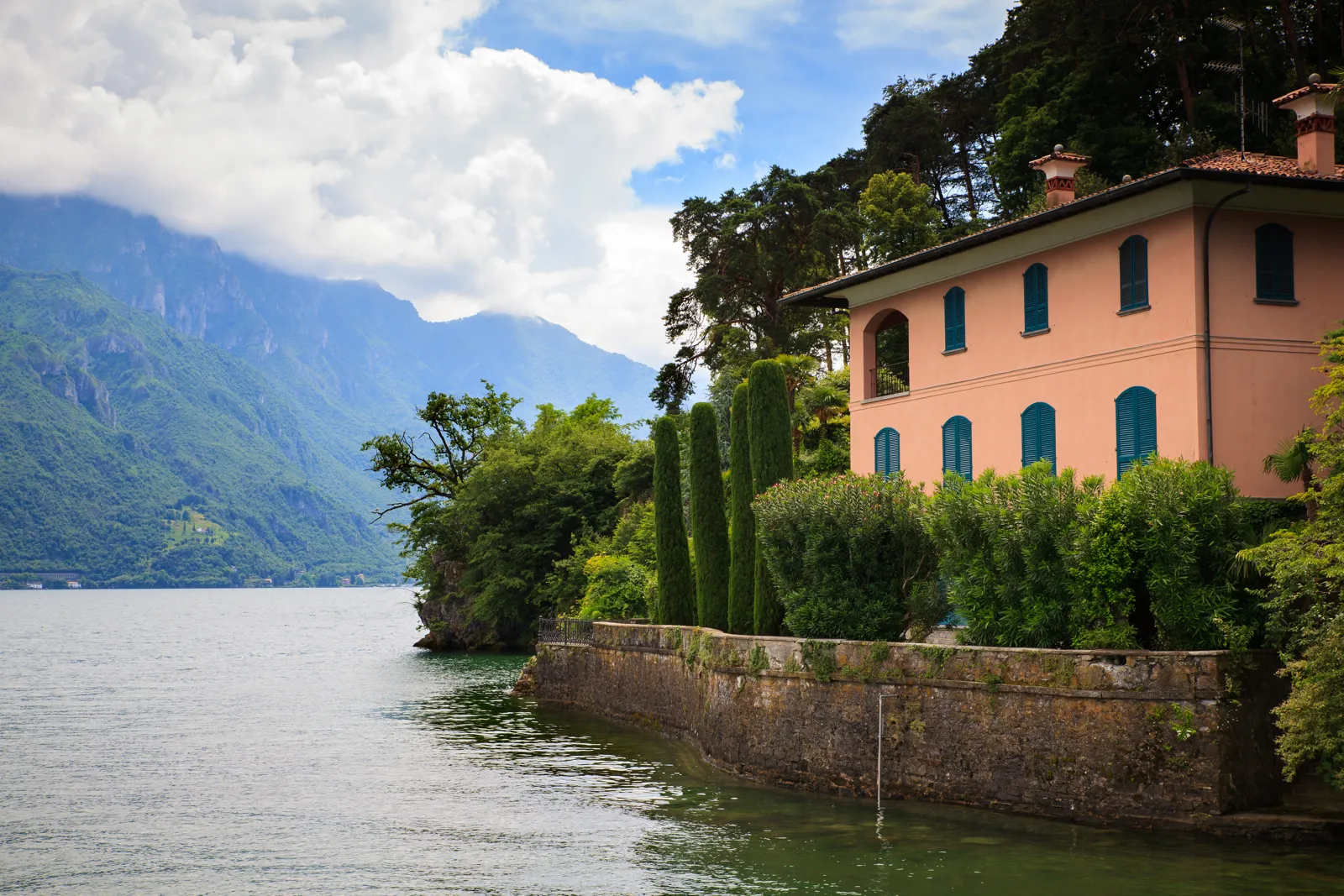
A lakeside villa in Bellagio.
Bellagio sits on the tip of the peninsula that separates the lake’s two southern branches. Stepped lanes, shops, a lakeside promenade and the gardens of Villa Melzi make it the best-known stop. It is also the busiest village: come early or stay into the evening, after the day-trippers have left.
Varenna
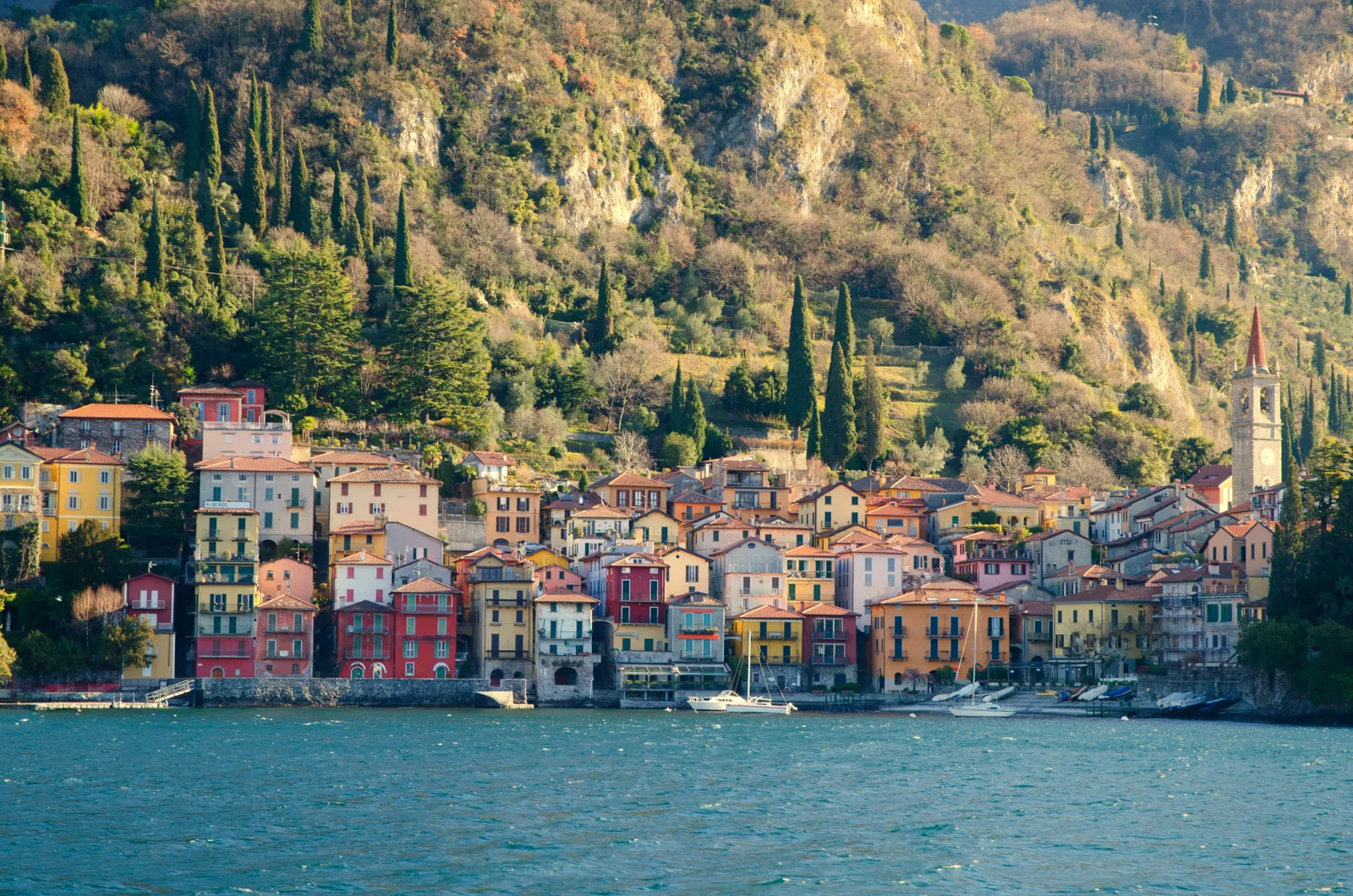
Varenna seen from the lake.
On the east shore, Varenna lines up its colourful houses above the water. You can visit Villa Monastero and its gardens, climb to Vezio castle for the view and follow the promenade along the lake. Varenna has a railway station, which makes it a convenient base without a car.
Tremezzo, Villa Carlotta and Villa del Balbianello
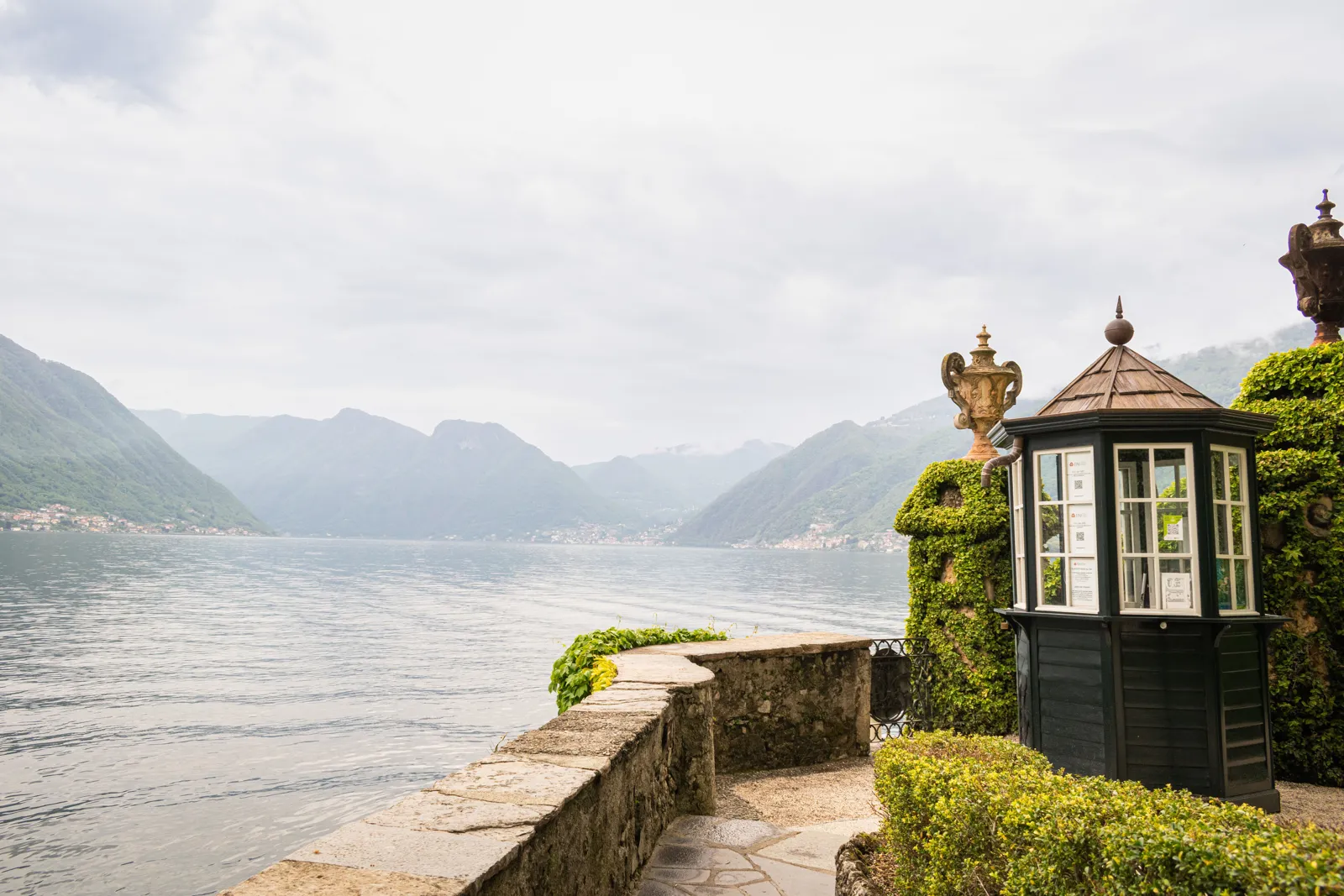
From the gardens of Villa del Balbianello.
On the west shore, the Tremezzina is home to two of the most visited villas: Villa Carlotta, with its botanical garden and art collections, and Villa del Balbianello, on the Lavedo headland near Lenno, run by the FAI (the Italian National Trust). Check Villa del Balbianello’s opening hours and visiting arrangements on its website before you go.
Menaggio
Opposite Bellagio and Varenna, Menaggio is a lively small town with a large lakeside square, a lido and trails up into the hills. It is well connected by boat and bus, and serves as a gateway to Lake Lugano.
The north of the lake and hiking
Wilder, the north of the lake attracts nature lovers and water-sports enthusiasts. Piona Abbey, on a peninsula on the east shore, and the high-level trails, such as the Sentiero del Viandante on the eastern shore or the Greenway del Lago di Como in the Tremezzina on the western shore, let you explore the lake on foot, away from the crowded piers.
The lake by boat
The boat remains the best way to discover the lake. The public ferry service calls at most villages; in the central lake, car ferries link Bellagio, Varenna, Menaggio and Cadenabbia. You can also hire a boat with a skipper or take a private boat trip, an expensive but popular option.
Itinerary ideas for Lake Como
Weekend (2-3 days)
Day 1: Como, the cathedral, the Brunate funicular
Day 2: boat to Bellagio and Varenna, back via Menaggio
Day 3: Villa Carlotta and Villa del Balbianello in the Tremezzina
5 to 7 days
Days 1-2: Como and Brunate
Days 3-4: base in the central lake (Bellagio, Varenna or Menaggio), villas and boats
Day 5: hike a section of the Sentiero del Viandante or the Greenway
Days 6-7: the north of the lake and Piona Abbey, or a trip to Lugano
Lake Como combines well with Milan, with neighbouring Switzerland or, further afield, with Venice by train via Milan. For the whole country, see our Italy travel guide.
Budget for a trip to Lake Como
Indicative amounts per person per day, excluding flights:
Item
Budget
Comfort
Accommodation (sharing a double room)
roughly €50 to €85
roughly €120 to €250
Meals
roughly €25 to €40
roughly €55 to €100
Boats and transport
roughly €15 to €25
roughly €25 to €50
Sightseeing (villas, gardens)
roughly €10 to €20
roughly €20 to €40
Total per day
roughly €100 to €160 per person per day
roughly €220 to €400 per person per day
Indicative estimates: the central lake (Bellagio, Tremezzina) is the most expensive area.
To cut costs, stay in Como, Lecco or a lesser-known village, and use day boat tickets if you plan several crossings.
Getting around Lake Como
Train: trains link Milan with Como in about an hour, and Milan with Varenna on the east-shore line. You do not need a car for a first visit.
Boat: slow boats, fast boats and car ferries link the villages. Timetables are reduced out of season: check them before setting off.
Bus: routes run along the shores, but the roads are narrow and often congested in summer.
Car: useful for isolated villages and the north of the lake, but parking is scarce and paid in the villages. The U.S. State Department notes that break-ins of rented vehicles are common: leave nothing visible.
Getting there: the main gateways are Milan Malpensa and Milan Linate airports. From Malpensa, reach Como by train via Saronno or by shuttle; from Linate, go via central Milan.
Where to stay at Lake Como
Base
Best for
Good to know
Como
No car, all year round
Lively town, station, boats to the central lake
Bellagio
First trip, atmosphere
Expensive and very busy during the day
Varenna
No car
Station on the Milan line
Menaggio
Central base
Boats, buses and a lido
Tremezzina (Tremezzo, Lenno)
Villas and peace
Upmarket hotels
North of the lake
Nature, water sports
More affordable
Many Italian municipalities charge a tourist tax per night, usually paid at your accommodation, often in cash (GOV.UK).
For a first trip, the Bellagio – Varenna – Menaggio « triangle » is the most practical base, as boats link them in a few minutes. Book early for May, June and September.
Entry requirements, health and safety
US citizens: Italy is in the Schengen area. You may enter for up to 90 days for tourism or business without a visa; your passport must be valid at least 3 months beyond your stay, and you need proof of sufficient funds and a return ticket (U.S. Department of State, travel.state.gov, last updated August 11, 2025).
UK citizens: no visa for up to 90 days in any 180-day period as a tourist. Your passport must have been issued less than 10 years before the day you arrive and be valid at least 3 months after the day you plan to leave the Schengen area. The EU Entry/Exit System (EES) is being implemented: fingerprints and a photo may be taken at your first entry, free of charge (UK FCDO, GOV.UK, updated 21 October 2026).
ID: under Italian law, police can stop you at any time for an identity check: carry photo ID at all times (GOV.UK).
Health: UK travellers can use a GHIC or EHIC for medically necessary state healthcare (GOV.UK); travel.state.gov advises being up to date on CDC-recommended vaccinations and recommends insurance that covers medical evacuation.
Theft: crime levels are generally low, but bag-snatching and pickpocketing are more common in city centres, at major tourist attractions and on public transport (GOV.UK); the State Department notes that break-ins of rented vehicles are common, so never leave luggage in a parked car.
Mosquitoes: GOV.UK lists biting insects and West Nile disease among the health risks in Italy: protect yourself from bites.
Switzerland: if you cross the border to Lugano, carry your passport, as for the rest of your trip.
Hiking: check the weather; GOV.UK points out that hiking carries specific risks and advises making sure your insurance covers mountain rescue.
Emergencies: 112 (police), 118 (ambulance), 115 (fire), according to GOV.UK; the State Department gives 112 for all emergencies.
Practical tips
Boats: check the time of the last boat, especially out of season, so you do not get stuck on the other shore.
Villas: many open from late March to early November; check dates and book if necessary.
Swimming: swim at lidos and authorised areas; the lake is deep and cold a few metres from the shore.
Money: cards are widely accepted; use ATMs in well-lit public areas or inside a bank (travel.state.gov).
Mobile data: check your home carrier’s roaming charges for Italy and for Switzerland before you leave; an eSIM is a simple way to get local data.
Restaurants: a cover charge (« coperto ») is often added; try the lake fish, such as lavarello (whitefish).
Our view, traveller type by traveller type, based on the information in this guide:
Profile
Our verdict
Couples
Ideal: villas and gardens (Villa Carlotta, Villa del Balbianello, Villa Melzi), lakeside villages and Bellagio in the evening, after the day-trippers have gone.
Garden lovers
Ideal in April-May, when the azaleas and rhododendrons bloom.
Hikers
Yes: the Sentiero del Viandante on the east shore, the Greenway in the Tremezzina on the west shore, and the wilder north of the lake.
No car
Yes: train from Milan to Como and Varenna, boats between the villages; it is even the simplest option in summer.
Families
Possible: the Brunate funicular, boats and lidos, but fewer beaches and theme parks than at Lake Garda.
Tight budget
Not ideal: roughly €100 to €160 per person per day on a budget; stay in Como, Lecco or a lesser-known village.
Further reading
To compare the lake season with the rest of the country, read when to go to Italy. May and September are among the best months: our selections where to go in May and where to go in September offer other ideas for those dates. If you prefer beaches and water sports, our Lake Garda guide covers the other big lake within reach of Milan.
Frequently asked questions
How many days do you need to visit Lake Como?
Two or three days are enough for Como, Bellagio, Varenna and a villa. Five days to a week let you add the other villas, hiking and the north of the lake.
Can you visit Lake Como without a car?
Yes. The train links Milan with Como and Varenna, and boats serve most villages. It is even the simplest option in summer.
Where should you stay at Lake Como?
In the central lake (Bellagio, Varenna, Menaggio) to explore by boat, or in Como for a stay at any time of year, with a station and more choice.
What is the most beautiful village on Lake Como?
Bellagio and Varenna are the most often mentioned. Bellagio is livelier; Varenna is smaller and very photogenic. You can visit both on the same day.
Can you visit Lake Como in winter?
Yes, but many hotels, restaurants and villas close, and boats run less often. The town of Como remains the best base.
Our sources
Climate normals: 1991-2020 normals for the Lugano station (on the shore of Lake Lugano, 273 m, or 896 ft, about 30 km, or 19 mi, from Como) published by MeteoSwiss


 FlightsKiwi.comCompare flights and airline combinations to Lake Como.Compare flights