Switzerland packs some of the best-known peaks in the Alps, large lakes, historic towns and one of the densest public transport networks in Europe into a small territory. It is an easy destination to reach, but expensive once there. This Switzerland travel guide gathers the essentials for visiting Switzerland: what to see, what to do, itineraries from 7 days to 2 weeks, budget and entry requirements to plan your trip.
To locate cities, regions, terrain, national parks and airports, see our map of Switzerland.
Switzerland at a glance
CapitalBern (federal city)
LanguagesGerman, French, Italian and RomanshEnglish is common in tourist areas
Switzerland can be visited all year, but not for the same reasons. From late June to early October, the mountains are open for hiking, the lakes are warm enough to swim and the passes are open. From mid-December to March, it is ski season. For cities and lakes, May-June and September are the most pleasant, with fewer crowds than in high summer. November and late spring are shoulder seasons when many mountain establishments close. Ticino, south of the Alps, is the mildest region. All the details, region by region and month by month, are in our article best time to visit Switzerland.
What to see in Switzerland: the highlights
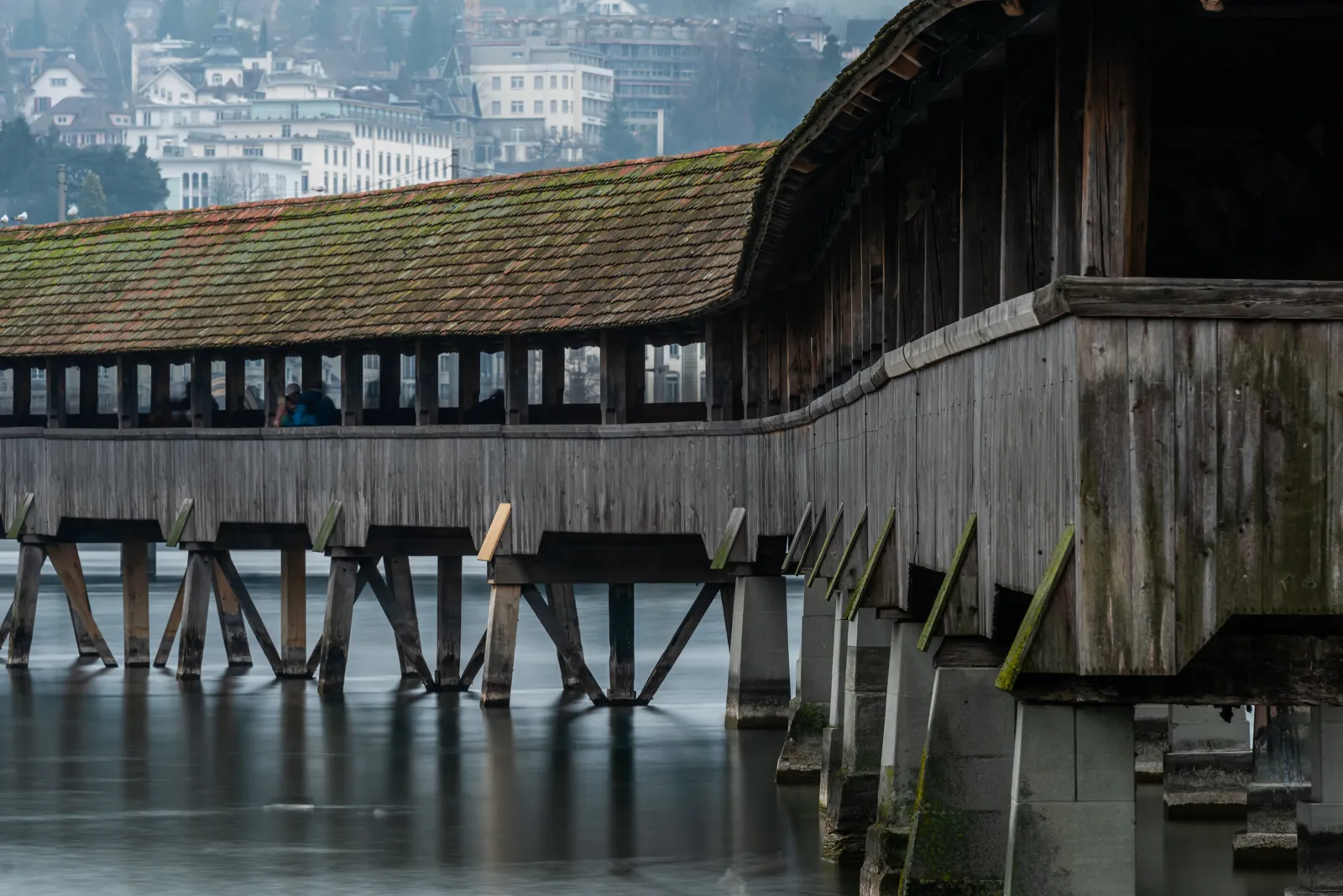
The Chapel Bridge and the Jesuit Church on the Reuss in Lucerne
Geneva and Lake Geneva
Geneva, an international city at the end of Lake Geneva, is explored on foot: the old town and St. Pierre Cathedral, the Parc des Bastions and the Reformation Wall, the quays and the Jet d’Eau, the Palais des Nations. Boats link the lakeside towns: Nyon, Lausanne, Vevey, Montreux and, on the French shore, Évian and Yvoire. Between Lausanne and Vevey, the terraced Lavaux vineyards, a UNESCO World Heritage Site, can be explored on foot or by train. Near Montreux, Chillon Castle, set on a rock at the water’s edge, is one of the most visited sights in the country. For the city itself, our Geneva travel guide covers the old town, the quays and the best time to go.
Lausanne and Montreux
Lausanne, built on a slope above the lake, is a lively student city, home to the International Olympic Committee and the Olympic Museum, with a Gothic cathedral and a metro that climbs from the lakeshore at Ouchy. Montreux, quieter, is known for its flower-lined promenade and its jazz festival in July. It is also the starting point of the GoldenPass line to Gstaad and the Bernese Oberland.
Lucerne and Central Switzerland
Lucerne is one of the most visited cities in the country, with its covered wooden bridge (Kapellbrücke), its old town of painted façades and its lake surrounded by mountains. Rigi, Pilatus and Titlis are easy to reach by rack railway, cable car or funicular, and steamboats cruise Lake Lucerne.
Interlaken and the Bernese Oberland
Between Lakes Thun and Brienz, Interlaken is the base for exploring the Jungfrau region: the Lauterbrunnen valley and its waterfalls, the villages of Wengen, Mürren and Grindelwald, and the Jungfraujoch, where the train climbs to almost 3,500 m (11,480 ft), on the edge of the Aletsch Glacier. It is an ideal region for hiking in summer and skiing in winter.
Zermatt and Valais
At the foot of the Matterhorn, Zermatt is a car-free village reached by train. The Gornergrat, served by a rack railway, offers one of the best-known views of peaks over 4,000 m (13,100 ft). Valais also has Saas-Fee, Verbier, Crans-Montana and the Aletsch Glacier, the largest in the Alps. Lower down, the Rhône valley is wine country.
In Valais, our page seeing the Matterhorn covers access to Zermatt, viewpoints and official prices.
Zurich, Basel and Bern
Zurich, the country’s largest city, combines an old town on the Limmat, major museums (Kunsthaus, Swiss National Museum) and lively nightlife. Basel, on the French and German borders, is known for its art museums and carnival. Bern, the federal capital, has an arcaded old town listed as a World Heritage Site, wrapped in a loop of the Aare. Further north, Zurich, the largest Swiss city, has its own full guide.
Ticino: Lugano, Locarno and Bellinzona
South of the Alps, Ticino speaks Italian and has the atmosphere to match: arcaded squares, palm trees on the shores of Lakes Lugano and Maggiore, wild valleys such as the Verzasca. Bellinzona has three medieval castles listed as World Heritage. It is the mildest region in the country, pleasant from spring onward.
Graubünden and the Engadine
The largest Swiss canton is also the most mountainous. St. Moritz and Davos are historic resorts; the Engadine is known for its high-altitude lakes and golden larches in October. The Bernina Express crosses the Alps to Tirano, in Italy, on the Albula and Bernina lines, a UNESCO World Heritage Site. The Swiss National Park, the only one in the country, is also in Graubünden.
Other sights not to miss
The Rhine Falls, near Schaffhausen: the most powerful waterfalls in Europe, approached by boat.
Gruyères, a small medieval town in the canton of Fribourg dominated by its castle, which gave its name to the cheese.
Lake Oeschinen, a mountain lake at 1,578 m (5,177 ft) above Kandersteg, in the Bernese Oberland.
Creux du Van, a rocky cirque about 1.4 km (0.9 mi) wide in the Neuchâtel Jura.
Things to do in Switzerland
Beyond the cities and peaks, these are the experiences found in most trips:
Take a scenic train: the Glacier Express, the Bernina Express or the GoldenPass line.
Ride up to a summit by rack railway or cable car: Jungfraujoch, Gornergrat, Rigi, Pilatus or Titlis.
Cruise a lake, sometimes by steamboat: Lake Geneva, Lake Lucerne, Lakes Thun and Brienz.
Hike in the mountains from late June to early October, in the Jungfrau region, around Zermatt or in the Engadine.
Walk through the Lavaux vineyards, between Lausanne and Vevey.
Visit Chillon Castle on the shores of Lake Geneva.
Ski from mid-December to March in Zermatt, Verbier, Davos or St. Moritz.
Taste the specialties: fondue, raclette, Gruyère, chocolate.
Switzerland itinerary: 7 days to 2 weeks
7 to 10 days: lakes and Alps by train
Days 1 and 2: Geneva, then Lausanne and Lavaux
Day 3: Montreux and Chillon Castle, then the GoldenPass line to the Bernese Oberland
Days 4 to 6: Interlaken, Lauterbrunnen, Grindelwald, and the Jungfraujoch if the weather is clear
Days 7 and 8: Lucerne and a nearby summit (Rigi or Pilatus)
Days 9 and 10: Zurich, then depart
2 weeks: the grand tour of Switzerland
Days 1 to 3: Geneva, Lausanne and Lake Geneva
Days 4 and 5: Zermatt and the Matterhorn
Day 6: the Glacier Express from Zermatt to Graubünden (St. Moritz)
Days 7 and 8: the Engadine, then the Bernina Express to Tirano and on to Ticino
Days 9 and 10: Lugano, Locarno and Bellinzona
Days 11 to 13: Lucerne and the Bernese Oberland (Interlaken, Grindelwald)
Day 14: Bern or Zurich, then depart
These journeys are mostly done by train. If you travel by car, check that the passes are open, as several are closed in winter.
Budget for a trip to Switzerland
Switzerland is one of the most expensive countries in Europe: accommodation, restaurants and mountain lifts cost considerably more than in most neighboring countries. Indicative amounts per person per day, excluding international travel (converted from our euro estimates at the ECB rate of 23 October 2026, €1 = CHF 0.9227):
Item
Budget
Comfort
Accommodation (based on a shared double room)
roughly CHF 35–65 (youth hostel, campsite)
roughly CHF 110–185
Meals
roughly CHF 30–40 (supermarkets, snacks)
roughly CHF 75–110
Transport (train, boat, PostBus)
roughly CHF 20–30 with a pass
roughly CHF 30–45
Activities and summits
roughly CHF 10–30
roughly CHF 35–90
Total per day
roughly CHF 90–140
roughly CHF 230–370
Indicative estimates, varying with the season and the exchange rate. Trips to the summits by mountain railway or cable car are often the biggest expense.
To cut costs: shop at supermarkets (Coop, Migros), compare transport passes if you make many journeys, and stay outside the best-known resorts. Prices of passes and mountain railways change every year: check the official websites of SBB and the mountain railway companies before you go.
Who is Switzerland for?
Our verdict by travel style, based on the information in this guide:
Mountains and hiking: ideal: the Jungfrau region, Zermatt, the Engadine, from late June to early October.
Rail travel: ideal: the Glacier Express, the Bernina Express, the GoldenPass line and rack railways up to the summits.
Families: yes: punctual trains, lake cruises; the budget remains high.
Skiing: yes, from mid-December to March in Zermatt, Verbier, Davos or St. Moritz.
Weekend breaks: yes: Geneva, Lucerne or Zurich work well for a long weekend.
Budget travelers: not well suited: roughly CHF 90–140 per person per day, even in youth hostels and shopping at supermarkets.
Getting around Switzerland
Train: the SBB network serves almost the whole country with regular-interval timetables and well-coordinated connections. Mountain railways, boats and PostBuses complete the network. Several passes exist for visitors (such as the Swiss Travel Pass): compare them with single tickets for your itinerary. According to the U.S. Department of State, public transport is excellent, punctual and safe; tickets must be bought and validated before boarding, as they cannot be bought on board, and fare dodgers face on-the-spot fines.
Scenic trains: the Glacier Express (Zermatt – St. Moritz), the Bernina Express (to Tirano) and the GoldenPass line (Montreux – Lucerne) are regular lines; a seat in the panoramic cars is booked at extra cost.
PostBus: the yellow buses serve mountain villages and, in summer, several passes.
Boat: Lake Geneva, Lake Lucerne, Lakes Zurich, Thun, Brienz, Lugano and Maggiore are served by regular boats, some of them steamboats.
Car: handy for remote valleys. You must buy and display a vignette to drive on motorways, sold online, at most border crossings, petrol stations and post offices (UK FCDO, GOV.UK, updated 11 August 2026); rental cars usually already have one. According to the U.S. Department of State (travel.state.gov, last updated January 15, 2026), speed limits are 120 km/h (75 mph) on motorways, 100 km/h (62 mph) on expressways, 80 km/h (50 mph) outside urban areas and 50 km/h (31 mph) in towns; the blood alcohol limit is 0.05%; headlights must be on at all times; turning right on red is illegal; and drivers coming from the right have priority unless indicated otherwise. Snow chains are required in some mountain areas in winter, and several Alpine passes are closed in winter. Some villages (Zermatt, Wengen, Mürren, Saas-Fee) are car-free. UK photocard licences are accepted (GOV.UK).
Plane: rarely useful, as the country is small and the trains efficient.
Where to stay in Switzerland
In cities, stay near the station or in the old town: everything is then within walking distance or a tram ride. In Geneva, the Pâquis and Cornavin areas are convenient; in Lucerne, the old town and the lakeshore. In the mountains, Interlaken is the most practical base for the Jungfrau region, but sleeping in Wengen, Mürren or Grindelwald lets you enjoy the summits in the evening. In Zermatt, accommodation is expensive, especially with a Matterhorn view.
Options range from youth hostels and campsites to luxury hotels, by way of rental chalets and apartments and Swiss Alpine Club huts for hikers. For February school holidays and the festive season in the resorts, or for summer at the best-known sites, book several months ahead.
Entry requirements for Switzerland
US citizens: according to the U.S. Department of State (travel.state.gov, last updated January 15, 2026), Switzerland applies Schengen rules: your passport should be valid for at least three months beyond your stay, and you will need proof of sufficient funds and a return ticket. Short tourist stays are visa-free for up to 90 days in the Schengen area.
UK citizens: according to the UK FCDO (GOV.UK foreign travel advice, updated 11 August 2026), you can travel without a visa for up to 90 days in any 180-day period. Your passport must have been issued less than 10 years before you arrive and expire at least 3 months after the day you plan to leave the Schengen area. At the border you may need to show proof of accommodation, travel insurance, a return ticket and enough money (around 100 Swiss francs a day). Use the « All passports » lane. Under the EU Entry/Exit System (EES), you may need to register your fingerprints and photo.
Customs: Switzerland has strict rules on goods brought in and out: declare anything that may be prohibited or taxable (GOV.UK). Check that your prescription medication is legal with the Swiss Federal Customs Administration (U.S. Department of State). For the return, check your home country’s allowances (e.g. CBP in the US, HMRC in the UK). Entry requirements checked on 24 October 2026; check them again before you travel.
Health and safety in Switzerland
Health: the UK FCDO (GOV.UK, updated 11 August 2026) advises checking vaccine recommendations at least 8 weeks before your trip and flags ticks, especially between April and October, tick-borne encephalitis and altitude sickness in areas such as the Matterhorn, Saas-Fee, St. Moritz and Engelberg-Titlis. UK travelers need a GHIC or EHIC, which does not replace travel insurance. According to the U.S. Department of State, medical care is comparable to US standards, and the on-duty pharmacist can be found via 144.
Rescue and insurance: mountain rescues can be extremely expensive (U.S. Department of State): make sure your insurance covers mountain rescue and helicopter costs (GOV.UK, updated 11 August 2026).
Safety: serious crime is rare, but the UK FCDO (GOV.UK, updated 11 August 2026) reports more petty theft in larger cities, at Geneva airport and on trains to and from Geneva. Watch your belongings at airports, stations and in crowds. In Ticino and St. Gallen, covering your face in public is illegal, with fines of 100 to 10,000 Swiss francs.
Mountains: avalanches, landslides, crevasses, rockfalls, storms and sudden weather changes are year-round Alpine hazards. Check forecasts, stay on marked paths, don’t go alone, leave your itinerary with someone and consider a guide (GOV.UK; U.S. Department of State). Off-piste skiing is very dangerous because of avalanches. In summer, wildfire bans apply after droughts.
Emergencies: 112; ambulance 144, police 117, fire 118 (GOV.UK; U.S. Department of State).
Practical tips for Switzerland
Money: the currency is the Swiss franc. According to the U.S. Department of State, most major credit cards are widely accepted, but many vendors only take chip-and-PIN cards; ATMs are widely available and accept US debit cards. Check your bank’s foreign transaction fees. Our currency converter helps you estimate prices.
Internet: check your provider’s roaming charges or get an eSIM. Wi-Fi is available in most accommodation.
Languages: French is spoken in western Switzerland (Geneva, Vaud, Neuchâtel, Jura, part of Valais and Fribourg); elsewhere German or Italian dominate, but English gets you by easily.
Rules and customs: trains leave on time. Respect waste sorting, quiet in the evening and on Sundays, and parking rules.
Not for a short stay if you are a US or British citizen: Switzerland is in the Schengen area, with visa-free stays of up to 90 days in any 180 days (GOV.UK; travel.state.gov). Your passport must be valid at least three months beyond your stay. Checked on 24 October 2026.
Can you pay in euros in Switzerland?
The currency is the Swiss franc. It is simpler to pay by card (many vendors require chip-and-PIN) or to withdraw francs from ATMs, which accept US debit cards (U.S. Department of State).
How much does a week in Switzerland cost?
Excluding international travel, allow roughly CHF 90–140 per person per day on a budget and roughly CHF 230–370 in comfort. Trips to the summits and resort stays in high season push the bill up considerably.
What is the best time to visit Switzerland?
From late June to early October for hiking and the lakes, from mid-December to March for skiing. September is a very good compromise: still mild, trails open and fewer crowds.
Will my phone plan work in Switzerland?
It depends on your provider: Switzerland is not in the EU, so check your plan’s roaming charges before you leave, or use an eSIM.
How many days do you need in Switzerland?
Allow 7 to 10 days to combine Lake Geneva, the Bernese Oberland and Lucerne by train, and two weeks to add Zermatt, Graubünden and Ticino. A long weekend is enough for a city such as Geneva, Lucerne or Zurich.
What to do in Switzerland in a week?
Spend two days in Geneva and on Lake Geneva (Lausanne, Lavaux, Chillon), three days in the Bernese Oberland (Interlaken, Lauterbrunnen, Grindelwald, Jungfraujoch) and two days in Lucerne with a nearby summit, Rigi or Pilatus.
What are the most beautiful places in Switzerland?
Zermatt and the Matterhorn, the Jungfrau region (Interlaken, Lauterbrunnen, Grindelwald and the Jungfraujoch), Lucerne and Lake Lucerne, the Lavaux terraced vineyards and Chillon Castle on Lake Geneva, the Engadine and Ticino. Scenic trains such as the Glacier Express and the Bernina Express link several of these places.
What to see in Switzerland in 3 or 4 days?
Choose a single region: Lucerne and a nearby summit (Rigi or Pilatus) with Zurich, Interlaken and Lauterbrunnen with the Jungfraujoch, or Geneva, Lausanne, Lavaux and Montreux around Lake Geneva. Our guide to Lausanne, things to do and where to stay covers that stop.
Hesitating with a neighboring country? See our guides to Austria, Germany and France.
MeteoSwiss: 1991-2020 climate normals for the Geneva, Zurich, Lugano and Davos stations, published by the World Meteorological Organization and distributed by NOAA
Wikipedia (Rhine Falls, Oeschinen Lake and Creux du Van articles, citing Presence Switzerland/FDFA and swisstopo): natural sites, checked on 5 October 2026
European Central Bank, euro reference rates of 23 October 2026 (budget conversions)
Discover our other destinations in Europe, such as neighboring Italy.
Transparency: this page contains affiliate links, labelled as such. If you book through them we may earn a commission at no extra cost to you; it does not influence our content or recommendations. How we fund the site.