To visit Venice, allow 2 to 3 days for St Mark’s, the Doge’s Palace, the Grand Canal and the Rialto, and one more day for Murano, Burano and Torcello; the best times are April to June and September to mid-October. Venice is built on about a hundred islets in the middle of a lagoon, linked by more than 400 bridges. Car-free, the city is explored on foot and by boat, between the monuments of St Mark’s, the palaces of the Grand Canal and quieter districts where Venetians still live. This guide to things to do in Venice helps you choose your visits, your neighbourhood and your lagoon trips for a stay of 2 to 4 days.
For official opening hours and tickets for the basilica and the bell tower, read our guide visiting St Mark’s Square.
For the glass island, our guide visiting Murano covers access, the museum and buying tips.
In the lagoon, our guide visiting Burano details getting there by vaporetto and the Lace Museum.

Our travel deals for Venice
Affiliate links: we earn a commission, at no extra cost to you.
 FlightsKiwi.comCompare flights and airline combinations to Venice.Compare flights
- Airport transferKiwitaxiPrivate driver booked in advance at a fixed price.Book a transfer
- Tickets and toursTiqetsEntry tickets and guided tours to book online; compare with the official price.See tickets



Venice at a glance
- Airport Marco Polo(Tessera), linked to the historic centre by bus to Piazzale Roma or by boat
- Ideal length 3 days, plus one day for Murano, Burano and Torcello
- Best time April to June and September to mid-October
- Time zone UTC+1, UTC+2 in summer (Europe/Rome)1 hour ahead of London, 6 hours ahead of New York most of the year
- Entry Schengen area: no visa for up to 90 days for US citizens (tourism or business) and UK citizens (in any 180-day period) · travel.state.gov · GOV.UKPassport valid at least 3 months beyond your stay (US) or after leaving the Schengen area (UK)
- Currency euro (€) · currenciesTourist tax and, on some days, an access fee for day-trippers
- Electricity 220-volt system, according to the U.S. Department of State · plugsCheck that your devices accept it; you may need a plug adapter
- Budget see our budget section
When to go to Venice
✅ Best months: April, may, June, September, October
The best times are from April to June and from September to mid-October: 17 to 26 °C (63 to 79 °F) in the afternoon, according to ISPRA normals. July and August are hot (28 °C, or 82 °F), humid and very busy. Winter is cold (7 to 9 °C, or 45 to 48 °F, in the afternoon) but quiet, except during Carnival; it is also acqua alta (high water) season, from October to January. Month-by-month climate, tides and events: see our article when to go to Venice.
Things to do in Venice: 10 must-dos
For a first trip to Venice, here are the essentials to see and do, to tick off according to your interests and the length of your stay:
- Go inside St Mark’s Basilica and climb the bell tower
- Visit the Doge’s Palace and cross the Bridge of Sighs
- Ride the whole Grand Canal on vaporetto line 1
- See the Rialto Bridge and market in the morning
- Admire Titian at the Frari and Tintoretto at the Scuola Grande di San Rocco
- Choose a museum in Dorsoduro: the Gallerie dell’Accademia or the Peggy Guggenheim Collection
- Enjoy the sunset on the Zattere
- Climb the bell tower of San Giorgio Maggiore for the view of St Mark’s
- Spend a day on Murano, Burano and Torcello
- Try cicchetti in a bacaro in Cannaregio or San Polo
What to see in Venice: the places not to miss
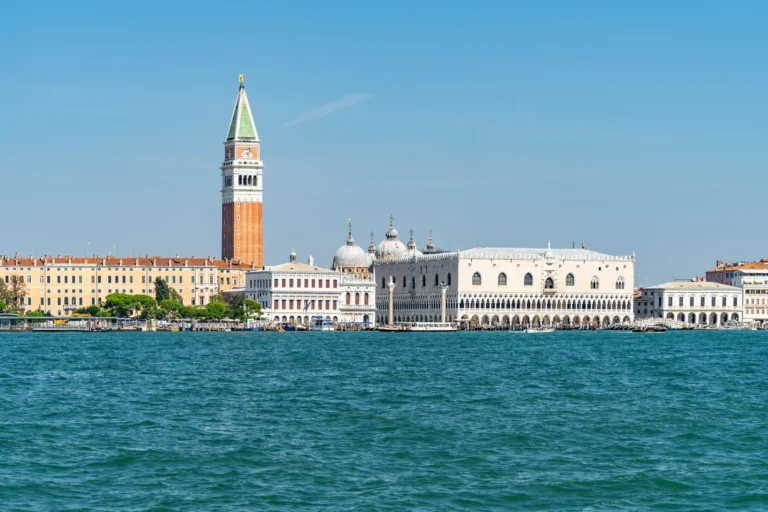
St Mark’s Square and the basilica
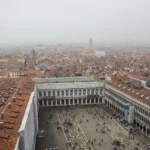
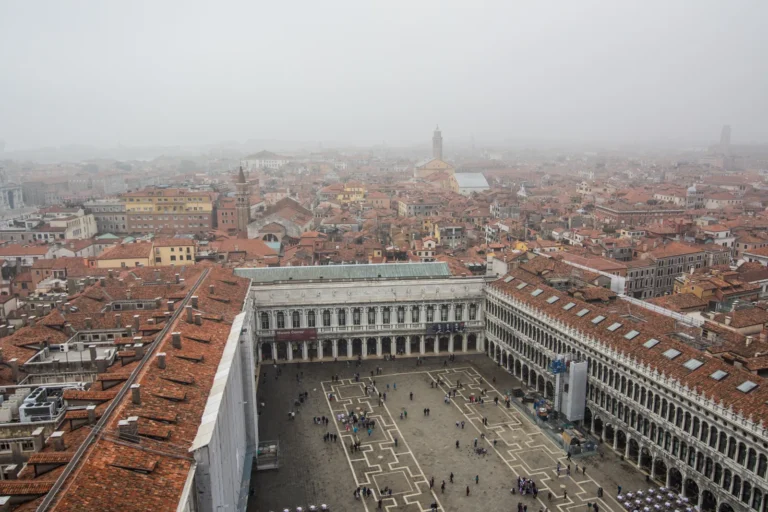
St Mark’s Square is the monumental heart of Venice. The basilica, with its Byzantine-inspired domes, is covered in gold-ground mosaics; you can go up to the terrace of the horses and see the Pala d’Oro, a goldsmith’s altarpiece, with separate tickets. The bell tower, rebuilt in the early 20th century after it collapsed, offers a view over the whole city and the lagoon. The Clock Tower and the Procuratie close off the square. Arrive at opening time: the queue gets very long in the middle of the day.
The Doge’s Palace and the Bridge of Sighs
The seat of power of the Republic of Venice, the Doge’s Palace has monumental halls painted by Tintoretto and Veronese, including the Hall of the Great Council. The visit crosses the Bridge of Sighs to reach the old prisons. Themed guided tours let you see less accessible parts of the palace. Book your ticket online in high season.
The Grand Canal and the Rialto Bridge
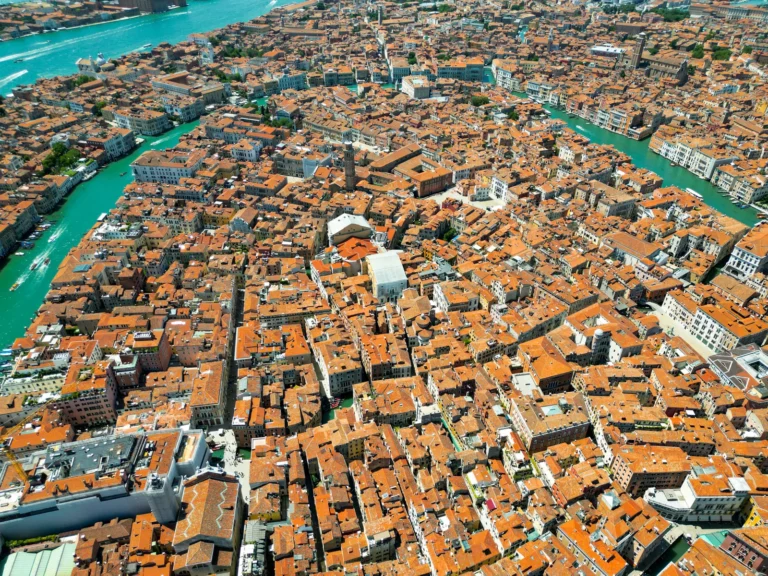
The Grand Canal winds through the city in an S-shape, lined with palaces from the Middle Ages to the Baroque era. The best way to see it is to take vaporetto line 1, which stops at almost every landing stage, from Piazzale Roma to the Lido. The stone Rialto Bridge spans the canal at its midpoint; right next to it, the Rialto market (fruit, vegetables and fish) comes alive in the morning. To cross the canal cheaply, traghetti, ferry gondolas, link the two banks at a few points.
Dorsoduro: the Accademia, the Salute and the Guggenheim Collection
On the south bank of the Grand Canal, Dorsoduro has several major museums. The Gallerie dell’Accademia show Venetian painting, from Bellini to Titian and Tiepolo. The Peggy Guggenheim Collection, in a palace on the water, is devoted to 20th-century art. The basilica of the Salute dominates the entrance to the Grand Canal, and the Zattere, long quays facing the Giudecca, are pleasant in the late afternoon. Ca’ Rezzonico is devoted to 18th-century Venice.
San Polo and Santa Croce: the Frari and the Scuola Grande di San Rocco
In the heart of the city, the Frari basilica holds two major works by Titian, including the Assumption on the high altar. A few steps away, the Scuola Grande di San Rocco is entirely decorated by Tintoretto. These districts, with their lively campi (squares), are also among the best for trying cicchetti, small bites served at the counter of bacari (wine bars).
Cannaregio and the Ghetto
To the north, Cannaregio is the most residential district, along wider and quieter canals. Here you can visit the Ghetto, the first neighbourhood in history to bear that name, with its synagogues and Jewish museum. The Fondamenta della Misericordia and Fondamenta degli Ormesini are lined with bars and restaurants frequented by Venetians.
Castello, the Arsenale and the Biennale
To the east, Castello mixes working-class lanes, the old Arsenale, the Republic’s shipyard, and the gardens (Giardini) where the Biennale is held. The further you go from St Mark’s, the quieter it gets. Via Garibaldi, wide and lively, gives an idea of everyday life away from the tourist sights.
San Giorgio Maggiore and the Giudecca
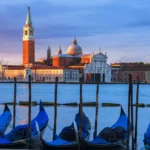
Opposite St Mark’s Square, the island of San Giorgio Maggiore has a church by Palladio whose bell tower offers one of the finest views of the city, often with a shorter wait than St Mark’s. The neighbouring Giudecca is a residential island with the church of the Redentore, also by Palladio.
Murano, Burano and Torcello
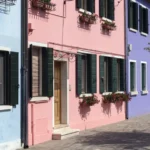
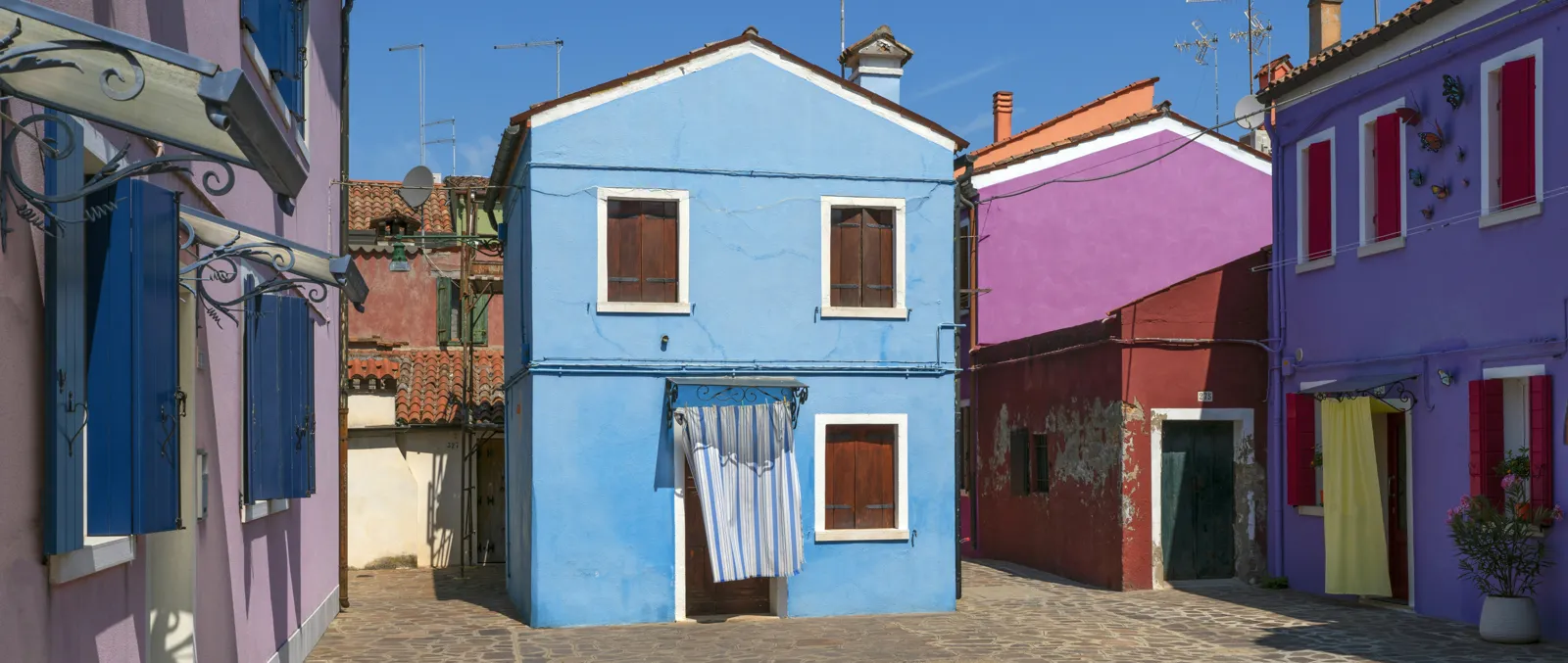
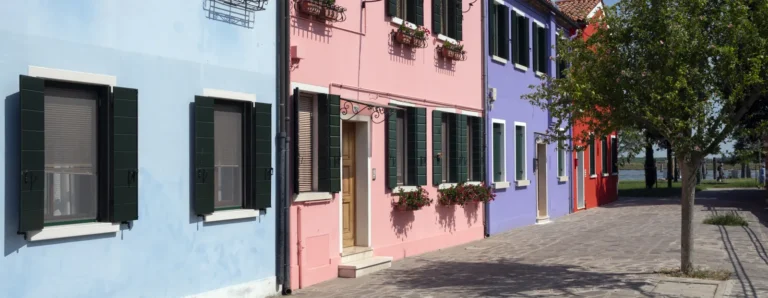
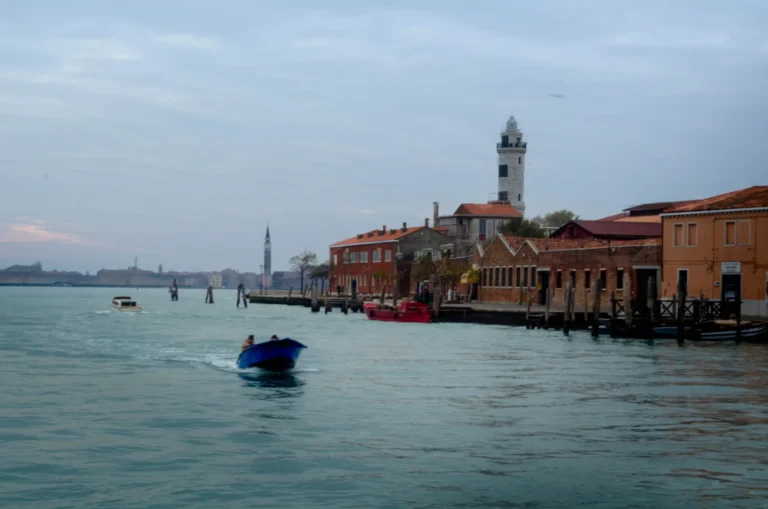
These three lagoon islands can be visited in a day by vaporetto from Fondamente Nove. Murano is famous for its glassworks, some of which can be visited, and its Glass Museum. Burano, further out, is known for its brightly coloured houses and its lace-making tradition. Almost deserted Torcello has the cathedral of Santa Maria Assunta and its mosaics, witnesses to the beginnings of the lagoon. Set off early to enjoy Burano before the groups arrive.
The Lido
This long island separates the lagoon from the Adriatic. People come for the beaches, from June to September, and for the Venice Film Festival at the end of summer. Cars are allowed, a surprising contrast with the historic centre. A bike is a good way to explore it.
The districts (sestieri) of Venice
- San Marco: closest to the monuments, but the most expensive and busiest
- Dorsoduro: museums, pleasant quays, a more residential feel
- San Polo and Santa Croce: central, near the Rialto; Santa Croce is handy for Piazzale Roma and arriving by bus
- Cannaregio: near Santa Lucia station, lively, with many neighbourhood restaurants
- Castello: quiet in its eastern part, within walking distance of St Mark’s
- Giudecca and Lido: quieter, but you need the vaporetto for every outing
Itinerary: Venice in 2, 3 or 5 days
Venice in 2 days
- Day 1: St Mark’s Square, the basilica and the Doge’s Palace in the morning; the Rialto and the Frari in the afternoon; the Grand Canal by vaporetto (line 1) in the late afternoon
- Day 2: Dorsoduro (Accademia or Guggenheim, the Salute) in the morning, then Murano and Burano in the afternoon, or Cannaregio and the Ghetto to stay in town
Venice in 3 days
- Day 1: St Mark’s Square, the basilica and bell tower, the Doge’s Palace; in the late afternoon, vaporetto line 1 along the whole Grand Canal
- Day 2: the Rialto and its market in the morning, the Frari and the Scuola Grande di San Rocco, then Dorsoduro (Accademia or the Guggenheim Collection, the Salute, the Zattere at sunset)
- Day 3: Murano, Burano and Torcello; in the evening, cicchetti in Cannaregio
Venice in 4 to 5 days
- Days 1 to 3: the itinerary above
- Day 4: Cannaregio and the Ghetto in the morning, Castello and the Arsenale in the afternoon, the view from San Giorgio Maggiore in the late afternoon
- Day 5: the Lido (beach in summer, cycling out of season) or the Biennale depending on the year; or a train trip to Padua or Verona
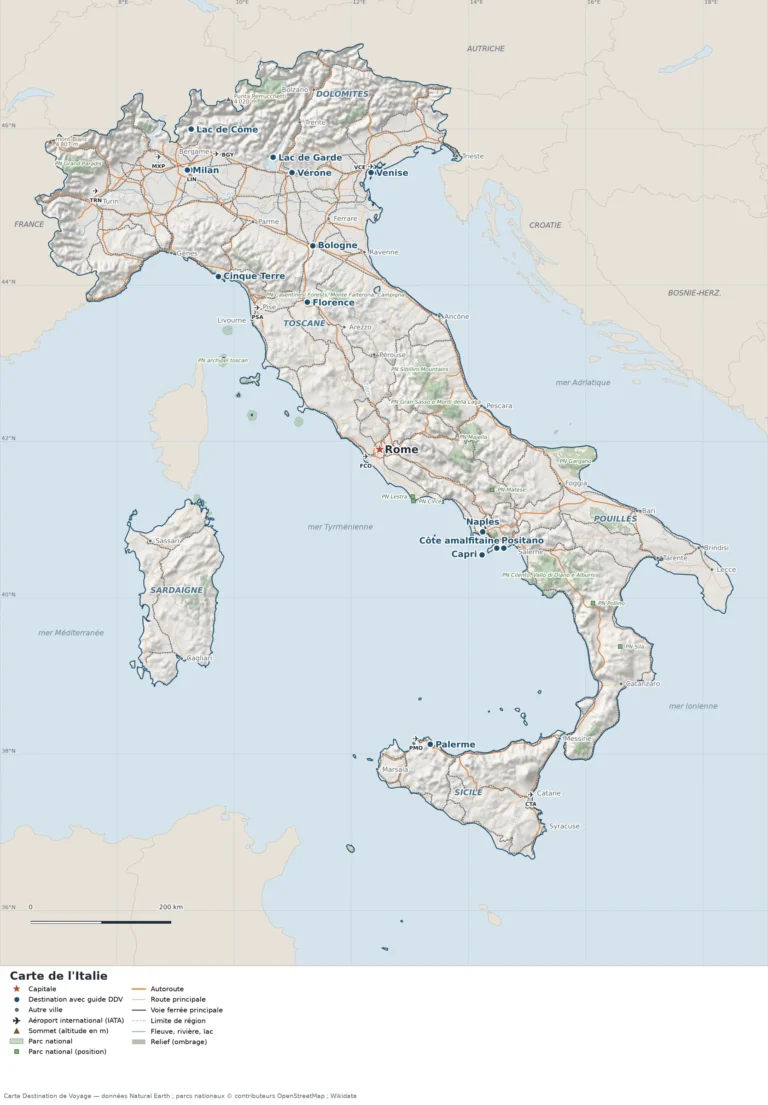
Venice combines well with other stops in northern Italy, reachable by train. For a longer trip, see our Tuscany and Rome guides, or continue to Slovenia and Croatia. For an Italian stop further south, see our Sicily guide.
Budget for a stay in Venice
Venice is one of the most expensive cities in Italy, especially for accommodation in the historic centre. Indicative amounts per person per day, excluding flights. If you are hesitating between Venice and the capital, our comparison Rome or Venice for a first trip will help you choose.
| Item | Budget | Comfort |
|---|---|---|
| Accommodation (sharing a double room) | roughly €40 to €70 | roughly €120 to €250 |
| Meals | roughly €25 to €40 | roughly €60 to €100 |
| Transport (vaporetto) | roughly €10 to €25 (multi-day pass) | roughly €25 to €40 |
| Sightseeing | roughly €15 to €25 | roughly €30 to €50 |
| Total per day | roughly €90 to €150 per person per day | roughly €220 to €400 per person per day |
To cut costs: stay in Cannaregio or Castello rather than San Marco, or on the mainland (Mestre), a few minutes away by train or bus; eat cicchetti at the counter rather than on a terrace on the main squares; buy a multi-day vaporetto pass if you plan to use it often; drink your coffee standing at the bar. Gondolas are expensive: their fares are regulated, so ask before you get in.
Getting around Venice
- On foot: the main way to get around. Distances are short, but stepped bridges and dead-end alleys lengthen journeys; an offline map is useful.
- Vaporetto: the water buses of the public company ACTV serve the Grand Canal, the city’s perimeter, the Lido and the islands. Single tickets are expensive; passes of 1 to 7 days soon pay for themselves.
- Traghetto: ferry gondolas that cross the Grand Canal at a few points, for a modest price.
- From the airport: bus to Piazzale Roma, or Alilaguna boats to several stops in the centre and on the islands; water taxis are fast but expensive.
- Train: Santa Lucia station is in the historic centre; do not confuse it with Venezia Mestre, on the mainland.
- Car: pointless. If you arrive by car, park in a car park at Piazzale Roma, Tronchetto or Mestre.
Venice airport transfer: bus, Alilaguna boat and taxi
From Marco Polo airport, there are two approaches: reach Piazzale Roma by bus (the road terminus at the entrance to the city, then on foot or by vaporetto), or arrive by water close to your hotel by boat. The choice depends mainly on where you are staying.
Bus to Piazzale Roma
Two operators link the airport with Piazzale Roma: ATVO (« Venice Airport Bus Express », which also serves Mestre) and ACTV (line 5, known as the Aerobus). Each operator publishes its timetables; fares could not be read on their websites when we checked, so check them when you buy. The bus is the simplest option if you are staying near Piazzale Roma, Santa Lucia station or in Mestre.
Alilaguna boat
Alilaguna runs the airport boat lines: the Blue line (Murano, Fondamente Nove, Lido, Arsenale, San Zaccaria, San Marco, Zattere, Giudecca, Tronchetto, Santa Lucia station), the Orange line (Madonna dell’Orto, Guglie, San Stae, Rialto, Sant’Angelo, Ca’ Rezzonico, Santa Maria del Giglio) and the seasonal Red line. Official fares: €18 one way airport – Venice (€32 return), €10 airport – Murano (€18 return). The ticket includes one large suitcase and one piece of hand luggage; each extra bag costs €4. Note: winter timetables for the Blue and Orange lines come into force on 28 October 2026 and the Red line is suspended in winter.
Road taxi and water taxi
A road taxi cannot go further than Piazzale Roma. The private water taxi drops you as close as possible to your hotel if it has water access: it is the most direct option, but ask the price before setting off.
| Option | Where to catch it | Official fare | Source |
|---|---|---|---|
| ATVO bus | Airport → Piazzale Roma / Mestre | Shown at purchase | atvo.it |
| ACTV bus line 5 | Airport → Piazzale Roma | Shown at purchase | ACTV |
| Alilaguna (Blue, Orange lines) | Airport landing stage | €18 (Venice), €10 (Murano) | alilaguna.it |
| Water taxi | Airport landing stage | Price to agree before departure | — |
Booking a transfer in Venice
A private transfer booked in advance (a driver waiting on arrival, price fixed when booking) makes most sense if you arrive late, have bulky luggage, are travelling as a family with young children, or as a group sharing the cost. Before booking, check what the price includes (tolls, luggage, waiting if your flight is delayed), the exact meeting point in the terminal, the cancellation terms and the name of the company actually providing the transfer.
Sources: Alilaguna, home page (lines, winter timetables) and « Fares » page (alilaguna.it); ATVO, « Venice airport bus express » page (atvo.it), checked 24 October 2026.
Where to stay in Venice
For a first stay, San Marco, San Polo and Dorsoduro let you do everything on foot. Cannaregio is a good compromise: close to the station, quieter in the evening and better value. Castello, in its eastern part, suits those looking for peace. With luggage, choose accommodation close to a vaporetto stop to avoid stepped bridges.
Options range from youth hostels and B&Bs to palaces turned into luxury hotels. Rooms are often small and lifts rare in old buildings: check before booking. Staying in Mestre greatly reduces the budget, at the cost of a daily commute and a less Venetian evening.
Entry requirements, health and safety
- US citizens: Italy is in the Schengen area. You may enter for up to 90 days for tourism or business without a visa; your passport must be valid at least 3 months beyond your stay, and you need proof of sufficient funds and a return ticket (U.S. Department of State, travel.state.gov, last updated August 11, 2025).
- UK citizens: no visa for up to 90 days in any 180-day period as a tourist. Your passport must have been issued less than 10 years before the day you arrive and be valid at least 3 months after the day you plan to leave the Schengen area. The EU Entry/Exit System (EES) is being implemented: fingerprints and a photo may be taken at your first entry, free of charge (UK FCDO, GOV.UK, updated 21 October 2026).
- ID: under Italian law, police can stop you at any time for an identity check: carry photo ID at all times (GOV.UK).
- Health: UK travellers can use a GHIC or EHIC for medically necessary state healthcare (GOV.UK); travel.state.gov advises being up to date on CDC-recommended vaccinations and recommends insurance that covers medical evacuation.
- Theft: crime levels are generally low, but bag-snatching and pickpocketing are more common in city centres, at major tourist attractions and on public transport (GOV.UK); the State Department notes that break-ins of rented vehicles are common, so never leave luggage in a parked car.
- Acqua alta: high waters are common in Venice and can flood parts of the city (GOV.UK); the State Department also lists high-tide flooding in Venice. Check the tide forecast before you go; sirens announce significant high tides.
- In Venice: keep your belongings close on the vaporetto and in the main squares. In summer, protect yourself from mosquito bites.
- Emergencies: 112 (police), 118 (ambulance), 115 (fire), according to GOV.UK; the State Department gives 112 for all emergencies.
Practical tips for Venice
- Access fee: GOV.UK notes that visitors to Venice may need to pay an access fee; day-trippers are concerned on certain days, and people staying overnight are exempt under certain conditions. Check the calendar and arrangements on the city’s official website.
- City rules: swimming in the canals is an offence (GOV.UK), and the city penalises certain behaviour (picnicking on monument steps, beachwear in town). Find out about the rules in force.
- Tourist tax: it is usually paid at your hotel, often in cash; ask for a receipt (GOV.UK).
- Money: cards are widely accepted; keep some cash for bacari and small purchases.
- At restaurants: the « coperto » (cover charge) is often charged per person; it must appear on the menu.
- Mobile data: check your home carrier’s roaming charges before you leave; an eSIM is a simple way to get local data.
- Shoes: bring comfortable walking shoes, and waterproof ones from October to January.
Pitfalls to avoid in Venice
- Arriving at St Mark’s in the middle of the day: the queue for the basilica and the Doge’s Palace is then at its longest; come at opening time or book online.
- Buying single vaporetto tickets: they are expensive; a multi-day pass soon pays for itself.
- Sitting down without reading the menu: the coperto (cover charge) is often charged per person and must be shown; terraces on the main squares are the most expensive.
- Getting into a gondola without knowing the fare: prices are regulated, so ask before boarding.
- Forgetting the access fee: on certain days, day-trippers must pay it; check the calendar on the city’s official website.
- Swimming in the canals or picnicking on monument steps: it is prohibited and penalised.
- Mixing up the stations: only Venezia Santa Lucia is in the historic centre, not Venezia Mestre.
Who is Venice for?
Our view by traveller type, based on the information in this guide (places, budget, seasons).
| Profile | Our view | Why |
|---|---|---|
| Couples | Very well suited | Sunset on the Zattere, the view from San Giorgio Maggiore, evenings in Cannaregio. |
| Families | Suited | Vaporetti, lagoon islands, the Lido beach in summer; stepped bridges and few lifts in old hotels. |
| Tight budget | With reservations | Roughly €90 to €150 per person per day; stay in Cannaregio, Castello or Mestre, buy a vaporetto pass, eat cicchetti. |
| Culture | Very well suited | St Mark’s Basilica, the Doge’s Palace, the Accademia, the Frari, the Scuola Grande di San Rocco, the Biennale. |
| Beach | Not well suited | The Lido, from June to September, is an extra rather than a reason to go. |
Frequently asked questions
How many days do you need to visit Venice?
Two days let you see St Mark’s, the Doge’s Palace, the Rialto and the Grand Canal. Allow three to four days to add the Dorsoduro museums, the less touristy districts and a day on the lagoon islands.
How do you get from Marco Polo airport to central Venice?
By bus to Piazzale Roma, then on foot or by vaporetto, or by Alilaguna boat directly to several stops in the centre. Water taxis are the fastest option, but also the most expensive.
Do you have to pay to enter Venice?
On certain busy days, an access fee is charged to day-trippers who are not staying overnight. Dates, amount and exemptions change from year to year: check them on the city’s official website before your visit.
Is it better to stay in Venice or in Mestre?
Staying in the historic centre lets you enjoy the city early in the morning and in the evening, when the day-trippers have left. Mestre is much cheaper and a few minutes from the centre by train or bus, but it has the feel of a modern town.
Is Venice safe?
Yes, on the whole: according to GOV.UK, crime levels in Italy are generally low, but pickpocketing is more common at major tourist attractions and on public transport. The main natural hazard is acqua alta, which can flood some areas for a few hours in autumn and winter.
What are the pitfalls to avoid in Venice?
Visiting St Mark’s in the middle of the day, buying single vaporetto tickets, sitting on a terrace without checking the coperto, getting into a gondola without knowing the fare and forgetting the access fee charged to day-trippers on certain days.
What are the best things to do in Venice in 2 days?
On day one, St Mark’s, the Doge’s Palace, the Rialto and the Grand Canal by vaporetto; on day two, Dorsoduro and its museums in the morning, then Murano and Burano or Cannaregio in the afternoon.
Further reading: to avoid the crowds and the heat, read when to go to Venice. For a tour of Italy, see our Italy travel guide and our Tuscany guide; to the east, Slovenia is close by.
Our sources
- Venice climate normals: 1991-2020 normals for the Venice Tessera station (Marco Polo airport), published by the Istituto Superiore per la Protezione e la Ricerca Ambientale (ISPRA) and included in NOAA’s WMO climate normals
- Alilaguna (alilaguna.it) and ATVO (atvo.it): airport transfer lines, fares and winter timetables, checked 24 October 2026
- Entry requirements, health and safety checked on 26 October 2026: U.S. Department of State, Italy country information (last updated August 11, 2025) and UK FCDO, GOV.UK foreign travel advice for Italy (updated 21 October 2026)
- Our methodology
Updated October 2026.
To combine Venice with other stops, see our Italy travel guide, the page when to go to Italy and our other destinations in Europe.