Visiting Puglia means discovering the « heel » of Italy: about 800 km (500 mi) of coastline between the Adriatic and the Ionian Sea, white hilltop towns, the trulli of Alberobello, the Baroque of Lecce and simple cooking based on olive oil, vegetables and fresh pasta. What are the things to do in Puglia? This guide covers the must-sees, itineraries from 7 days to 2 weeks, a budget, transport and our tips for planning your trip to Puglia.
Our travel deals for Puglia
Affiliate links: we earn a commission, at no extra cost to you.
FlightsKiwi.comCompare flights and airline combinations to Puglia.
AirportsBari (north and centre) and Brindisi (Salento)
Time zoneUTC+1, UTC+2 in summer (Europe/Rome)1 hour ahead of London, 6 hours ahead of New York most of the year
EntrySchengen area: no visa for up to 90 days for US citizens (tourism or business) and UK citizens (in any 180-day period) · travel.state.gov · GOV.UKPassport valid at least 3 months beyond your stay (US) or after leaving the Schengen area (UK)
Language and currencyItalian; euro (€)
Electricity220-volt system, according to the U.S. Department of State · plugsCheck that your devices accept it; you may need a plug adapter
✅ Best months: April, may, June, September, October
❌ Period to avoid: November
The best time is from mid-May to June and from September to early October: 24 to 28 °C (75 to 82 °F) in the afternoon, a pleasant sea and fewer people than in August, according to the 1991-2020 normals for the Bari station. July and August are hot (an average high of about 30 °C, or 86 °F, in Bari) and very busy; winter is mild but damp. Month-by-month climate, areas and events: see our article when to go to Puglia.
Things to do in Puglia: the must-sees
Alberobello and its trulli
Alberobello has more than a thousand trulli, dry-stone houses with conical roofs, listed as a UNESCO World Heritage Site. The sloping Rione Monti district is the most photographed and most commercial; Aia Piccola, on the other side, is more lived-in and quieter. You can visit the Trullo Sovrano, the only one with an upper floor, and the trullo-shaped church of St Anthony. Come early in the morning or at the end of the day to avoid the groups.
The Itria Valley: Locorotondo, Cisternino, Martina Franca
Between Alberobello and Ostuni, the Itria Valley is dotted with isolated trulli, dry-stone walls and olive trees. Locorotondo, a circular village of white houses, is known for its white wine and views over the valley. Cisternino is famous for its butcher-grills (« fornelli pronti »), where you choose your meat to be cooked on the spot. Larger Martina Franca has an elegant Baroque centre and hosts the Valle d’Itria opera festival in summer.
Ostuni, the white city
Perched on a hill a few kilometres from the sea, Ostuni is entirely whitewashed. You get lost in a maze of lanes, steps and covered passages up to the Gothic cathedral at the top. The view over the centuries-old olive groves running down to the Adriatic is especially beautiful at the end of the day. It is also a good base for the beaches on the nearby coast.
Polignano a Mare and Monopoli
Polignano a Mare is built on the edge of cliffs riddled with caves. Its small pebble beach, Lama Monachile, tucked between two cliffs beneath a bridge, is one of the best-known images of the region; it is packed in summer. A few kilometres away, larger and livelier Monopoli has kept a colourful fishing harbour, a seaside castle and many rocky coves south of town.
Bari
The regional capital is often the gateway to the trip. Its old town, Bari Vecchia, is explored on foot: the Basilica of St Nicholas, a major pilgrimage site holding the saint’s relics, the Romanesque cathedral of San Sabino and the Norman-Swabian castle. In the lanes, women still make orecchiette in front of their doors. The very long seafront is pleasant in the evening, and focaccia barese makes a simple, inexpensive lunch.
Lecce, the Florence of the Baroque
Lecce is the cultural heart of the Salento. Its soft, golden limestone allowed a highly ornate Baroque style in the 17th century: the façade of the Basilica of Santa Croce, Piazza del Duomo and its bell tower, and many churches and palaces. In the centre, a Roman amphitheatre is partly excavated on Piazza Sant’Oronzo. The city is lively in the evening and makes a convenient base for exploring the whole Salento.
Otranto and the Adriatic coast of the Salento
Otranto, Italy’s easternmost town, has a cathedral whose floor is covered by a huge 12th-century mosaic, and an Aragonese castle. To the north, the Grotta della Poesia at Roca Vecchia is a natural pool carved into the rock, very busy in summer. To the south, the coast road to Santa Maria di Leuca, the tip of the heel, runs past cliffs, watchtowers and coves such as Cala dell’Acquaviva.
Gallipoli and the Ionian coast
On the west coast of the Salento, Gallipoli’s old town sits on an island linked to the mainland by a bridge, around its castle and Baroque cathedral. Beaches of fine sand and very clear water follow one another from Punta Prosciutto to Pescoluse. The Porto Selvaggio nature park, with its pine woods and rocky coves, offers a wilder alternative, reachable on foot.
Castel del Monte, Trani and the Castellana Caves
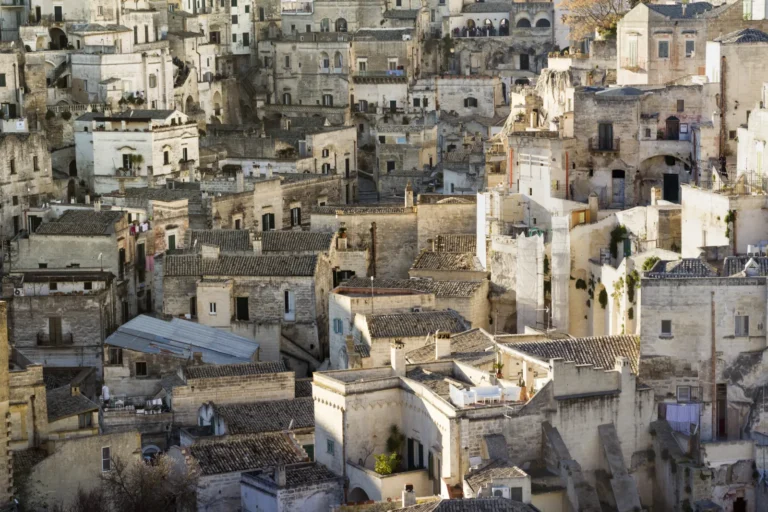
North-west of Bari, Castel del Monte, an octagonal castle built in the 13th century by Emperor Frederick II, is a UNESCO World Heritage Site. On the coast, Trani charms with its Romanesque cathedral set on the water’s edge. South of Bari, the Castellana Caves form a vast underground network of rock formations, visited with a guide. Finally, about an hour by road from Bari, Matera, in Basilicata, is well worth the detour for its cave dwellings, the Sassi, a World Heritage Site. Our guide to Matera and its Sassi covers a visit to the city.
The Gargano
The « spur » of the boot, in the north of the region, is a national park combining beech forest (Foresta Umbra), white cliffs and seaside villages such as Vieste and Peschici. In season, boats run to the Tremiti Islands, known for diving and crystal-clear water. The Gargano is quite far from the rest of the region: allow at least two nights there.
Itinerary ideas for Puglia
Puglia in 7 days
Day 1: arrive in Bari, visit Bari Vecchia
Day 2: Polignano a Mare and Monopoli
Day 3: Alberobello, Locorotondo and Cisternino
Day 4: Ostuni and the nearby beaches, drive to Lecce
Day 5: Lecce
Day 6: Otranto, the Grotta della Poesia, the coast to Santa Maria di Leuca
Day 7: Gallipoli and the Ionian coast, depart from Brindisi airport
Puglia in 10 days to 2 weeks
Add Matera (one or two nights) between Bari and the Itria Valley
Castel del Monte and Trani from Bari (one day)
The Gargano and the Tremiti Islands (two to three days)
More time in the Salento to alternate beaches and villages
Fly into Bari and out of Brindisi (or vice versa) to avoid backtracking: rental companies often charge one-way fees, but the time saved is real.
Who is Puglia for?
Here is our view by traveller type, based on the stops, budget and conditions covered in this Puglia guide.
Profile
Our view
Couples
✅ Nights in a trullo or a masseria, white towns such as Ostuni, sunsets over the Adriatic.
Families
✅ Fine sandy beaches on the Ionian coast, the Castellana Caves, masserie with pools; a car is almost essential.
Tight budget
✅ More affordable than northern Italy: roughly €70 to €110 per person per day, except in August, when seaside prices soar.
Culture and history
✅ Lecce’s Baroque, the UNESCO-listed trulli of Alberobello and Castel del Monte, Matera about an hour from Bari.
Beach
✅ The Salento and the Gargano; famous coves such as Polignano a Mare are packed in summer.
No car
⚠️ Trains serve the Adriatic coast (Bari, Monopoli, Ostuni, Lecce), but the Itria Valley and the coves are poorly served.
Budget for a trip to Puglia
Puglia remains affordable compared with northern Italy, except in August, when seaside accommodation prices soar. Indicative amounts per person per day, excluding flights:
Item
Budget
Comfort
Accommodation (sharing a double room)
roughly €30 to €50
roughly €80 to €150 (trullo, masseria)
Meals
roughly €25 to €35
roughly €45 to €70
Transport (shared car, fuel, parking)
roughly €10 to €20
roughly €20 to €30
Sightseeing and beaches (lido, umbrella)
roughly €5 to €10
roughly €15 to €30
Total per day
roughly €70 to €110 per person per day
roughly €150 to €260 per person per day
Indicative estimates, varying with the season. In August, expect to pay considerably more.
Getting around Puglia
Car: the most practical way to explore the Itria Valley, the masserie and the coves. Almost all historic centres are limited traffic zones (ZTL), monitored by cameras: park outside. The State Department notes that cameras photograph number plates in restricted zones and fines are sent to drivers’ home addresses, and that break-ins of rented vehicles are common: leave nothing visible.
Train: Trenitalia links Bari, Monopoli, Polignano, Ostuni, Brindisi and Lecce on the Adriatic coast line. The Ferrovie del Sud Est regional network serves Alberobello, Locorotondo, Martina Franca, Gallipoli and Otranto, among others, with lower frequencies.
Bus: shuttles from Bari and Brindisi airports to the towns, and regional buses; seasonal routes serve the beaches in summer.
Boat: trips along the cliffs (Polignano, Otranto, Gargano) and seasonal services to the Tremiti Islands.
Where to stay in Puglia
Bari: handy for arrival and day trips to Polignano, Castel del Monte and Matera
Monopoli or Polignano a Mare: by the sea, halfway to the central sights
Itria Valley: sleep in a trullo or a masseria, often with a pool; a car is essential
Ostuni: an elegant base between countryside and sea
Lecce: the best base for the Salento, with a lively evening scene
Salento coast: Otranto or Gallipoli for a beach stay
Masserie, former fortified farms turned into hotels or guesthouses, are a speciality of the region: they range from simple farm stays to luxury hotels.
Entry requirements, health and safety
US citizens: Italy is in the Schengen area. You may enter for up to 90 days for tourism or business without a visa; your passport must be valid at least 3 months beyond your stay, and you need proof of sufficient funds and a return ticket (U.S. Department of State, travel.state.gov, last updated August 11, 2025).
UK citizens: no visa for up to 90 days in any 180-day period as a tourist. Your passport must have been issued less than 10 years before the day you arrive and be valid at least 3 months after the day you plan to leave the Schengen area. The EU Entry/Exit System (EES) is being implemented: fingerprints and a photo may be taken at your first entry, free of charge (UK FCDO, GOV.UK, updated 21 October 2026).
ID: under Italian law, police can stop you at any time for an identity check: carry photo ID at all times (GOV.UK).
Health: UK travellers can use a GHIC or EHIC for medically necessary state healthcare (GOV.UK); travel.state.gov advises being up to date on CDC-recommended vaccinations and recommends insurance that covers medical evacuation.
Theft: crime levels are generally low, but bag-snatching and pickpocketing are more common in city centres, at major tourist attractions and on public transport (GOV.UK); the State Department notes that break-ins of rented vehicles are common, so never leave luggage in a parked car.
Driving: UK travellers can use a UK photocard driving licence; hire companies may require an international driving permit (GOV.UK). The State Department refers US travellers to AAA for international driving permits. Thieves may try to make you stop your car by pointing out a fictional fault (GOV.UK).
Natural hazards: wildfires are a risk during the extended summer months and heavy winter rain can cause local flooding; many parts of Italy lie on a seismic fault line (GOV.UK). In summer, protect yourself from heat and mosquitoes.
Beaches: GOV.UK advises following the beach flag system (a red flag means you must not enter the water) and taking extra care where there are no lifeguards.
Emergencies: 112 (police), 118 (ambulance), 115 (fire), according to GOV.UK; the State Department gives 112 for all emergencies.
Practical tips
Opening hours: many shops and churches close in the afternoon, from about 1 pm to 4 or 5 pm; Italians eat dinner late, rarely before 8 pm.
Beaches: in summer, lidos (private beaches) charge for umbrellas and sunloungers; free beaches are often smaller and fill up early.
Restaurants: a cover charge (« coperto ») is often added; tipping is not compulsory.
Specialities: orecchiette with turnip tops, burrata, focaccia barese, friselle, pasticciotto (a custard pastry from Lecce), Primitivo and Negroamaro wines.
Mobile data: check your home carrier’s roaming charges before you leave; an eSIM is a simple way to get local data.
Money: cards are widely accepted; keep cash for small shops and markets.
A week lets you see Bari, Polignano, Alberobello, the Itria Valley, Ostuni, Lecce and part of the Salento. Ten days to two weeks are needed to add Matera, the Gargano and time on the beach.
Do you need to rent a car in Puglia?
It is strongly recommended for the countryside, the masserie and the coves. The train is enough to link the main coastal towns (Bari, Polignano, Monopoli, Ostuni, Lecce). Watch out for the ZTLs in historic centres.
Which airport should you choose for Puglia?
Bari for the north and centre (Polignano, Alberobello, Matera), Brindisi for the Salento (Lecce, Otranto, Gallipoli). For a full circuit, fly into one and out of the other.
Where should you stay to visit Puglia?
Two bases are enough for a week: Monopoli, Ostuni or a trullo in the Itria Valley for the centre, then Lecce for the Salento.
Is Puglia safe?
Yes: according to GOV.UK, crime levels in Italy are generally low. The main risk is theft from cars, especially rental cars, which the State Department says are often broken into: leave nothing visible.
Our sources
Climate normals: 1991-2020 normals for the Bari-Palese (airport) station published by NOAA (World Meteorological Organization normals)


 FlightsKiwi.comCompare flights and airline combinations to Puglia.Compare flights


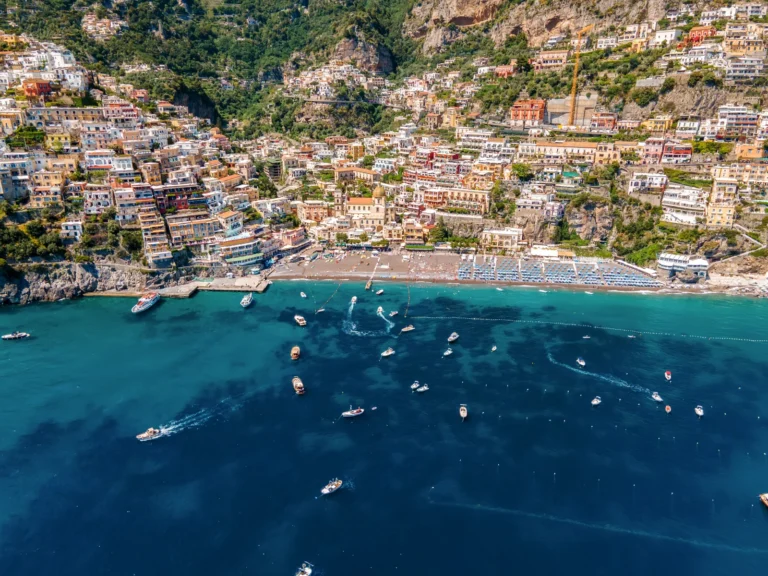 Amalfi Coast
 When to go
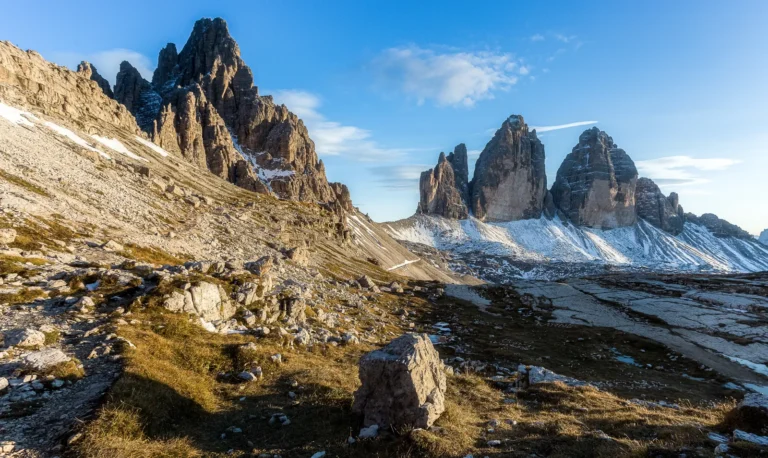 Dolomites
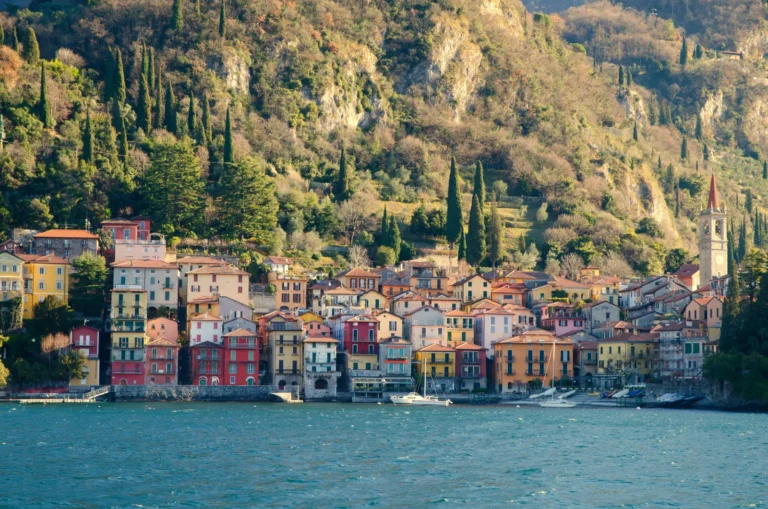 Lake Como
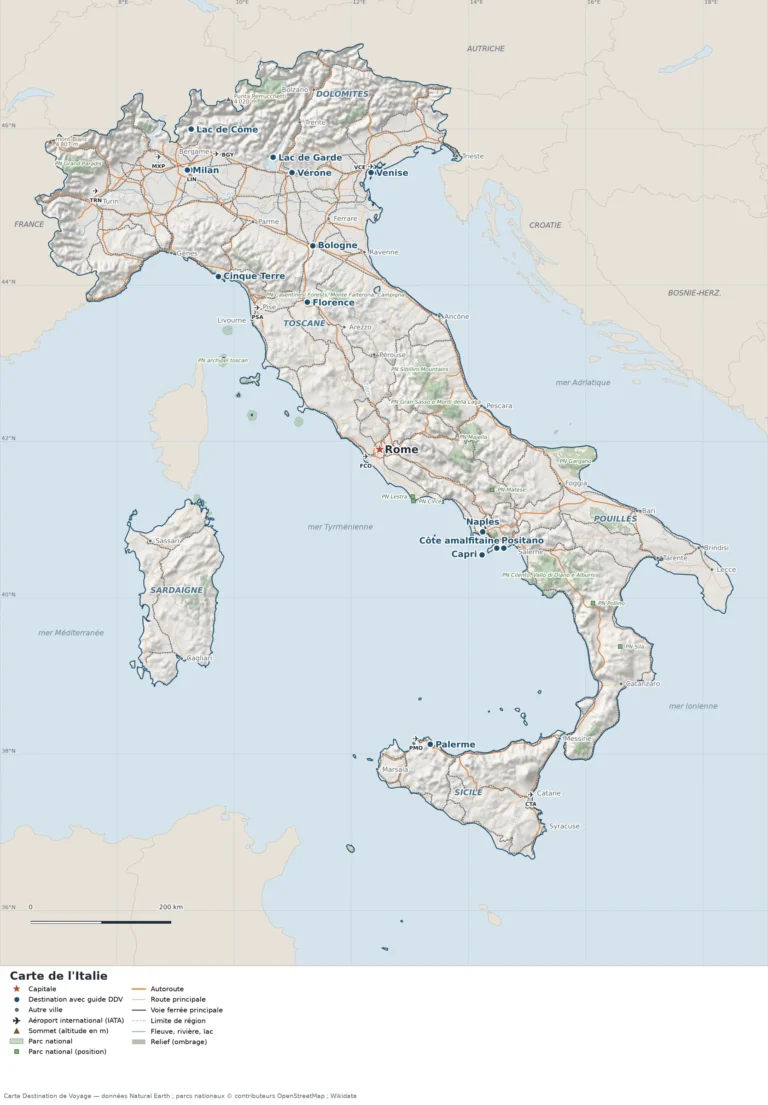 Map
 Sardinia
 Sicily
 Lake Garda
 Rome
 Venice
 Verona
 Tuscany
 Bologna
 Cinque Terre
 Florence
 Genoa
 Matera
 Milan
 Naples
 Turin