For an Amalfi Coast travel guide in brief: allow 4 to 5 days for Positano, Amalfi, Ravello and the Path of the Gods, a week with Capri and Pompeii, ideally in May-June or September, getting around by bus and boat rather than by car. The Amalfi Coast stretches for about fifty kilometres (30 mi) along the south of the Sorrento peninsula, between Positano and Vietri sul Mare. Its villages cling to cliffs planted with terraced lemon groves, linked by a corniche road and by boats. A Unesco World Heritage Site since 1997, it is as good for swimming as for hiking. This guide helps you choose your village, your excursions and how to get around. For another side of southern Italy, flatter and more rural, our guide to things to do in Puglia covers trulli and white towns.
Our travel deals for Amalfi Coast
Affiliate links: we earn a commission, at no extra cost to you.
FlightsKiwi.comCompare flights and airline combinations to Amalfi Coast.
AirportNaples-Capodichino (NAP)Then about 1.5 to 2.5 hours’ journey depending on the village
Ideal length4 to 5 days on the coastA week with Capri, Pompeii and Naples
Best timeMay-June and September
Time zoneUTC+1, UTC+2 in summer: 1 hour ahead of London, 6 hours ahead of New YorkLocal time now: –:–
EntrySchengen area: no visa for up to 90 days for US citizens (tourism or business) and UK citizens (in any 180-day period) · US: travel.state.gov · UK: GOV.UK
❌ Period to avoid: January, February, November, December
The best times are May-June and September: 24 to 28 °C (75 to 82 °F) in the afternoon, little rain and a pleasant sea from June to September, according to ISPRA normals for Naples-Capodichino. July and August exceed 30 °C (86 °F) and the coast is saturated. From roughly November to March, many hotels and ferries stop. Month-by-month climate and tips: our article on when to go to the Amalfi Coast.
Where to go: Amalfi Coast highlights
Positano
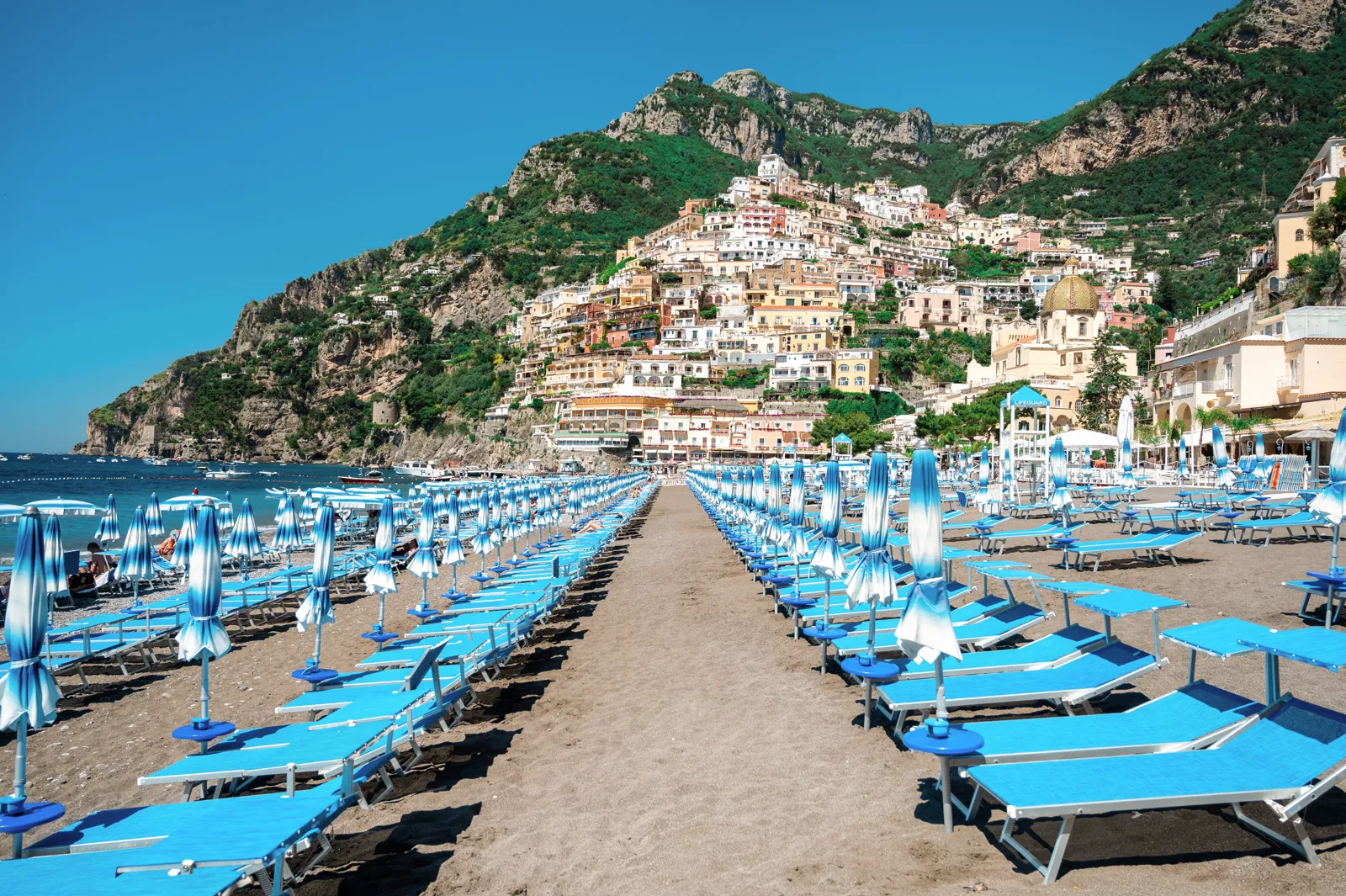
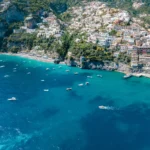
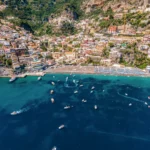
Positano tumbles down in a cascade of colourful houses to its main beach, the Spiaggia Grande, overlooked by the church of Santa Maria Assunta and its majolica dome. The village is explored by stairways and lanes lined with fashion and ceramics shops. It is the most photographed village on the coast, but also the most expensive and the busiest. Above it, the hamlet of Nocelle marks the end of the Path of the Gods.
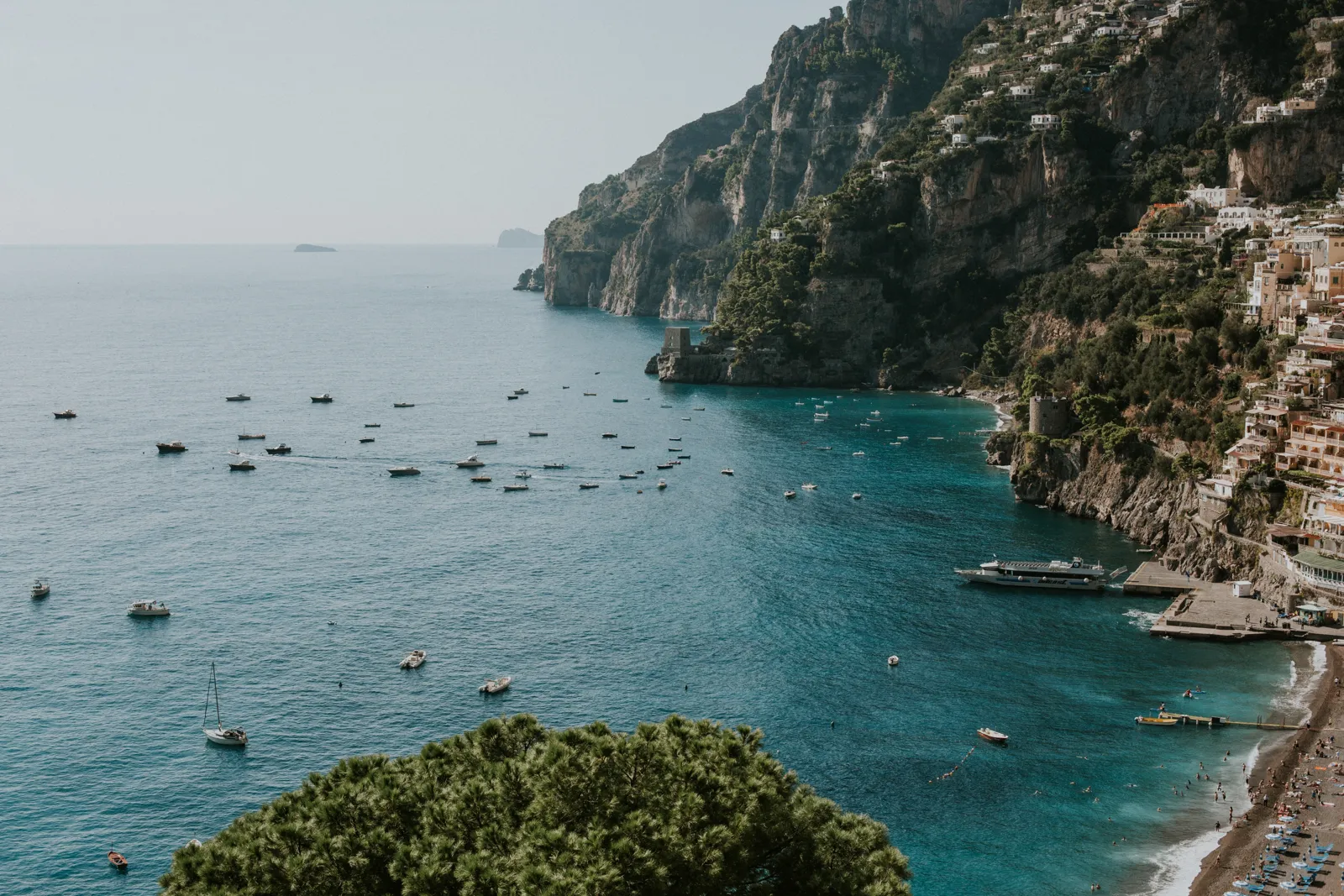
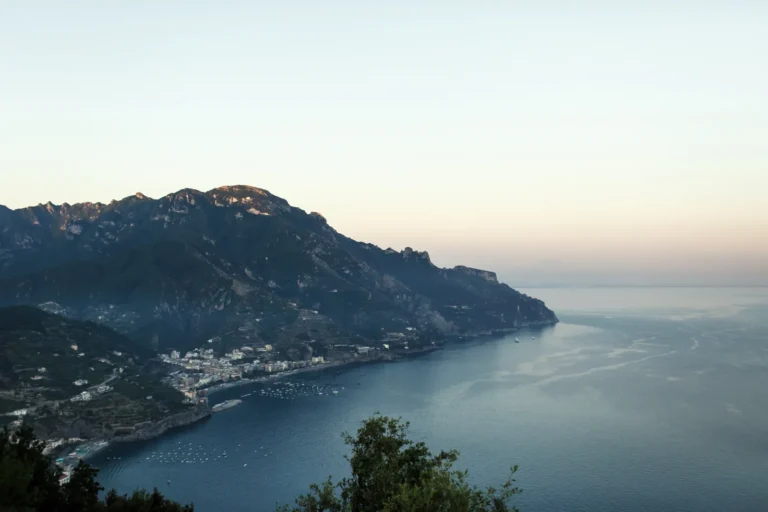
The Spiaggia Grande and the village of Positano.The Amalfi Coast seen from the heights of Positano.
Amalfi
A former maritime republic, Amalfi is the town that gave its name to the coast. Its Cathedral of St Andrew, at the top of a wide staircase, combines a colourful façade with the Cloister of Paradise and its interlaced arches. The Paper Museum recalls the town’s papermaking tradition. Amalfi is also the coast’s main transport hub: buses and boats converge there, making it a practical base.
Ravello
Perched more than 300 m (984 ft) above the sea, Ravello is calmer than the seaside villages. Villa Rufolo and its gardens host the concerts of the Ravello Festival in summer. Villa Cimbrone is famous for its Terrace of Infinity, a balcony of marble busts above the Gulf of Salerno. A stepped path leads down to Minori or Atrani for those with strong legs.
The Path of the Gods
The Path of the Gods (Sentiero degli Dei) links Bomerano, on the Agerola plateau, with Nocelle, above Positano. It follows the cliffs halfway up, with continuous sea views. Allow about 3 hours’ walk, then a long descent by stairs to Positano, or a bus from Nocelle. The route suits walkers in good condition with good shoes. Avoid the hottest hours in summer and give up in stormy weather.
Atrani, Minori, Maiori and Cetara
Atrani, right next to Amalfi, is one of the smallest villages in Italy, with a square nestled at the foot of the cliff. Minori is known for its Roman villa and its pastry shops. Maiori has the longest sandy beach on the coast, more family-friendly. Cetara, a fishing village, is famous for its anchovies and colatura di alici, a fermented anchovy sauce.
Praiano and the fjord of Furore
Between Positano and Amalfi, Praiano is a long, quieter village, popular for its sunsets. A little further on, the fjord of Furore is a narrow gorge spanned by a road bridge, with a tiny beach hidden at the bottom.
Vietri sul Mare
At the eastern end of the coast, near Salerno, Vietri sul Mare is the capital of painted ceramics. Its workshops and decorated façades make it an easy stop from Salerno.
Conca dei Marini and the Emerald Grotto
Between Furore and Amalfi, the village of Conca dei Marini is home to the Emerald Grotto (Grotta dello Smeraldo), a karst cave partly flooded by the sea, discovered in 1932 by a fisherman. It owes its name to the green colour of the water, lit by an underwater opening. You reach it by boat or by a lift from the coast road.
The Valle delle Ferriere
Above Amalfi, the Valle delle Ferriere nature reserve, in the municipality of Scala, protects a wooded valley. It takes its name from the old ironworks of the Republic of Amalfi, whose remains you see along the way. Several paths lead there, from Amalfi, Pogerola or Pontone: a shadier hike than the Path of the Gods.
Capri, Pompeii and Sorrento
Several excursions combine with the coast. Capri, reached by boat from Positano, Amalfi or Sorrento depending on the season, draws visitors with its cliffs and the Blue Grotto, whose access depends on sea conditions. Pompeii and Herculaneum, Roman towns buried by the eruption of Vesuvius in AD 79, can be visited all year. Sorrento, on the other side of the peninsula, is a larger town, busy all year, linked to Naples by train.
Things to do on the Amalfi Coast: 10 experiences not to miss
For a first stay, here is what to see and do on the Amalfi Coast, to tick off according to your interests and the length of your trip:
Walk down the lanes of Positano to the Spiaggia Grande
Visit the Cathedral of St Andrew and the Cloister of Paradise in Amalfi
See the Terrace of Infinity at Villa Cimbrone and the gardens of Villa Rufolo in Ravello
Hike the Path of the Gods, from Bomerano to Nocelle
Walk in the shade of the Valle delle Ferriere, above Amalfi
Enter the Emerald Grotto at Conca dei Marini
Admire the fjord of Furore from its bridge
Sail along the coast between Salerno, Amalfi and Positano
Taste the coast’s lemons, limoncello and Cetara’s colatura di alici
Bring home painted ceramics from Vietri sul Mare
Itinerary: the Amalfi Coast in 5 to 10 days
The coast in 5 days
Day 1: arrive in Naples, transfer to Amalfi or Positano; explore the village at the end of the day
Day 2: Amalfi (cathedral, Cloister of Paradise, Paper Museum) and Atrani; in the evening, boat to Positano if you are staying there
Day 3: Ravello (Villa Rufolo, Villa Cimbrone), walk down to Minori
Day 4: the Path of the Gods from Bomerano to Nocelle, descent to Positano, a swim
Day 5: a day on Capri by boat, depending on the season and the sea
A week to 10 days with Naples and Pompeii
Days 1 and 2: Naples (historic centre, National Archaeological Museum)
Day 3: Pompeii, then train to Sorrento
Days 4 to 8: the Amalfi Coast following the itinerary above
Day 9: Herculaneum or Vesuvius on the way back
Day 10: depart from Naples
For a longer trip in southern Italy, combine the coast with Sicily, or start in Rome, linked to Naples by train. For a wilder island, see our Sardinia guide.
Budget for a stay on the Amalfi Coast
The Amalfi Coast is one of the most expensive regions of Italy in high season, because accommodation is limited. Indicative amounts per person per day, excluding flights:
Item
Budget
Comfort
Accommodation (based on a shared double room)
roughly €45 to €80
roughly €150 to €300
Meals
roughly €25 to €40
roughly €60 to €100
Transport (bus, ferries)
roughly €10 to €20
roughly €25 to €50
Activities (beach club, sights)
roughly €10 to €20
roughly €30 to €60
Total per day
roughly €90 to €150
roughly €250 to €450
Indicative estimates, varying with the season. Prices peak in July-August, especially in Positano and Ravello.
To cut costs: stay in Sorrento, Salerno, Maiori or Minori rather than Positano; travel in April, May or October; choose free beaches over beach clubs with sunbeds; have a pizza or a sandwich at the counter for lunch.
Getting around the Amalfi Coast
Boat: from roughly April to October, ferries link Salerno, Amalfi, Positano, Sorrento and Capri. It is the most pleasant and often the fastest way in summer. Services depend on the season and the state of the sea.
Bus: regional buses run all year along the Amalfi road, between Sorrento, Positano, Amalfi, Ravello and Salerno. They are cheap but often packed in summer; buy your tickets before boarding.
Car: not recommended in high season. The road is narrow and winding, traffic jams are frequent and parking is scarce and expensive. Traffic restrictions for non-resident vehicles may apply on some days; check before renting.
From Naples: the Circumvesuviana train to Sorrento then a bus, a train to Salerno then a boat or bus, or a private transfer; depending on the season, boats also link Naples with the coast.
On foot: paths and stairways link villages and hamlets; bring good shoes.
Where to stay on the Amalfi Coast
The choice of village depends on your plans. Amalfi is the most practical base, at the centre of bus and boat connections. Positano has the most spectacular setting, but it is expensive and all stairs. Ravello suits a quiet, romantic stay away from the sea. Praiano is a good compromise between Positano and Amalfi. Maiori and Minori are more family-friendly and cheaper. Sorrento and Salerno, outside the coast itself, are budget-friendly, well-connected bases.
Watch the access: many places to stay are at the end of long stairways, with no car access. Check the distance to the bus stop or the port, and whether there is a terrace or air conditioning in summer. Many hotels close in winter.
Entry requirements, health and safety
US citizens: you may enter Italy for up to 90 days for tourism or business without a visa. Your passport must be valid at least 3 months beyond your stay, and you need proof of sufficient funds and a return ticket. A passport that has ever been reported lost or stolen, or is expired, may be refused (U.S. Department of State, travel.state.gov, last updated August 11, 2025).
UK citizens: no visa for up to 90 days in any 180-day period as a tourist. Your passport must have been issued less than 10 years before the day you arrive and be valid at least 3 months after the day you plan to leave the Schengen area. The EU Entry/Exit System (EES) is being implemented: fingerprints and a photo may be taken at your first entry (GOV.UK, updated 21 October 2026).
ID: under Italian law, police can stop you at any time for an identity check: carry photo ID at all times (GOV.UK).
Health: UK travellers can use a GHIC or EHIC for state healthcare; whatever your nationality, take out travel insurance covering medical costs. In summer, protect yourself from the heat on hikes and at archaeological sites.
Theft: crime levels are generally low, but bag-snatching and pickpocketing are higher in city centres and at major tourist attractions (GOV.UK). Leave nothing visible in a car.
Volcanoes: there are several active volcanoes in southern Italy, with national emergency planning for the Phlegraean Fields (GOV.UK); the State Department notes potential volcanic activity especially near Naples. Follow the authorities’ instructions. After heavy rain, landslides can temporarily close the coast road.
Emergencies: dial 112.
Practical tips for the Amalfi Coast
Stairs: the villages are vertical; travel light and bring comfortable shoes.
Beaches: they are mostly pebbly; water shoes are useful. Many beaches are beach clubs with a charge, with some free stretches.
Money: cards are accepted almost everywhere, but keep cash for buses and small shops.
In restaurants: a « coperto » (cover charge) is often added per person; check the menu.
Mobile data: check your home carrier’s roaming charges; coverage can be weak on some trails.
Specialities: the coast’s lemons (the « sfusato amalfitano », under the Limone Costa d’Amalfi protected geographical indication), limoncello, Cetara’s colatura di alici, Vietri ceramics.
Mistakes to avoid on an Amalfi Coast trip
Renting a car in summer: a narrow road, traffic jams and scarce parking; buses and boats are simpler.
Booking accommodation without checking access: many places are at the end of long stairways, far from the bus stop.
Coming in winter for the sea: from roughly November to March, many hotels and ferries stop.
Walking in the heat of the day: in summer, set off on the Path of the Gods early in the morning, with water.
Boarding the bus without a ticket: buy it beforehand, and keep some cash.
Trying to see everything from Positano: Amalfi is better placed for exploring by bus and boat.
The Amalfi Coast: who is it for?
Our verdict by traveller type, based on the information in this guide:
Traveller type
Our verdict
Couples
Ideal: Ravello, quieter and romantic, sunsets in Praiano, the Terrace of Infinity at Villa Cimbrone.
Hikers
Ideal: the Path of the Gods and the shadier Valle delle Ferriere; avoid the hottest hours in summer.
Culture
Yes: Amalfi cathedral, the villas of Ravello, and Pompeii or Herculaneum on a day trip.
Families
Possible: Maiori and Minori are more family-friendly, with the longest sandy beach on the coast, but the villages are all stairs.
Budget travellers
Not ideal: roughly €90 to €150 per person per day on a budget; stay in Sorrento, Salerno, Maiori or Minori.
Reduced mobility
Not ideal: vertical villages, accommodation often at the end of long stairways.
How many days do you need to visit the Amalfi Coast?
Allow 4 to 5 days to see Positano, Amalfi and Ravello, hike the Path of the Gods and take a trip to Capri. A week to ten days lets you add Naples, Pompeii and Herculaneum.
How do you get from Naples to the Amalfi Coast?
By train to Sorrento or Salerno, then by bus or boat depending on the season, or by private transfer. Allow about 1.5 to 2.5 hours depending on the village.
Should you rent a car on the Amalfi Coast?
It is not recommended in high season: the road is narrow, often congested, and parking is scarce and expensive. Buses and boats are enough to link the villages.
Where should you stay on the Amalfi Coast?
Amalfi for convenience, Positano for the setting, Ravello for peace, Maiori or Minori for a tighter budget. Sorrento and Salerno are cheaper, well-connected bases.
Is the Amalfi Coast safe?
Broadly yes. GOV.UK notes higher levels of bag-snatching and pickpocketing at major tourist attractions. The main risks are traffic on the coast road and landslides after heavy rain.
Where is the Amalfi Coast?
In southern Italy, in Campania, in the province of Salerno: it occupies the southern side of the Sorrento peninsula, on the Gulf of Salerno, between Positano and Vietri sul Mare. The nearest airport is Naples.
What are the most beautiful villages on the Amalfi Coast?
Positano for its cascading colourful houses, Amalfi for its cathedral and its role as a hub, Ravello for its villas and gardens. Atrani, Praiano, Minori and Cetara are quieter.
Unesco World Heritage Centre: « Costiera Amalfitana » (inscribed in 1997), consulted on 5 October 2026
Wikipedia (Italian): Grotta dello Smeraldo, Riserva naturale Valle delle Ferriere and Limone Costa d’Amalfi (PGI), consulted on 5 October 2026
Reference climate normals: 1991-2020 normals for the Naples-Capodichino station (Naples International Airport), published by the Istituto Superiore per la Protezione e la Ricerca Ambientale (ISPRA)


 FlightsKiwi.comCompare flights and airline combinations to Amalfi Coast.Compare flights

 When to go
 Dolomites
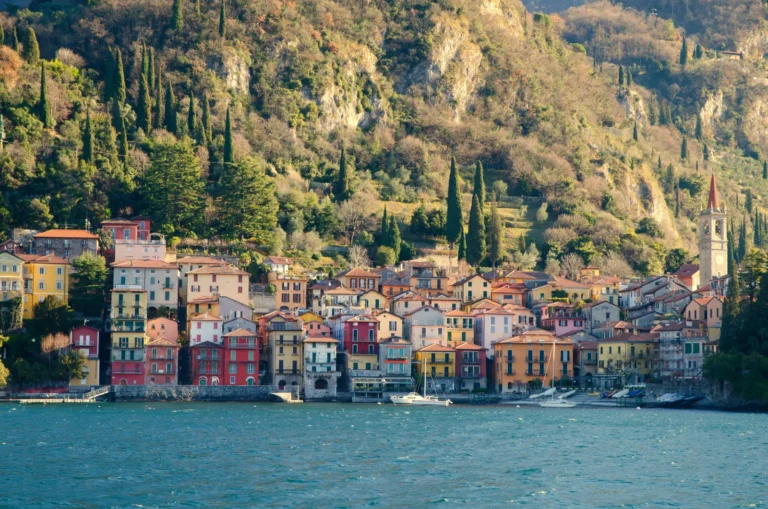 Lake Como
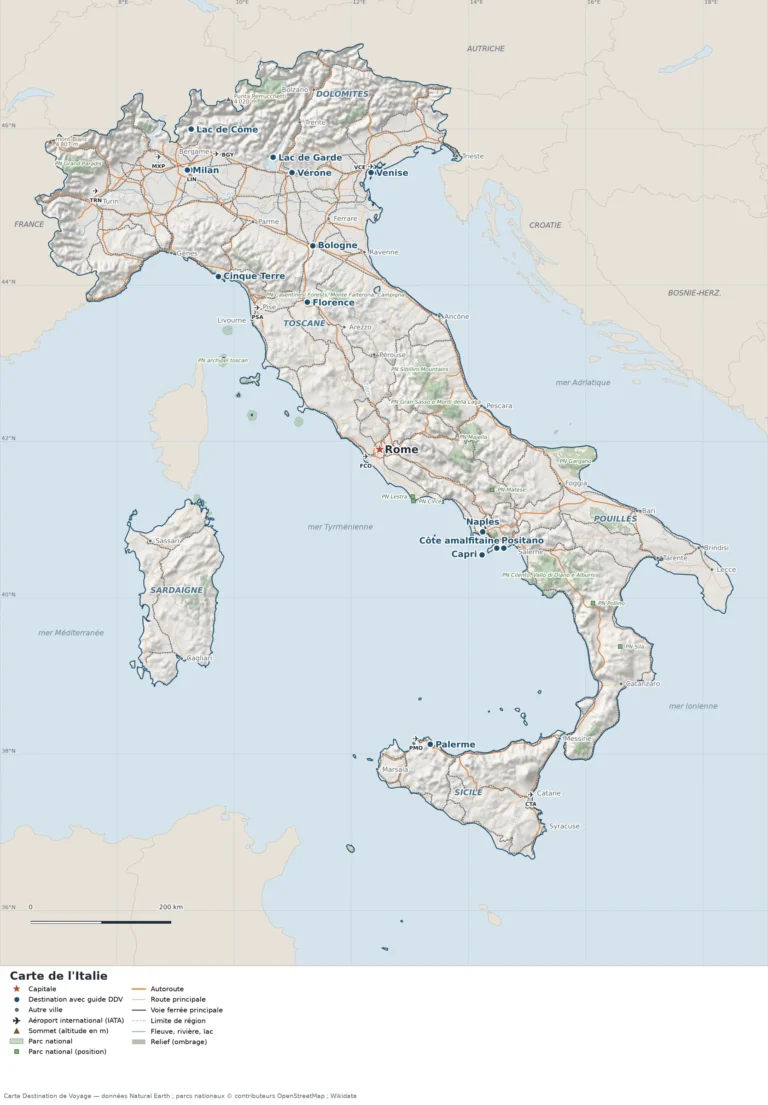 Map
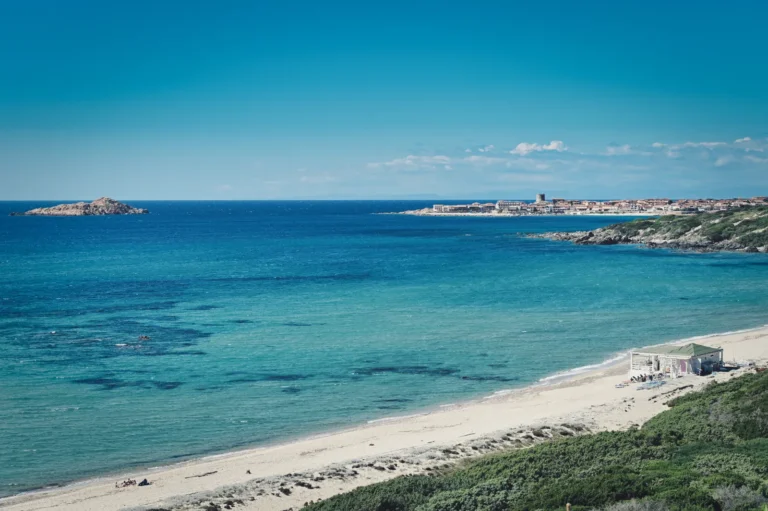 Sardinia
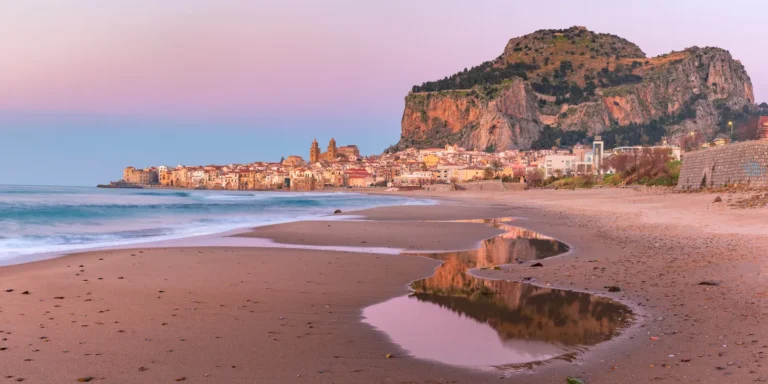 Sicily
 Lake Garda
 Puglia
 Rome
 Venice
 Verona
 Tuscany
 Bologna
 Cinque Terre
 Florence
 Genoa
 Matera
 Milan
 Naples
 Turin